Under Water

represents inner harmony and energetic balance.
ZOOT launches a new interview series dedicated to Generation Z — a generation navigating identity, visibility, and uncertainty in a rapidly shifting world, while redefining what it means to be heard and to be seen.
In this first chapter, model and professional swimmer Inga Carvalho reflects on the challenges of femininity and the emotional weight of growing up in a world marked by conflict. Trained by discipline both in and out of the water, she brings a rare clarity to questions of strength, vulnerability, and self-definition.
Photography Djenice Duarte
Make up Antonia Rosa
Assisted by Eline
Hair Jordan Alves
Model Inga Carvalho from Face Models
Jewellery Inês Manzoni Atelier
Women are forced to learn that their bodies speak long before they do. They are constantly judged for them — for what they wear, how they present themselves — and, on top of that, the world expects them to be “soft, trouble-free, self-sacrificing, and accommodating.”
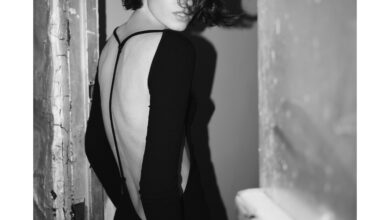
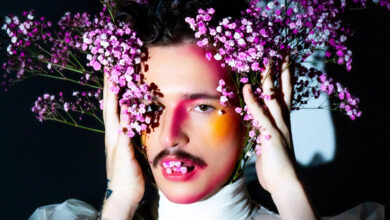
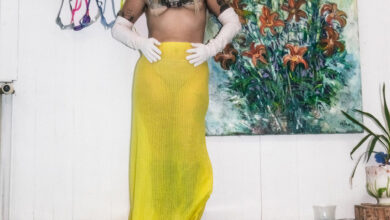
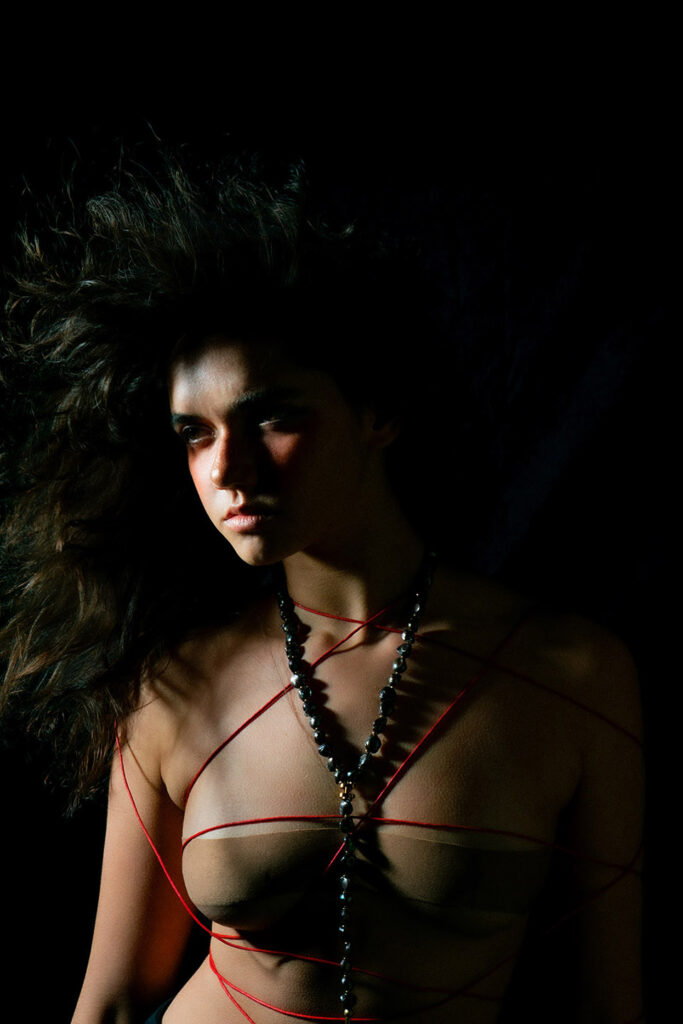
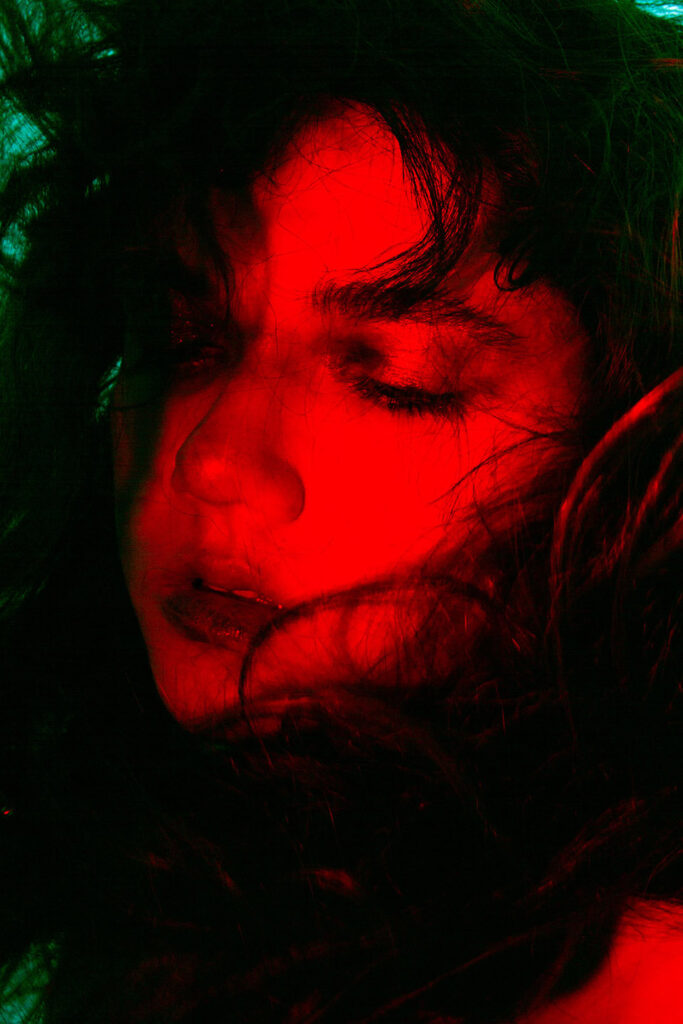
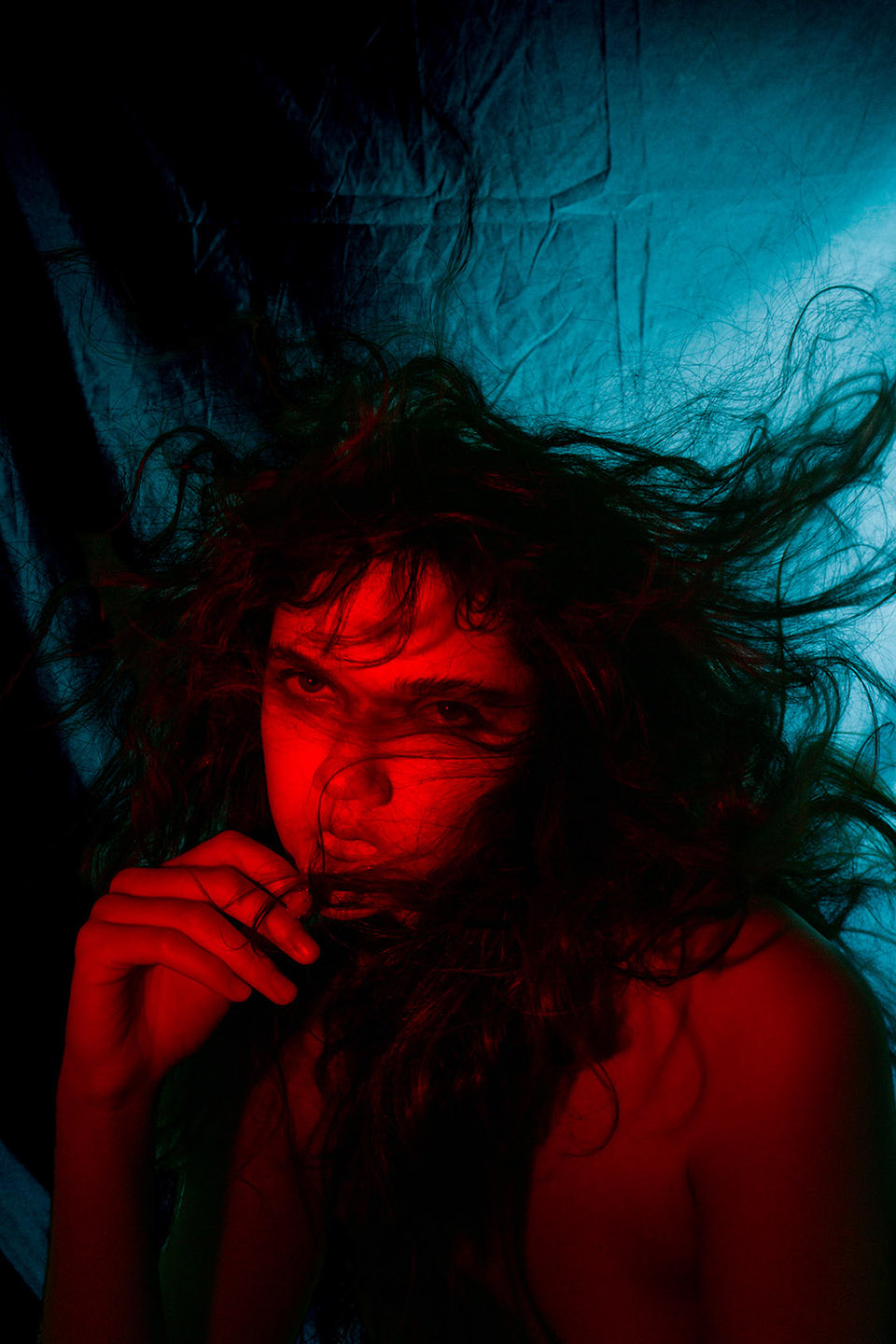
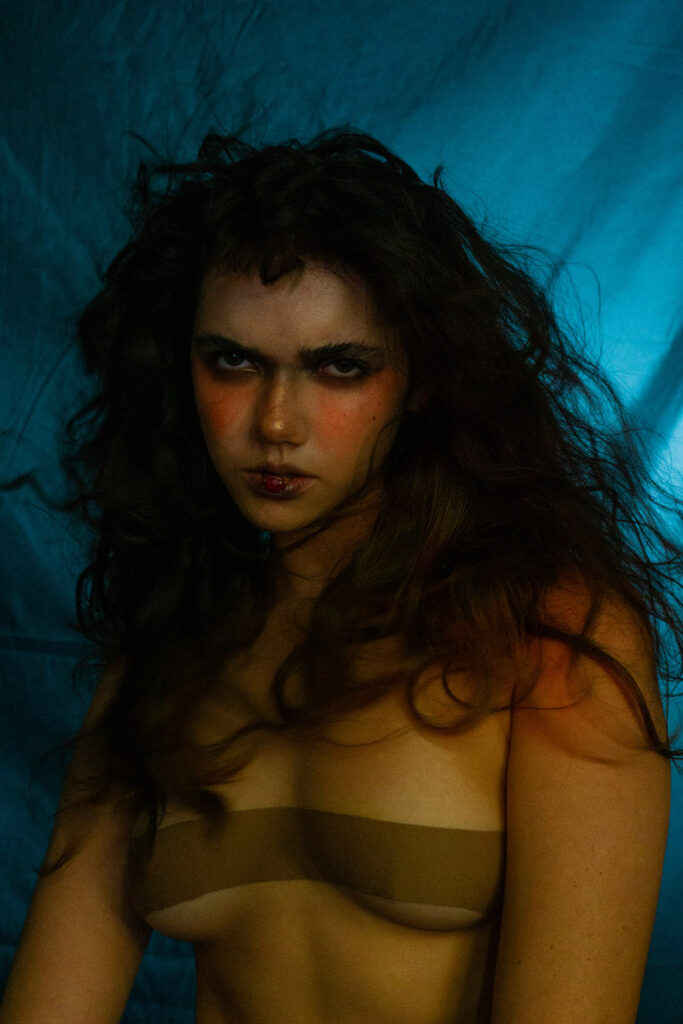
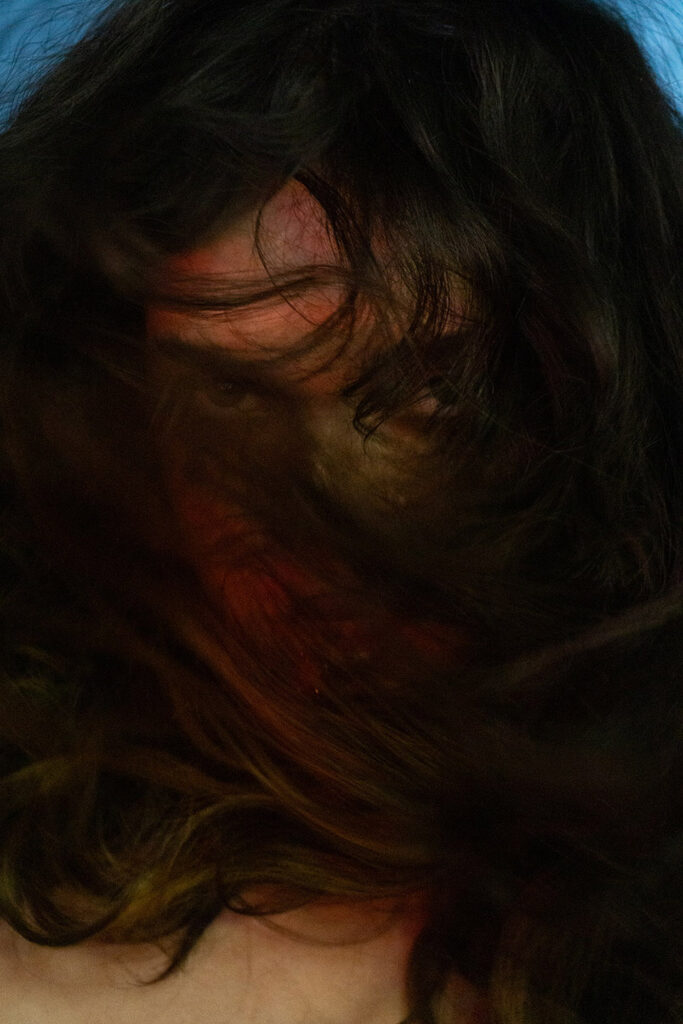
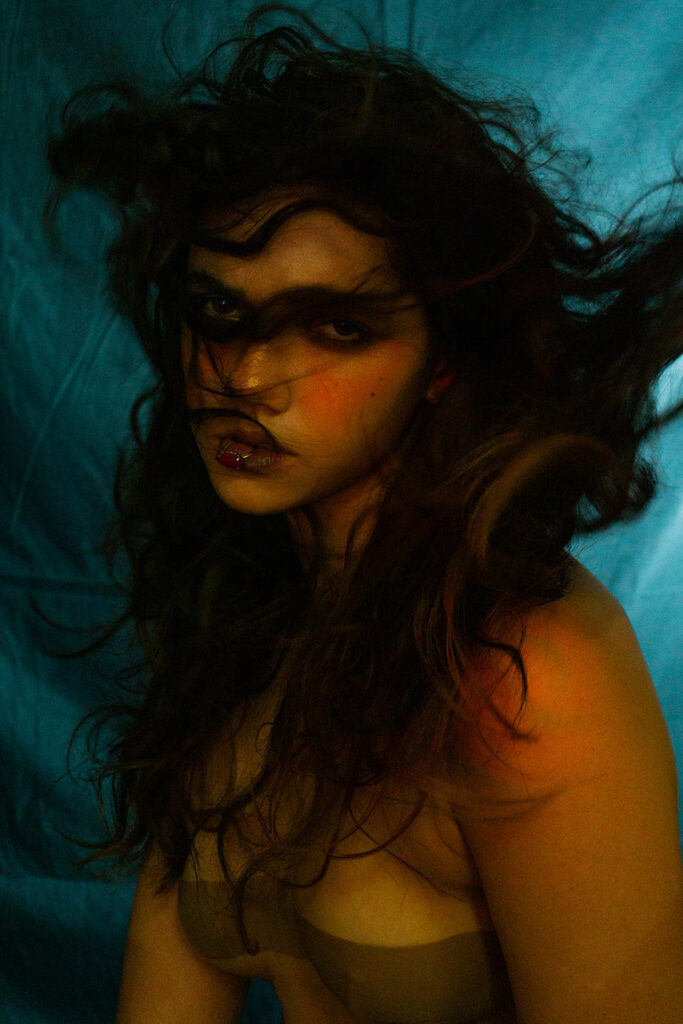
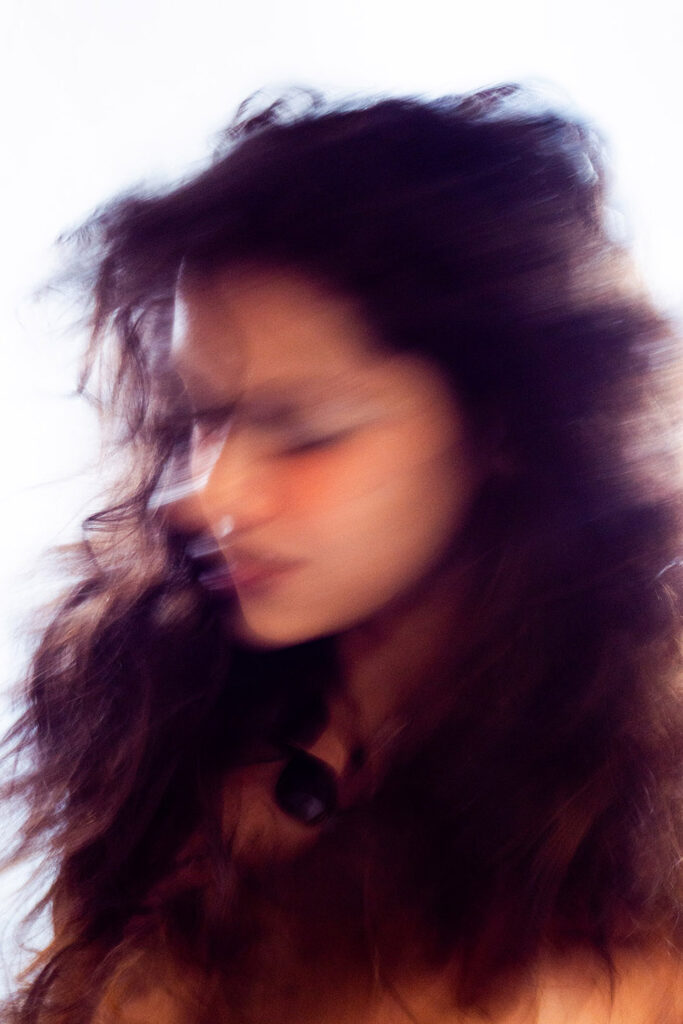
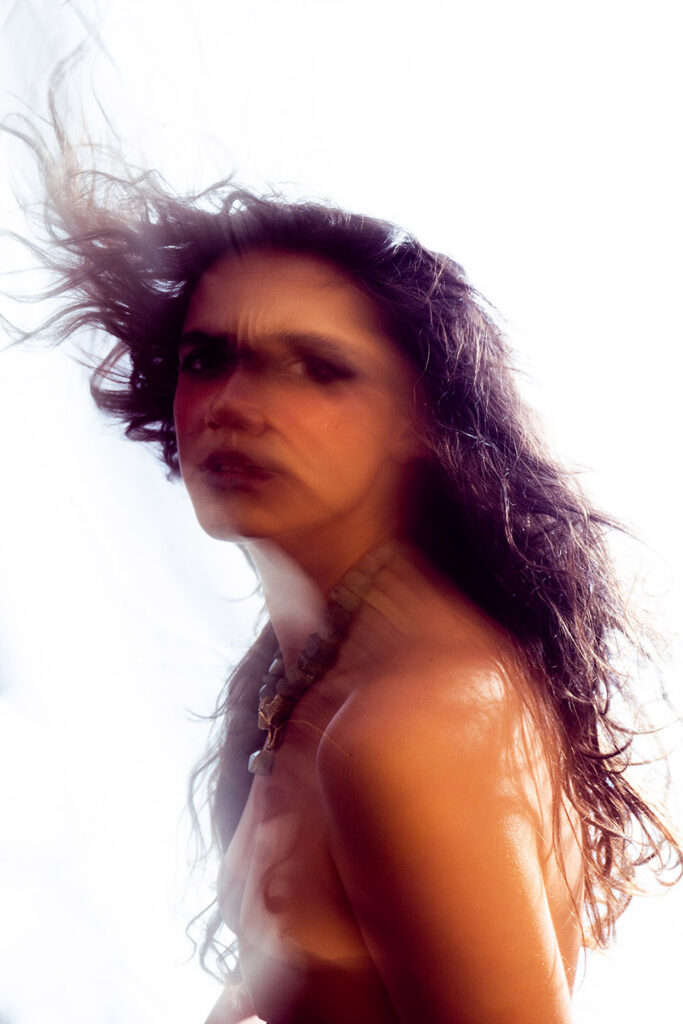
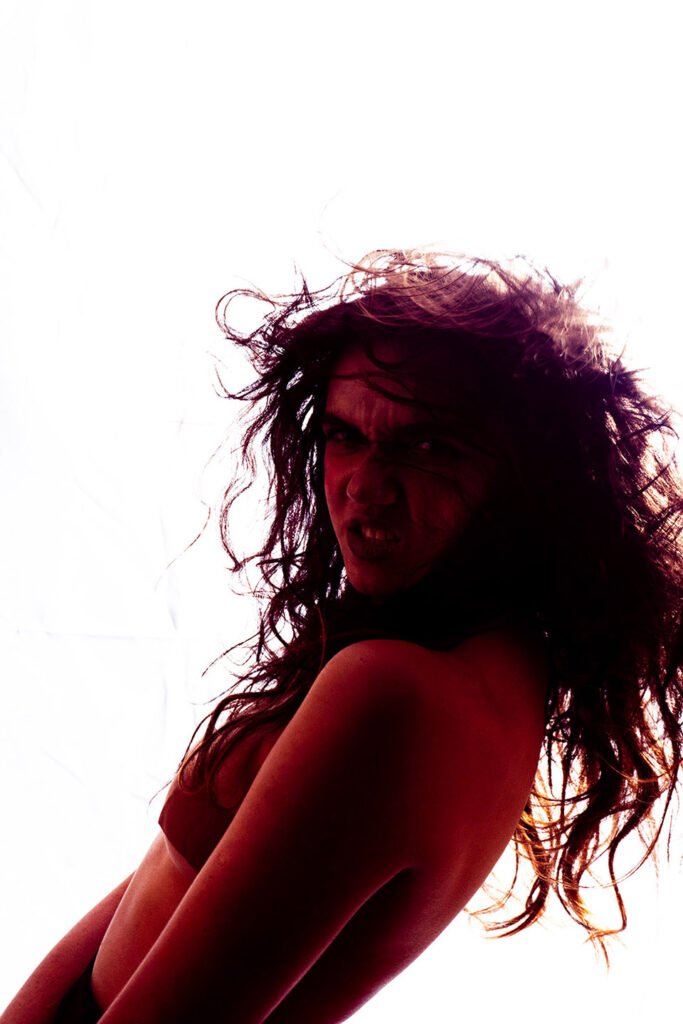
In this editorial, captured by Djenice and protagonized by Inga, we suggest a different kind of femininity: loud, rebellious, persistent, intense, and full of personality.
Above all, we stand by a clear message — pursue your dreams. Do not restrain them, do not archive them; use them as fuel for everything you do, and work as much as you need to in order to conquer them.
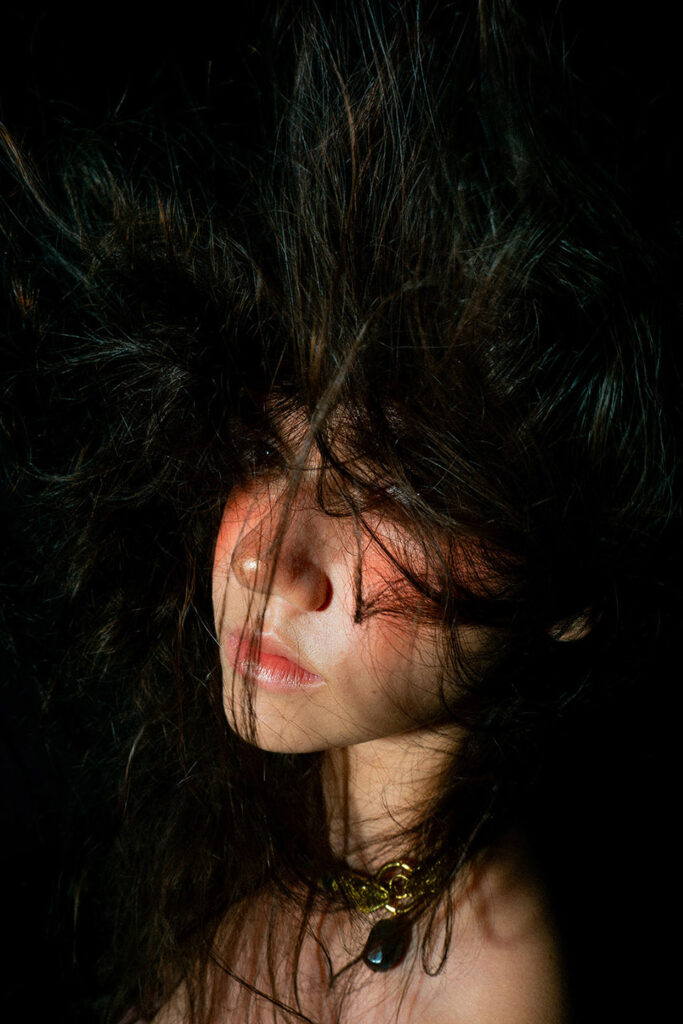
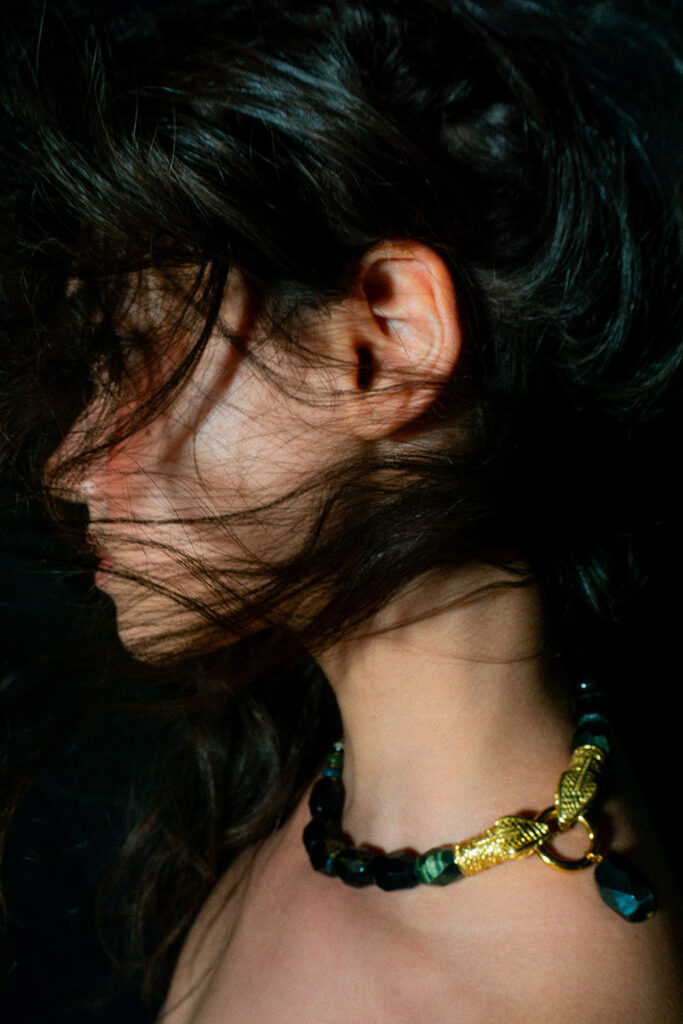
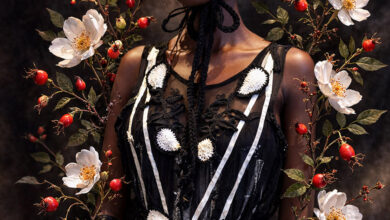
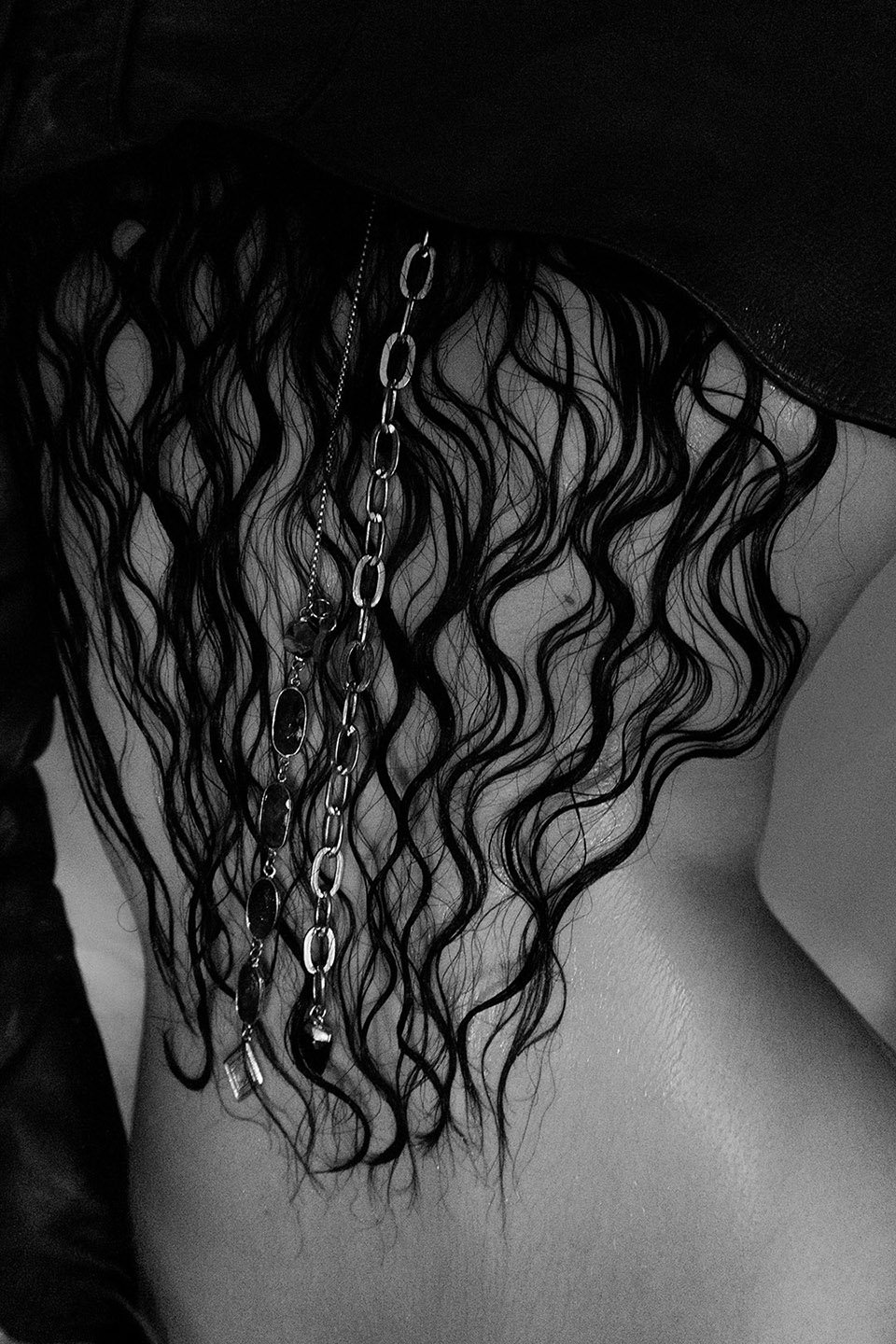
INÊS MANZANI Scarlat Olho de Falcão necklace. The snake heads symbolize wisdom, transformation, and feminine power, while the Olhos de Falcão stone represents protection, mental clarity, and emotional balance.
ZOOT: You grew up in Portugal, between the water and the world of fashion. Tell us a bit about where you come from, what you studied, and how you found yourself between two disciplines — swimming and modeling — that both rely on rhythm, endurance, and presence. How did your journey begin, and how do these two passions shape each other?
INGA: I was born in Portugal, and when I was 6 years old, I went to live in Angola until I was 15.
I have always done swimming my whole life. I started participating in swimming competitions from a young age and haven’t stopped since.
I studied arts in high school, and at the moment I am studying audiovisual and multimedia. I participate in several groups in my university (photography, an RTP2 program, radio, ESCS Magazine, BLA, a junior company) that help me explore different work areas, and I am part of acting and modeling agencies, like Face.
Growing up in an environment where I do everything and more made me realize that having good organization is the basis of everything, because without it, I wouldn’t know how to manage myself, especially with the time I have to do what I do. Swimming and being a model require dedication, and I believe that the fact that I still swim today highlights that I don’t give up on things easily, which I consider a great quality.

ZOOT: Swimming teaches surrender, rhythm and silence, while fashion demands visibility presence, and gaze. How do you navigate those two energies — the discipline of the athlete and the vulnerability of the model?
INGA: Both things require professionalism, and for everything I do I kind of have a “personality” to approach each part of my life. It does not mean a mask, but for example, when I am in a calmer environment with my friends, I behave differently than when I am modeling, for instance. Swimming, being something I love to do, brings me calm and also serves as an escape from my problems. Whenever I swim, my problems mostly fade away, and the same happens when I do everything I enjoy, such as modeling. I love what I do and always aim to achieve the best of myself, and I feel that when you do something you really enjoy, you somehow forget the vulnerability you are exposed to during what you do.
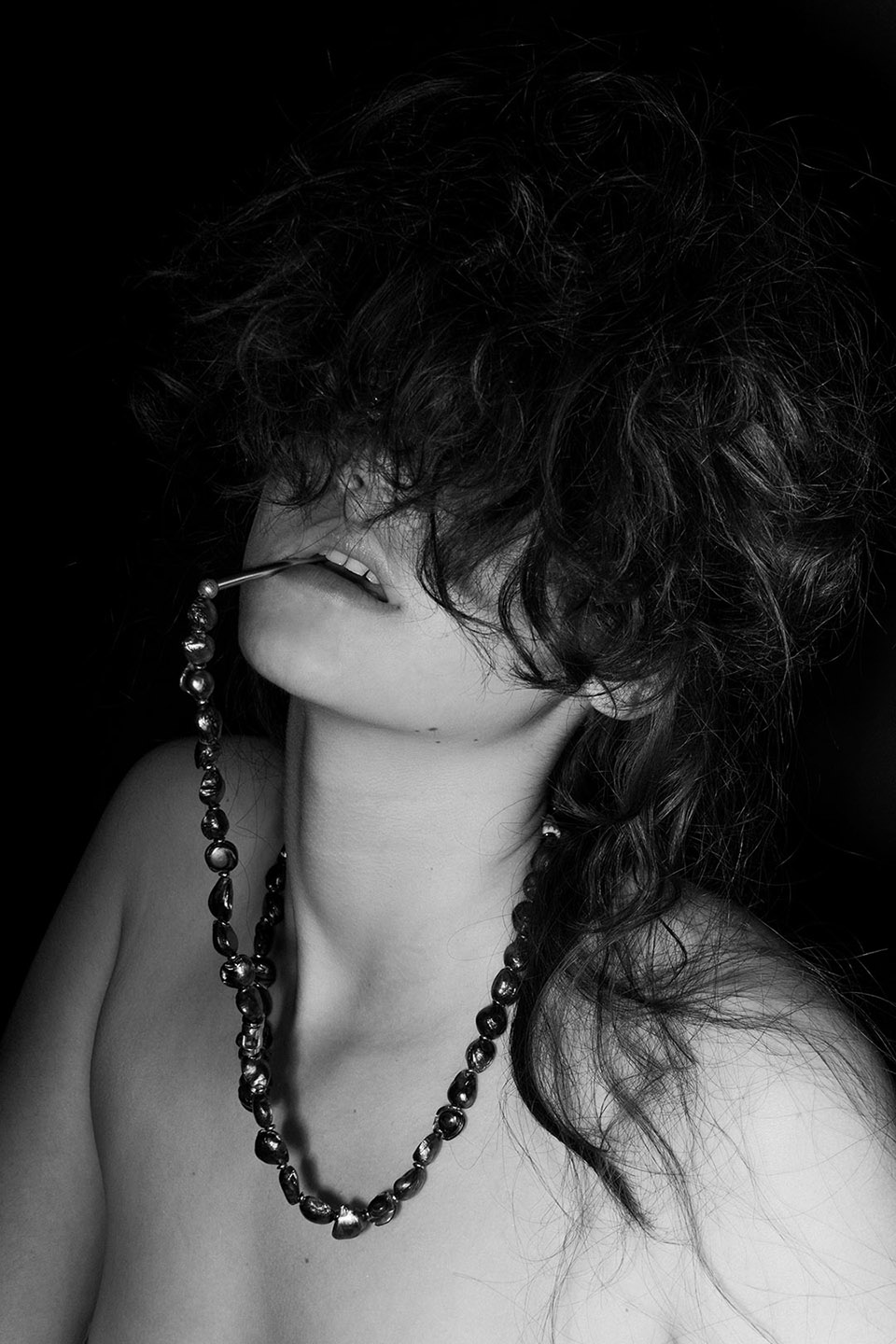
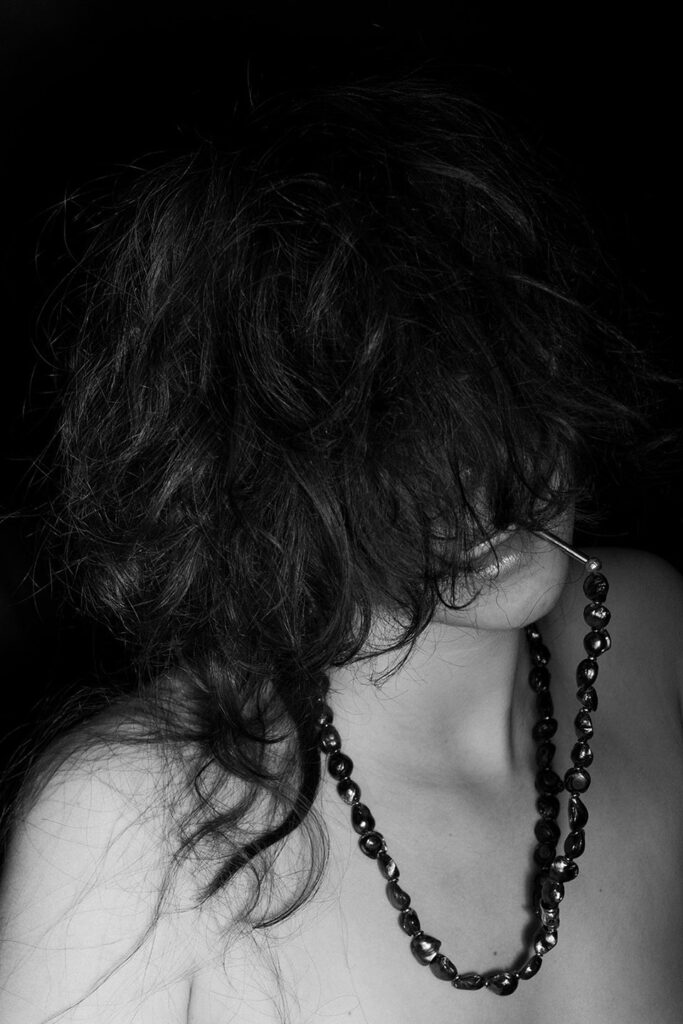
ZOOT: The world interprets our body even when we’re not trying to say anything. When and how did you first realize your body could be political — that it could speak a language others might read before you even spoke?
INGA: Since I was little, I have always stood out from the rest of my class for being the tallest and thinnest girl (thin and tall sometimes seemed a bit skeletal). This makes the opinions of others, whether we like it or not, already formed about us, because there’s no denying it: the eyes see the physical appearance first and only then the personality. Even if one thing doesn’t influence the other, there will always be one that stands out first. I have always loved my body, and the fact that I am tall and have the measurements I have made me realize that I could be a model, as I had always imagined.
ZOOT: Which rule about femininity are you unlearning right now?
INGA: I am unlearning that femininity has to be soft, trouble-free, self-sacrificing, and always accommodating. That mask has always existed, but within me, femininity has been seen as something tough, persistent, and defined by each person without the pressure to apologise. It is more than time for women to stop being seen as incredibly sensitive objects whose only function is to look beautiful.

ZOOT: What does “freedom” feel like in a woman’s skin today?
INGA: For me, freedom in the skin of a woman means both having the right to do things like vote, work, or donate blood, as well as being seen as an individual person without being in the shadow of her partner. And, of course, as it could not be otherwise, there are still countless cases where freedom doesn’t even seem to be an option in the lives of many women, as sad as that may be.

ZOOT: What would you tell the girl you were at 12 — the one who first dreamed of something beyond the small circle of home?
INGA: The 12-year-old Inga always dreamed of being a supermodel, so making her proud by doing what I do is always an achievement. It’s always amazing to see something we aspire to become a reality, and to know that it depends on our effort and dedication. It’s a pride that can’t be contained, seeing that my dream is becoming more and more vivid.
ZOOT: If you could send one message to a girl in 2035, what would you promise her?
INGA: I would send a message promising that my commitment and dedication would continue to be a part of who I am, and I would give a piece of advice: keep working on your dreams, because a dream without any work to make it happen is just a dream. If I hadn’t kept pursuing what I truly wanted, going through all the agencies, castings, and “no’s,” I would never have gotten where I am, and for that I am grateful to everyone who made it possible — and to myself, of course, hahaha.

ZOOT: What do you wish men asked — and actually listened to — about women’s lives?
INGA: I wish they would understand, or at least try to understand our problems without minimizing them. I wish they would ask us, and really listen, what it’s like to live in a body that is constantly watched, judged, and sometimes feared, and that they would ask what we need to feel safe, respected, and taken seriously, and not seen as objects that exist to satisfy them.
ZOOT: What would you ask men to practice?
INGA: Listening, understanding without defending themselves when they are clearly wrong, taking emotional responsibility and making amends for the impact of their actions, not just acknowledging intentions, and above all, practicing consistent empathy, even when it’s uncomfortable.
ZOOT: In times of conflict, even far from the frontlines, war leaves invisible marks. What scars do you think war has left on your generation?
INGA: War never brings easy times, and of course this has an impact on both present and future generations. I believe that, above all, the fear of having strong and correct opinions and wanting to be heard — yet being completely silenced by someone who sees nothing beyond their own arrogance — is a scar that will remain for future generations, as well as the constant worry of being attacked for expressing their opinions. Emotional exhaustion is also heightened by this normalized violence, as is a quiet loss of hope that things will improve for some.
ZOOT: What does peace look like to you — not as an idea, but as something you can touch or feel?
INGA: Peace, for me, is like a blank sheet of paper, with no problems to solve and no scribbles to distract our mind. It’s like a day well spent with our friends where our only concern is trying not to laugh at another joke because otherwise we burst with joy. It reminds me of breathing without hurry and a silence that doesn’t scare, where we can fall asleep without being on alert for an earthquake — peace.


ZOOT: What do you think feels louder in Portugal today — progress or backlash? And what do you think we risk losing if we stop listening and acting?
INGA: Today in Portugal, I feel that progress and reaction coexist, but the reaction has undoubtedly made more noise, taking up space with fear, nostalgia, and dangerous simplifications. The issue is, if we stop listening and acting, we risk losing rights gained through decades of struggle, as well as the trust and ability to imagine a fairer country, instead of just defending what already exists. Silence, at this moment, would be a form of abdication.
ZOOT: What in Portugal feels newly possible for women, artists, and young people?
INGA: Speaking more clearly about inequalities and limits, creating something outside the rules without the fear of failing or not feeling validated. I feel there is always a space ready to welcome those who do not follow the rules when it comes to art, and it is definitely a good thing to appreciate.



ZOOT: Climate change is something you’ve grown up with as a constant shadow. What small act or everyday habit would you trade to gift the planet one quiet, healthier year?
INGA: The urgency to do things quickly, to discard “waste” quickly. I love reusing materials, and I feel that if everyone did it, there might be a change — as well as stopping constant consumerism (for some people).
ZOOT: When you think about your body — moving through water, through fashion, through time — what do you want it to say to the world?
INGA: There will always be people who may not approve of my body, but to me, that means absolutely nothing, because the body isn’t theirs and I know my worth. I would like to tell people not to stop doing what makes you happy out of fear of disapproval, validation, or contempt from others. Move as I move, between the fluidity of water, the elegance and professionalism of fashion, and the freedom of passing time.

Thank you Inga!
To boot…
Inês Manzon, jewellery designer
@inesmanzoni_atelier | www.inesmanzoni.com
We spoke with Portuguese jewellery designer Inês Manzoni, whose pieces feature in this photoshoot, to explore how she approaches design and storytelling in each creation.
ZOOT: Can you tell us about your creative process: from the first idea to a finished piece?
Inês: My creative process always begins with the search for materials. Whether I’m travelling or in Lisbon, I’m constantly drawn to stones and elements that captivate me, sometimes for their shape, sometimes for their colour, and often for the energy they carry.
When a piece resonates with me, I start composing combinations, almost like a quiet dialogue between materials. I experiment until I find a harmony that feels both balanced and slightly rebellious, even when I’m working with classic elements like pearls, natural stones, or Leather.
From there, the piece evolves naturally. I refine proportions, test how it moves and feels on the body, and only consider it finished when it reflects the duality I seek: elegance with character, delicacy with strength. Each creation is a small story made tangible, shaped intuitively from the very first spark to the final touch.
ZOOT: You say that each piece is a way of materializing your lightness, strength, and authenticity. How do your personal experiences and inspirations shape the jewellery you create?
Inês: My work is shaped by a constant inner duality, the feminine and the masculine, the urge to feel and the need to act. Throughout my life, I was often pushed into action when, deep down, I longed simply to feel.
In my work, these forces finally meet in balance. The creative process grounds me, brings me back to the earth and gives me stability. It is where sensitivity finds space to emerge.
I’m deeply inspired by ancient civilizations, especially the Egyptian and Greek. Their symbolic language, their elegance, and the power of their forms resonate with me. I carry that classical, timeless essence into my pieces, allowing each one to hold meaning and a sense of ancestral strength.
In the end, every creation becomes a bridge between who I am and what I wish to express: confidence, connection, elegance, and the enduring force of the feminine.
ZOOT: Growing up in a family connected to one of Portugal’s oldest jewellery houses, Casa Batalha, what traditions or lessons from that legacy influence your own work today?
Inês: Growing up in a family connected to Casa Batalha the Portugal’s oldest Fashion jewelry house, shaped what I do today. Since childhood, I watched my grandmother, my mother and my aunts working on necklaces, always surrounded by pearls, stones and stories. Those moments were more than craft, they were family, connection and a beautiful legacy passed from one generation of women to the next.
That heritage still guides me. It taught me to value detail, patience and the meaning behind each piece. In my atelier and in the leather bags I design, I try to honour that feminine lineage, creating with purpose, intuition and heart.
ZOOT: Many of your pieces feature stones with emotional and energetic symbolism. What do you hope people feel or experience when wearing your jewellery?
Inês: I love the idea that, when someone wears them, they feel a quiet boost of confidence, almost like reconnecting with who they truly are. Many of my creations include stones with their own symbolism, but what I really hope is that each piece becomes a little emotional reminder: something that brings back a happy moment, a special phase, a good feeling. In the end, I want people to feel that they’re not just putting on an accessory, but something meaningful that carries their energy throughout the day.