Ashwin Gane: Between music, film and storytelling
Moving fluidly between music, film, and visual storytelling, Ashwin Gane approaches creativity as world-building — constructing atmosphere, character, and narrative across disciplines. With his latest release, Flip Dat, he takes a decisive step forward, pairing the track with his directorial debut and expanding his cinematic language beyond sound.
Featured artist Ashwin Gane
Photography Sandro Hyams
Styling Christopher Campbell
And Steve Vyse
Assisted by Kay Ferguson
Hair Timothy Furssedonn using L’Oréal Professionnel Paris
Makeup Jo Sugar using Heris Huta and Nars
Special Thanks
Bradleyl Taylor • Big Machine Agency
Interview and words Daniela Abranches
A first-generation Indian-American born and raised in Detroit, Ashwin Gane is a multidisciplinary artist focused on building worlds. In this interview, he reflects on heightened perception, being a savant, fashion, and the importance of depth in an era shaped by algorithms.
Gane wears many hats, but each serves the same vision. A producer, artist, director, and storyteller, his work unfolds as part of a wider universe where music and image are inseparable. Flip Dat marks a new chapter — a stylised whodunit blending humour, precision, and cinematic reference, revealing his growing interest in structure and narrative as much as sound.
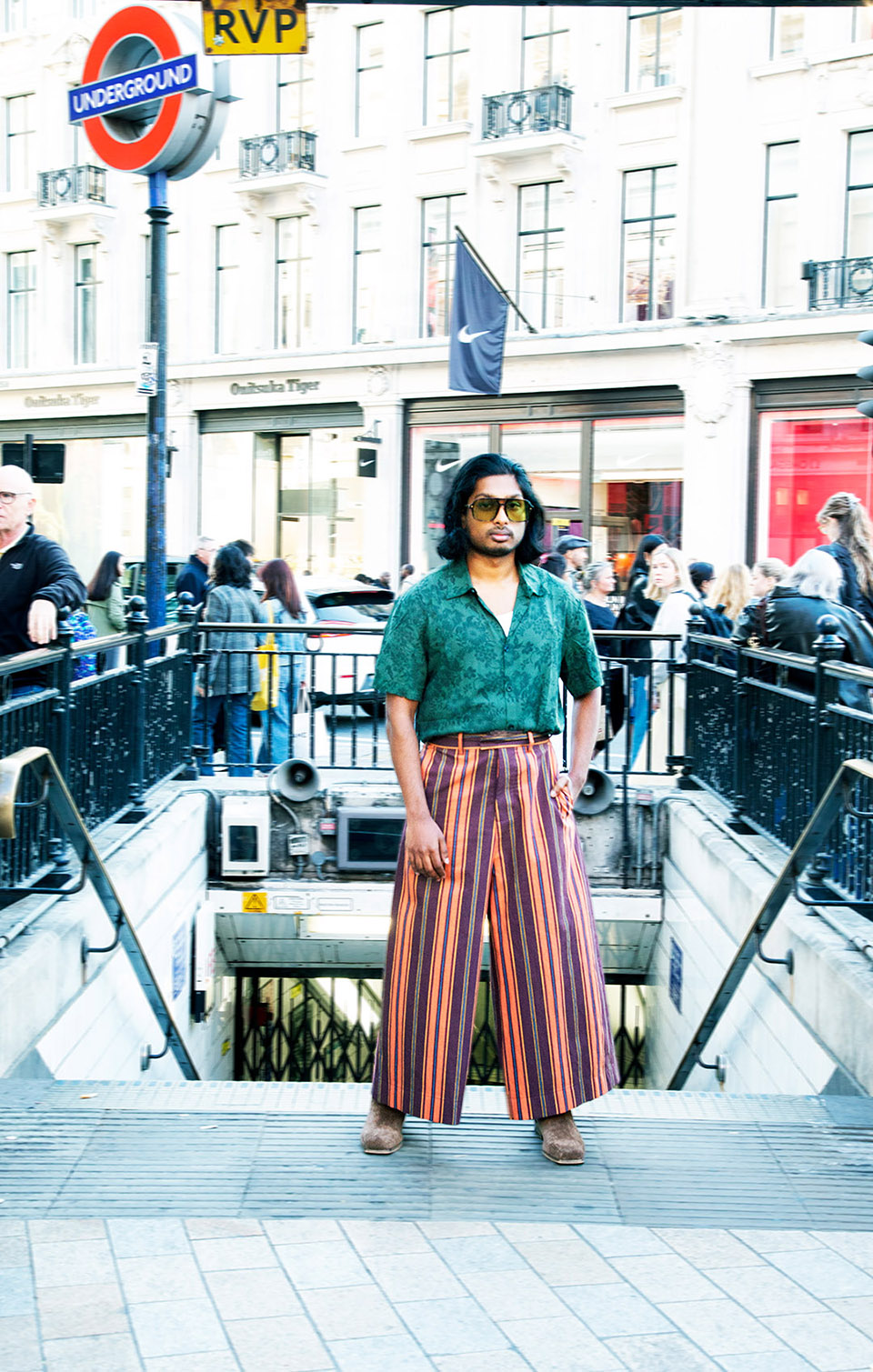
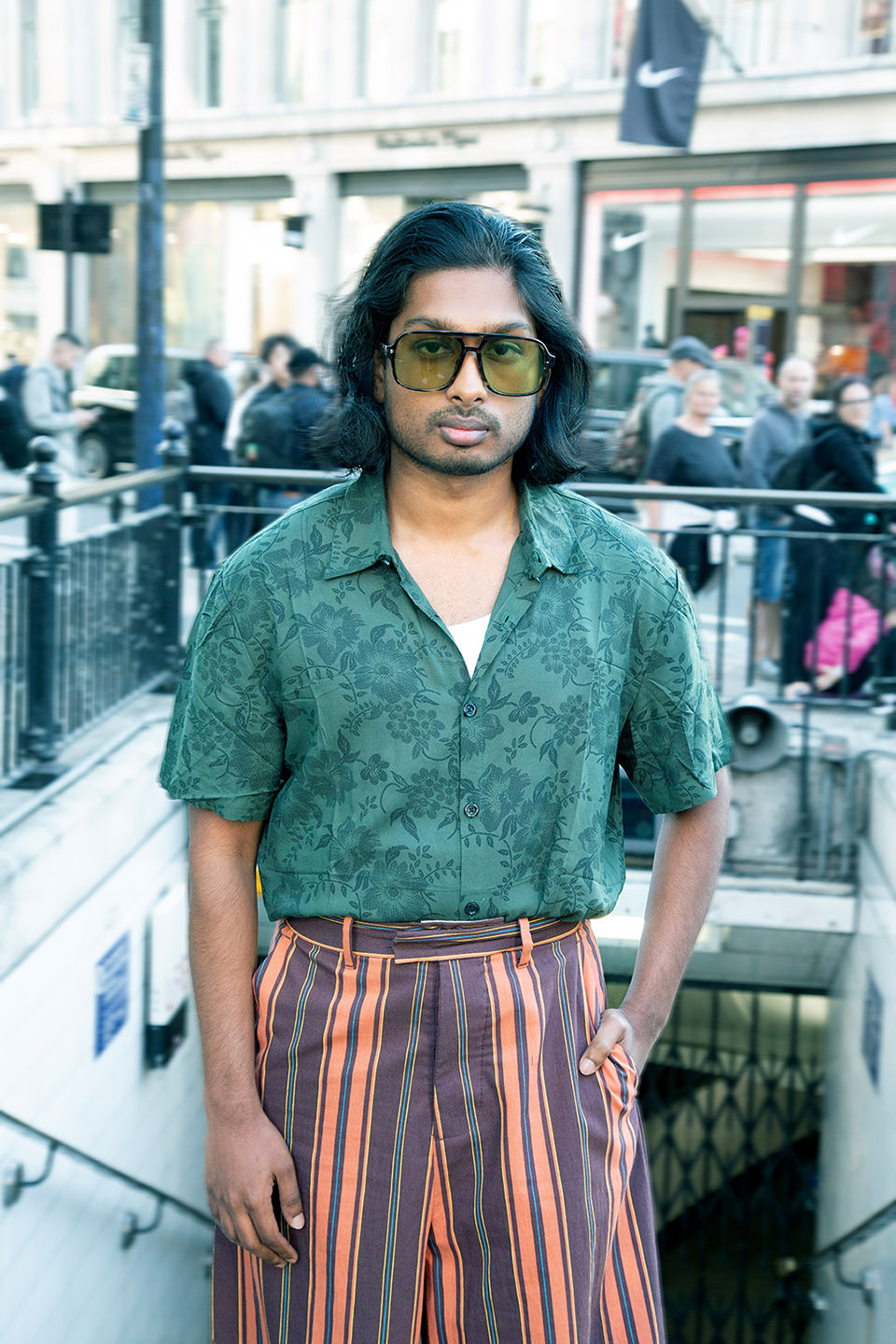
At a time when culture often favours speed over substance, Gane is focused on longevity — creating work designed to endure rather than peak and vanish. ZOOT met him for a portrait in the centre of London to discuss world-building, discipline, and the value of depth in an age of quick hits.
ZOOT: For those who might not know you, can you please introduce yourself to our readers?
Ashwin Gane: If you don’t know who I am, my name is Ashwin Gane. I was born in Dearborn and I’ve been a proud Michigander my whole life. I do a lot of things — I’m a record producer, recording artist, and vocal producer, really a one-stop shop. I’m also a director and a storyteller. But if I had to summarize it, I’m a multidisciplinary artist who likes to create worlds.
I use music and film and focus on the intersections between them, trying to build something that feels greater than the sum of its parts. You can see the first steps toward this new direction in my most recent video, Flip Dat, which also marked my directorial debut. I’d describe it as an Agatha Christie–style whodunit with Wes Anderson inspired cinematography, and it’s really just a preview of what’s to come.
ZOOT: How does wearing all those hats shape your creative discipline?
Ashwin Gane: I wear a lot of hats — producer, recording artist, storyteller, director — and I do that intentionally. All of those roles intertwine. When I learn something in one discipline, it immediately informs the others. To me, all art is connected. At its core, it’s the same process: you’re creating something from nothing, just using different tools.
Because I understand multiple fields, I know when to step back and take a breath. That perspective helps me manage the creative process without getting overwhelmed. And it also helps when working with other people — if you understand every part of the machine, you know how to communicate what you want and how to guide a team effectively. Everything moves hand in hand.
ZOOT: What was your life like growing up in Detroit, and what parts of that past still shape the way you create, think, or move in the world today?
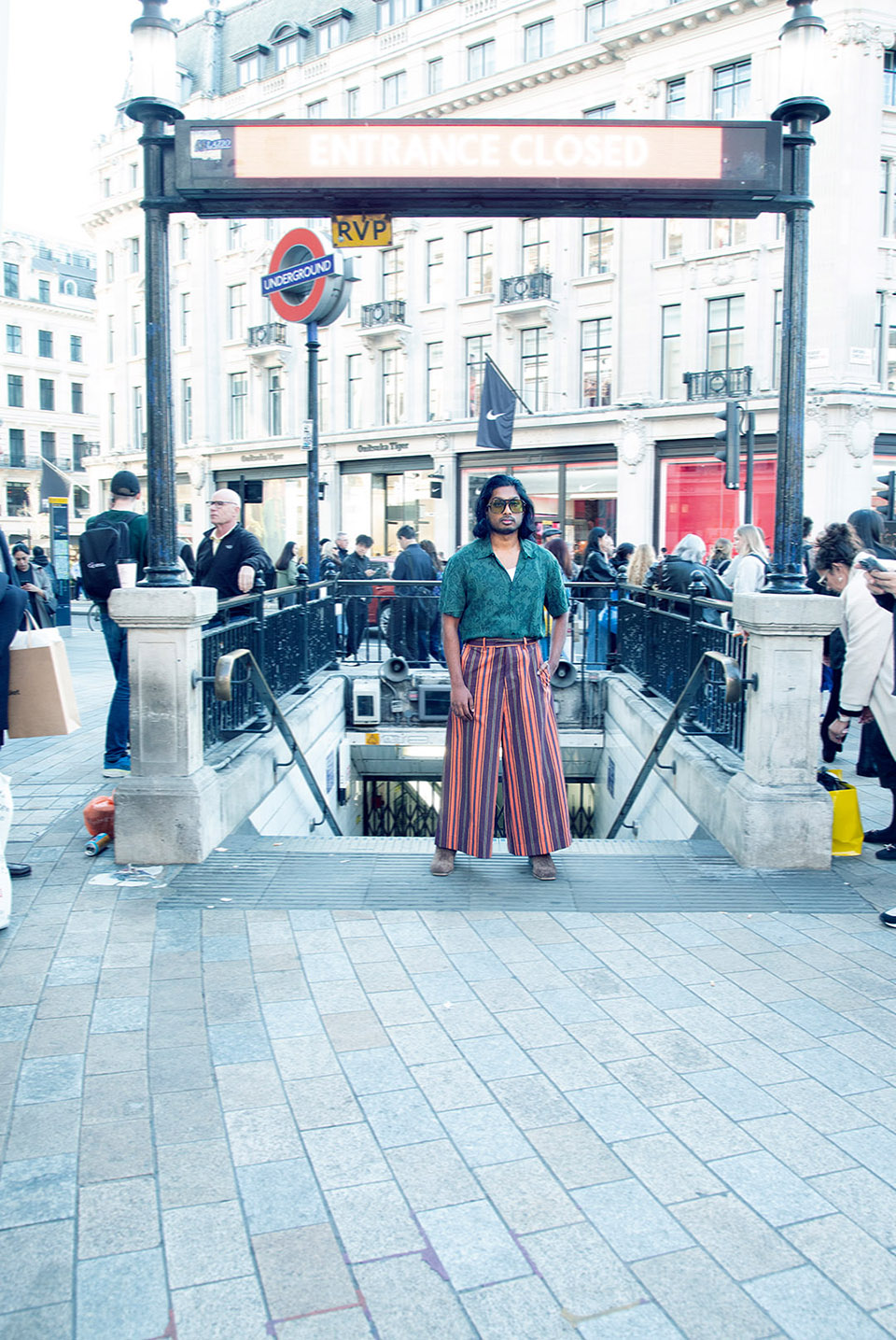
Ashwin Gane: People hear Detroit and immediately think 8 Mile. That wasn’t my experience. I grew up in Metro Detroit, in the suburbs — Farmington Hills. It was peaceful, stable, and honestly, not very exciting. And because of that, I spent a lot of time creating worlds in my head to entertain myself.
That habit never left. In a way, everything I’m doing now is me returning to that inner child — but with the skills, discipline, and perspective I’ve developed as an adult. I’m taking what once lived purely in imagination and giving it structure, sound, and visuals. That’s how growing up here still shapes how I move: I don’t wait for the world to stimulate me — I build one.
ZOOT: Detroit has produced giants like Eminem, Big Sean, and Babyface Ray. Do you feel a sense of artistic lineage?
Ashwin Gane: I’d say yes and no. I don’t feel like I sit directly in that lineage sonically — my music is more melodic and cinematic, so it naturally lives in a different lane. But where I do feel a connection, especially with Eminem, is in the use of storytelling and character. The way he created personas and worlds around his music definitely opened a door. In that sense, I see a parallel with what I’m doing now through characters like Inspector Gane and the larger worlds I’m building.
So it’s not a direct lineage in terms of sound, but I do feel part of a broader tradition of Midwestern artists who are often underestimated and end up carving their own path. Detroit — and the Midwest in general — produces a lot of quiet innovators, and I’m proud to be part of that.
ZOOT: You make music “for the ones who see too much.” What does “seeing too much” mean to you?
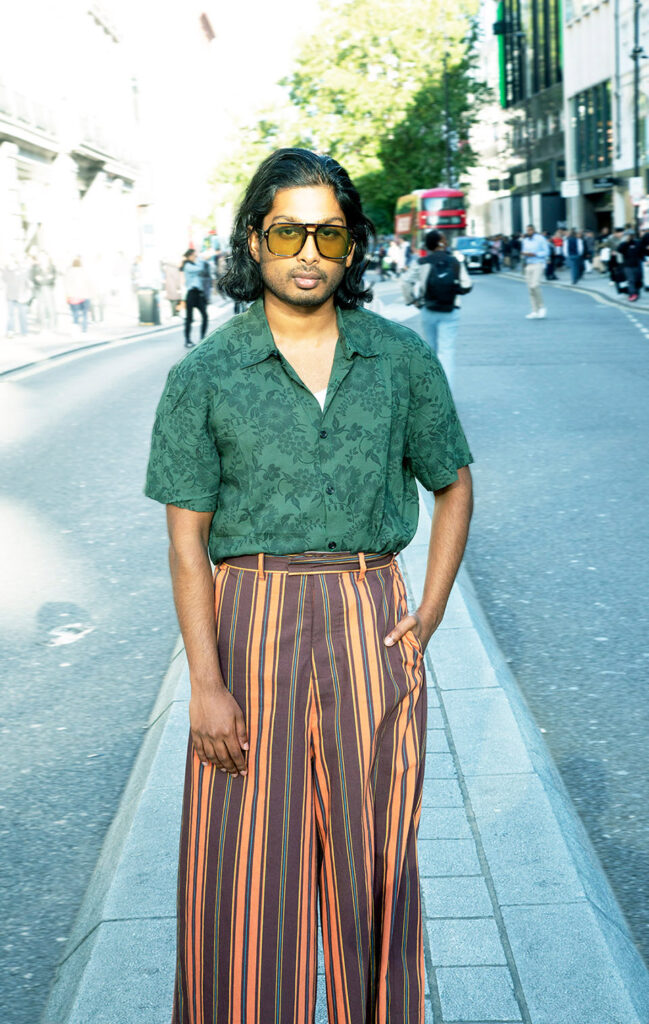
Ashwin Gane: “Seeing too much” means being deeply aware — not just of what’s good, but of the flaws, the contradictions, and the things people prefer to ignore. It’s the ability to see both sides at once: the beauty and the ugliness, the surface and what’s underneath. That awareness can apply to emotions, relationships, or even socio-political realities. Once you see those hidden truths, you can’t unsee them.
ZOOT: You describe your music as a fusion of orchestral tension, trap grit, and storytelling. What role does contrast play in your songs?
Ashwin Gane: Contrast is everything. Life is contrast — elegance and violence, wisdom and impulse, beauty and decay. My music thrives where those tensions collide. The orchestration gives you scale and emotion, the trap elements give you teeth, and the storytelling binds them into something that feels mythic and grounded at the same time.
ZOOT: You’ve also described your sound as “cinematic.” When you start a new track, do you begin with a visual scene in your mind, or does the music create the imagery as you go?
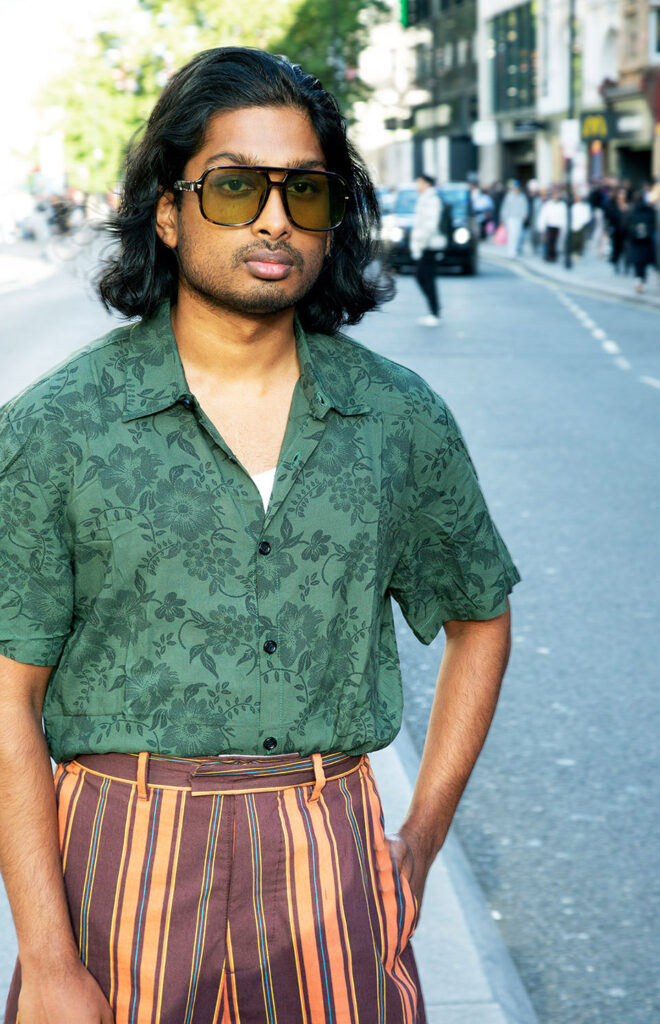
Ashwin Gane: It’s really a case-by-case basis. If I’m making R&B playlist music, I don’t always start with a scene — I already know the lane I’m in, so I’m focused on creating the song itself. Even with non-R&B records, a lot of times I’ll be working on the music, and it starts generating imagery on its own. For example, when I started the beat for Flip Dat, I knew I wanted a slightly Spanish feel, and that immediately brought a Don Juan-type character to mind. That’s how I used to work — the music created the imagery.
Now, when I’m working on projects rooted in world-building, I approach it the opposite way. I use a more top-down process rather than a bottom-up one. I start with the scene, the character, the world — and then I make the music to match that vision. That shift is newer, and it’s a whole lane we haven’t fully stepped into yet. The world I’m building now dictates my creative choices, not just the sound. You’ll start to get a real preview of that direction in 2026.
ZOOT: You recently released “Flip Dat.” What story or emotion did you want to capture?
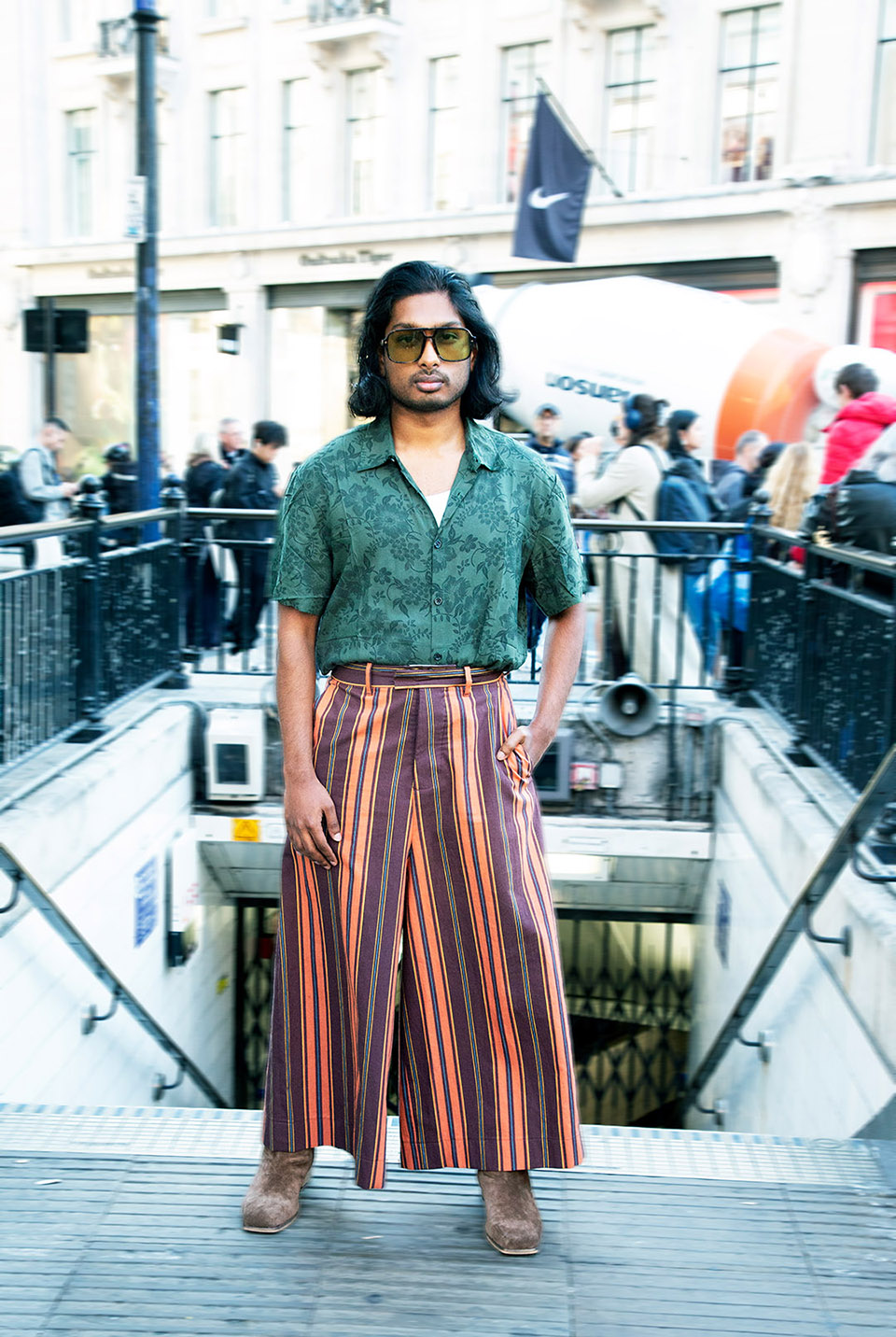
Ashwin Gane: There are actually several stories and emotions happening at once. On the song level, it’s pretty straightforward. The record itself is sarcastic, a little dark, a little humorous. There’s bravado, it’s a bit crass, even a little seductive. It’s very confident. That part is simple — it’s this modern Don Juan–type figure who just runs around “flipping that,” so to speak.
But once you get to the video, another layer gets added. You’re not really supposed to take the story of the song and apply it directly to me, because there’s an obvious mismatch. That’s where the video comes in.
With the video, there’s both a literal plot and a kind of meta-commentary. The literal plot is this ridiculous whodunit concept — something that’s usually reserved for a murder mystery — but instead, it’s applied to figuring out who the “flipper” is. And by flipper, I mean this person who goes around stealing the hearts of women from their partners. It’s obviously absurd.
That’s where the satire and deadpan humor come in. We’re poking fun at the whole thing. It’s meant to be silly, but it works because it’s played completely straight. That’s really the tone of the video — it’s a fun ride, but the humor comes from treating something preposterous with total seriousness.
There’s also some meta-textual commentary about my own career in there as well. It’s performative — hence the playhouse — and it reflects that idea of characters, roles, and presentation. That’s really the story and the emotion behind it.
ZOOT: You seem to be really interested in directing videos. How did you come up with the concept for “Flip Dat” video, and do you want to direct more in the future?
Ashwin Gane: It really stemmed from a few things. First, the song itself isn’t autobiographical, but a lot of people expect recording artists to always be telling their own story. I wasn’t doing that here — I was making a song that reflected the character of the music. Sonically, it felt like this Don Juan–type figure.
That naturally raised a question: if I’m not the flipper, then who is? Once that question came up, the idea of a mystery clicked. Who is flipping that? Who’s the flipper? From there, it made sense to treat it like a whodunit.
I also wanted to create a role that fit my natural demeanor. The cerebral detective — someone in the vein of Hercule Poirot or Sherlock Holmes — felt right for me. Agatha Christie was an obvious influence because of her whodunit mysteries. And Wes Anderson fit in because of his deadpan, satirical humor, which was already present in the song.
That’s why I leaned into Wes Anderson–style cinematography — to make it clear that this is performative, a little silly, and over-the-top, but played completely straight. The playhouse location helped reinforce that as well. It’s obviously not reality, and that’s intentional.
Once I had the setting, I built a color palette around it, then created a cast of characters, and the whole thing evolved naturally. It honestly felt like uncovering something — like finding a fossil and slowly brushing the dirt away.
I’ve always wanted to direct, and with this project I kind of jumped into the deep end. Being involved at this level and seeing something that existed in my head come to life for the first time was huge for me. That’s why Flip Dat will always hold a special place for me. And honestly, this feels like maybe ten percent of what I can do. There’s a lot more coming.
ZOOT: How does your Indian heritage influence your music and the way you approach life?
Ashwin Gane: My heritage gave me an early respect for mythology, philosophy, and discipline. Indian culture has this deep relationship with epics, gods, moral ambiguity, and cosmic balance. That shows up in my writing — I’m drawn to timeless stories, archetypes, and metaphors about power and transformation. At the same time, being first-gen means I had to create my own blueprint. That duality fuels a lot of who I am.
ZOOT: You’re a savant. How does that shape the way you perceive sound, rhythm, or even silence
Ashwin Gane: My mind breaks things down fast — patterns, frequencies, emotional cues. Silence is as loud to me as sound; it’s information. That perception helps me build music very precisely, but it also means I have to create systems and discipline to keep it from becoming overwhelming. The structure lets the intuition breathe.
ZOOT: As someone whose mind is always absorbing and creating, how do you stay grounded?
Ashwin Gane: I stay grounded by taking a healthy amount of breaks — and by breaks, I mean time where I’m not chasing a deadline or working toward a specific goal. That’s important, because without that balance, burnout is inevitable.
At the same time, I’m always absorbing. If I stop absorbing altogether, I actually feel more burnt out. I need space to take things in and create freely. When everything is done under pressure or strictly for work, that’s when it becomes draining. So I make sure to allocate time for creativity that doesn’t feel like work — even if I’m still technically doing something productive. That freedom is what keeps me grounded.
ZOOT: You recently collaborated with Babyface Ray. How did that partnership come about, and what was the dynamic like?
Ashwin Gane: I actually knew Babyface Ray before he was the Babyface Ray people know today. I met him years ago when I was really just a beat maker — a producer figuring things out. So the collaboration was more a matter of timing than anything else. Eventually, it made sense for us to connect creatively and do something that felt right.
What surprised me most was the level of trust he put in me — not just as a producer, but as a vocal producer as well. That’s a high-level role; it’s the kind of trust you only give when you believe in someone’s vision. He really let me guide the process, and I appreciated that a lot. It felt like real, top-tier collaboration.
ZOOT: Was there anything unexpected you learned from that collaboration?
Ashwin Gane: What surprised me was realising how far my role had expanded, and that became clear in the studio. The trust Babyface Ray showed — not just in my production and vocal engineering, but in my overall judgment — made it clear that I was operating as the creative director. I was curating the record, shaping the vocals, and making high-level creative decisions. That feedback showed me how far I’d come.
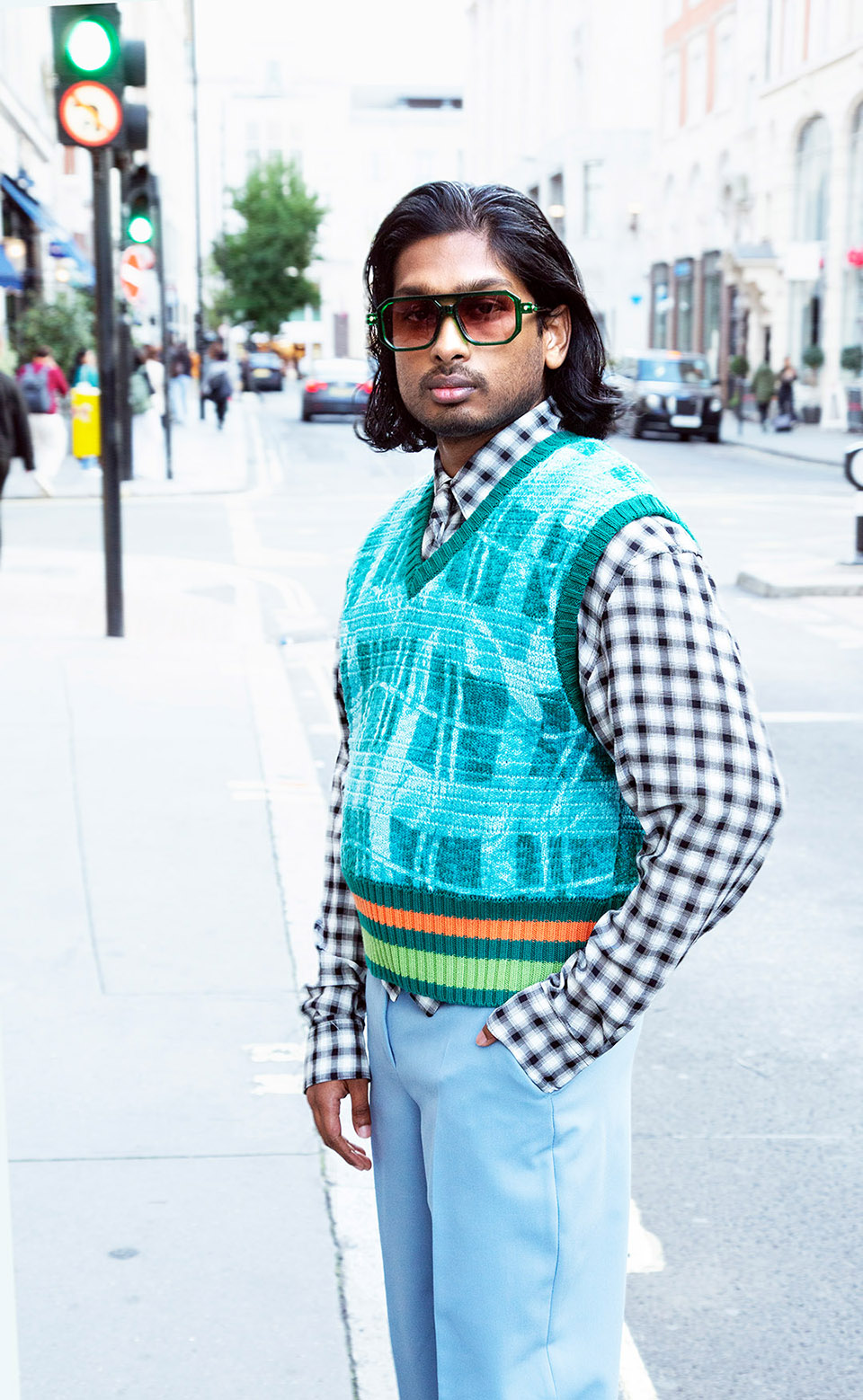
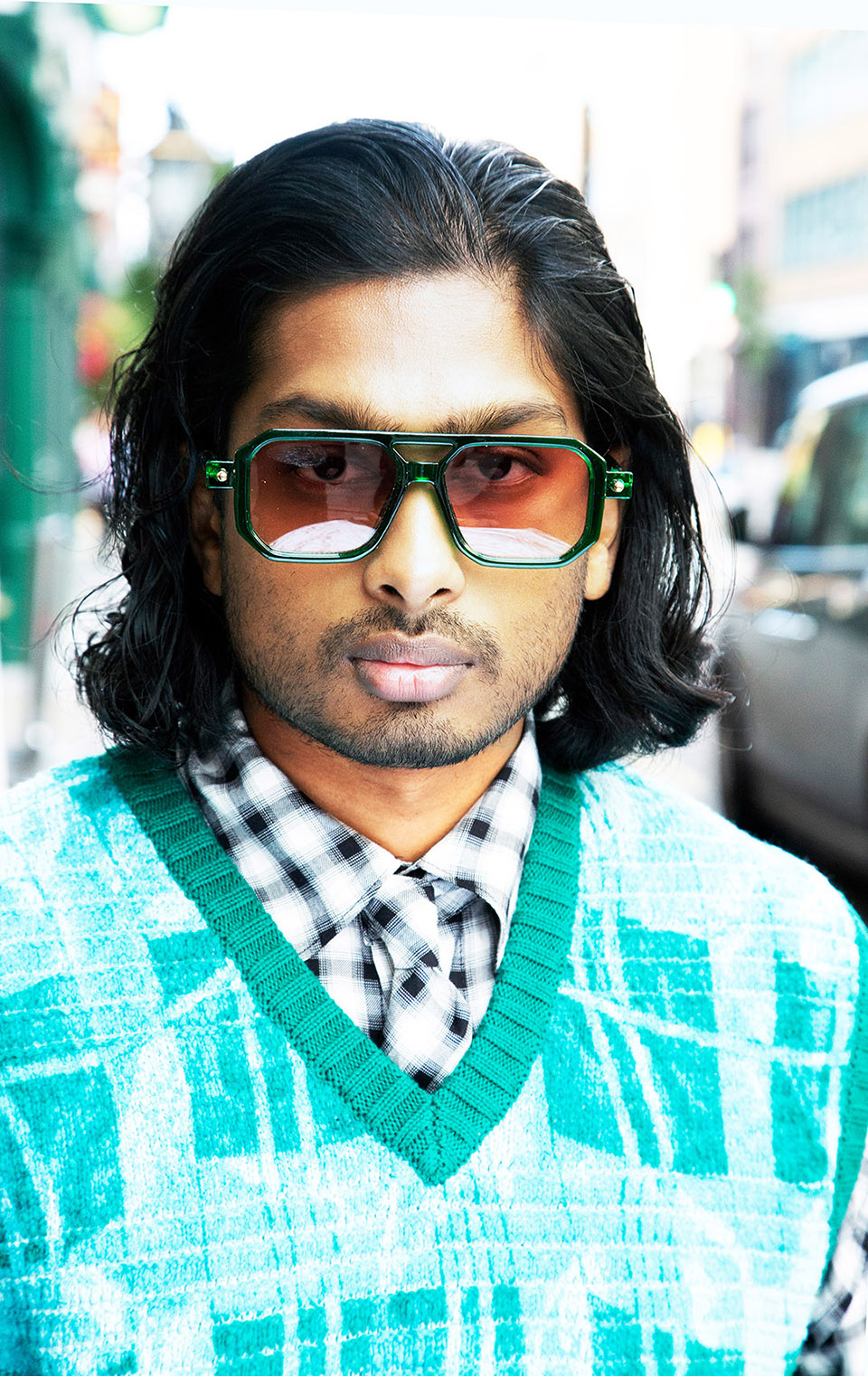
ZOOT: You’ve attended both New York and London Fashion Weeks. What does fashion give you artistically that music doesn’t?
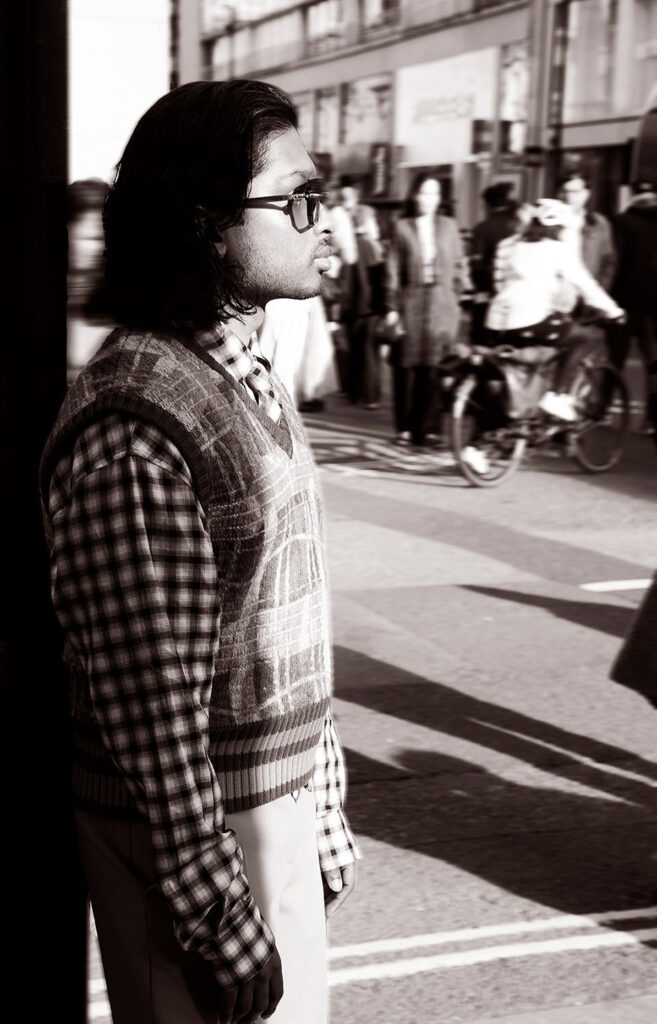
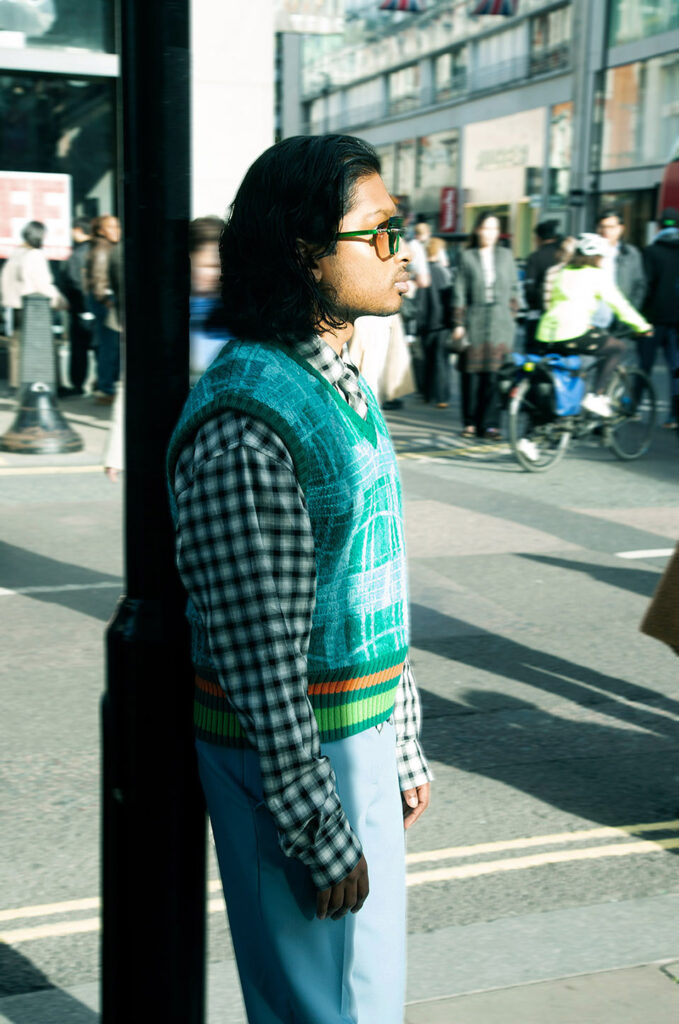
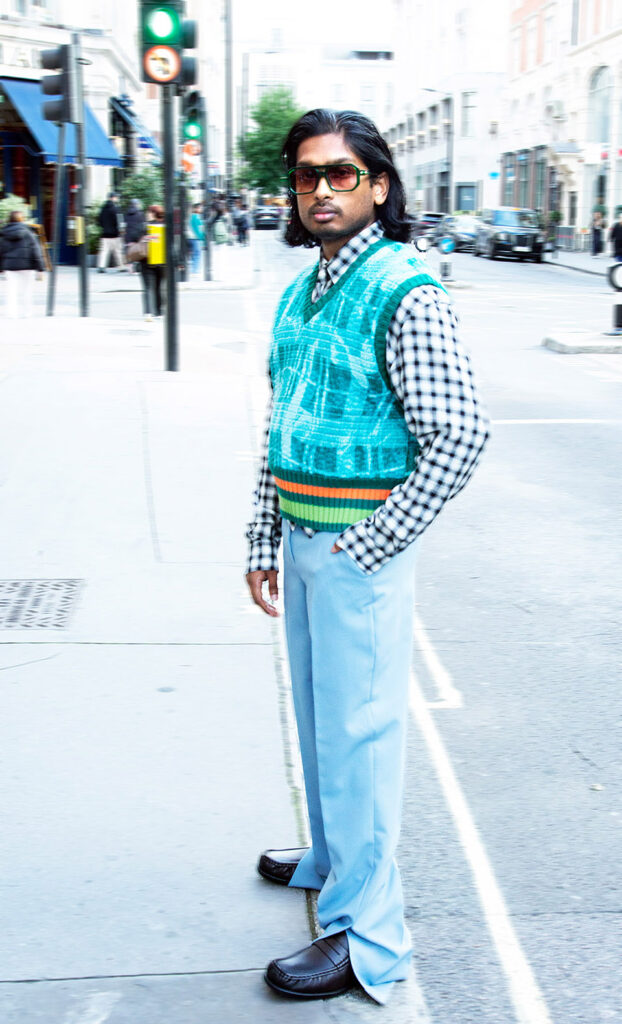
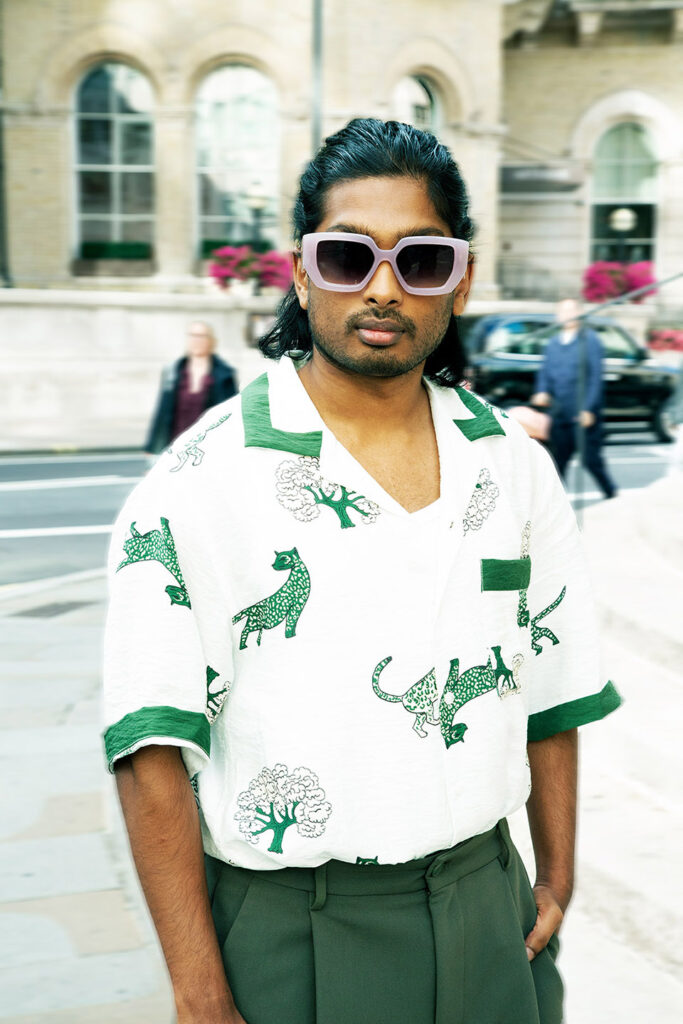
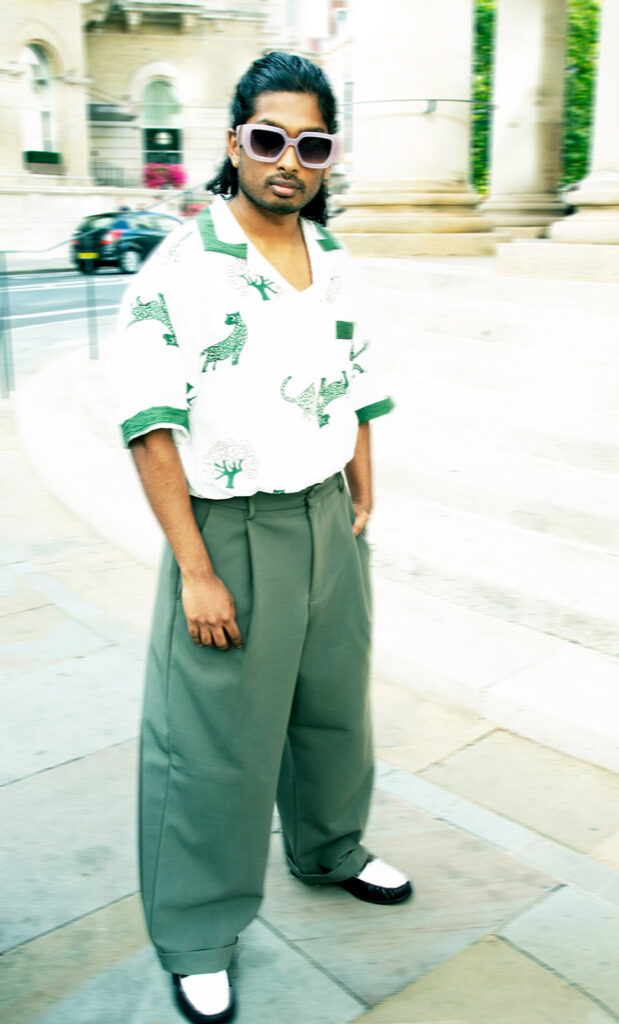
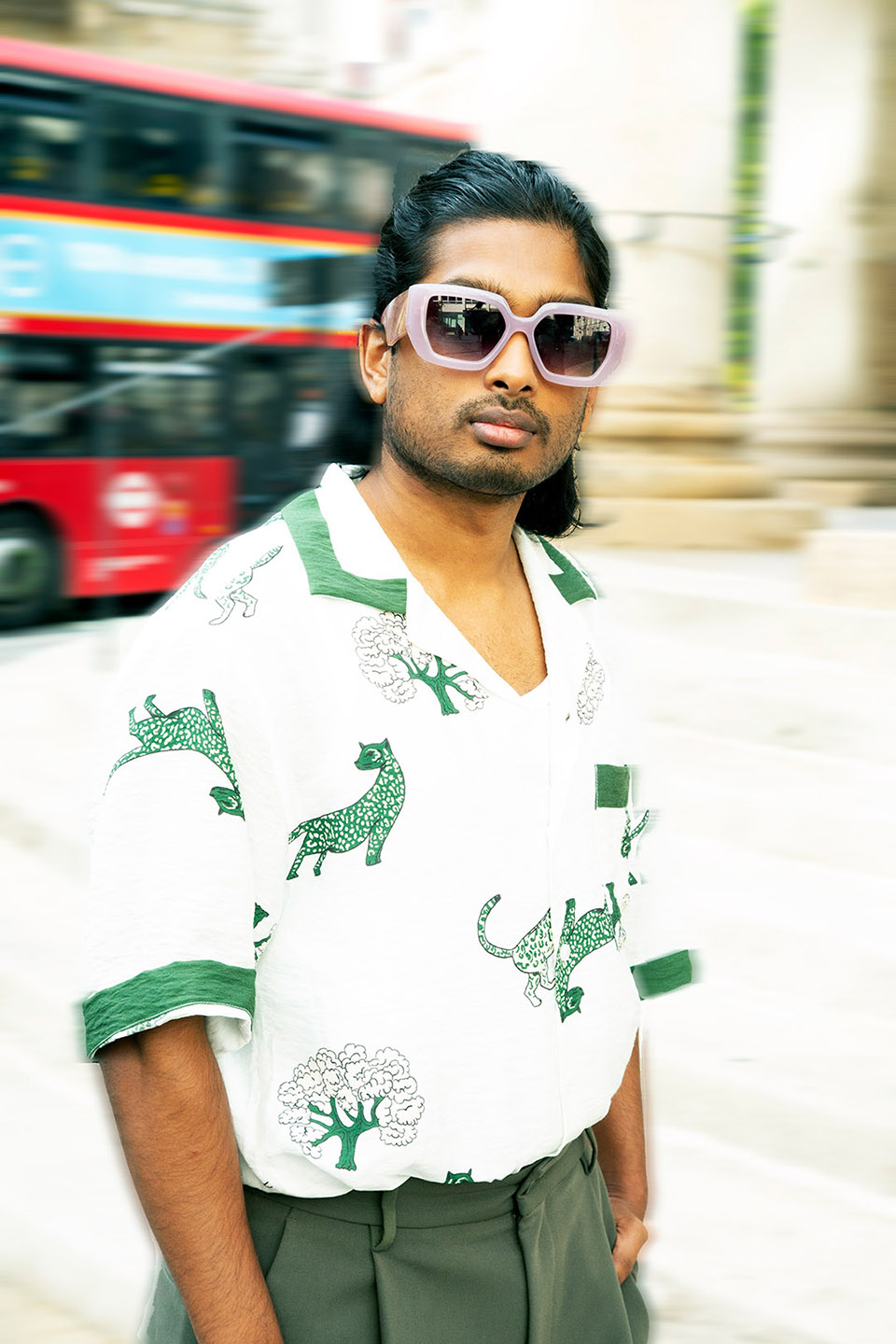
Ashwin Gane: I used to see fashion as a world of its own. Over time, I realized it’s more of a tool — something that helps bring a world to life and pull people into it. Even without creating clothing myself, what I wear and how I present myself can make someone feel the atmosphere of the world I’m building.
Fashion affects how people perceive you and how you move through life in subtle ways, and for me it works alongside the music and visuals rather than existing as something separate.
ZOOT: Do you see your fashion identity as a character, an extension of the music, or a world of its own?
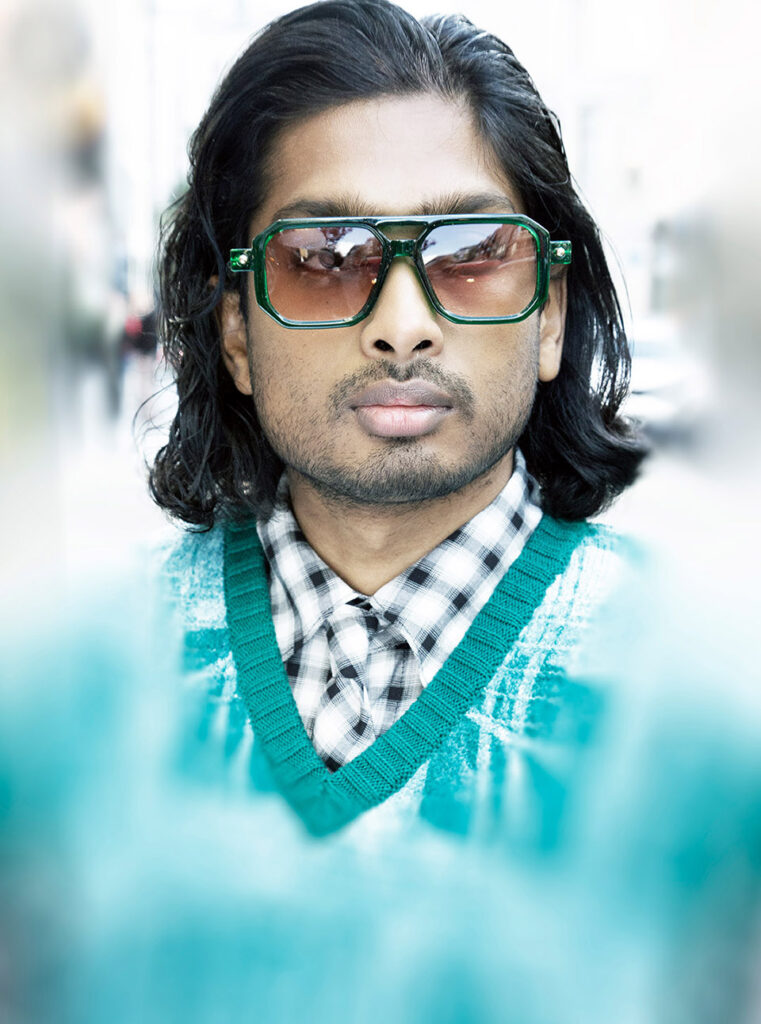
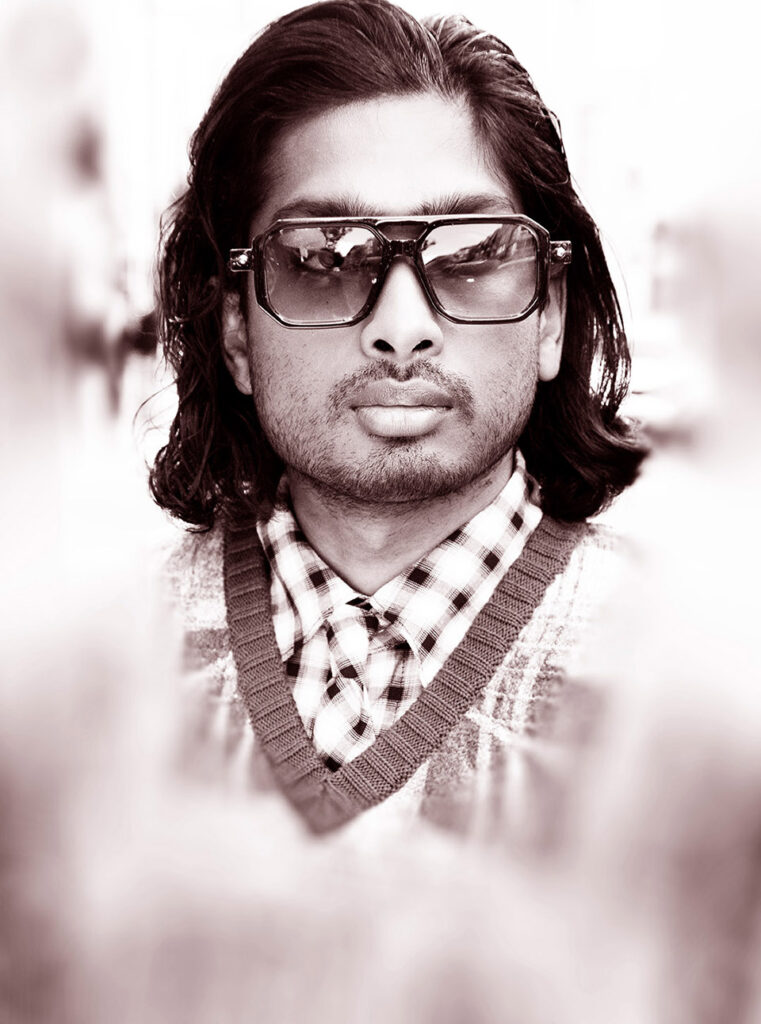
Ashwin Gane: I used to see fashion as something separate from what I was doing. Over time, I realized it can actually be a huge part of the world-building. For me, the music and the fashion are both extensions of a bigger idea — the world itself.
I’m really focused on creating the wardrobe and overall look of that world and the characters within it. It’s not about being a fashion icon. It’s about shaping the identity of the world visually, the same way I do sonically. Fashion is just another language I use to help bring that world to life.
ZOOT: Do you think sound has texture — and if so, would you ever design a clothing line that sounds like your music?
Ashwin Gane: Sound absolutely has texture — it’s called timbre. Every sound has its own tonality, overtones, and character, and that’s what gives it a physical feeling even though it’s invisible. So yes, sound definitely has texture.
As for whether I’d ever design a clothing line that sounds like my music — I already have the ideas. When the demand is there, that’s something I’d explore. For me, it’s all about cohesion: the music should sound like the world, and the clothes should look like the world. They’re just different expressions of the same idea.
ZOOT: Music influences culture, and politics shapes power. Where do those forces intersect for you?
Ashwin Gane: They intersect in narrative. Whoever controls the narrative controls perception. Music shapes how people feel; politics shapes how people act. Artists who understand both become cultural architects.
ZOOT: What social, political, or climate issue is close to your heart?
Ashwin Gane: I care about misinformation and intellectual decay. We live in a time where people don’t question anything — or question the wrong things. A society that stops thinking becomes easy to control. I’m passionate about pushing people toward knowledge, critical thought, and self-actualization.
ZOOT: You’ve performed at NBA games for major crowds. Does the scale of your platform affect your sense of responsibility?
Ashwin Gane: Honestly, no. The scale doesn’t really affect my sense of responsibility. Whether it’s a small room or a massive crowd, I approach it the same way. I’m focused on creating what I want to create, not adjusting my message based on how big the platform is.
I might design certain records to work in larger spaces, like stadiums, but that’s a technical choice, not a shift in values or direction. The work stays the same.
ZOOT: Algorithms reward quick hits instead of depth. How do you protect depth in your work?
Ashwin Gane: I don’t really chase the algorithm. You can be aware of it and even take inspiration from it, but it’s not going to work the same way for everyone. If you create something that’s actually worthy, the algorithm eventually follows what you’re doing.
You can’t be a slave to trends — we’re not robots. I’m always asking myself whether I’m making something that could last for decades, not just a few days. Protecting depth means prioritizing longevity over quick hits.
ZOOT: Is there anything else you’d like to share with our readers?
Ashwin Gane: Yeah — I’ve got a new song called D&D coming out in January. I produced it with Scott Storch, and it really represents the latest refinement of my vocal sound — it finally feels locked in. I’m excited for people to hear that evolution. We’re also doing something very interesting with the video, so if you’re into Dungeons & Dragons, you’ll definitely connect with it.
After that, I’m stepping back into more mythic territory — but at a higher level than anything I’ve done before. Think Robert Eggers sensibility, filtered through a pop lens. That’s where things are headed next.
Thank you Ashwin!
To boot
Ashwin Gane
@ashwingane | www.ashwingane.com