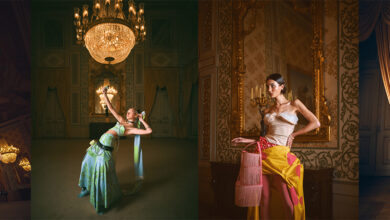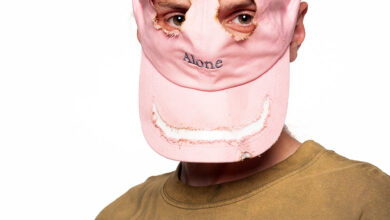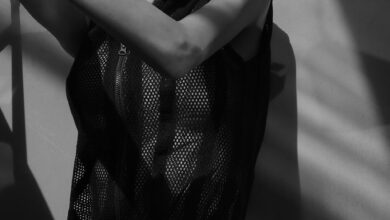
Backstage at SANGUE NOVO at MODALISBOA SS26 BASE
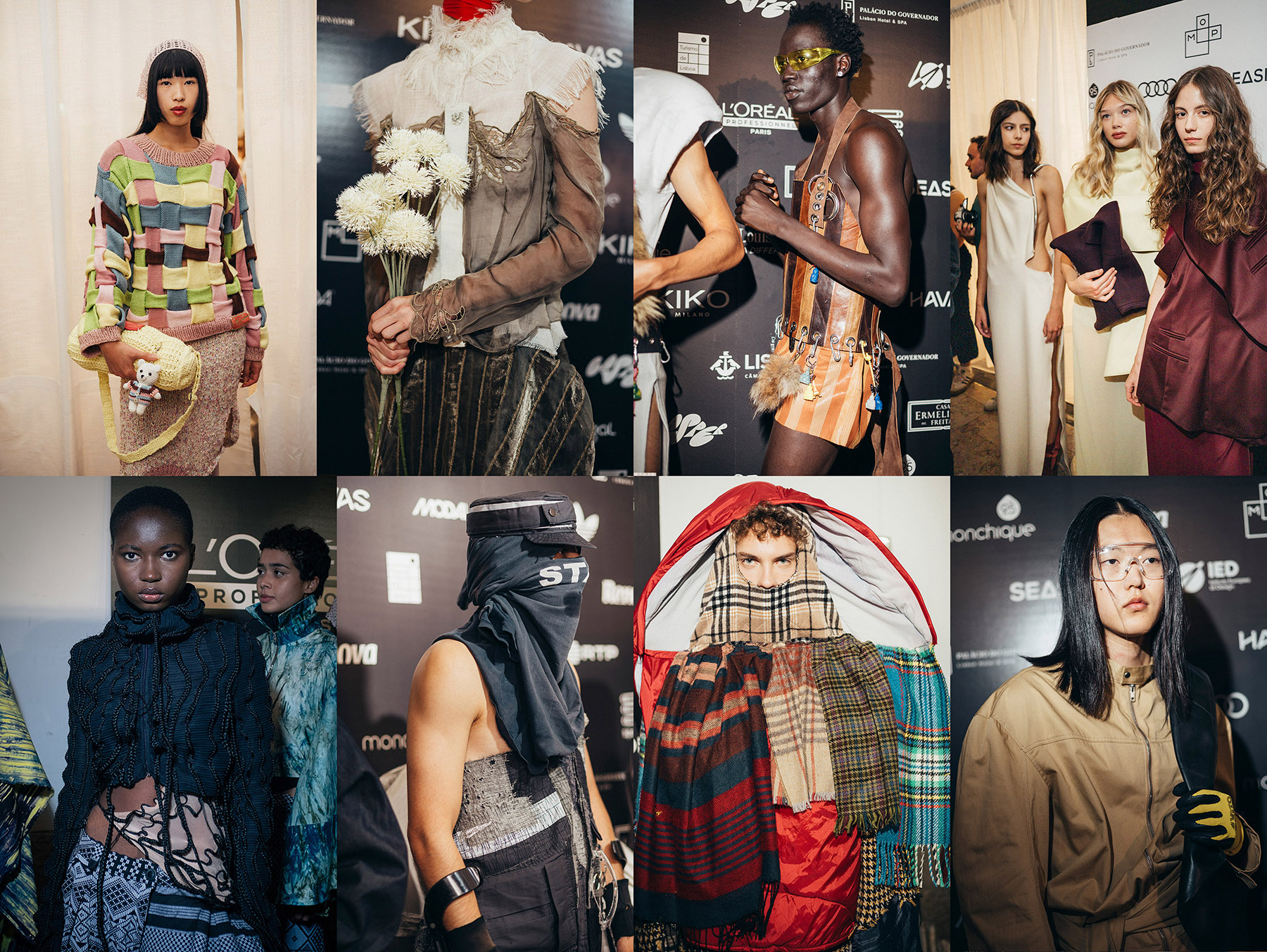
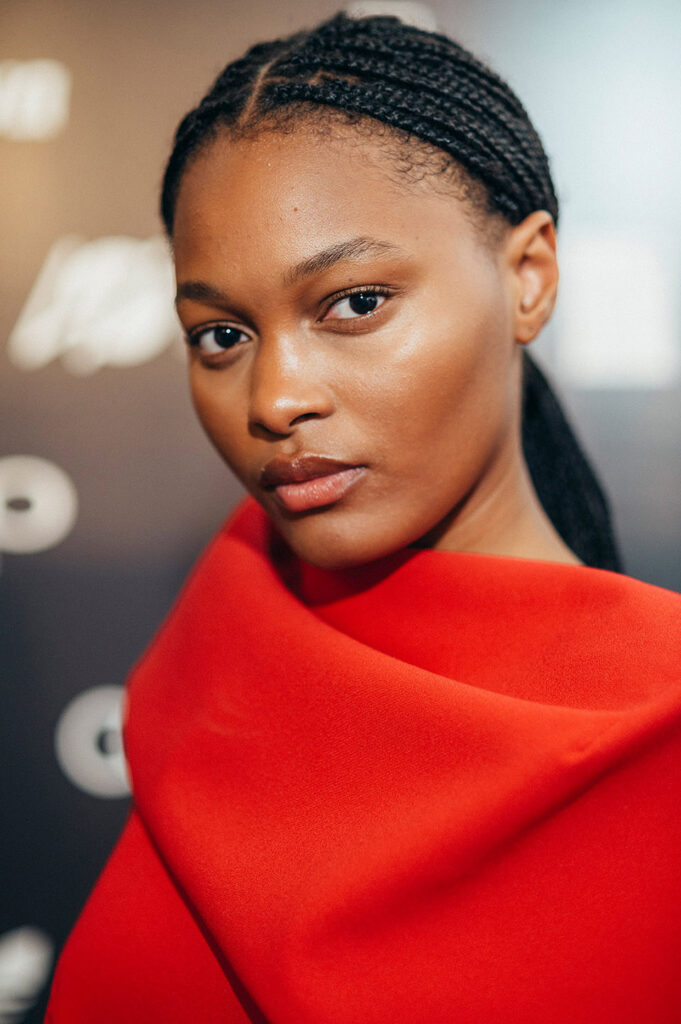
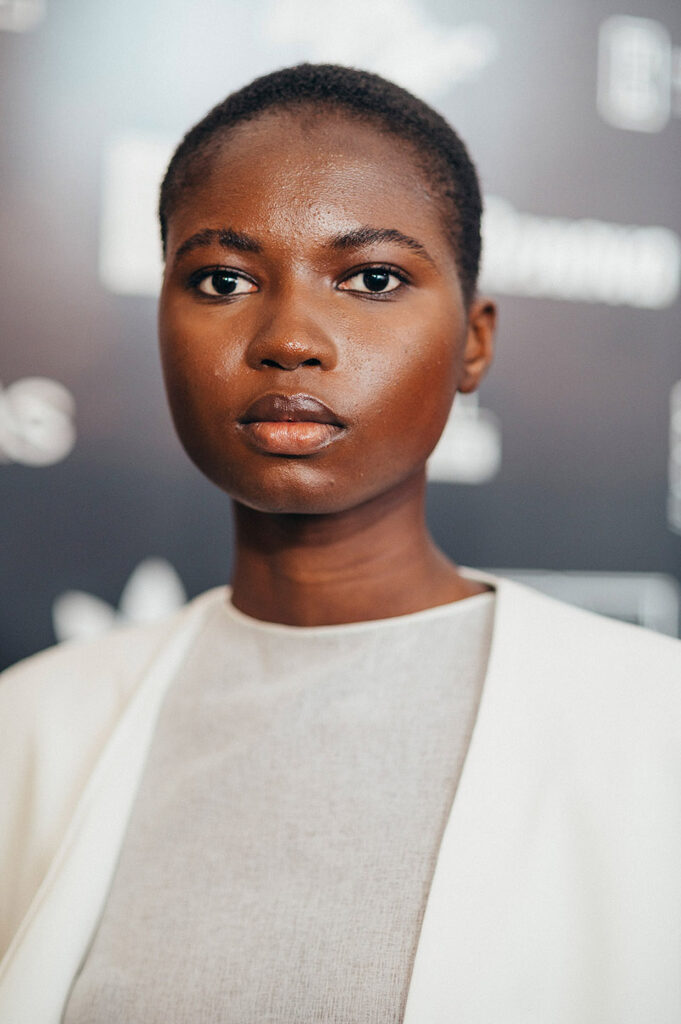
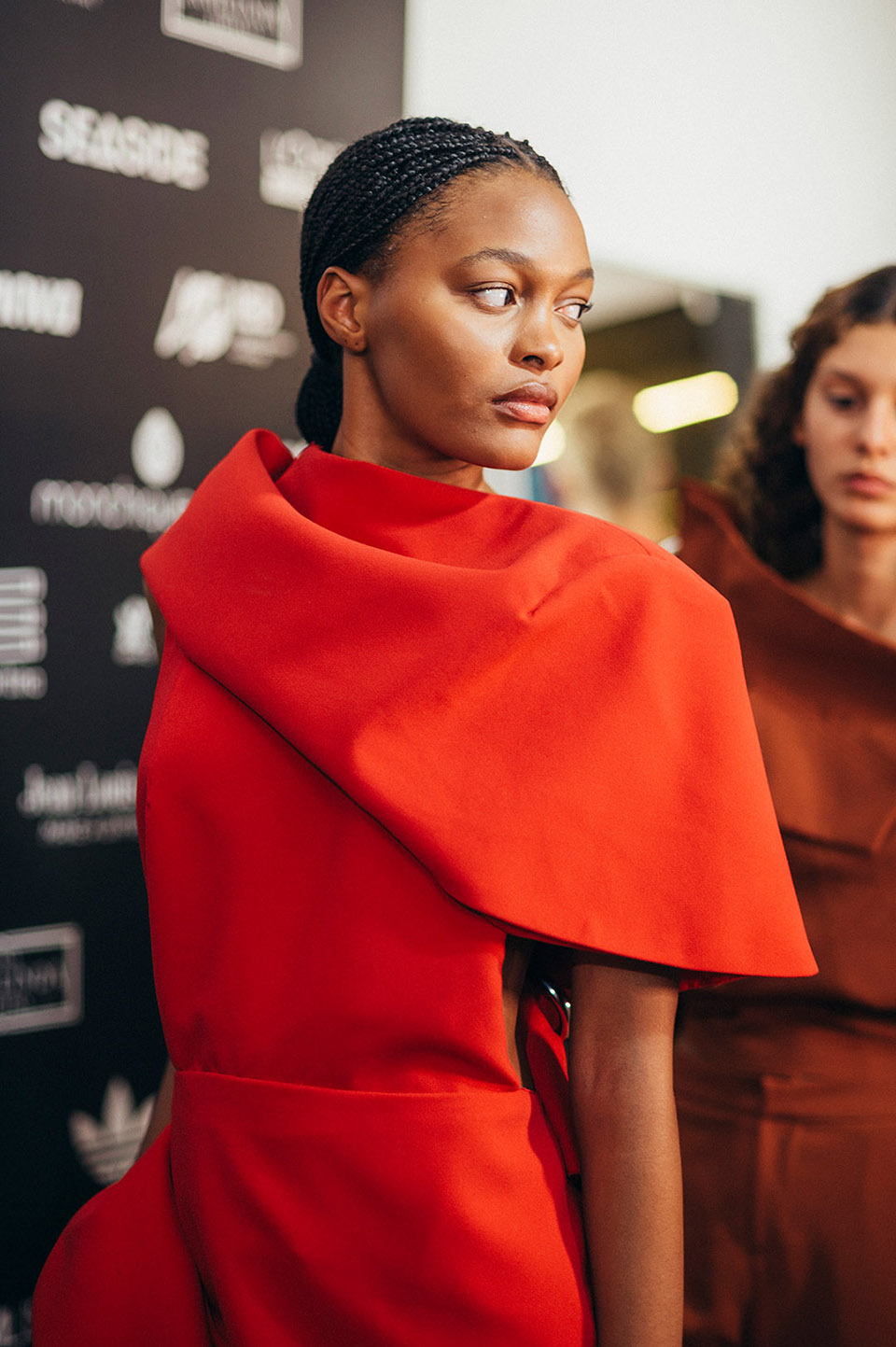
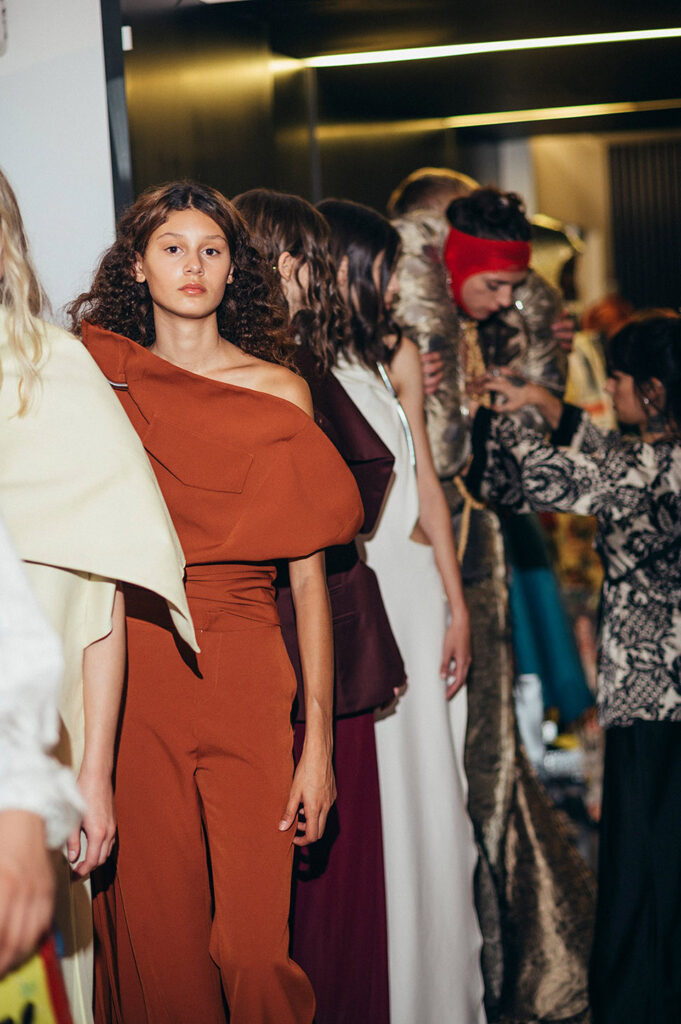
SANGUE NOVO is one of the most anticipated event from ModaLisboa. Since 1996, Sangue Novo, as part of ModaLisboa, has provided a platform for emerging designers to showcase their talent and vision, fostering the growth of national fashion authorship. This year’s theme is about returning to the Base, not as an act of retreat, but as a commitment to ensuring that what grows is grounded, intentional, and built to last.
Photography Isabella Glock & Barbara Martons
Lead Makeup Antonia Rosa & team with Kiko Milano
Lead Hair Helena Vaz Pereira, Griffe Hair Style
Words Daniela Abranches
“ModaLisboa BASE is an edition that does not seek formulas. It approaches fashion not as an isolated act, but as a practice that brings together people, systems and languages.”
Eduarda Abbondanza, President of Associação ModaLisboa
Founded in 1991 by the Associação ModaLisboa in partnership with the Lisbon City Council, MODALISBOA operates as a central platform for younger designers in Portugal, fostering the growth of national fashion authorship.
In its 65th edition, ModaLisboa BASE proposes a deliberate return to fundamentals. Rather than focusing on form alone, this edition shifts attention to the material, conceptual and structural foundations that shape fashion today. At a time when the industry is increasingly called upon to respond to social, economic and cultural pressures, the Lisbon Fashion Week positions itself as a space for active reflection — suggesting that revisiting the base is essential to determine what is truly worth building for the future.
It is within this context that Sangue Novo, takes on particular relevance. More than a visibility platform, Sangue Novo operates as a field of experimentation, designed to support a new generation of designers who question established forms and seek to intervene in the systems that produce and sustain them.
This annual competition held its first phase in October, during which eight designers – Adja Baio, Ariana Orrico, Mafalda Simões, Do Cruzeiro Seixas Eva, Élio, Mariana Garcia, Inês Almeida and Usual Suspect – presented their collections to a jury led by Miguel Flor.
The five finalists – Adja Baio, Ariana Orrico, Mafalda Simões, Mariana Garcia and Usual Suspect – will go on to develop new collections to be presented at the final stage of the competition in March 2026. During this period, they will take part in mentoring sessions with the jury and industry specialists, as well as benefit from press and showroom support through Showpress. In March 2026, they will compete for the ModaLisboa × IED – Istituto Europeo di Design and ModaLisboa × Burel Factory awards.
Adja Baio
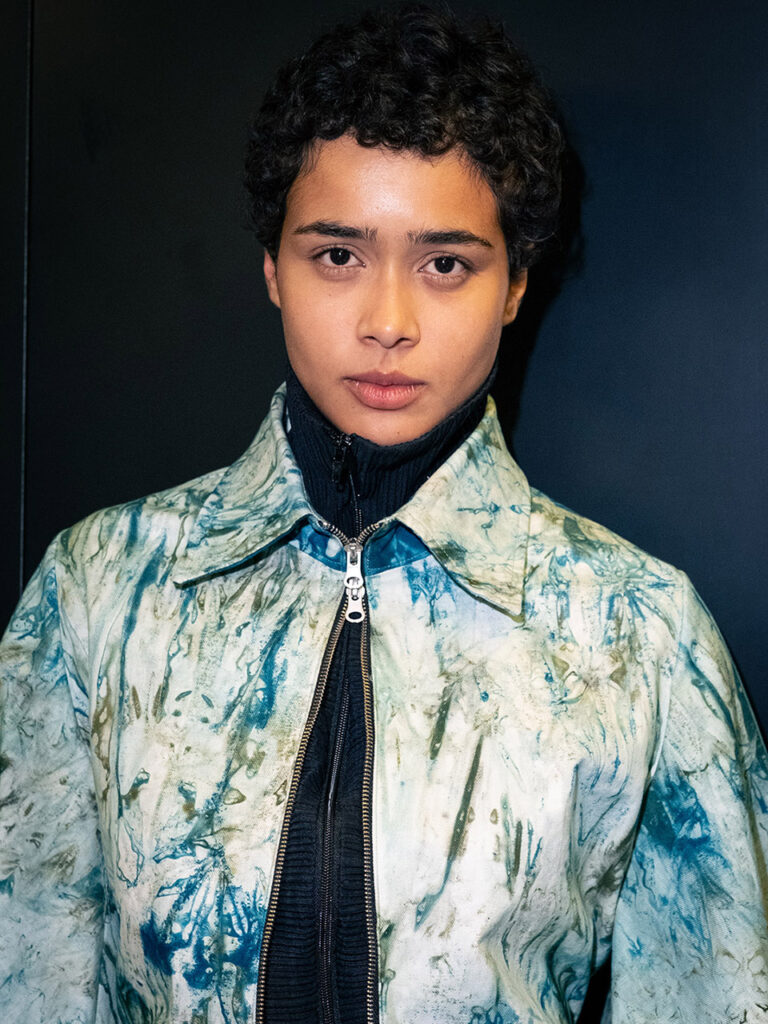
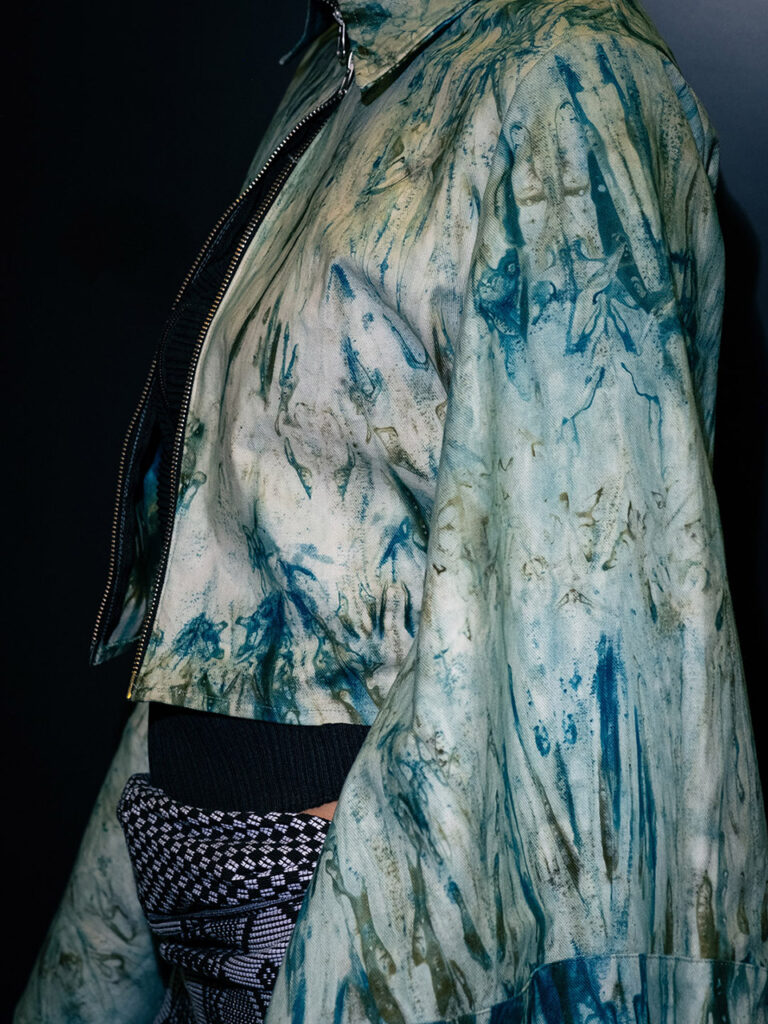
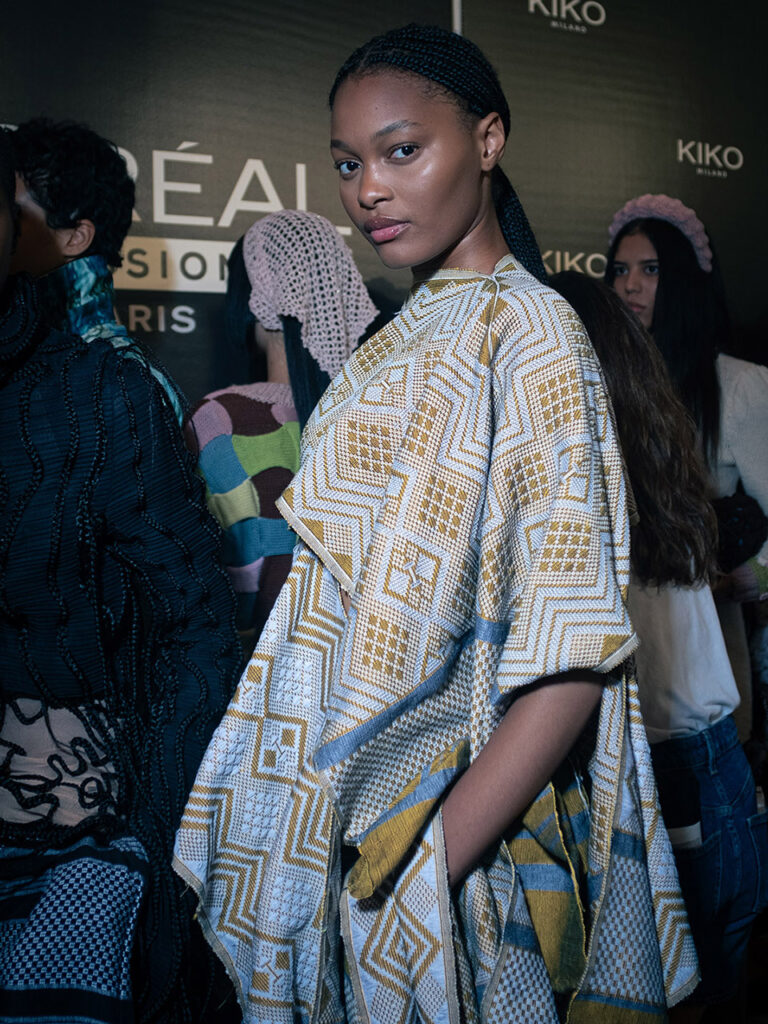
Adja Baio was born and raised in Guinea-Bissau and is now based in Portugal for 7 years.
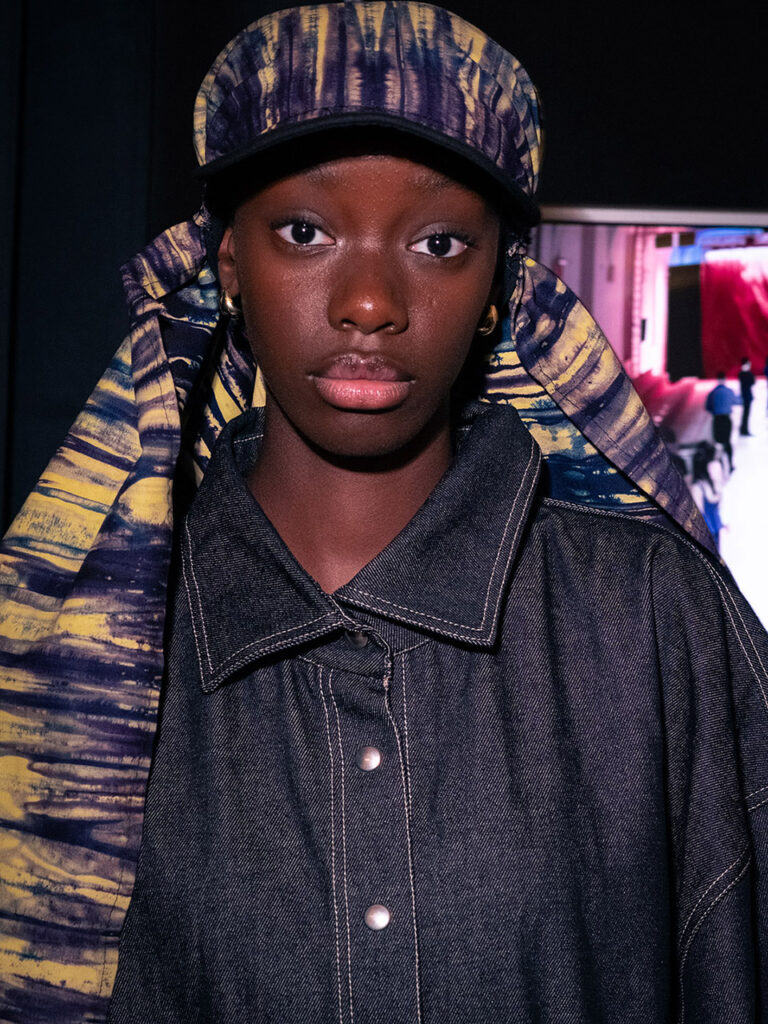
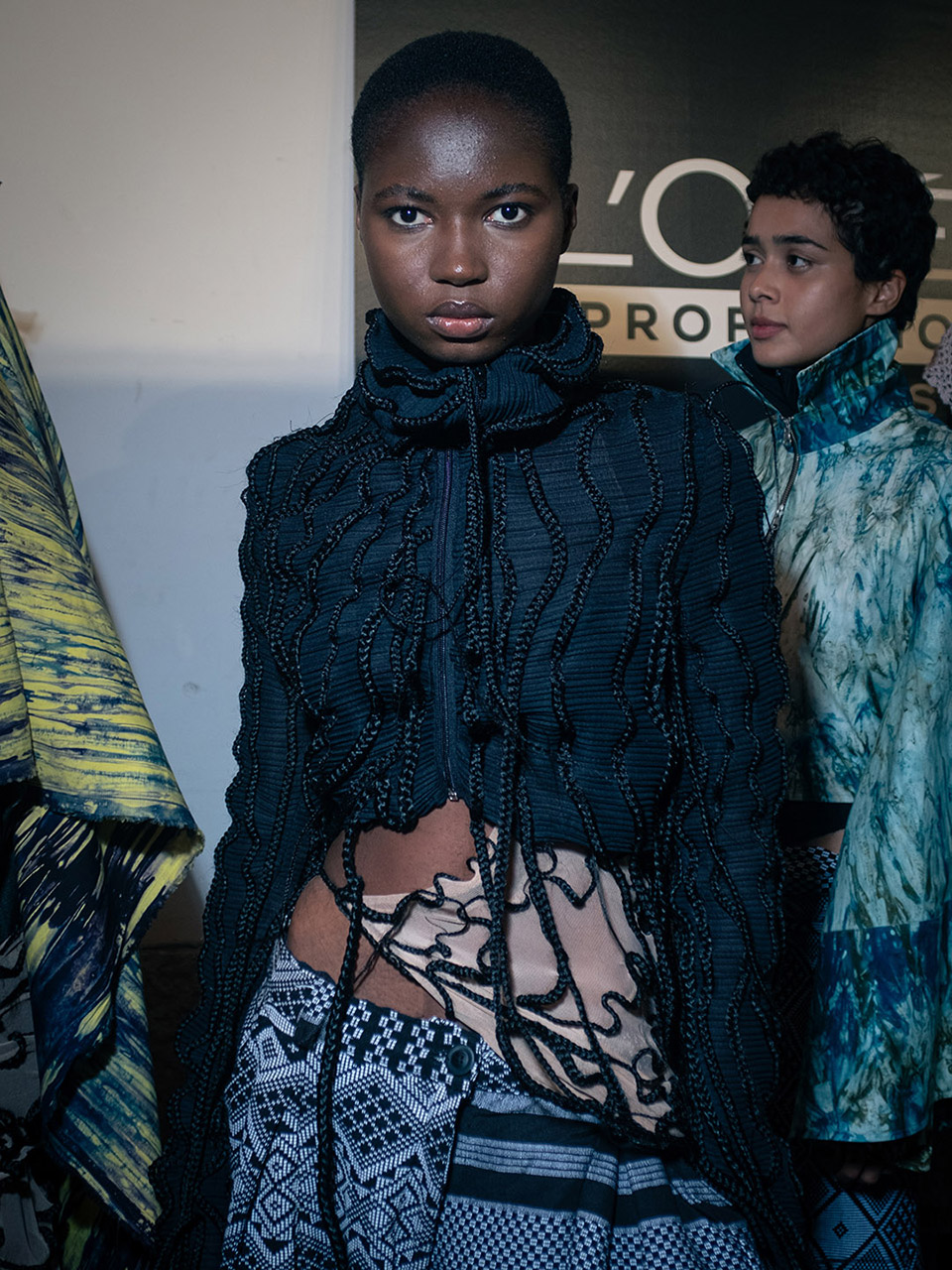
Her work explores genderless fashion, blending Guinean heritage—such as traditional brocade fabrics known for their rich textures and vivid patterns—with streetwear influences, seen in the use of raw denim and oversized, cargo pants.
Titled PANO DE PINTI, the collection places hair at the heart of its story. Braiding is a shared ritual linked to care, memory, and resistance, and has long served as a language in many African cultures – signaling identity, status, and belonging. Through this collection, Baio uses fashion as a means of self-affirmation, resorting to cultural elements to help build her identity.
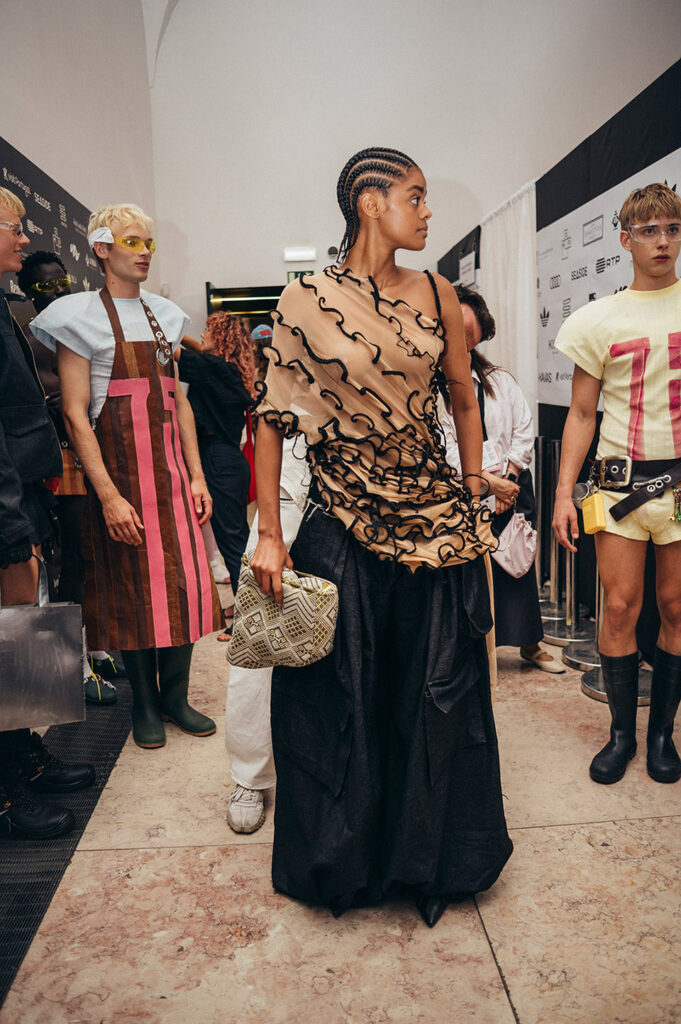
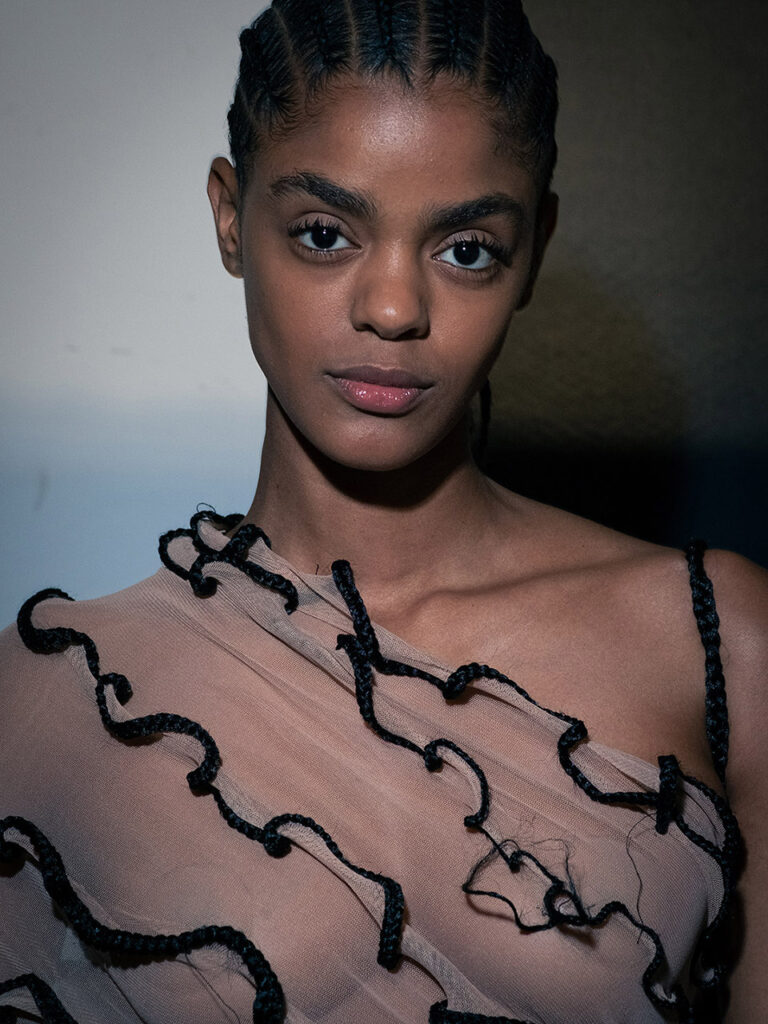
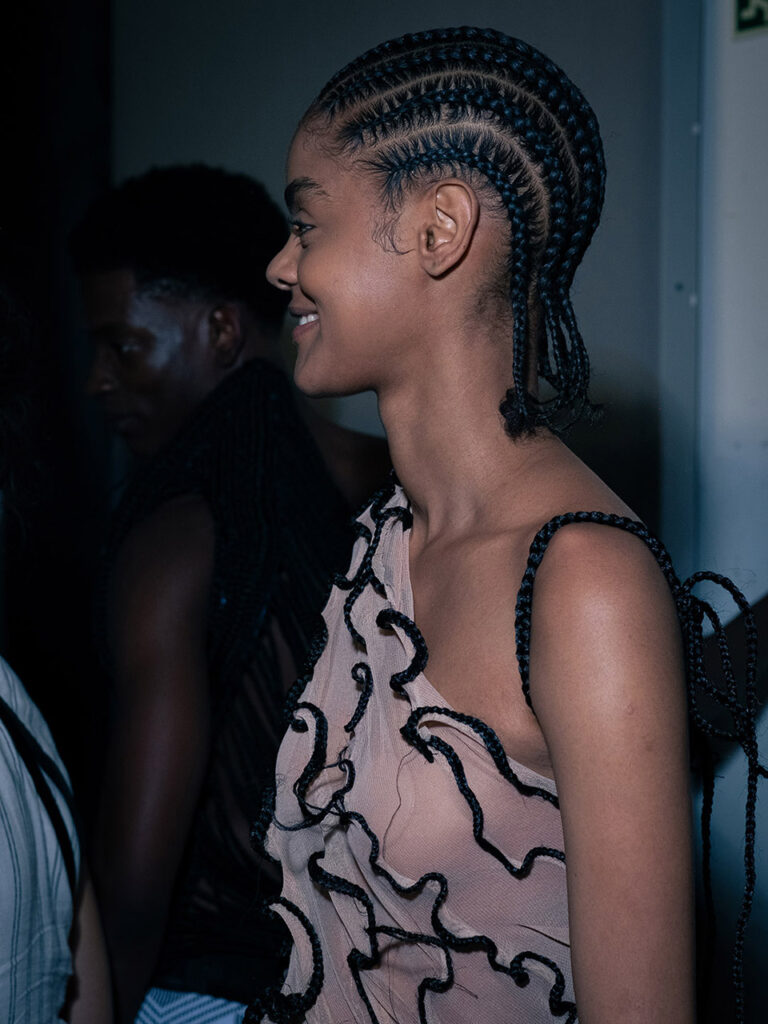
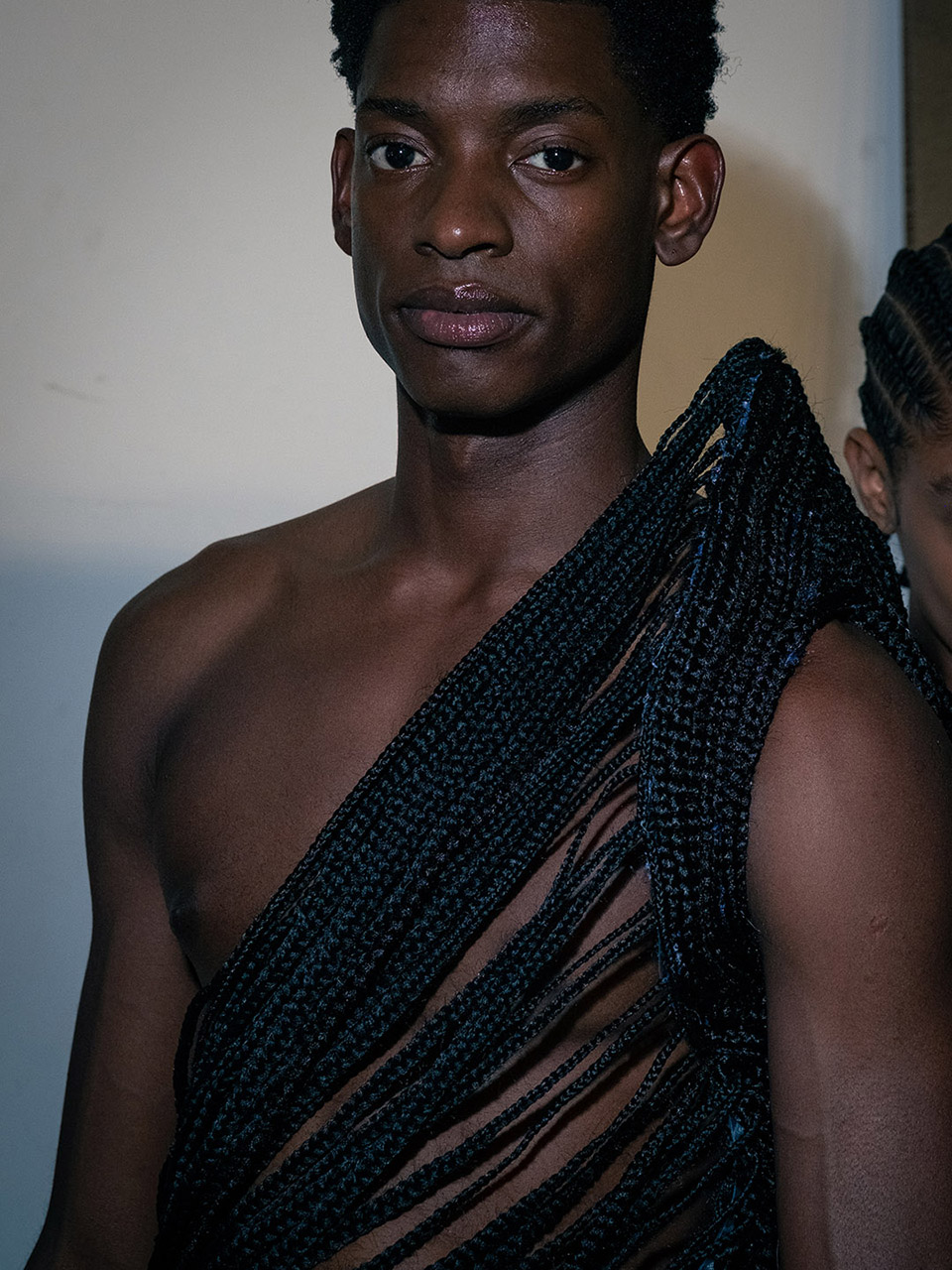
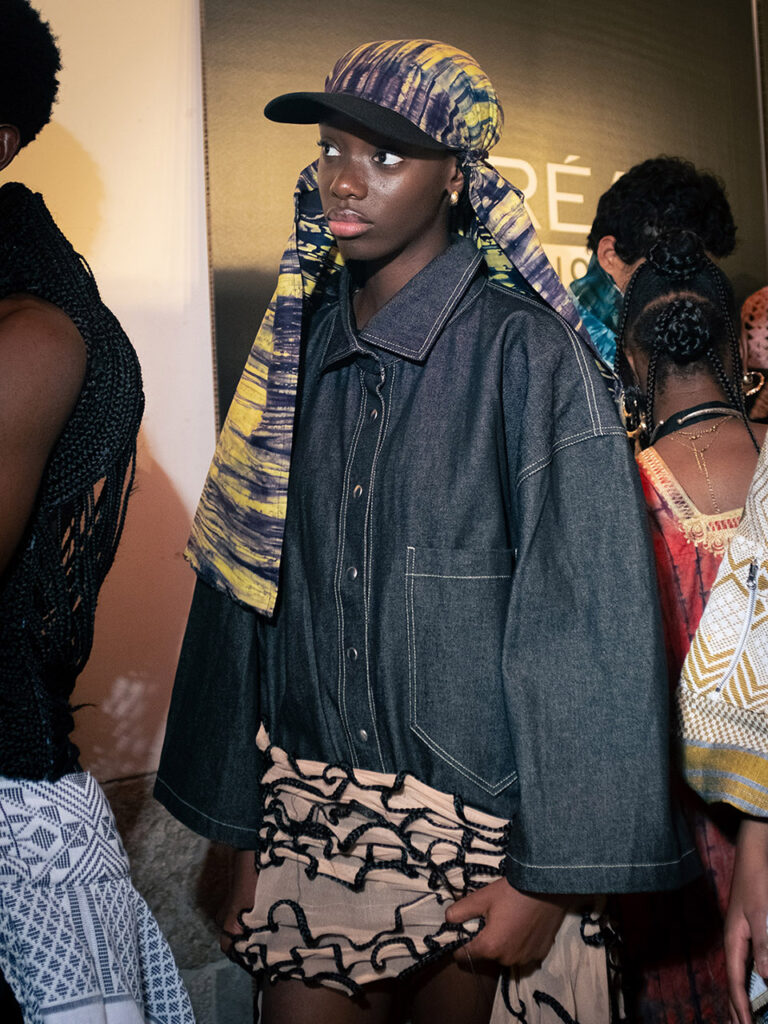
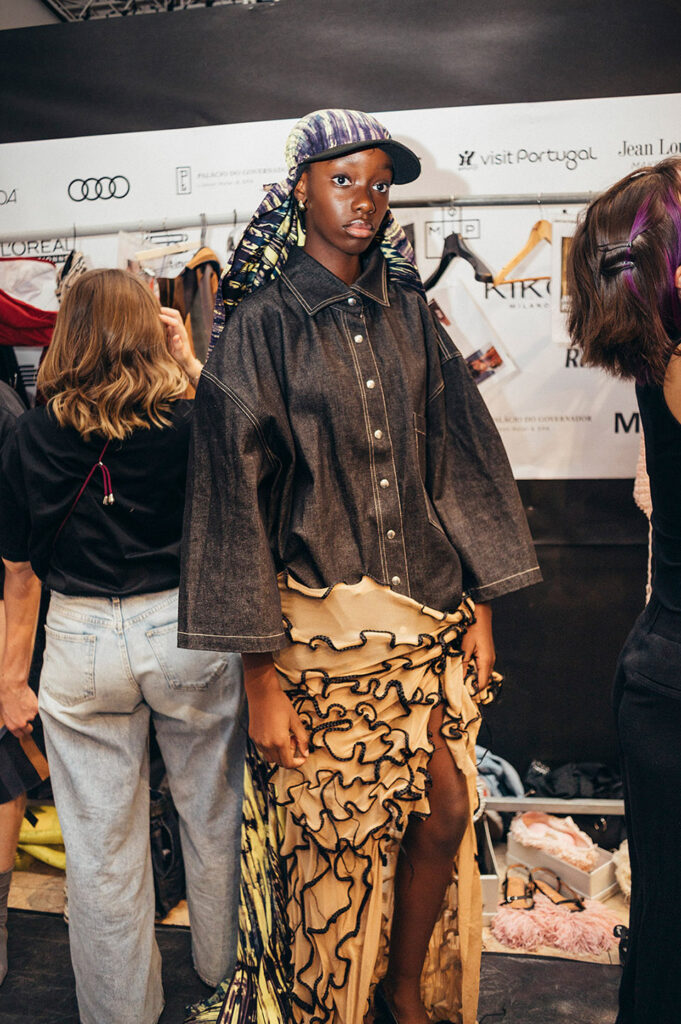
Braids represent identity, memory, and resistance. They are a deep connection to my culture and have been part of my life since childhood. After leaving Guinea-Bissau and moving to Portugal, this connection became stronger and more conscious. Braiding became a form of self-expression. It fully represents who I am, which is why I felt the need to bring braids into fashion, transforming this cultural heritage into a creative and visual language.
Adja Baio
Mafalda Simões
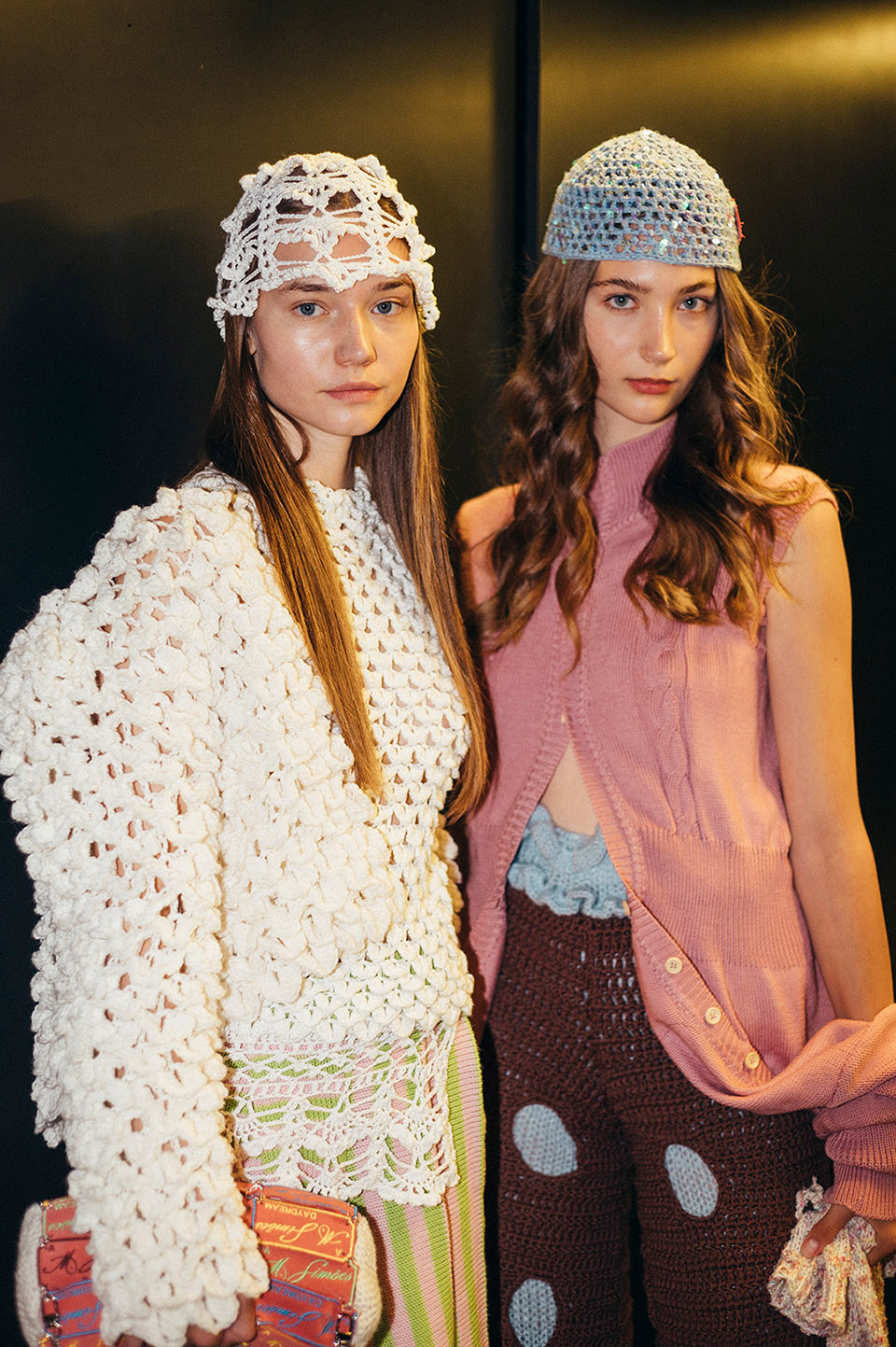
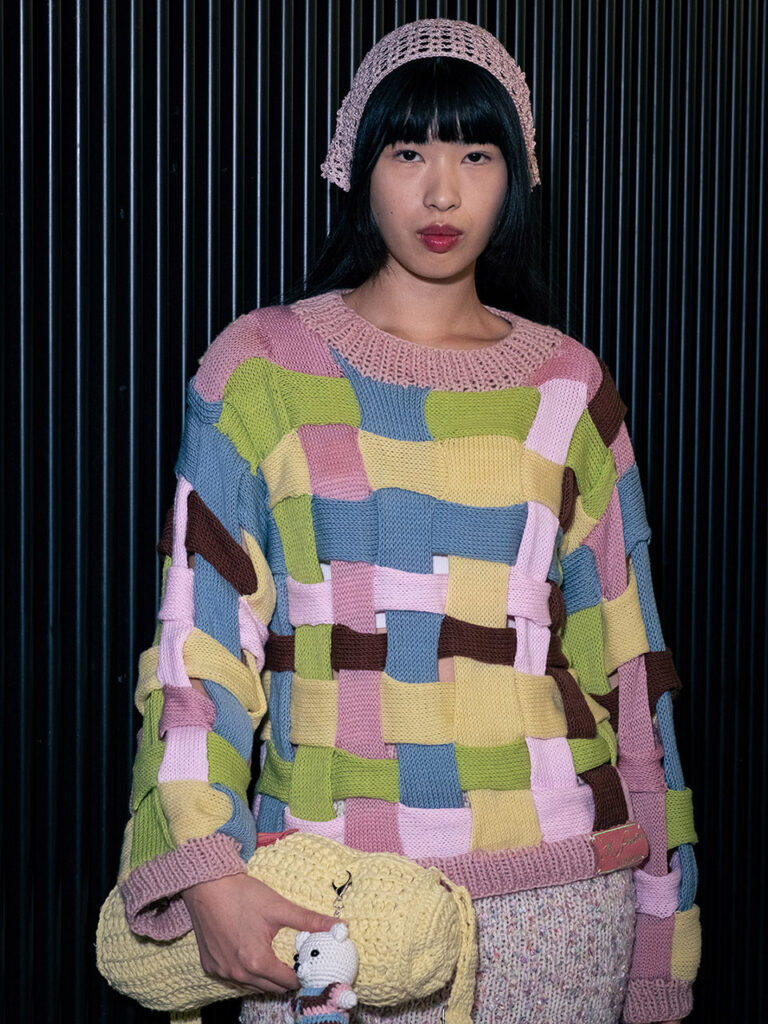
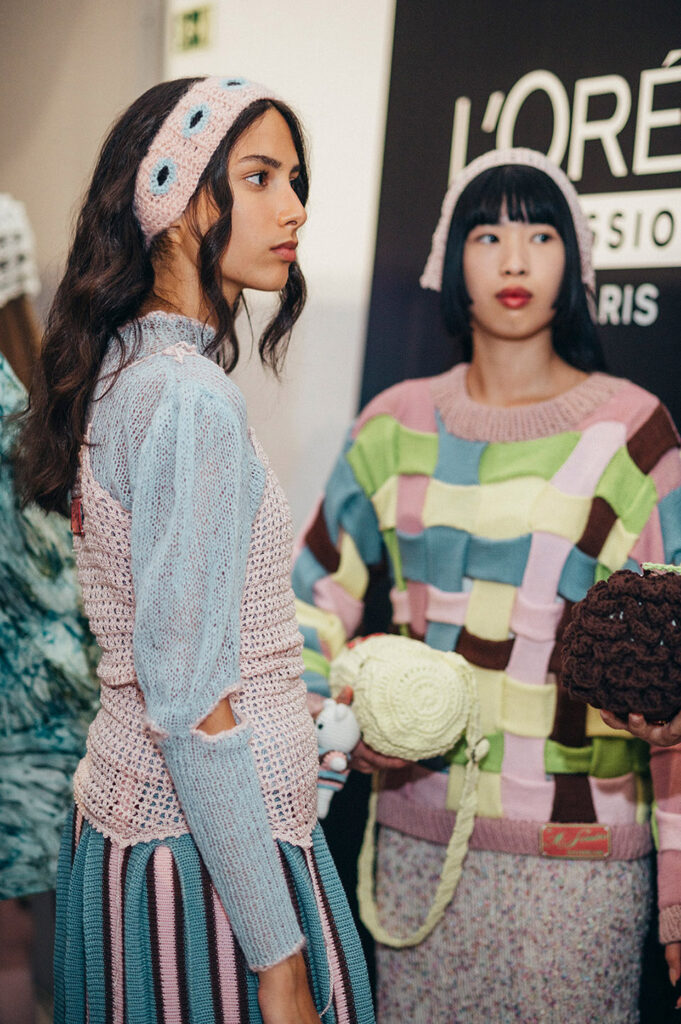
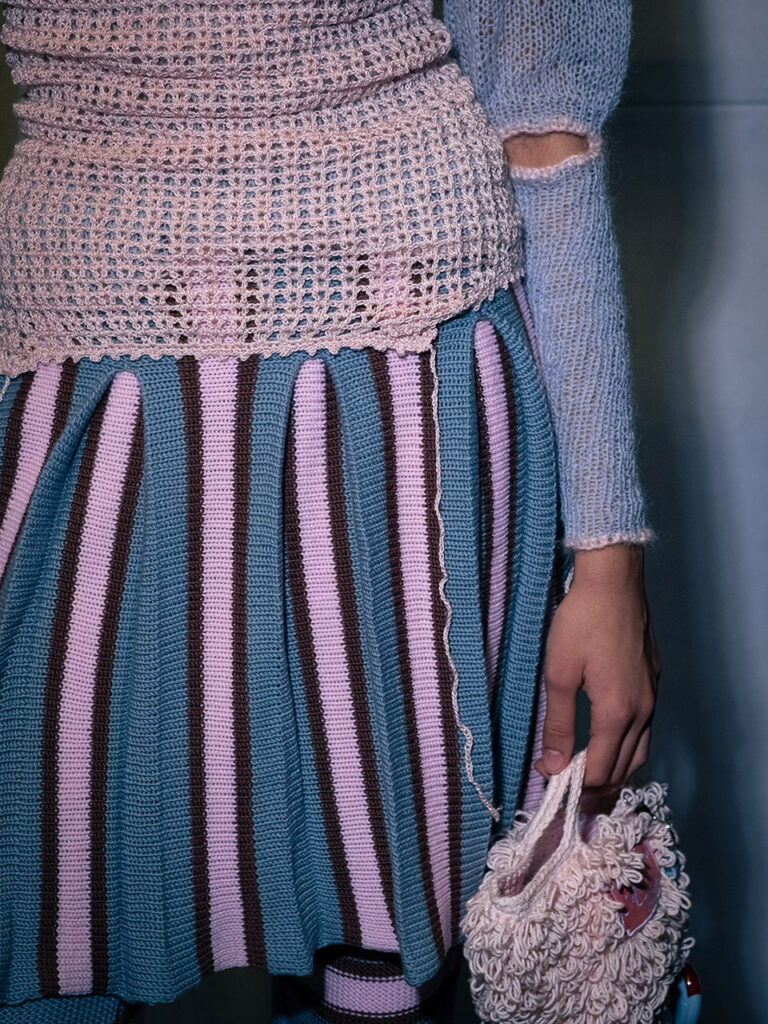
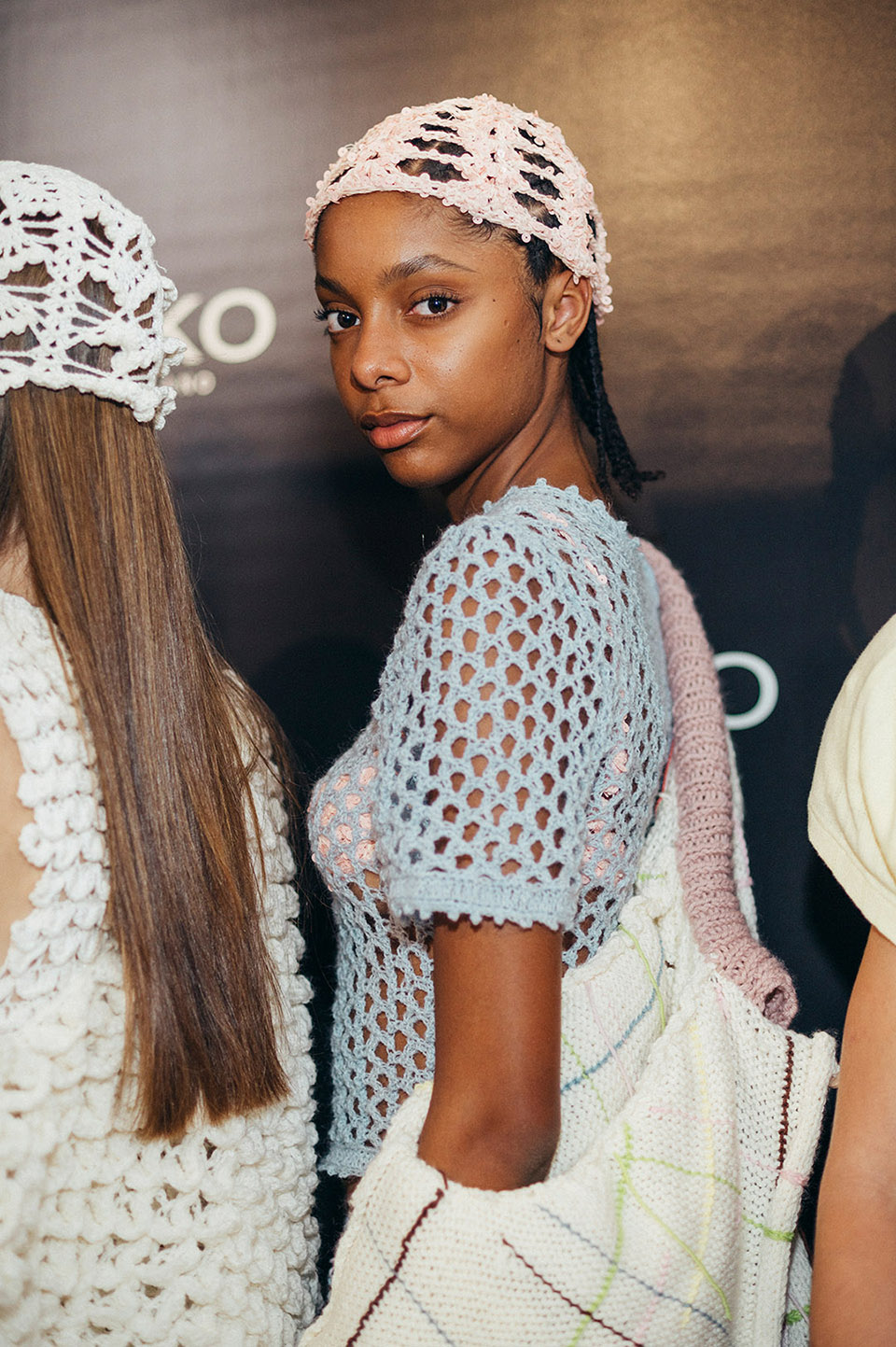
Mafalda Simões was born in Coimbra, and her work is closely linked to craftsmanship and manual processes. In her practice, she consistently favours knitting and crochet, two traditional techniques that slow the pace of fashion by emphasising slowness, tactility, and time, both in the creation of garments and in how they are perceived.
DAYDREAM, explores the transition from childhood to adolescence as a suspended, in-between state – a mental and emotional territory where the awareness begins to fracture the innocence, but imagination remains a form of refuge.
The project draws direct inspiration from Justine Kurland’s photographic series Girl Pictures, taken between 1997 and 2002 on the road in the American wilderness. In these images, adolescence appears as a self-governed space, shaped by play, vulnerability and quiet resistance to imposed structures. The photographer “staged the girls as a standing army of teenaged runaways in resistance to patriarchal ideals” (Justine Kurland).
The use of pastel tones evokes a space of innocence and imagination and the slow, repetitive gestures of knitting and crocheting create a rhythm that allows the mind to wander, mirroring the introspective, suspended state of daydreaming.
MAfalda simões
Justine Kurland’s Girl Pictures speaks to me as a kind of dreamlike illusion, something just out of reach yet deeply familiar. It captures the teenage state of being, when everything is charged with emotion and imagination. Her images transform the ordinary into spaces of make-believe, where teenagers build imaginary worlds on the margins of adult life.
That imaginative spirit is what I try to bring into my crochet and knitting. I wanted to highlight this sensitive and resilient life stage, when identity and the world feel both fragile and infinite.
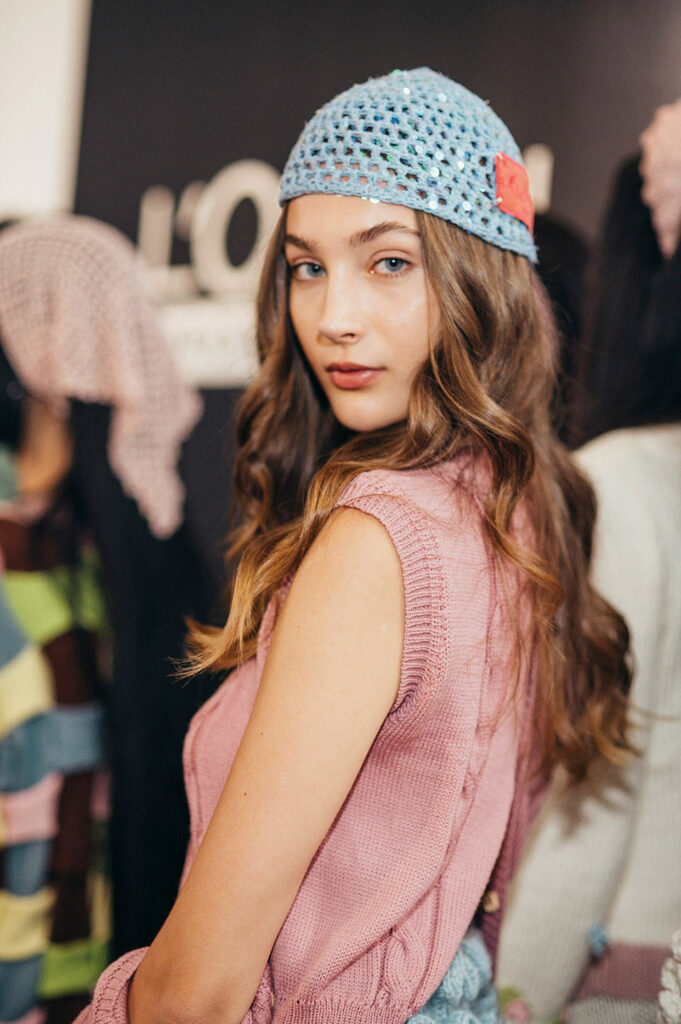
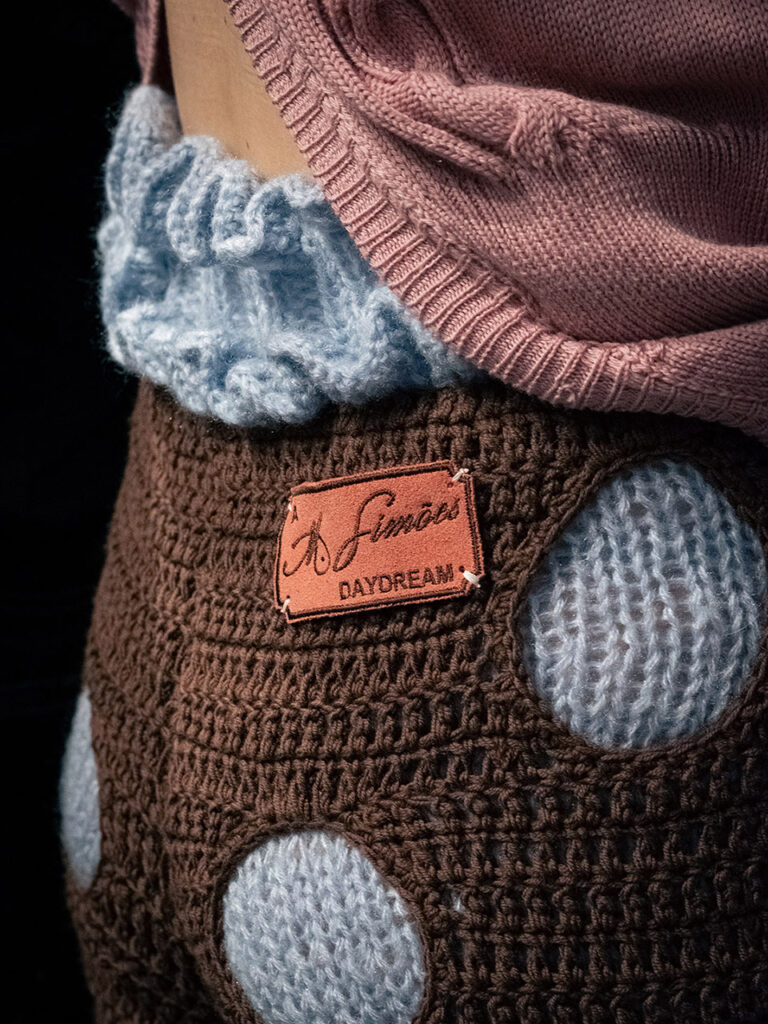
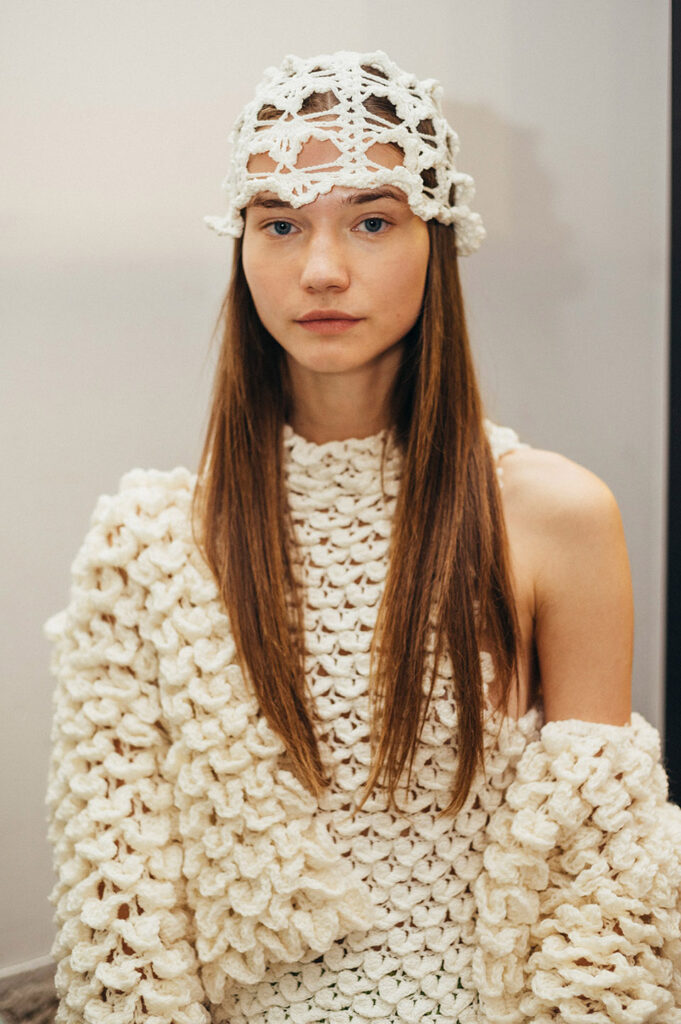
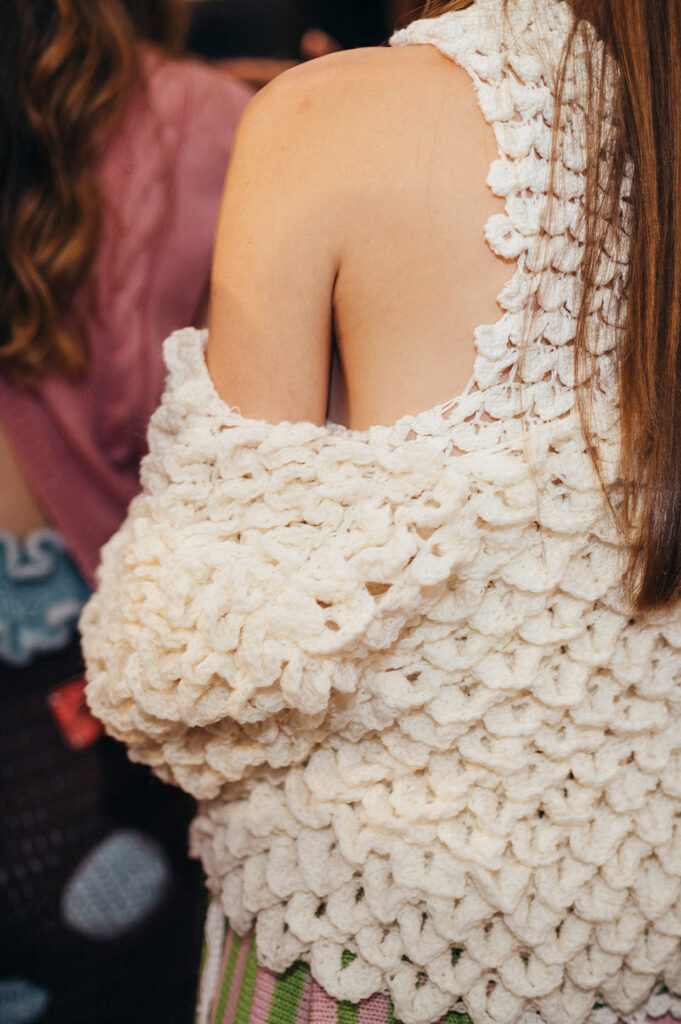
Crocheting and knitting have always been part of my life. I grew up surrounded by them through my mother and grandmothers, continuing a tradition passed down through generations. It only began to feel fully mine during the COVID quarantine, when I connected with these techniques on a personal level.
Mafalda simões
Crochet and knitting are very zen-like practices for me. While my hands focus on repetition and process, my mind is free to wander. In that sense, working with yarn is also a form of daydreaming, an entry into this in-between space, where memories, fantasies, and even mundane plans can intertwine.
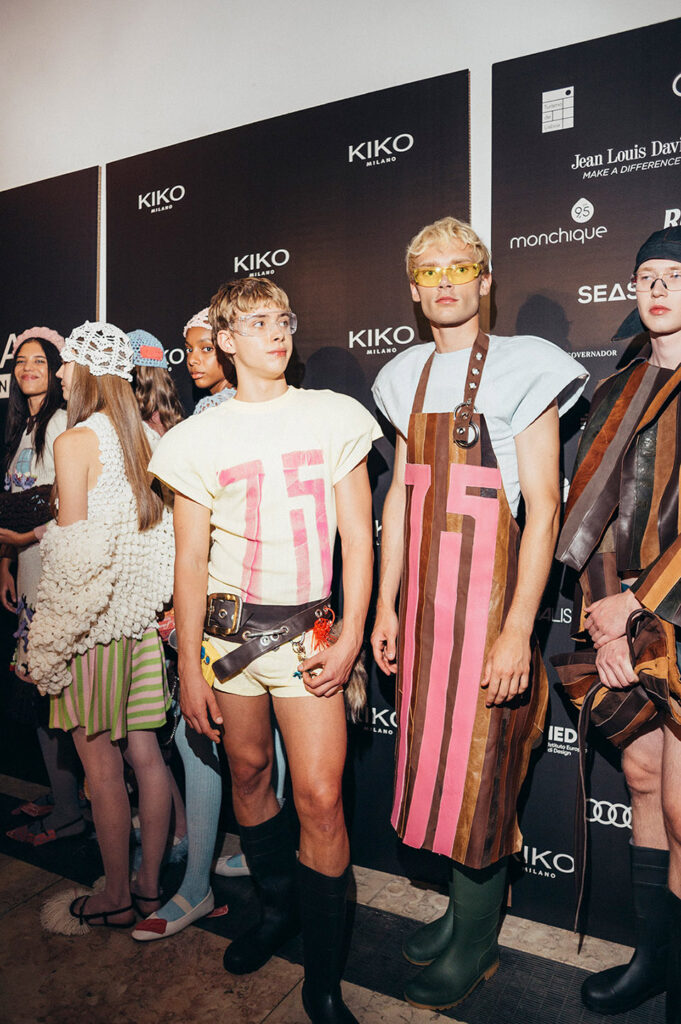
Ariana Orrico
Born in Lisbon to Cape Verdean parents, Ariana Orrico approaches fashion as a space for questioning and provocation.
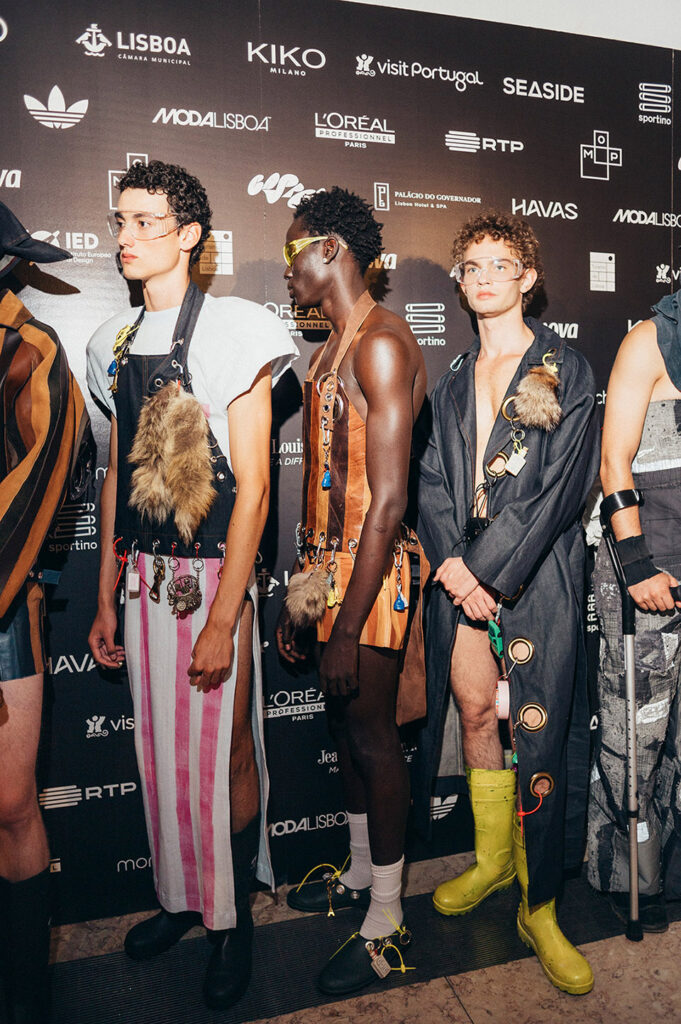
Titled 75, the collection emerges from an urgency to liberate the male body from the visual neutrality that has long constrained it. The removal of trousers becomes a symbolic first gesture — a refusal of convention that opens the body to vulnerability, doubt and redefinition.
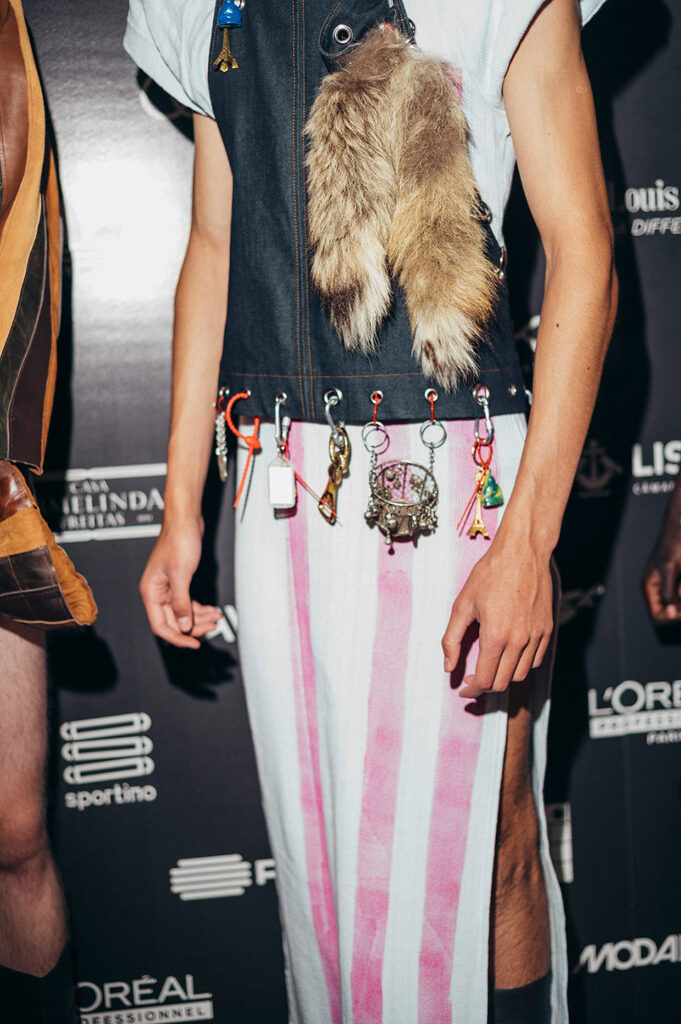
As the first men lived as hunter-gatherers, relying on hunting animals and gathering objects to survive, this collection suggests that modern man should experiment new ways of existing, collecting the tools for self-discovery. In this context, the presence of foxtails can be interpreted as talismanic, evoking a time when animal parts were worn as amulets believed to impart strength, instinct, or protection.
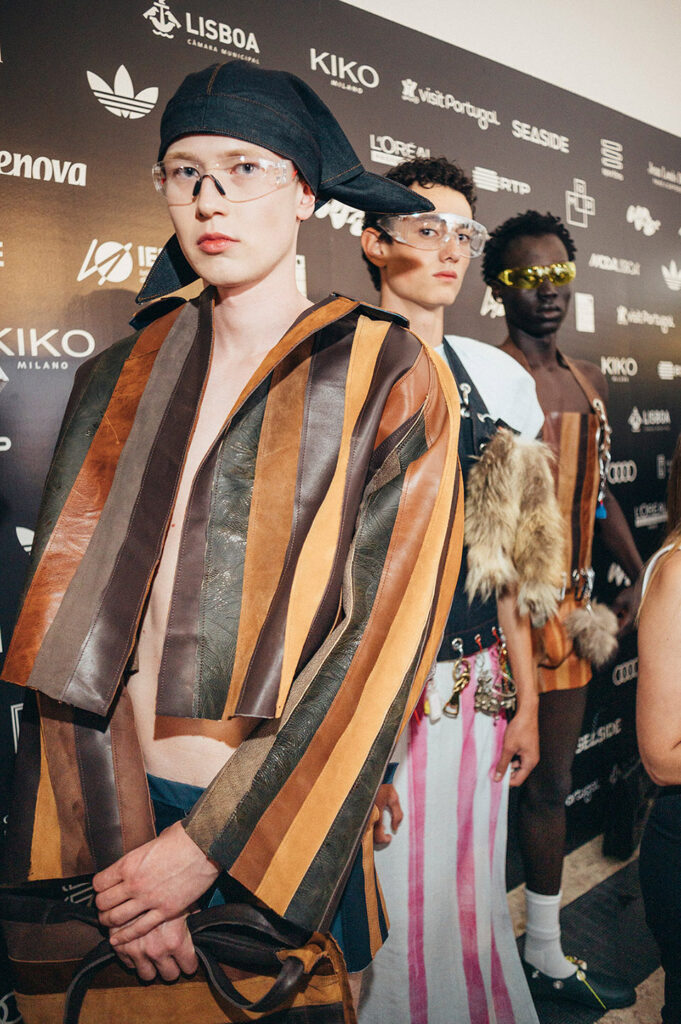
75 is one of my favorite numbers and it’s a number I see a lot. Mathematically it’s tree-quarters and while I was doing this collection I would say, as a joke, that’s called 75 because there is no pants in the collection so I’m dressing only 75% of the body.
Ariana orrico
It’s also Paris area code, a city that is very familiar to me.
And ultimately, 1975 it’s the year my mother was born.
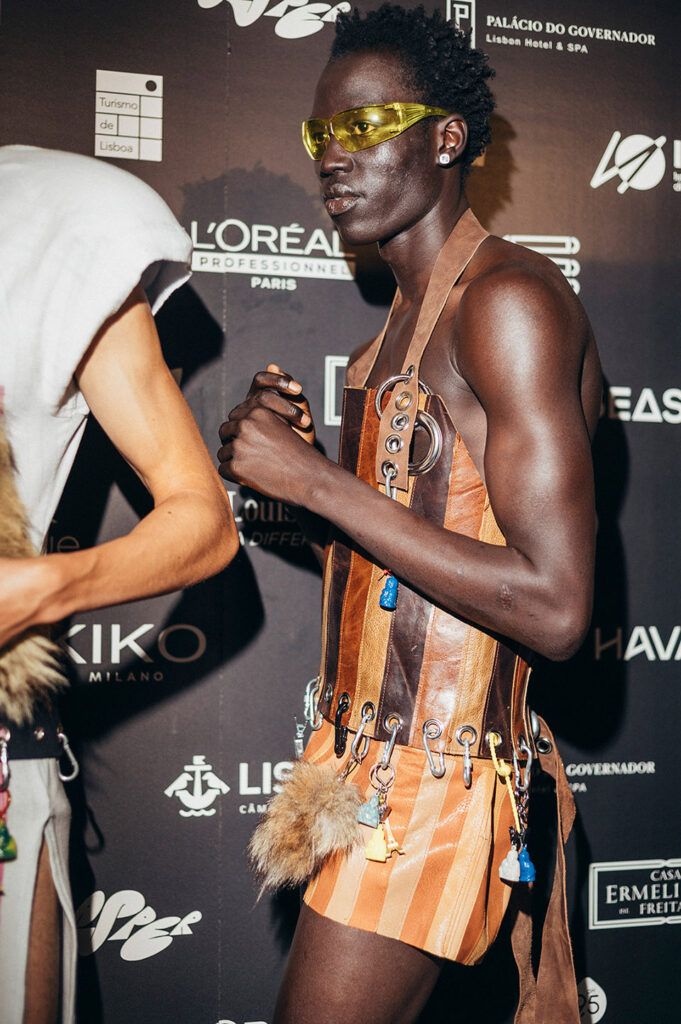
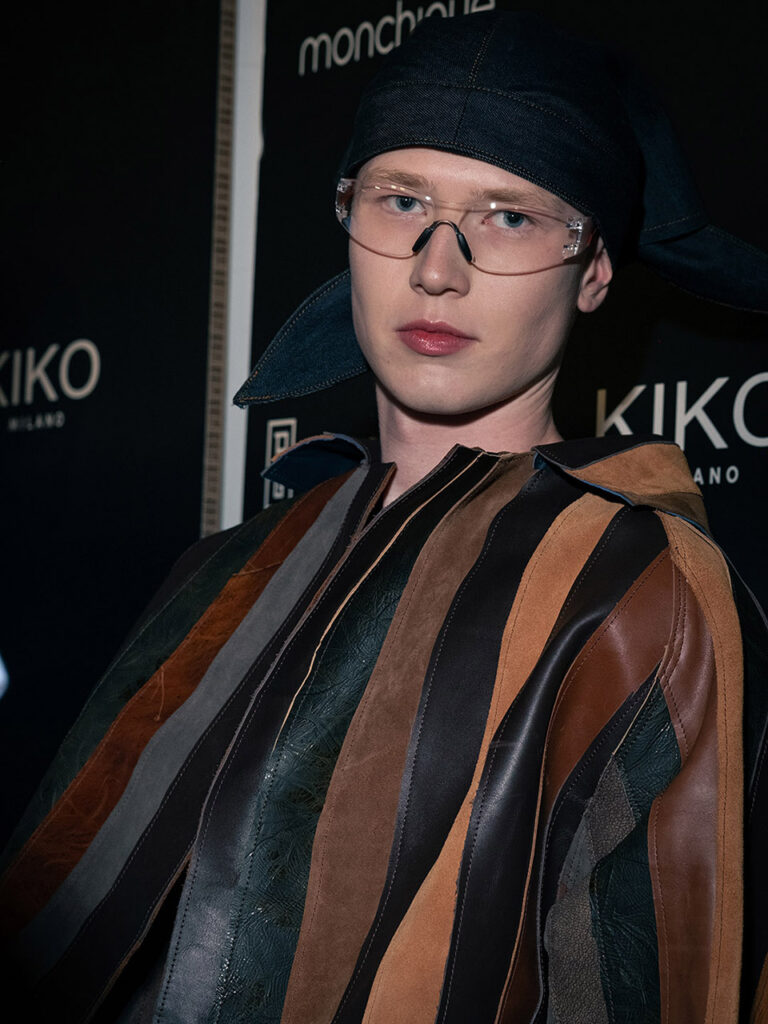
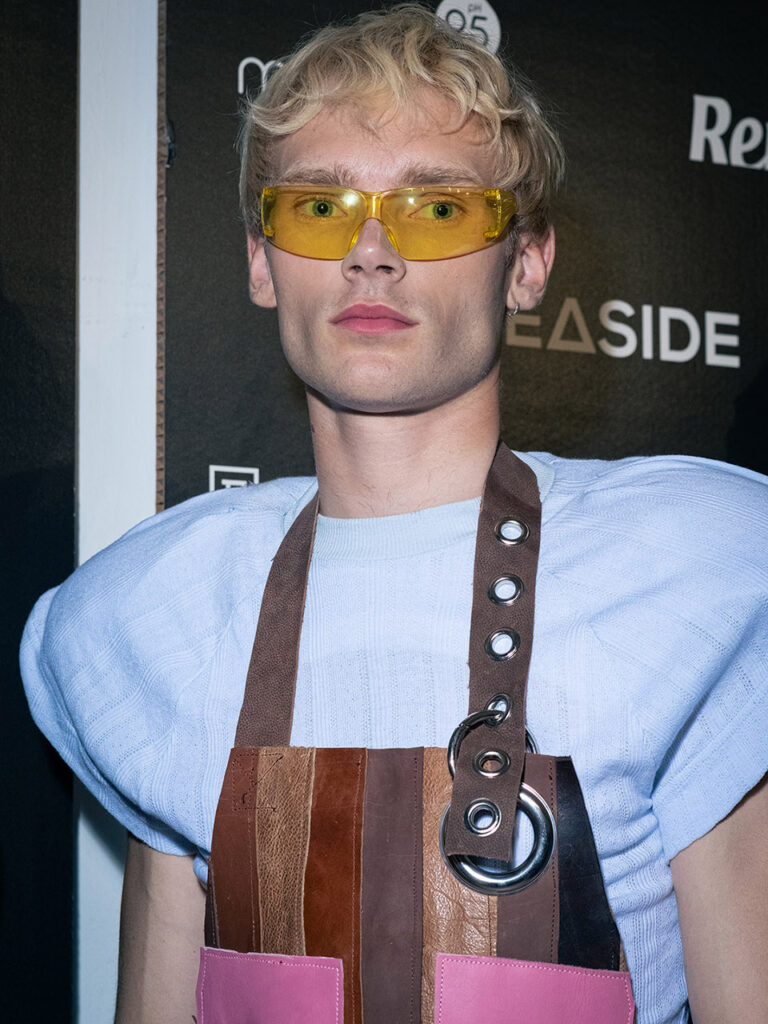
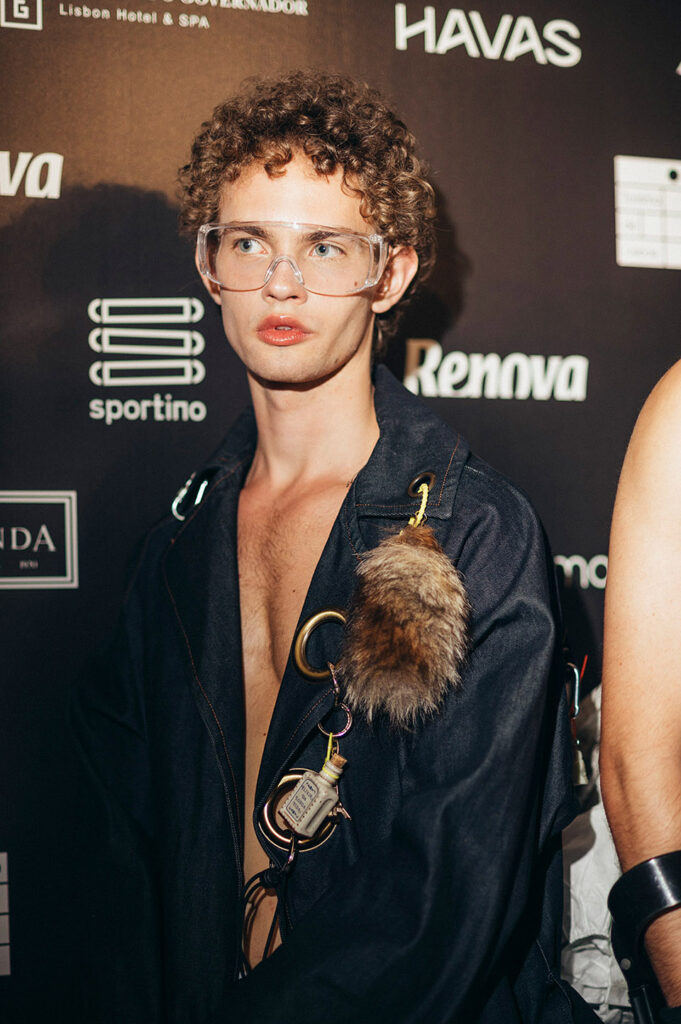
USUAL SUSPECT
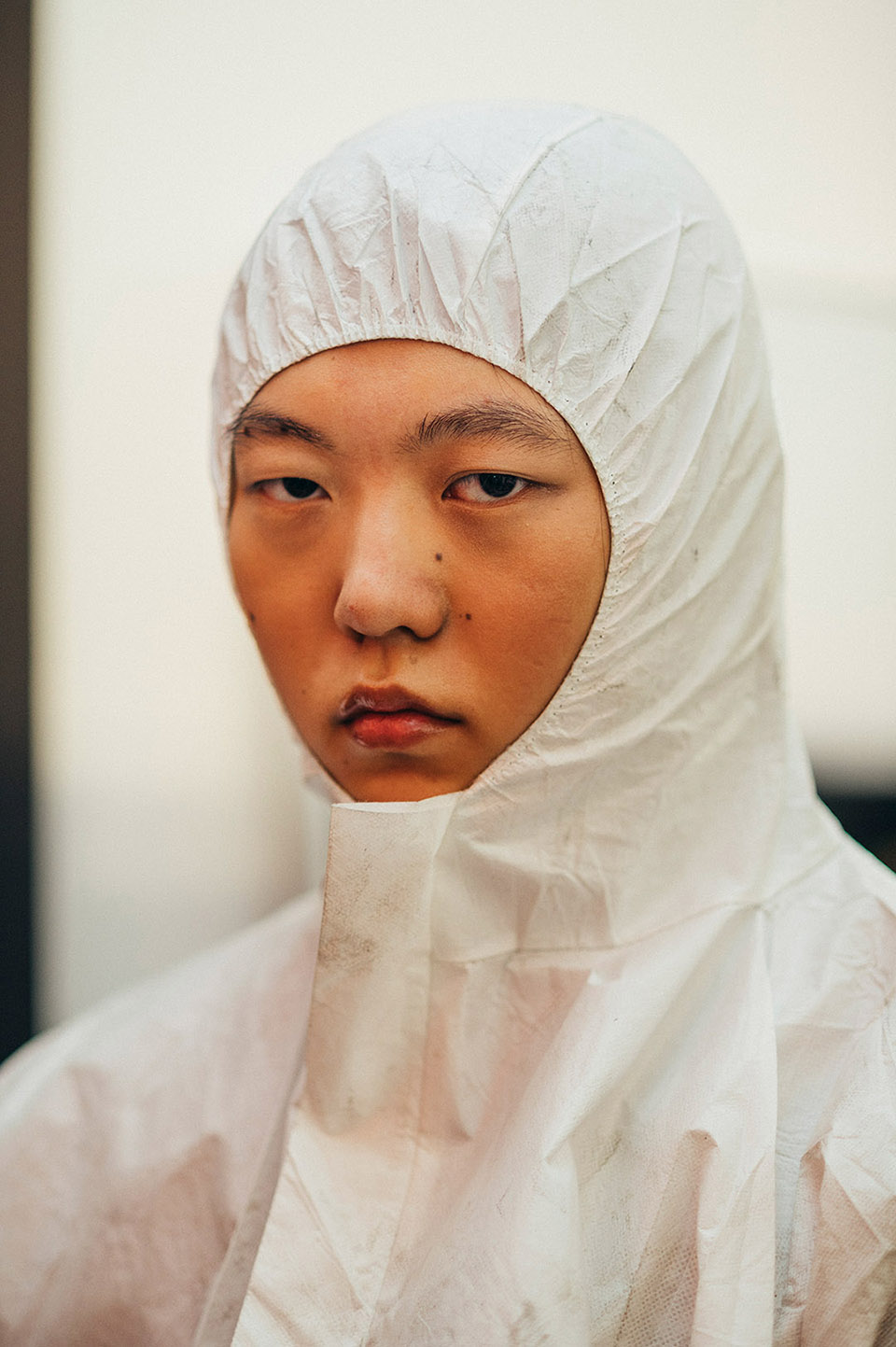
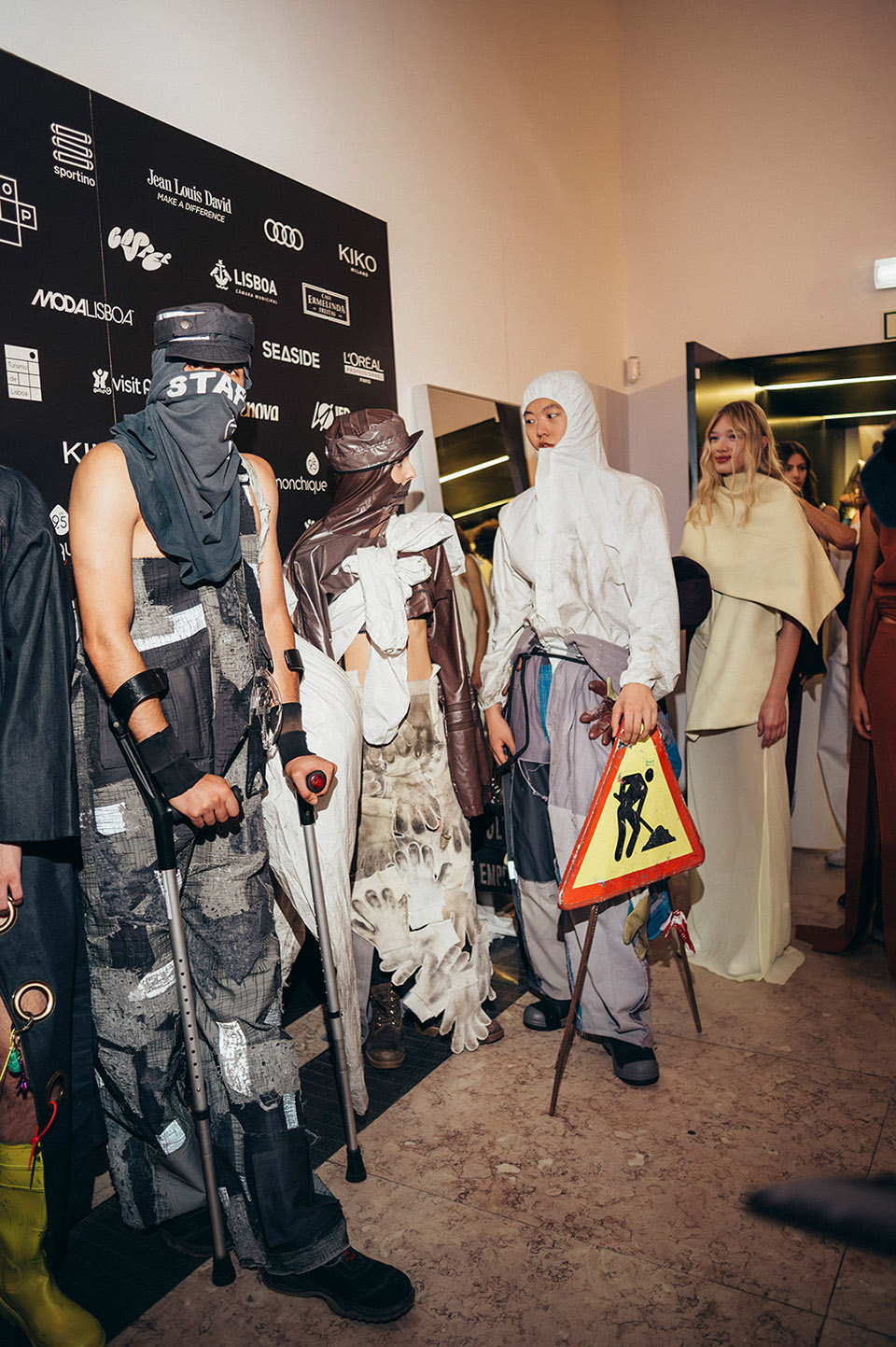
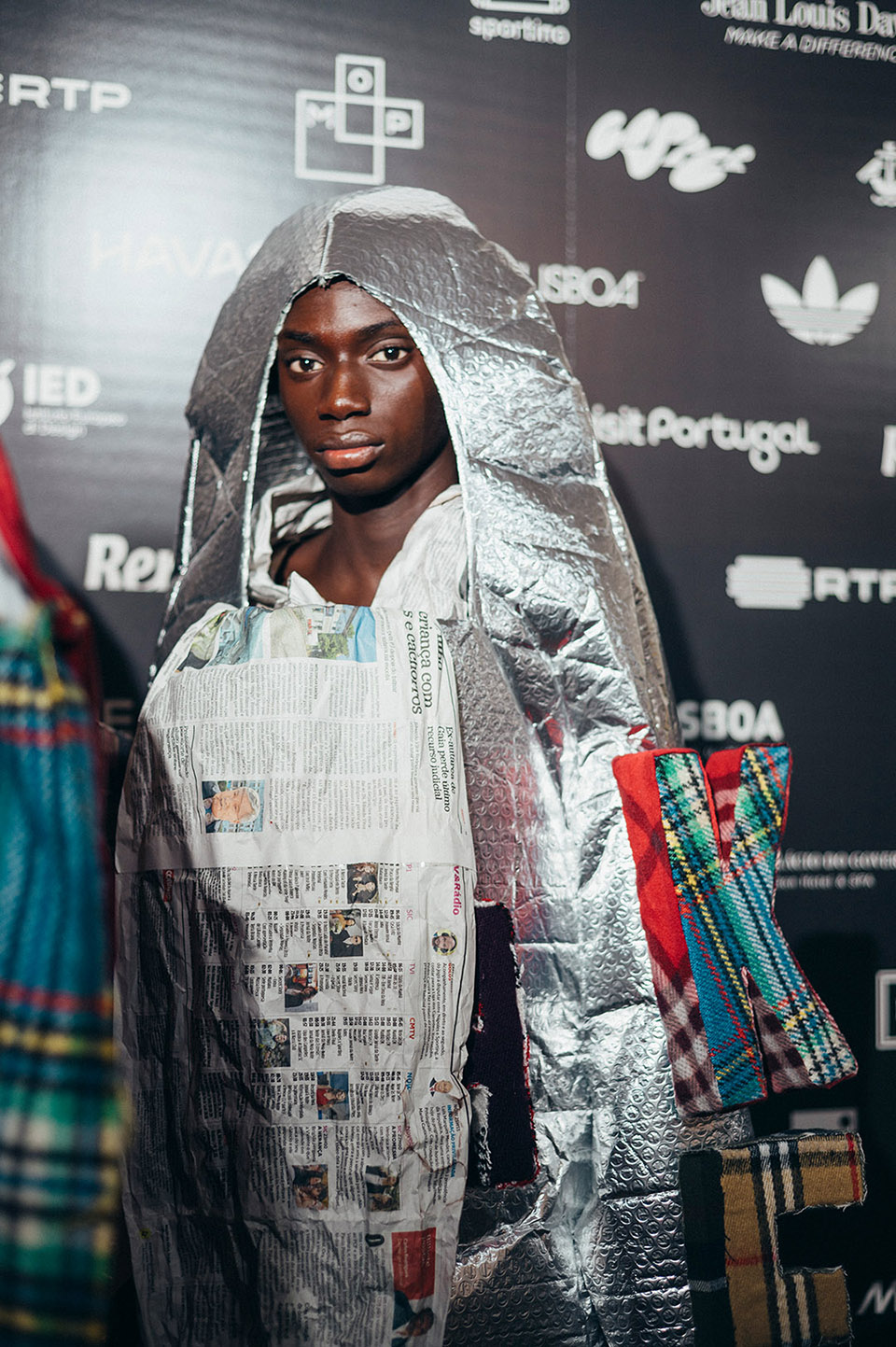
Founded by the designer Xavier Silva, from Aveiro, Usual Suspect 1 of 1 draws inspiration from workwear and streetwear, with a focus on upcycling.
ÚLTIMO EMPREGADO is rooted in Silva’s personal history and in a shared family experience of labour. Years of physical and emotional effort have left visible marks on work uniforms and invisible ones on the bodies that wore them.
This collection promotes upcycling as a form of resistance. Items that once symbolised exhaustion and exploitation are transformed into something with symbolic and artistic value.
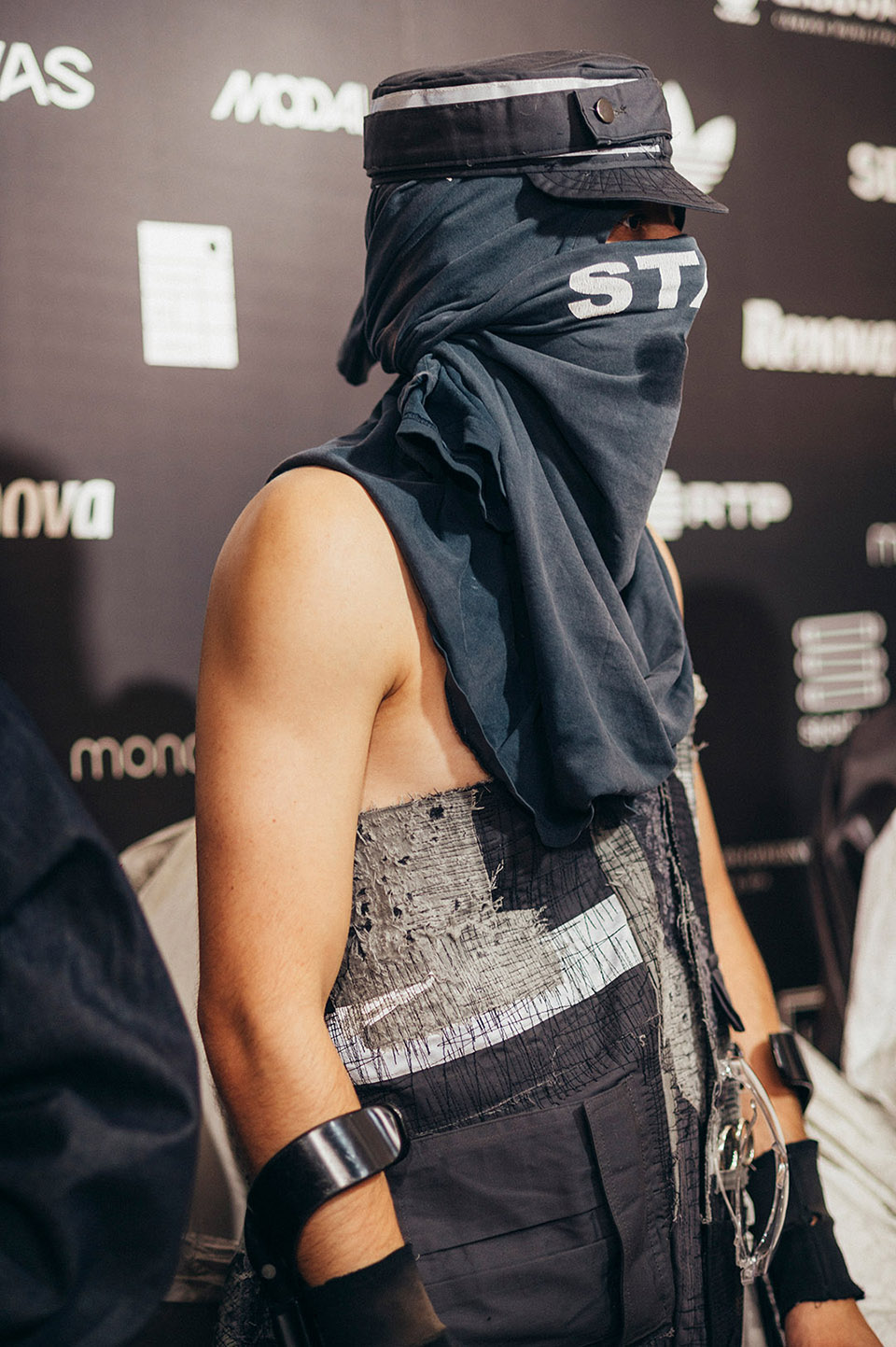
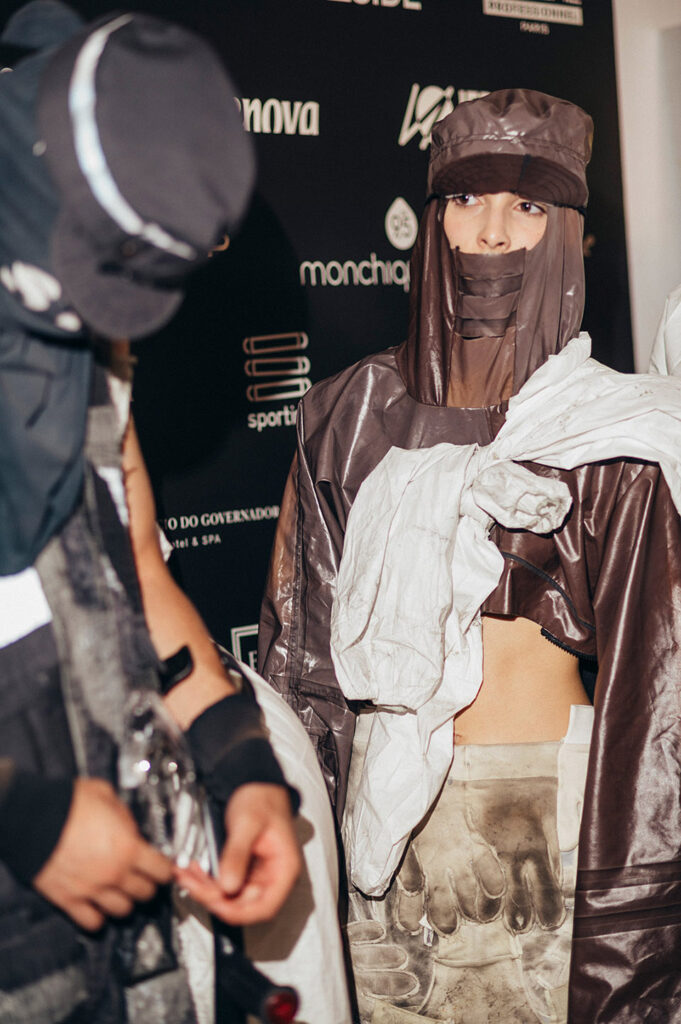
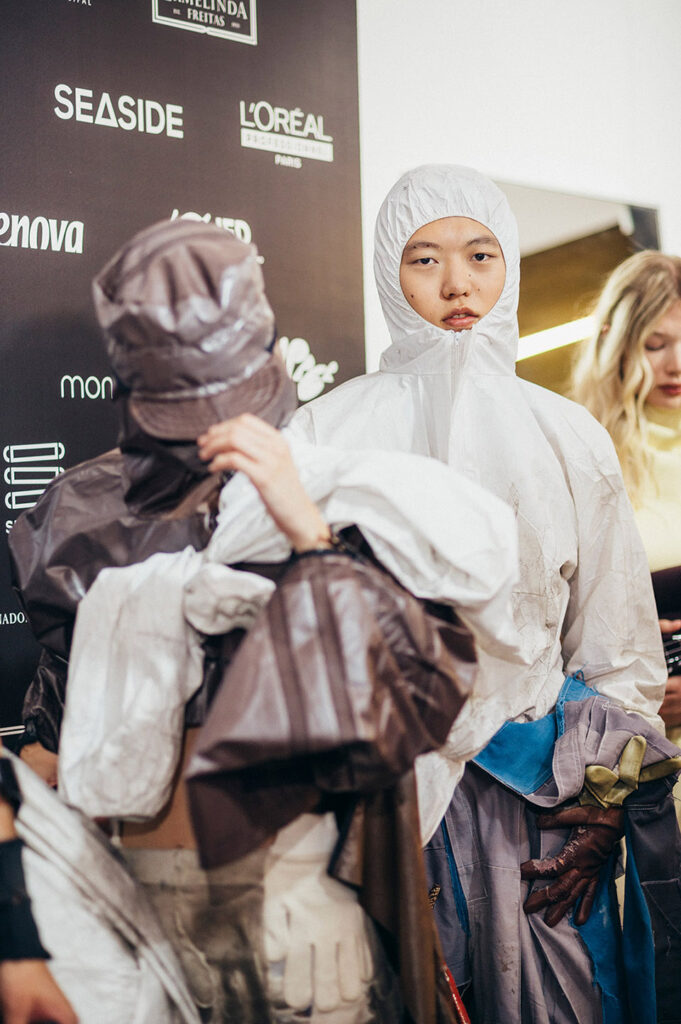
Growing up in conditions of hard and undervalued labour teaches resilience, discipline and a deep sense of responsibility from a very young age. My advice to families in similar situations would be to never underestimate the value of their experiences. Even when society fails to recognise it, this work builds knowledge, ethics and strength that deserve respect. Protecting one’s dignity, memory and identity is essential, especially in environments that often try to erase them. For me, creating “Último Empregado” was a way of honouring my family and myself, and of refusing the silence that often surrounds working-class lives. What needs to change is the way society looks at people who keep everything running while remaining unseen. Culturally, we need more honest representations of working-class realities, told by those who live them. Socially, we need fairer conditions, respect, and the understanding that dignity should never depend on the type of work you do.
Xavier Silva
Mariana Garcia
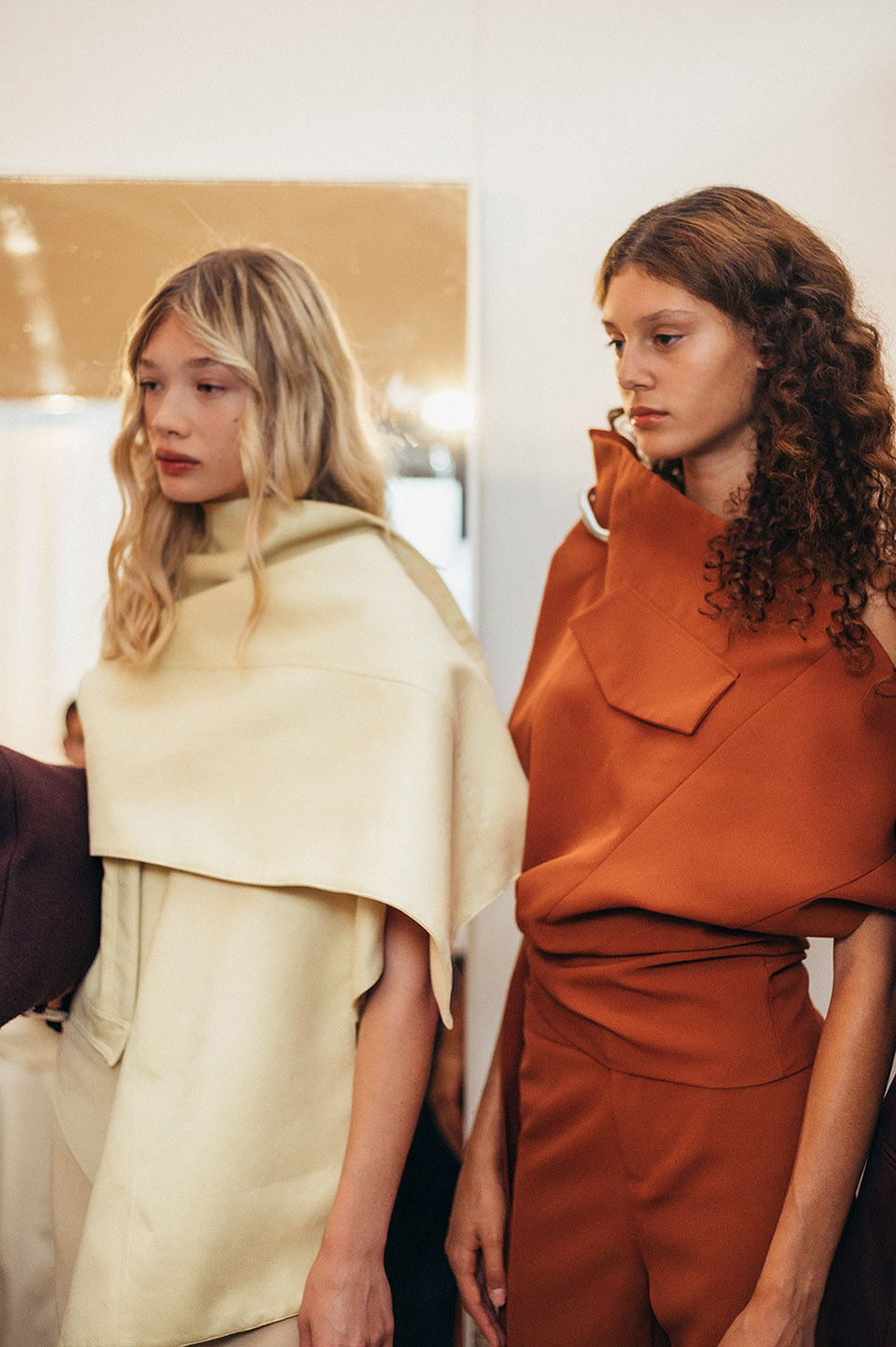
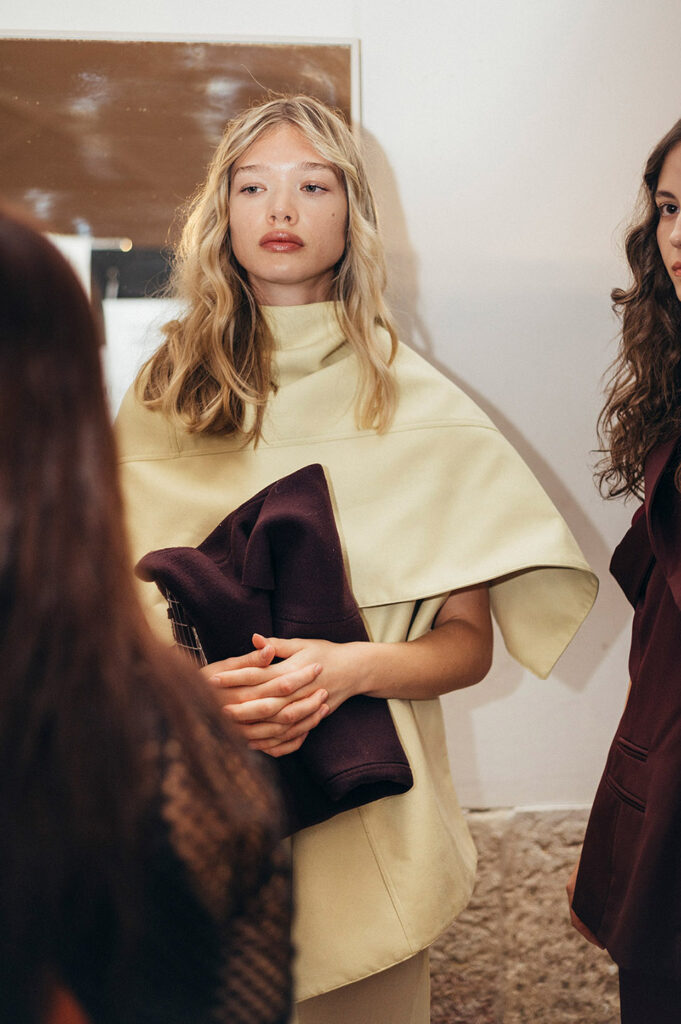
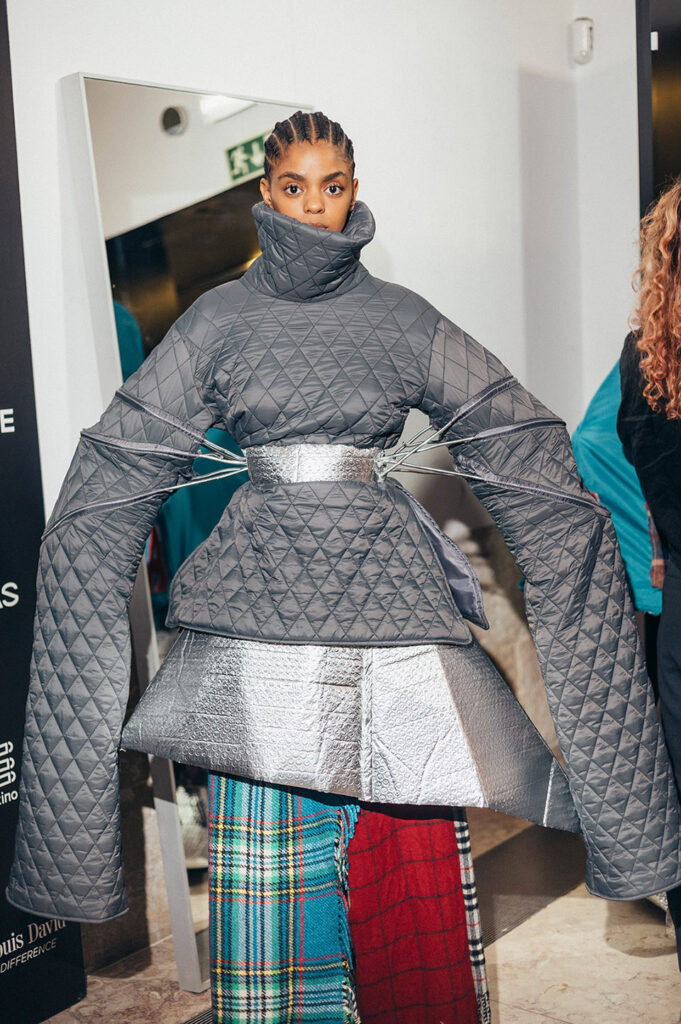
Hailing from Vila Nova de Famalicão, Mariana Garcia explores the relationship between the body, movement, and structure, striking a balance between functionality and elegance.
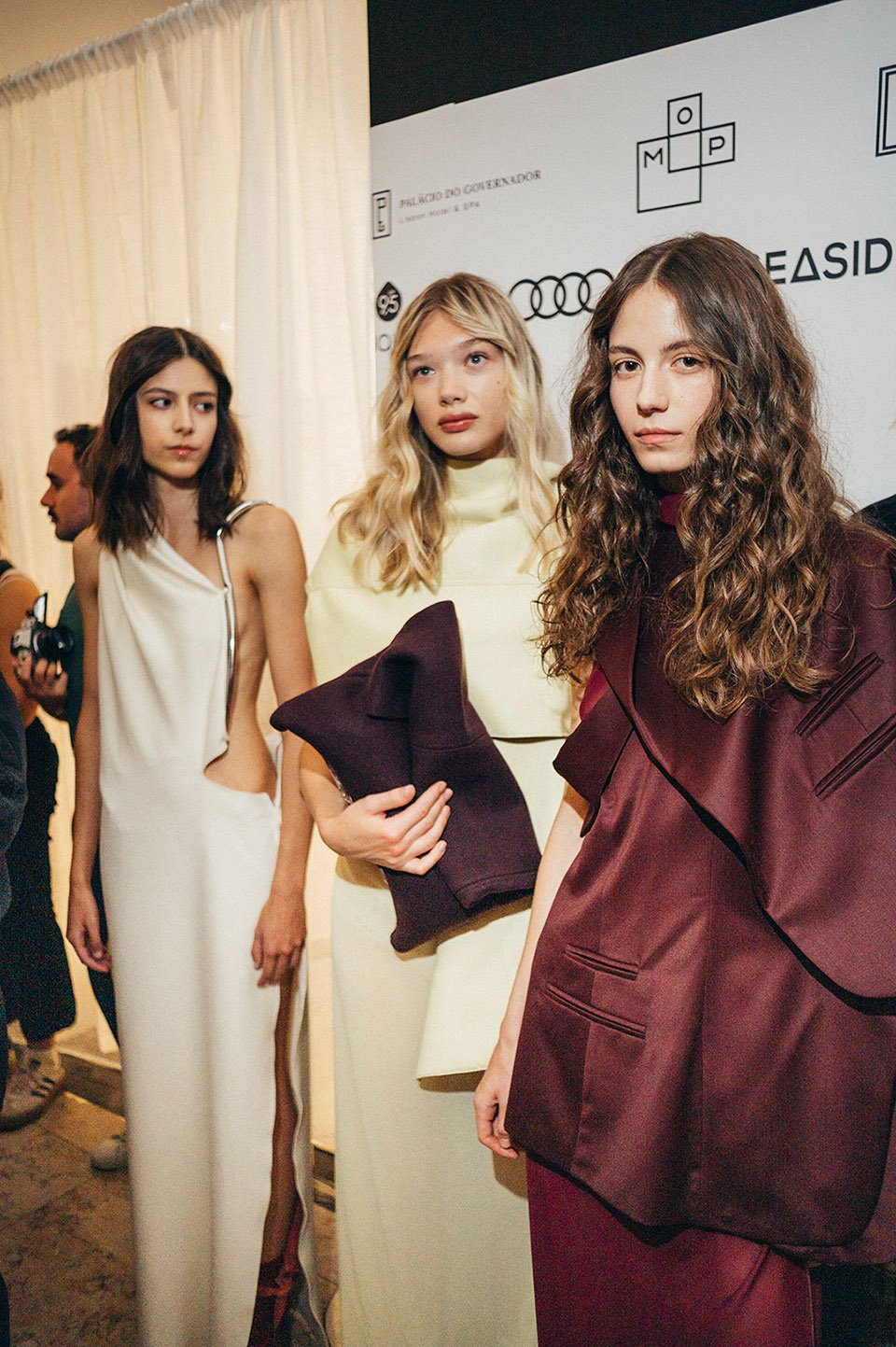
COTA 0 is conceived as the beginning of a creative journey and takes its name from topography, where quota 0 marks the starting point, the base from which everything is built.
The collection draws direct inspiration from the work of the American sculptor Richard Serra. Renowned for his large-scale steel sculptures, Serra’s work explores weight, gravity, and spatial tension, prompting viewers to experience form through movement.
In Mariana’s work, this influence is translated into a process of deconstruction, primarily of blazers and trousers, to create volume and movement.
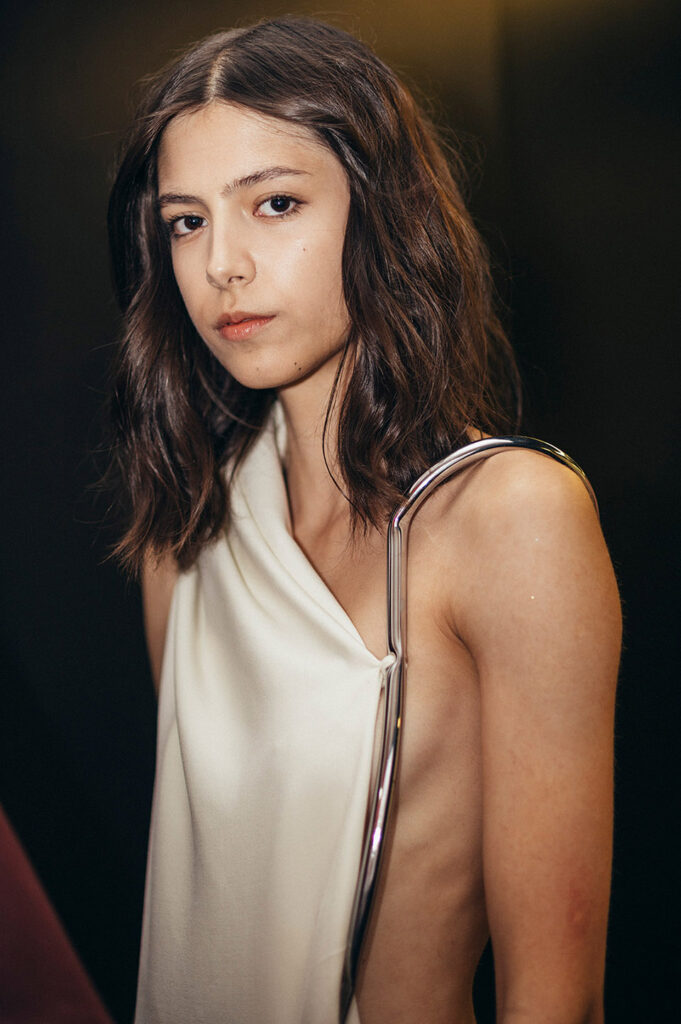
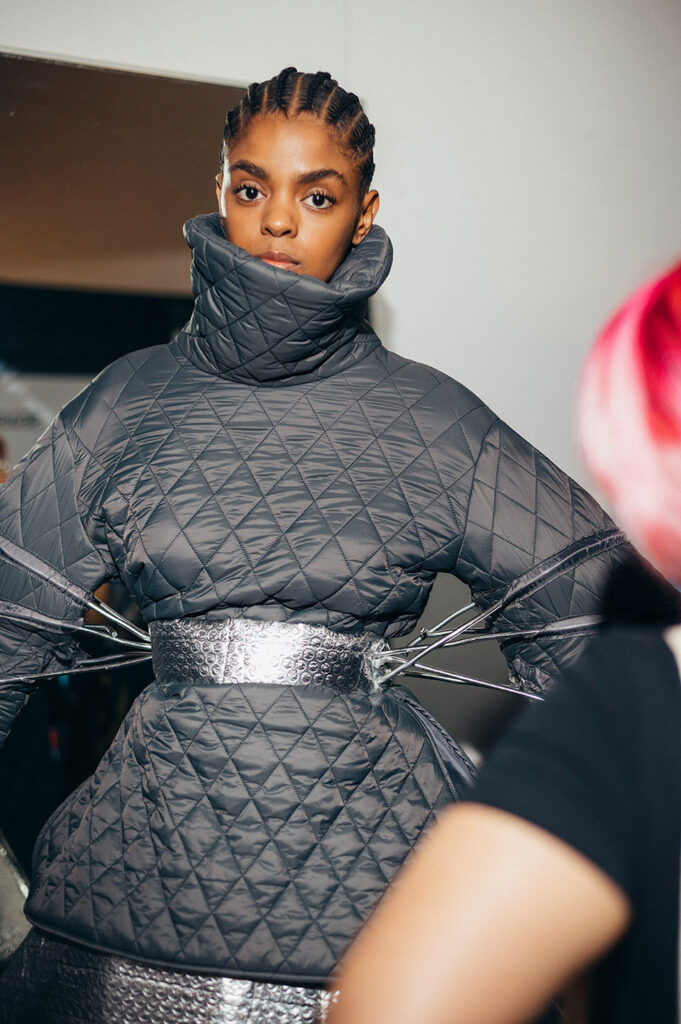
The precision of classic tailoring is disrupted by the use of industrial materials. Copper and chrome elements, sourced from the designer’s grandfather’s motorcycle workshop, have been integrated into the garments, challenging familiar and classical forms.
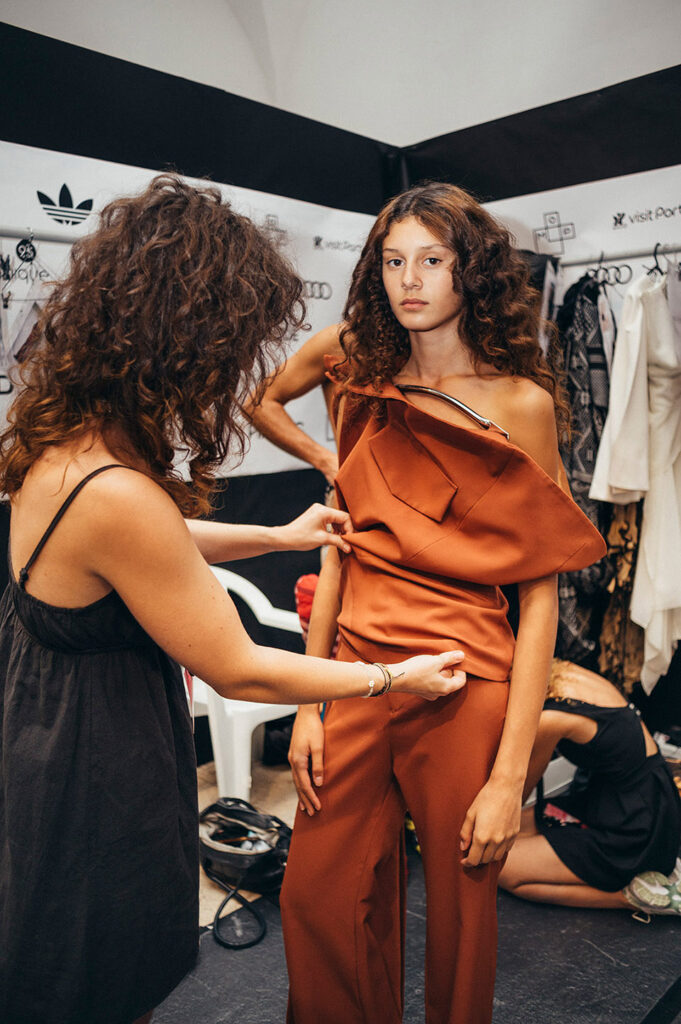
Deconstruction, for me, is a method. It is directly reflected in the pieces through physical work on the mannequin: I move the pieces, turn them inside out and explore different possibilities. I look for lines that catch my attention and that the body, through its movement, enhances even more. On a personal level, it is also a way of thinking that helps me deconstruct certain thoughts or limitations before moving on to a new step, to a new COTA.
Mariana Garcia
DO CRUZEIRO SEIXAS EVA
Eva do Cruzeiro Seixas is a fashion designer and visual artist whose work approaches fashion as a multidisciplinary field that intersects with space, memory and identity.
A CASA MORREU (2021–2025) is a long-term narrative of collapse and reconstruction that offers an intimate interpretation of home as a shifting entity moving between the physical – as inhabitable territory – the emotional – embodied in another person- and the philosophical — a symbol of continuity, return, and renewal.
These layers overlap, reflecting the instability of belonging and the constant negotiation between the self, space, and community. “In the search for a home, what do we tolerate in the name of companionship, of the desire for community?”
The project confronts the moment when shelter becomes constraint – when what once offered protection begins to suffocate – and proposes that home is not a place to return to, but something to be carried within.
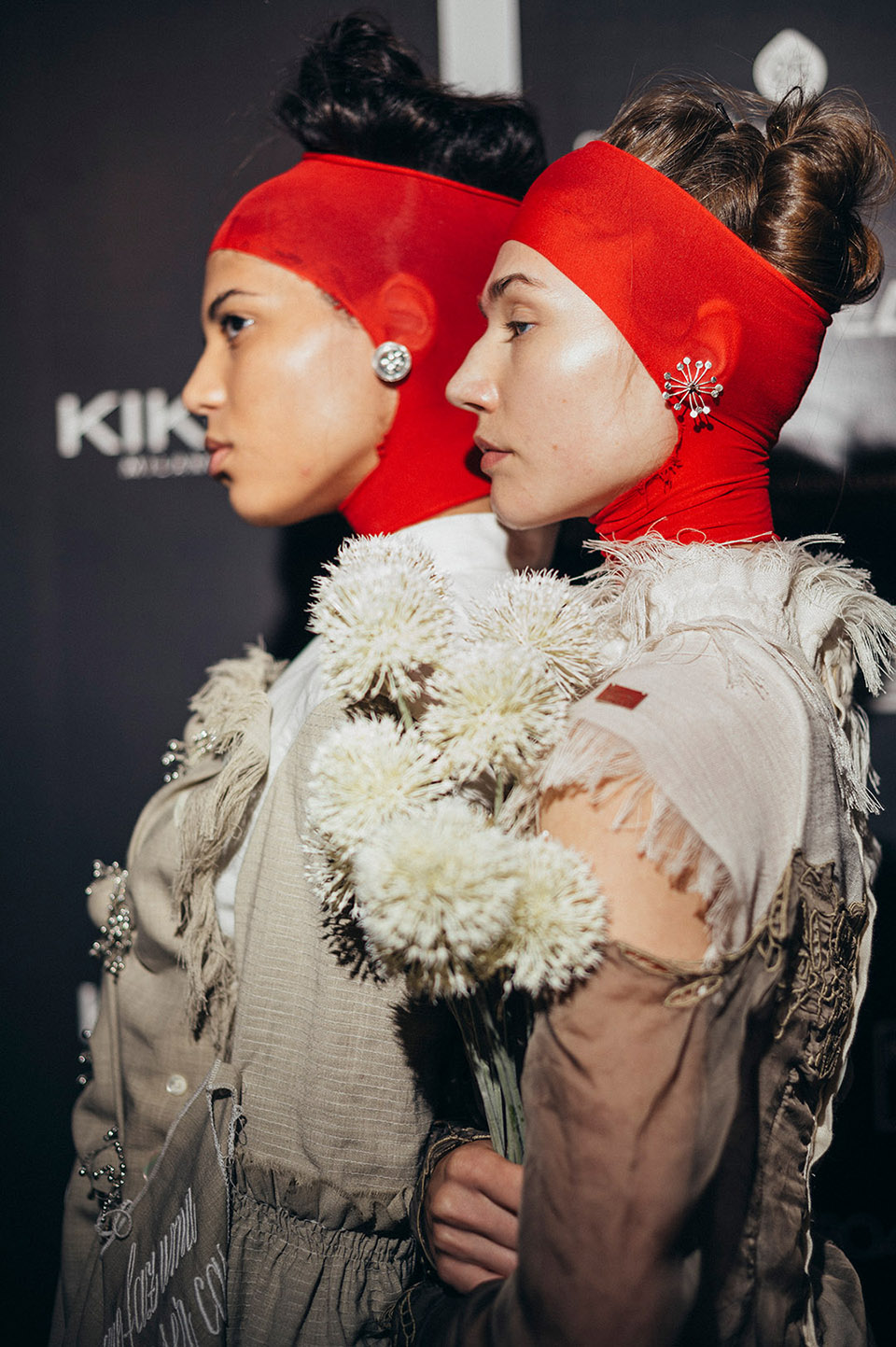
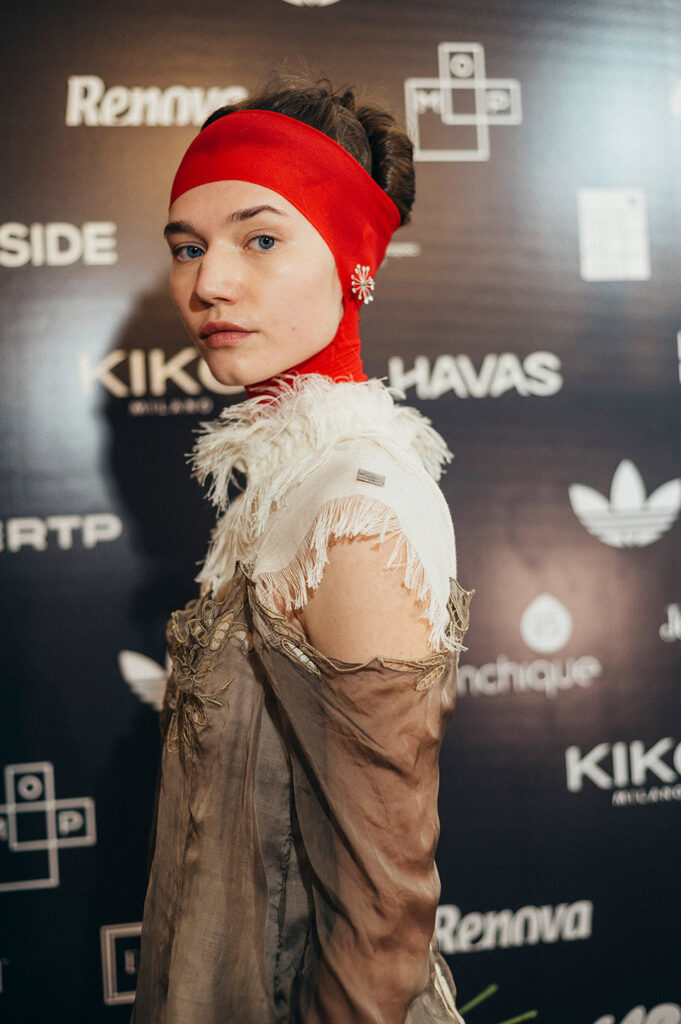
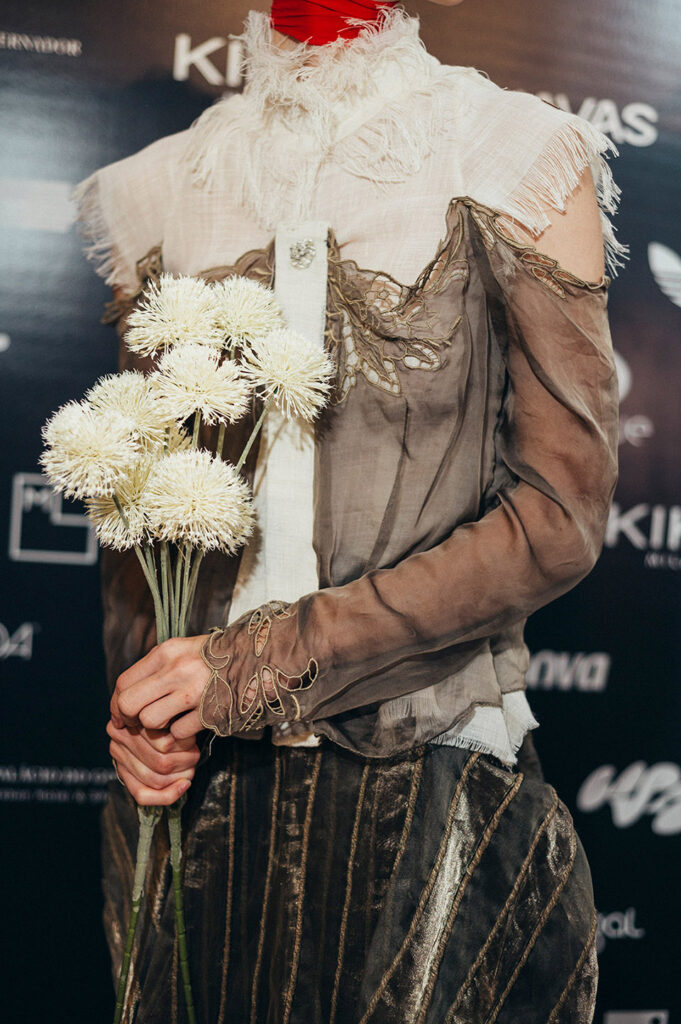
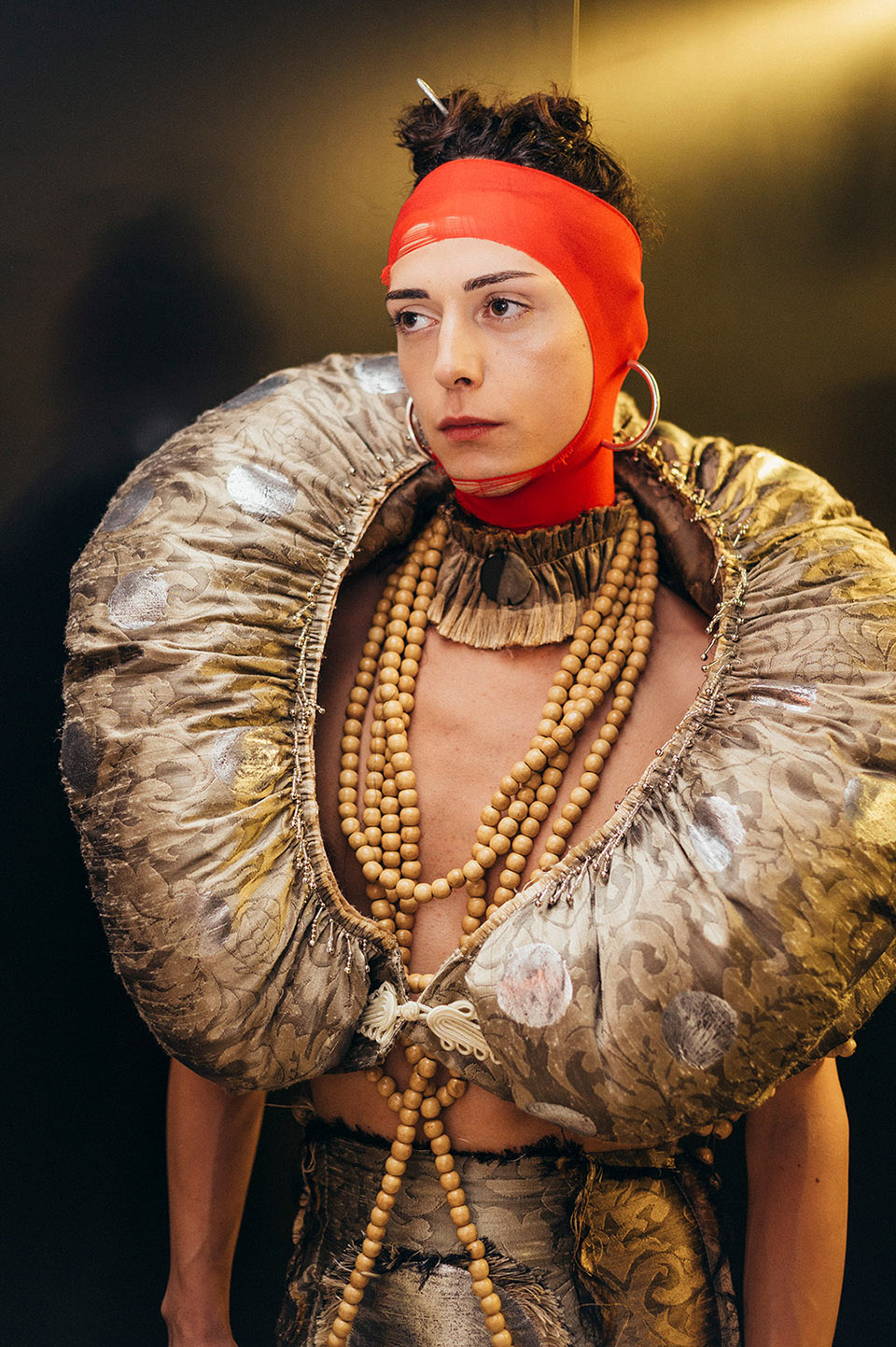
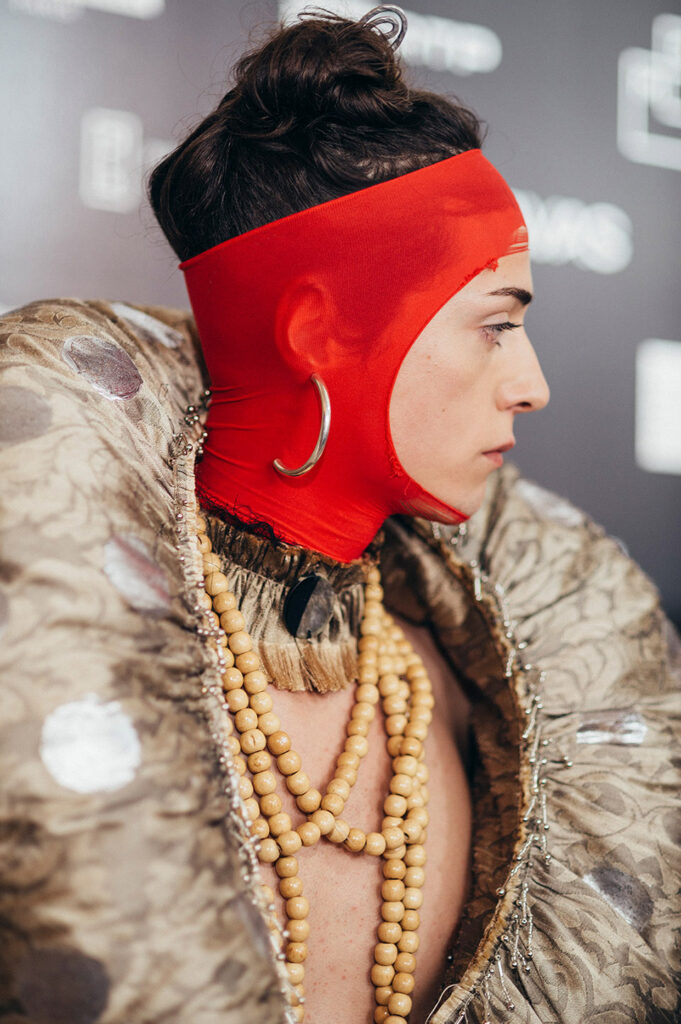
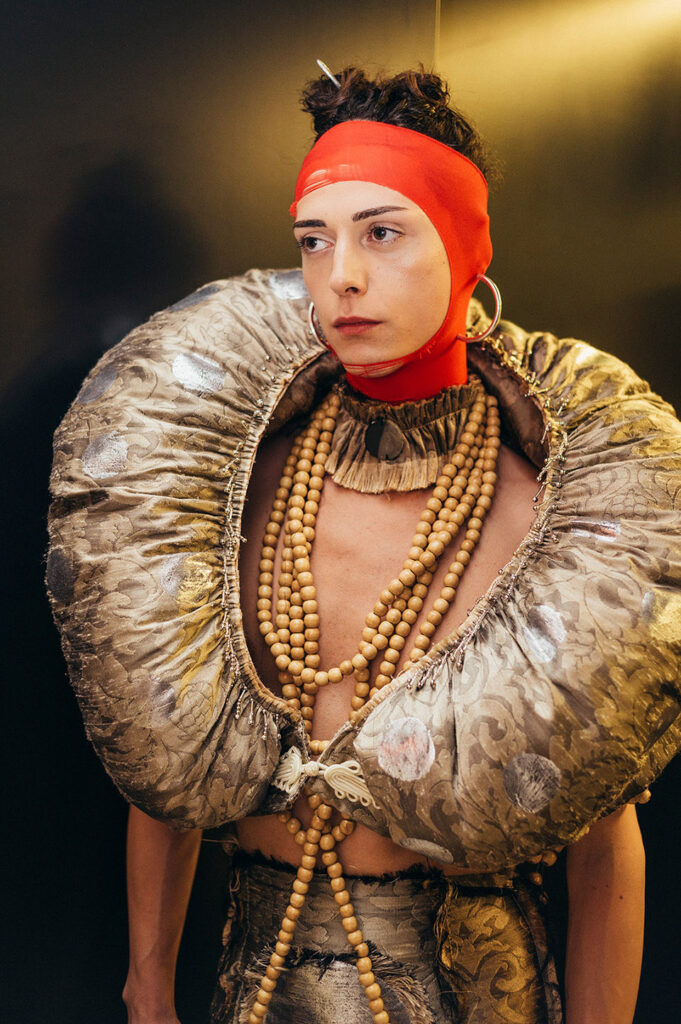
Each phase redefines what home means, what it shelters, and what it restricts. This ongoing tension directly shapes the garments I create. They carry traces of protection, fragility, weight, and repair, often existing between comfort and discomfort. In that sense, A CASA MORREU is not a closed chapter, but a continuous framework through which I understand my personal sense of home and translate it into form, material, and construction.
Eva seixas
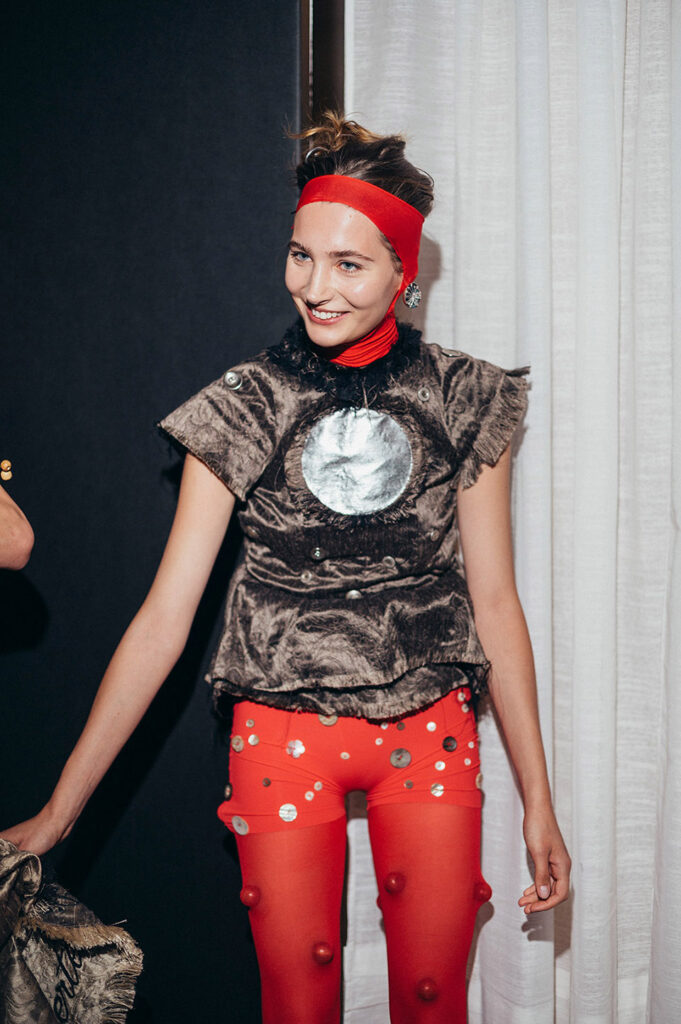
ELIO
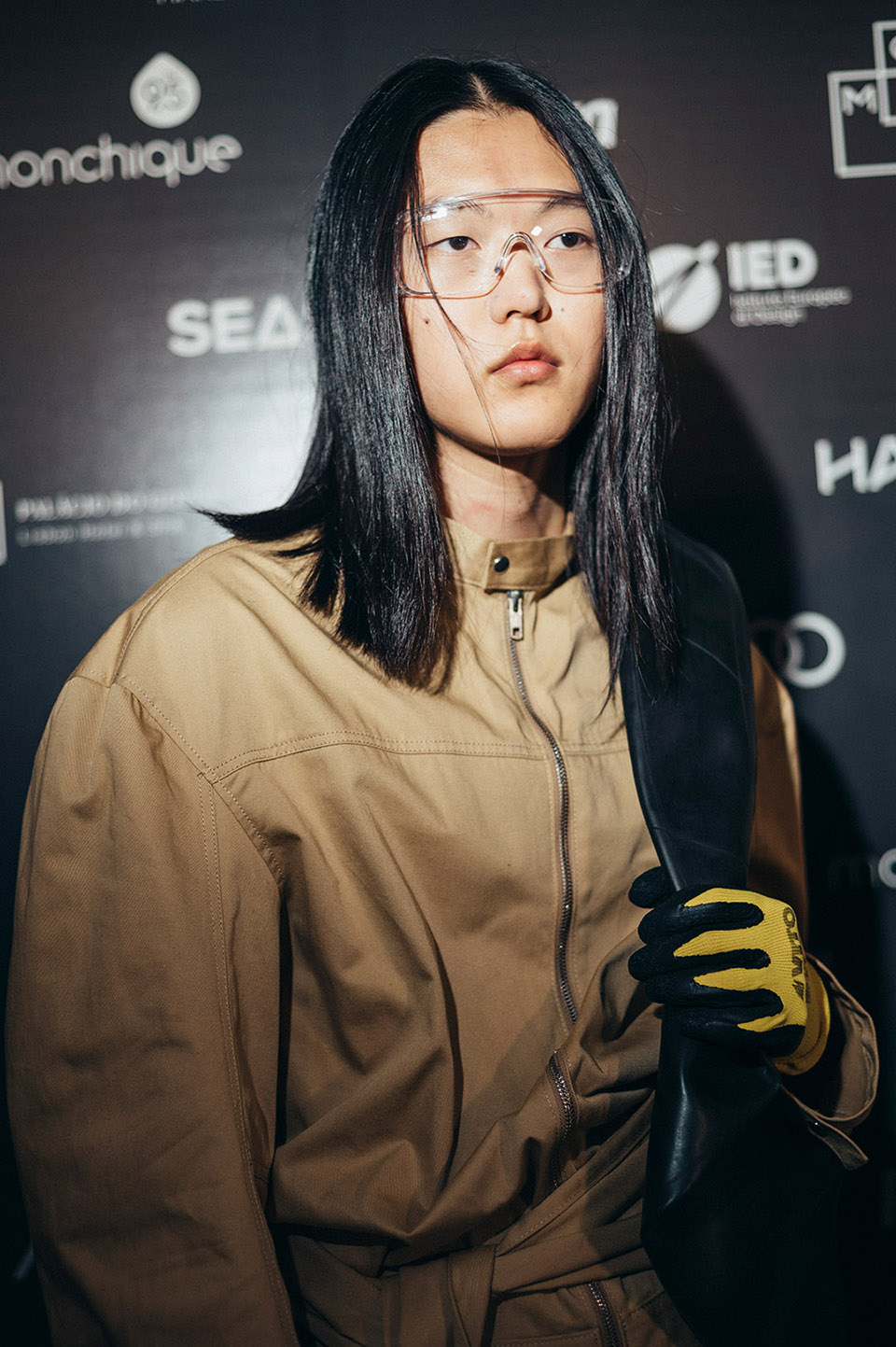
ELIO is the project of Élio Ramos, a designer born in the Algarve and based in Lisbon, whose work uses fashion as a critical language. Through deconstruction and material research, he addresses the themes of masculinity, identity and sustainability with a touch of irreverence.
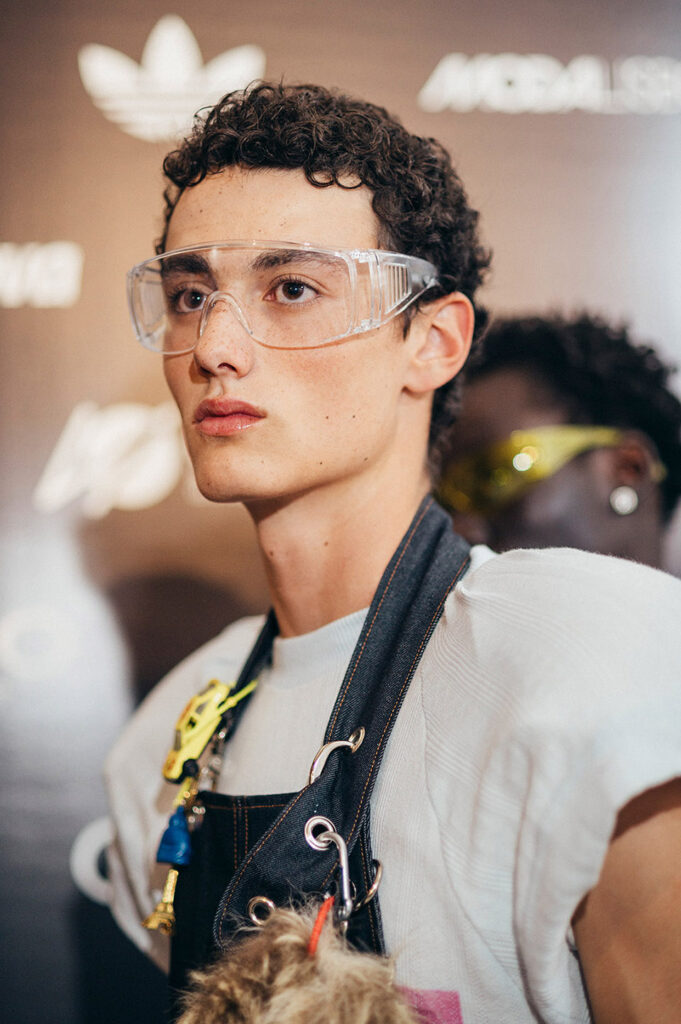
LUBE explores the visibility of the male body in industrial and mechanical settings, employing a visual language that captures the tension between exposure and protection, as well as strength and constraint.
The use of hard denim and inner tubes provides a masculine, rigid foundation associated with workwear and industrial durability. However, inner tubes are components designed to provide support while remaining unseen and protected. By exposing this component, the collection suggests that men do not always need to wear a protective layer and can allow themselves to be seen as they are.
The sculptural metal pieces, such as an exaggeratedly muscular torso, reflect a constructed ideal of strength that simultaneously exposes its artificiality. When placed over a living body, masculinity becomes something that can be moulded, worn and examined.
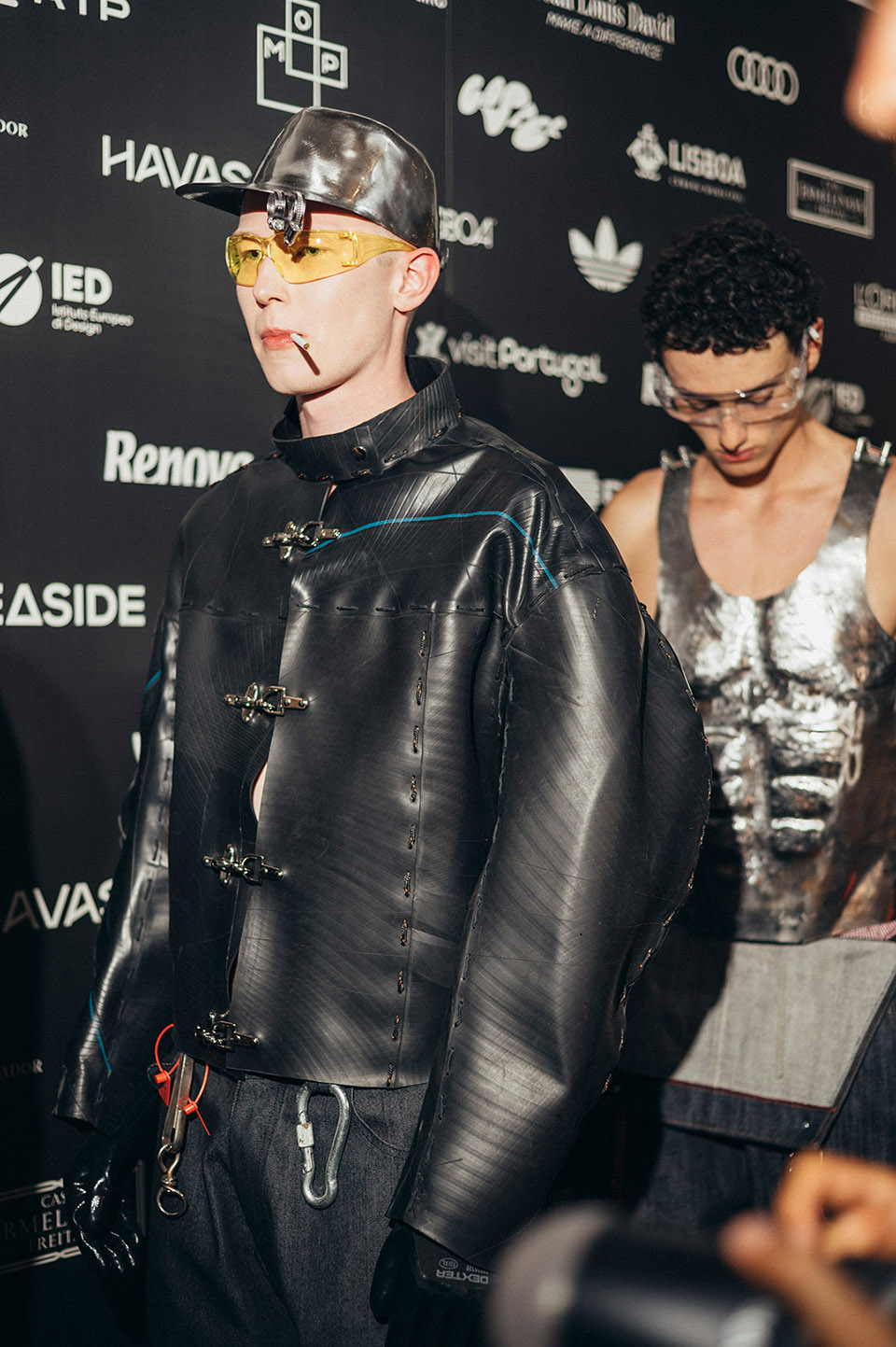
For me, this expectation of hiding the male body appears very early and in a quiet way. It’s not so much an explicit prohibition, but a constant education: the male body should be functional, contained, it shouldn’t ask for attention or care. I grew up understanding that showing the body, or admitting fragility, desire, or doubt, was often read as weakness or deviation. There is a permanent surveillance over how the male body occupies space.
Élio Ramos
Inês Almeida
Based in Castelo Branco, Inês Almeida approaches fashion from a multidisciplinary perspective, combining conceptual design, production and jewellery. Her work reflects a strong social awareness and a belief in fashion as a critical and political medium.
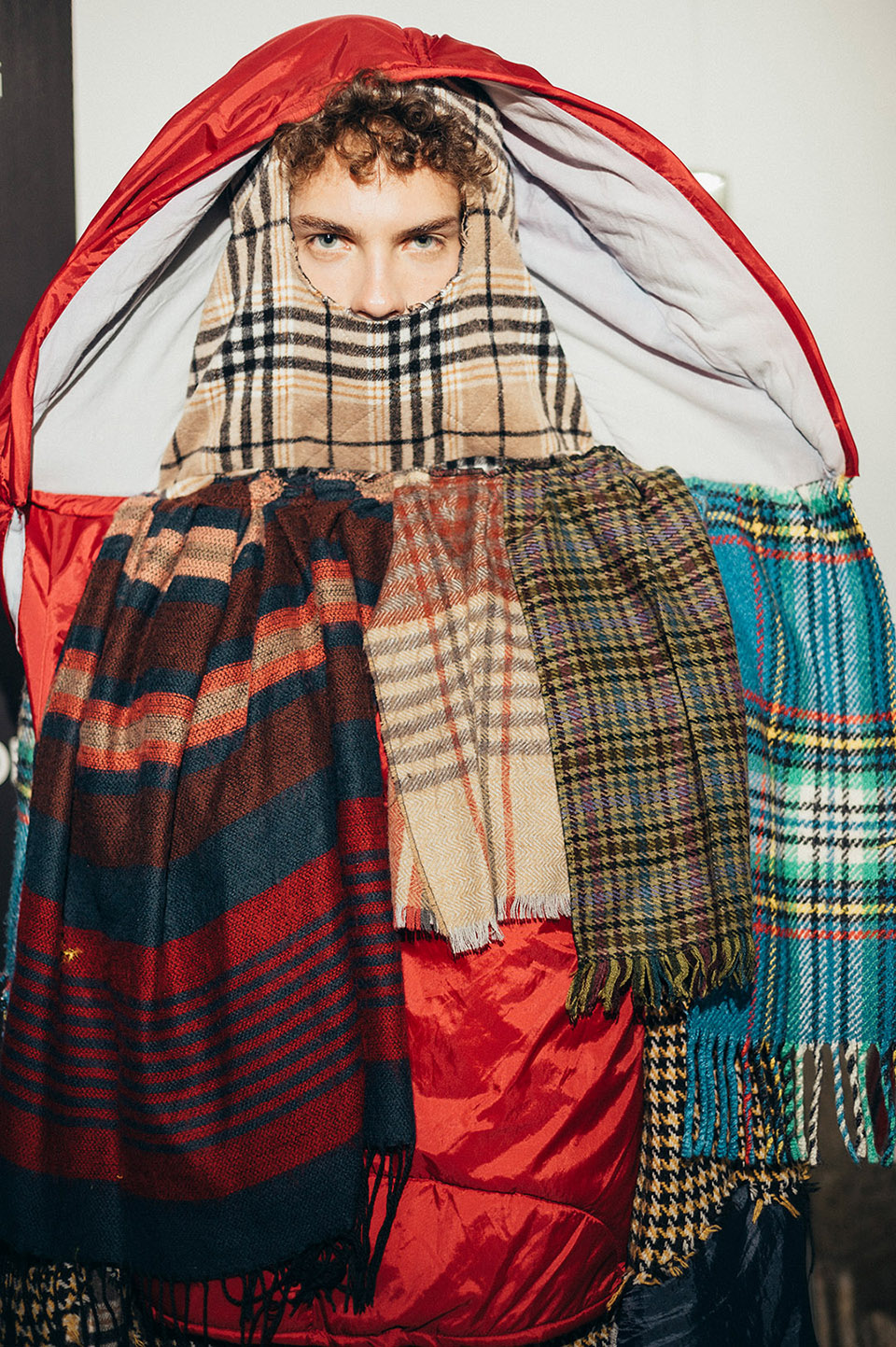
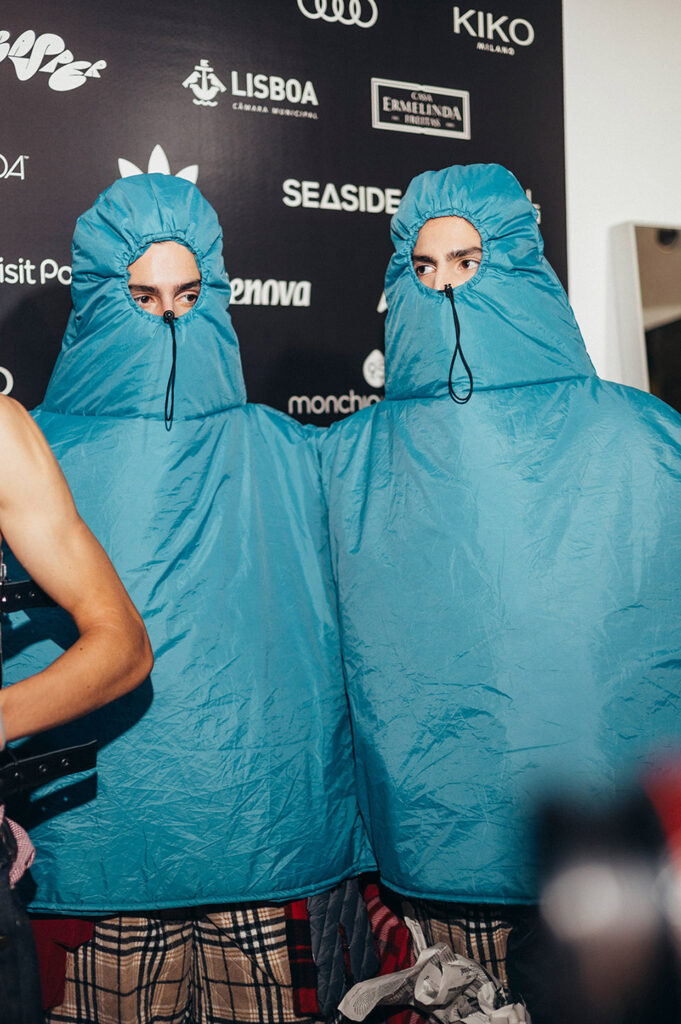
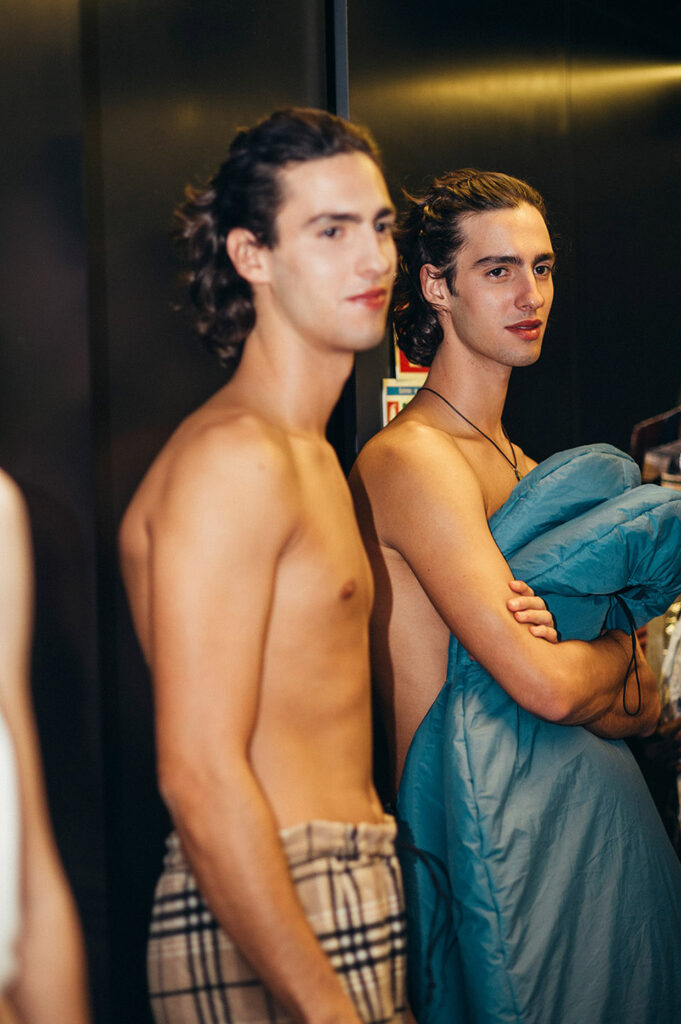
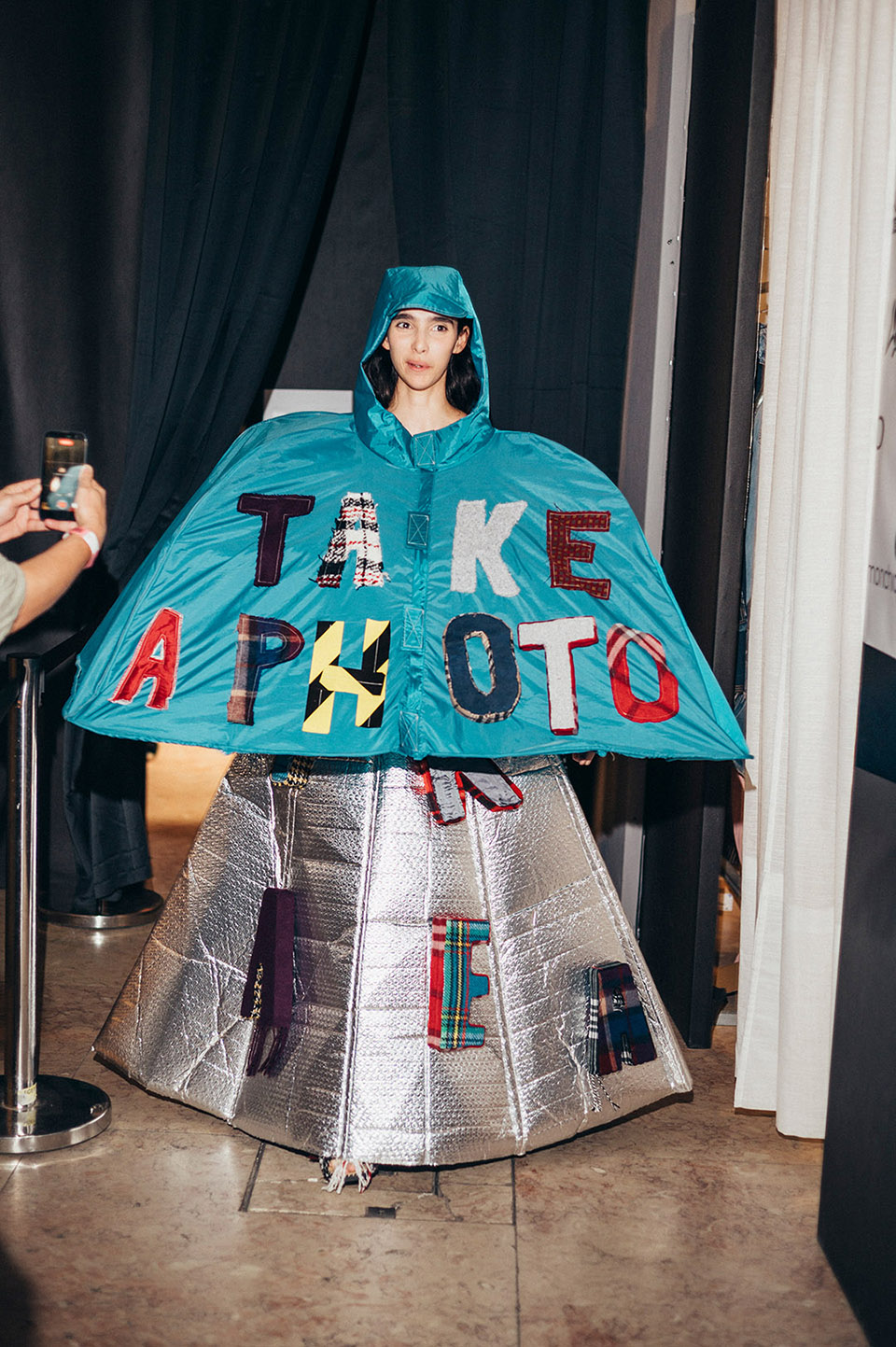
Misinformation erodes trust and exacerbates social division, blurring the distinction between truth and distortion. In response, ARMA A TENDA presents a political reflection on invisibility and inequality in contemporary Portugal. Drawing on sleeping bags and other materials that evoke isolation, the installation reflects the reality experienced by homeless people and aims to raise public awareness.
The final piece, featuring a tent as a piece of clothing, carries an explicit message: “TAKE A PHOTO”. This may be an attempt to confront the audience with its role as observer, exposing how poverty and displacement are often reduced to a spectacle.
For me, everything is political. And art, in this case fashion design, can and should be a form of introspection and dissemination of messages. This idea stemmed from conversations with people from different (social and economic) realities, about something that was worrying and alerting me. From there, I saw that many ideas from the people around me had arose from misinformation and not from a lack of compassion.
Ines almeida
To boot…
See the full collection of Sangue Novo here at Modalisboa.
Adja Baio @helena_baio
Ariana Orrico @arianaorrico
Do Cruzeiro Seixas Eva @evadocruzeiroseixas
Elio @elio__________________
Inês Almeida @indole.ia
Mafalda Simões @mafalda_beatriz
Mariana Garcia @_mariana_garcia0
See more of SANGUE NOVO here on ZOOT.