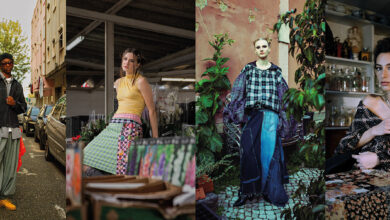
a playful paradox
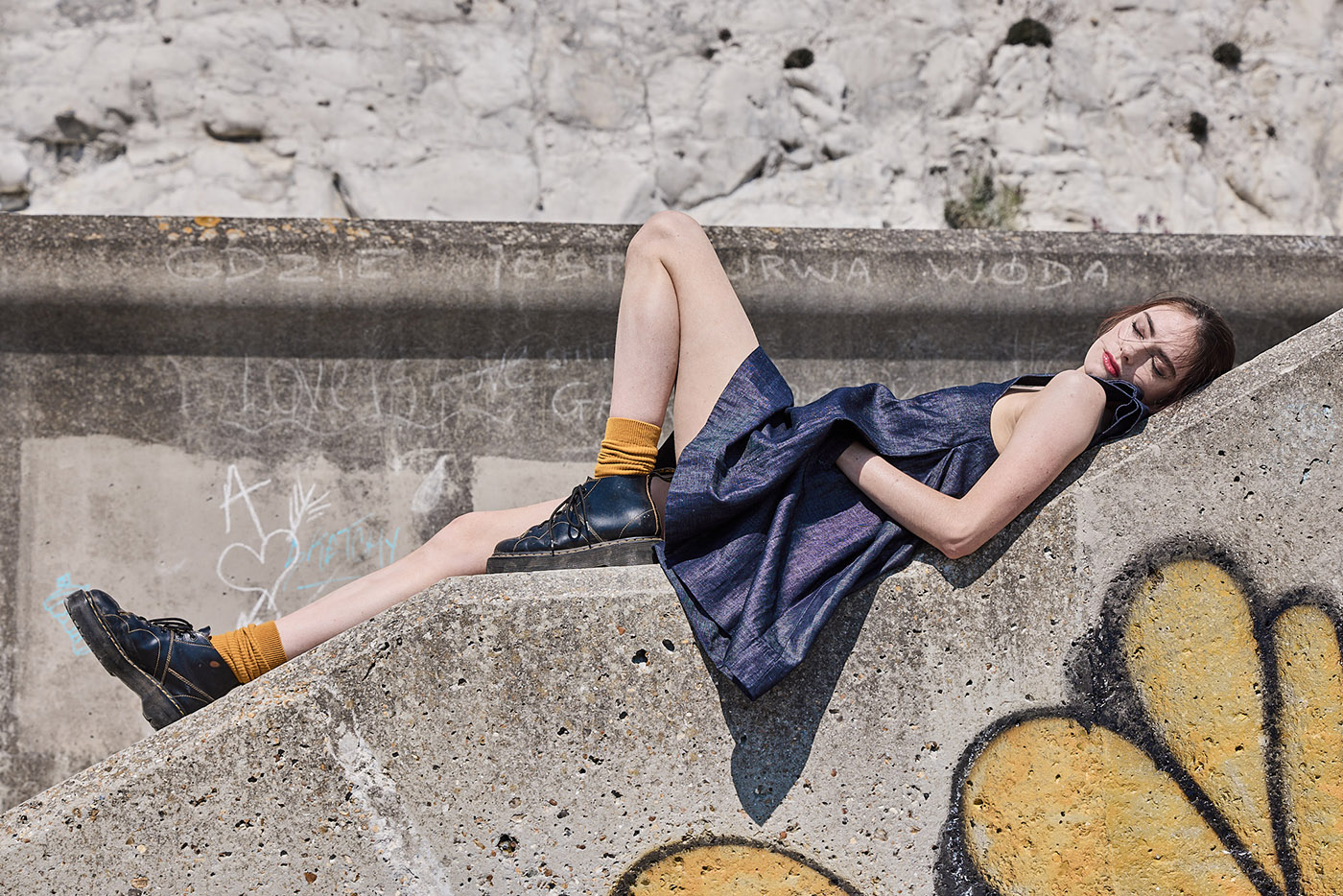
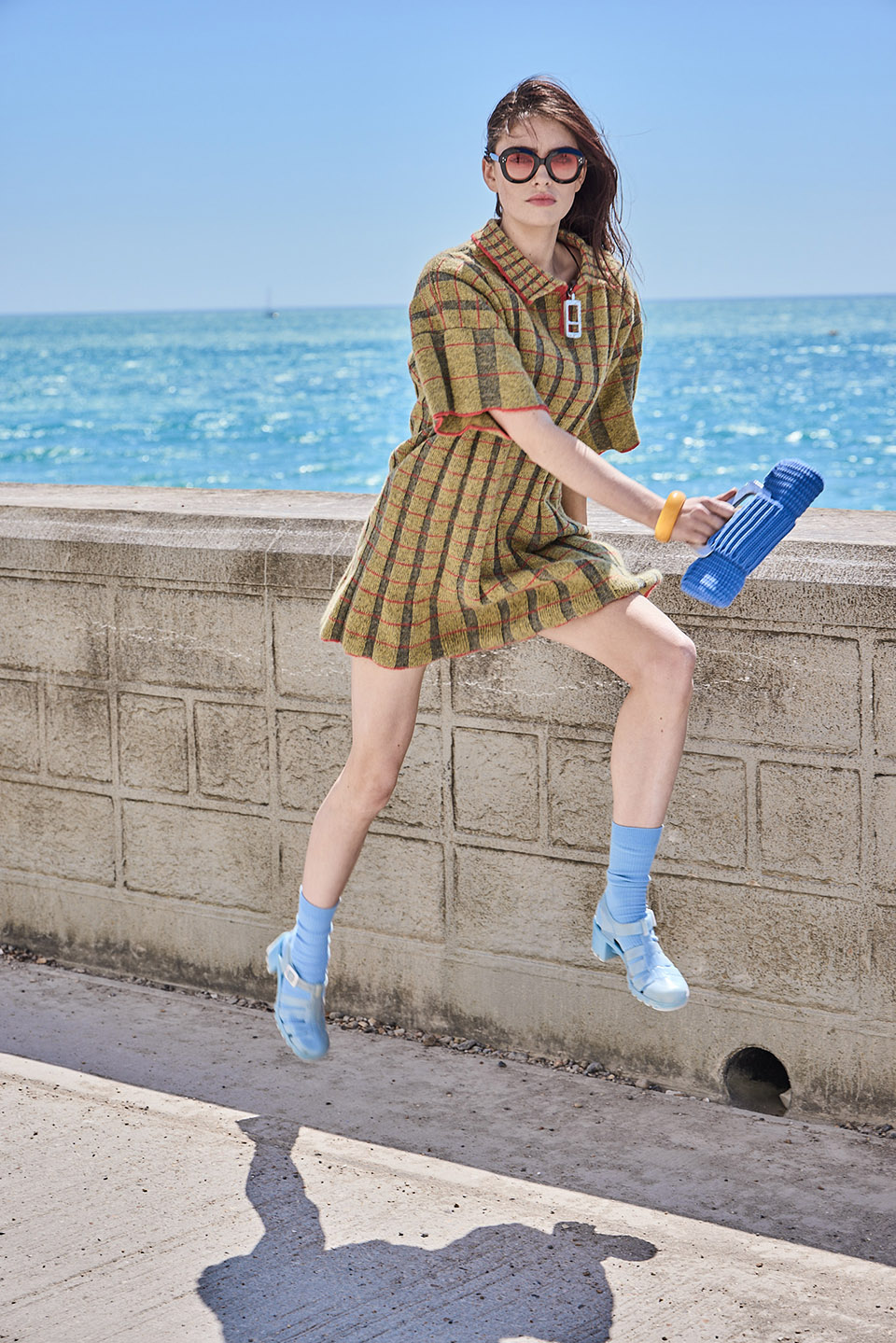
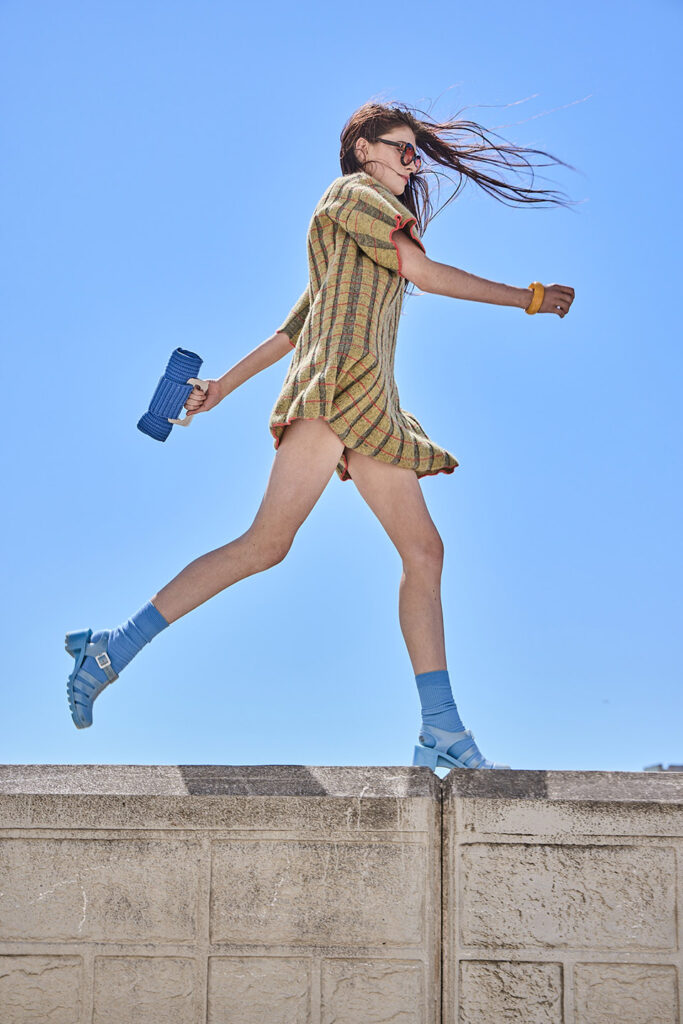
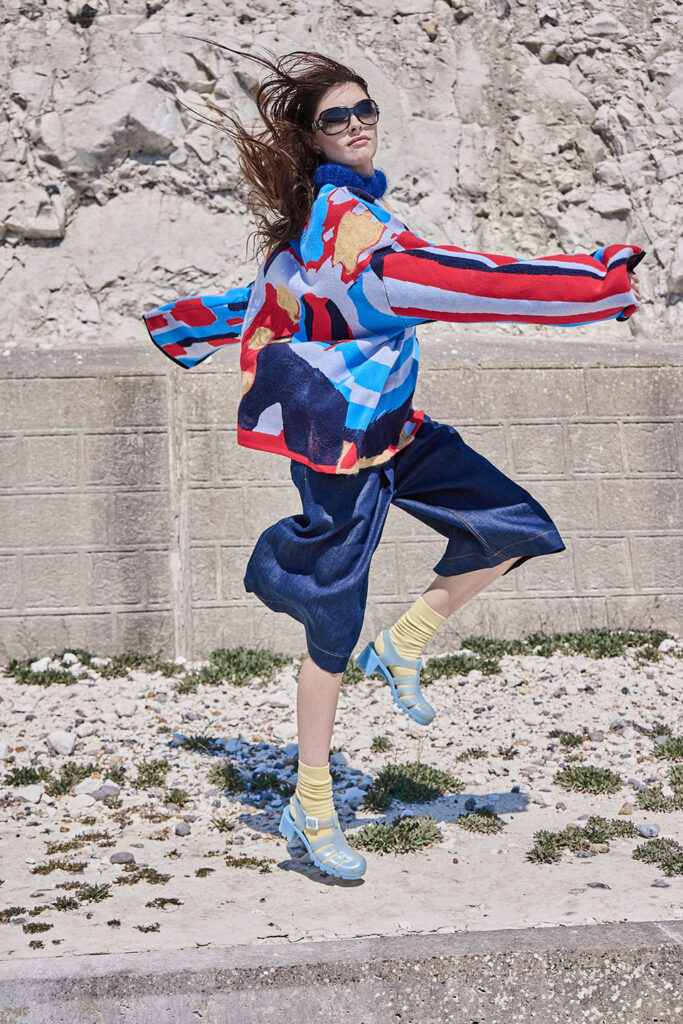
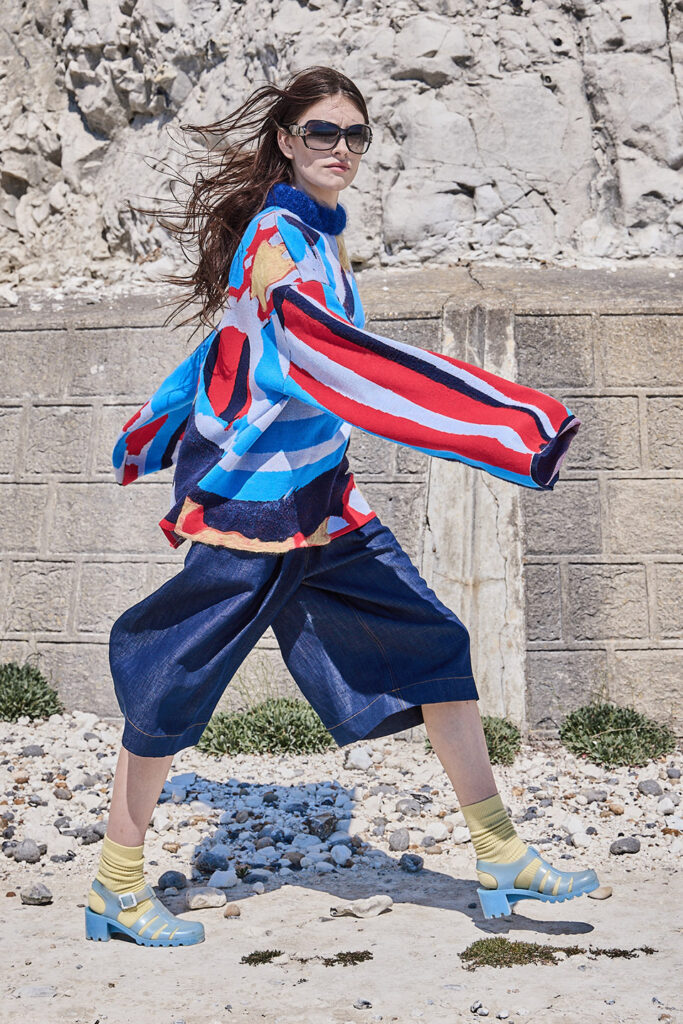
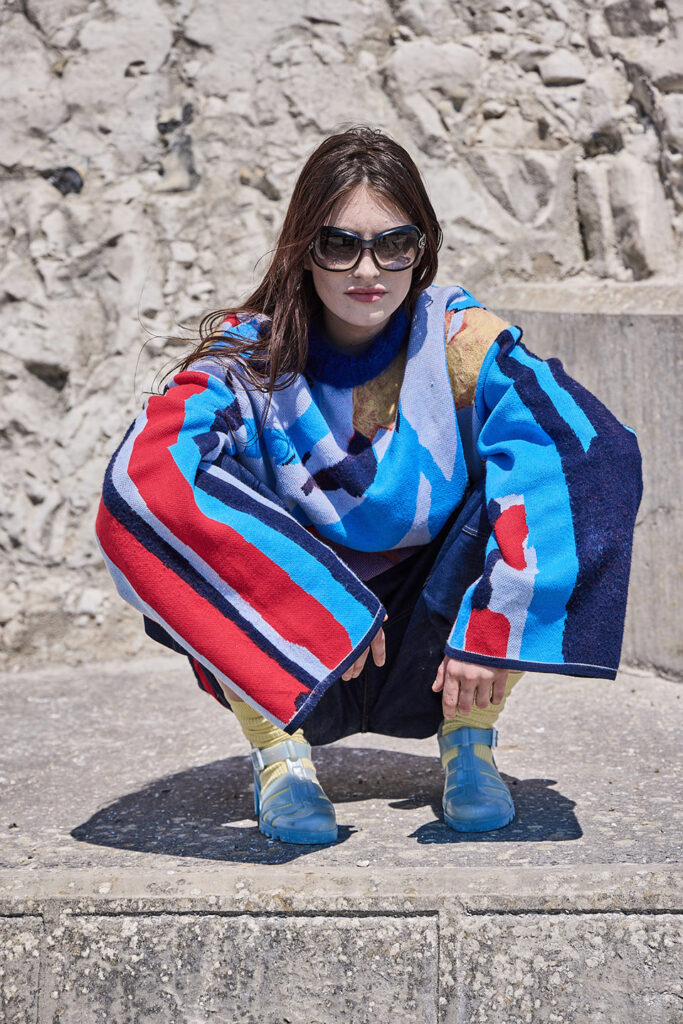
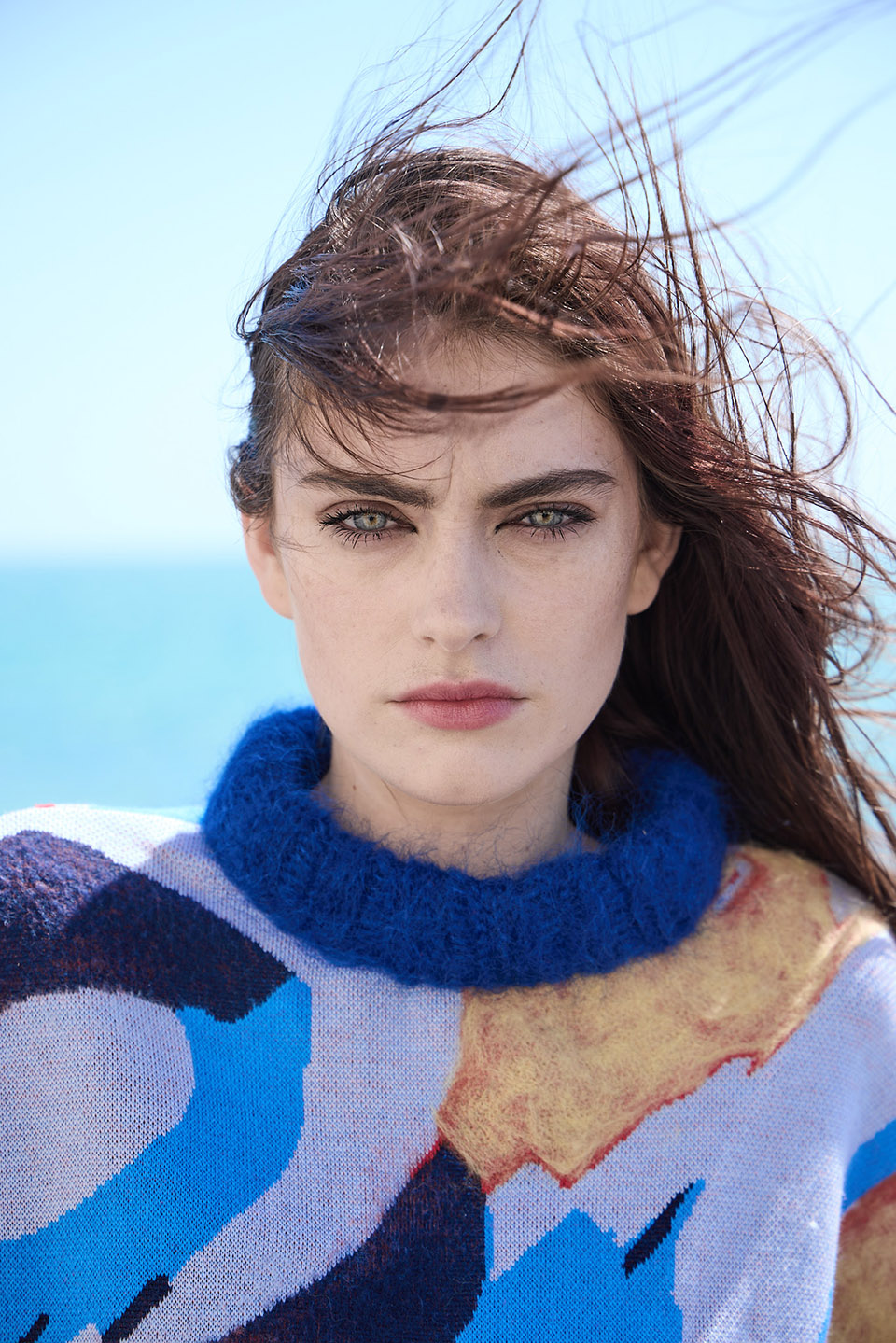
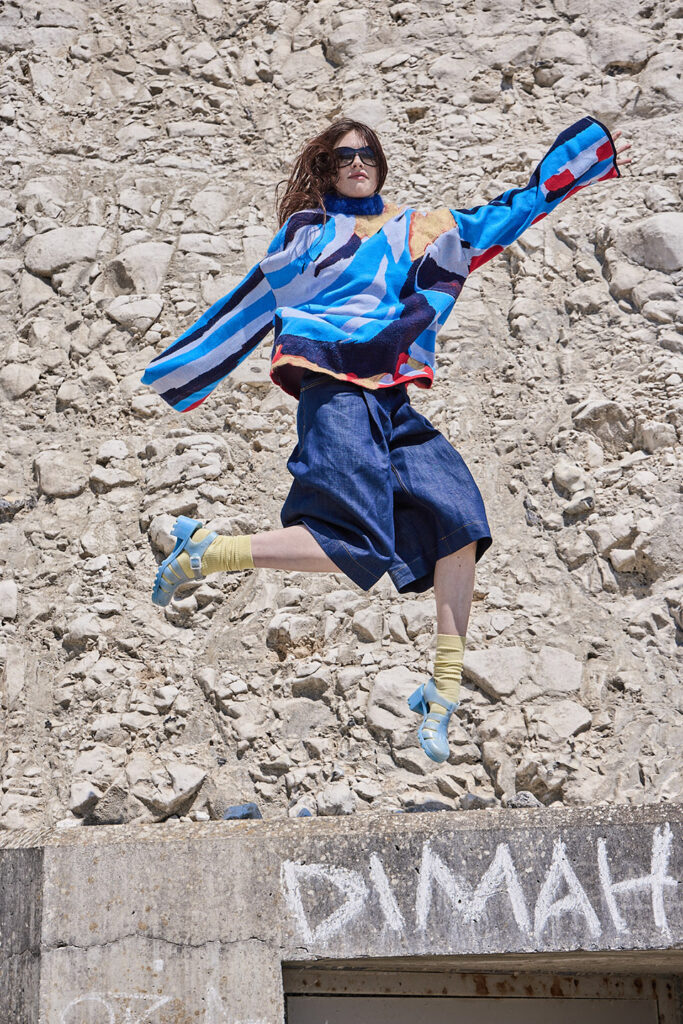
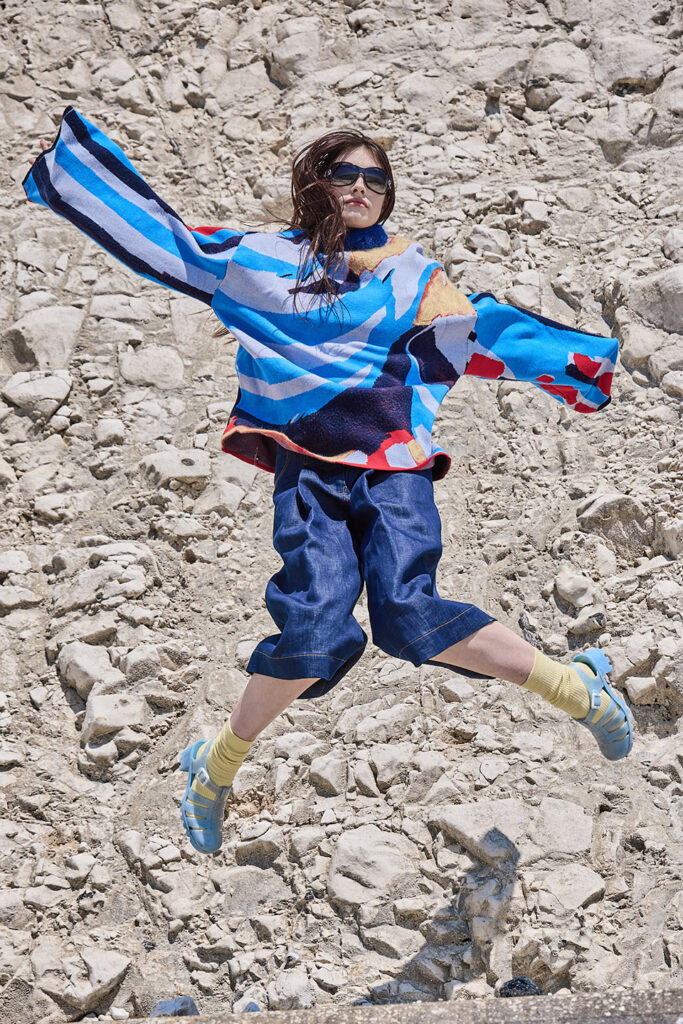
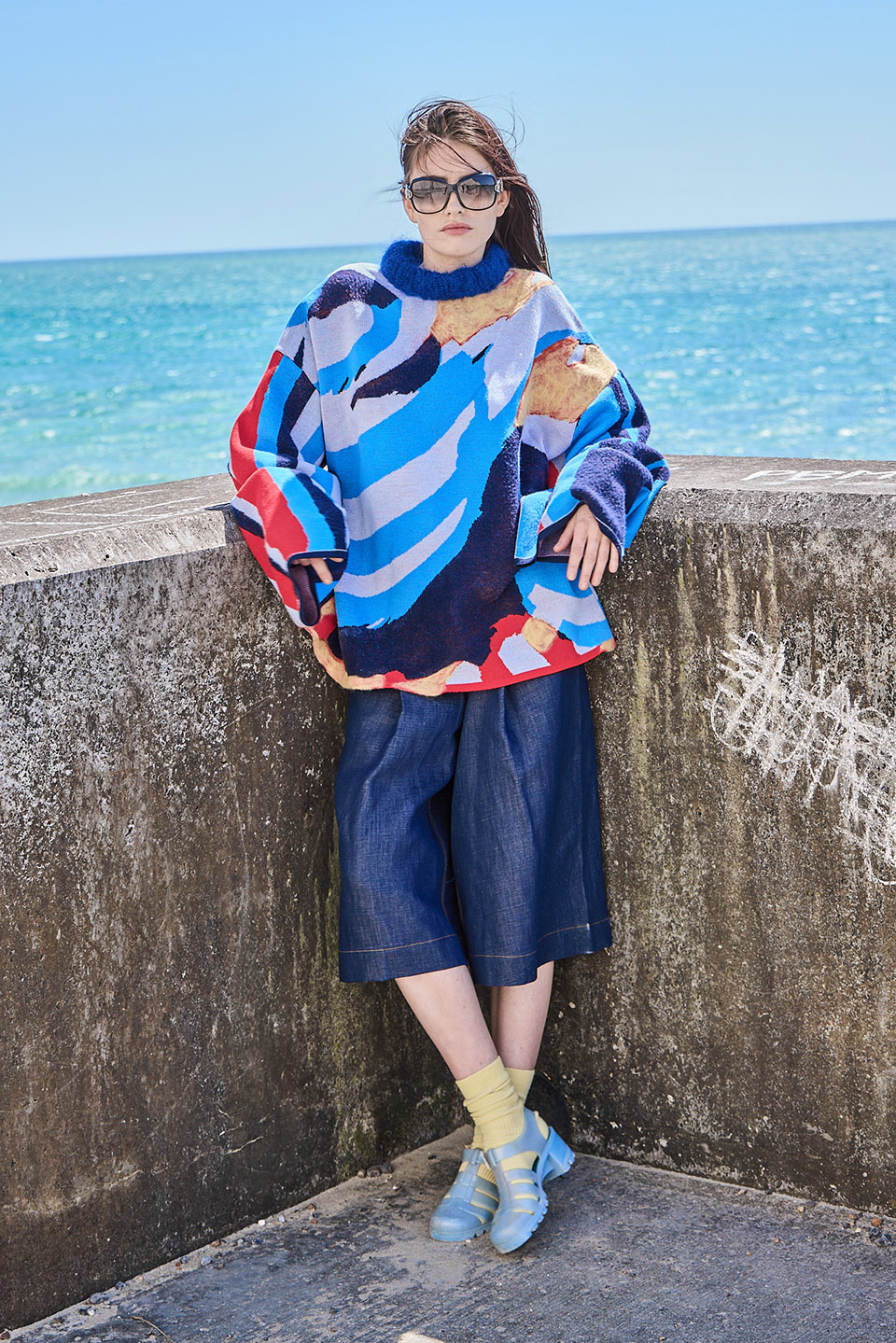
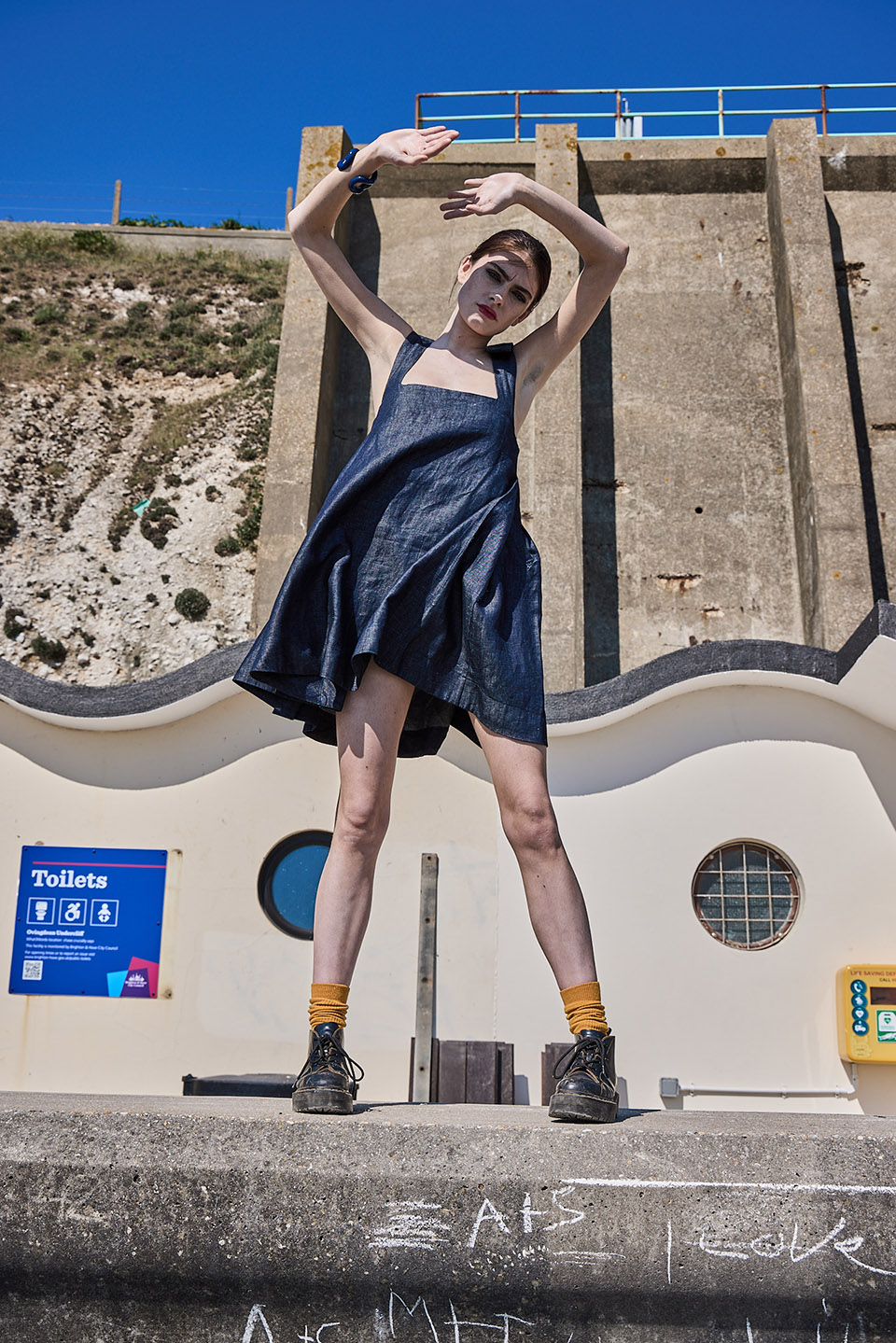
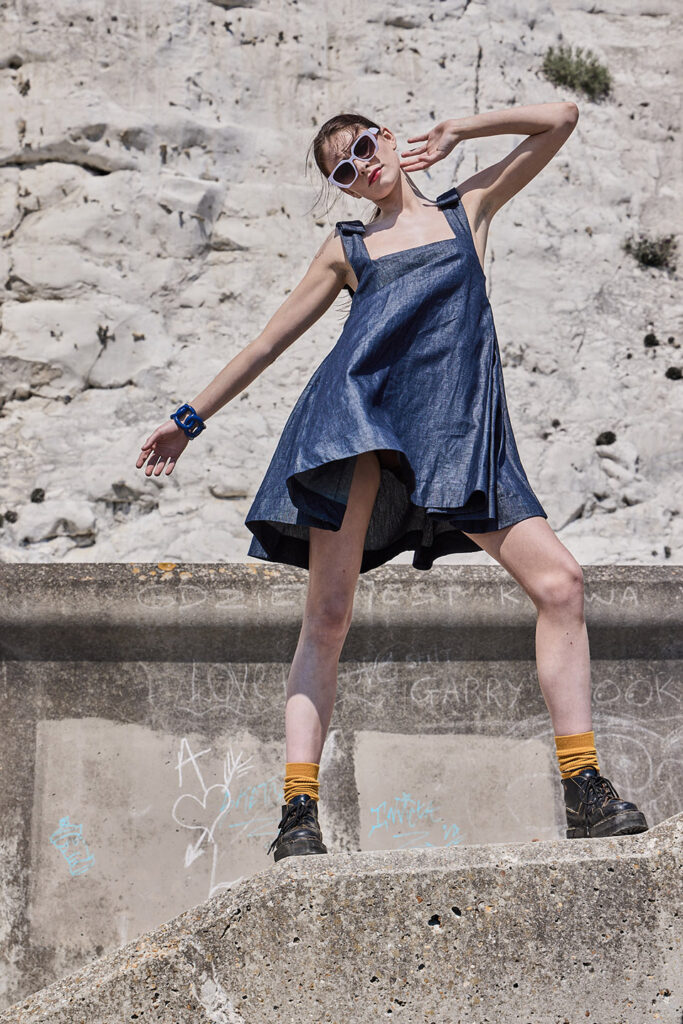
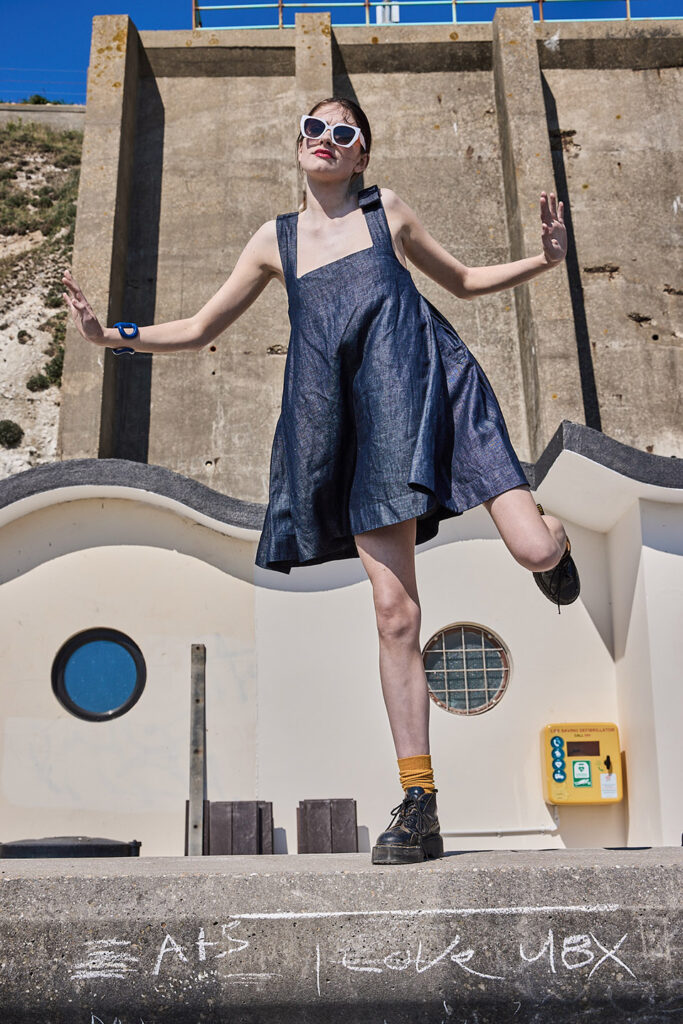
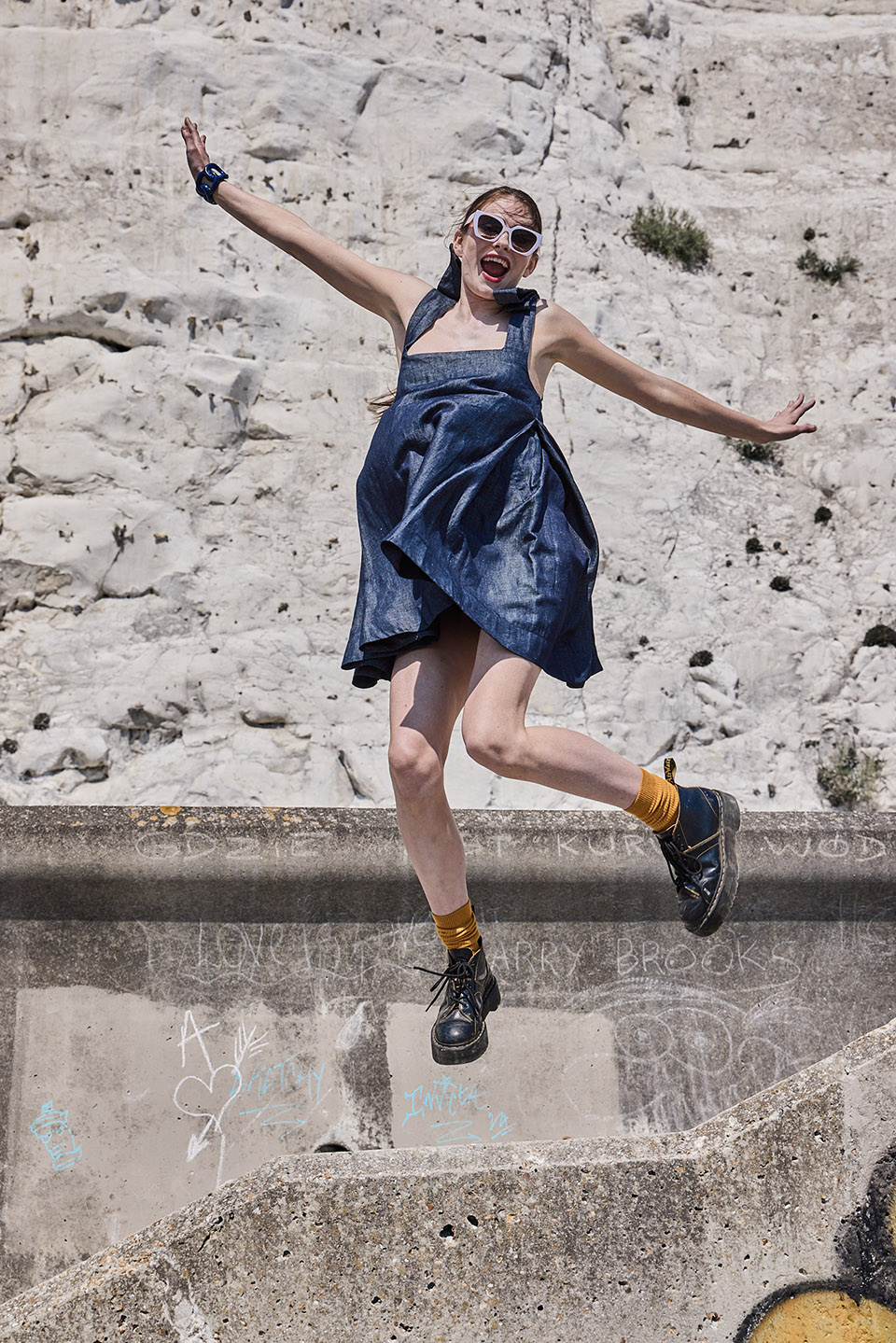
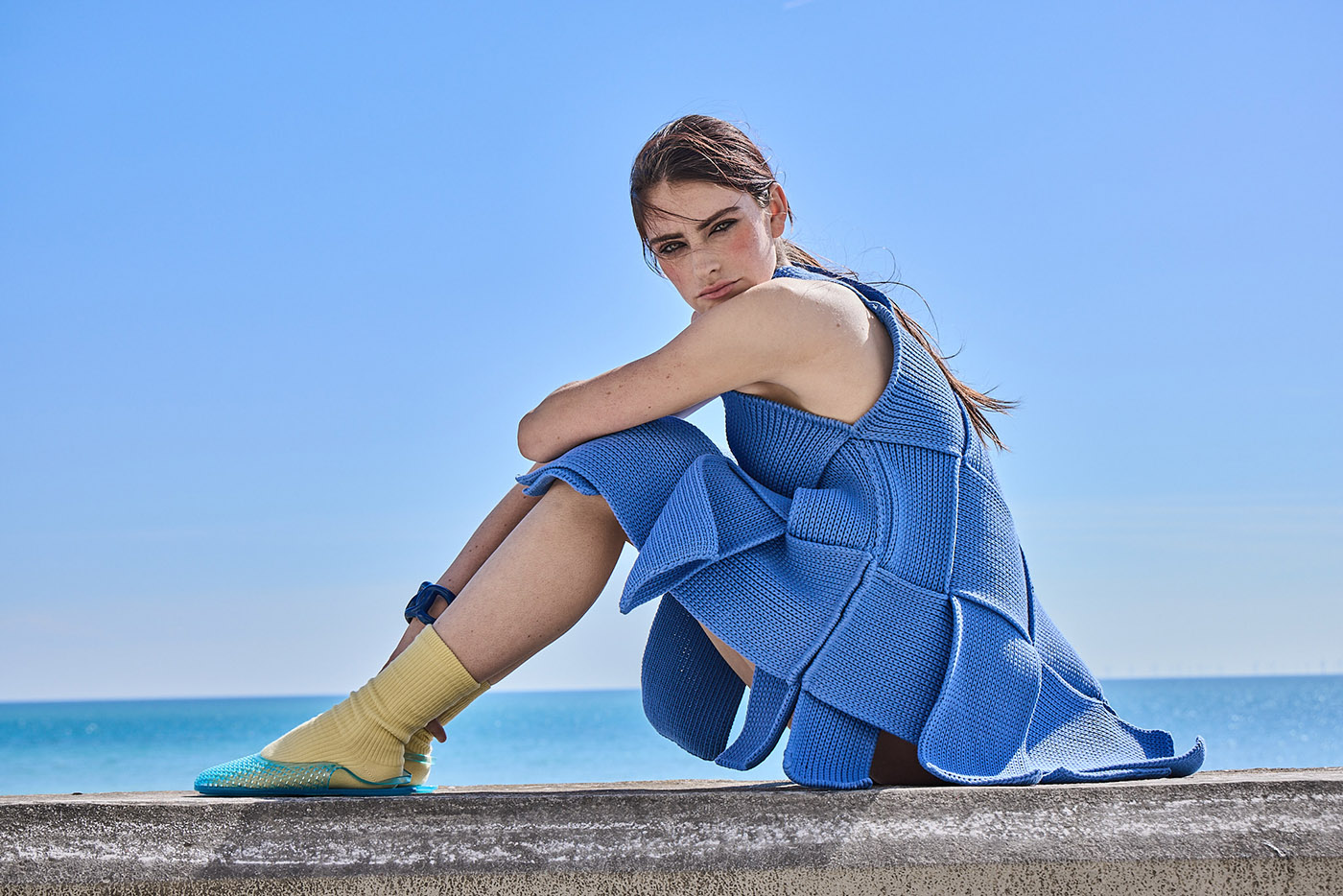
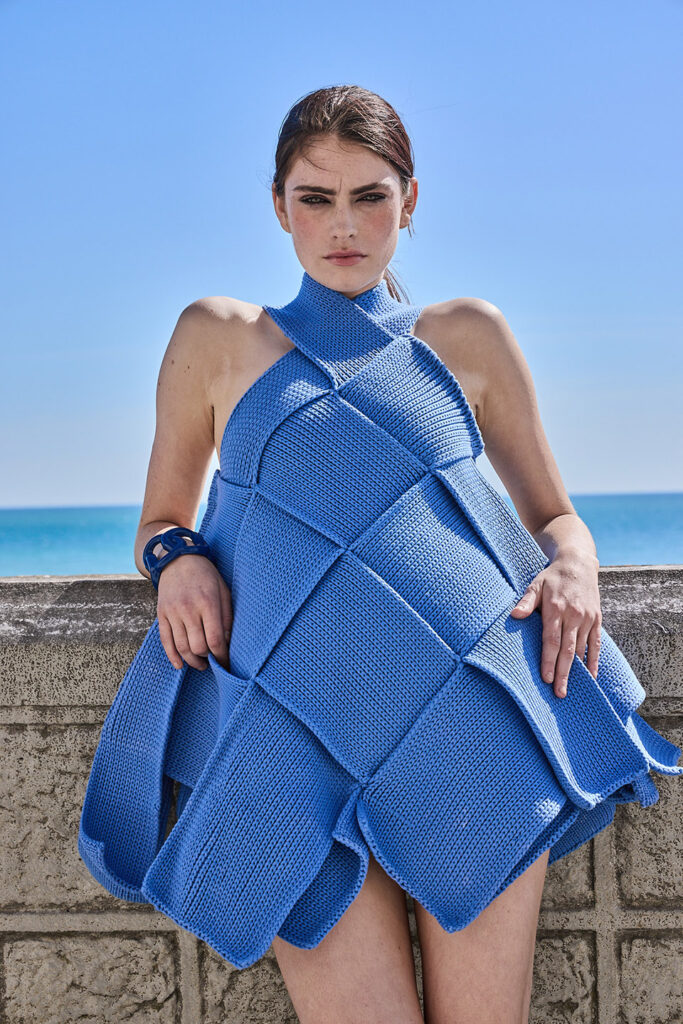
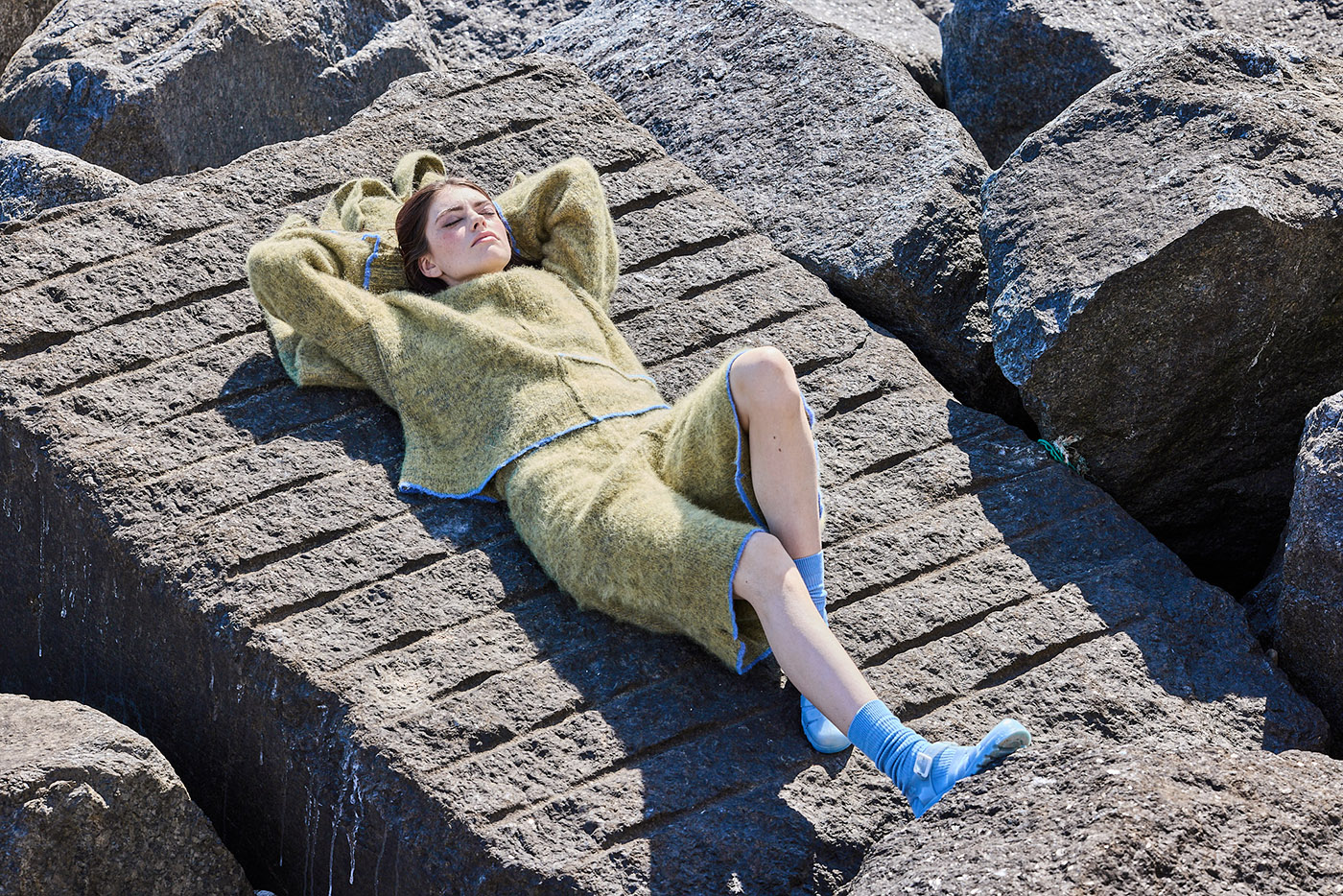
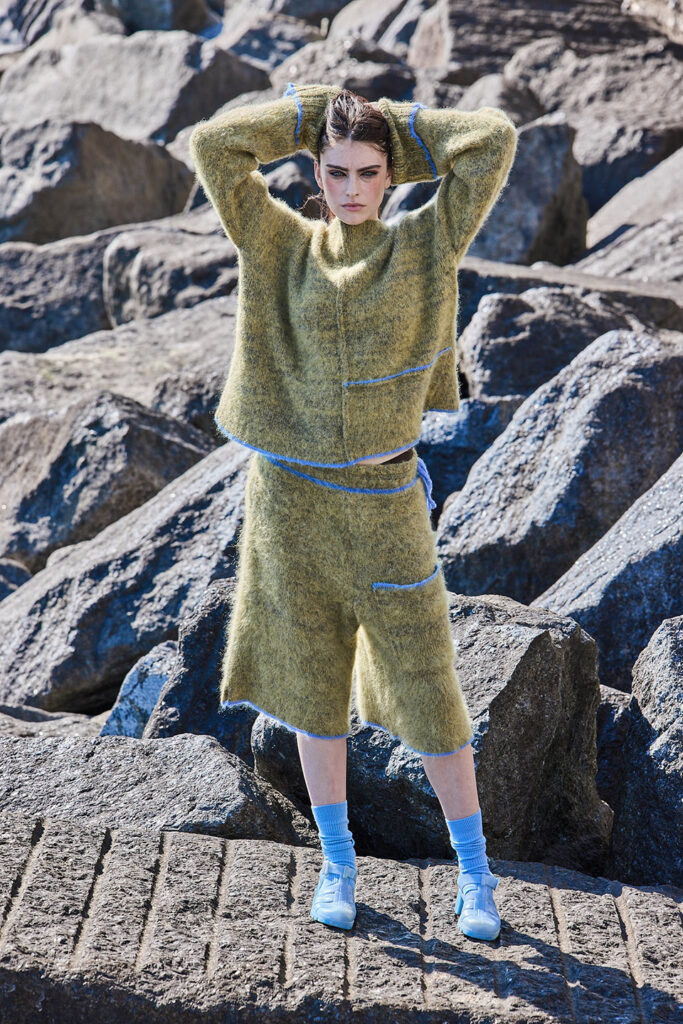
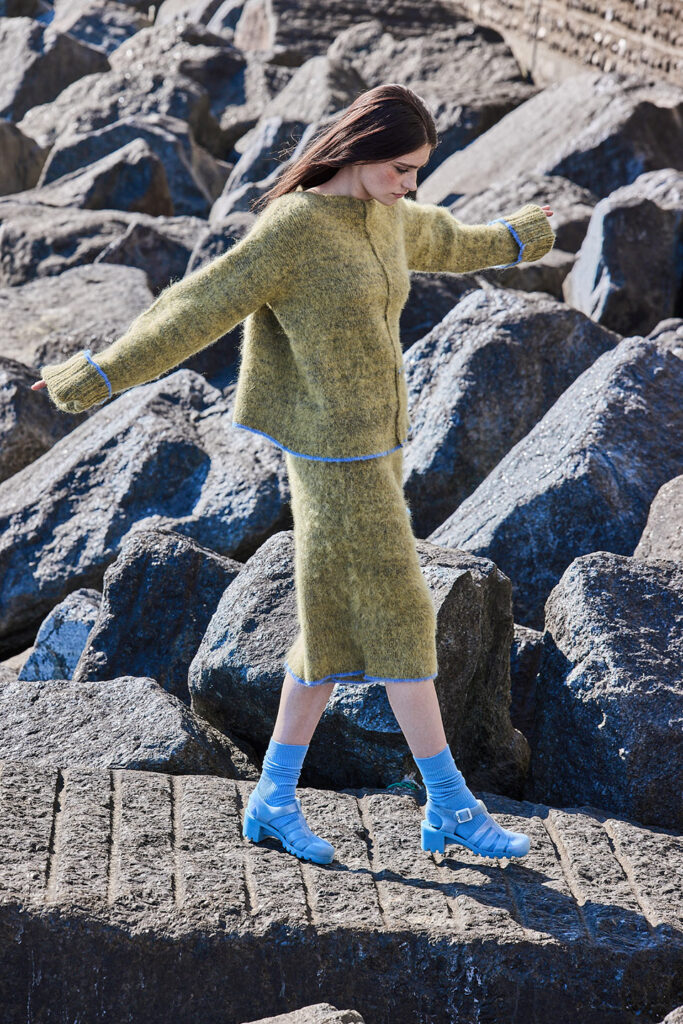
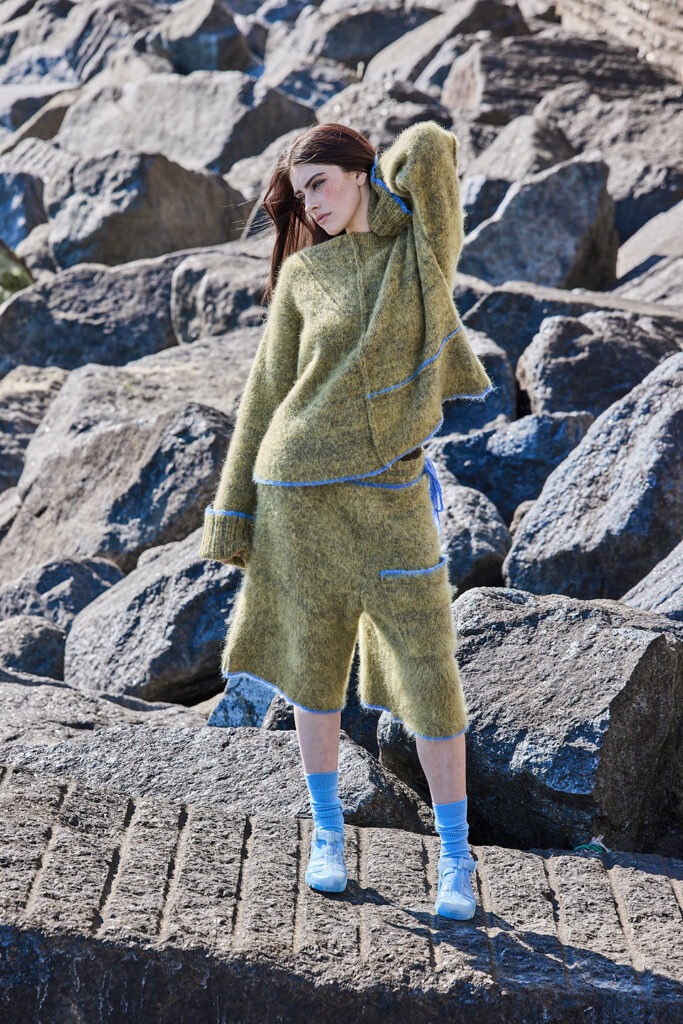
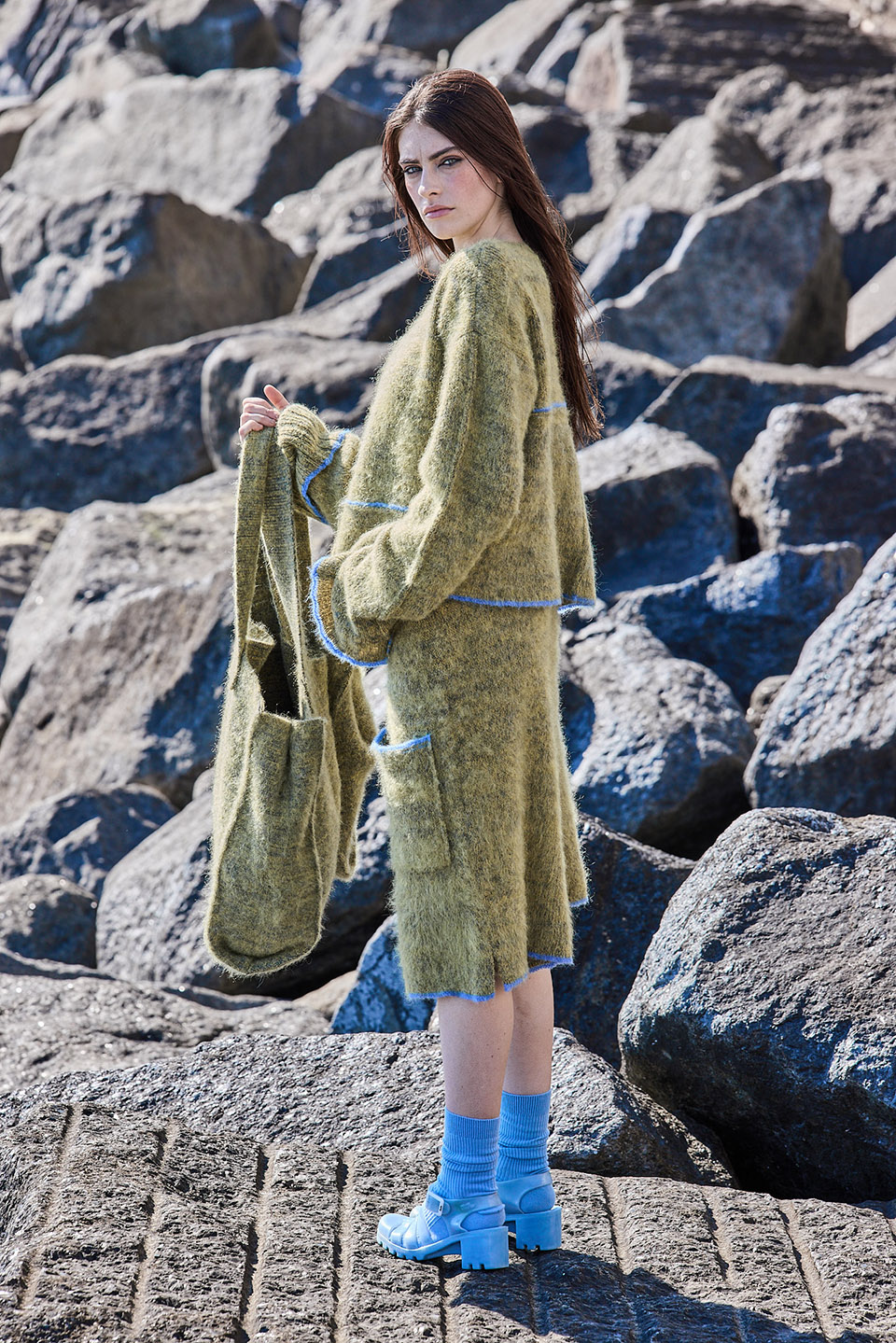
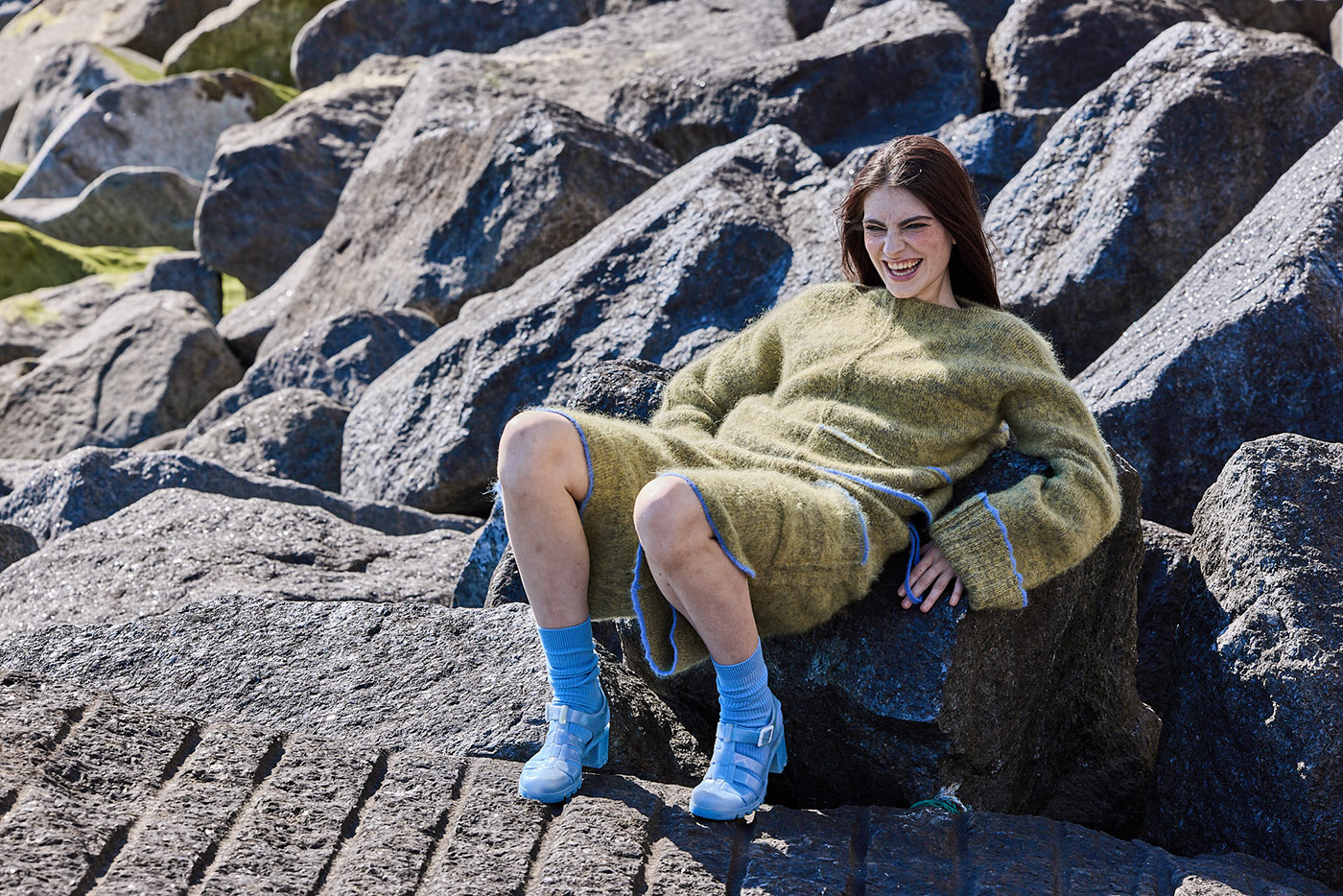
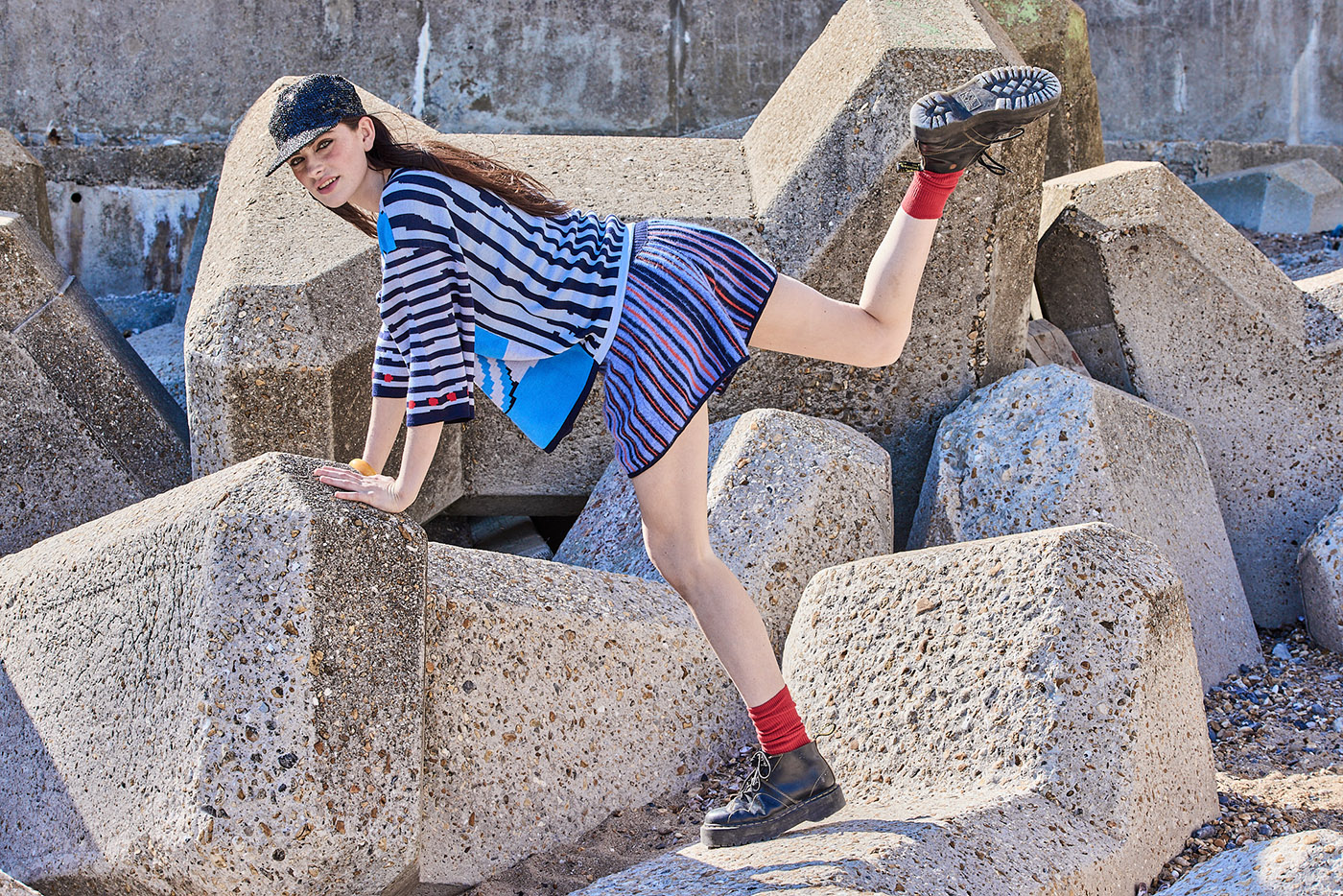
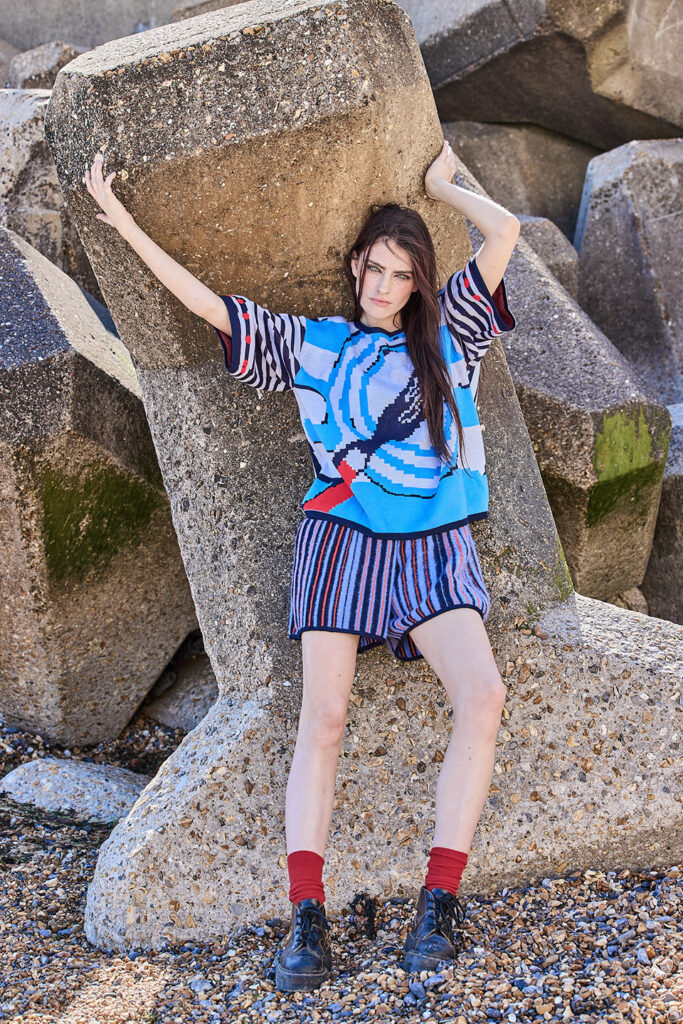
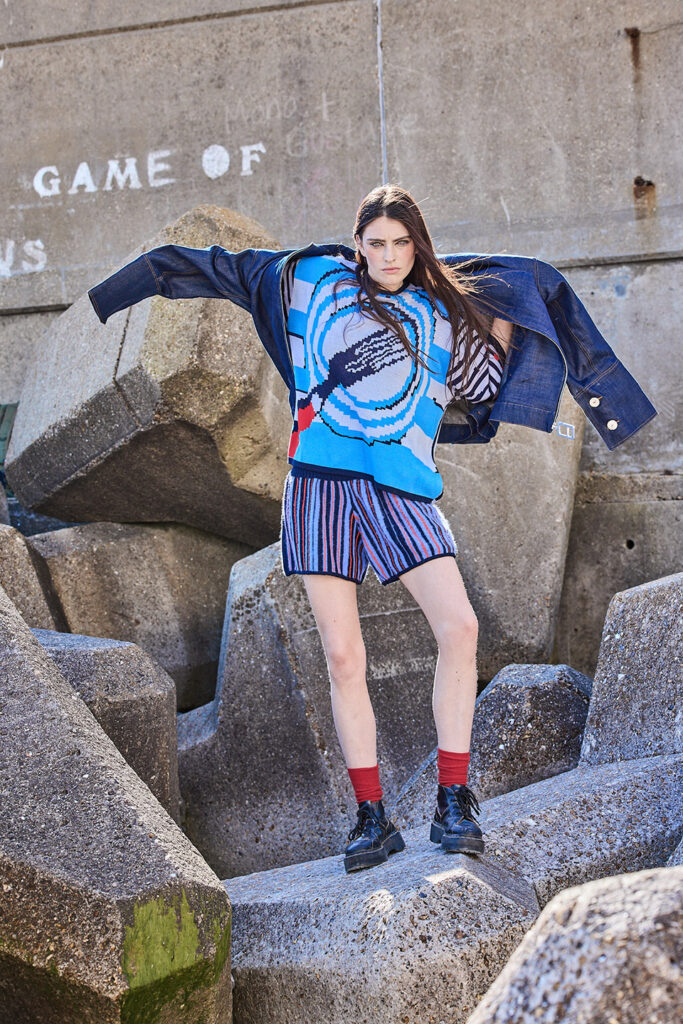
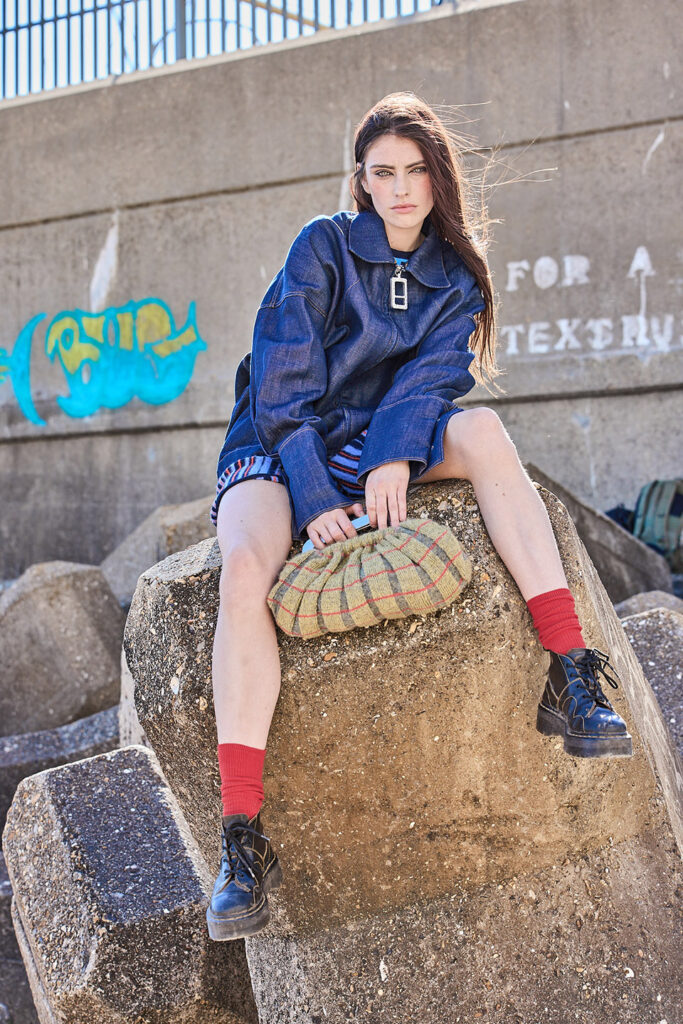
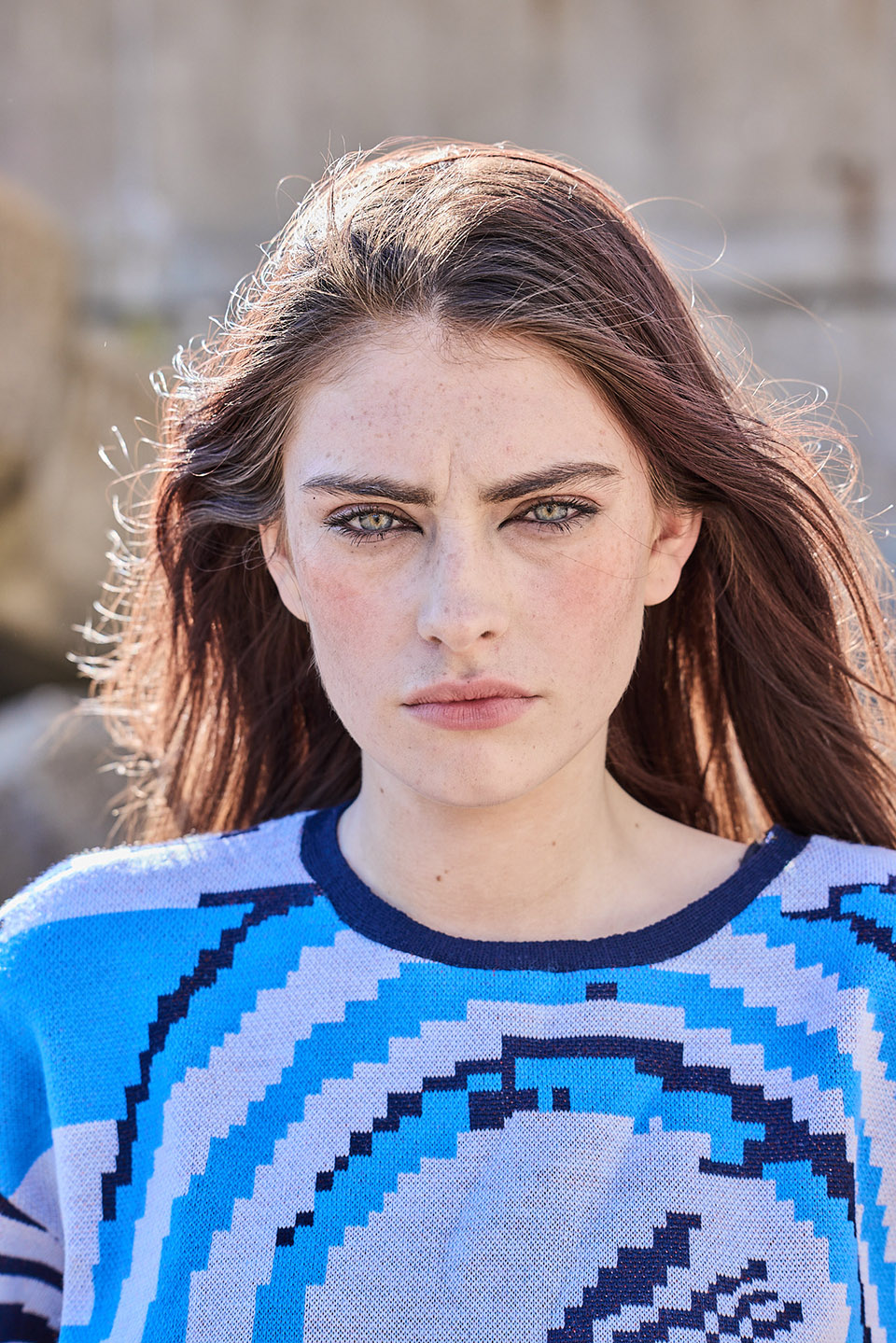
Young British fashion designer Amelia Caddick showcases a bold exploration of knitwear and denim in her latest BA degree collection — a tactile narrative of structure, softness, and raw edge. Shot on location in Brighton, the coastal backdrop added natural grit and atmosphere to the collection’s layered story. Captured through the lens of photographer Tim Kent, and brought to life by Cleopatra of The MiLK Collective, this editorial celebrates craftsmanship infused with playful confidence.
Photographer Tim Kent
Introducing fashion designer Amelia Caddick
Beauty & hair Jo Sugar using Skinician
and L´Oréal Professionnel Paris
Model Cleopatra from The MiLK Collective
Interview Marjorlaine
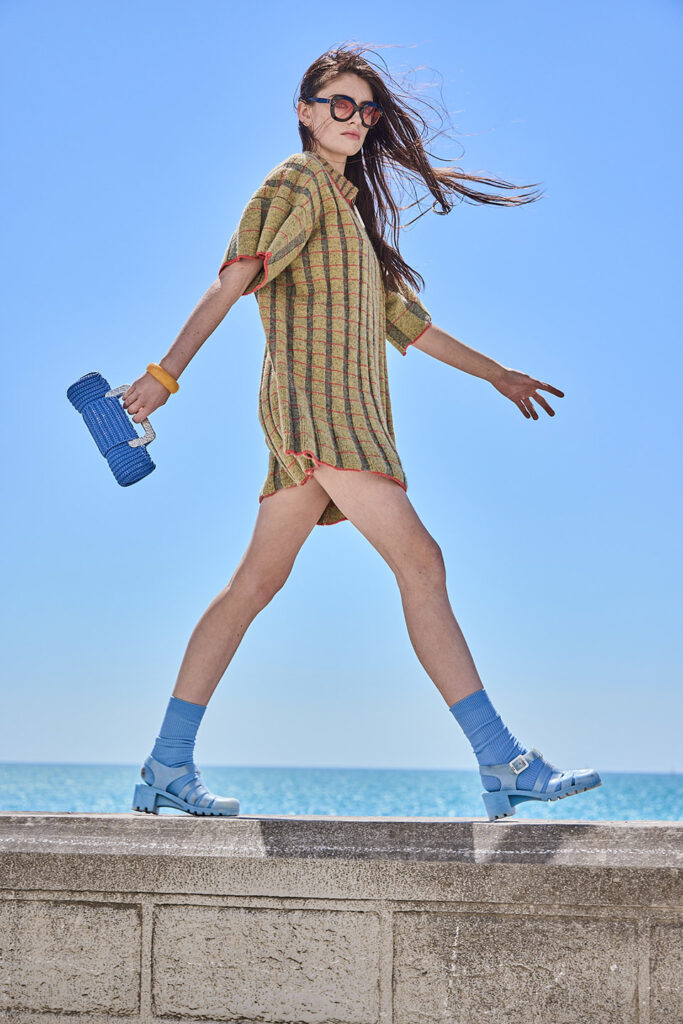
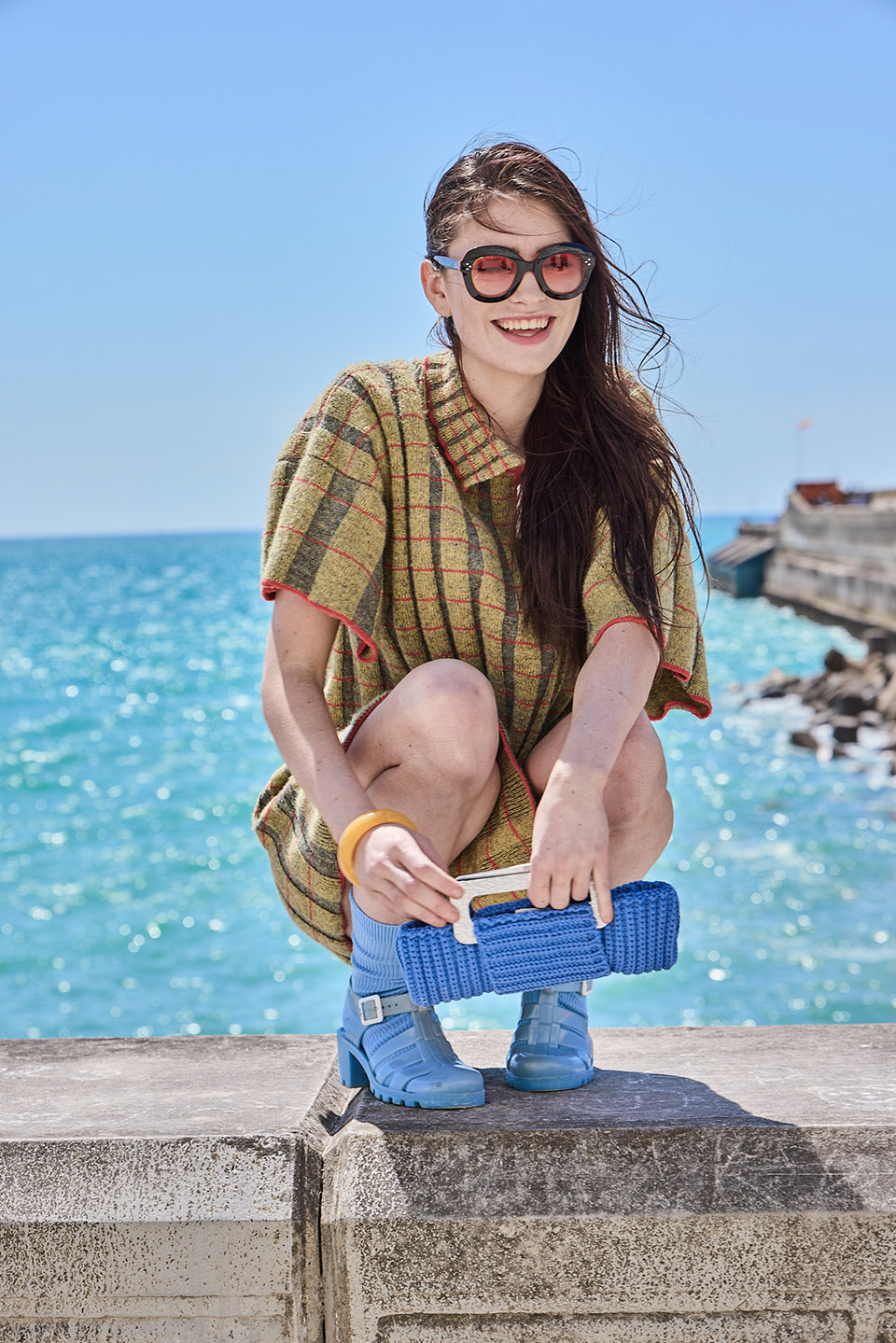
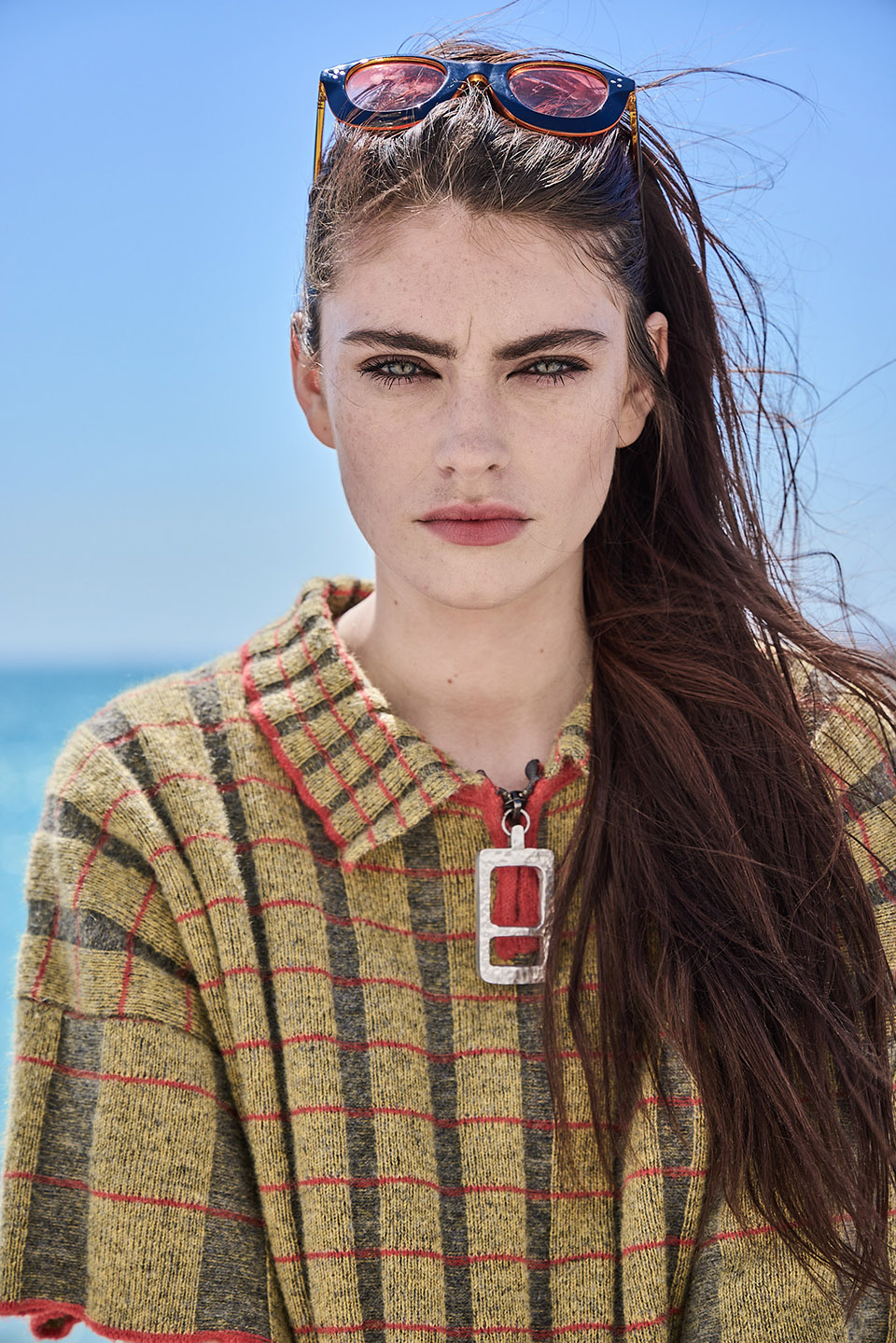
ZOOT: You are studying at Kingston School of Art University in London. Can you introduce yourself and tell us about your career in fashion so far.
Amelia Caddick: Hello! Yes, I’ve just finished my BA Fashion degree at Kingston University. I started out thinking I wanted to be a nurse—so I took biology at college—but eventually realised it wasn’t for me. I dropped it and picked up art and textiles instead, which led me to do a foundation year at Brighton Metropolitan. From there, I applied to Kingston and have been studying here for the past four years.
As part of my degree, I had the opportunity to take a year out in industry last year. I studied at AMD Berlin for the first half of the year, then worked at a knitwear label called Deparel in Amsterdam for the second half. I’d say this year out was where I grew the most – it really helped me find confidence in my style. I was knitting every day at Deparel, constantly making, and found so much excitement in the idea of generating my own material through knitwear. It felt like building something from the ground up.
Alongside the course, I’ve also kept up regular internships across a range of brands and scales – from names like Richard Quinn and Mowalola to, the bridalwear boutique Coco Conran. Each experience has been so insightful in helping me figure out where I see myself within the fashion world, and it’s been amazing to be surrounded by so many different ideas, processes, and ways of working.
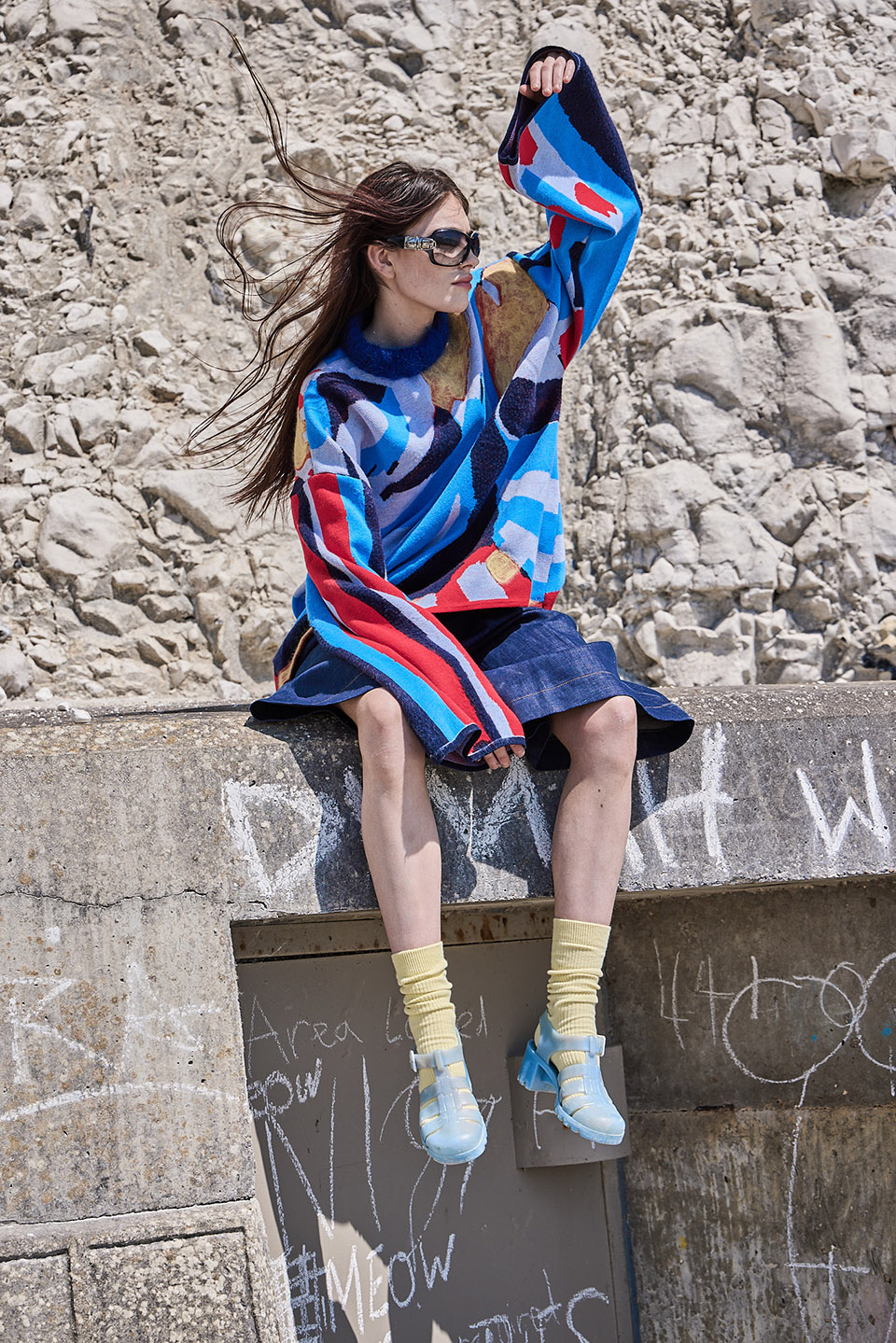
ZOOT: Why did you decide to focus on knitwear and denim?
Amelia: I touched on this earlier, but my love for knitwear lies in its ability to start from scratch – from the yarn up. I find it fascinating that you can determine every aspect of your textile, from the ply of the yarn to the exact stitch length, before you even begin thinking about the garment’s construction. It brings craft back into fashion and offers a naturally low-waste process, which is so vital in the current climate.
Denim, on the other hand, fascinates me with its structure and utilitarian history. It’s a fabric that holds memory and wears with time. There’s a certain polish to denim, particularly in its traditional techniques – like felled seams – that create garments that are as beautiful inside as they are outside. I love the contrast and harmony between knit and denim – rigidity and softness, heritage and innovation, functionality and play.
ZOOT: Can you explain your creative process? Do you have any plastic principles that you often use?
Amelia: Sampling is at the heart of everything I do. I sample obsessively – every yarn ply, every stitch tension, every design detail like a waistband or collar drape – until the result feels just right.
Throughout this process, I work predominantly with deadstock or donated materials. The majority of my final collection was sourced this way – from materials given to Kingston University to incredible resources like Denier Studio and good old eBay. While sustainability is at the core of my practice, I know there’s always more to do. As I grow within the industry, I’m committed to making environmentally conscious decisions part of my everyday design life.
ZOOT: How do you choose the materials and textures in your designs?
Amelia: I’m a very concept-driven designer. Every project begins with a world or idea I want to explore – drawing inspiration from everyday life, architecture, film, music, exhibitions, and the people around me. For this particular collection, a lot of the textile inspiration came from old bags stored in the attic – patterns, stripes, woven checks, and tactile carpet-like textures. There’s something beautiful in how memory is embedded into these materials. Utilising nostalgia to create a new future for the wearer, an ownership of the past.
I’m also constantly inspired by the materials themselves – unusual or overlooked fabrics often spark an idea. It becomes a conversation between concept and material: what can be made from this, and how can I push it further?
ZOOT: Do your creations tell a story or convey particular values?
Amelia: Yes – very much so. My final collection, Box 25, is a deeply personal exploration of memory, identity, and the emotional power of the objects we hold onto. Inspired by the article “Casket of Magic” – digby, and the sentimental power we assign to the things we keep, this collection investigates the emotional gravity of material fragments – pieces that transcend function and value to become vessels of meaning.
My home has always been a curated chaos of trinkets, heirlooms, and market treasures – a lived-in collage echoing the habits of my ‘great-grandtops,’ who scoured stalls, building her own store and within a sanctuary of stories. This inheritance of collecting is at the core of my creative practice. Each garment in Box 25 is a thank-you to the “Forever Boxes” stored in our attic, lovingly labelled by name and number, packed with the fragments of past lives and present joys. This collection is my offering for this year: my own Box 25.
As Digby so poignantly wrote, “If for some reason, one’s sense of self dims, one can simply rekindle it by foraging in the attic.”
The collection channels this act of foraging – emotionally and visually – into a collection that encapsulates nostalgic comfort and tender contradiction. It holds space for the innocence of childhood, the chaos of adolescence the intersection of retro and modern, serious and playful, childlike and grown-up.
Tactile and handcrafted, the pieces sit at a quiet triumph of preserving joy amidst contemporary noise – offering a wearable archive of memory, sentiment, and self.
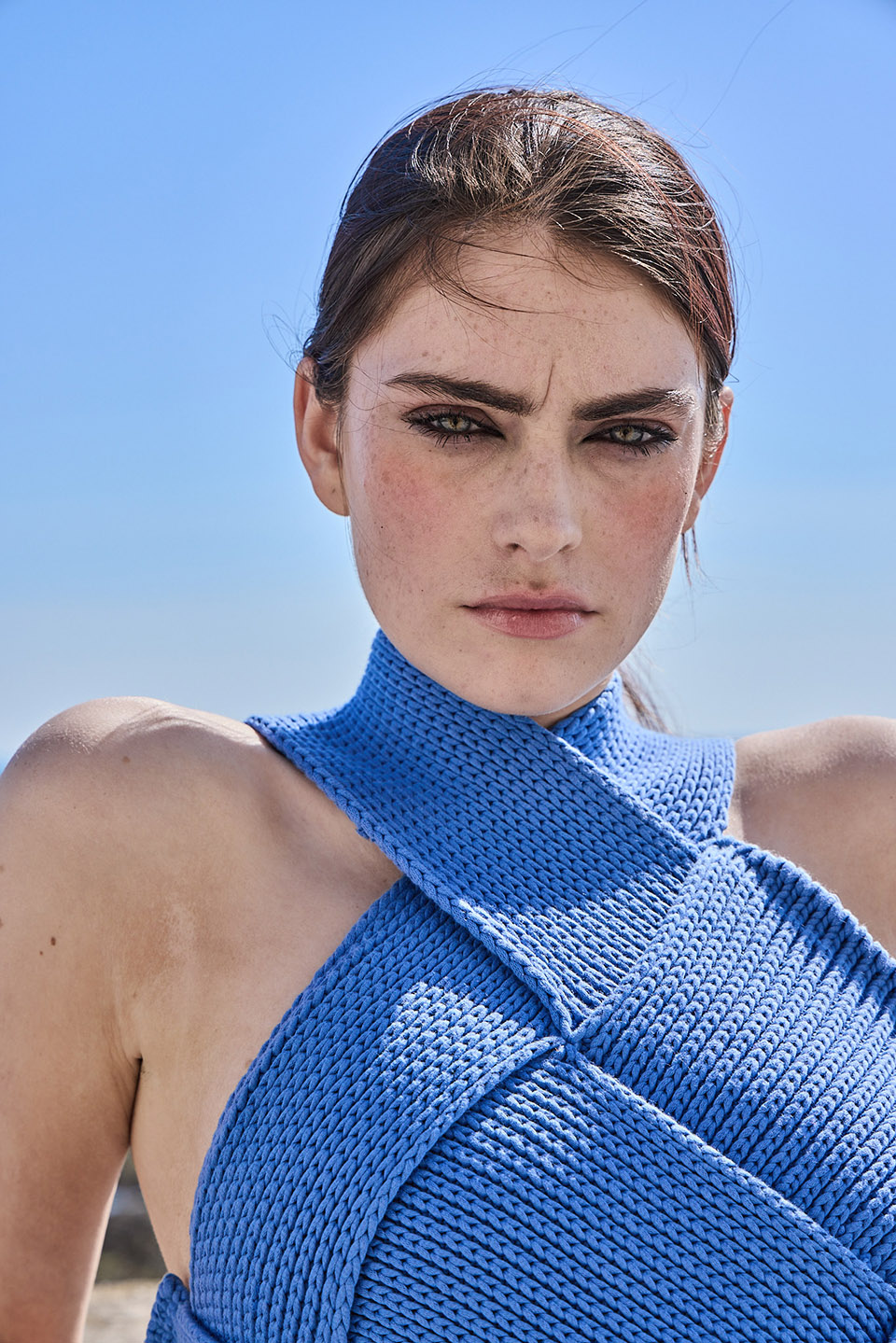
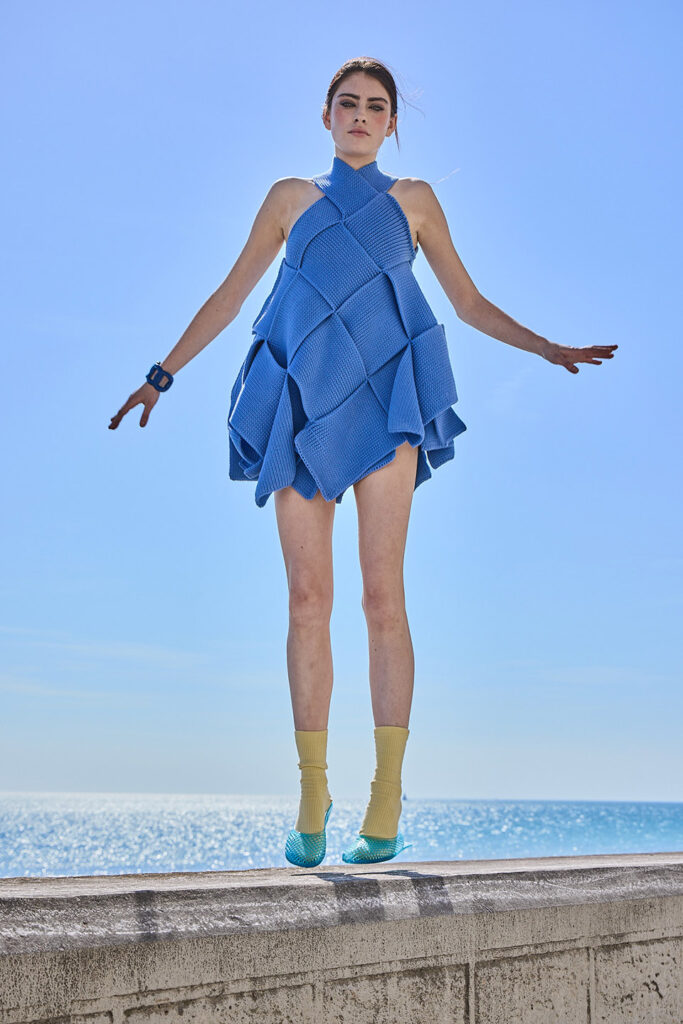
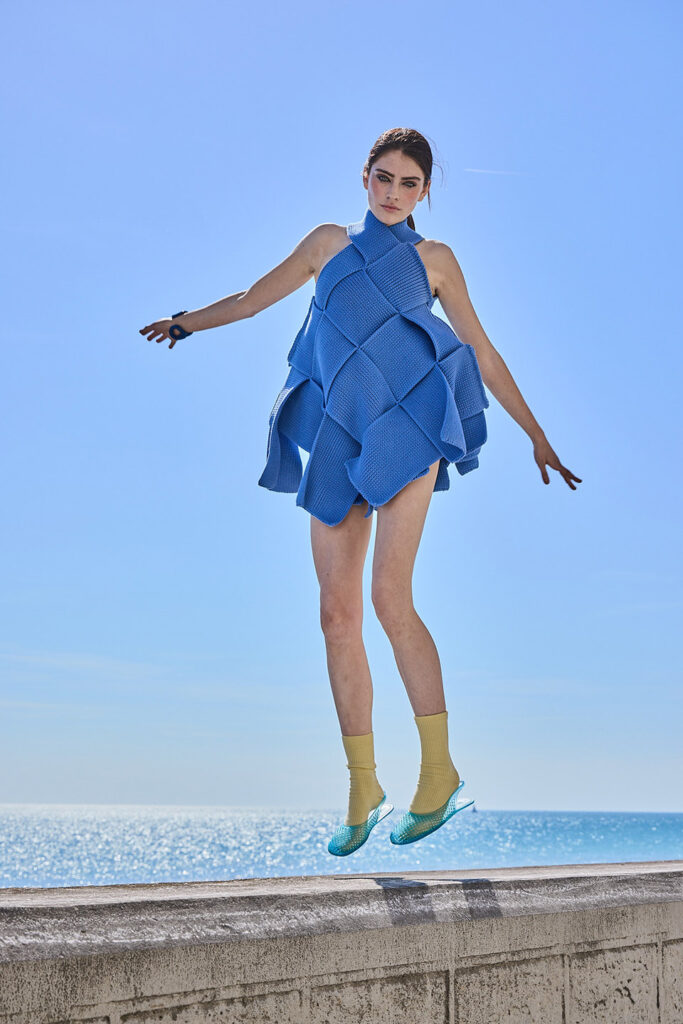
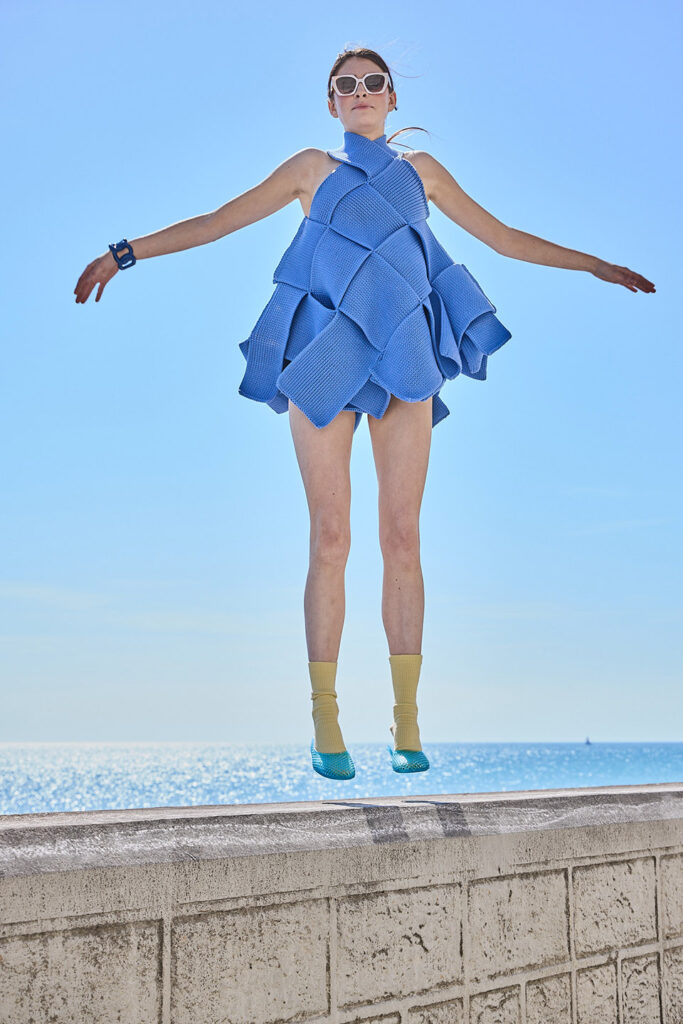
ZOOT: What was your last book, film, music, video, etc that left an impression on you and why?
Amelia: I recently watched “Perfect Days”, ( a film by Wim Wenders from a script written by Wenders and Takuma Takasaki ) and it stayed with me. The film captures the beauty of simplicity – the quiet magic in everyday routines, shadows, reflections. The soundtrack also took me on a nostalgic journey through my dad’s music collection – songs we’d listen to on overnight drives from the UK to France. It reminded me of the peace that comes from stillness and simple pleasures, a much-needed pause in our constantly buzzing world.
ZOOT: What kind of yarns are you using?
Amelia: The majority of my yarns were sourced from deadstock or donated to our university. Denier Studio in London has an incredible selection of deadstock yarns that I made good use of. I worked a lot with mohair and alpaca blends because I wanted that soft, brushed, three-dimensional texture—something really tactile that invites touch. I incorporated some Cashwool as well, because I wanted every piece to feel luxurious – like a cuddle.
I also used a tubular cotton blend, which brought an exciting structure and rigidity to the knit. It allowed me to blur the lines between the soft delicacy of knitwear and the more robust nature of denim, which was a key theme in my collection.
ZOOT: Would you like to share a comment about the current political, environmental, social climate we live in?
Amelia: It’s hard to know where to begin. But if I had to say one thing, it would be: peace. More peace in how we speak to each other, how we treat our planet, how we coexist. It’s heartbreaking how disconnected and divided the world is right now. I hope that through community, empathy, and creativity, we can start to rebuild something more harmonious – more human. The creative space is so fundamental to all this, but so undervalued by the bean counters and political leaders, yet it is how we can truly build better understanding, appreciation, shared experience and united goals: love.
Thank you Amelia!