Jonathan James William: Behind the Mask
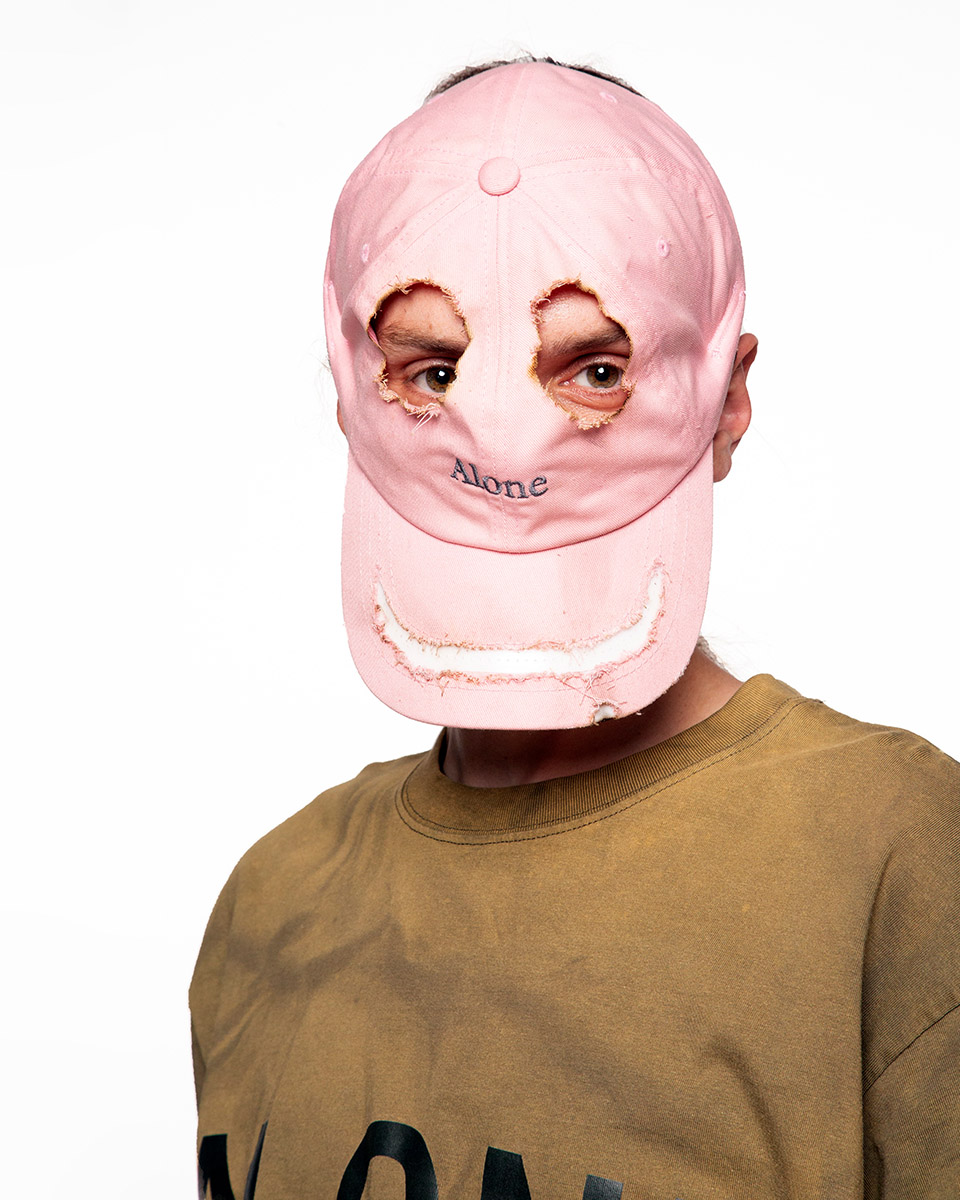
From Widnes, a small town outside Liverpool, to the runways of Central Saint Martins, Jonathan James William is carving out his own place in menswear. A descendant of Charles Darwin, he brings ideas of evolution into a practice that questions what masculinity can look like, while a mask has become an unmistakable part of his image. ZOOT goes behind it to meet the designer rewriting the rules on his own terms.
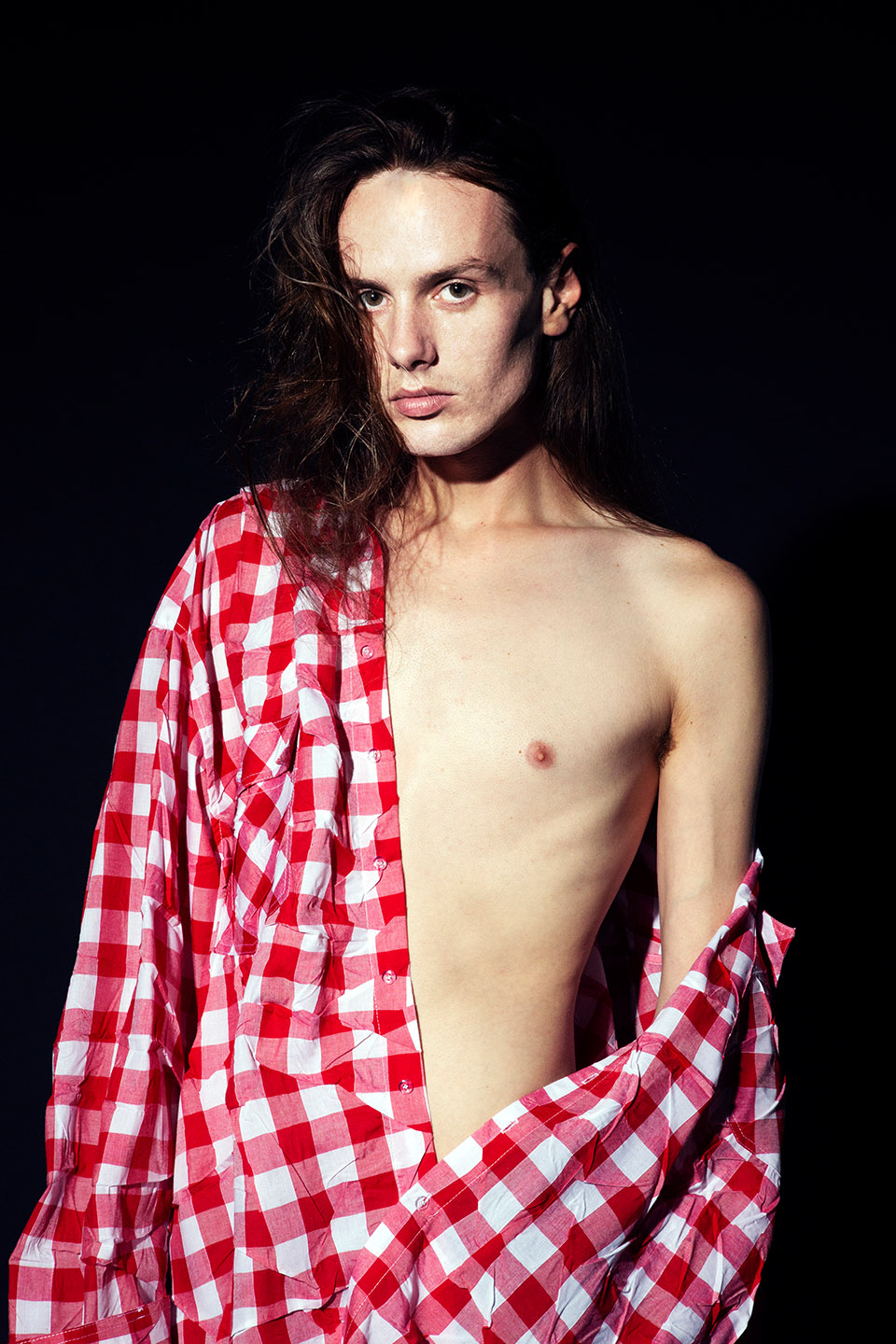
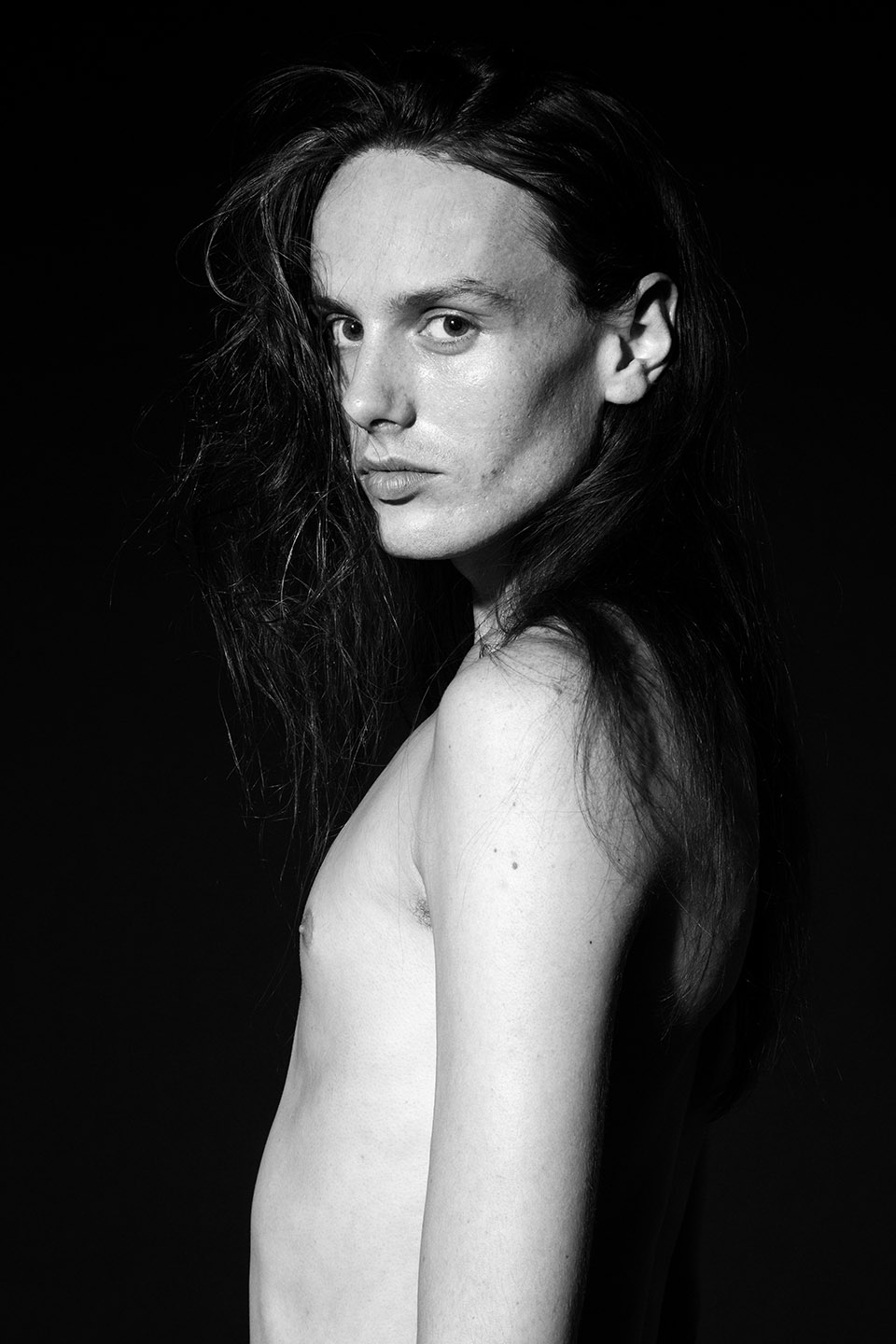
Featured Designer Jonathan James William
Photographer Sandro Hyams
Hair Timothy Furssedonn
Model Jamie Anderson
From First London
Studio Pixel Studio
Words Priscila Vieira
Four rejections from Central Saint Martins might be enough to convince most aspiring designers to reconsider their path, but for Jonathan James William, they only created more hunger. When he finally arrived at the institution he had spent years determined to attend, that persistence marked the beginning of a career he had always dreamed of.
Now, fresh from completing his MA Menswear degree and preparing to debut his first Spring/Summer 2027 collection titled “Write a Bad Review About Me”, the independent British designer is creating a different space within modern menswear.
In conversation with ZOOT, the designer discusses the experiences that have shaped his point of view, the evolution of the world he created, and why conviction and a willingness to make people uncomfortable remain essential to his practice.
ZOOT: For readers discovering your work for the first time, who is Jonathan James William?
Jonathan: Jonathan James William is an independent menswear designer based in the UK. I graduated from the MA Menswear course at Central Saint Martins in 2024 and have just finished my debut collection for Spring Summer 2027. My work focuses on the psychology of men’s tailoring and uniform, and how I can deconstruct and subvert this in a contemporary way. I’m interested in how clothing can communicate vulnerability, masculinity, and identity.
ZOOT: You grew up in a working-class town on the outskirts of Liverpool. How did that shape your relationship with fashion and your idea of luxury?
Jonathan: The idea of a community of hard-working people that I grew up around has most
likely albeit subconsciously shaped my relationship with the work and commitment I put into each collection. Growing up in all honesty, I probably did see expensive logos as a symbol of luxury, they’re also what got me into clothing before “fashion.” It wasn’t until later on after discovering fashion as a career path, that I saw more luxurious value in craftsmanship, longevity, and emotion. Looking after something because you couldn’t replace it. I think that’s stayed with me. Coming from a working-class background also made me appreciate and make the most of whatever opportunities came my way, because nothing was ever just handed to me.
ZOOT: You’ve often described your mother as your biggest inspiration. What did she
give you that still shapes your work today?Jonathan: She encouraged me to pursue a career in fashion, and she was actually the first person to teach me the basics of sewing. There are plenty of things she has taught me that still shape me and work today, resilience being one of them and perhaps the most important. Also, to work hard for what you believe in, trust your instincts, and never give up.
ZOOT: You were rejected by Central Saint Martins four times before finally getting in. What kept you from giving up?
Jonathan: Similar to what my mum taught me – believe in yourself and trust your ability. Constantly reminding myself I would study here one day, right up until the day that I received that offer letter. I am also a firm believer that everything happens for a reason, and some things are just meant to be. Whether that is people entering your life, not moving somewhere, not taking a certain job, and in this case being rejected by Central Saint Martins four times before finally getting in. There is a reason why I went to Saint Martins at the time I did.
ZOOT: What was the most valuable lesson you took from Central Saint Martins?
Jonathan: To be raw and authentic, discover your identity as a designer, and once you find it never let it go and certainly never compromise on it. Don’t pretend to be someone you’re not, the tutors will see right through you, as will anyone else in the industry. There were multiple times at the start of the course in which I was questioning things like whether I should be creating work like this person or that person? Should I be designing in this way? Should I research in that way? Saint Martins breaks you down to your core and forces you to look deep into your soul regarding the work you want to put out into the world. To forget everything you learned prior to coming, it retrains you to think and approach fashion in a way that is truly unique to each student. Another valuable lesson I took from my time at CSM was to think like a product designer and less like a fashion designer. This is an important lesson in building a sustainable business.
ZOOT: You launched your own label shortly after graduating. What was the biggest challenge in turning education into an independent practice?
Jonathan: University, particularly at Saint Martins, encourages you to dream and to not hold
back, push ideas and push creativity. Running a label teaches you about budgets, production, cash flow, manufacturers. Learning how to balance creativity with commerciality has been one of the biggest challenges, and the fact you’re now in it by yourself without the guidance of tutors. Knowing your brand lives and dies by the sword is also what makes it exciting.
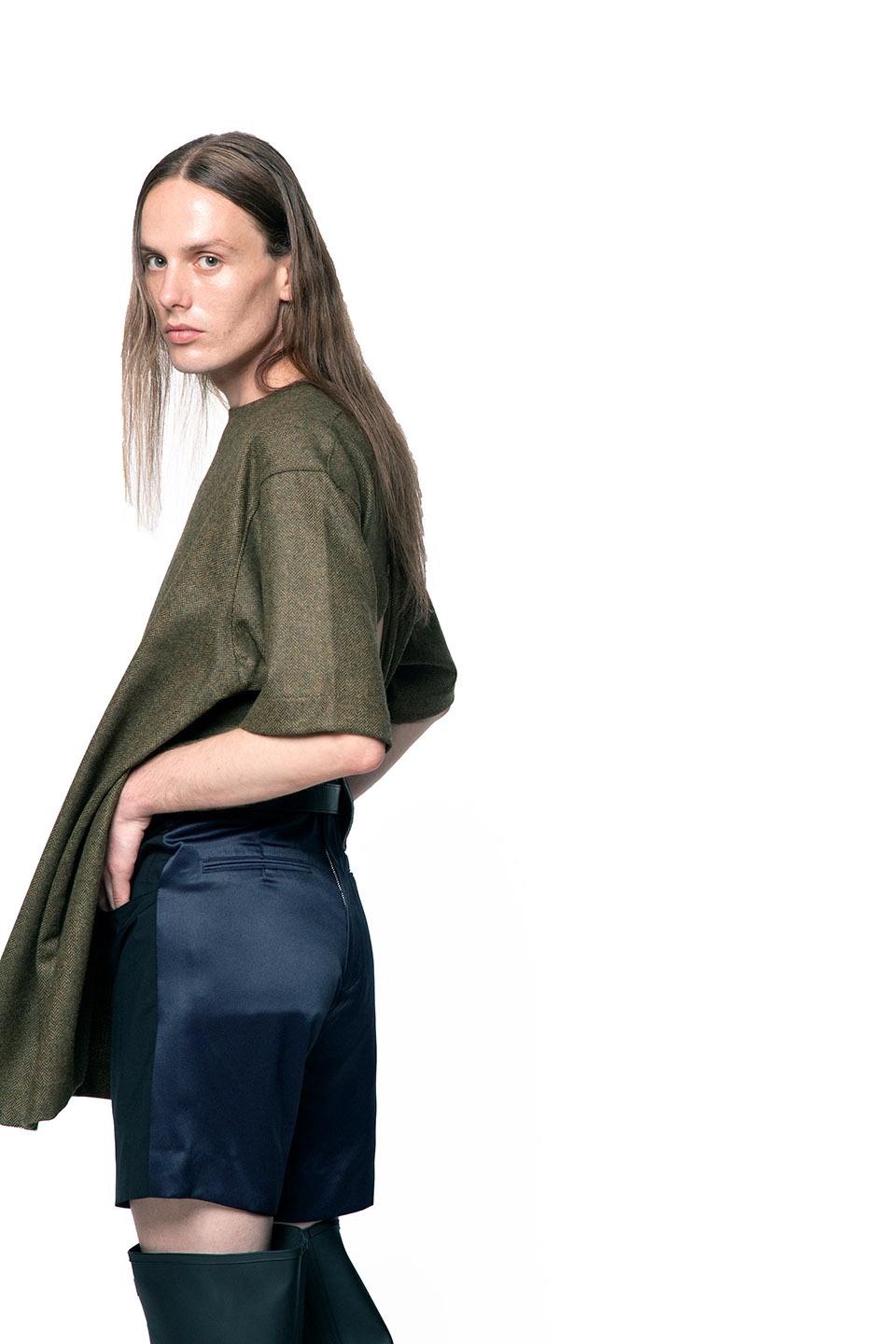
ZOOT: Where does a collection begin for you? Could you walk us through your creative process—from research and pattern cutting to the moment you know a collection is finished?
Jonathan: Each collection starts as a reaction to the previous collection, by analysing the one before: What I liked and didn’t like, what worked and what didn’t, what I should refine etc. I see each collection as an evolution of the collection prior. I could then be inspired by a film or TV series I watched recently, an art exhibition, a photographer or artist’s work I love, a fetish that intrigues me, reacting to real world scenarios. It could be anything. I then begin putting research together, building concepts, usually organising them into folders which is quite uniform and rigid, but at the same time not. It also enables me to focus and reduce down to the core elements, and helps me figure out ways in which I can relate them to the world Jonathan James William sits in. Then there is a lot of sketching or simply writing ideas down, researching fabrics, pattern cutting, creating samples, creating technical drawings, having back-and-forth conversations with my factory. It’s not always easy to identify the moment a collection is finished, sometimes it’s just a matter of realisation that I have said everything I wanted to say with this collection. And more often than not, it is never how I envisioned it looking at the beginning. Just trust the process.
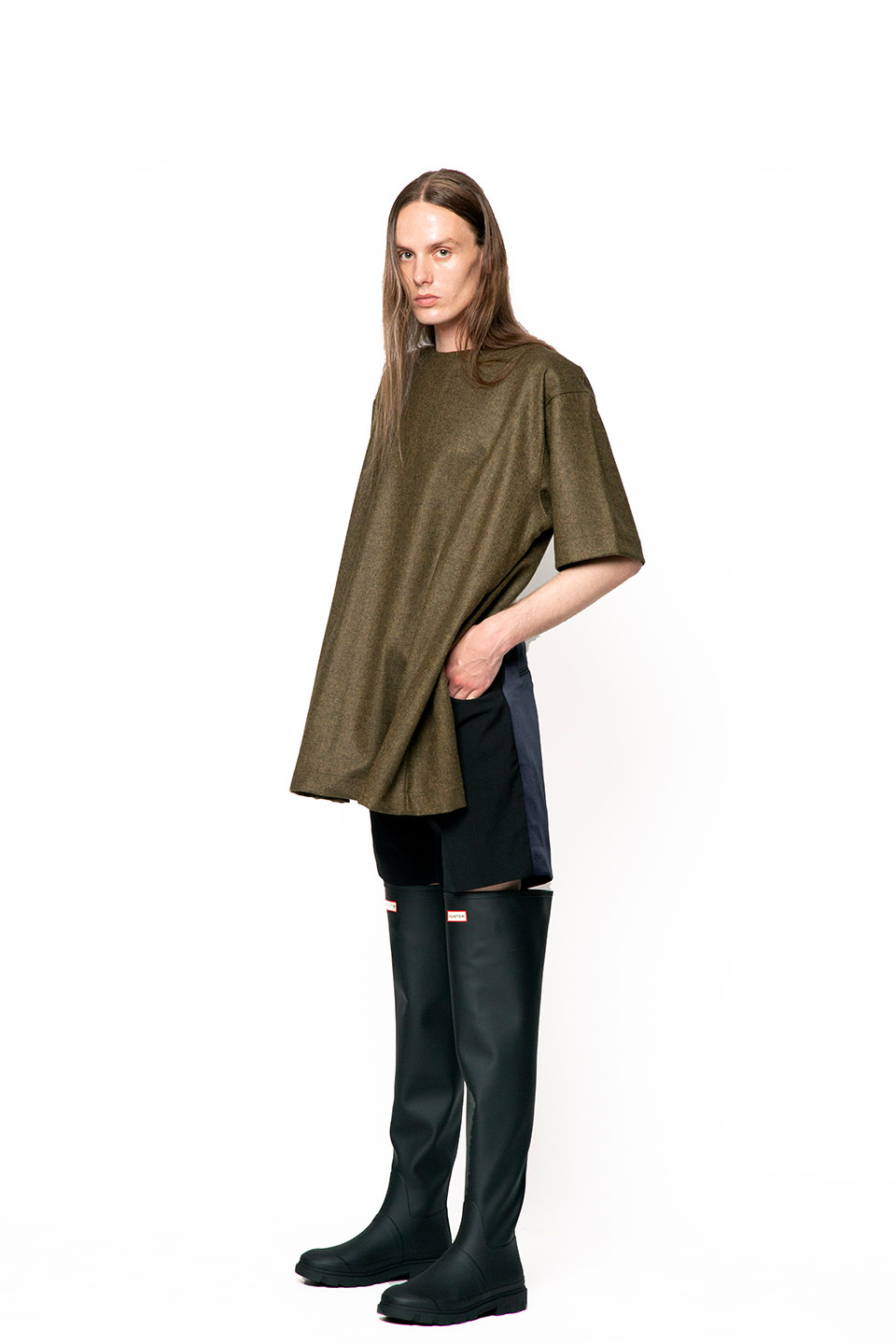
ZOOT: Every collection starts somewhere. What was the initial idea or feeling that sparked this collection, and how did it evolve throughout the design process?
Jonathan: The collection started after attending the Peter Hujar exhibition ‘Eyes Open in the
Dark’ at Raven Row gallery in London. I had often looked at Peter Hujar’s imagery in my research for previous collections, but seeing it in person took on a whole new emotional connection for me. I was fascinated by his ability to capture people at their most vulnerable without ever feeling exploitative.
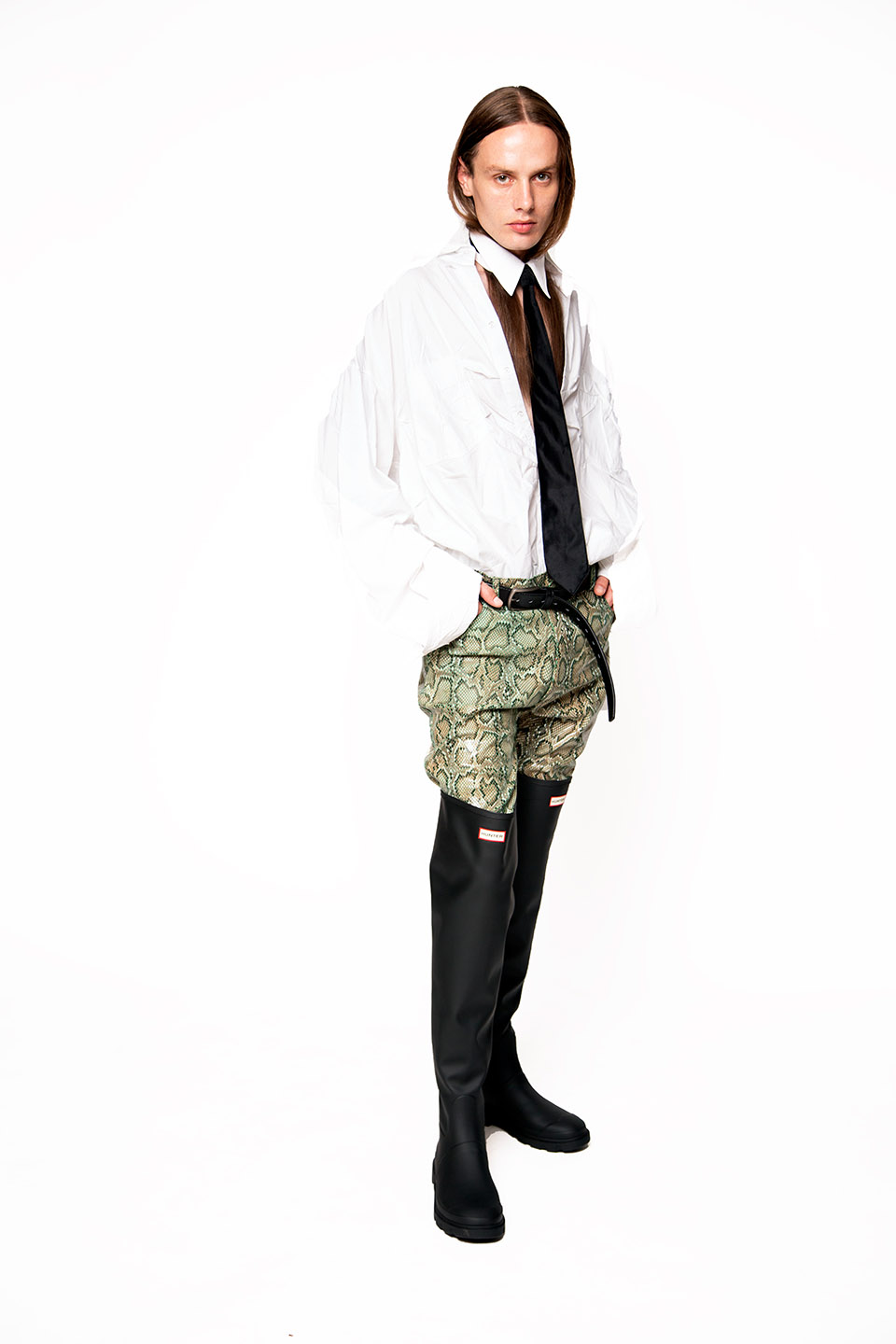
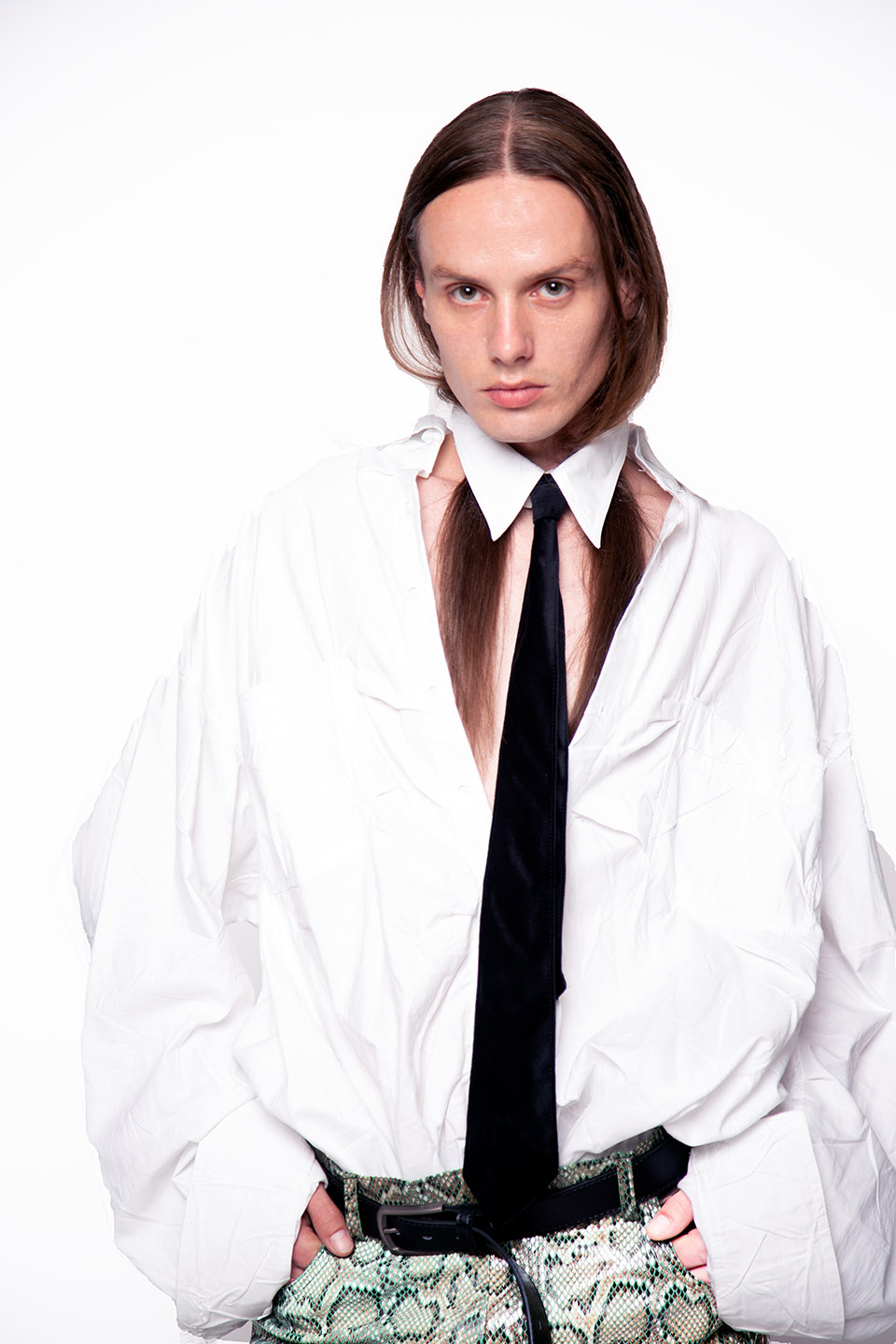
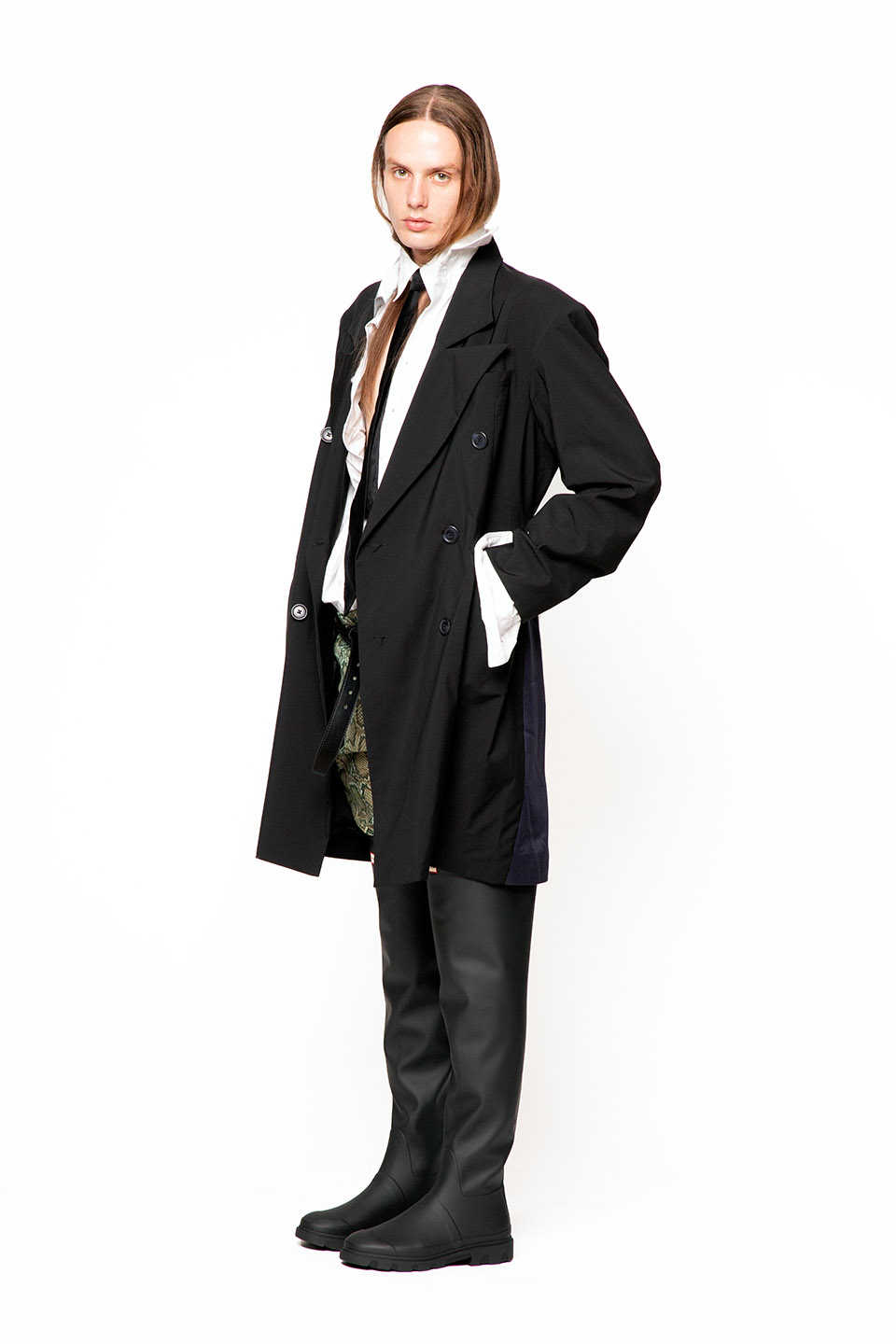
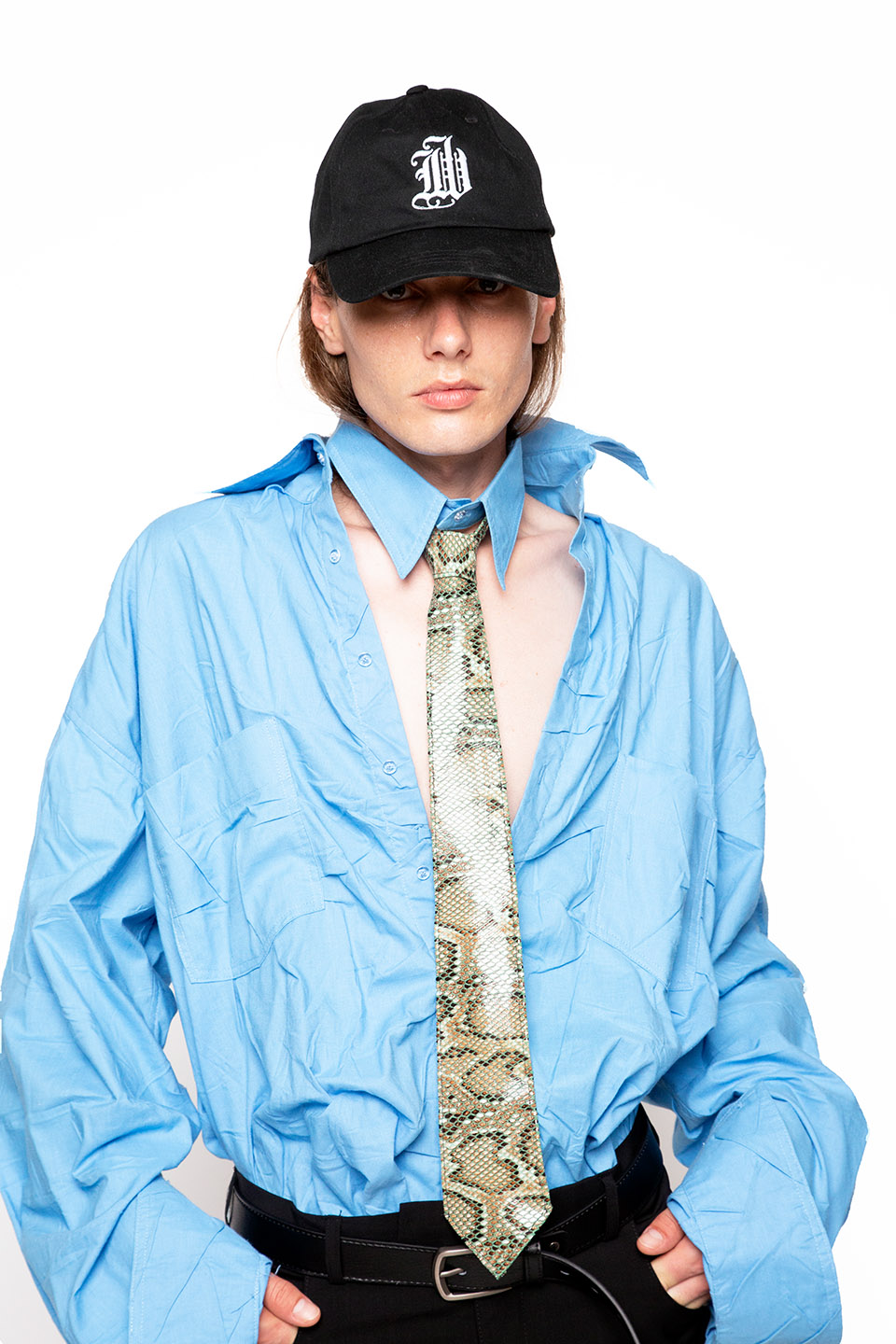
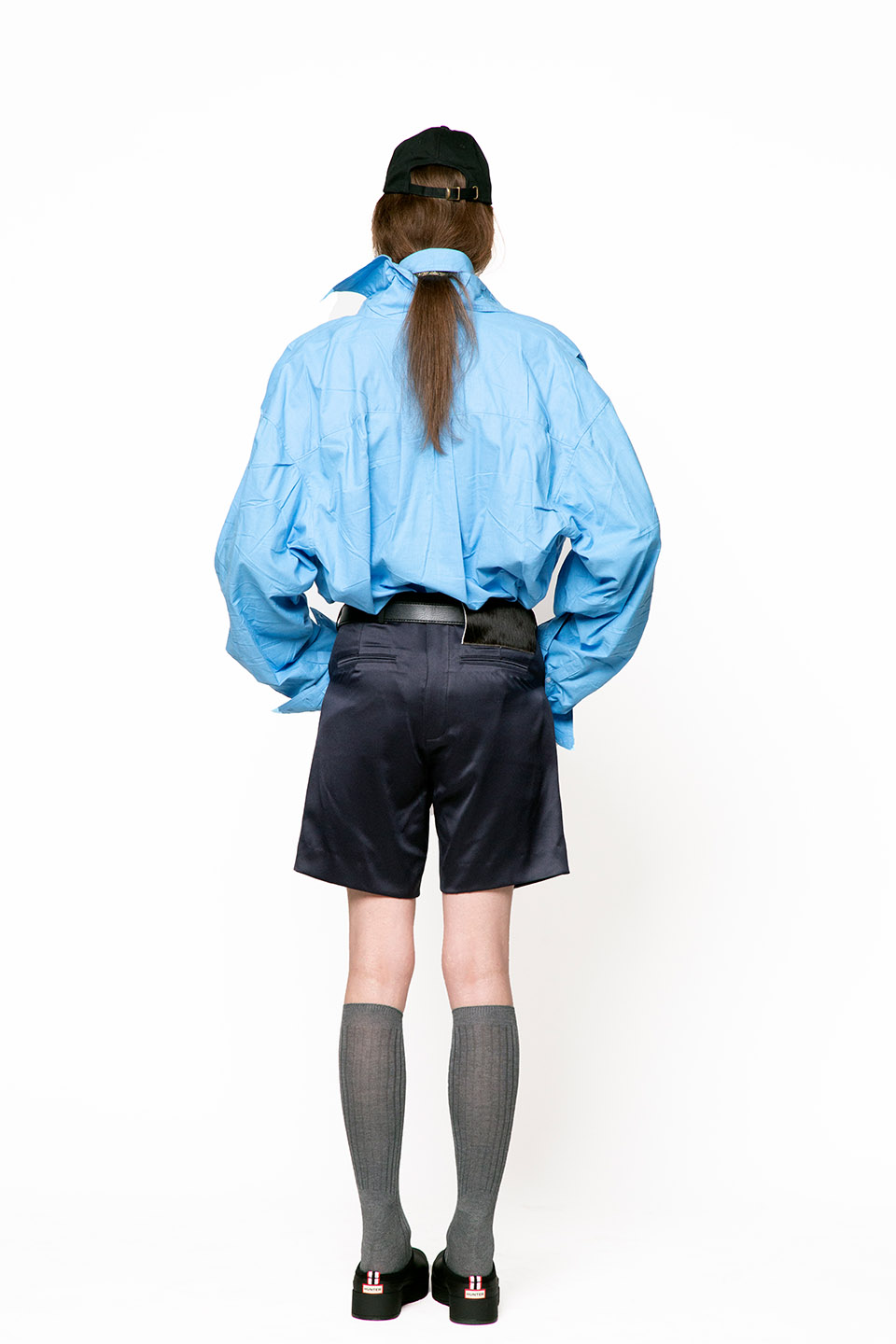
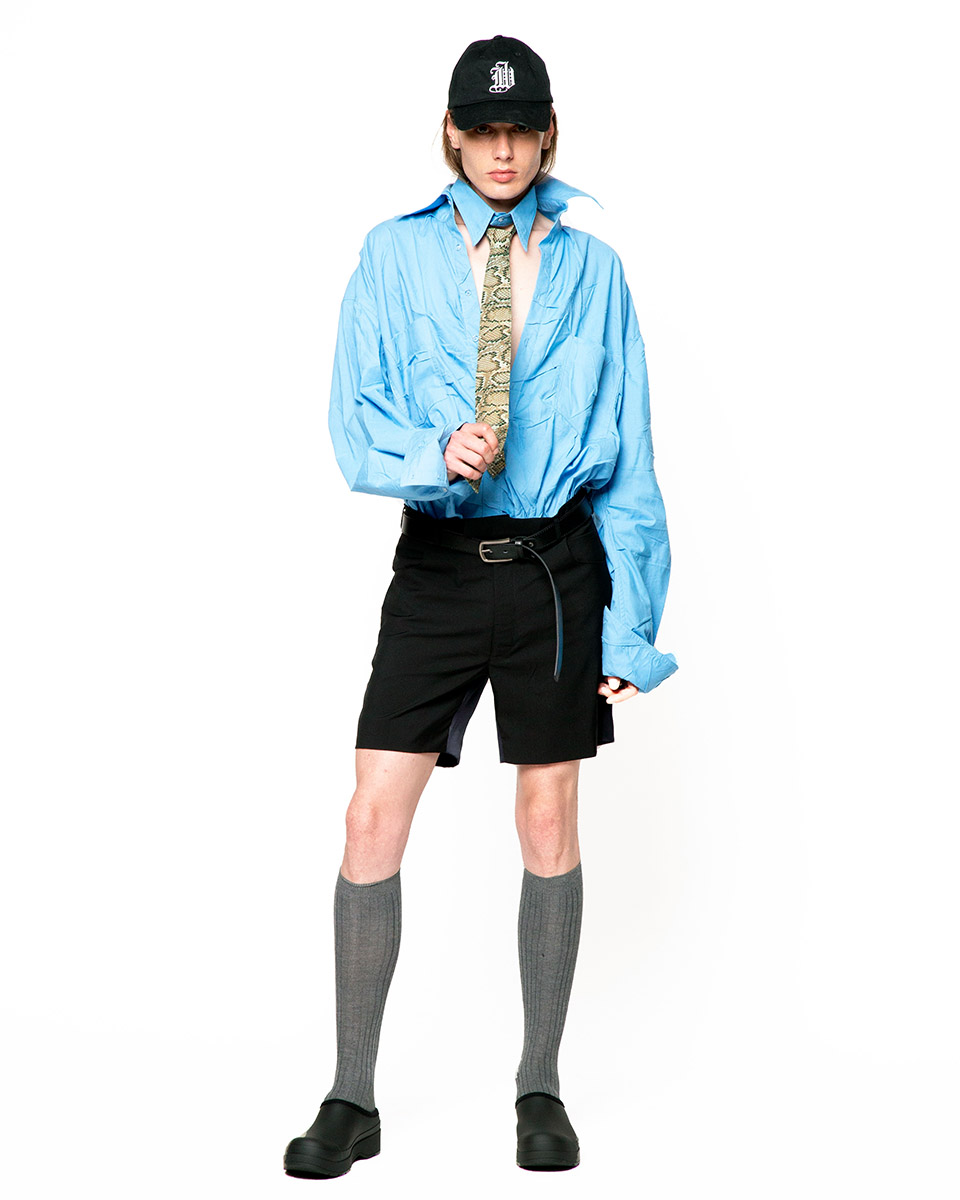
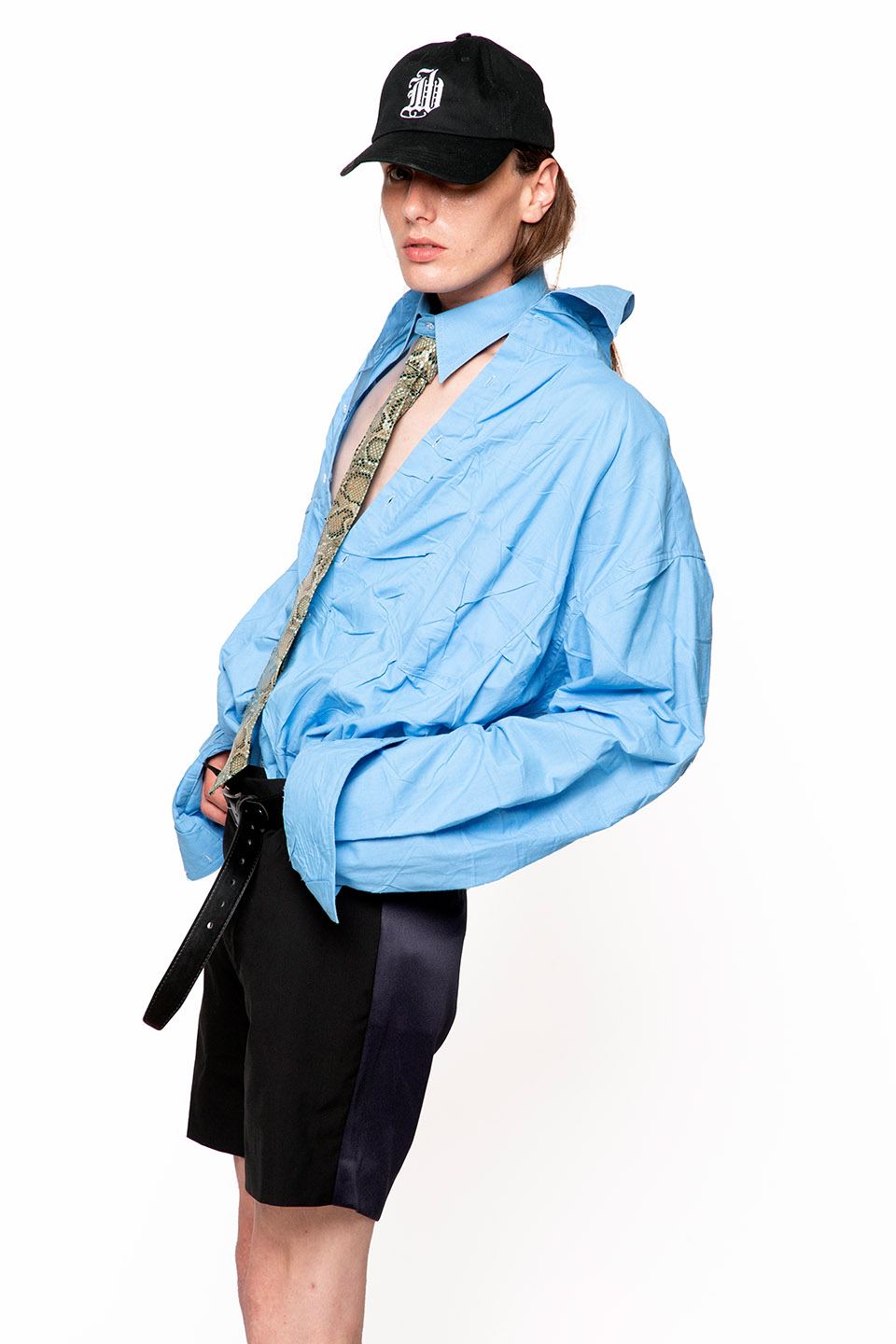
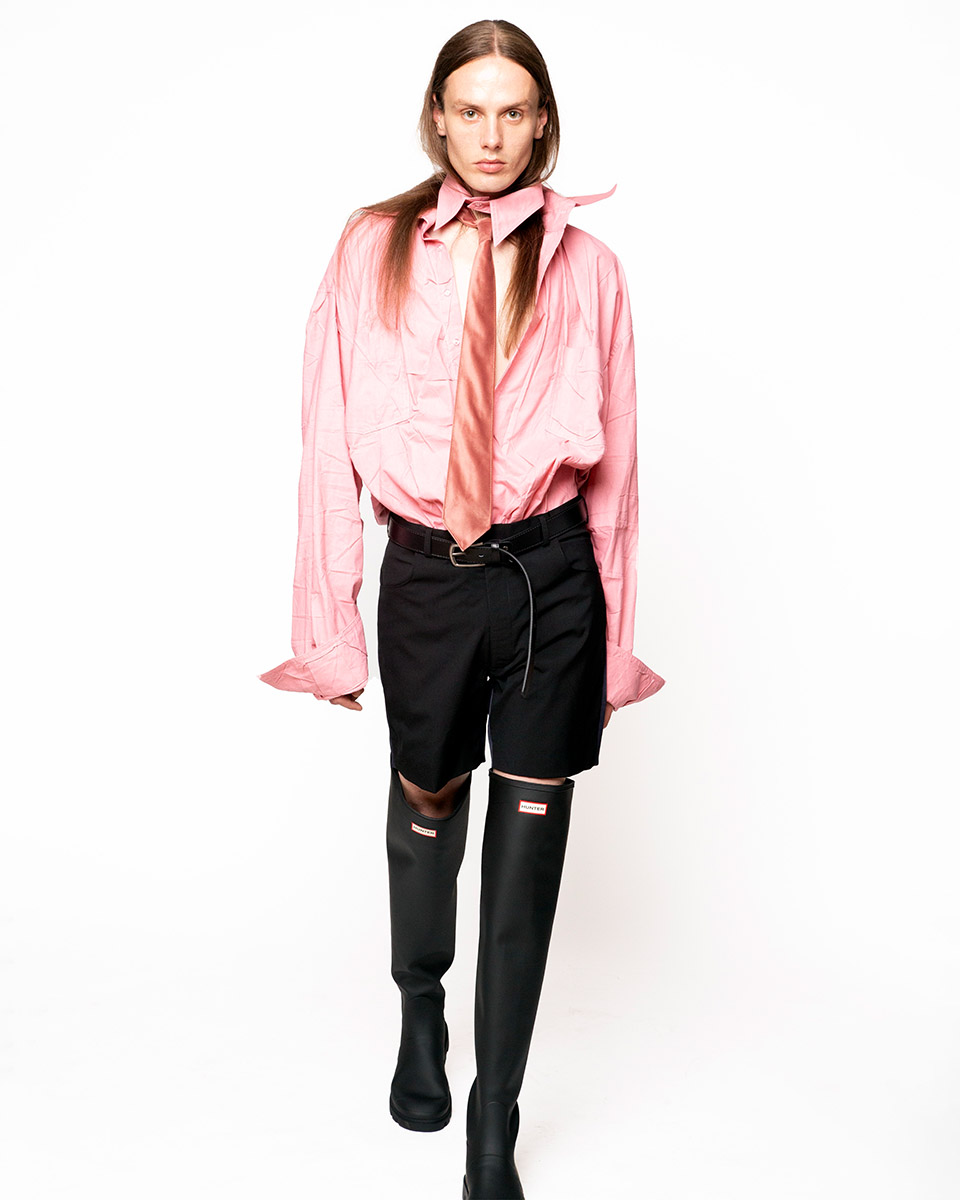
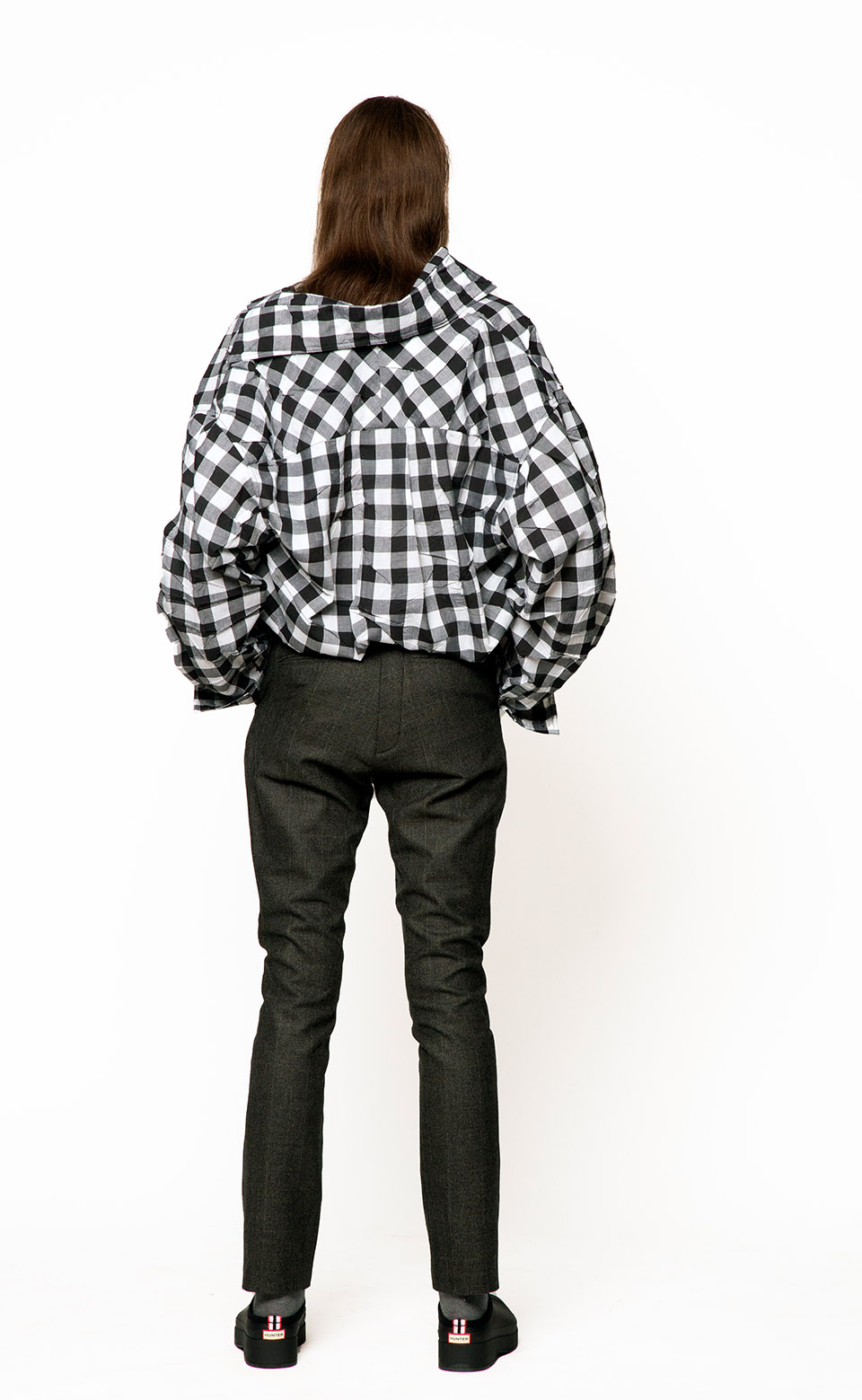
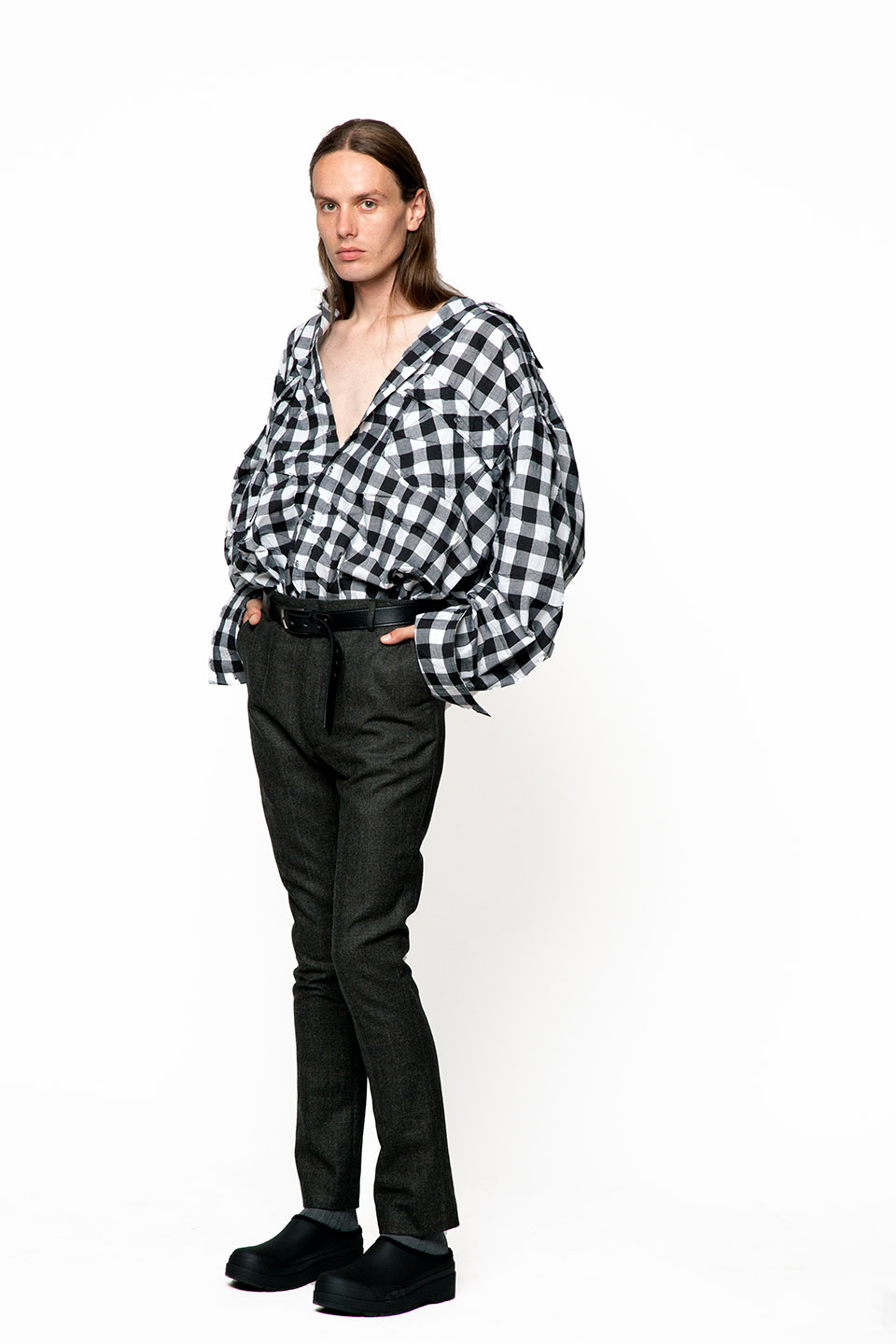
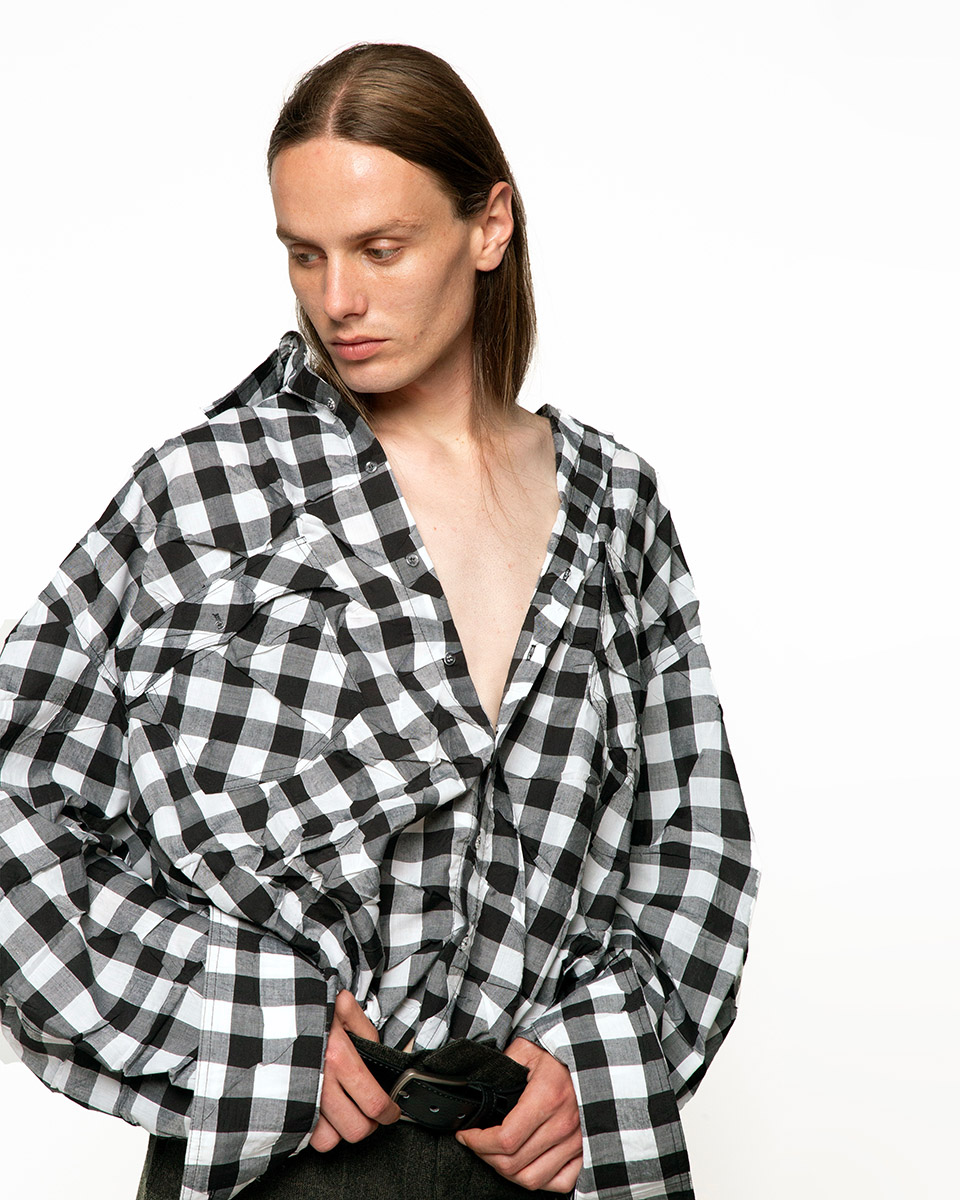
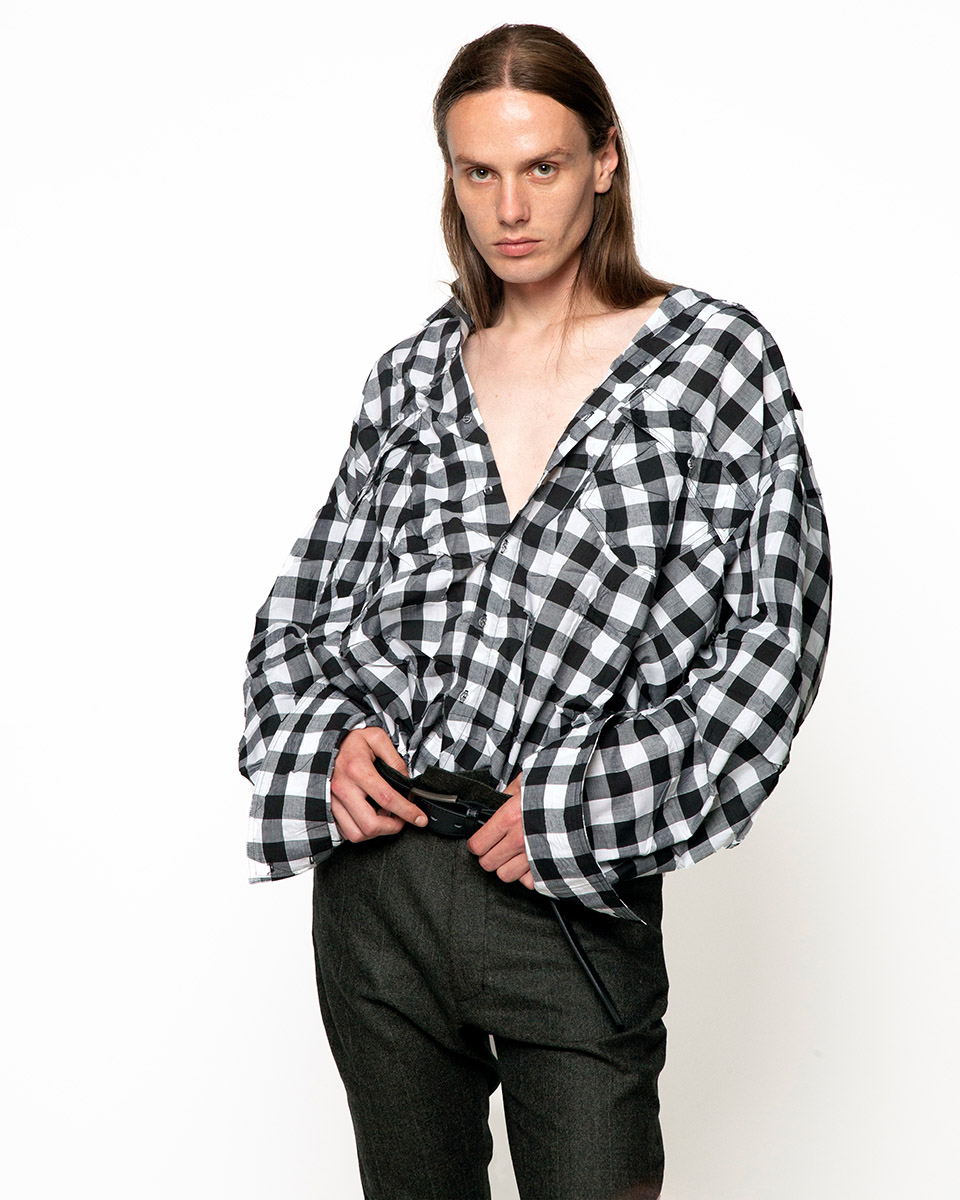
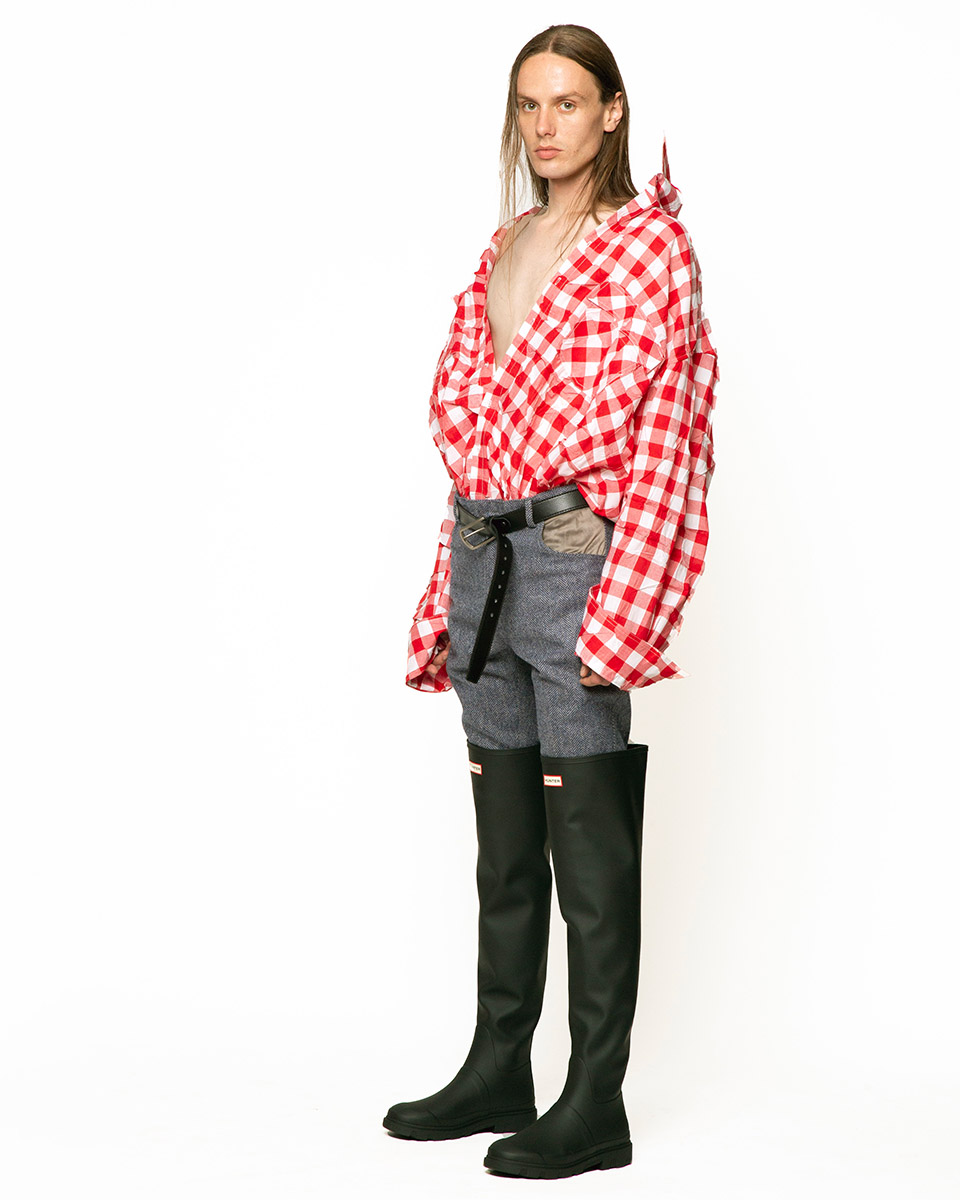
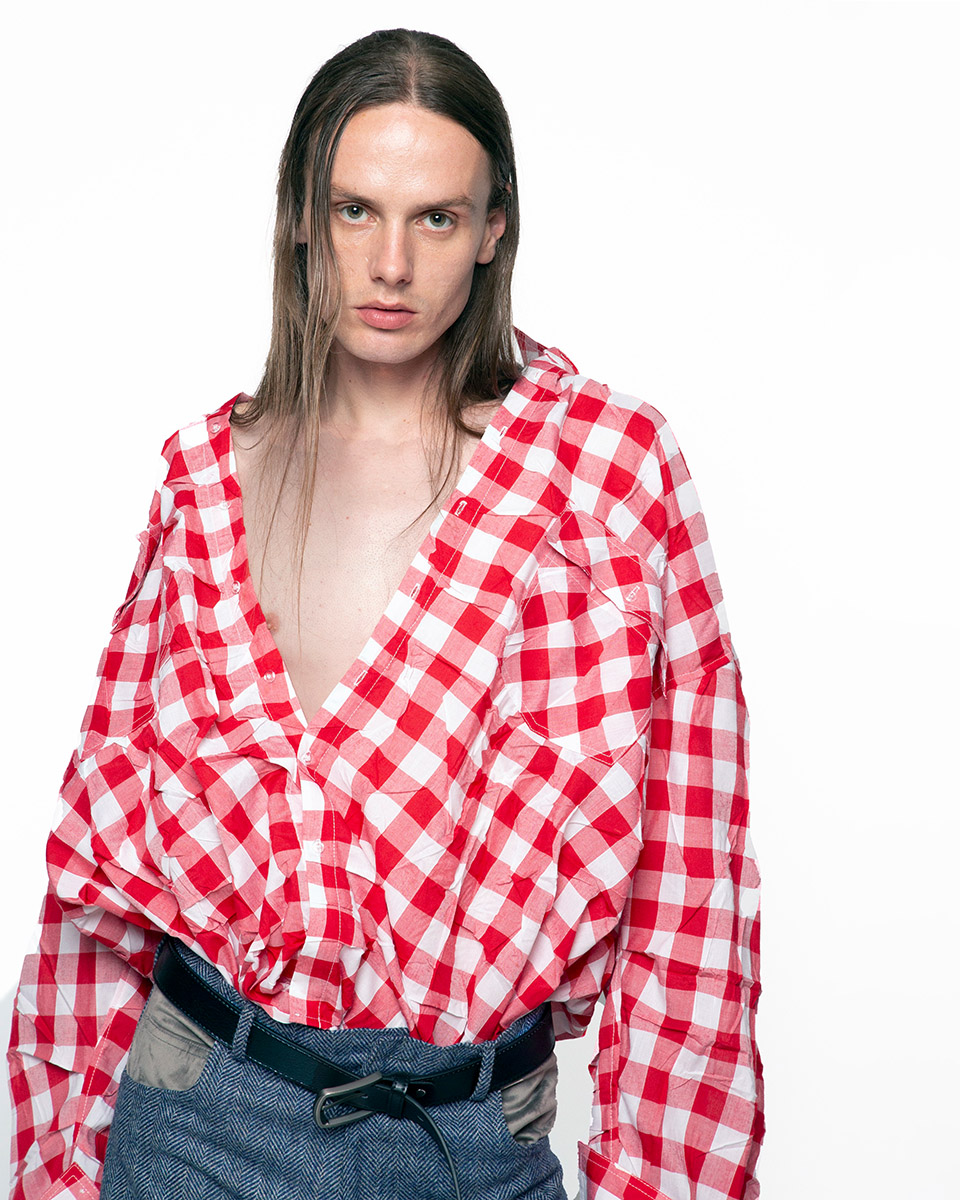
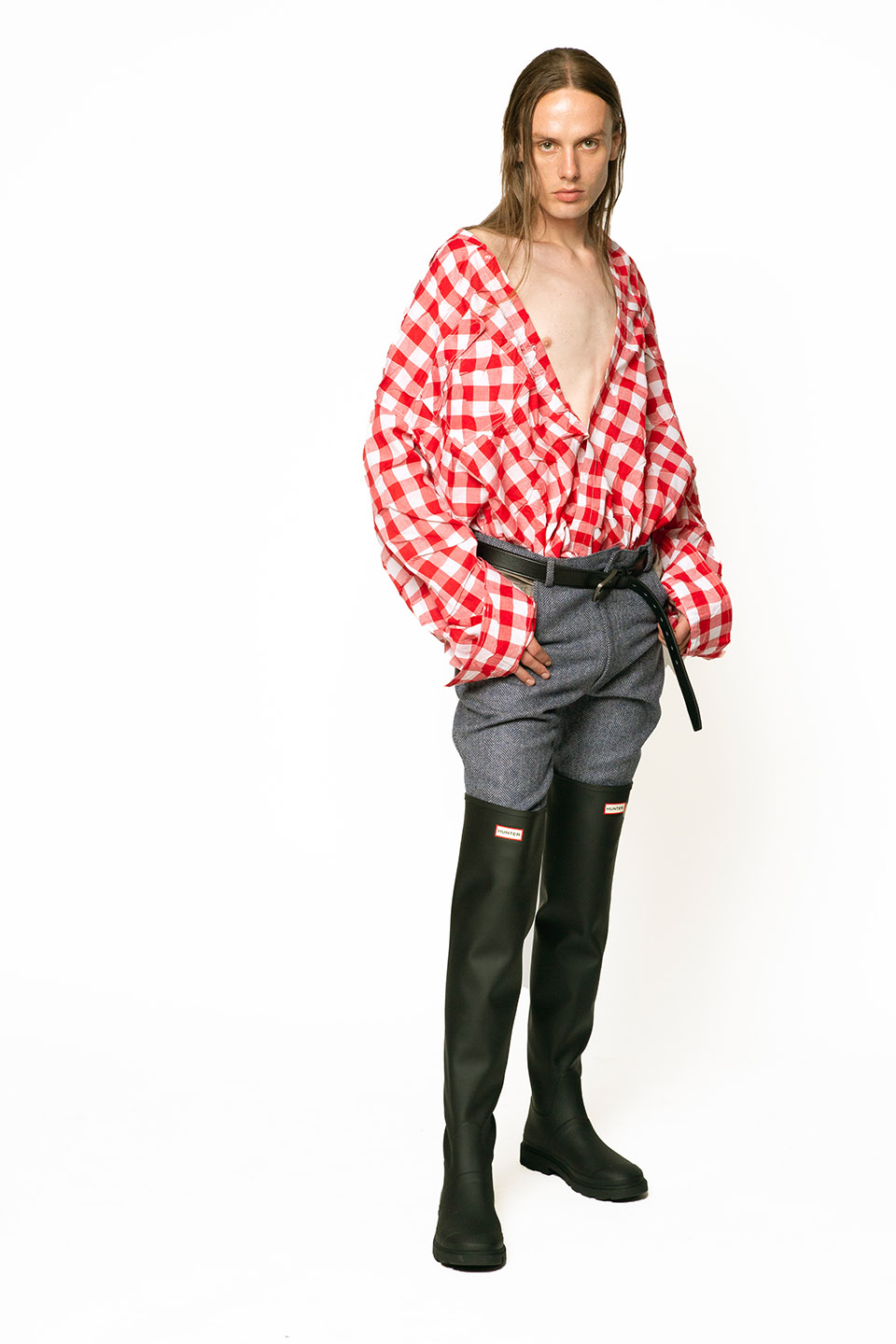
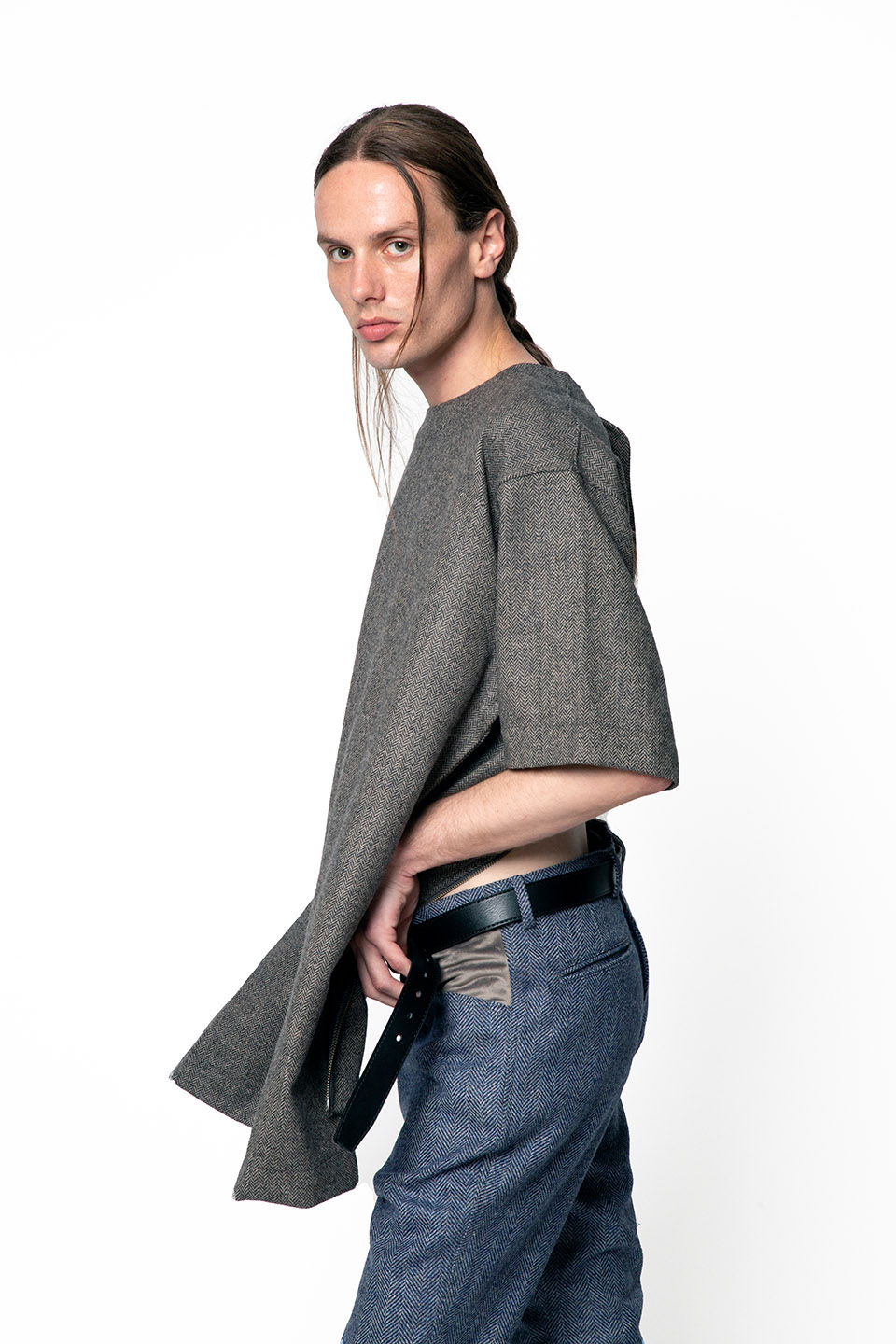
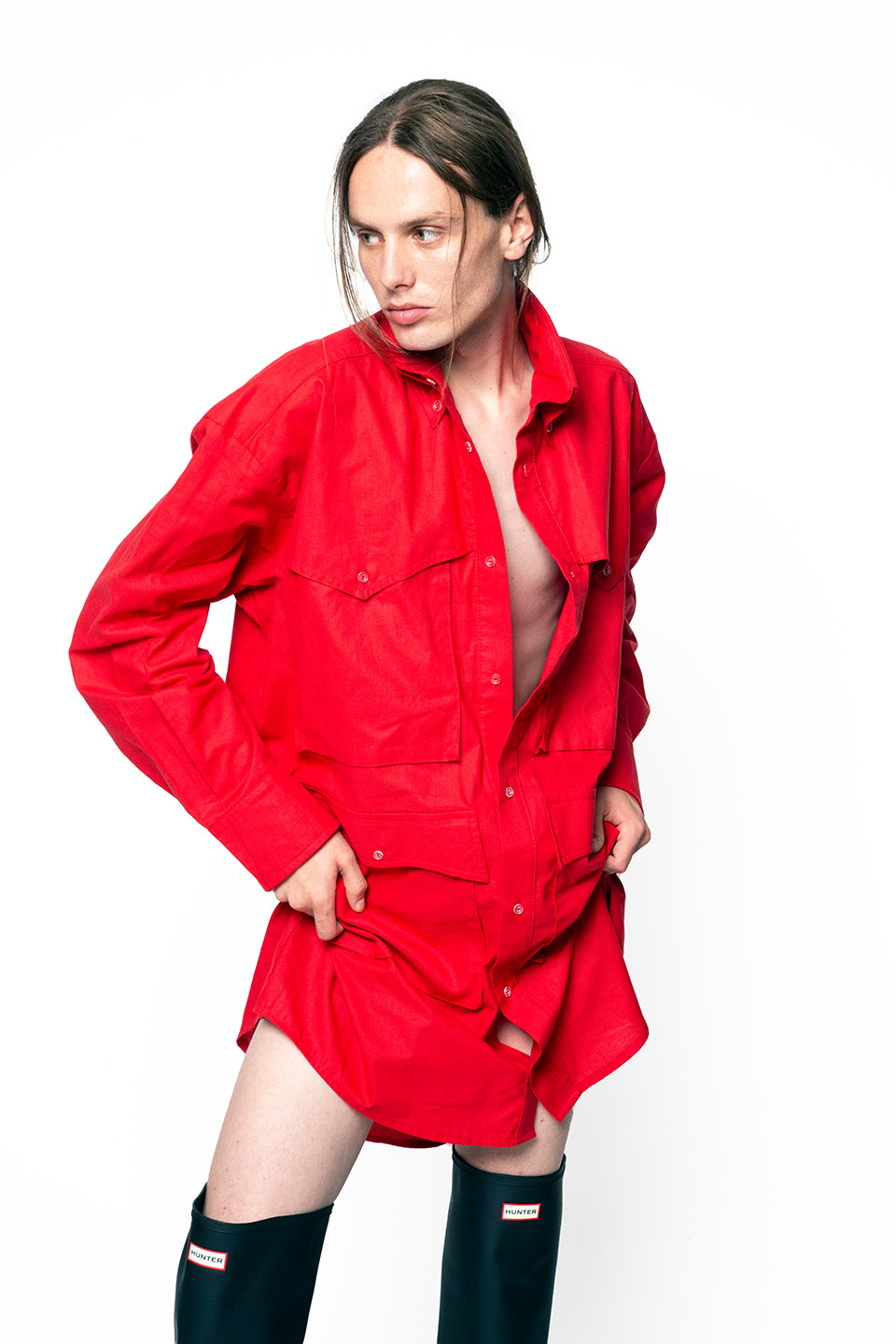
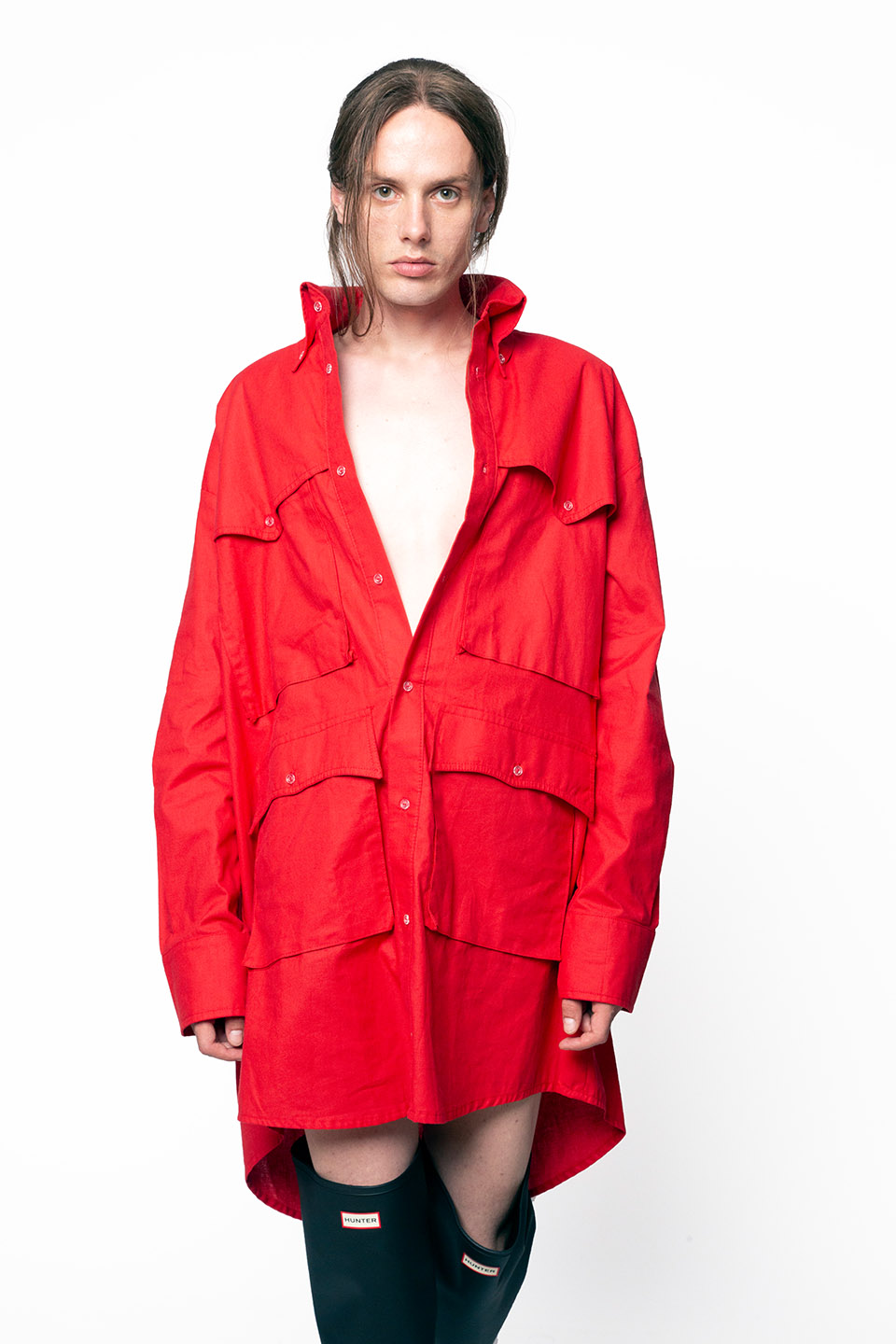
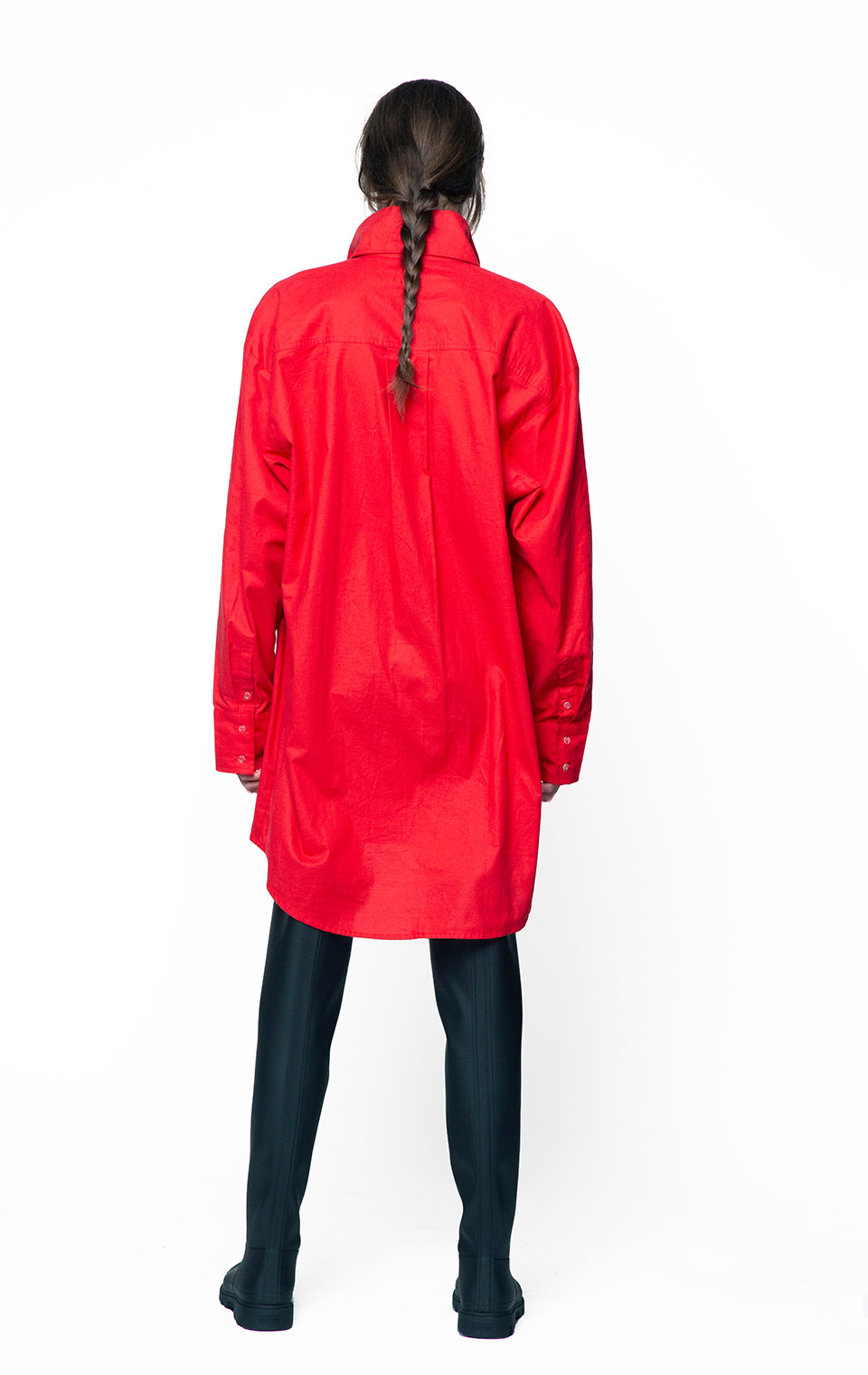
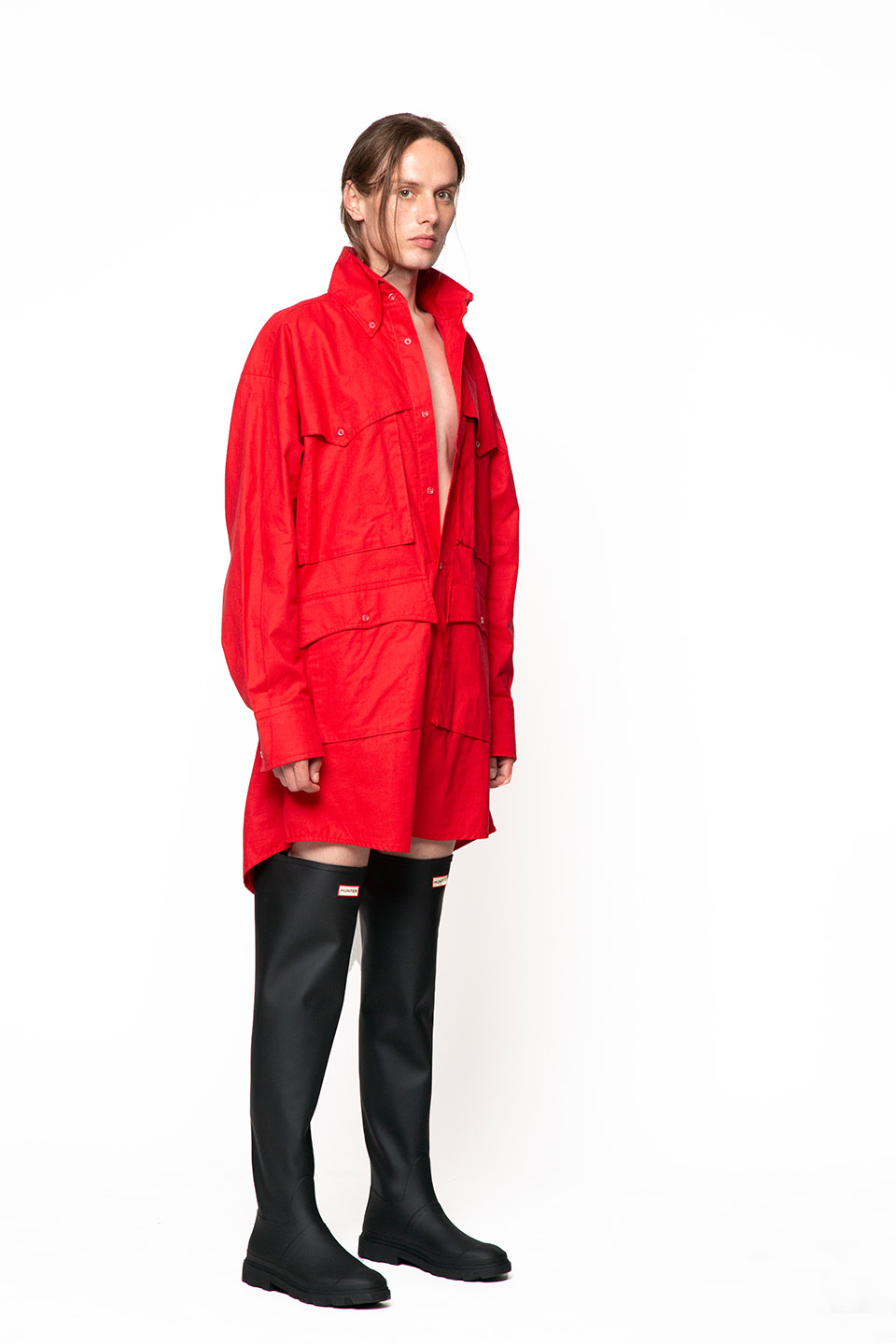
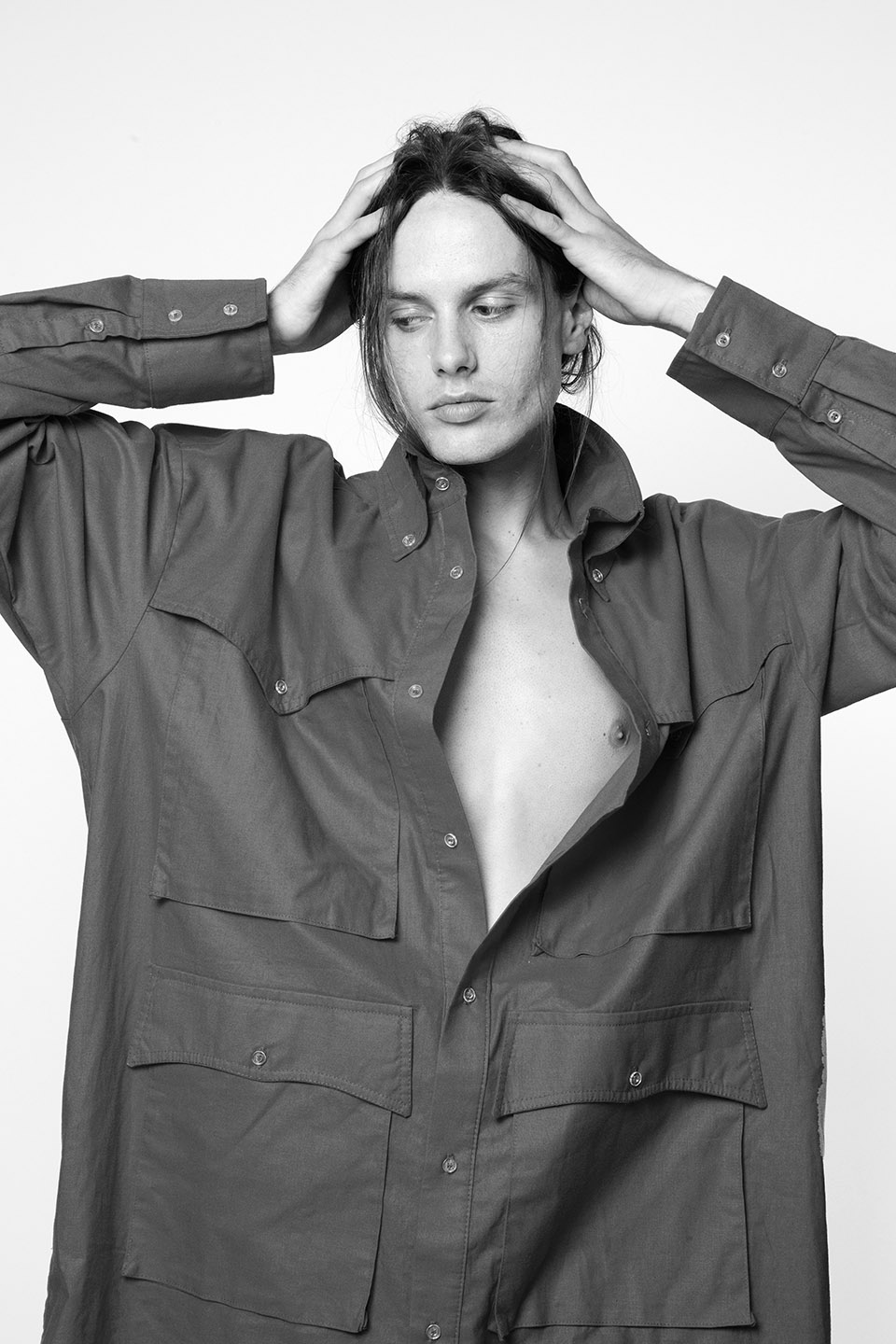
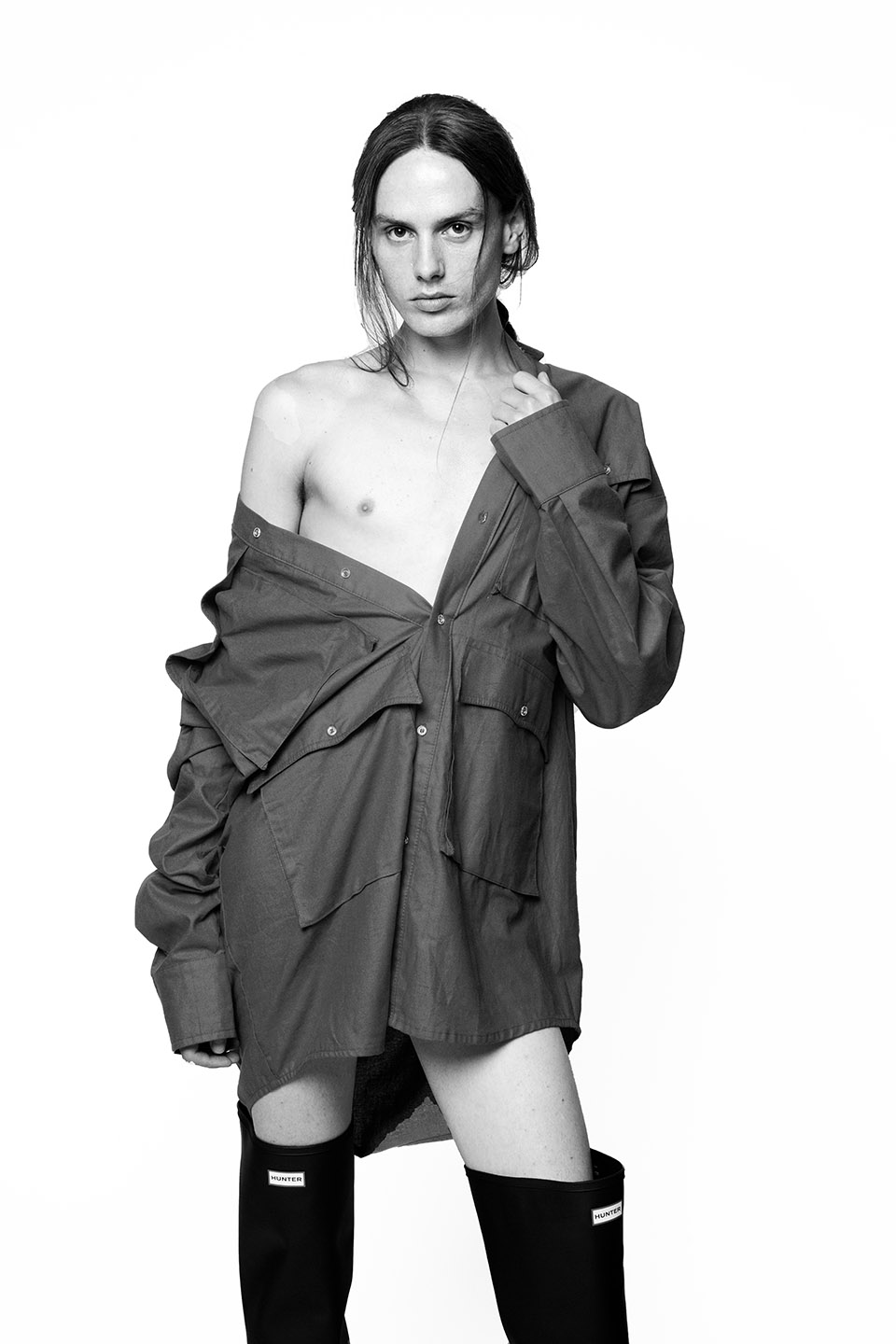
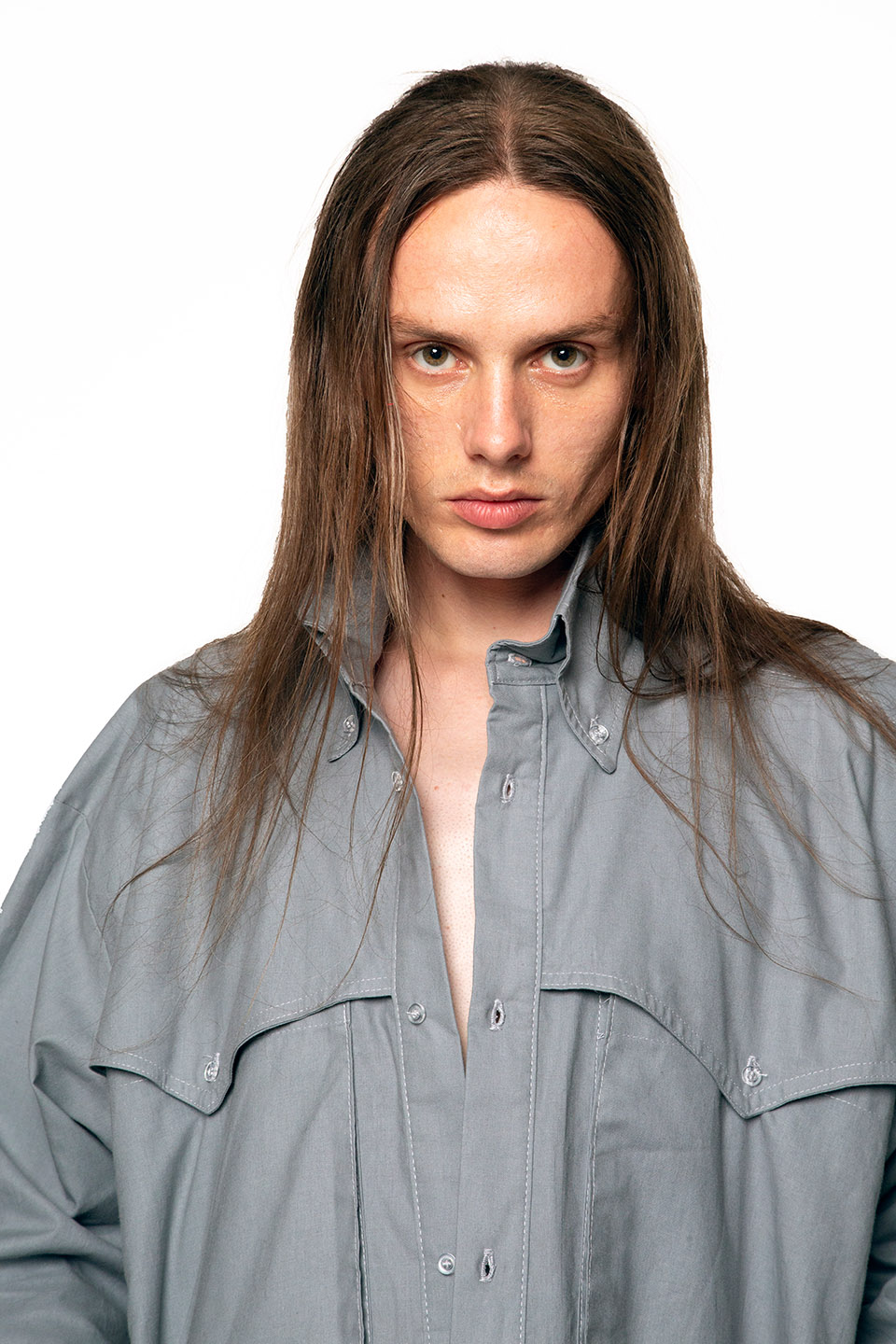
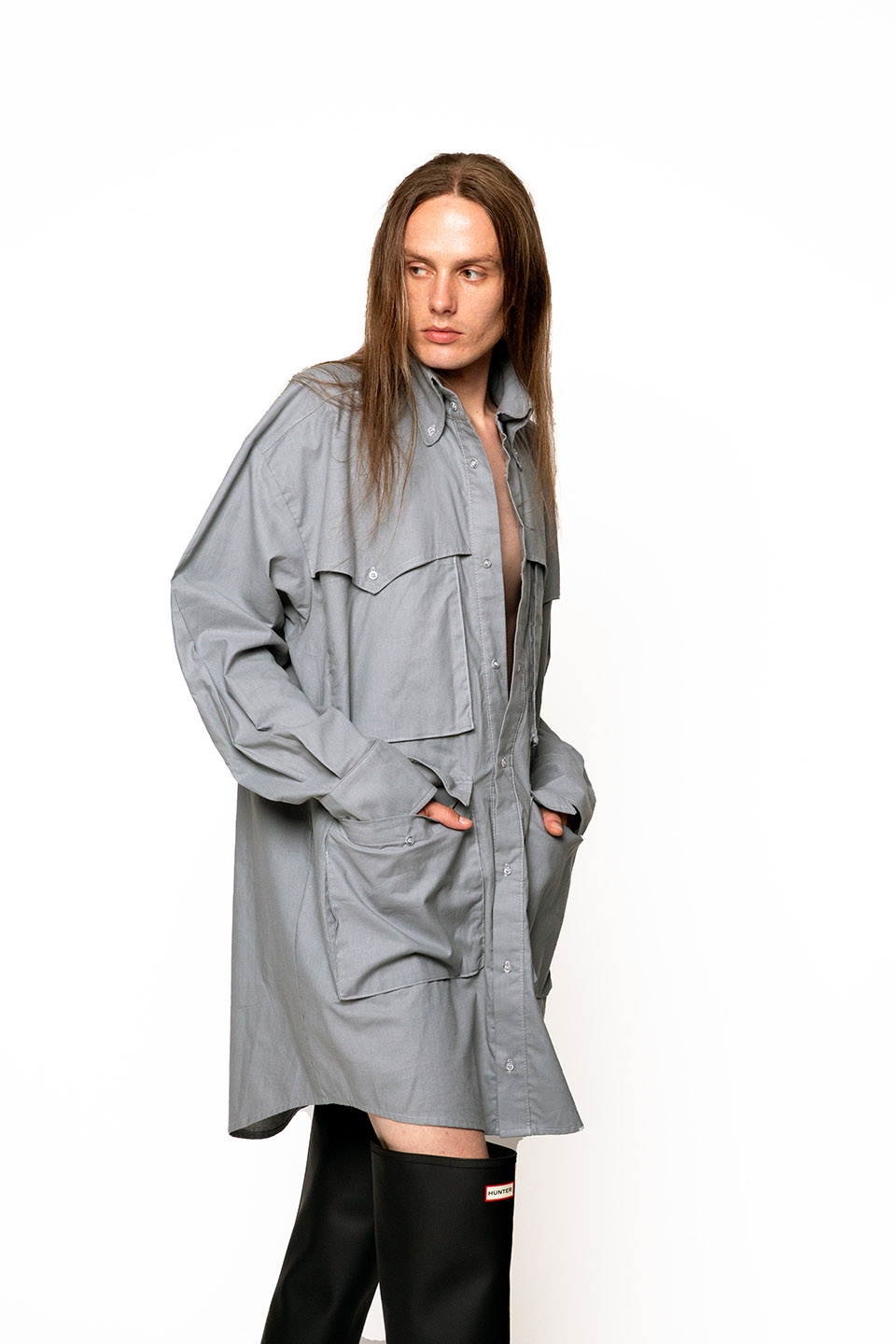
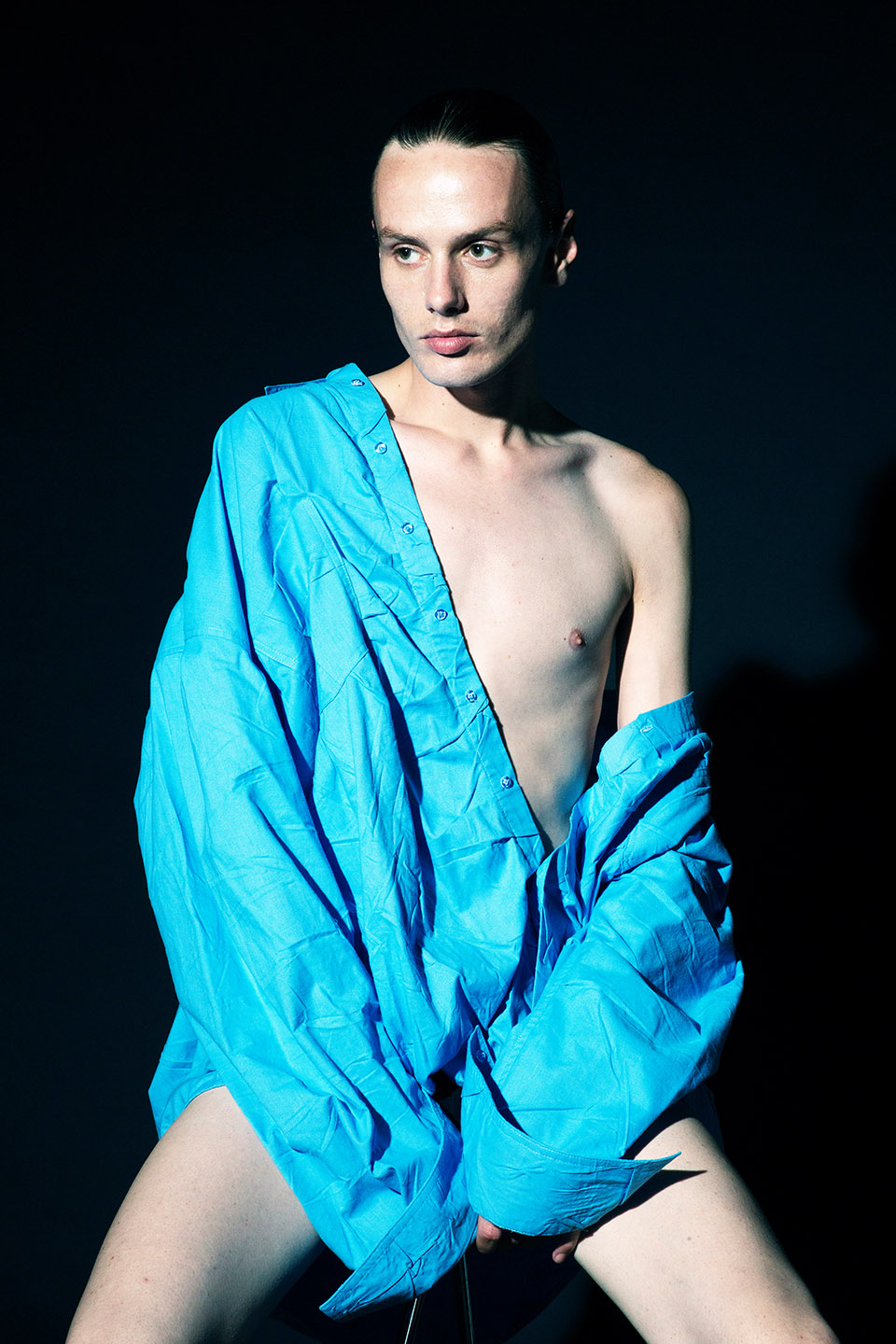
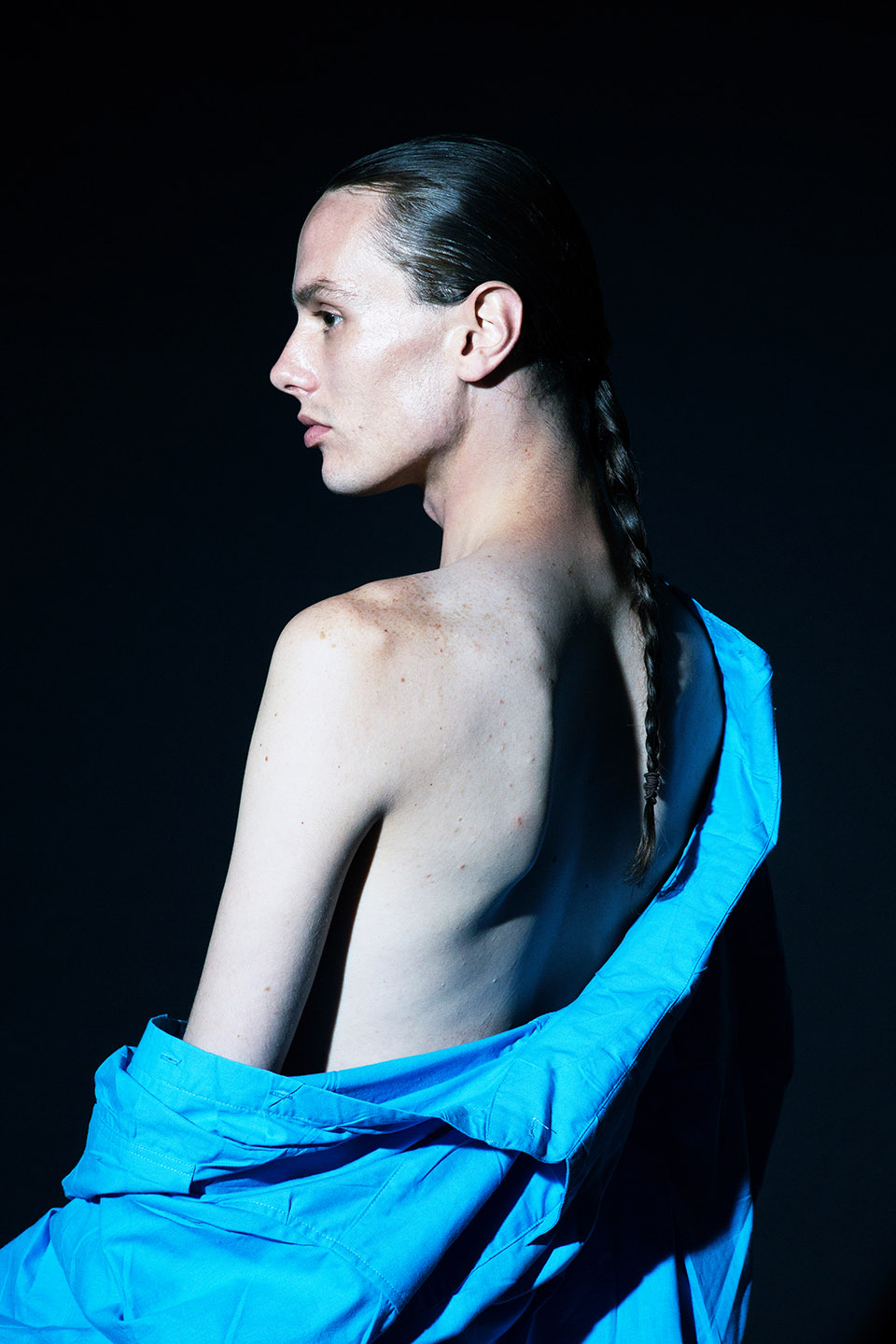
From there, I became interested in the contrast between uniform, men’s tailoring, and moments of vulnerability. I wanted to create garments that looked and felt familiar, yet felt slightly uncomfortable, as though something wasn’t quite right. Throughout the design process, the collection became less about referencing Peter Hujar directly, and more about translating the emotion his work evokes. There were also garments and ideas I took from my MA collection that I refined and developed – like with all my collections, they evolve through constant editing. As a result of that, the collection is stripped back to its most vulnerable core. It appears masculine, feminine, strong, fragile, uniform, tailored, oversized, fitted, illfitted, sexual, lived-in, and perverse.
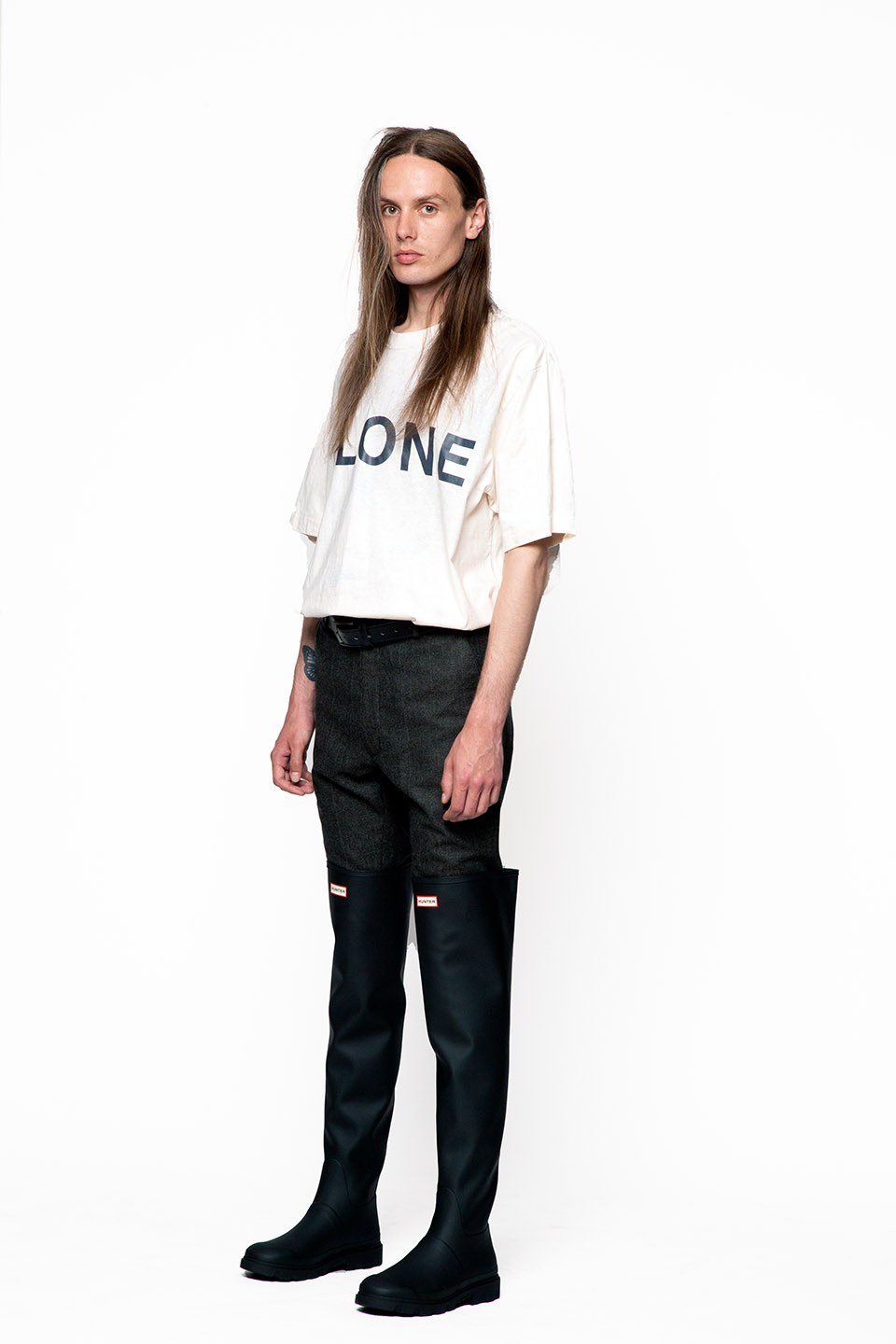
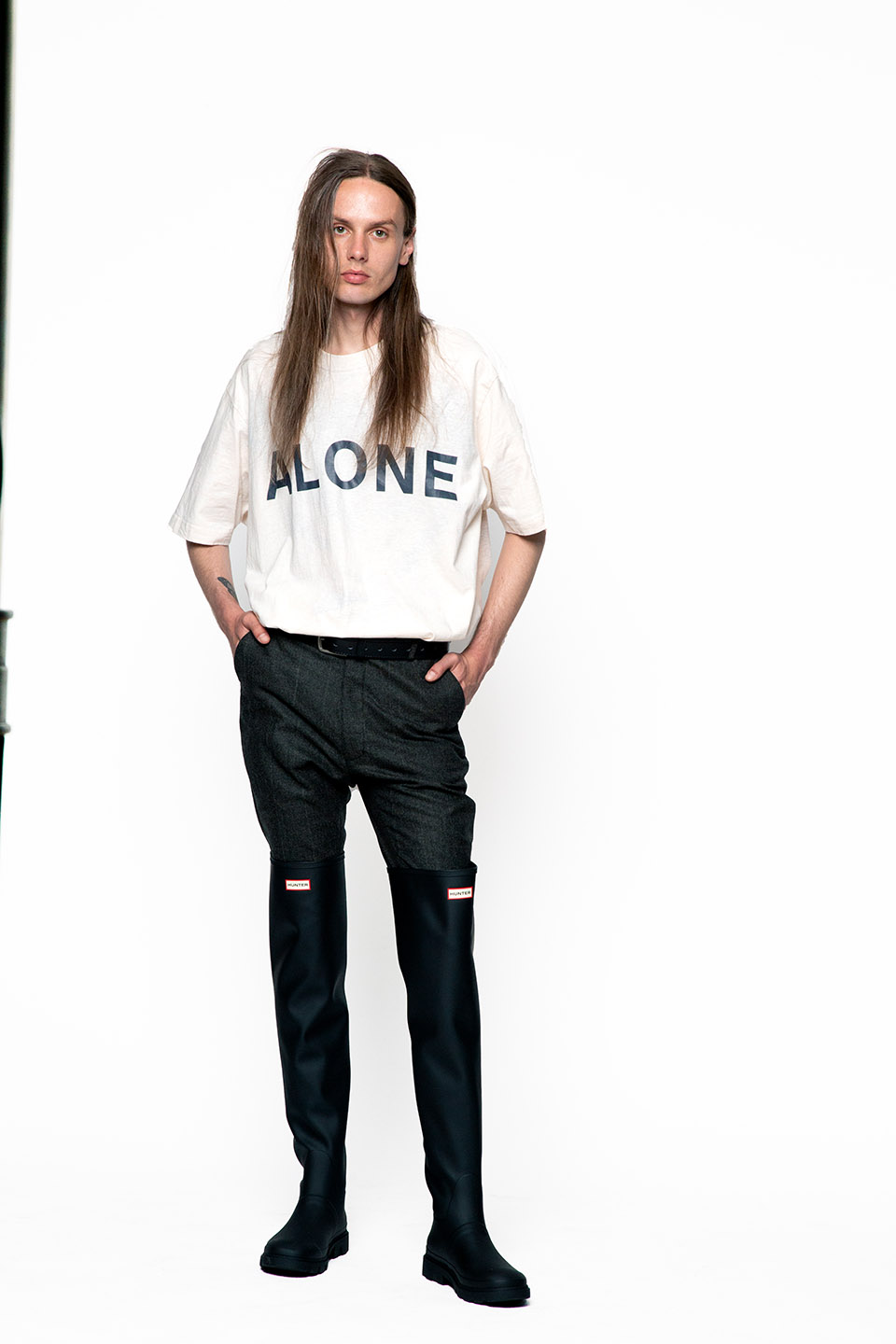
ZOOT: You collaborated with Hunter Boots for this collection. How did that partnership come about, and what made Hunter the right fit for your vision?
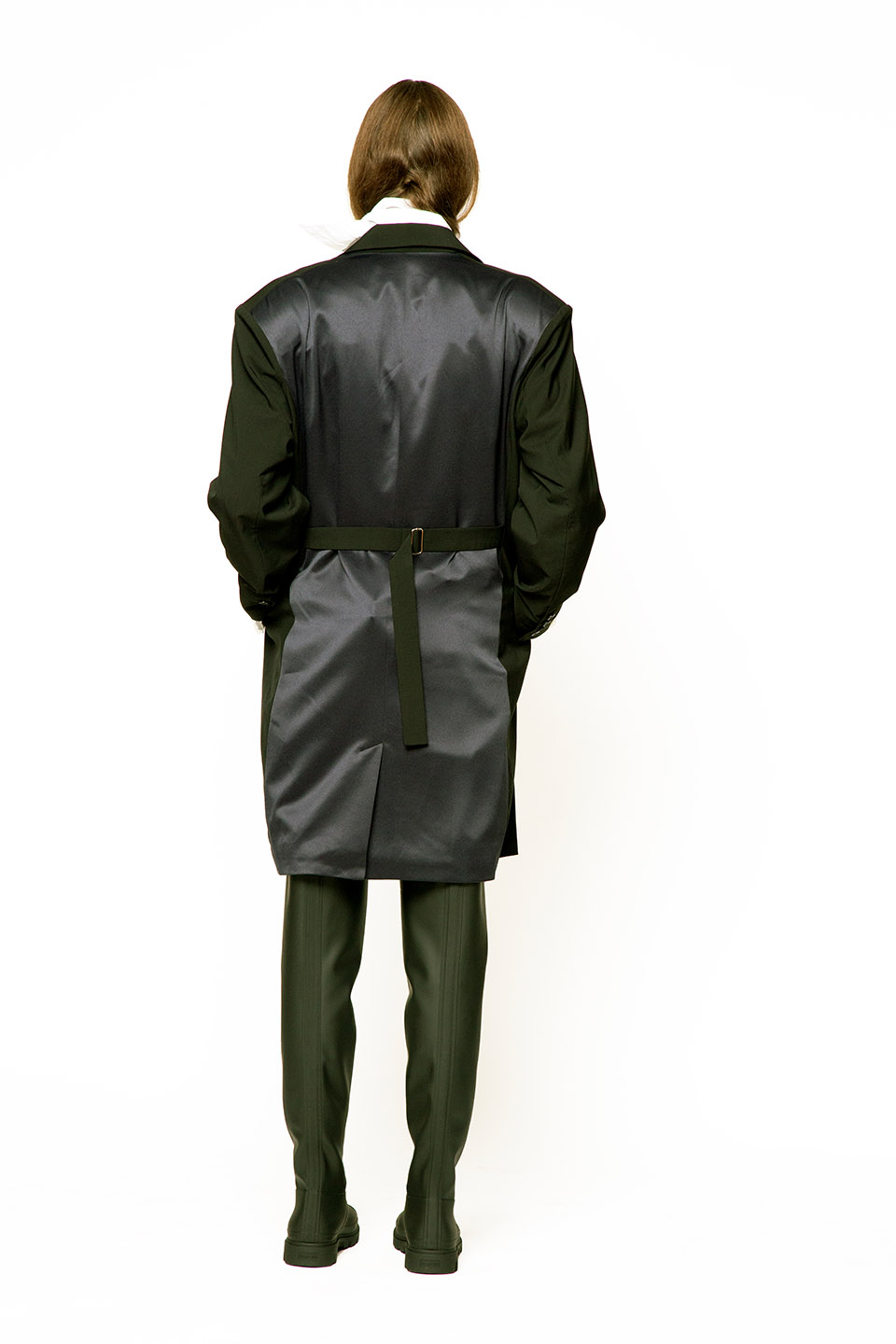
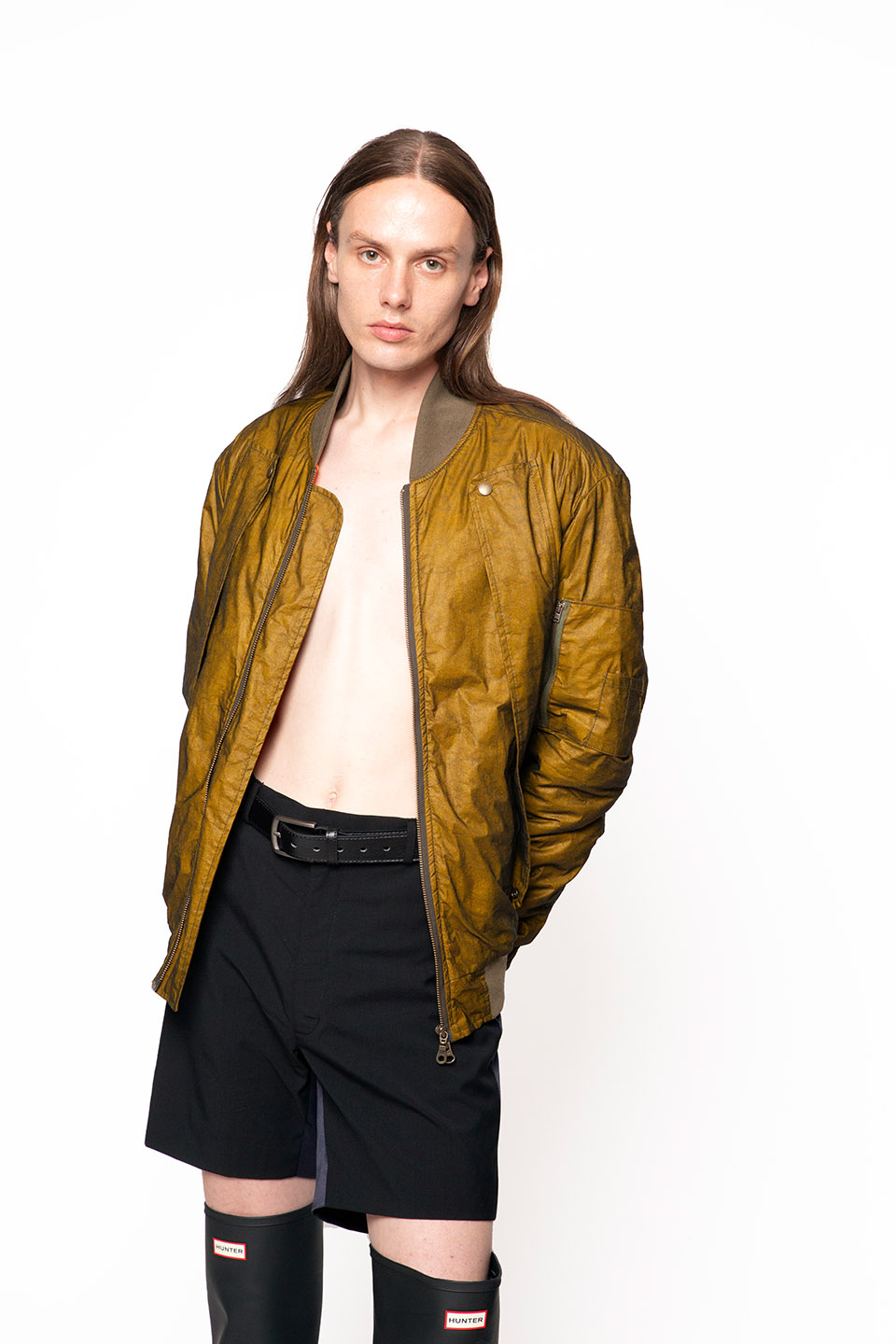
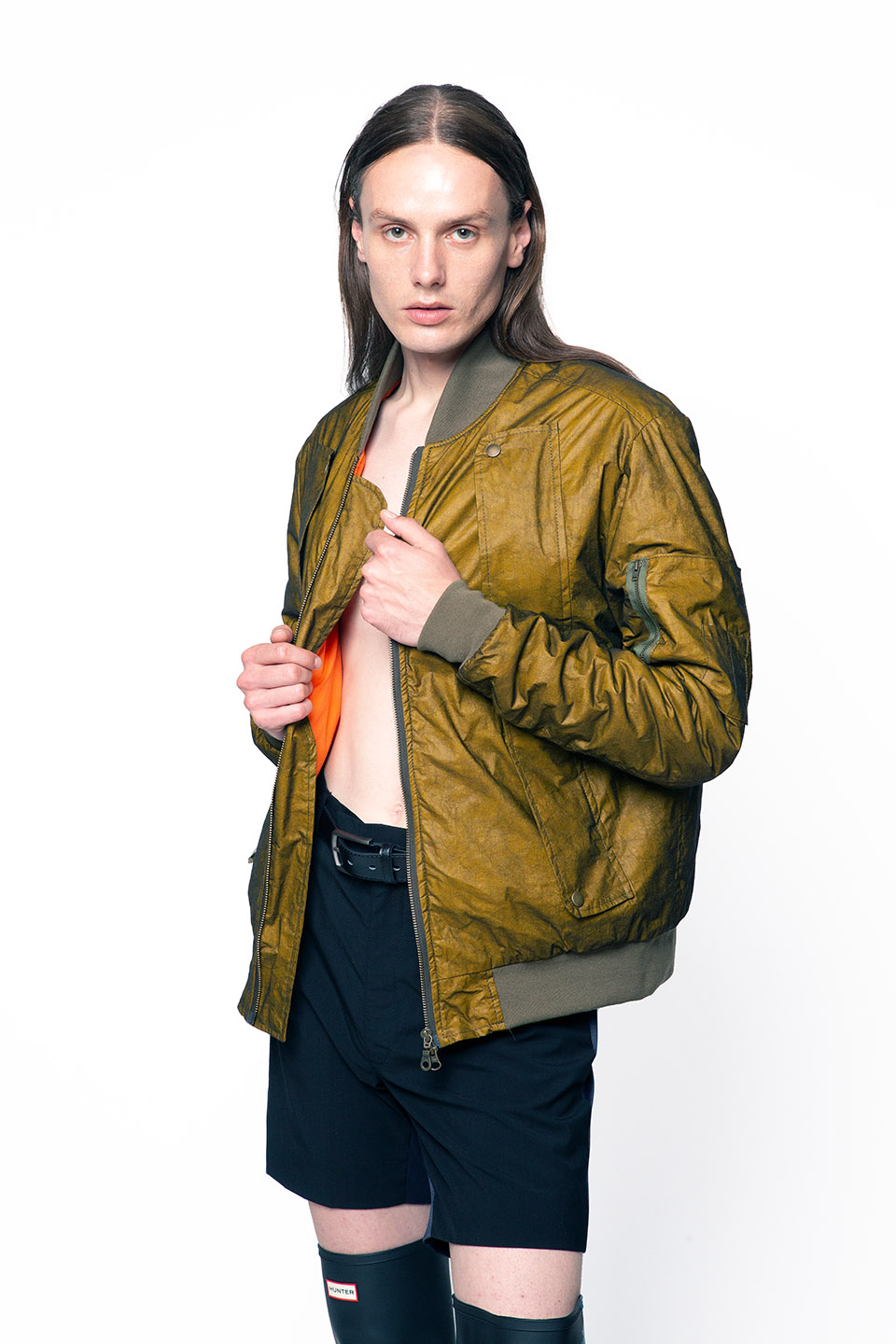
Jonathan: Hunter Boots have such a strong visual identity, one that makes them immediately recognisable to just about anyone. I wanted to challenge taking something so familiar and juxtapose it in an entirely different context. I reached out to Hazal, who is the Head of Footwear Design via LinkedIn, and she was not only kind enough to reply, but to welcome and feel excited by the concept behind the collection, and why I felt the footwear I was interested in them loaning to me belonged to the world I have created. I knew even before reaching out to the Hunter team that I wanted to use a thigh-high wader boot in my collection; the silhouette, fetish undertones, practicality, and this idea of protection. Then, after seeing several photographs of Peter Hujar himself wearing clogs, they too felt like the perfect opposition to the wader boot, that introduced a level of intimacy and sensuality. The tension between something functional and something vulnerable felt completely in line with what I was trying to communicate through the clothing. I’m incredibly grateful they trusted my vision and loaned me the footwear for my lookbook. I’m hoping this will be the start of a creative journey together and we can collaborate again next season.
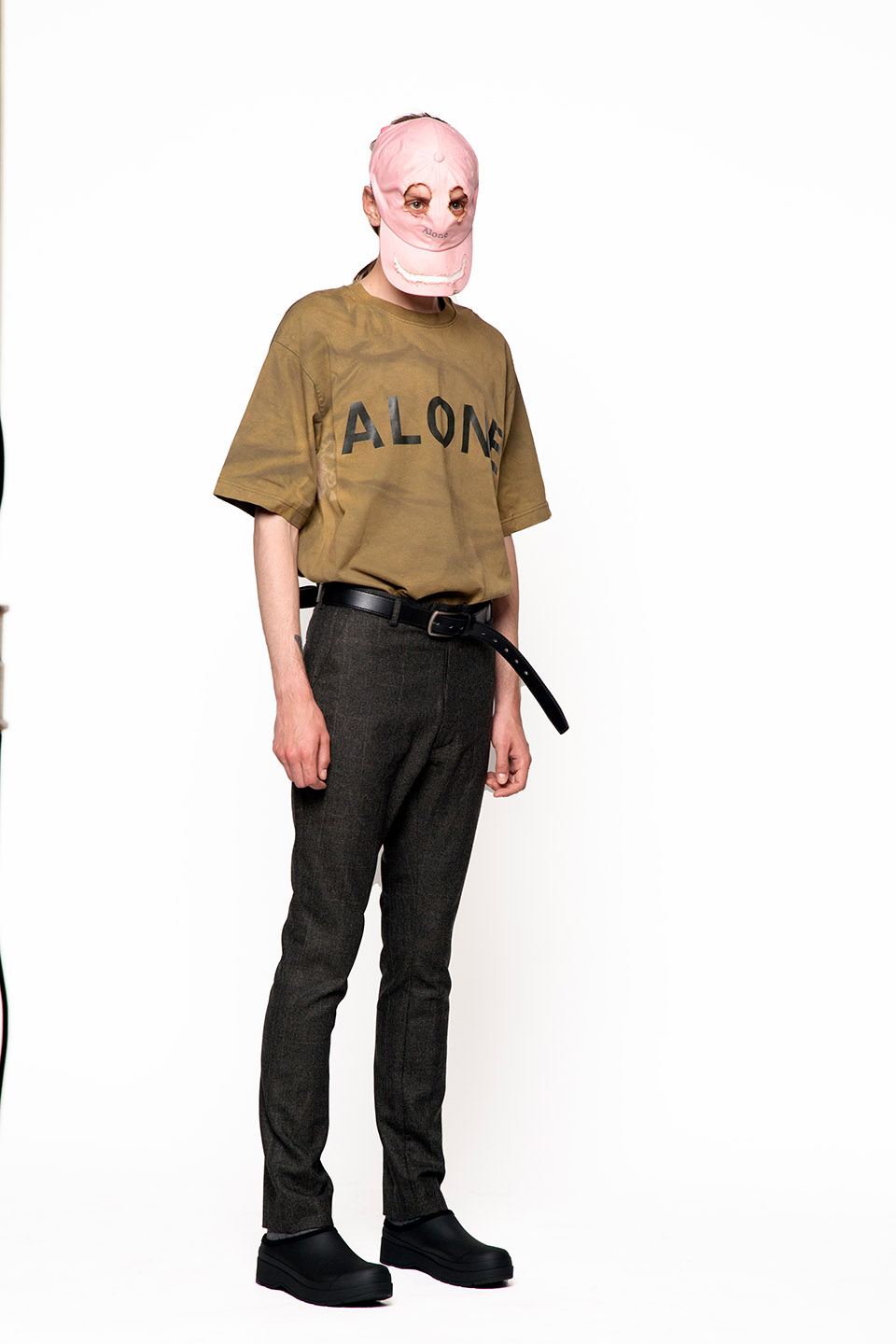
ZOOT: What’s the story behind the mask? And where does your alter ego, Big Daddy Jonny, fit within the Jonathan James William universe?
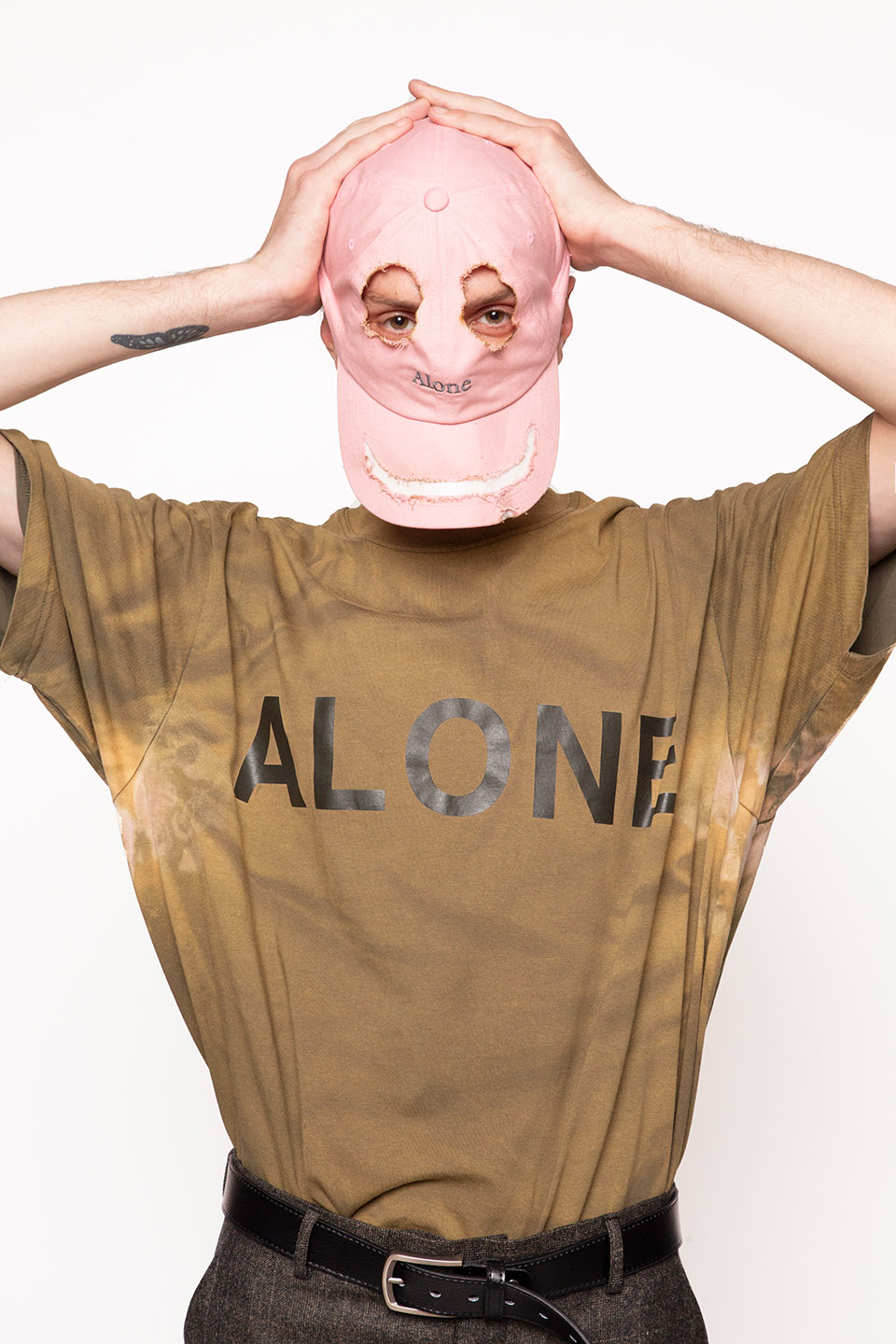
Jonathan: The story behind the mask stems from an idea I had back in 2018, that I had just randomly stumbled across going through my notes app. Using it for my MA collection was a perfect example of an idea being saved until the moment is right. After presenting my pre-collection at the end of first year, Fabio called me into his office and inadvertently calling me a narcissist. I took his telling off as a “Well if you want a narcissist, I’ll give you a narcissist,” and hence the Big Daddy Jonny mask was born. I kept it a secret and none of my tutors saw the masks until the show selection fitting. As for my alter ego, I’m not sure I would go as far as to call it that, he’s just an embodiment of sharing the same things we all experience. Insecurities, vulnerabilities, hidden fantasies. It was actually one of my ex-friends who suggested it becoming my Instagram handle…but that’s a story for a different day.
ZOOT: Your work often explores the psychology of masculinity. What can clothing reveal about identity that words can’t?
Jonathan: People make assumptions about someone before they’ve even spoken a single word. Clothing communicates vulnerability, confidence, fear, status, and personality instantly. You have the option to layer up and treat fashion as armour or you can reveal as much as you wish to, that is what interests me – creating garments that challenge those assumptions rather than reinforce them.
ZOOT: From American Psycho to The Killing of a Sacred Deer, cinema seems to run through your work. Does film inspire you more than fashion itself?
Jonathan: I have always been a visual person and film has always been a constant inspiration to me. Everything from the storytelling, the costume design, lighting, music, emotion, the tension-building – it all feeds into my work somehow. I would say film does inspire me more than fashion itself. Of course I am obsessed by both but with regards to finding inspiration, I probably find that more in clothing than I do with actual fashion. I’m less interested in referencing what other designers have done or are continuing to do.
ZOOT: Queer culture has long shaped fashion. How can designers engage with that legacy without reducing it to an aesthetic?
Jonathan: By understanding the history behind it. Queer culture isn’t simply a visual language, it’s rooted in community, resistance, and lived experience. Designers have a responsibility to research and respect that history as oppose to just borrow its aesthetics without acknowledging where they came from.
ZOOT: Your work has largely centred on masculinity. Do you see yourself exploring womenswear or femininity in the future?
Jonathan: My work has largely centred on masculinity, but it is also mainly about decoding and deconstructing typically masculine garments and stereotypes. I often look at womenswear or more “feminine” details for inspiration, and it is really just about seeing both masculinity and femininity as existing in harmony on a spectrum as opposed to two different entities. If I were to expand my label into designing womenswear I would approach it through asking the same emotional questions I’m already asking with my menswear. A conversation if you will between both. It would only be explored when I am absolutely sure the time is right to expand.
ZOOT: Charles Darwin is part of your family history, and his theory of evolution is built on adaptation and survival. Has that way of thinking influenced how you see the world? When you develop a collection, do you see it as an evolutionary process, adapting, refining and allowing only the strongest ideas to survive?
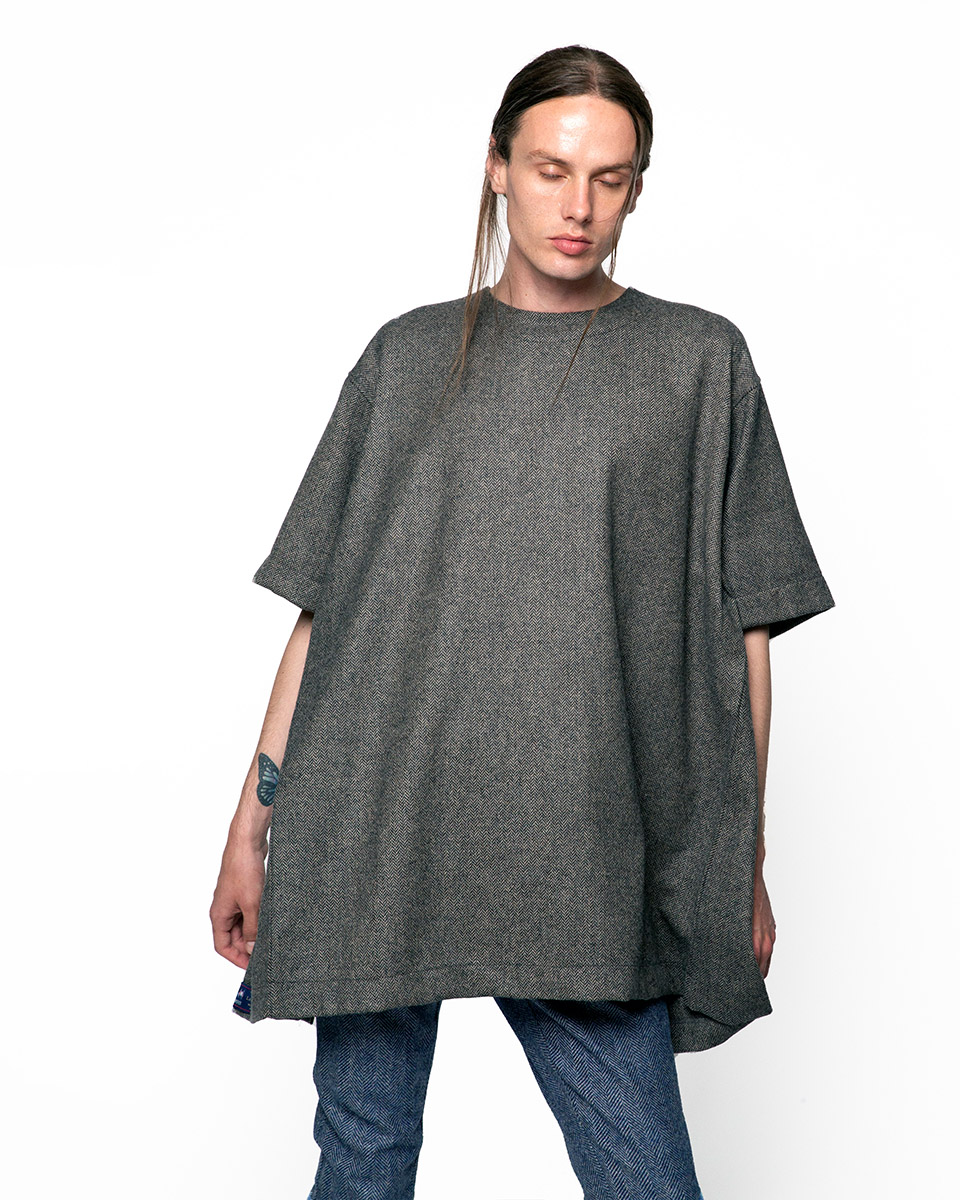
Jonathan: I think so. Evolution is really a process of experimentation, but also adaptation and refinement, all of which are not too different from designing a collection and building a brand. And like I mentioned earlier, each collection evolves from the collection that came before it. It’s a continuation. Not every idea survives, and the ones that do are developed and strengthened. Every collection evolves through editing.
ZOOT: You’ve described AI-generated fashion as “soulless.” Where, if anywhere, do you think artificial intelligence can genuinely support creativity without replacing authorship?
Jonathan: I’m a firm believer in creativity coming from the heart and the soul and that is something AI cannot replicate. That’s not to say it can’t be used as a tool to assist in organisation and workflows, but in terms of using it as a tool for creativity and building a meaningful collection, that needs to come from memories, lived experiences, emotion, and perspective. Artificial intelligence can help you work faster, but it can’t replace authorship.
ZOOT: What materials do you find yourself returning to most, and how important is
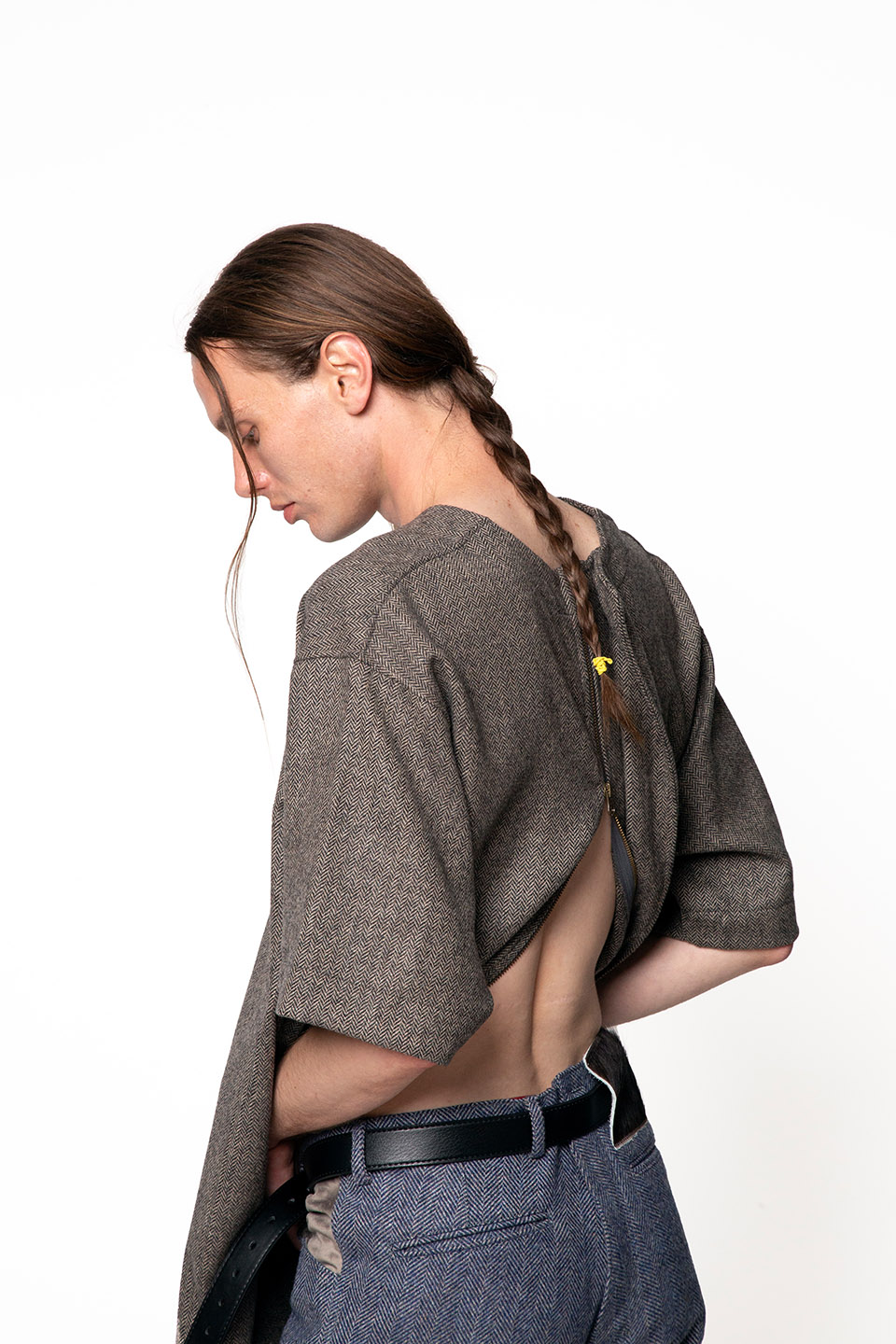
it for you to know where—and how—they’re sourced?Jonathan: Tailoring wools and shirting cottons tend to be fabrics that I return to most each season. I like fabrics that age well and develop character over time, it just adds to the ongoing narrative I like my work to have. Cowhide has become somewhat of a staple material for me and has been featured in my last three collections and will continue to feature in future collections. A lot of the fabrics I source are deadstock materials and for Spring Summer 2027 I worked directly with a mill in England for the first time. It’s important to understand the traceability of where a fabric comes from as it then allows you to understand it’s value and the ethics behind it.
ZOOT: If you could collaborate with any designer or artist, past or present, who would it be, and why?
Jonathan: I would have loved Peter Hujar to photograph my work. His ability to capture extraordinary beauty and fragility with such simplicity and honesty resonates extremely well with my label.
ZOOT: Fashion has always reflected the world around it. At a time of political polarisation, economic uncertainty, artificial intelligence and the climate crisis, what responsibility, if any, does fashion have beyond making beautiful clothes?
Jonathan: Whether people like it to or not, fashion has and always will reflect the world around it. Designers don’t need to make overtly political collections, in fact it’s impossible to be too overtly political in fashion because the prices alone automatically debar any designer from doing so. To me, celebrating quality, craftsmanship, and making beautiful clothes that stand the test of time, is what I
find meaningful. Clothes that have longevity and can be handed down through generations, that once in their life said something honest about the times in which they were created in excites me tremendously.
ZOOT: What advice would you give to young designers trying to find their place in the industry?
Jonathan: Be patient and do things at your own pace. If you can, gain industry experience working for another small independent label that resonates with your own style and that allows you to be super hands-on so you can see how they operate. Do your own deep research, this is the core foundation. Make it unique and personal. Do not just try to recreate another designer’s world. Create stuff that you believe in because you have something to say, develop your own language, don’t just design clothes that you think will gain appeal from the press. Be completely focused on having a clear vision rather than try to please everyone. Learn to say no. It is better to have someone hate what you do as opposed to them having no opinion at all. If you don’t have a thick skin already, get one fast because you’re going to need it. This is a tough industry, so think about everything before starting your own label – it’s a lot of hard work, long days, extremely expensive, stressful, there will be many times you doubt yourself and everything you have done. Unless you’re insanely passionate about it, just go work for a brand.
ZOOT: Without giving too much away, what direction do you see your next collection taking? Is there something you’ve been wanting to explore that you haven’t yet?
Jonathan: As I mentioned earlier in the interview, I always try to let each collection naturally lead into the next rather than forcing a completely new direction, just because it might be trendy or whatever. There are definitely themes surrounding masculinity, Intimacy, and psychology that I want to continue to question and challenge. What excites me most is exploring the hidden architecture of power, and how clothing can communicate authority, intimacy, and ritual. That is something I will continue to convey further in my next collection, continue to push my tailoring further, but rather than looking outward, I want to now explore what’s beneath the surface of tailoring – both literally and metaphorically. I’m currently researching into the interiors of garments, traditional bespoke construction, and ceremonial dress. Using those ideas to then create pieces that feel refined, contemporary, complex, interesting, and what will force the viewer to question their own personal beliefs, whether they love it or hate it.
Thank you Jonathan!
To boot…
Jonathan James William, Designer
www.jonathanjameswilliam.com | @jonathanjameswilliam
FASHION REFERENCES
HUNTER @hunterboots