Akon up close
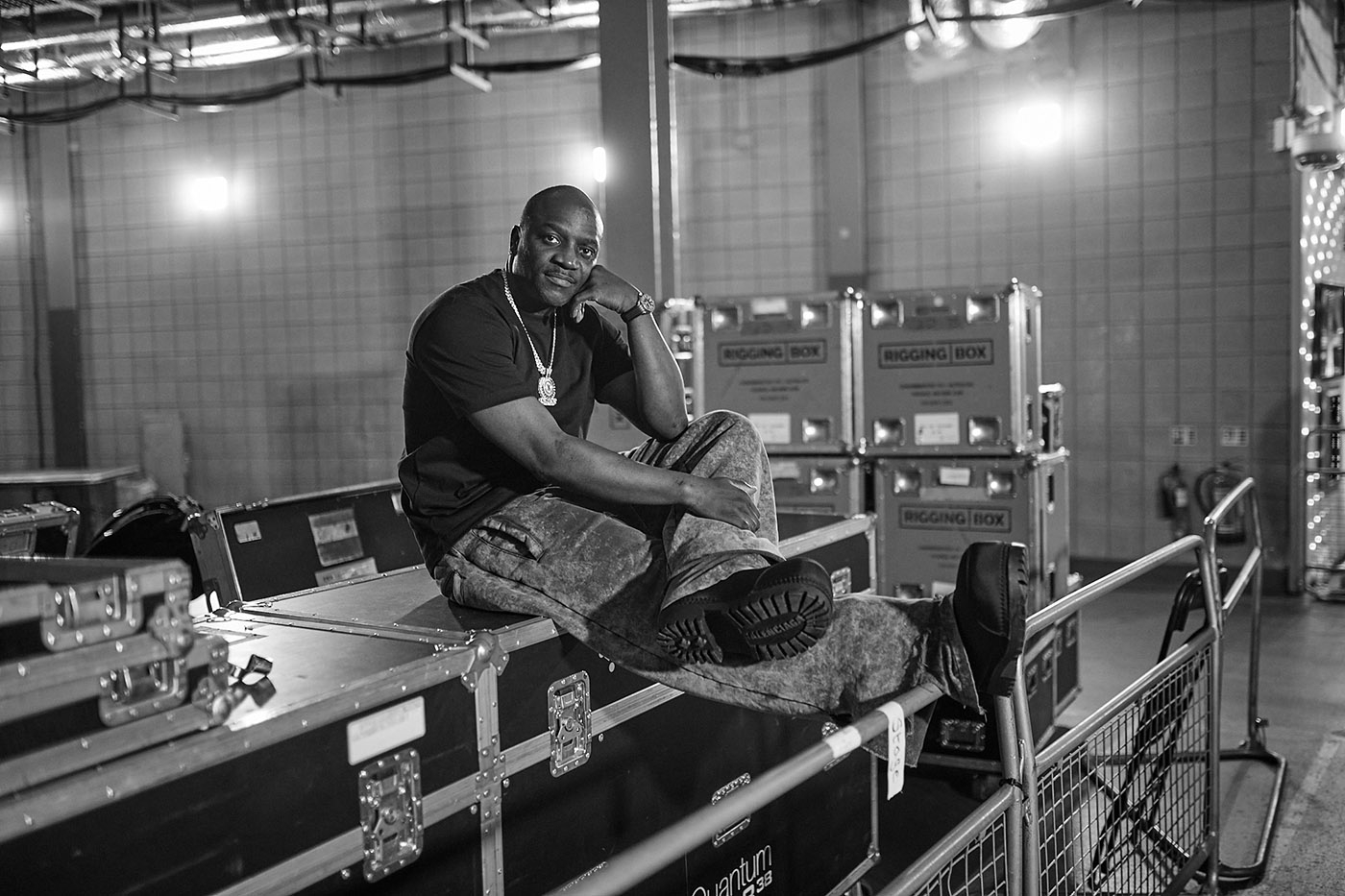
After nearly a decade away from releasing solo music consistently, Akon has stepped back into the spotlight with a new album, Beautiful Day, and a massive global arena tour. Backstage at London’s iconic The O2 Arena, ZOOT joined the artist, entrepreneur and philanthropist before his performance to talk about music, Africa, creativity, and the responsibility that comes with influence.
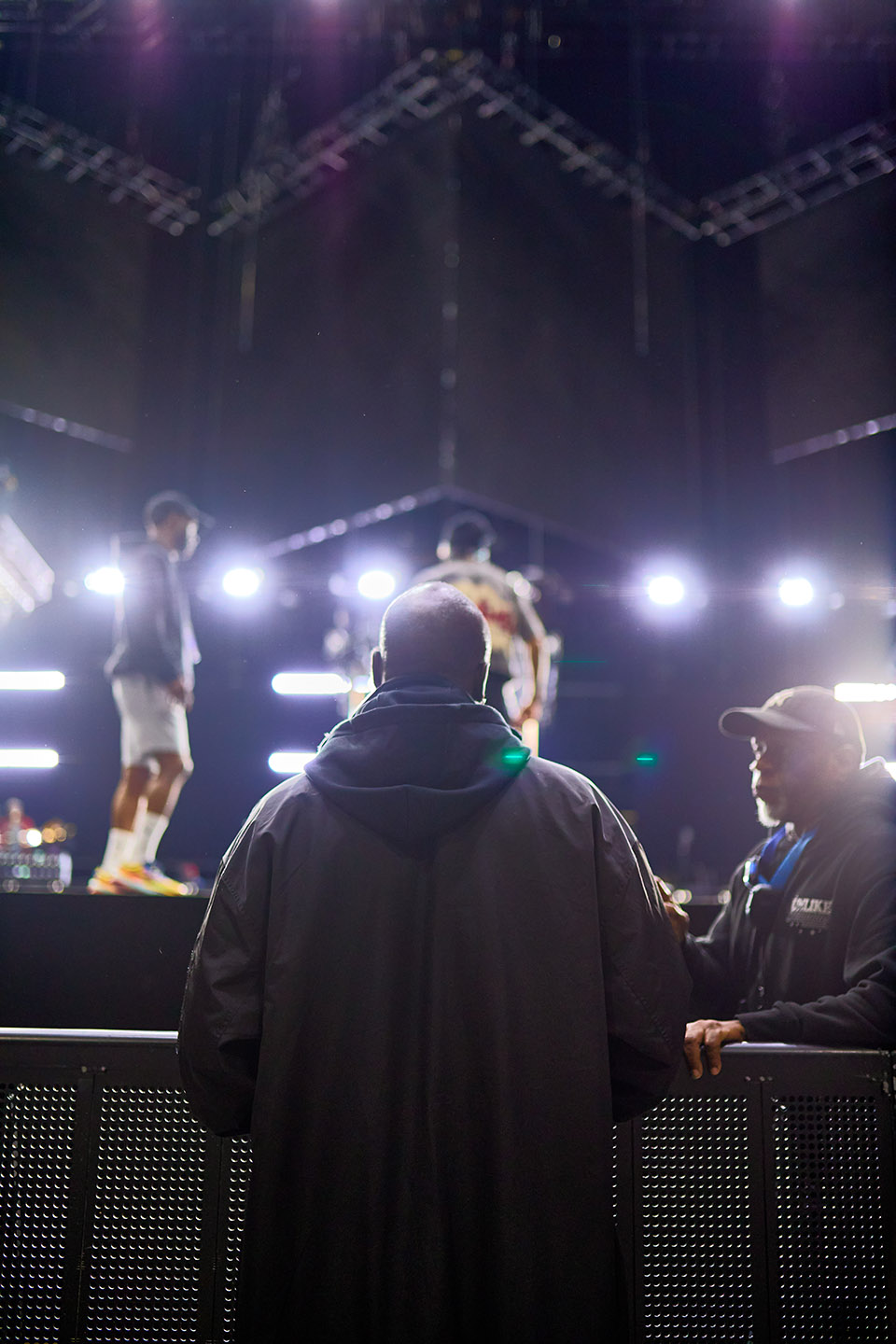
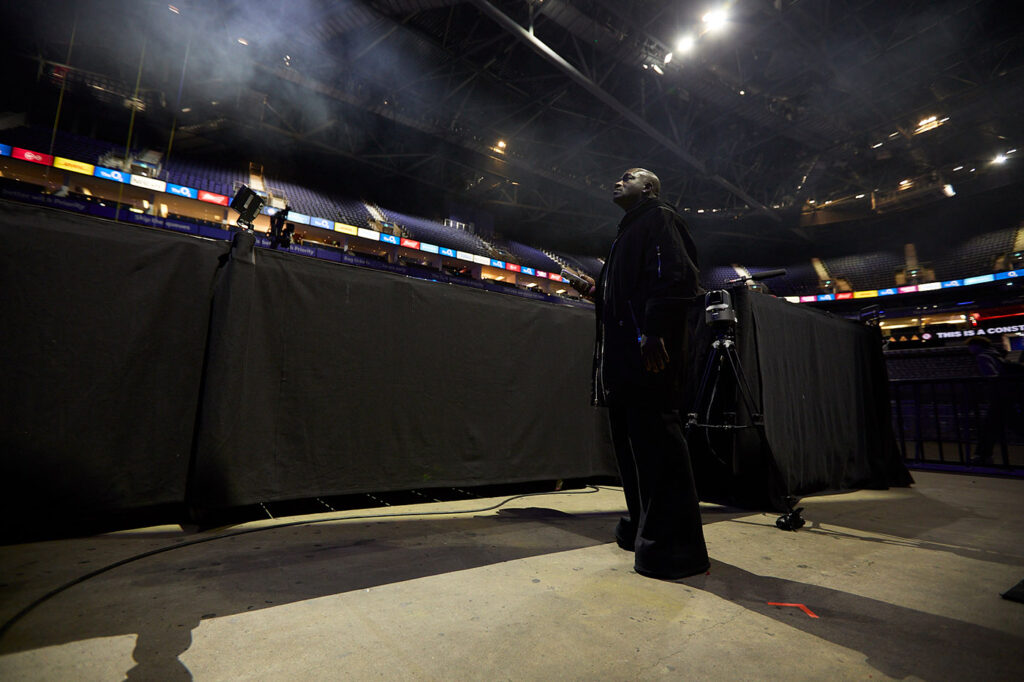
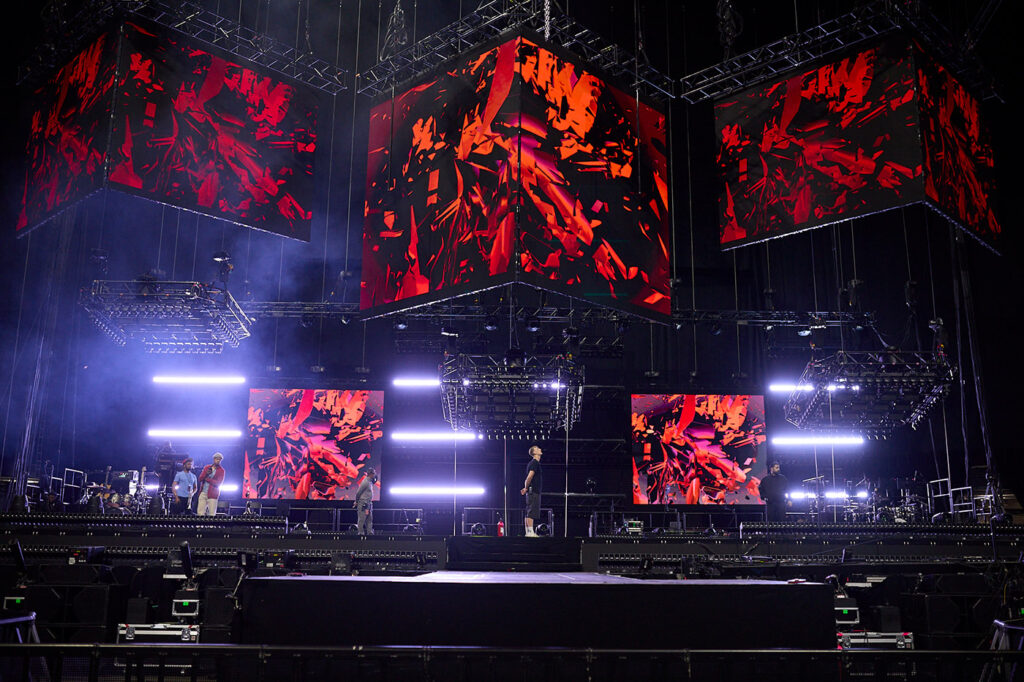
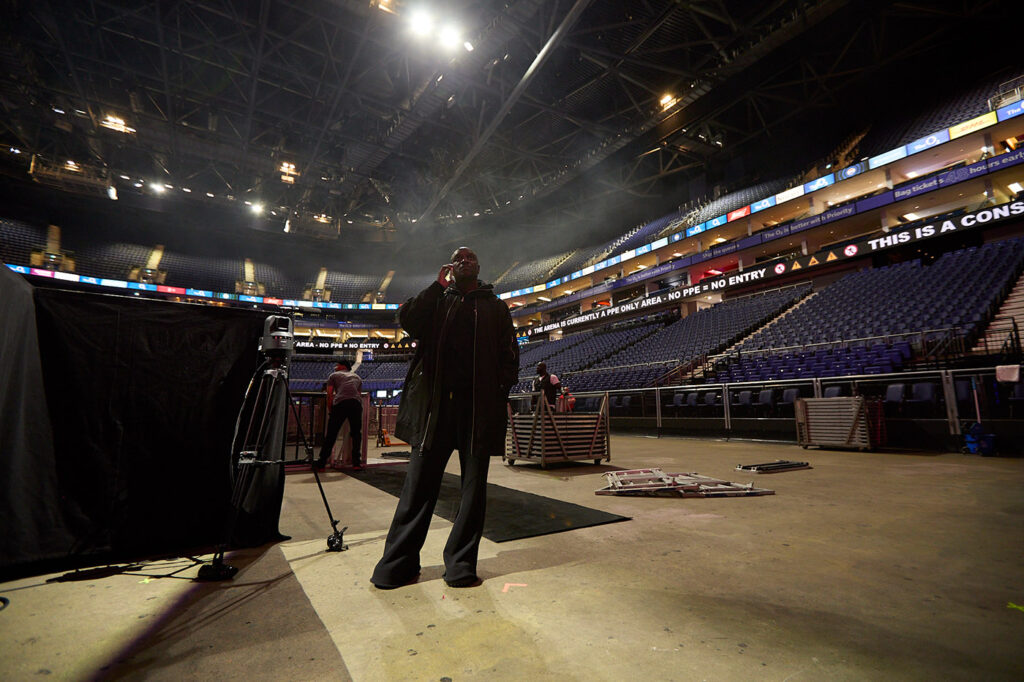
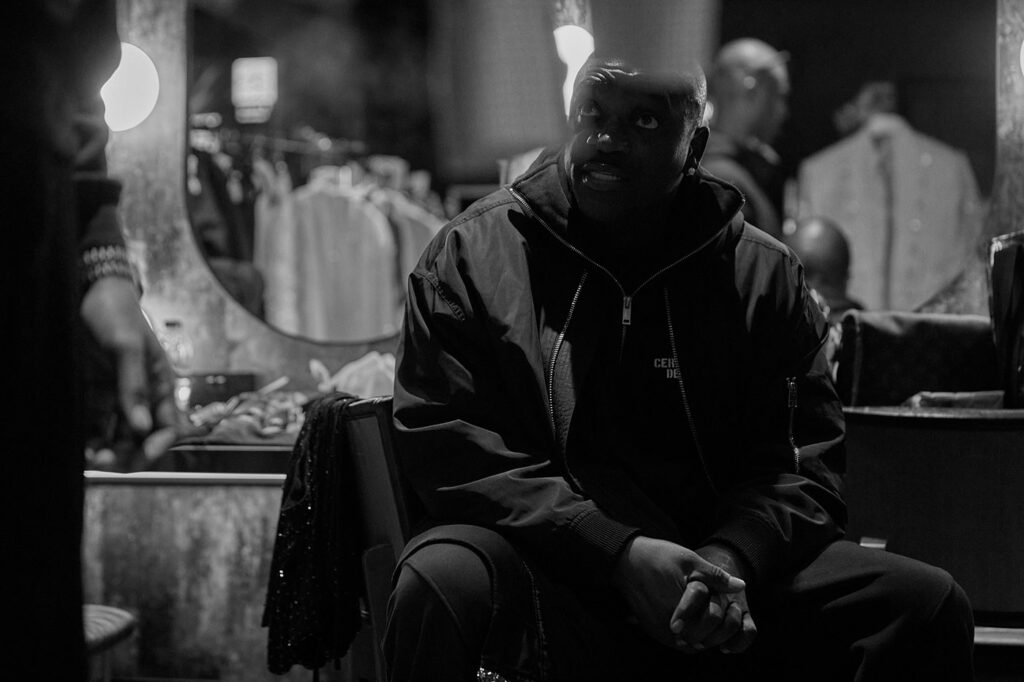
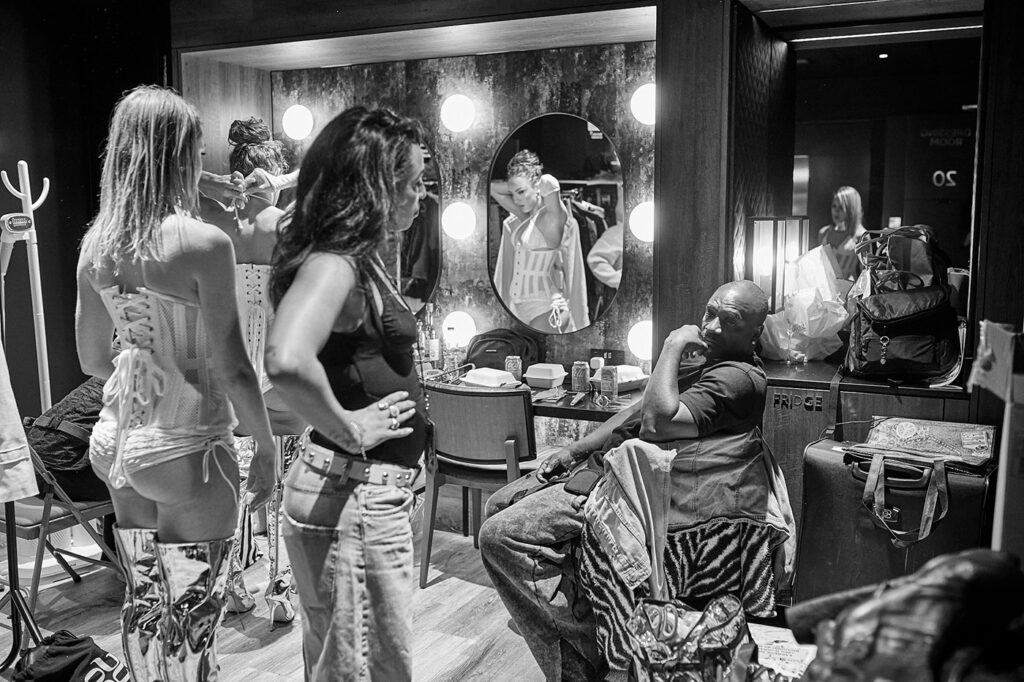
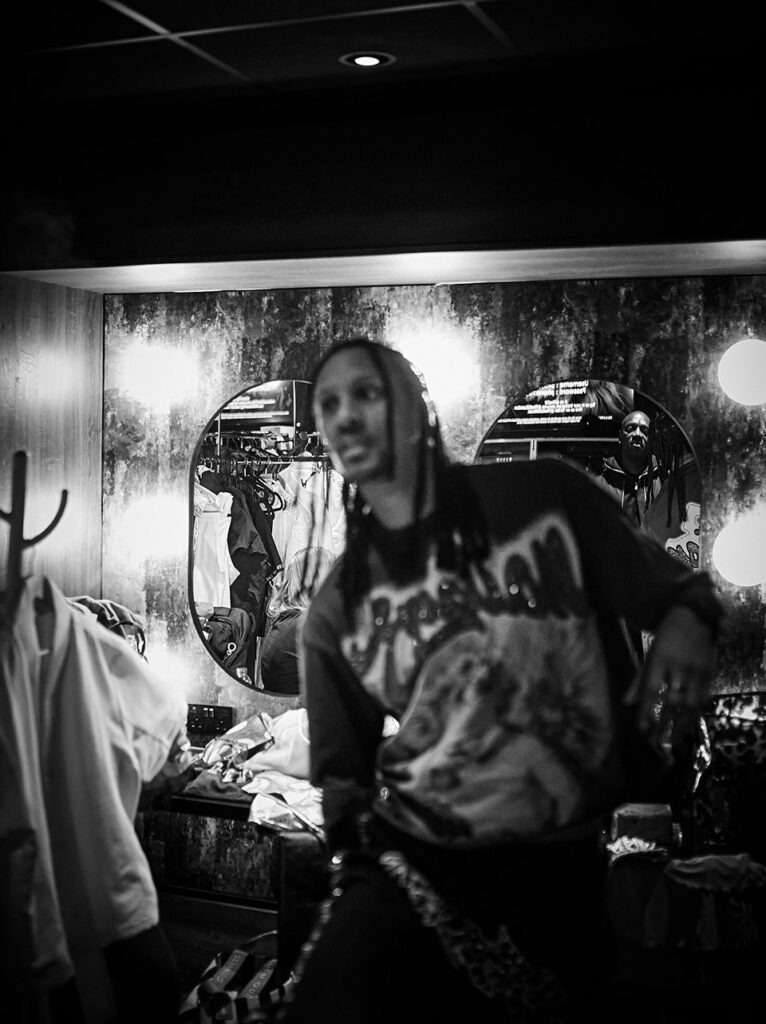
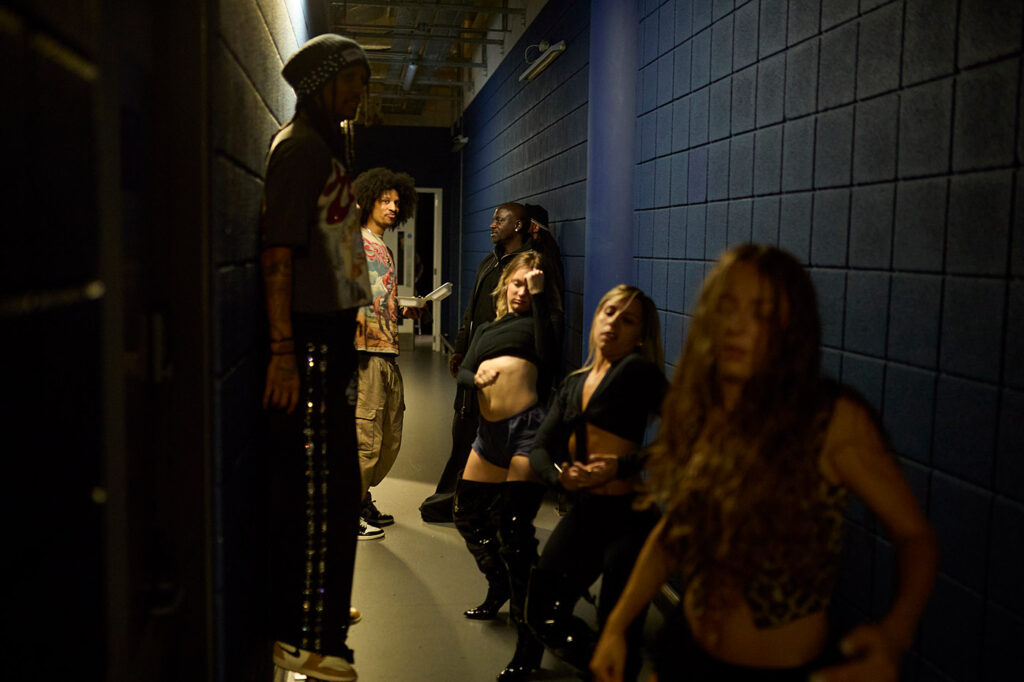
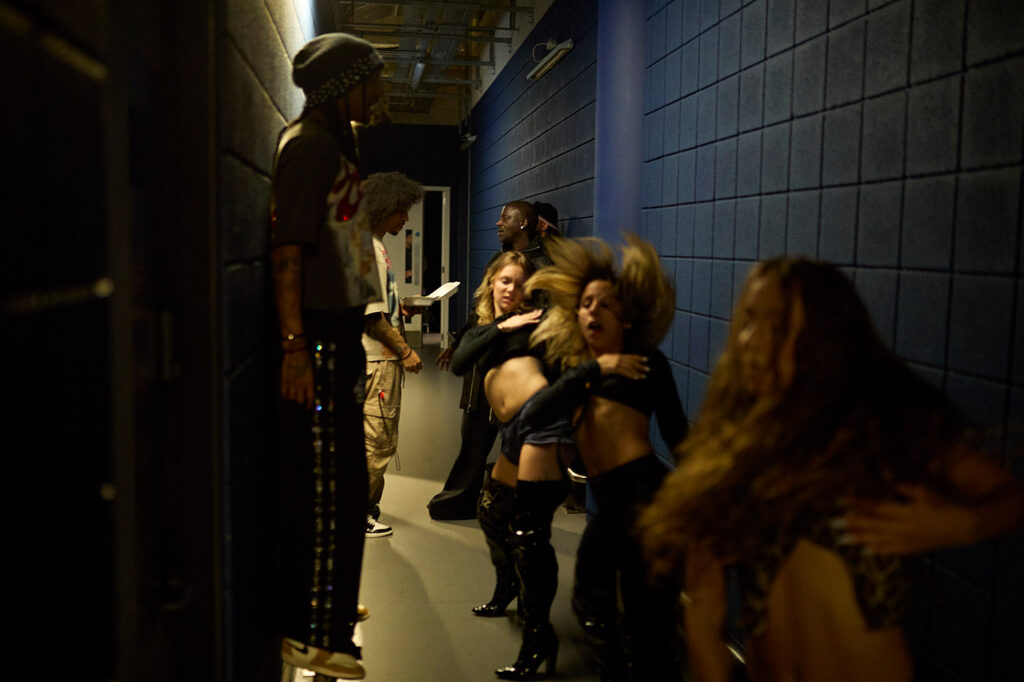
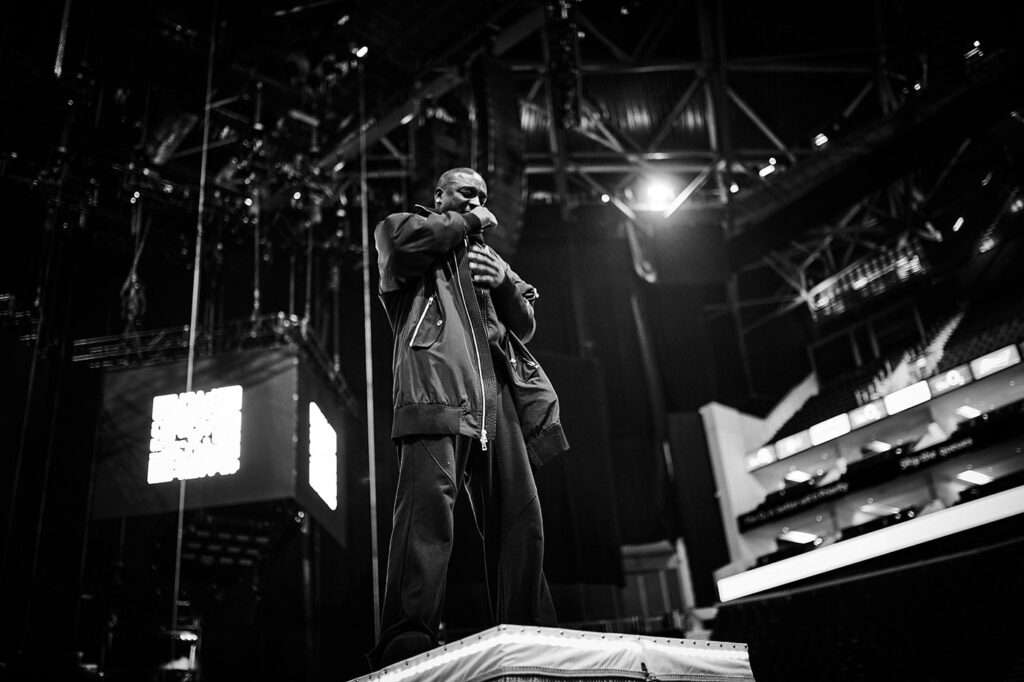
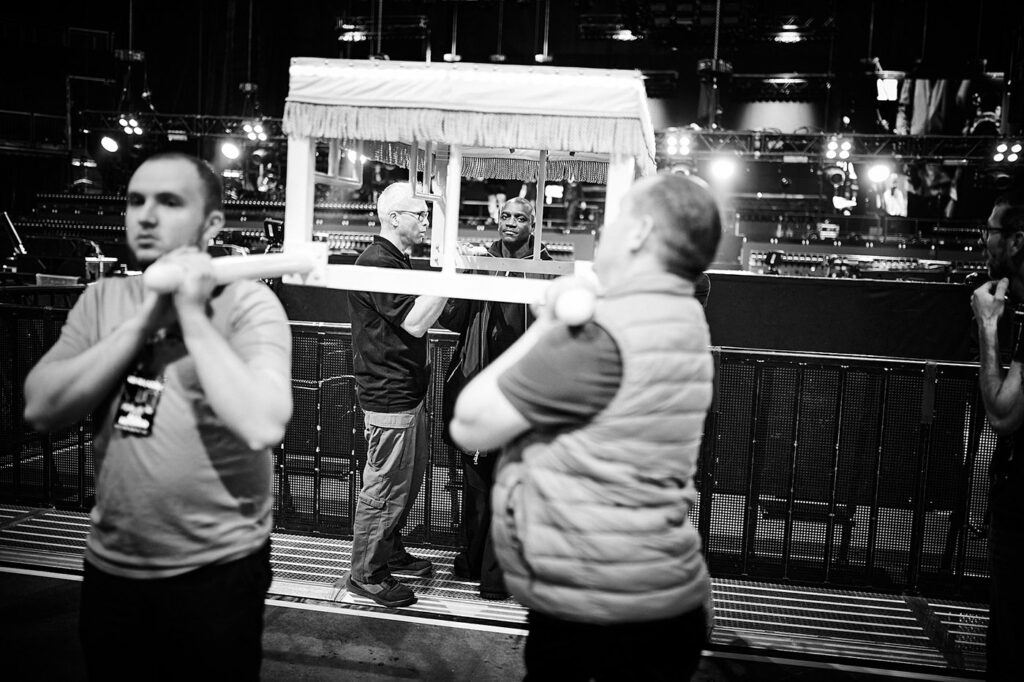
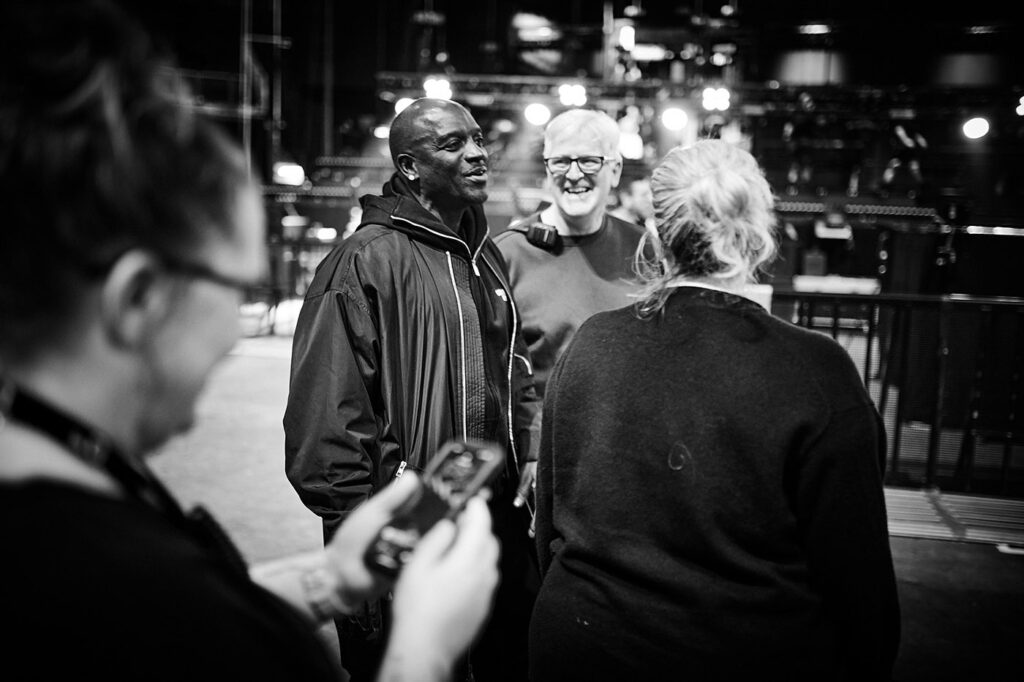
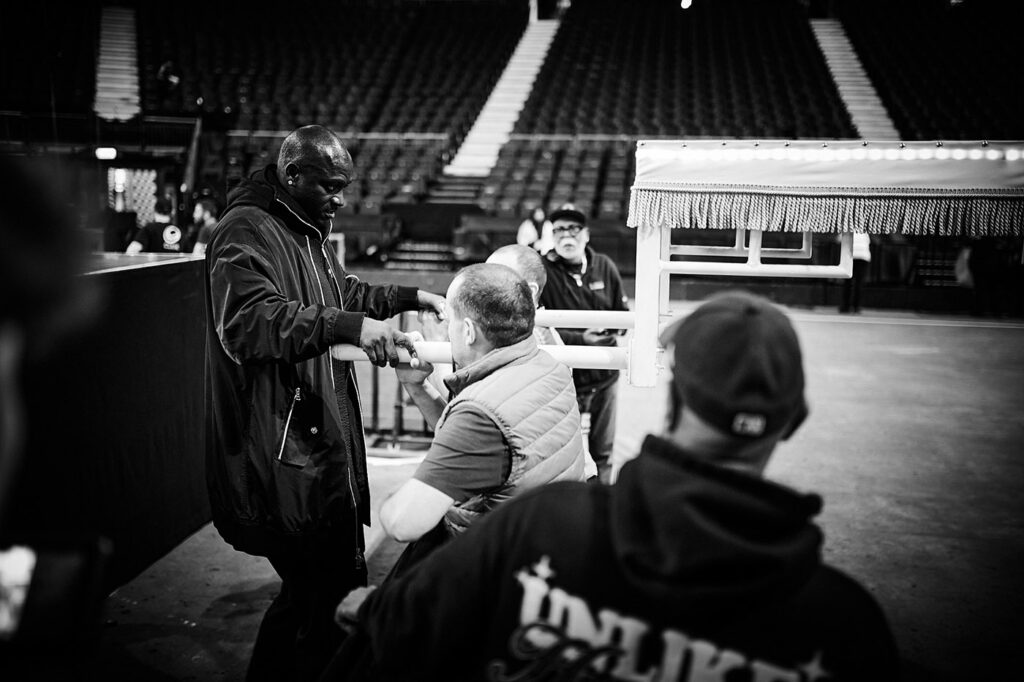
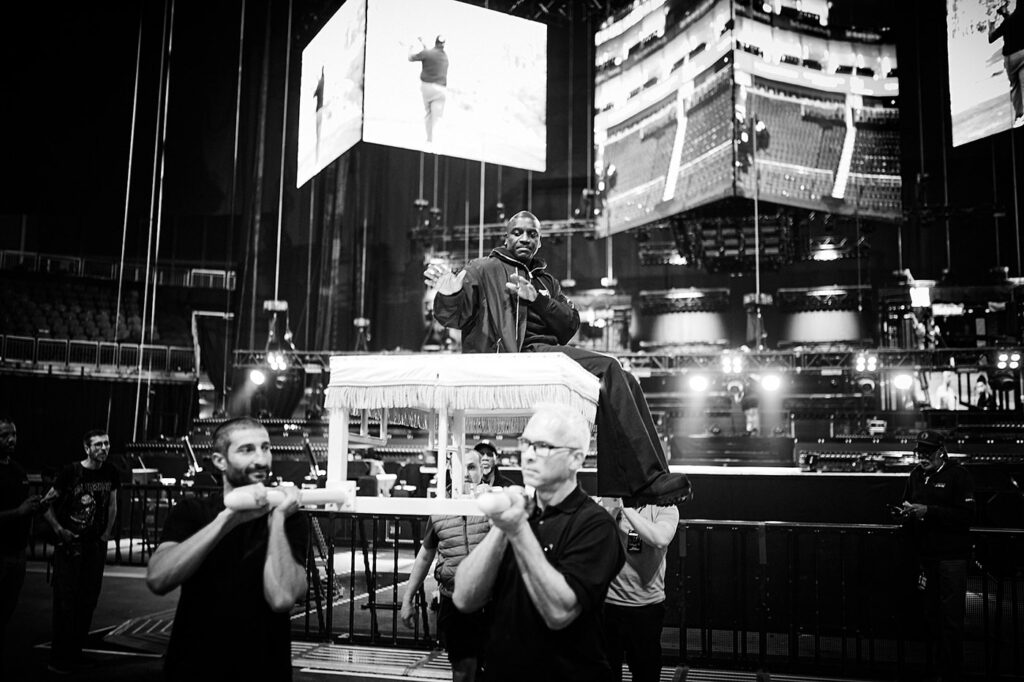
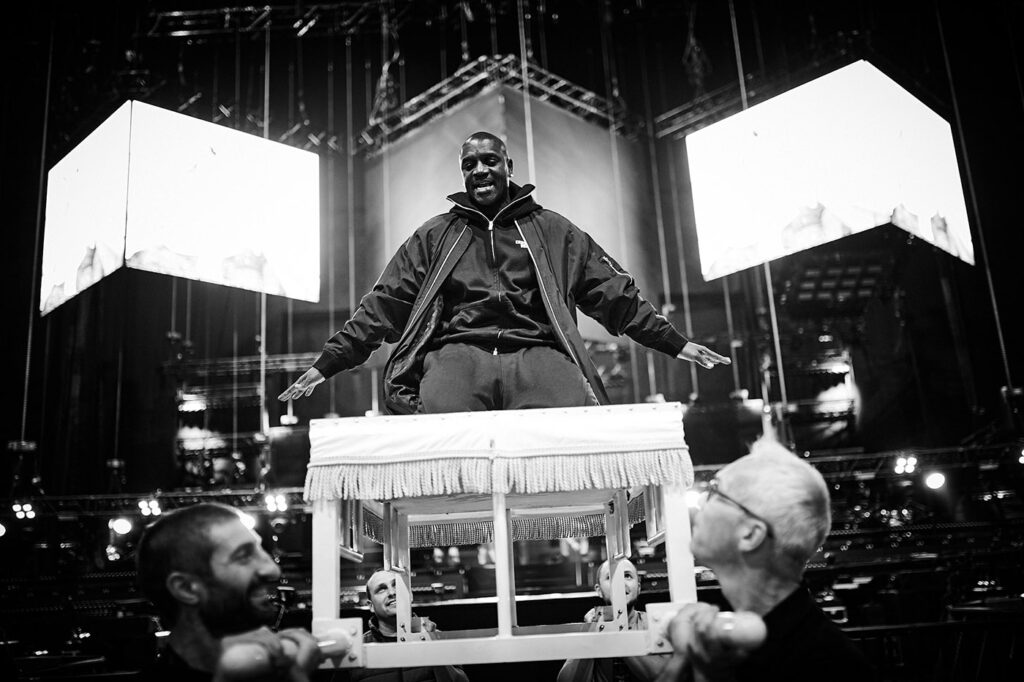
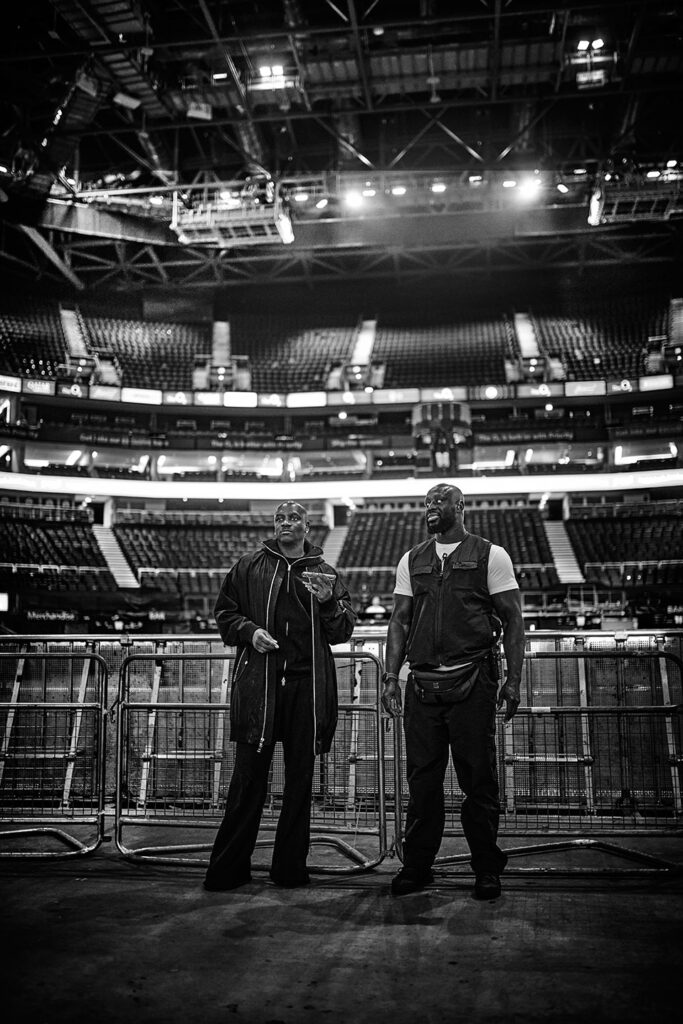
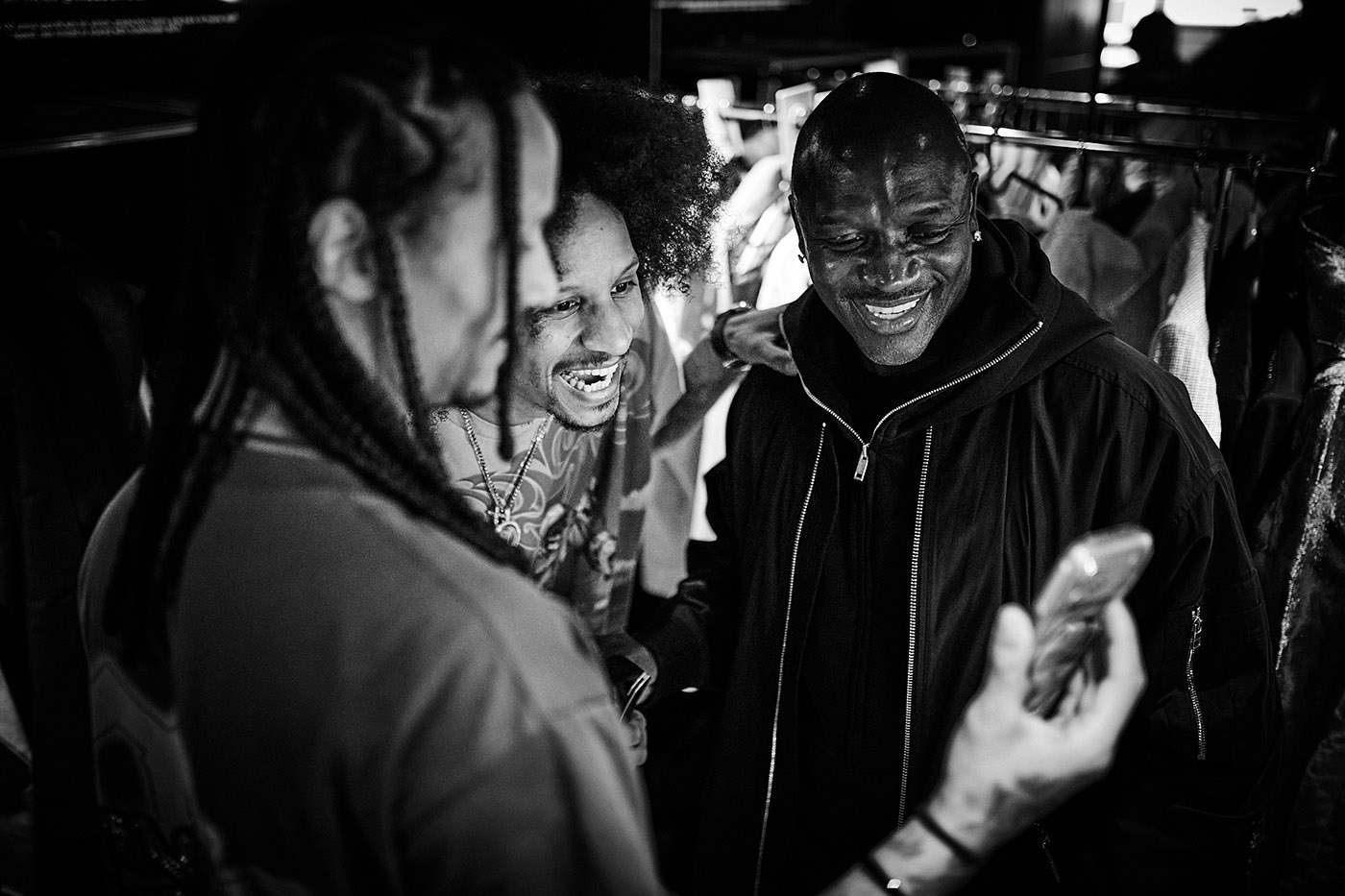
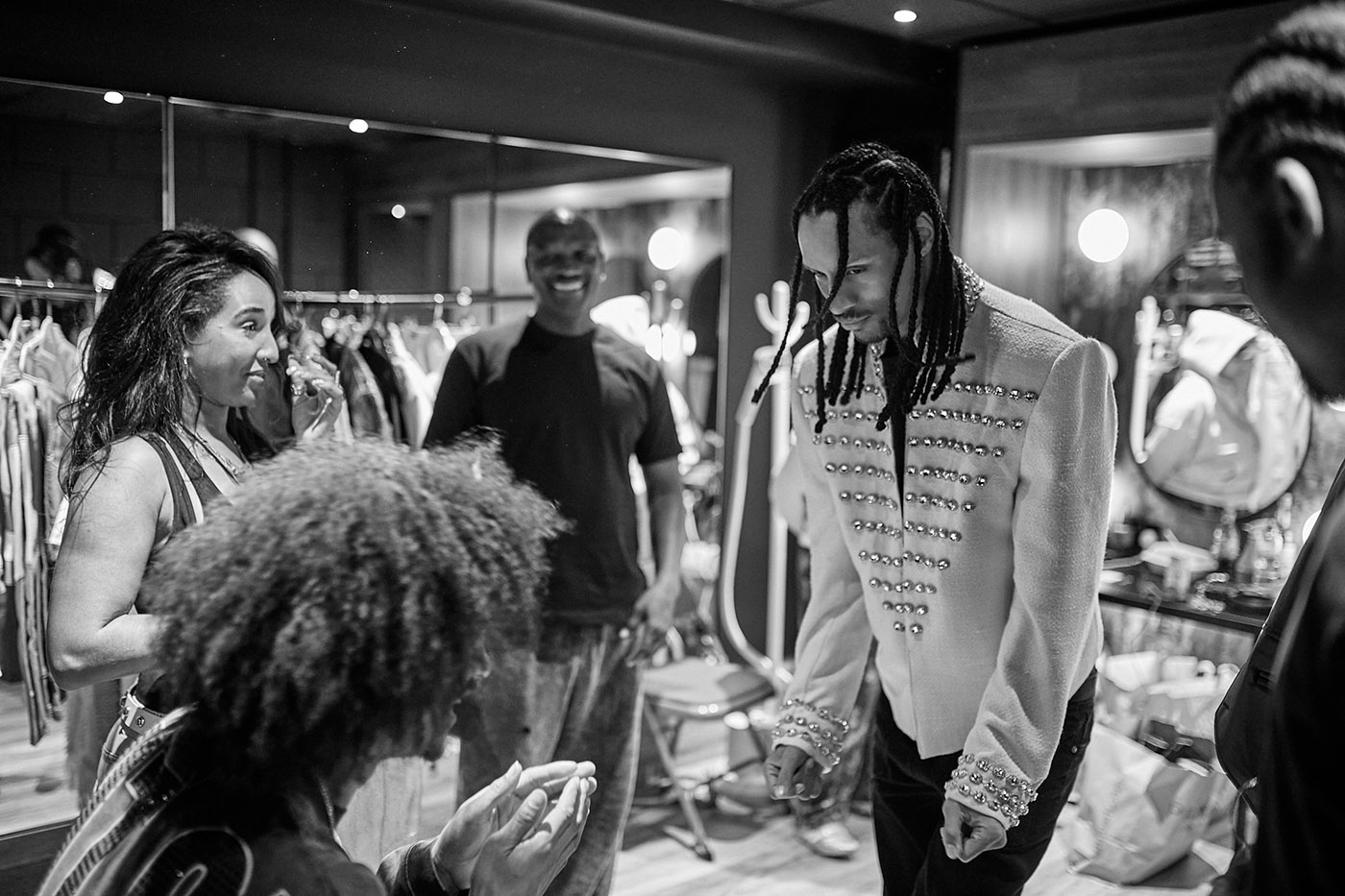
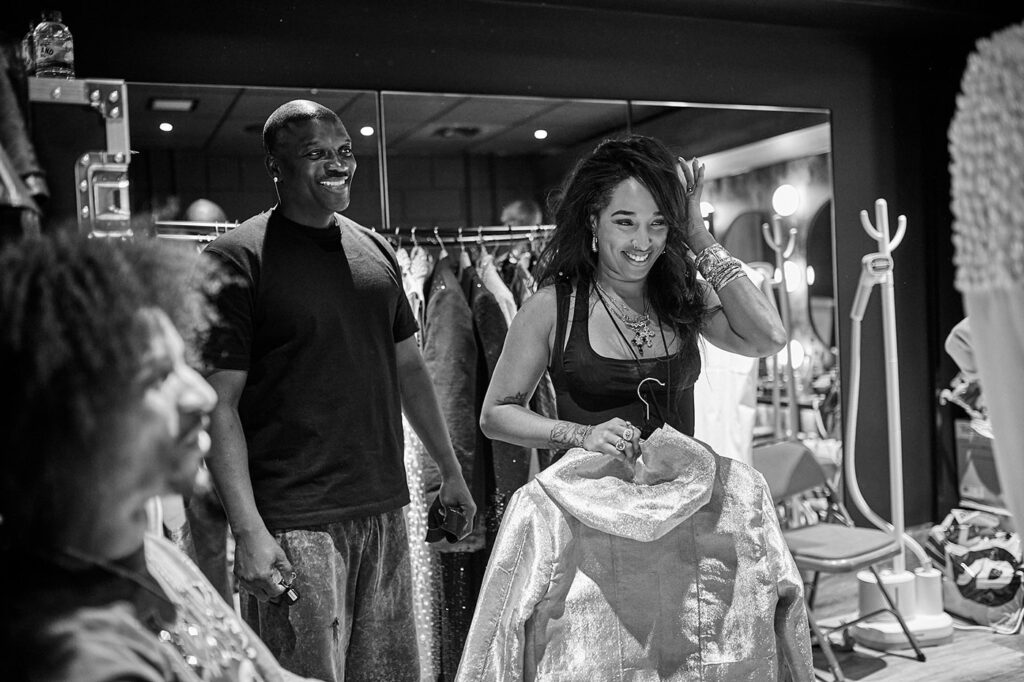
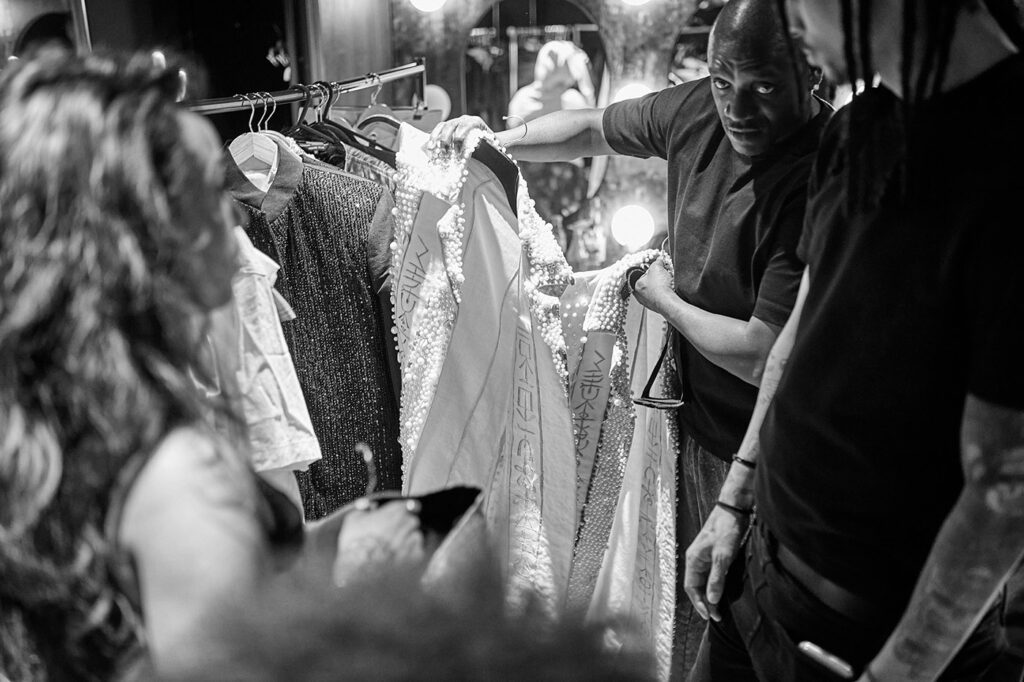
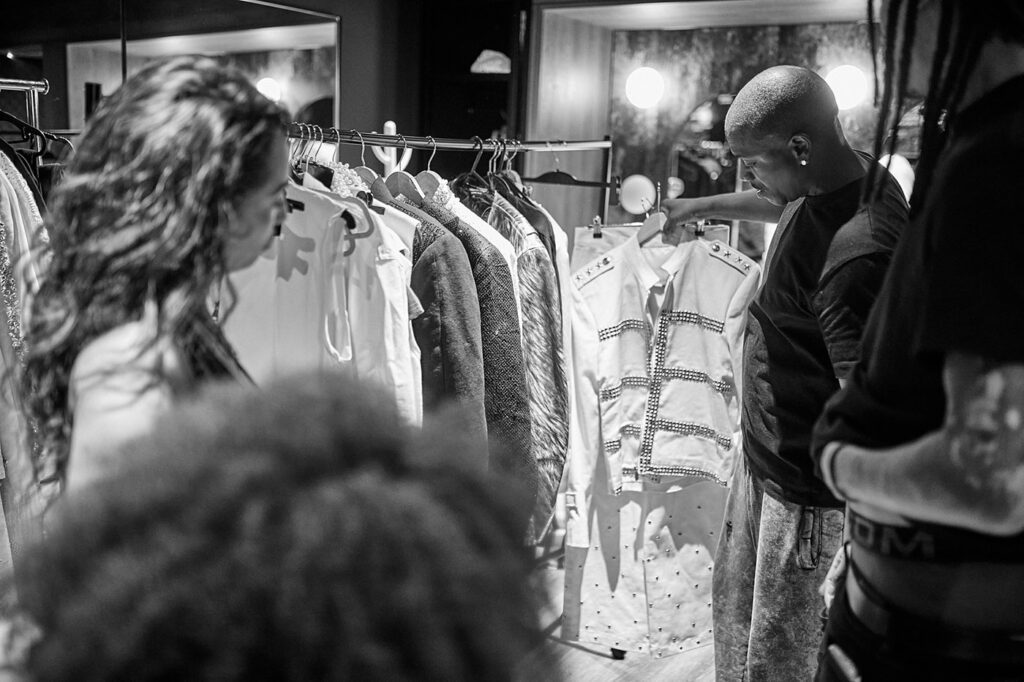
Backstage and concert photos by Aghil Menon
Interview by Daniela Abranches and Jo Sugar
Editor and words Andrea Probosch
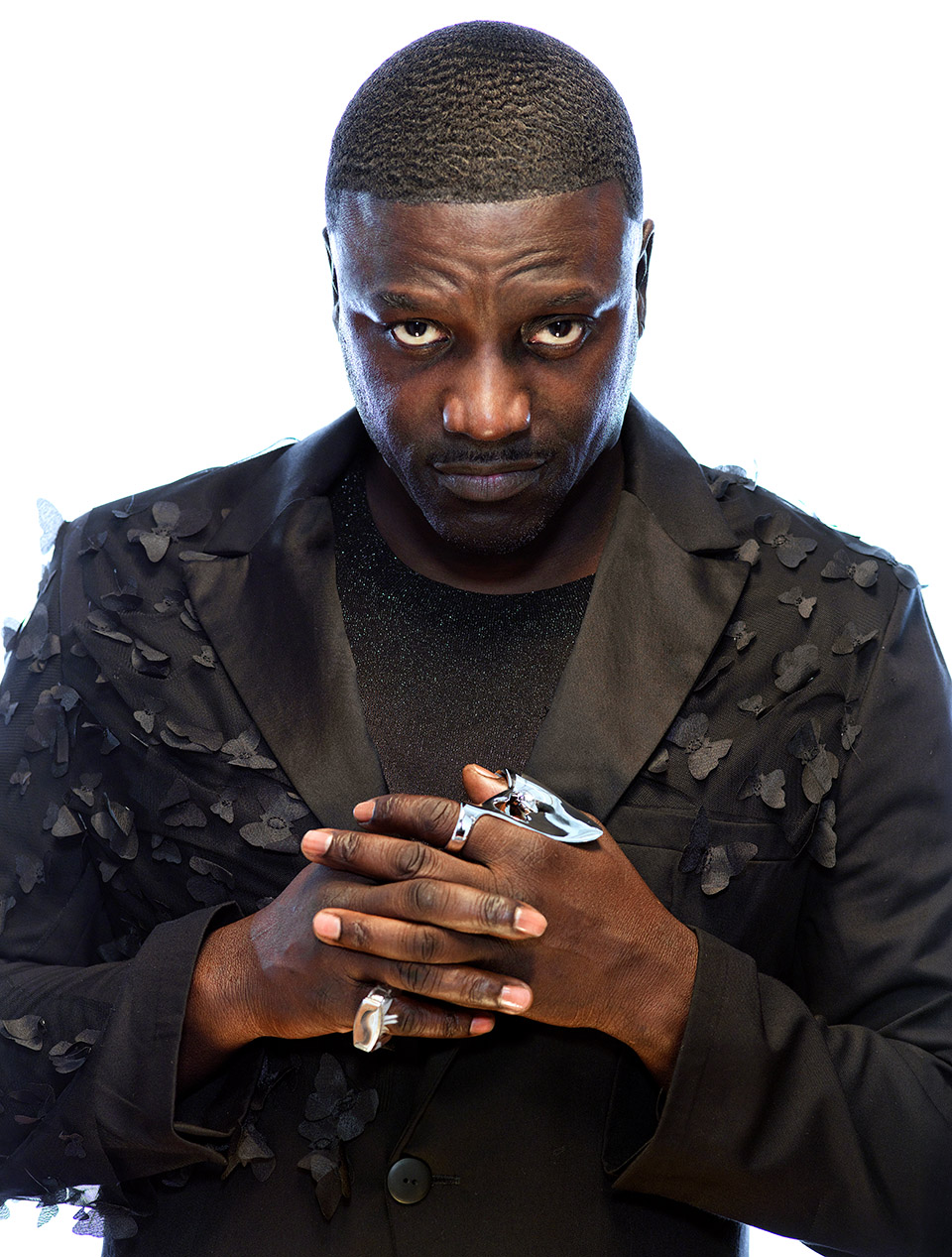
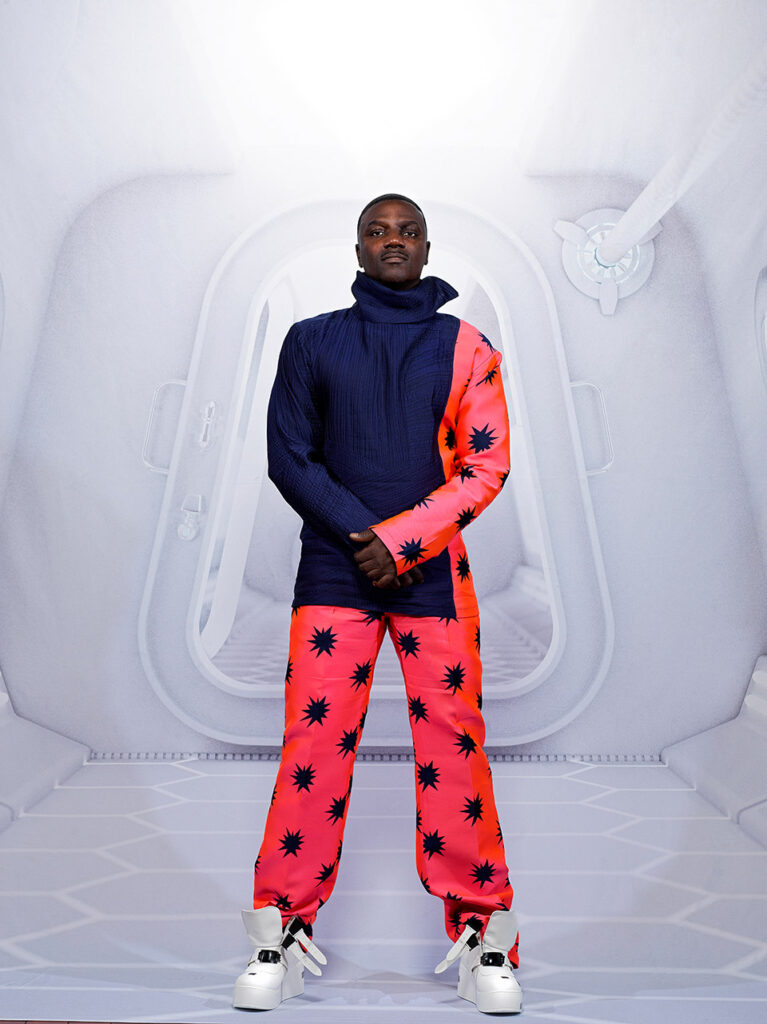
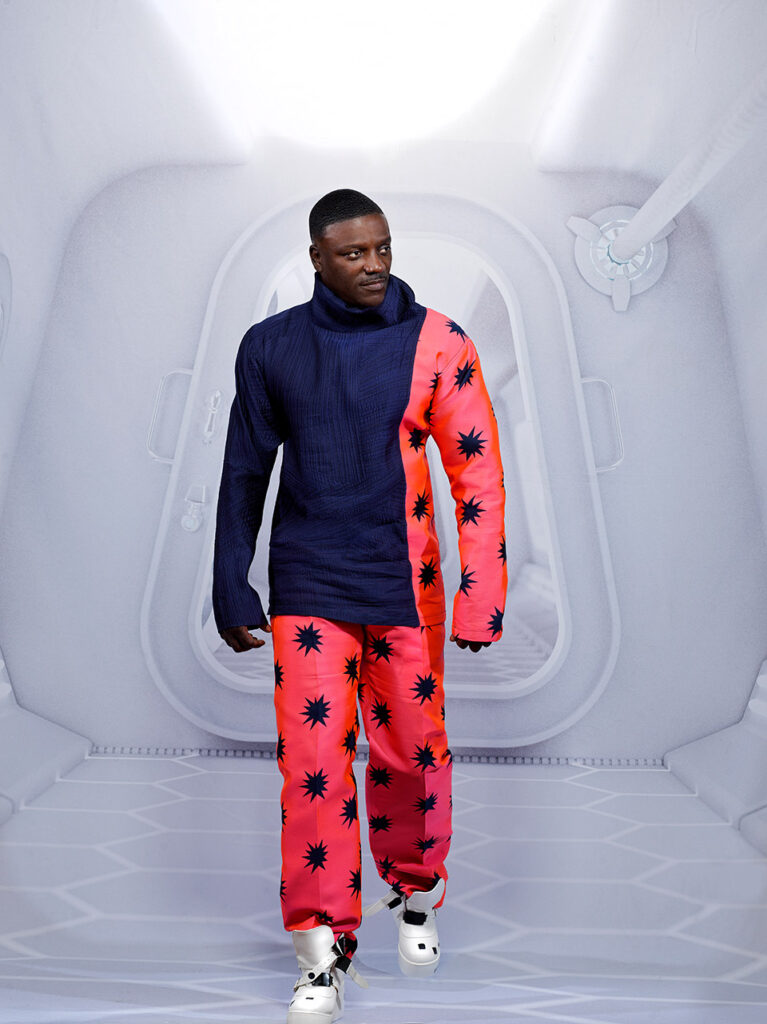
Fashion photos Carlos Lumiere
At Lumiére London
Assisted by Aghil Menon
Styling Joseph Crone
Assisted by
Khalifa Forte, Esther McRae & Evelyn Honour
Makup grooming Jo Sugar
Hair Tim Furssedonn
Special thanks to Bradley Taylor, Alan Floyd and Aimee Mcintosh from Live Nation UK.
Few artists defined the sound of the 2000s quite like Akon. From chart-dominating hits to discovering and developing new talent, he became one of the defining crossover figures of modern pop and R&B. But while many artists spent the last decade chasing visibility, Akon largely disappeared from the centre of the music industry, focusing instead on philanthropy, infrastructure and development projects across Africa, including solar energy initiatives.
Now, after a long break from the spotlight, he has returned with Beautiful Day — an album shaped as much by reflection as reinvention. Currently co-headlining the Nights Like This 2026 World Tour alongside Ne-Yo, Akon is reconnecting with audiences across generations while introducing his music to an entirely new one.
Before taking the stage at London’s sold-out The O2 Arena, Akon sat down backstage with Jo Sugar for ZOOT to speak about creativity, authenticity, technology, mentorship and what ultimately pulled him back into music. For readers meeting him for the first time, Akon describes himself simply as: “Artist, philanthropist, businessman — hopefully one day, a visionary.”
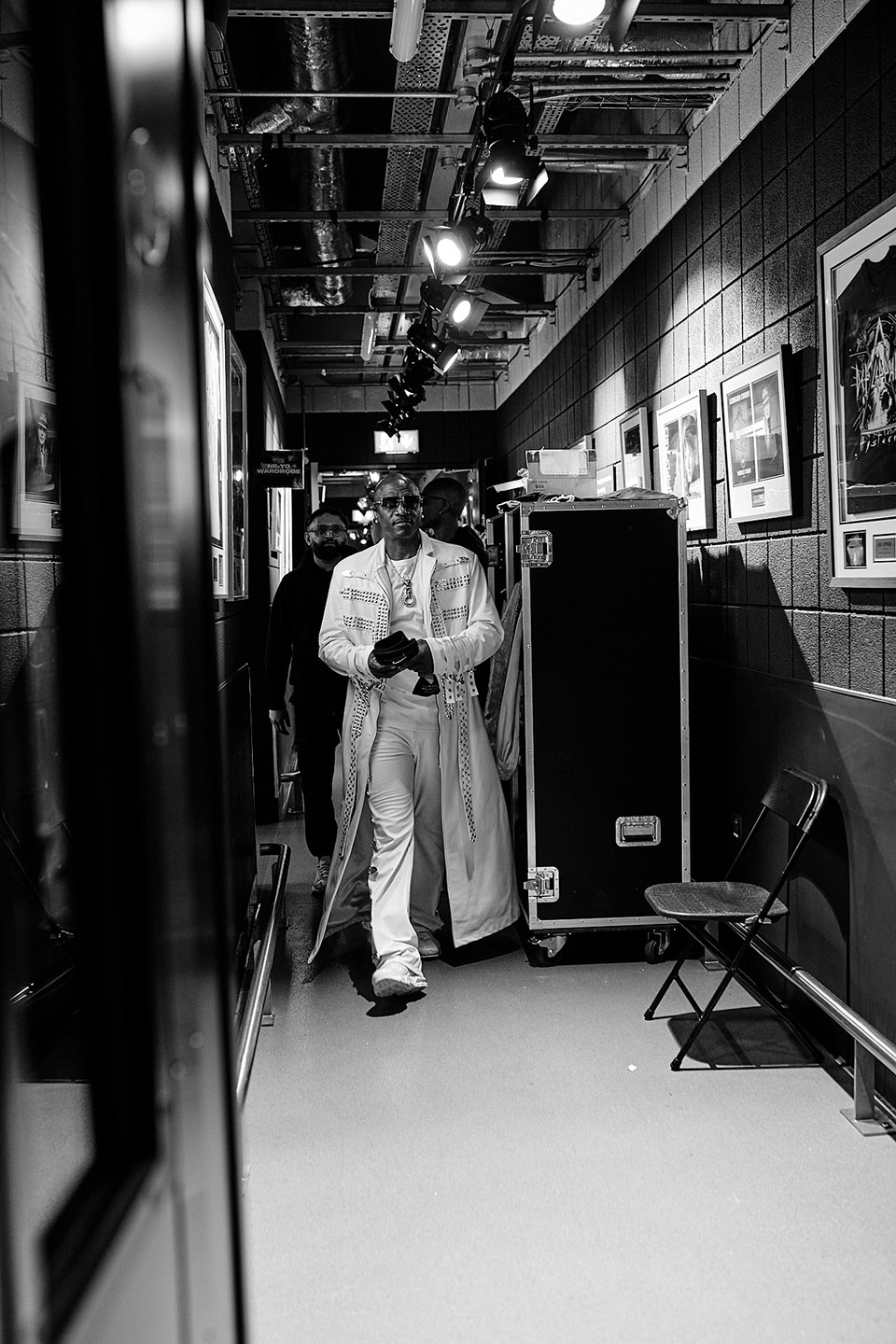
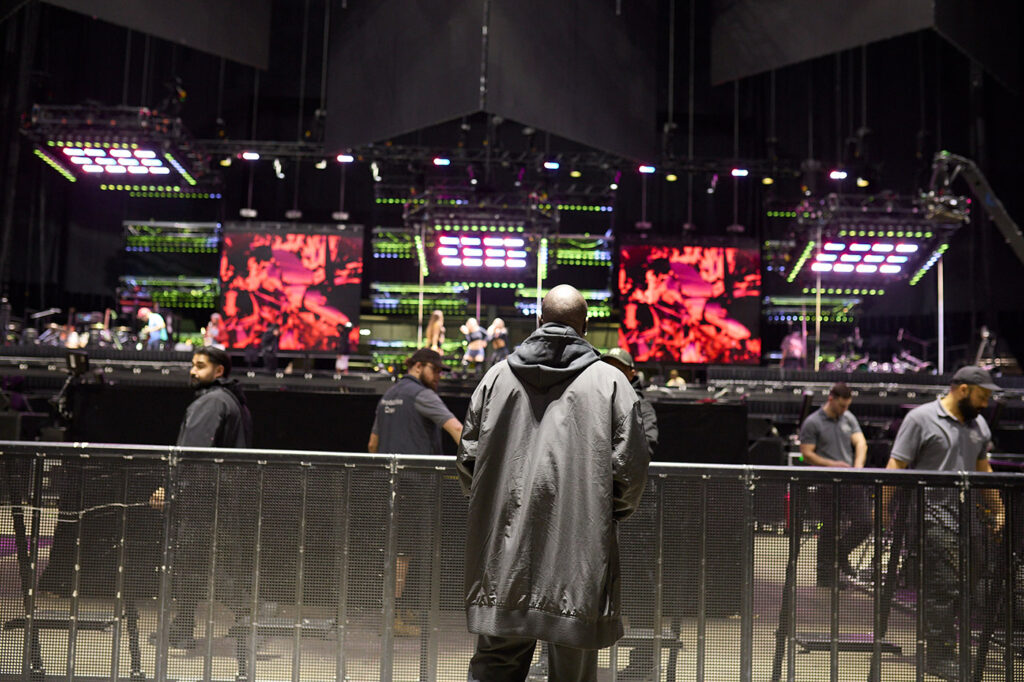
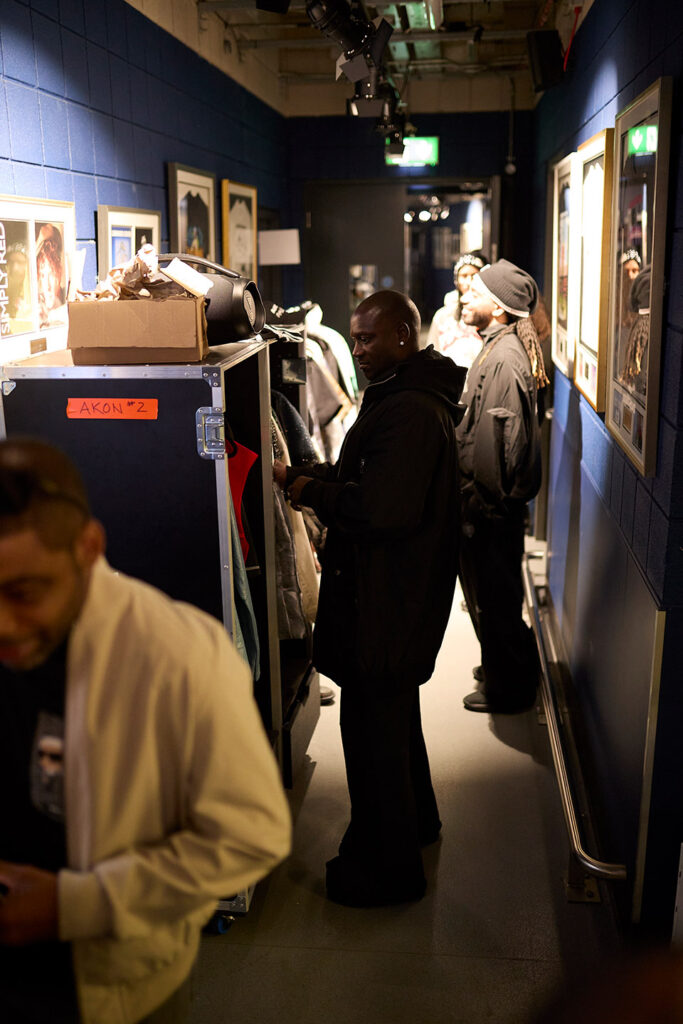
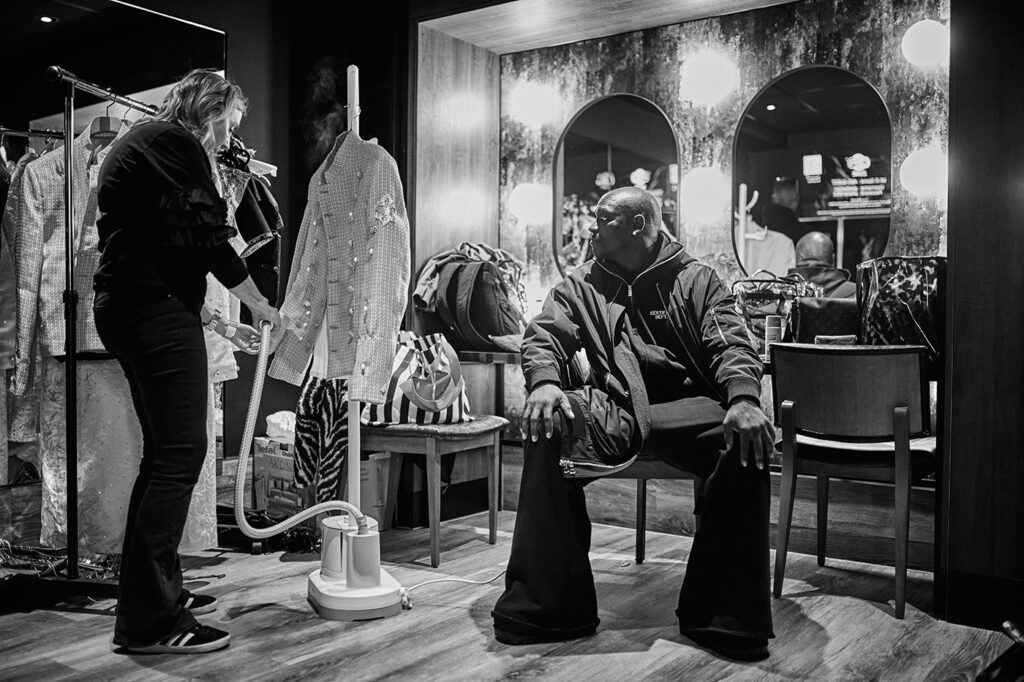
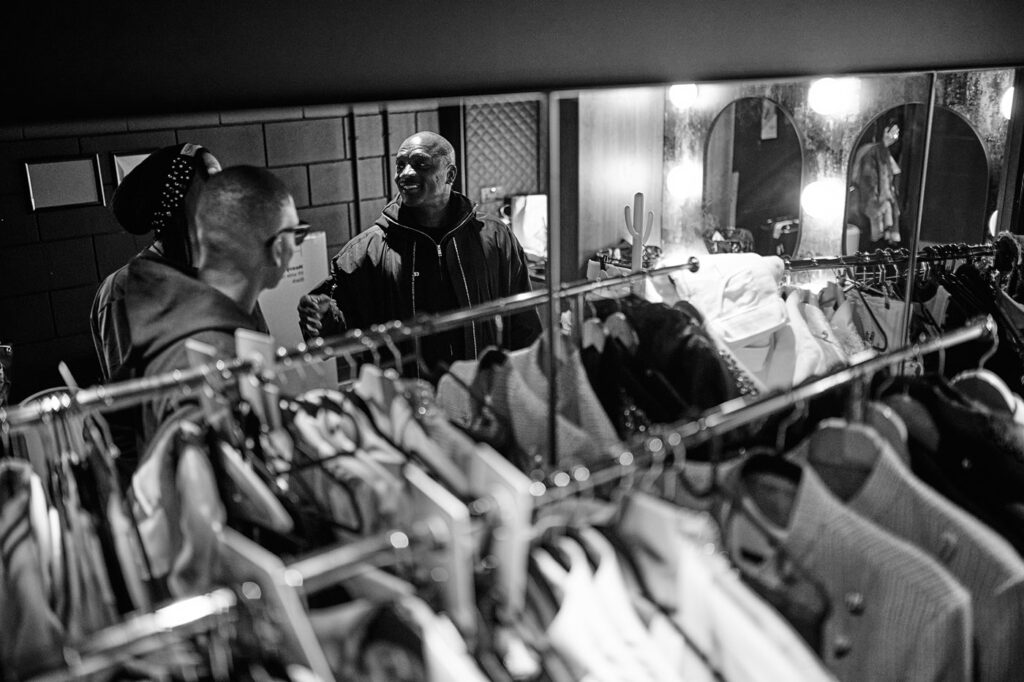
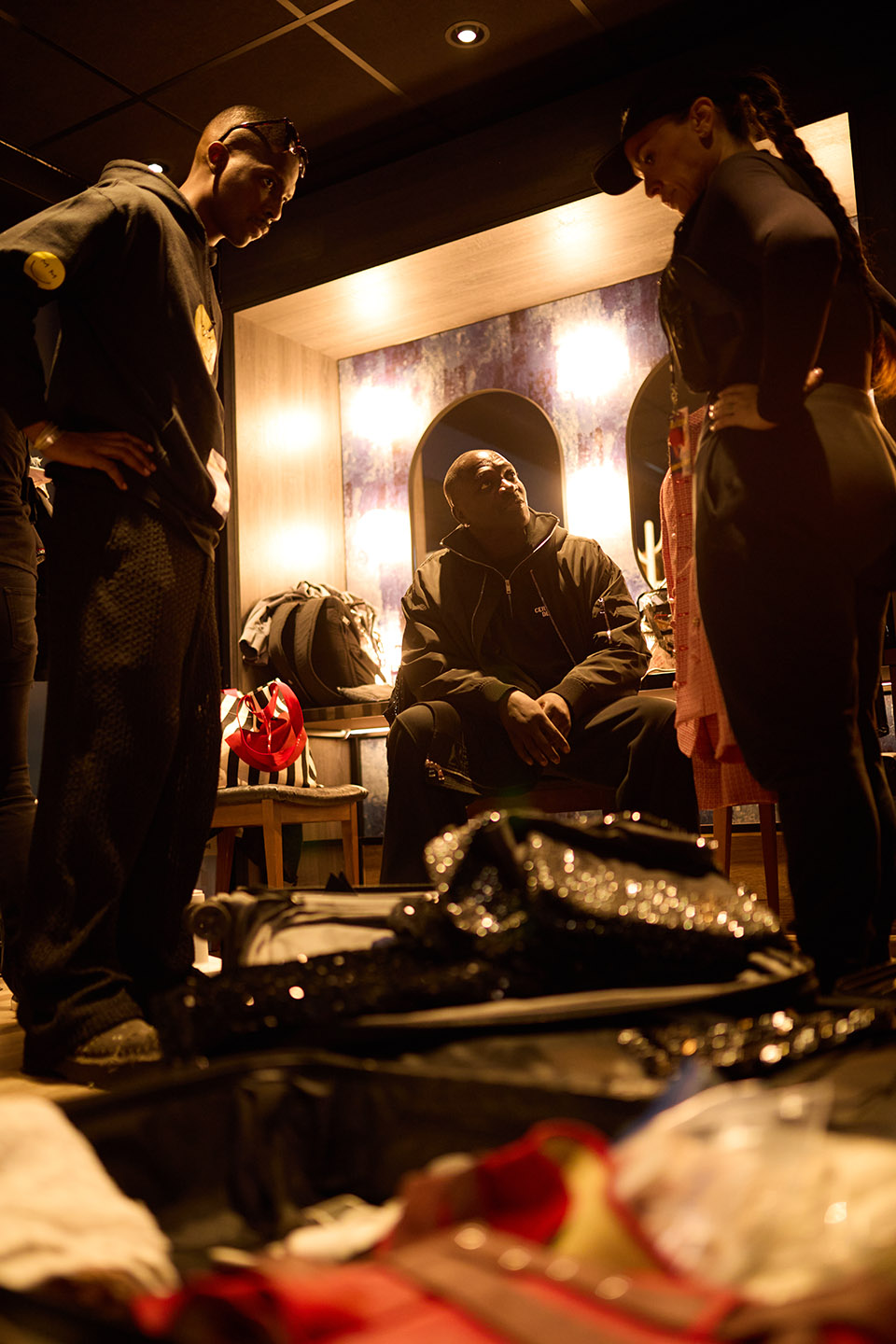
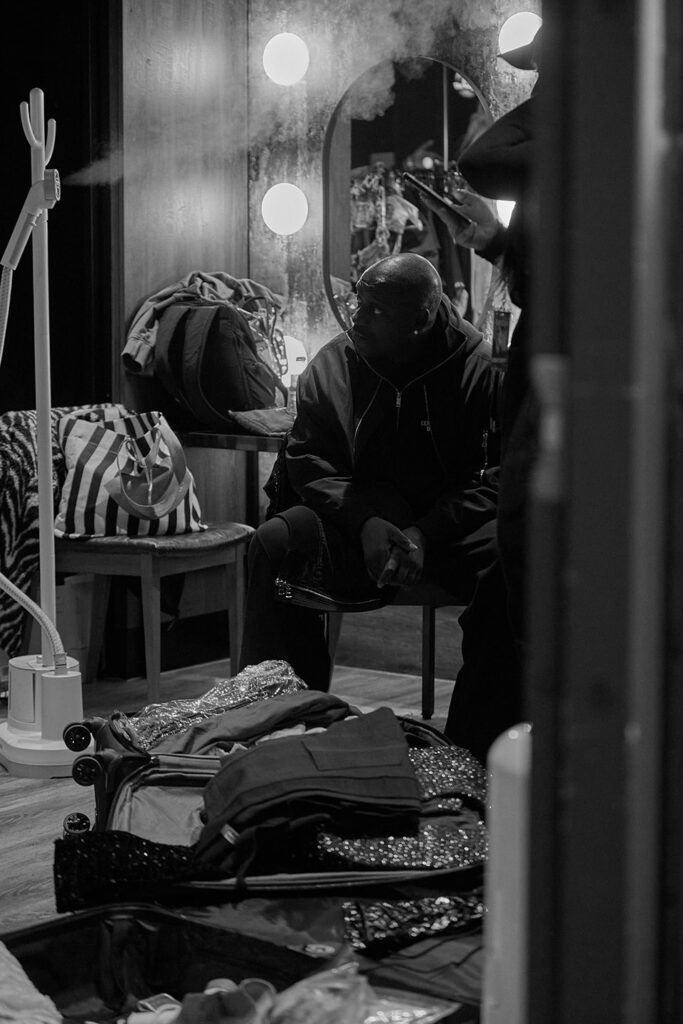
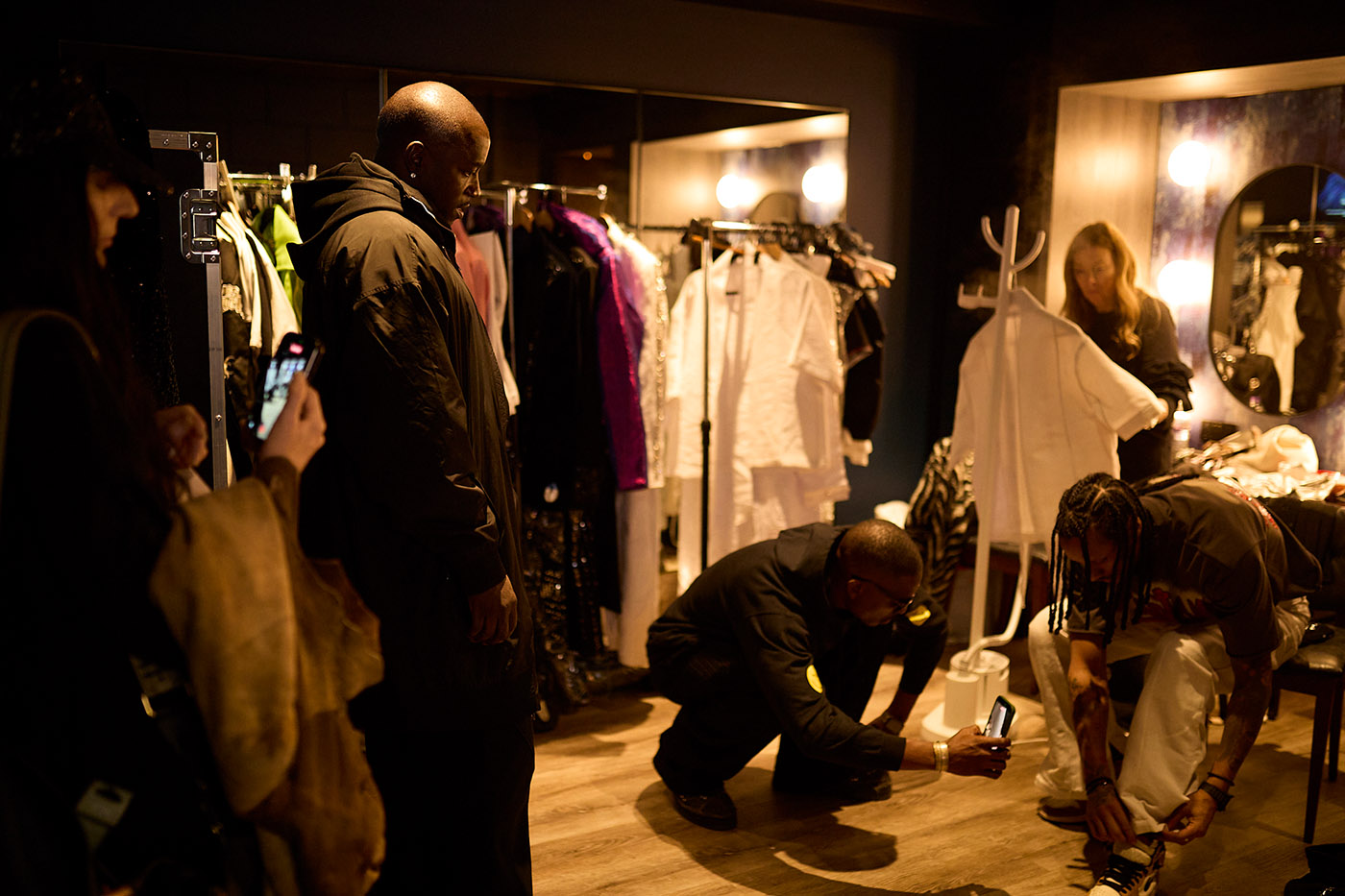
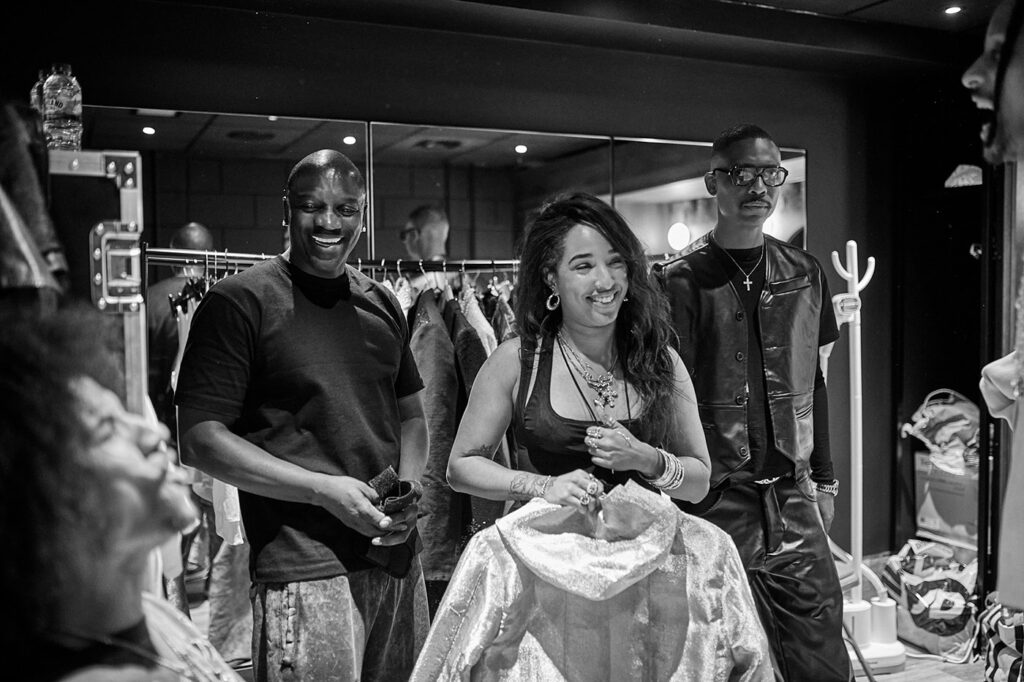
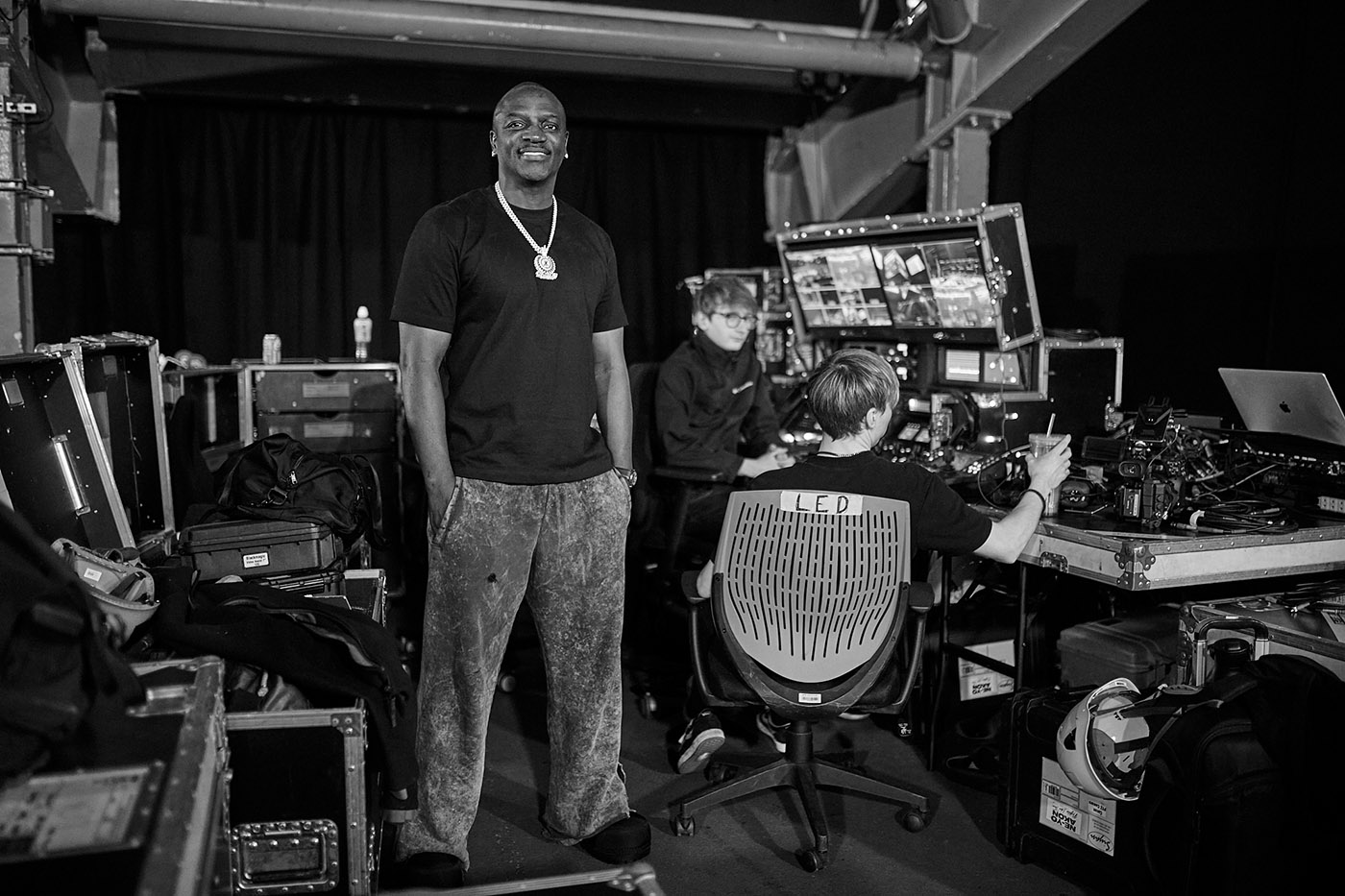
Reflecting on the encounter, Jo says: “What struck me most was the atmosphere backstage — despite the scale of the show, everything felt surprisingly calm and close-knit. You could really sense the family dynamic within his team, but also his genuine passion for uplifting people, whether through music, development or simply the way he speaks about others.”
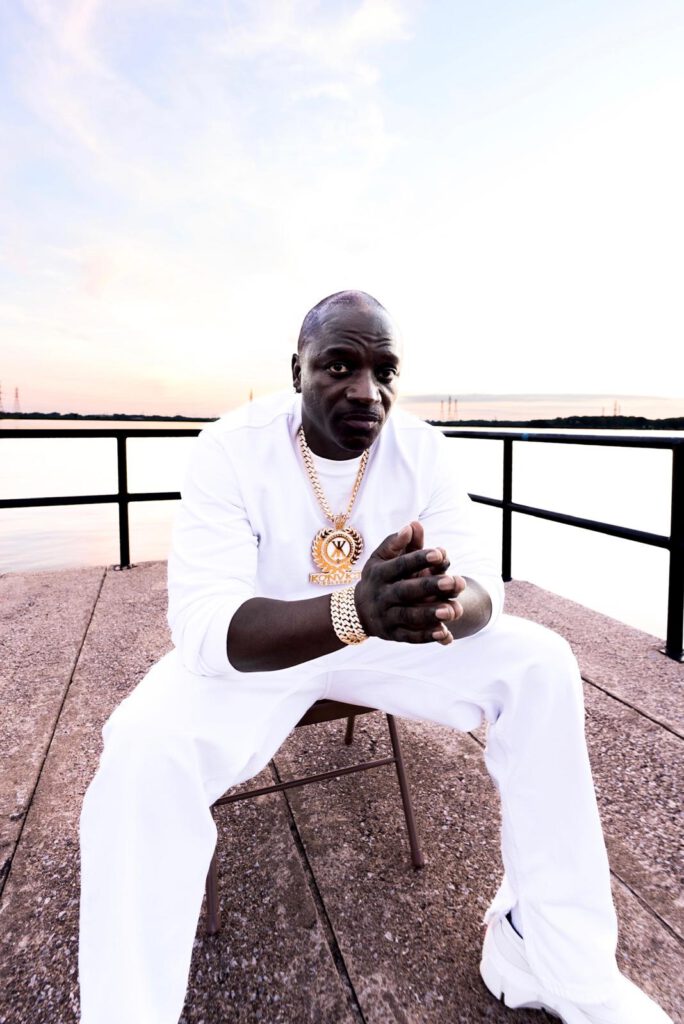
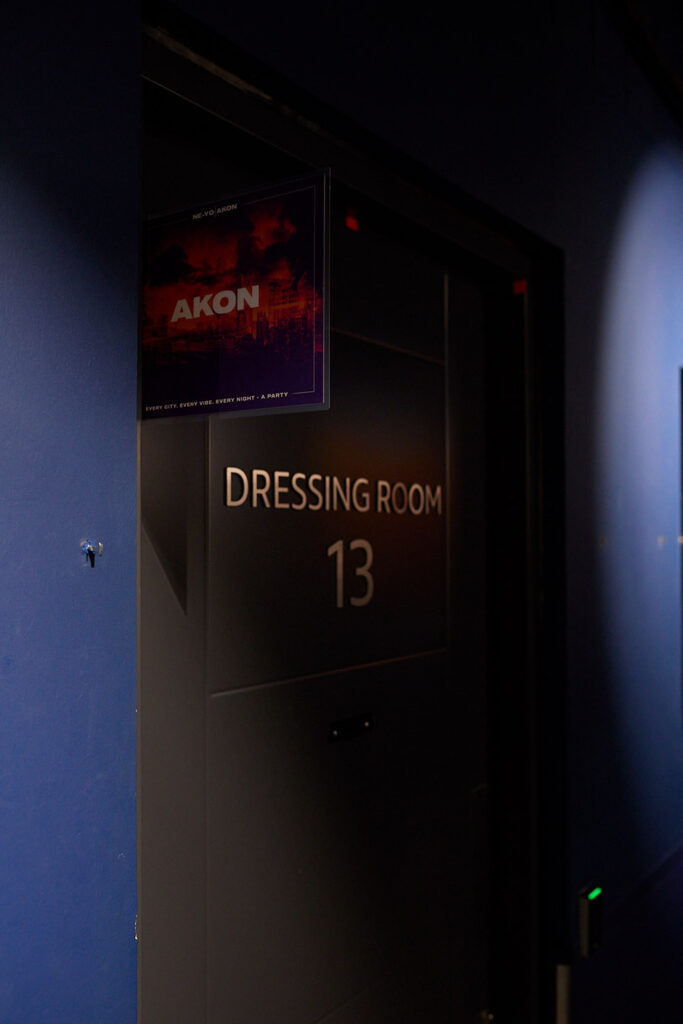
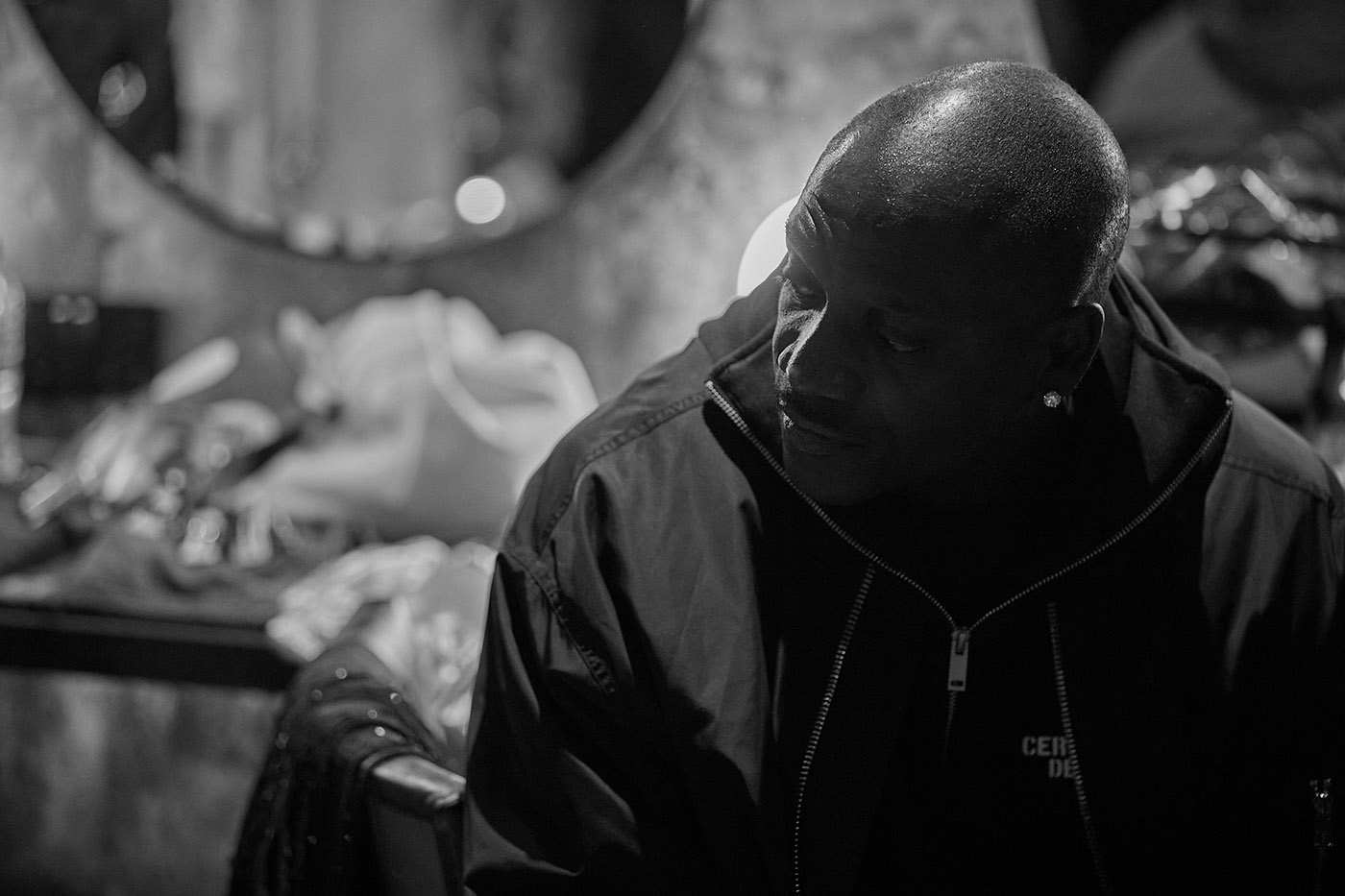
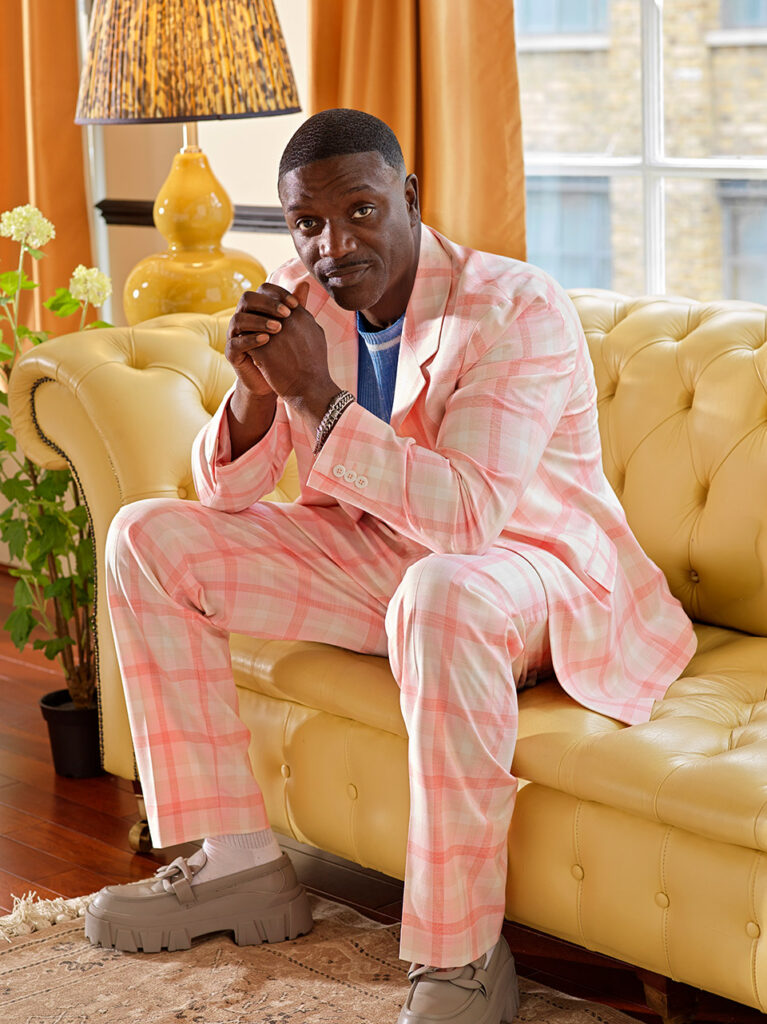
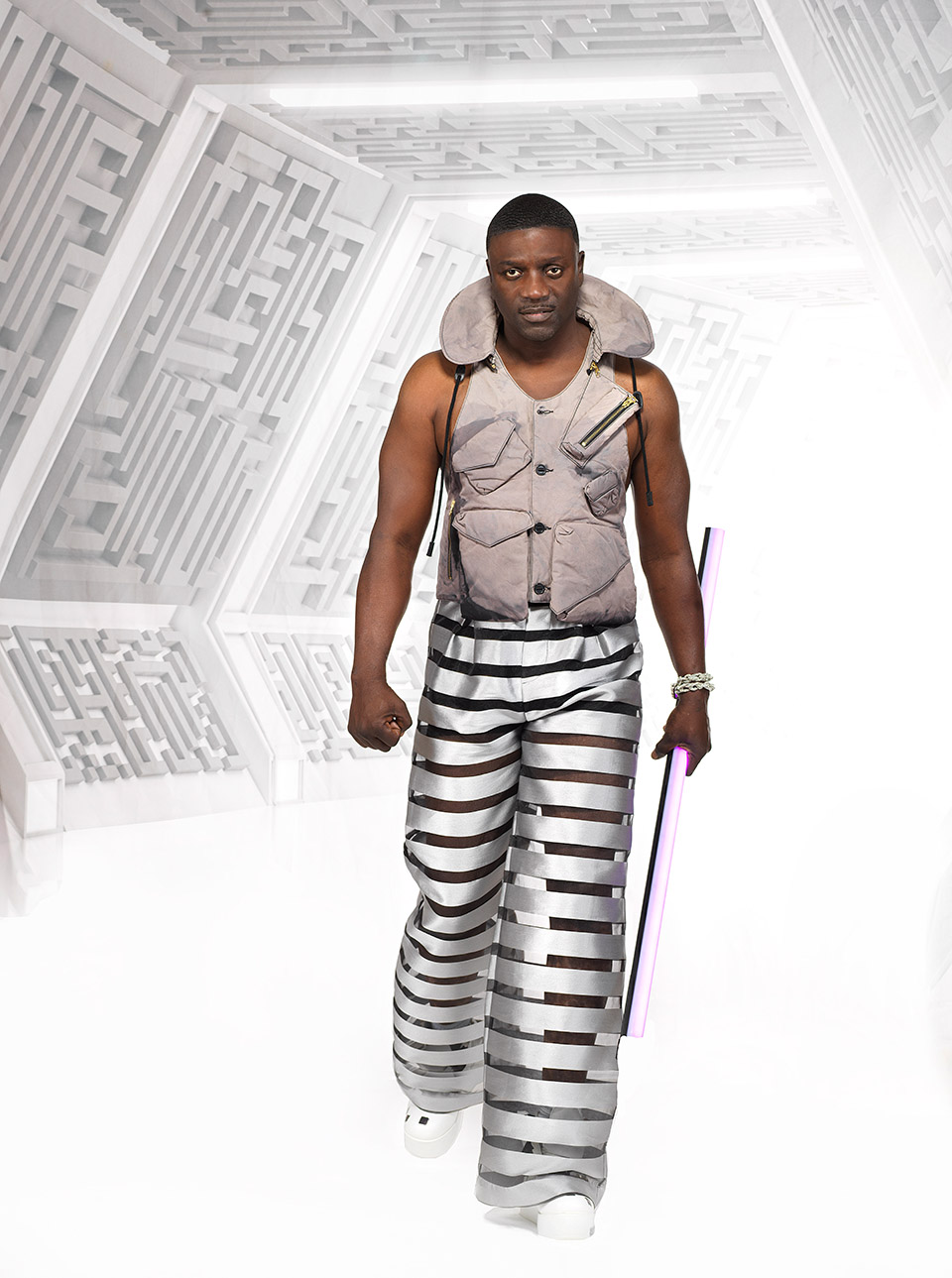
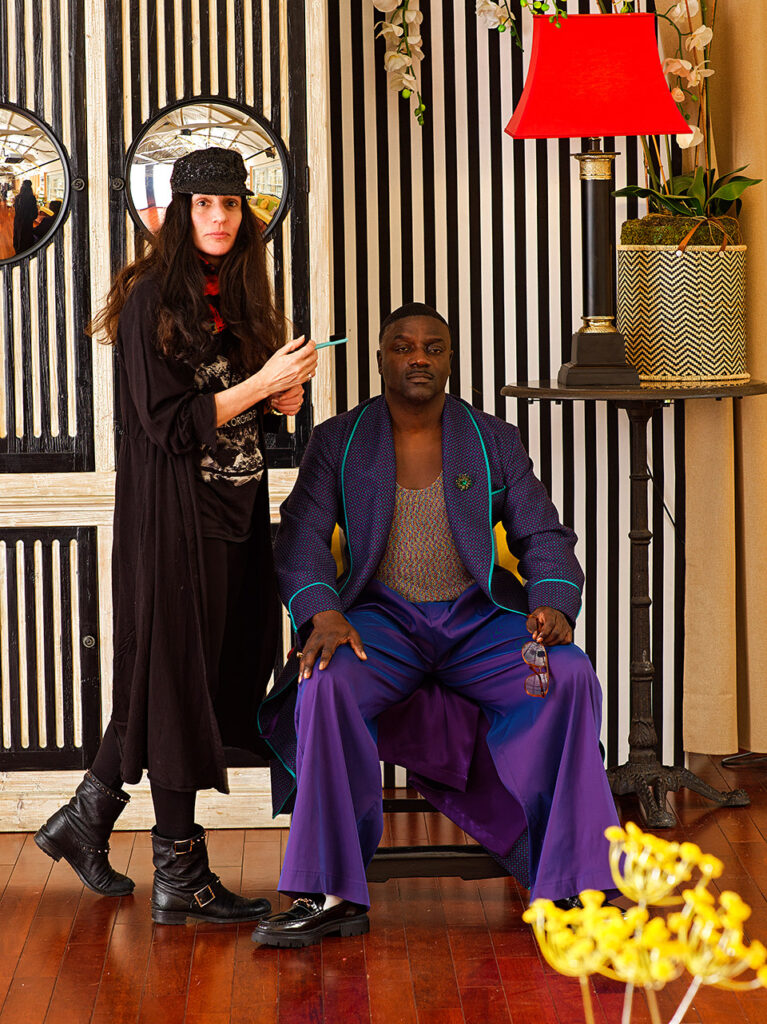
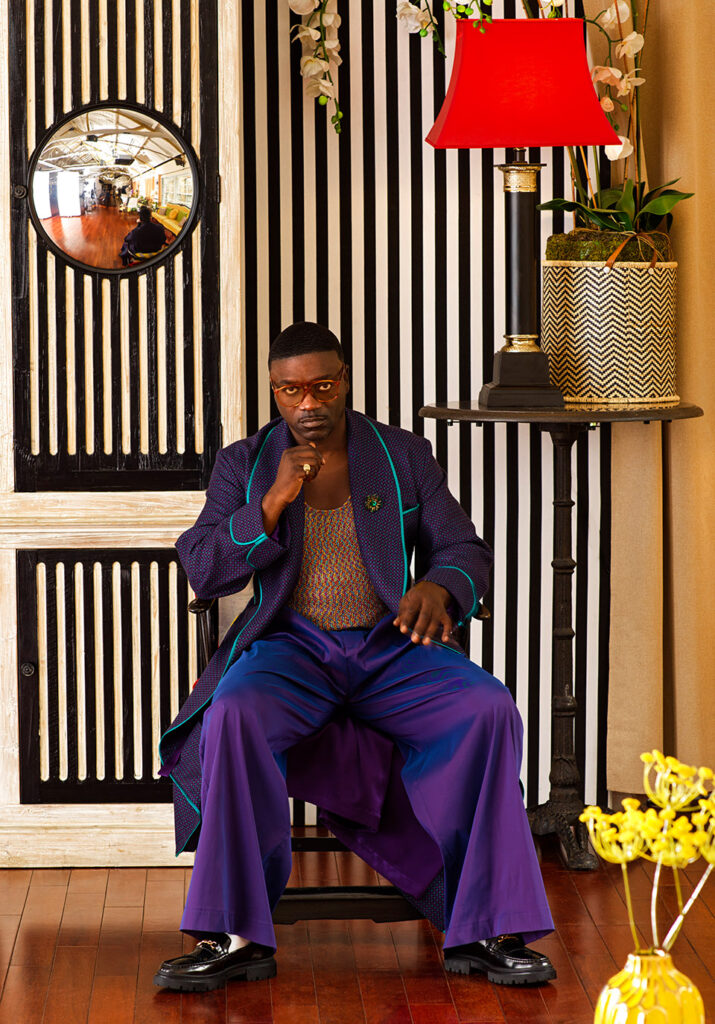
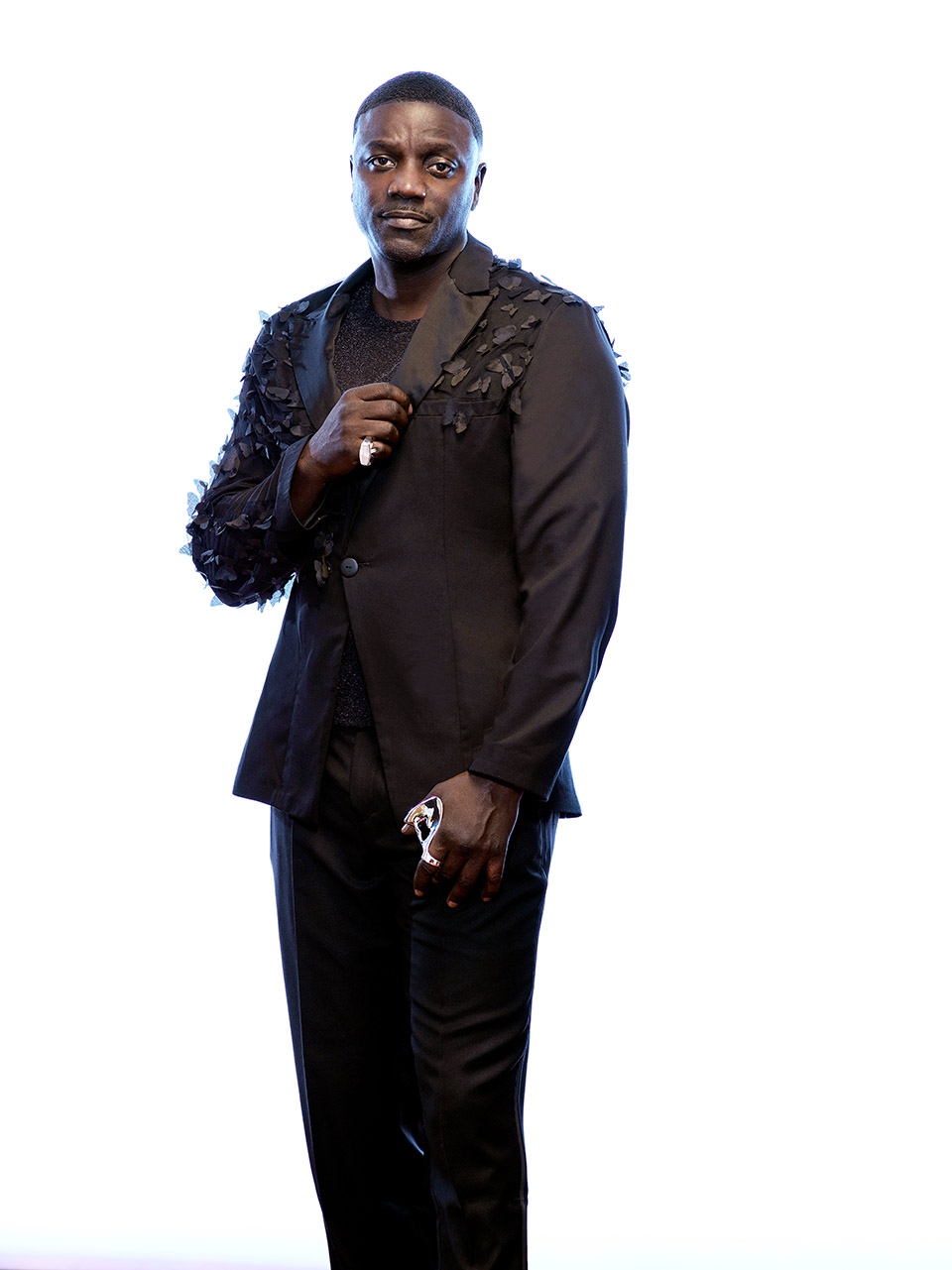
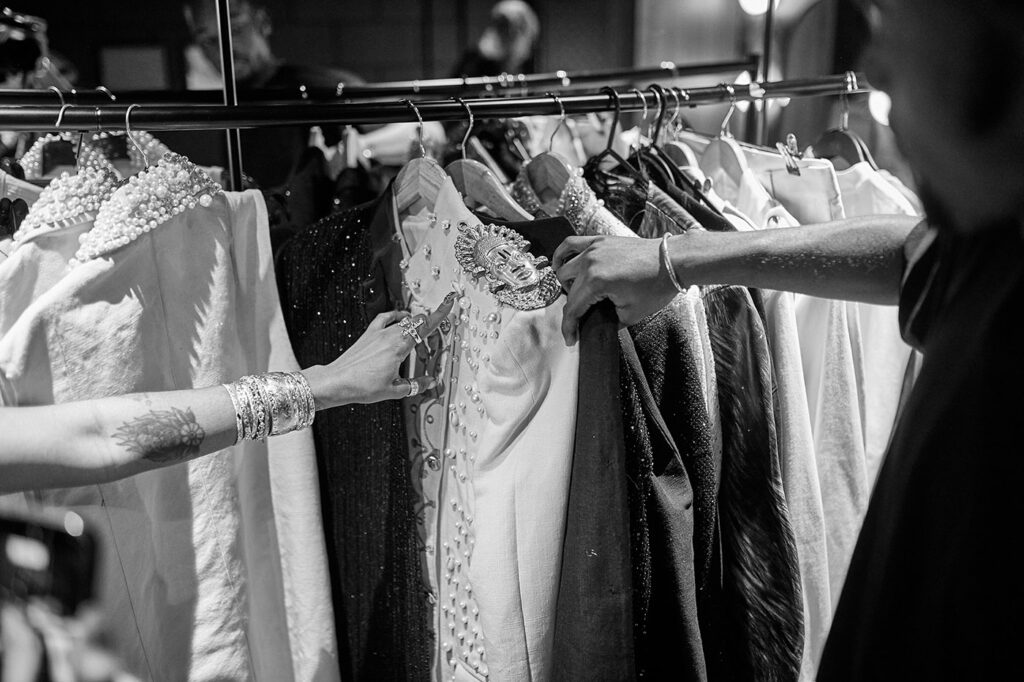
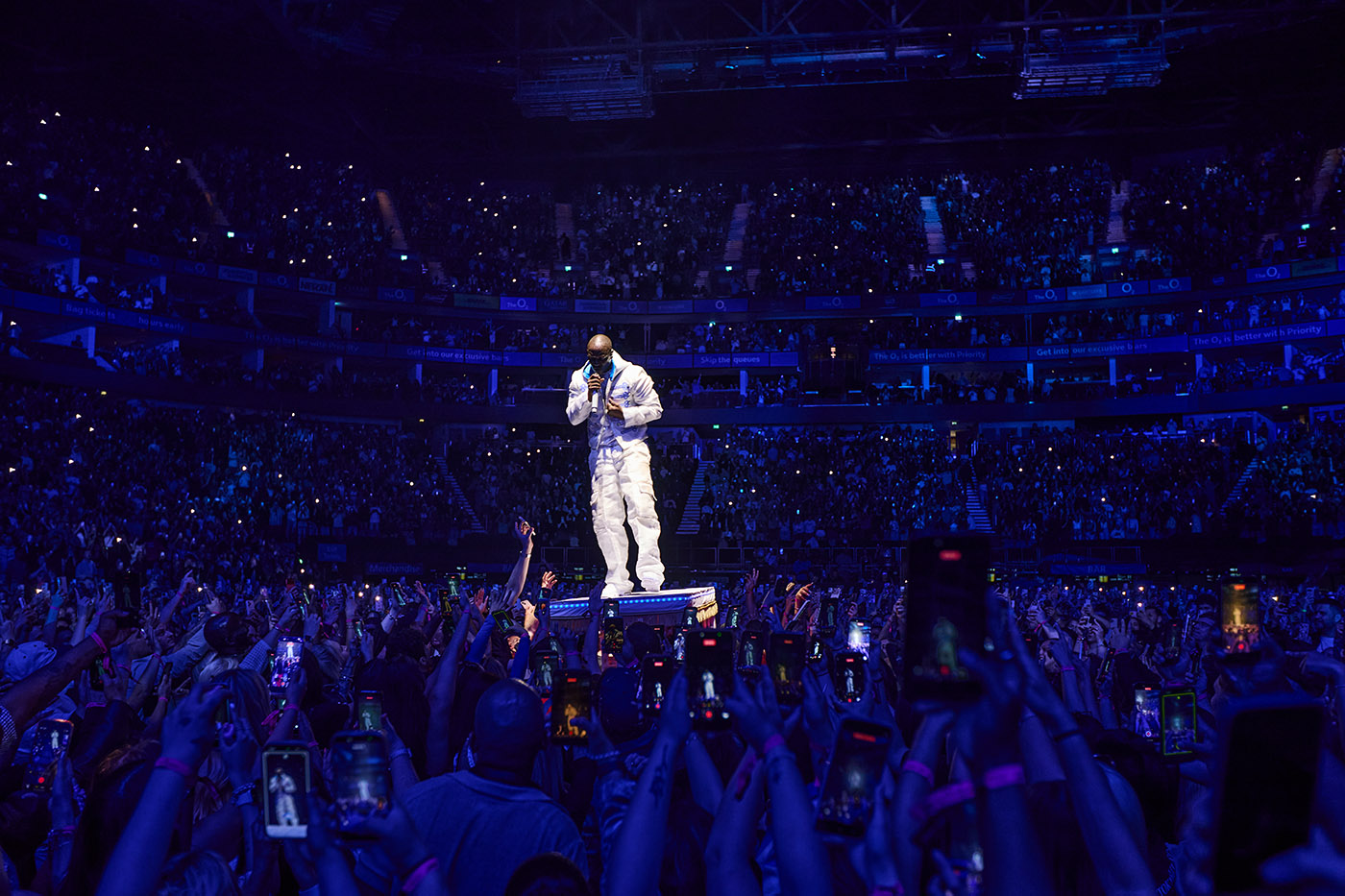
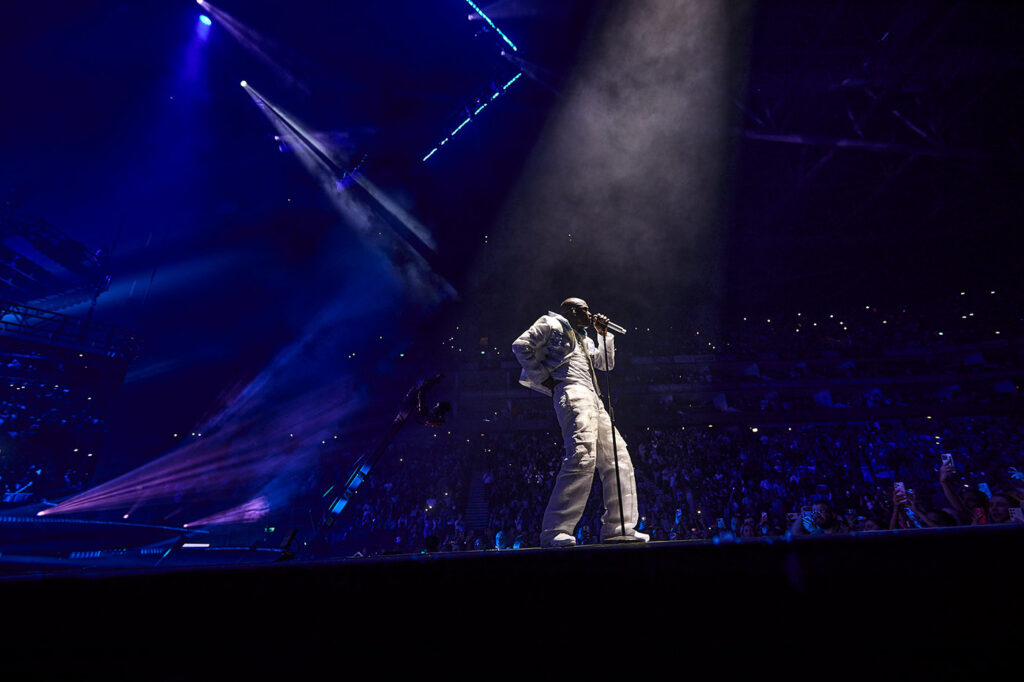
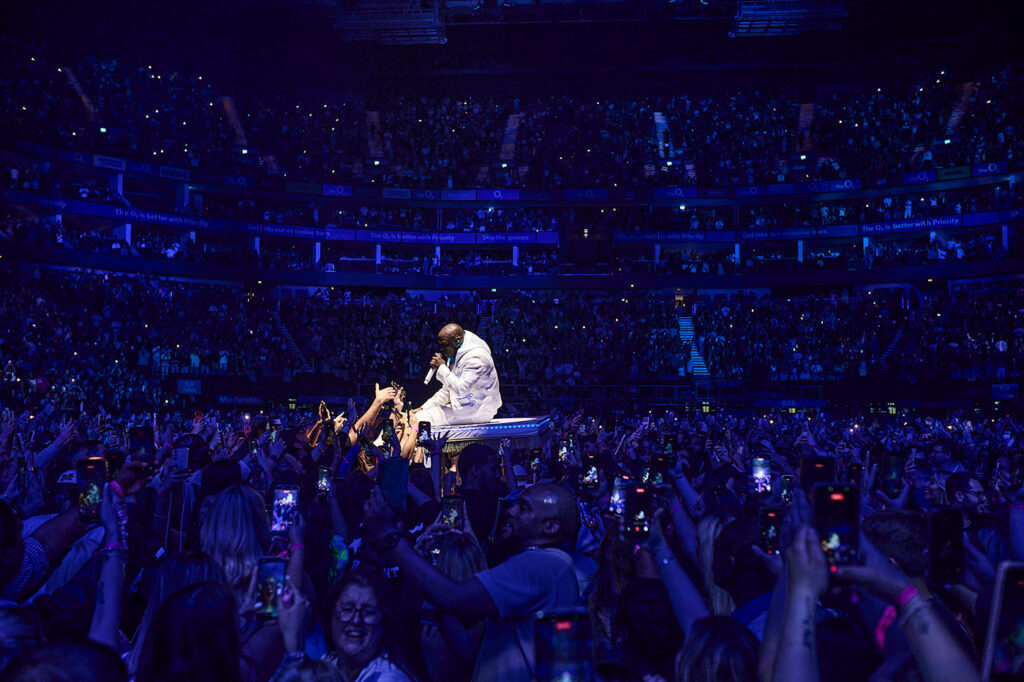
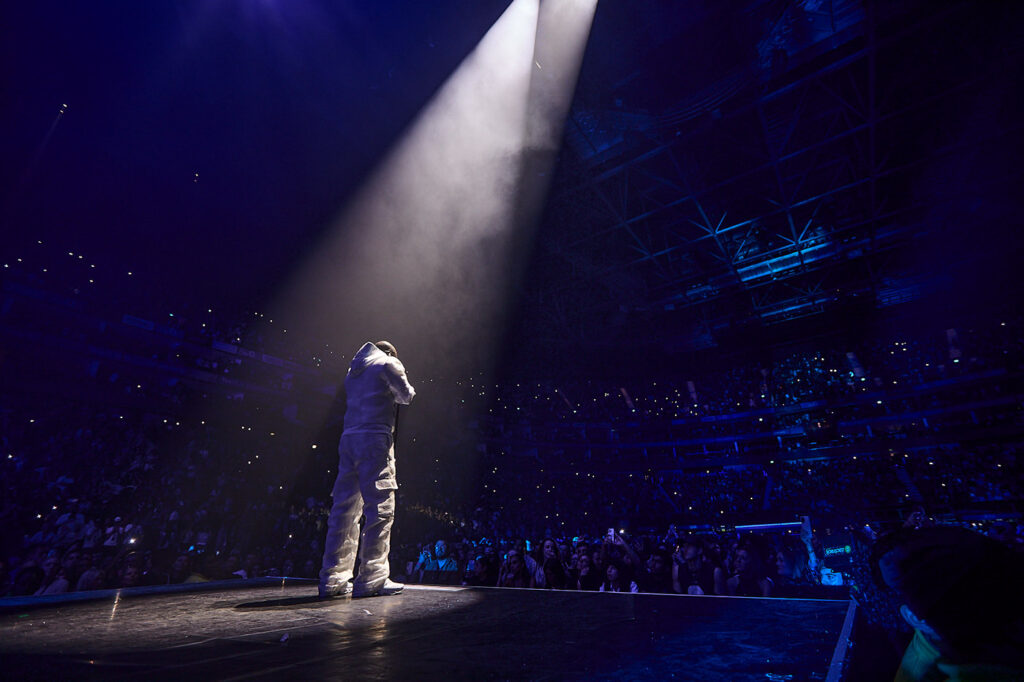
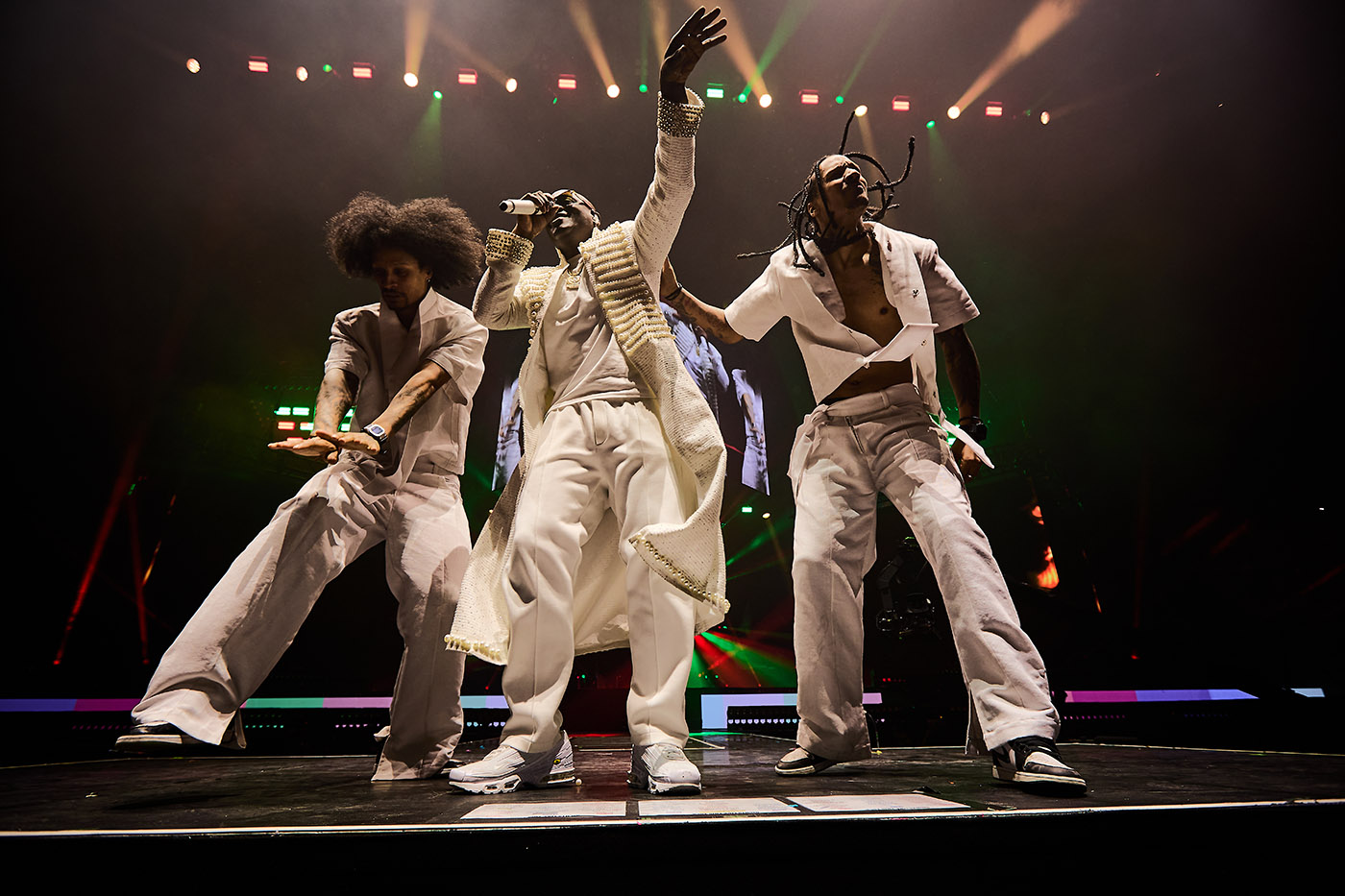
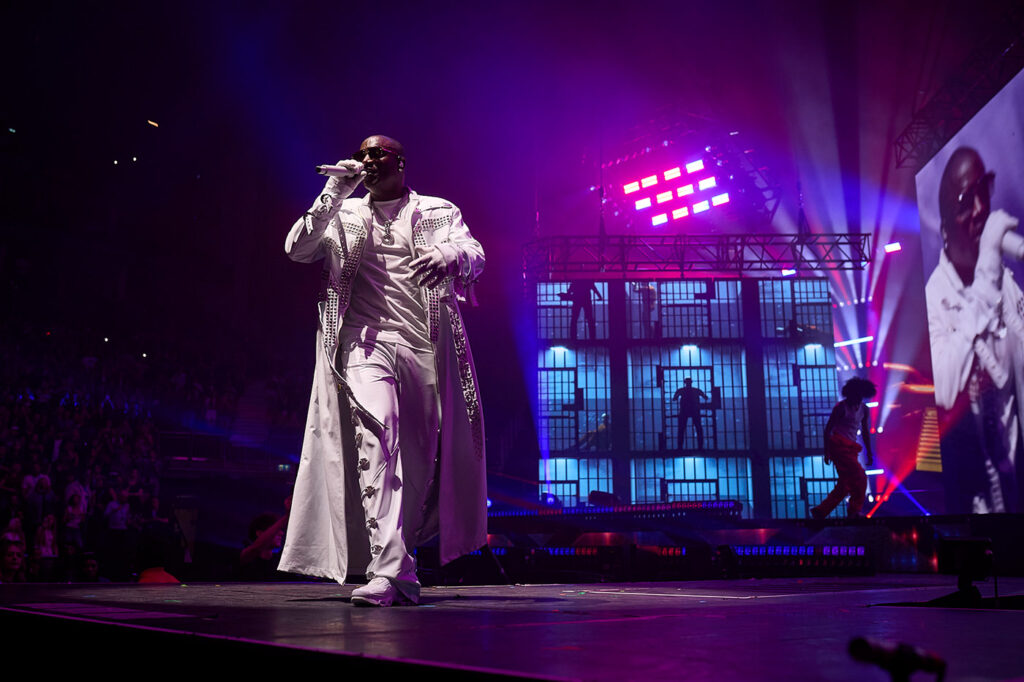
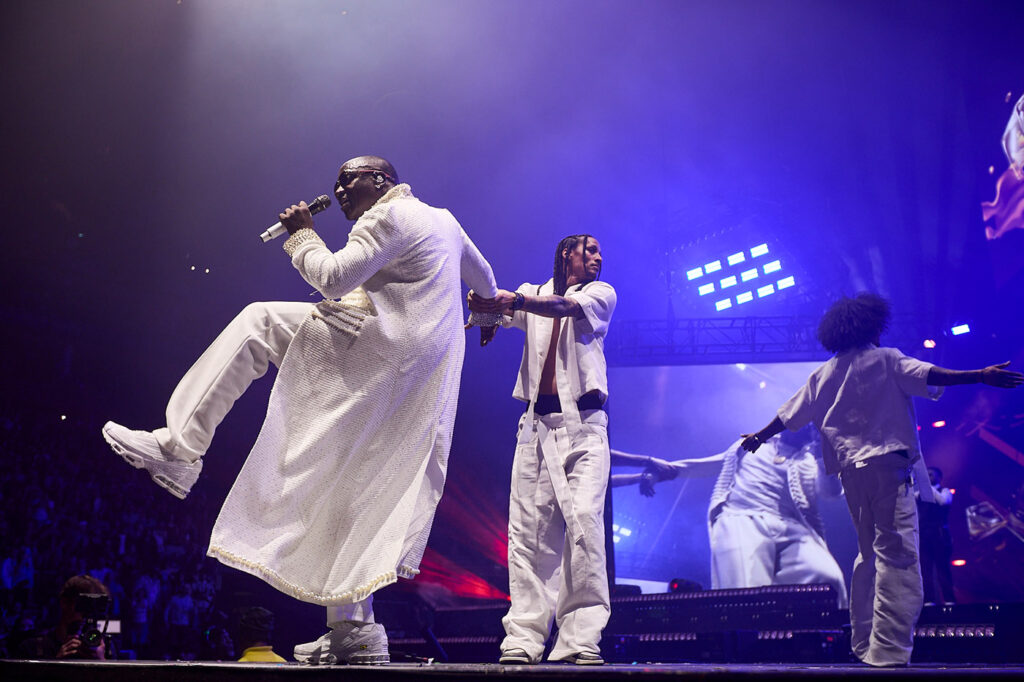
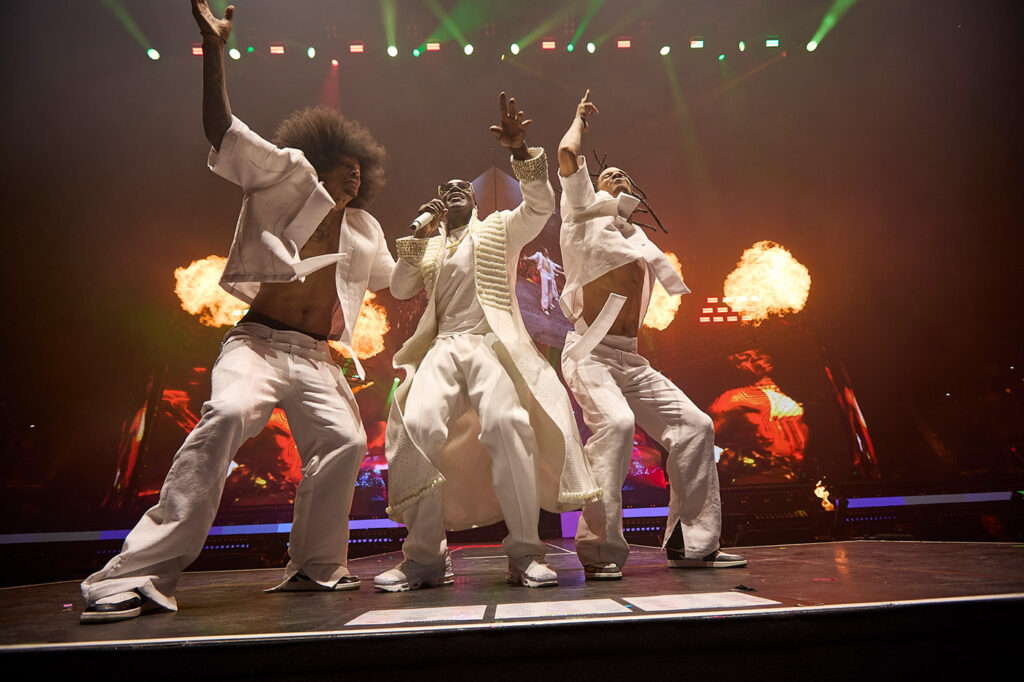
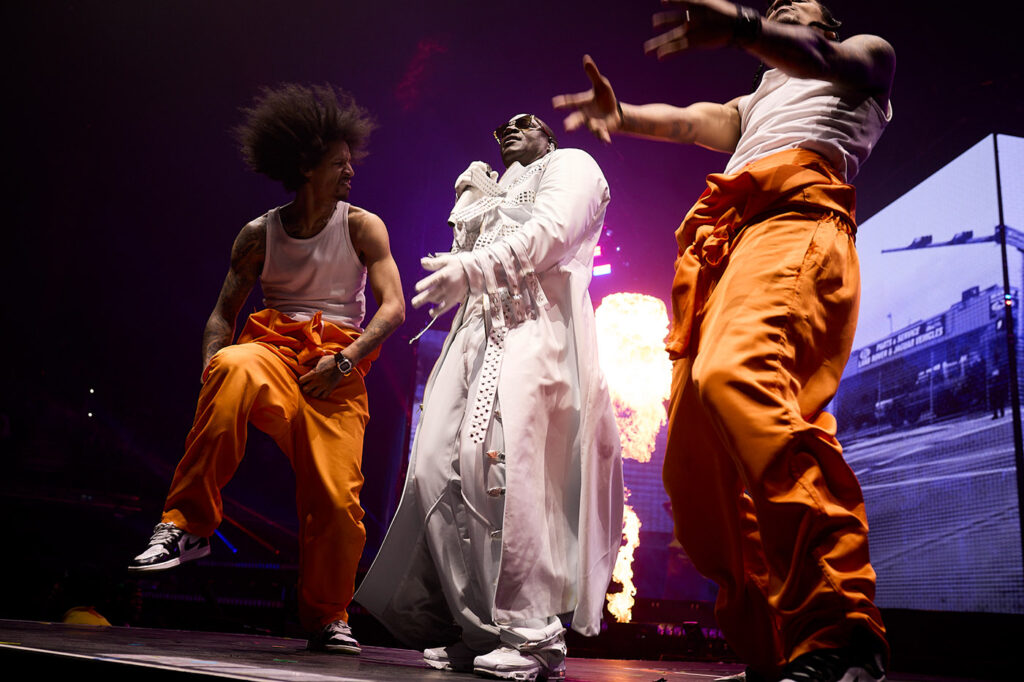
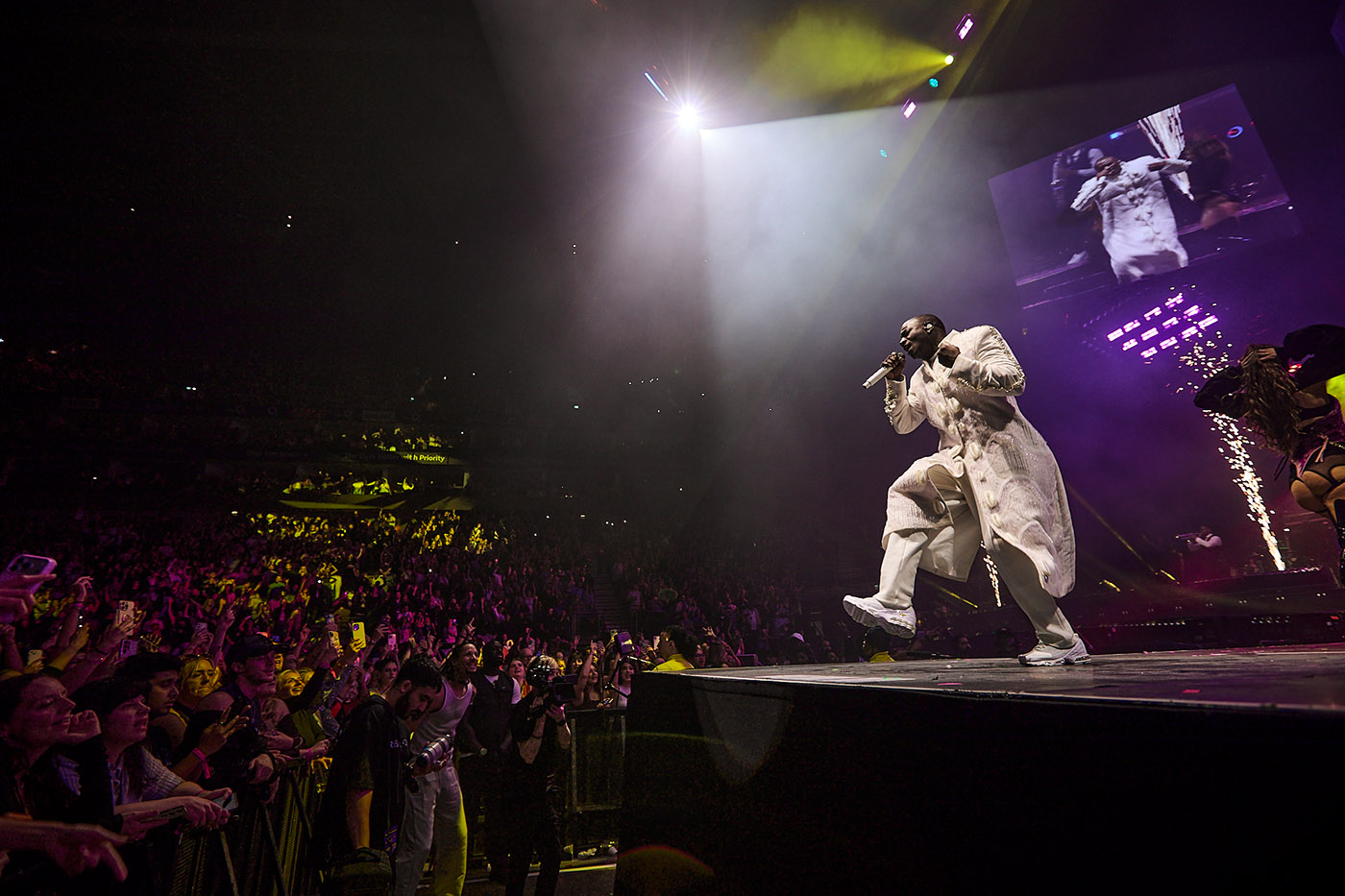
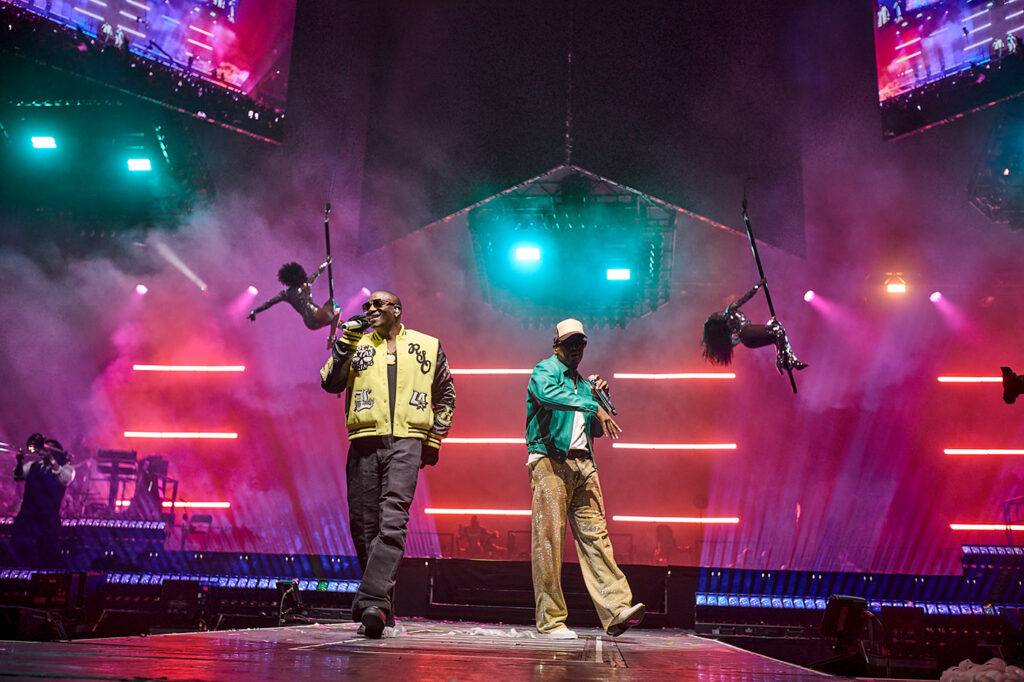
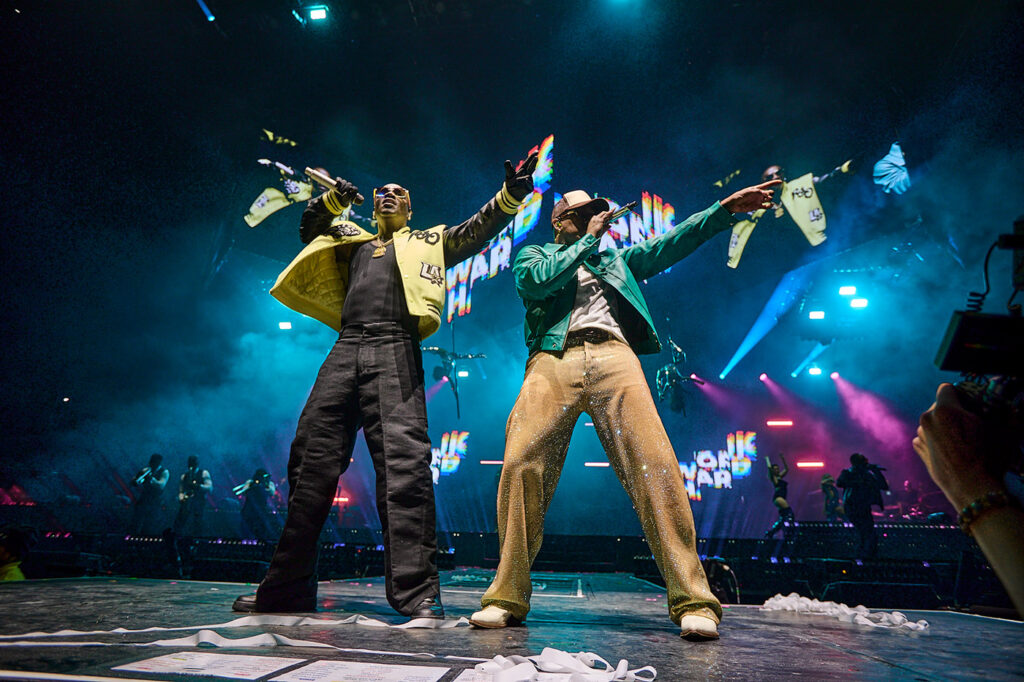
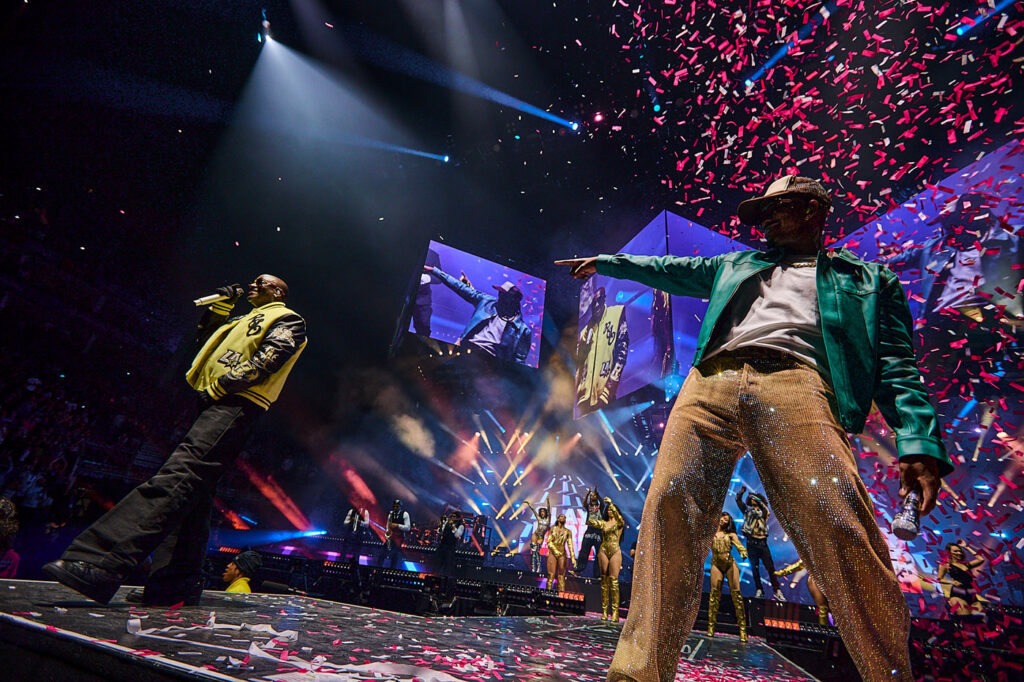
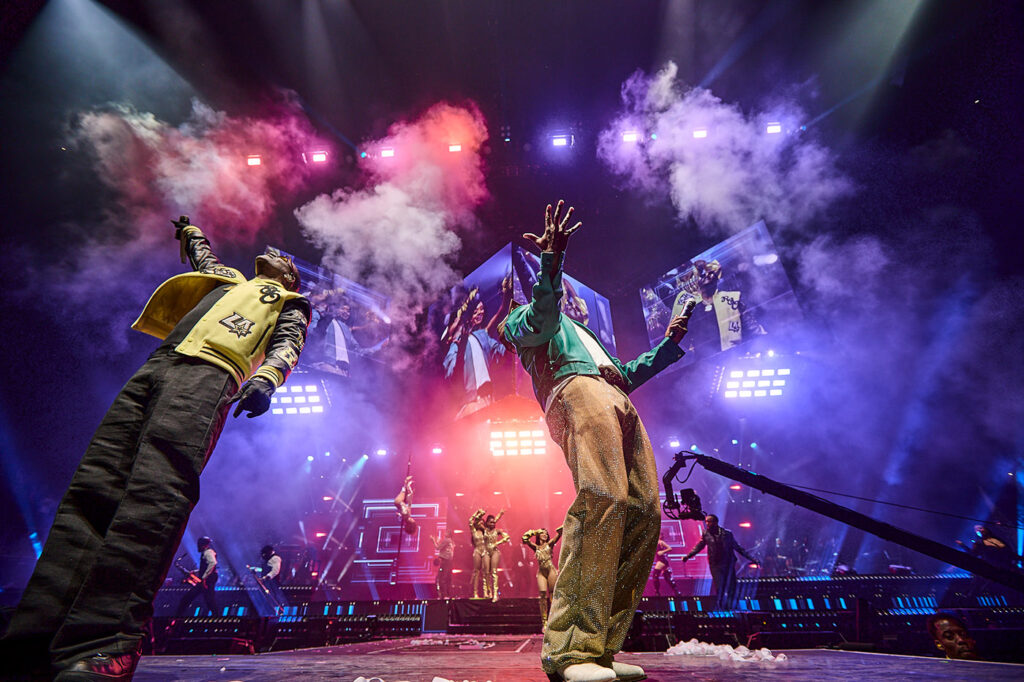
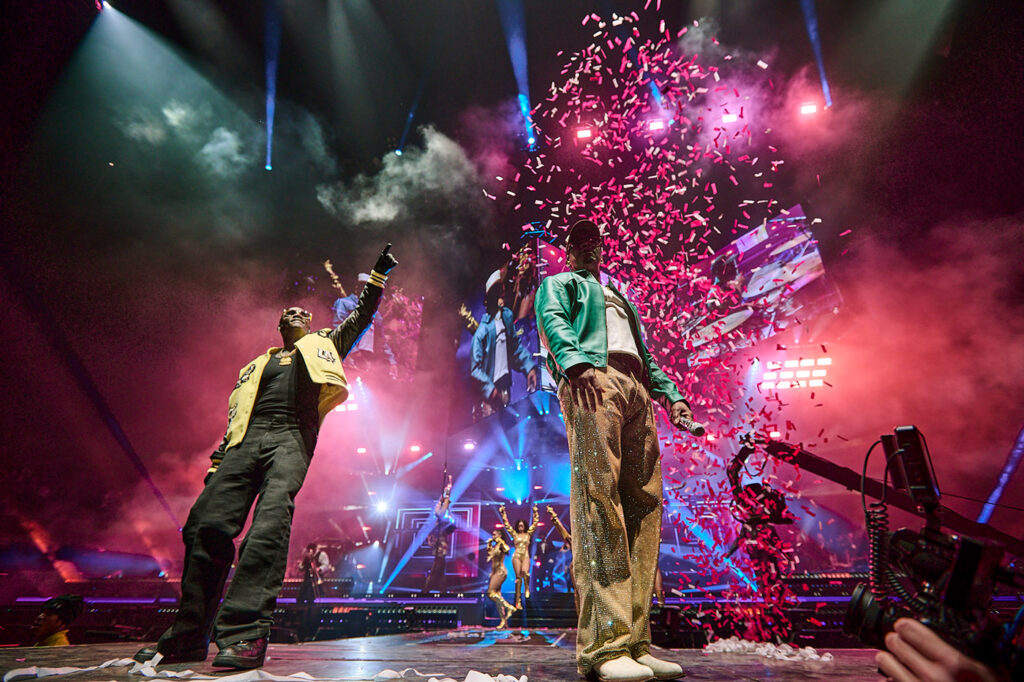
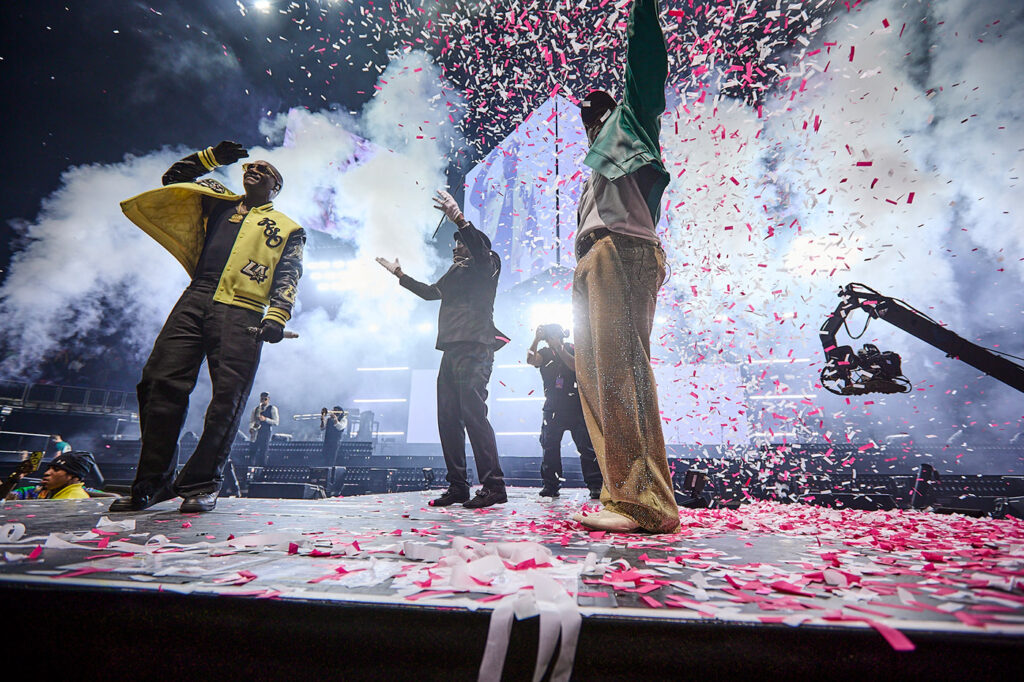
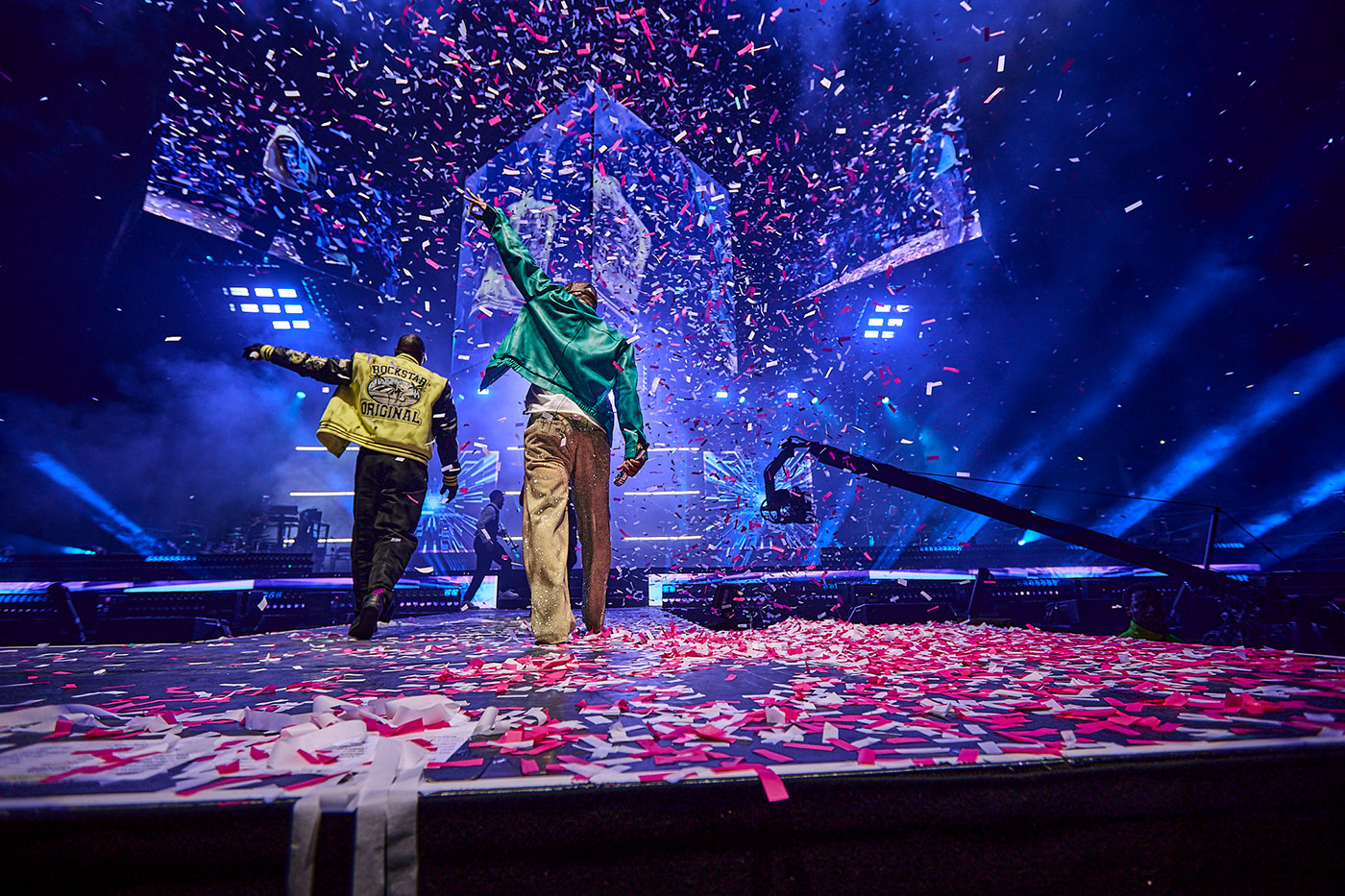
This feature combines two exclusive visual perspectives: backstage documentary photography by Aghil Menon, who captured Akon’s intimate pre-show moments with his team and the energy of the live performance, alongside a studio fashion portrait series by Carlos Lumiere, presenting an intense and stripped-back portrait of the artist behind the global persona.
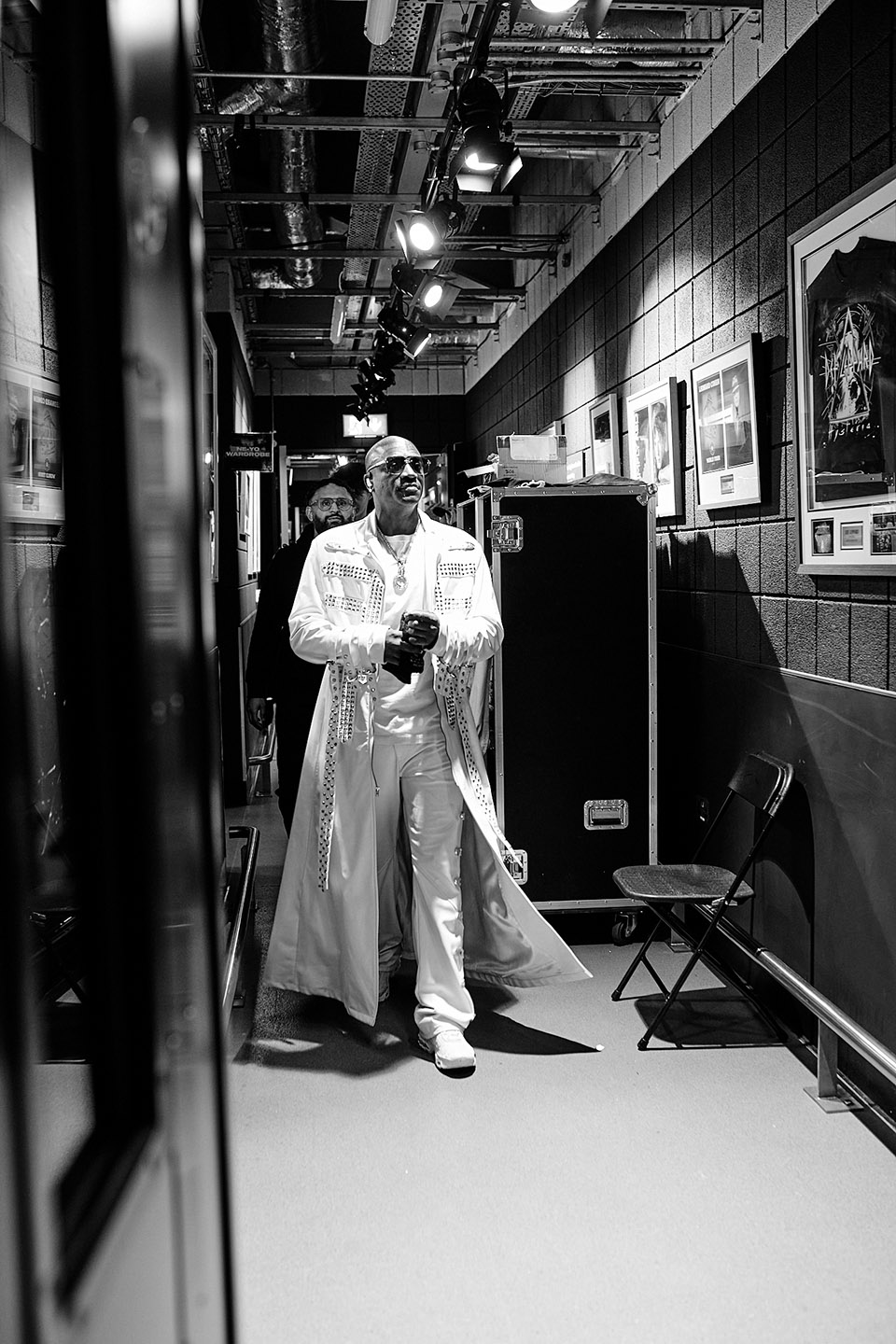
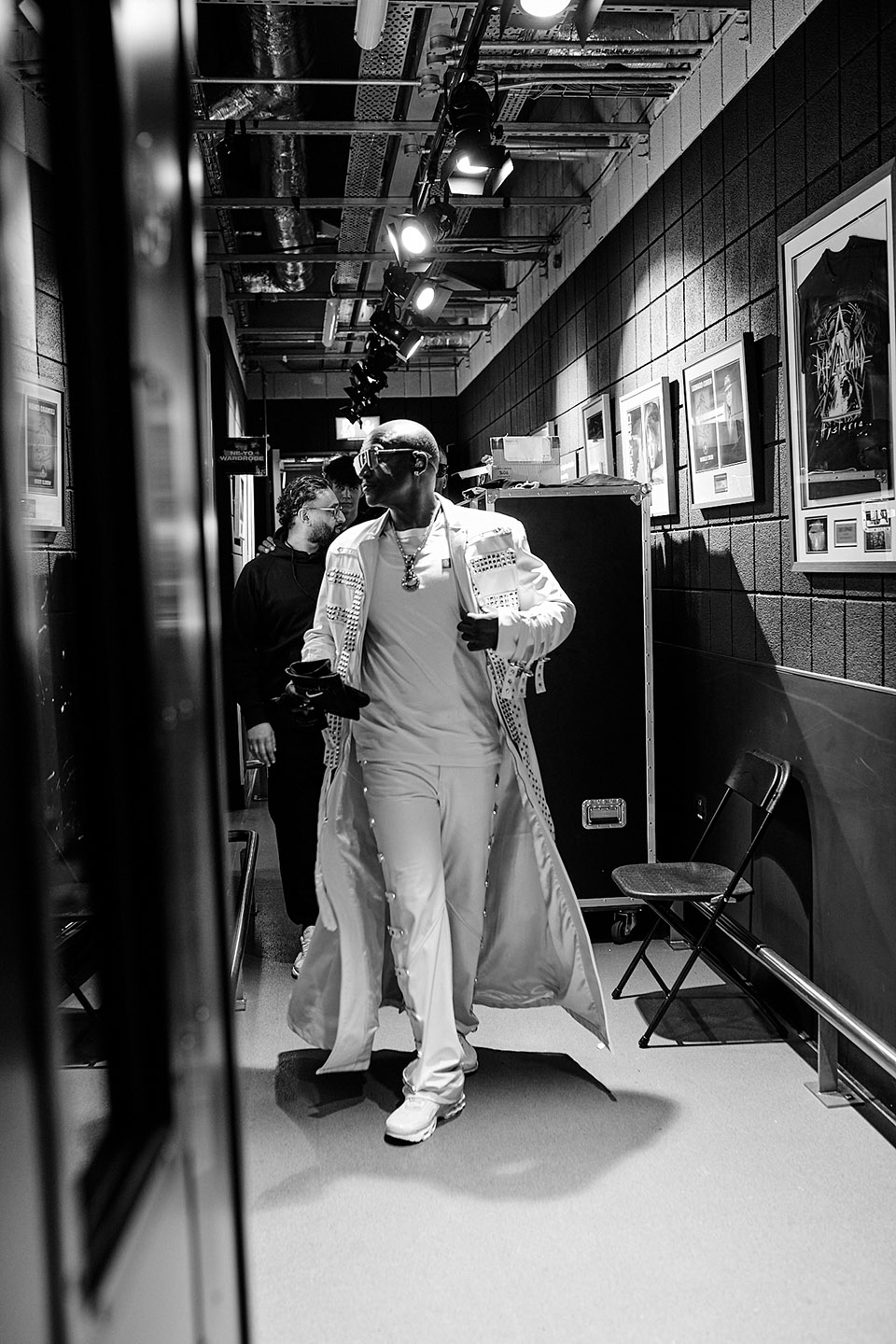
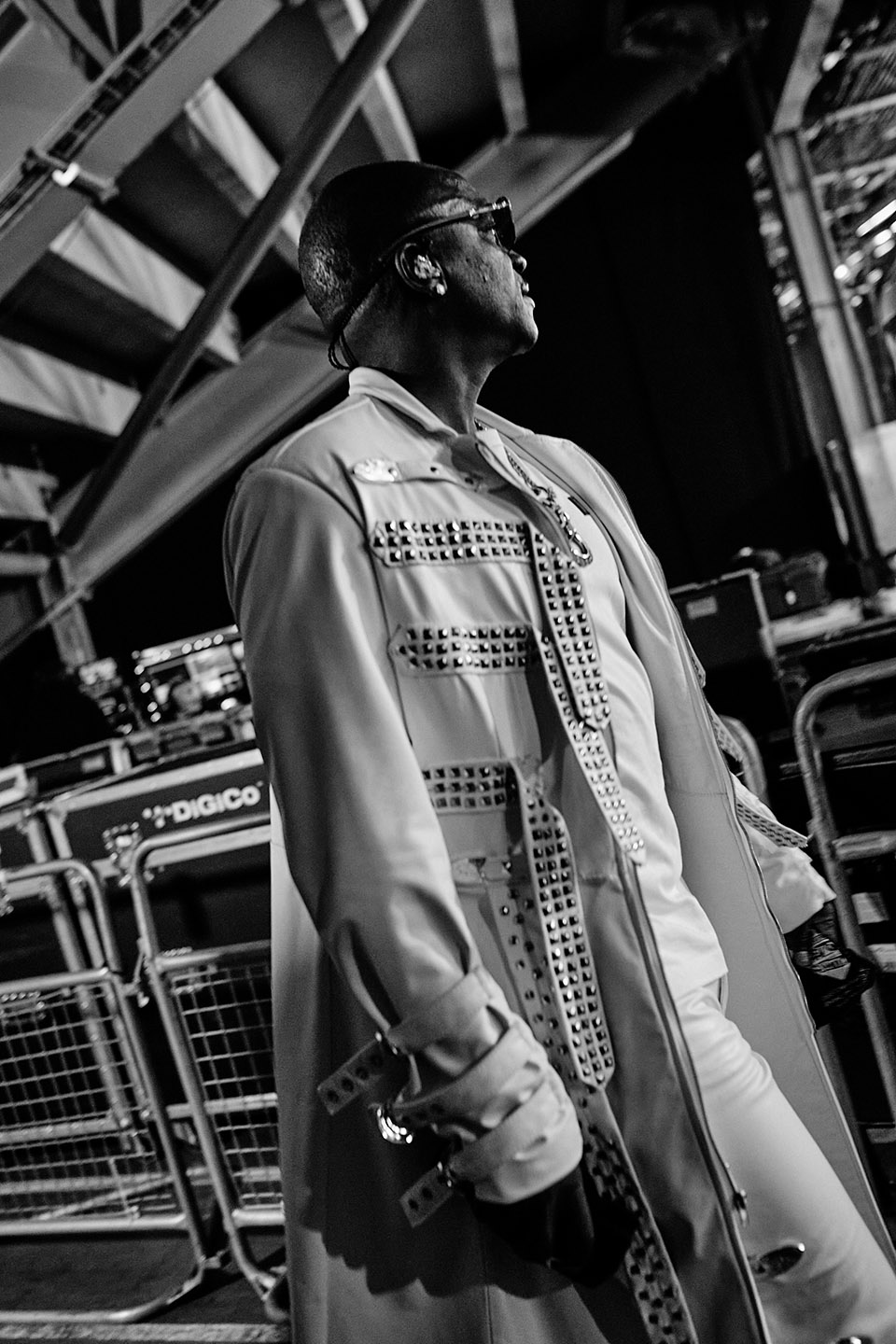
ZOOT: You were born in the United States but spent part of your childhood in Senegal. What do you remember about that transition as a young child, moving between two very different worlds?
AKON: Oh no, I remember that transition like it was yesterday. I’m a very family-oriented person, and I was raised in rural areas, so we had no water, no electricity. Literally, the well water was what we drank, bathed, and cooked with. We had kerosene lamps and candles.
Then when I went to the US, it was completely different. Most of my friends only had one parent because there were a lot of single-parent homes, so that was already different to me. But the upside was electricity — you flick one switch and everything comes on. Water was just a knob, and clean water came out, hot and cold. To me, the simplest things were everything. So yeah, that culture shock was totally different.
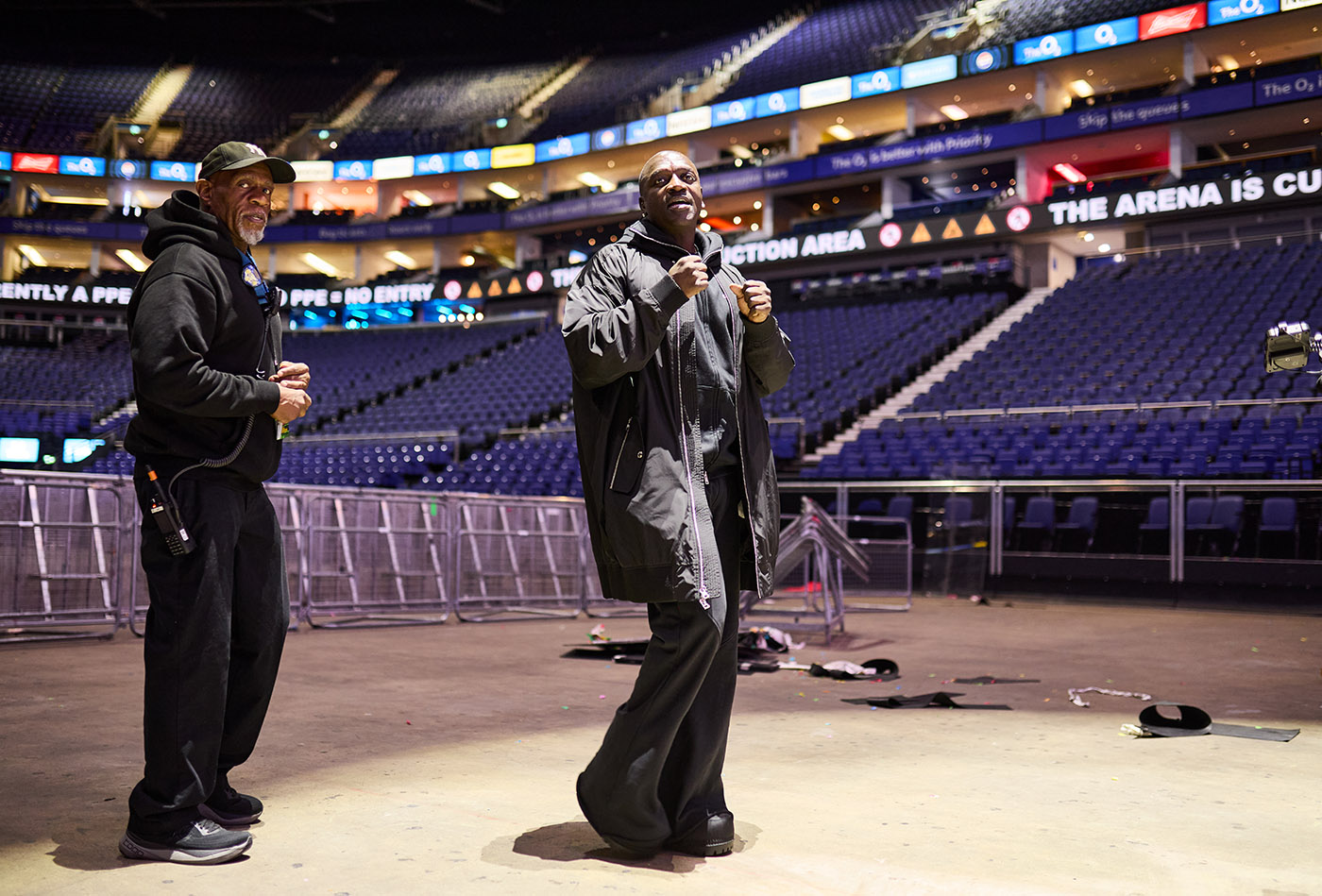
ZOOT: Growing up between Senegalese and American cultures, what felt different inside your household compared with many American families around you? And which of those values have you refused to lose, no matter how global your life became?
AKON: I think what felt different was the connection between moms and dads. Again, in America there were a lot of single-parent homes, but in my home my mom and dad were always there. They never had open problems in front of us. If they had issues, we would never know about it. Literally, if they had an argument, it wouldn’t happen in front of us.
We thought they got along forever until we got older and realised they did have problems they dealt with, but we never saw it. That’s one of the things that stayed with me, because even with my children, me and my wife never show them. If we disagree with each other, we don’t openly make it known — we talk through it. It changes everything. They could be mad at each other for a whole week and you’d still think they were lovebirds.
ZOOT: The early 2000s were a very particular moment in R&B and hip-hop. Looking back, what do you think allowed you to cut through so quickly?
AKON: I think what made R&B, especially in the early 2000s, cut through so quickly was that there was a lot of originality. We were all very competitive with each other. We didn’t want to do what the next artist did — we wanted to have our own thing.
When it came to creativity, I didn’t want to borrow someone else’s creativity and become successful from it, because that person gets the credit. But it also created a very healthy environment for us to compete with each other, especially with live performances, because that’s where we put a lot of our energy. That’s what sold our records and made our catalogues memorable to people listening on a day-to-day basis, because they could relate to it in their everyday lives. So it all came together.
ZOOT: Songs like “Locked Up” and “Lonely” carried a very specific emotional weight. Did you understand at the time why people connected so deeply with that vulnerability?
AKON: No, I actually didn’t. But what I did realise was that I went through it personally, and that’s the reason I wrote those songs. I was writing about a lot of things I was actually going through physically.
So being that I got locked up, it gave me the idea to write about being locked up. But I didn’t realise how many people in the world either related to being locked up, or even felt locked up in that sense, or had been locked up.
You know what I mean? So “Locked Up” was very metaphorical — if you weren’t physically locked up, you could be mentally locked up, or locked up at home, or within an environment you wanted to get out of but couldn’t. So I think that was the subliminal meaning in it that really moved most people — they related to it, one hundred percent.
ZOOT: You have worked across different sides of the music industry — as an artist, songwriter, producer, label executive and talent developer. Which of those roles has given you the greatest sense of fulfilment, and why?
AKON: I think out of all those roles, it would be two — being a performer and being an artist developer, for sure. As an artist developer, I love seeing other artists really maximise their full potential and become the better, greater version of themselves, with a little advice here, a little push there, a little support where it’s needed.
When I came up, I didn’t have any of that. Had I did, my rise would’ve moved a lot quicker and gone a lot further. But at the same time, learning it from the ground up and becoming what I am today makes it easier for me to pass that information on to younger artists who can really utilise it.
That came from Jimmy Iovine, he threw me that bone to be honest. He’s one of the biggest inspirations in my career as a talent finder, creator, executive and producer — because he started off as a producer too. That’s why me and him got along very, very well. We were both producers.
He happened to have this beautiful, talented artist on the roster and he was like, “Bro, I’m not quite sure what to do with this, but I know it’s something special. What do you think?” And I was like, “I need that — can I get that for my label?” He said, “It’s all yours.” Man, he was a blessing.
ZOOT: You stepped away from the stage for almost a decade. What led you to take that distance from performing, and what were you building during that period?
AKON: What led to it was me wanting to develop Africa. As a child coming to the US and experiencing that culture shock, I wanted my friends, family and the kids growing up there to have access to the same kind of environment. Africa hadn’t been developed for so long, and I knew there were small steps that could help fast-forward that development — and I wanted to be part of something that could trigger that process.
I was there helping to develop the Afrobeats music scene, showing artists how to become full-blown artists and look like superstars. You can’t be in a music video wearing a dirty white T-shirt — you’ve got to look like something people want to be part of. All of those little lessons I learned in the US, I brought back there.
My biggest focus was really developing the Afrobeats scene, and we were very successful at doing that. We were able to open doors for a lot of major artists coming out of Africa, who went on to become some of the biggest names in music. And outside of that, it was also about development and infrastructure — doing what I needed to do to help Africa build.
ZOOT: With ‘Akon Lighting Africa’, you helped expand access to solar energy while also creating employment and development opportunities. The project carries a lot of symbolic weight. How do you personally measure its impact today?
AKON: That’s the thing — you can’t even measure it. If I die tomorrow, I’ll be happy knowing I did my part. It opened the door for so many other major projects in Africa that are now doing the same thing.
The message became loud enough for governments to say, “OK guys, this is embarrassing — he’s not even part of the government and he’s making a difference. We have the budget, we have the resources.” More than anything, these are people who run countries, so I think it definitely motivated them to do more for the people.

ZOOT: You’ve long been involved in projects that go beyond music — infrastructure, energy, development. Where does that sense of responsibility come from, and how do you decide where to focus your efforts?
AKON: I think my sense of responsibility comes from the blessing, because I came from nothing. To be in this position today is something I would’ve never imagined 30 years ago — it felt impossible.
Every day I wake up, I know I’m being blessed. And because I’ve been blessed this much, I feel there’s a responsibility that comes with it. I know there’s a bigger role I need to play. I know for sure there’s an assignment I’m supposed to fulfil.
That’s what drives everything I do. I may not know exactly what I’m meant to do, but I know it’s something major, and that my presence and involvement are supposed to accelerate something that helps the human race in general.
So I try to be part of anything connected to giving back or creating the kind of foundation that allows people to thrive.
ZOOT: When an artist becomes an entrepreneur, the public often celebrates the vision but rarely sees the complexity behind it. What has been the hardest lesson in trying to turn big ideas into real structures?
AKON: The hardest part is getting it off the ground. Most projects are never easy, especially the biggest ones, and you’ve got to understand that from the beginning. You’re going to face huge hurdles before you ever reach the finish line.
So if you’re not ready to sacrifice time, money, sweat, tears — and even blood in certain situations — don’t even think about going there. You have to come into it prepared to sacrifice. Period.
ZOOT: You have been returning more visibly to music. What pulled you back into this chapter — and what do you want it to prove, whether to the audience, the industry, or yourself?
AKON: What pulled me back into music was really the passion, to be honest. I felt like something was missing. You can be all over the world doing things you love, but if it’s not making you feel whole, then something’s missing — and that’s what was happening with me.
I was doing all this philanthropy, making people smile, accomplishing everything I ever wanted to accomplish in life, but it still felt empty in a way. Then I realised that before, I had always been doing those things with music happening alongside it. Everything was moving in parallel, and that’s what made it fulfilling.
When I was doing it without the music, it just didn’t feel complete. So when I came back to the States, I looked at the music scene, understood how everything was moving, and realised it was time to get back in.
Not only because I think it’s achievable, but because a lot of young artists need a real mentor — somebody who can give them real knowledge about how this business actually works.
ZOOT: Even after years away from the centre of the stage, there is still a strong desire to see you return. How do you think you managed to remain relevant?
AKON: Man, that’s a blessing. Because artists are always afraid of stepping away from the stage and coming back to find their fans aren’t there anymore — especially with new artists coming out every year who are just as amazing, younger, more energetic, probably more handsome, you know what I’m saying.
So you just hope your music sticks in people’s souls long enough for them to ride with you through your whole journey. And I was blessed enough to have that. I think authenticity definitely plays a big part in it.
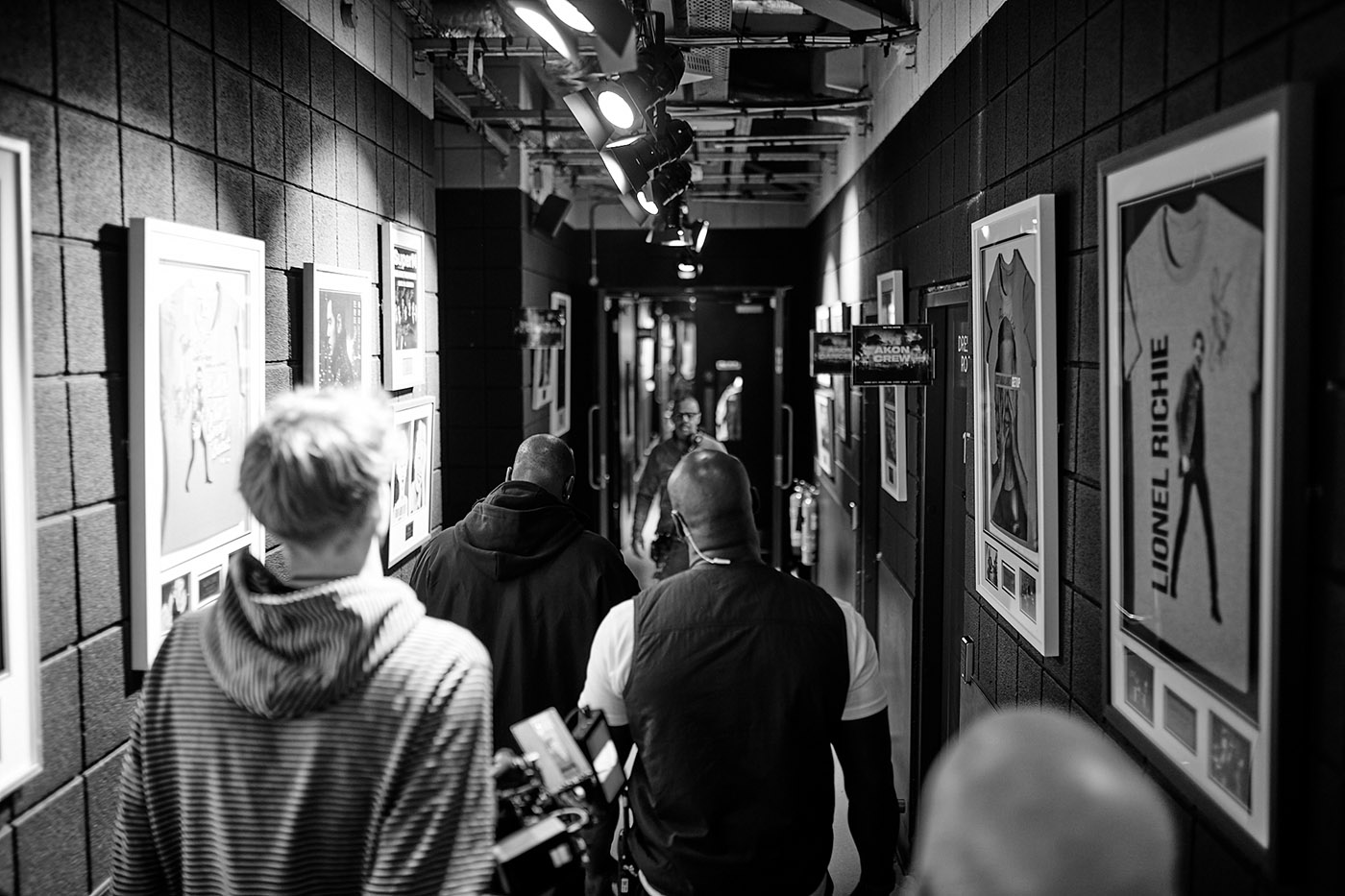
Among them, a tribute to Prince, who made history at the O2 with a record-breaking 21-night run in 2007.
In that context, you understood exactly the calibre of stage Akon was about to command.” – Jo Sugar
ZOOT: With your new album Beautiful Day, do you feel you are speaking mostly to the listeners who grew up with your music in the early 2000s, or are you now reaching a completely new generation?
AKON: With Beautiful Day, I’m definitely reaching a whole new generation. I’m seeing the depression, the challenges in relationships, and the lack of spirituality — not just in the music business, but in music in general. I wanted to bring all of that back into the music.
ZOOT: You came up in an era when an artist needed radio, clubs, labels, touring and physical presence to break through. Today, a song can become global through a phone screen. Do you think that has made music more democratic, or more disposable?
AKON: I think it’s a mixture of both, but more democratic than anything. It gives people the opportunity to discover artists much faster, and it gives artists the chance to put their talent and content directly in front of audiences much more quickly.
Before, I had to go city by city, radio station by radio station, TV station by TV station, and it took a huge amount of time just to circulate your music globally. Now, with the press of a button, everyone can get it in real time. So it’s a gift and a curse.
ZOOT: Music feels more ephemeral now than it did in the early 2000s. Do you think songs being released today can still become recognisable 15 or 20 years from now, the way your early hits have?
AKON: I think they’ve mastered the blueprint. For me, most of the records I make are based on personal experience — and when you experience something, there’s usually someone else in the world going through the exact same thing. That’s the first part.
The second part is the melody. I always make sure the melody is something you can remember even if the words didn’t exist. There are people who don’t speak English fluently and may not understand what I’m saying, but the melody will still stay with them.
And I never make music that’s time-sensitive. I don’t look at whatever sound is hot at the moment and rush to make something that fits it, because that sound belongs to today and might not exist tomorrow. You have to make timeless music.
When you put those three elements together, you create a record that can stand the test of time.

ZOOT: You seem to have a positive vision of AI. What benefits do you think it can bring to the music industry — and is there anything about it that genuinely concerns you?
AKON: Nothing really concerns me when it comes to AI, because AI is programmed by us — we’re the ones creating it. So unless you’re saying you’re afraid of yourself, what damage could it really do?
What I can say for sure is that AI helps organise the creator. As creators, we’re often unorganised when it comes to ideas and implementation. We’re constantly thinking of new ideas and new ways to find originality, and with all those variables, when it’s time to organise everything we can lose our train of thought.
AI helps me organise my thoughts and my creative process, so when I put something out, I can do it with intention. I also have data that helps me perfect that creation for the person listening.
I use it as a tool to improve what I’m already doing — not to take something that already exists and claim it as my own. It’s amazing, but you need to know what you’re doing with it. It’s supposed to help you do what you do. If you’re using it to do what it does and then taking ownership of it, of course it doesn’t work.
ZOOT: What are the main differences between writing, producing and realising an album in the early 2000s and now?
AKON: It’s a little different now, because a lot of artists don’t actually write or produce their own music anymore, so it’s harder to identify someone’s individual work through the music itself.
Back then, it was different because we wrote, produced and performed our own records — we were true 360 artists. That’s why the whole 360 contract situation became such a controversy at the time, because artists were already coming in fully developed: as performers, songwriters and entertainers, ready to hit the stage and make audiences go crazy.
Today, you can hire people from every sector to build the whole package around you. I think that’s probably the biggest difference between then and now.
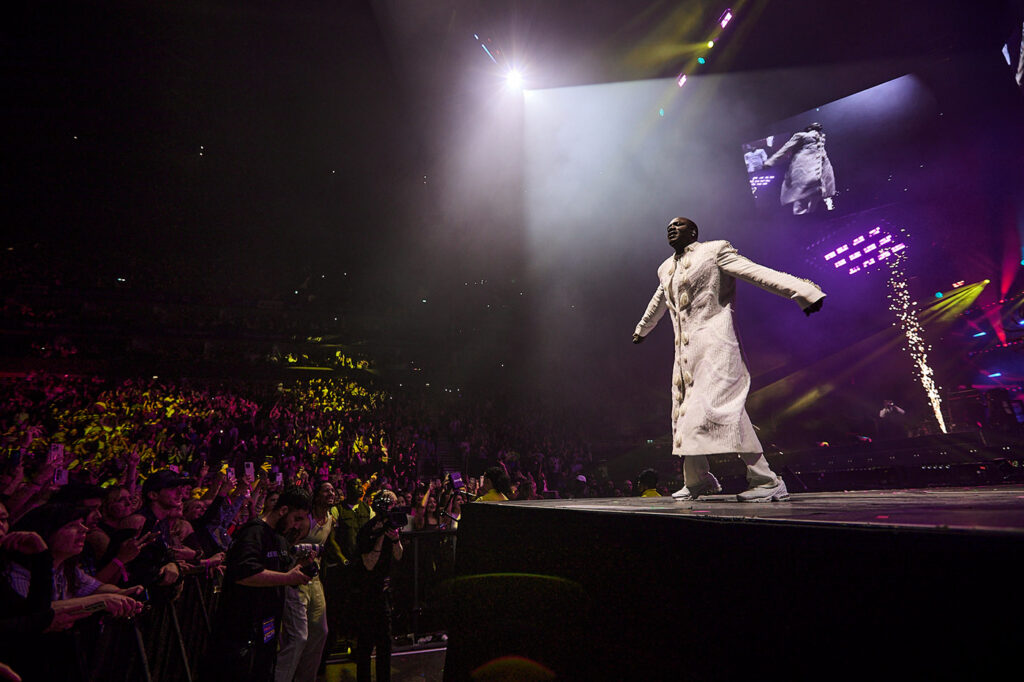
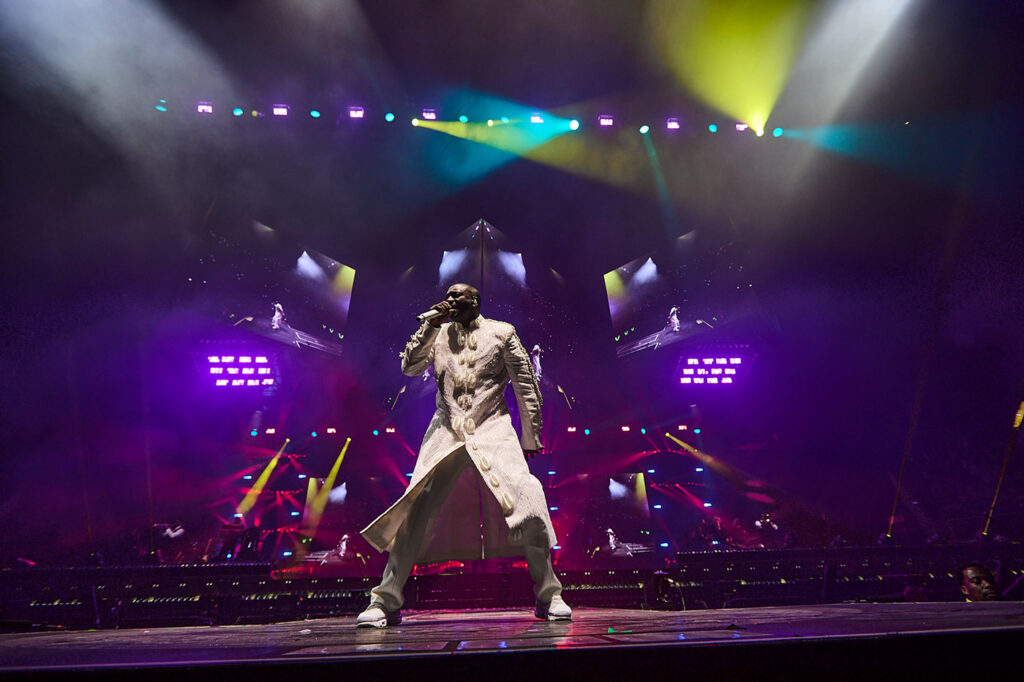
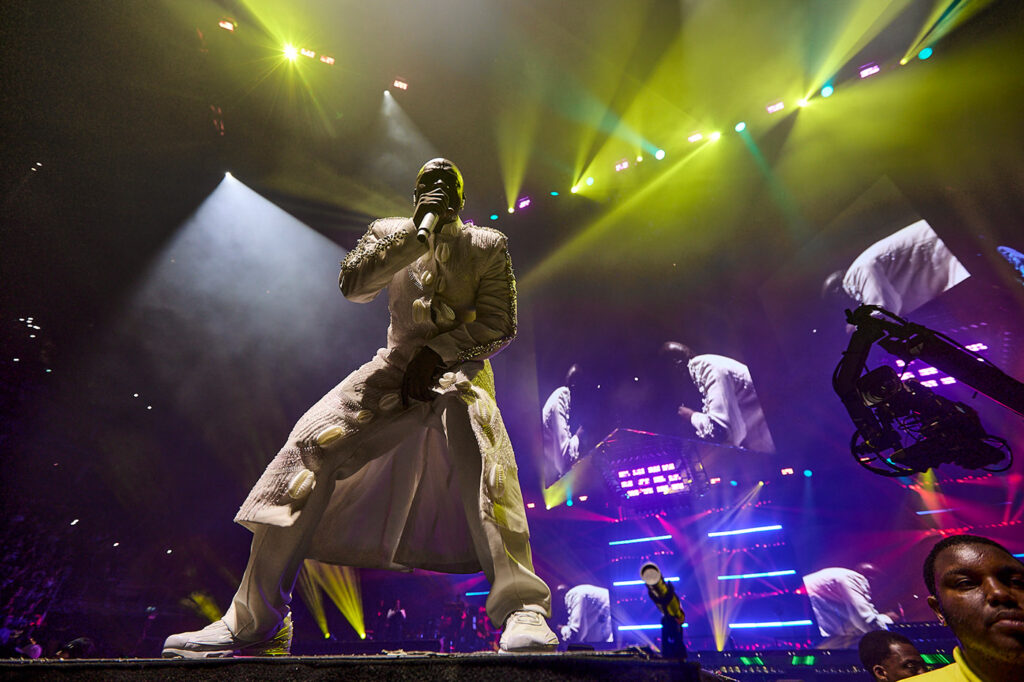
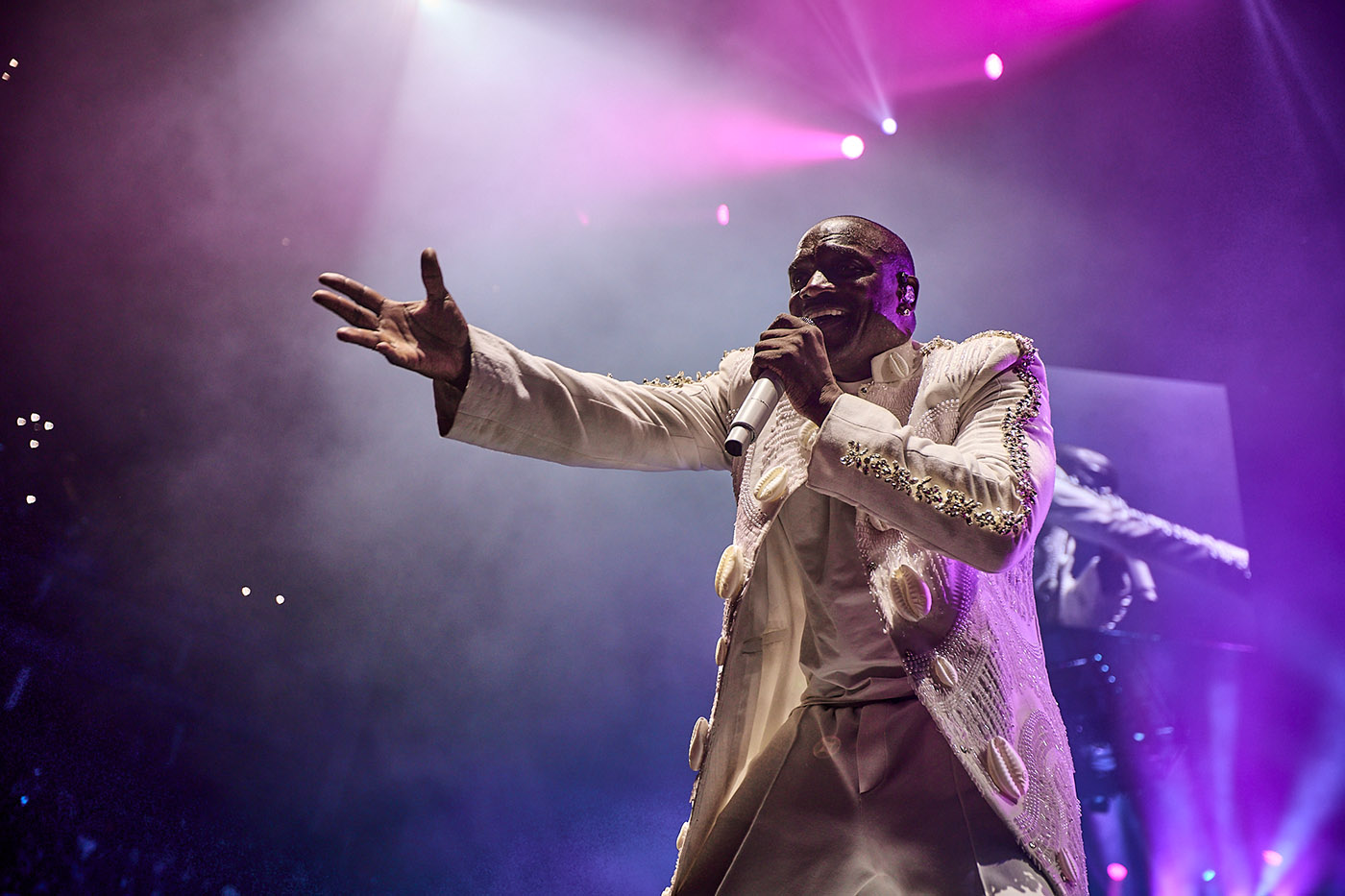
ZOOT: You’ve operated across cultures, industries, and even policy-adjacent spaces. Do you ever feel that artists today are expected to engage more directly with social or political realities — and if so, how do you personally navigate that line?
AKON: One thing I’ve realised is that artists have a much bigger voice than we probably ever expected, and a lot of people don’t want the responsibility that comes with knowing everything you say can spread instantly and be taken seriously by the people looking up to you.
But there are two things I’ve always tried to stay away from — and I learned this through real experience: religion and politics. Stay away from those. Keep it creative, keep it fun, and you should be alright.
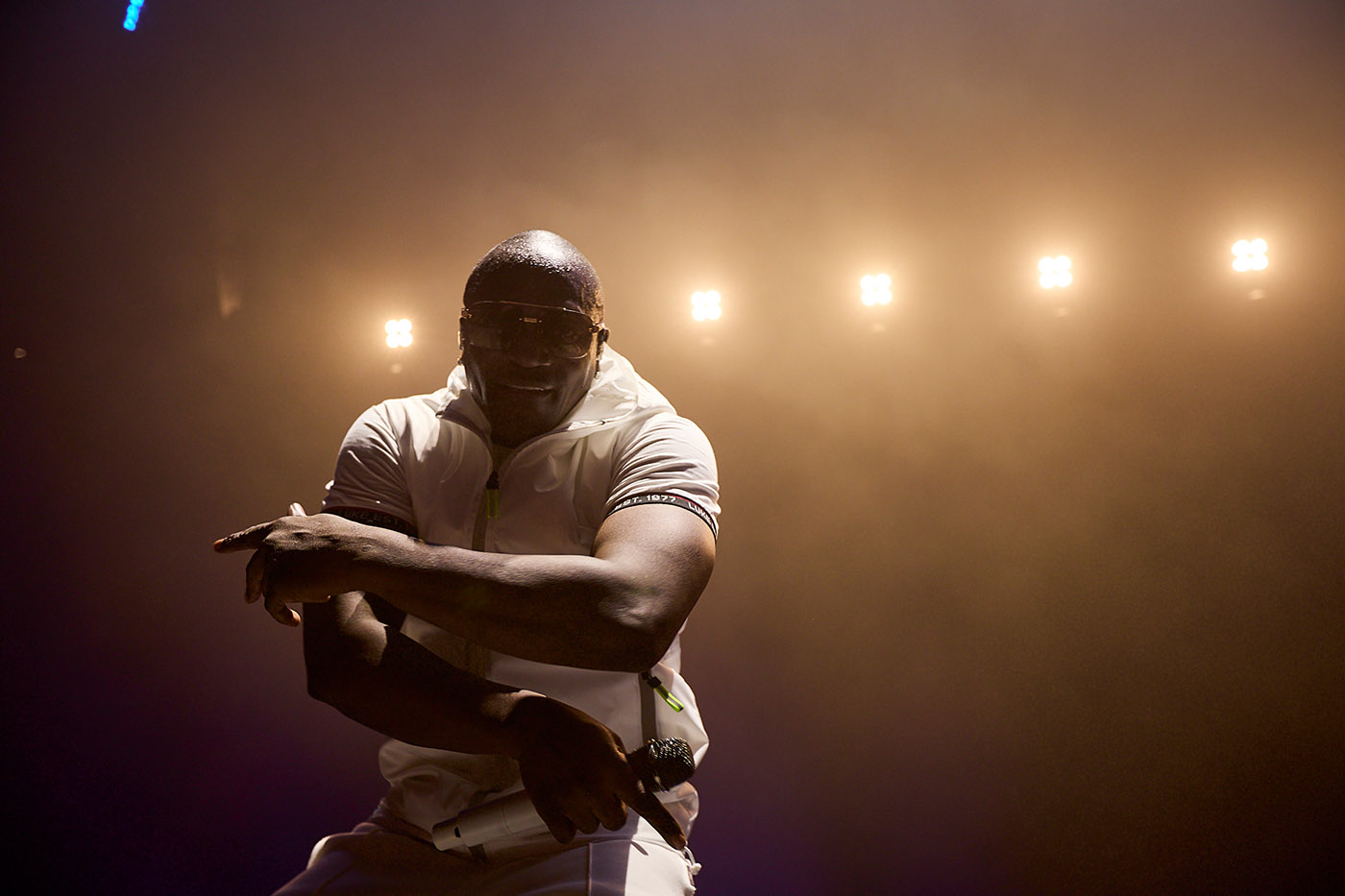

ZOOT: What made you stand out in 2004 — and what do you believe can make you stand out now?
AKON: That’s a question for the audience, to be honest. Me, I’ve always just been myself, stayed true to whatever it is that I do. If that’s a talent, then I’ll call that the reason I stood out — for sure.
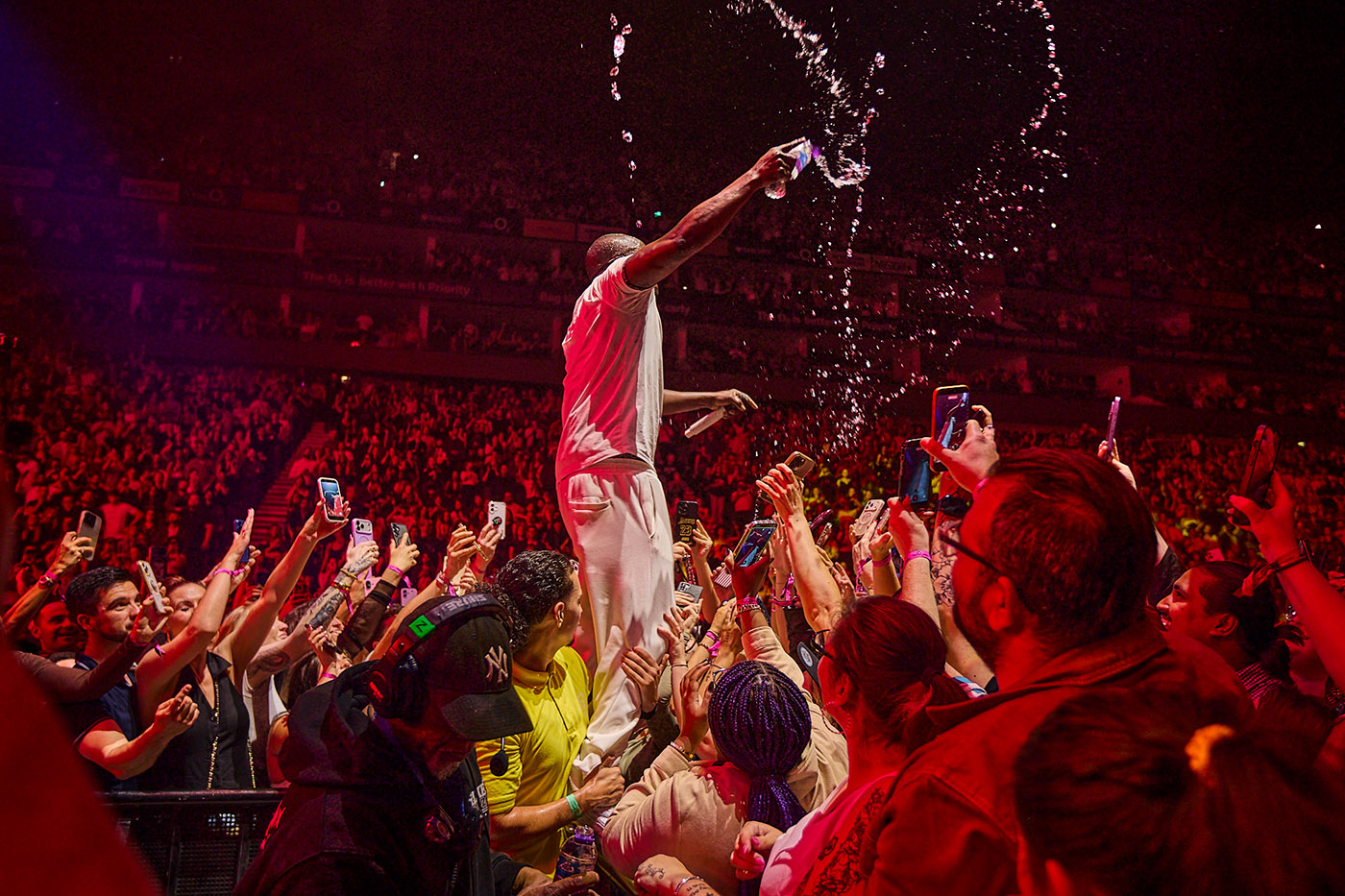
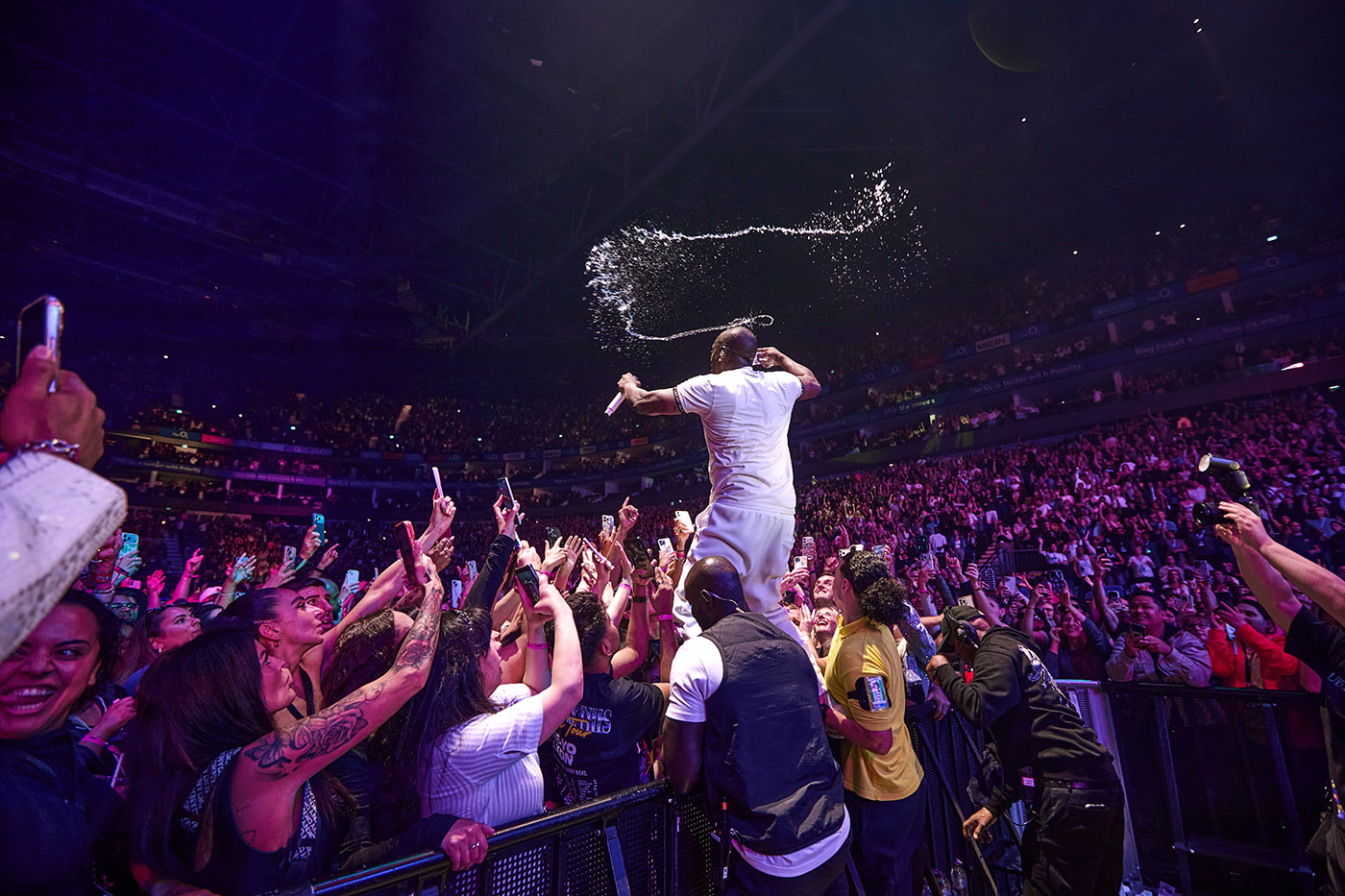
Thank you Akon!
To boot…
AKON
@akon I www.akon.com
Tour Manager: Alan Floyd
PR: Bradley Taylor
@bradleyltaylor I www.bigmachineagency.com
The dance duo: Les twins
Larry & Laurent Bourgeois
@officiallestwins
Larry @lestwinson
Laurent @lestwinsoff
Executive assistant: Eleni Papandreou @eleniolivia
AKON is dressed in custom made pieces
by couturier Ugo Mozie @ugomozie
Designer and founder @elevensixteen
Assisted by 1711 @1711.delivered
FASHION REFERENCES Studio photo shoot
ALEXANDER MCQUEEN @alexandermcqueen
DASHING TWEEDS. @dashingtweeds
GUCCI @gucci
TERESA.KEXUAN.LIU @teresa_kexuanliu
VIDI BLAK @vidi.blak
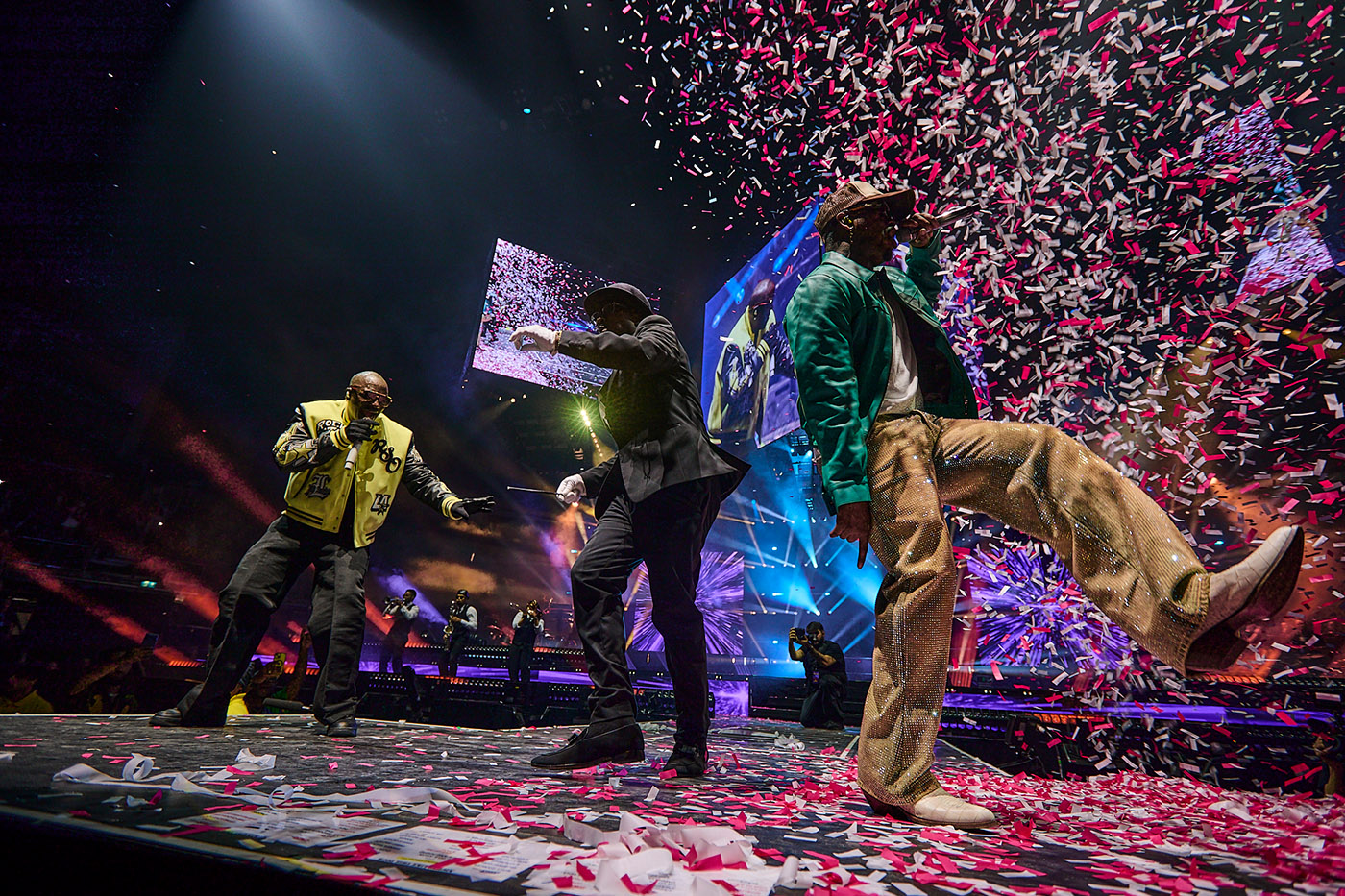
The “Nights Like This” 2026 World Tour
Akon is currently co-headlining the Nights Like This world tour alongside Ne-Yo. Built around a collaborative back-and-forth live format, the arena tour celebrates more than two decades of hits from both artists and spans 57 cities across Europe, Canada and the United States.
Remaining European Dates
* May 26 — Hamburg, Germany — Barclays Arena
* May 27 — Prague, Czech Republic — O2 Arena
* May 28 — Berlin, Germany — Uber Arena
* May 30 — Vienna, Austria — Wiener Stadthalle
* May 31 — Łódź, Poland — Atlas Arena
Canada Dates
From June 17 to June 27, the tour continues across Canada with stops including:
* Vancouver
* Edmonton
* Calgary
* Saskatoon
* Winnipeg
* Montreal
* Hamilton
U.S. Tour Highlights — August 2026
Following the Canadian leg, Akon resumes the U.S. run in August, with the final stretch focusing on the Northeast, Midwest and West Coast before concluding in California.
Selected dates include:
* Aug 1 — Syracuse, NY — Empower FCU Amphitheater
* Aug 2 — Burgettstown, PA — The Pavilion at Star Lake
* Aug 5 — Shakopee, MN — Mystic Lake Amphitheater
* Aug 8 — Dallas, TX — Dos Equis Pavilion
* Aug 11 — Austin, TX — Moody Center ATX
* Aug 15 — Phoenix, AZ — Talking Stick Resort Amphitheatre
* Aug 16 — Albuquerque, NM — Isleta Amphitheater
* Aug 21 — Inglewood, CA — Intuit Dome (Tour Finale)
For the complete schedule and ticket information, visit Akon Official Website.