Behind the Runway: Beauty, Craft and Creative Vision at the Fashion District London Showcase
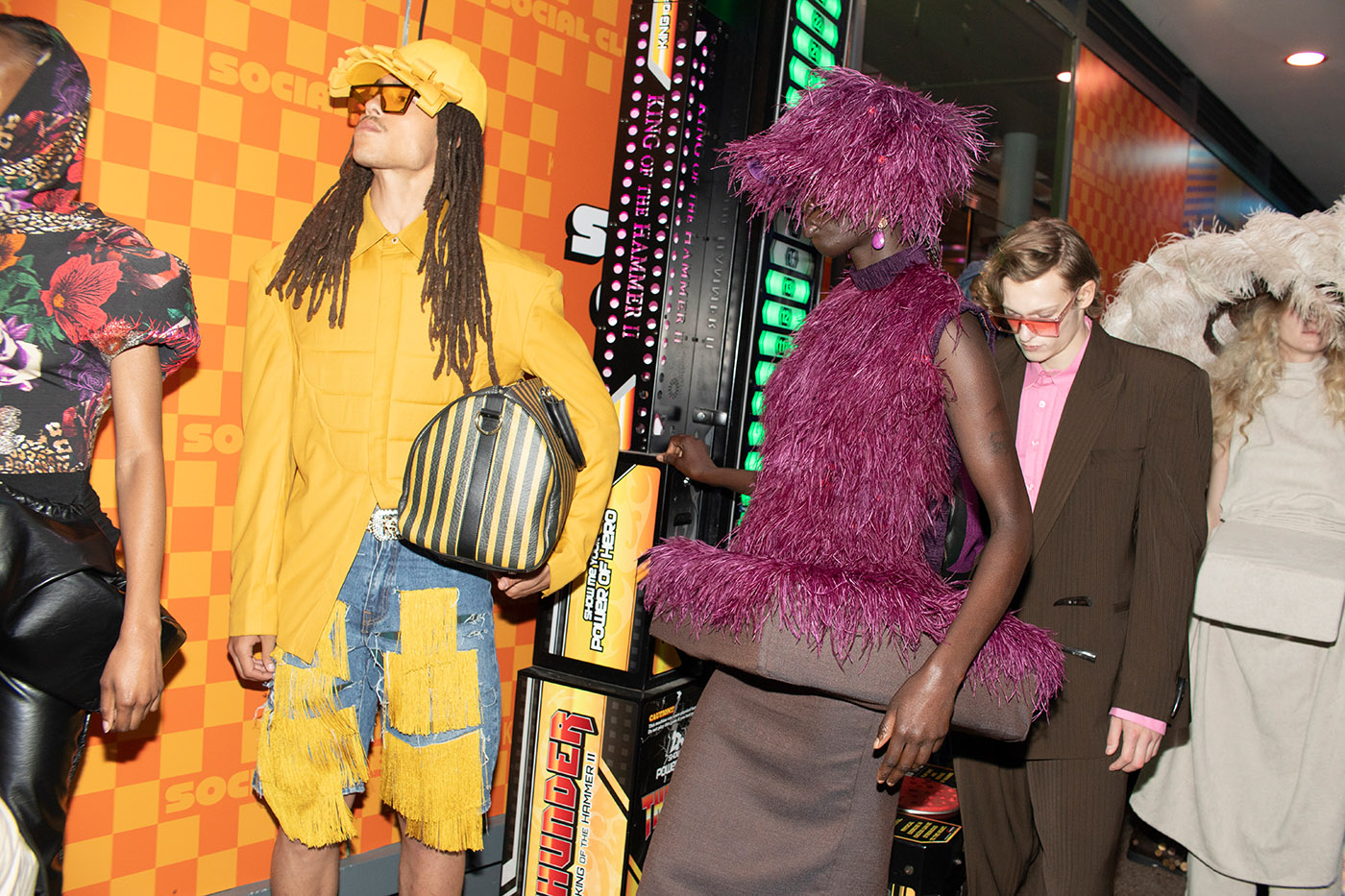
Makeup & Hair Designer Astrid Kearney takes us backstage at The Fashion District Live Performance Showcase in London. Leading the makeup and hair team across all six collections, Astrid translated each designer’s vision into a distinct beauty identity under the creative direction of Kim Howells.
Article Astrid Kearney
Featured designers
Barbara Hornok, Cătălina Negara, Dede Arisekola, Min-Ji Kim, Matthew David Andrews with Milliner Jenny Beattie, Ksenia Schnaider
Venue Fashion district London
Creative Director Kim Howells
Assisted by Lara Jones
Makeup/Hair Designer Astrid Kearney using Weleda & Ardell
Hair Lead Harry Andreou using Davinees UK & K18
Backstage Photography Tyler Matthias
Catwalk Detail Photography Olu Ogunshakin
Backstage team photography Astrid Kearney
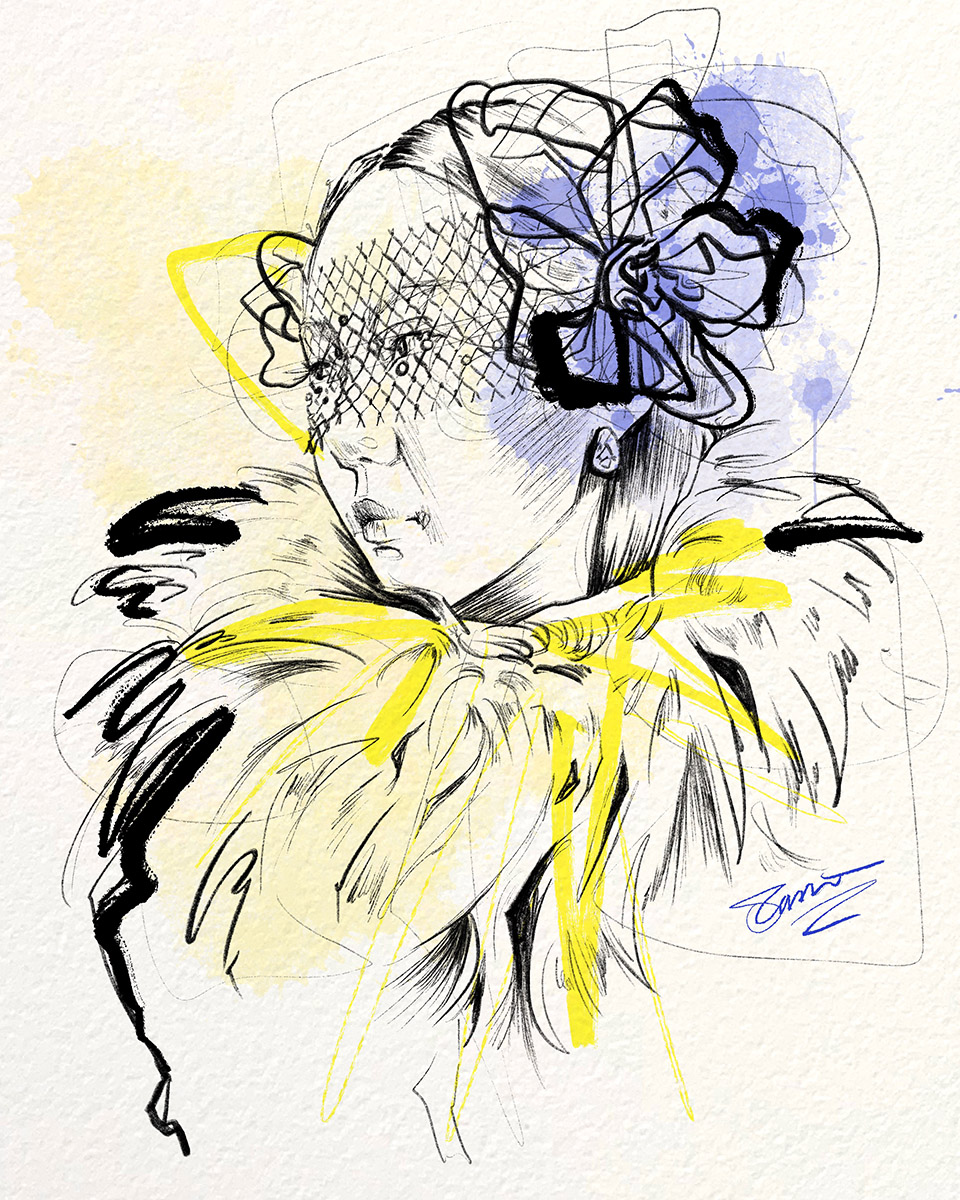
Illustrations Anna Huang & Olivia Tarr from Drawing Cabaret Couture.
Founded with support from London College of Fashion and the Mayor of London, the Fashion District network champions emerging talent, sustainability and fashion technology.
The Fashion District creates a unique opportunity to showcase designers’ work by combining the physical and digital simultaneously. Designers are invited to collaborate and create a bespoke digital character, reinforcing their brand identity and storytelling. One of my favourite parts of my job is working with emerging designers who are creating their own movements. Creatively directing this space is incredibly enjoyable and rewarding.
Kim Howells, Creative DirectoR
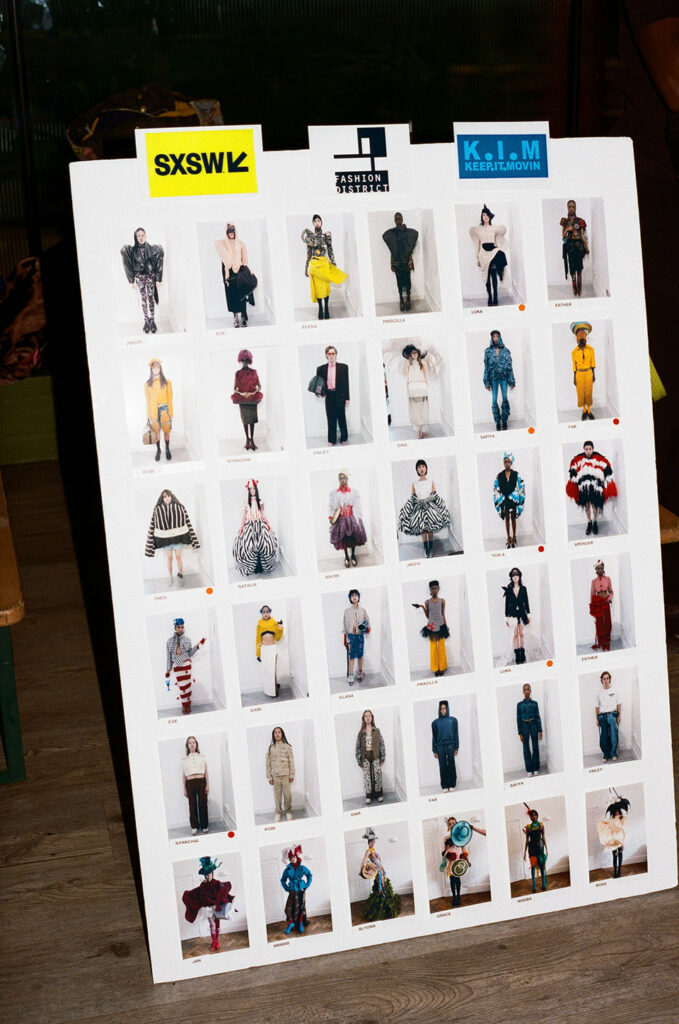
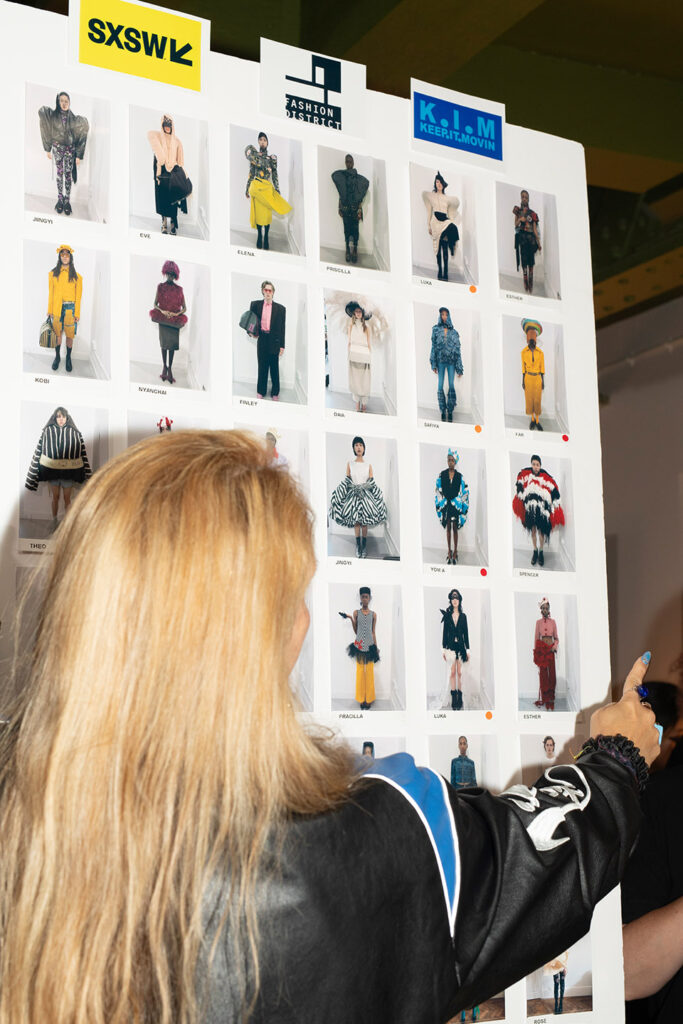
The Live Performance Showcase at Spitalfields Market, curated in partnership with SXSW London, brought six designers together to explore new models of sustainability, production and digital interaction.
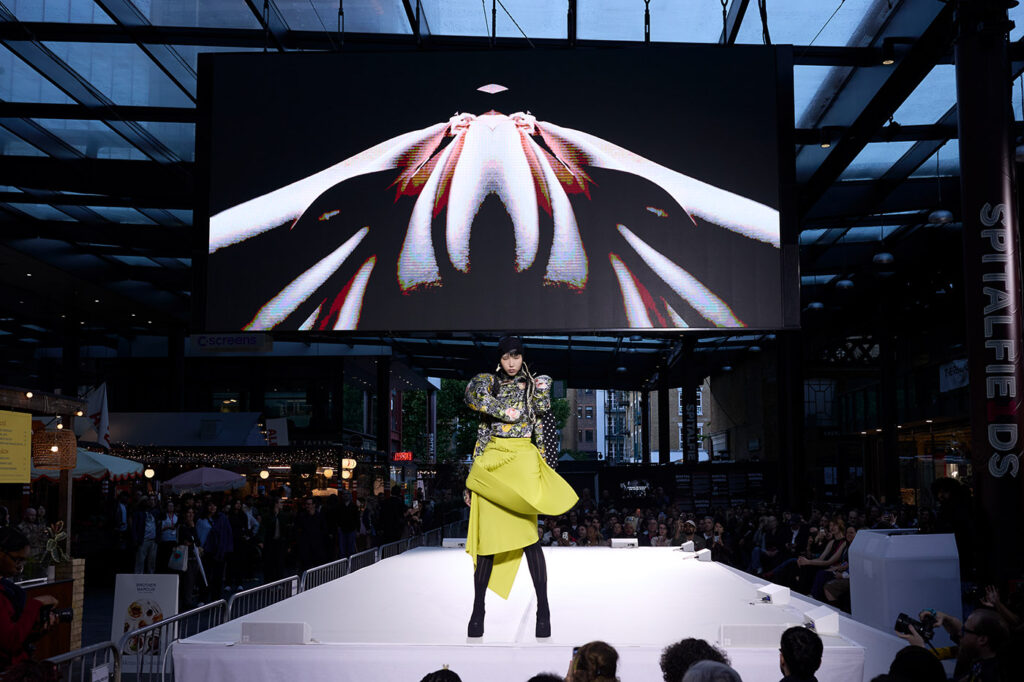
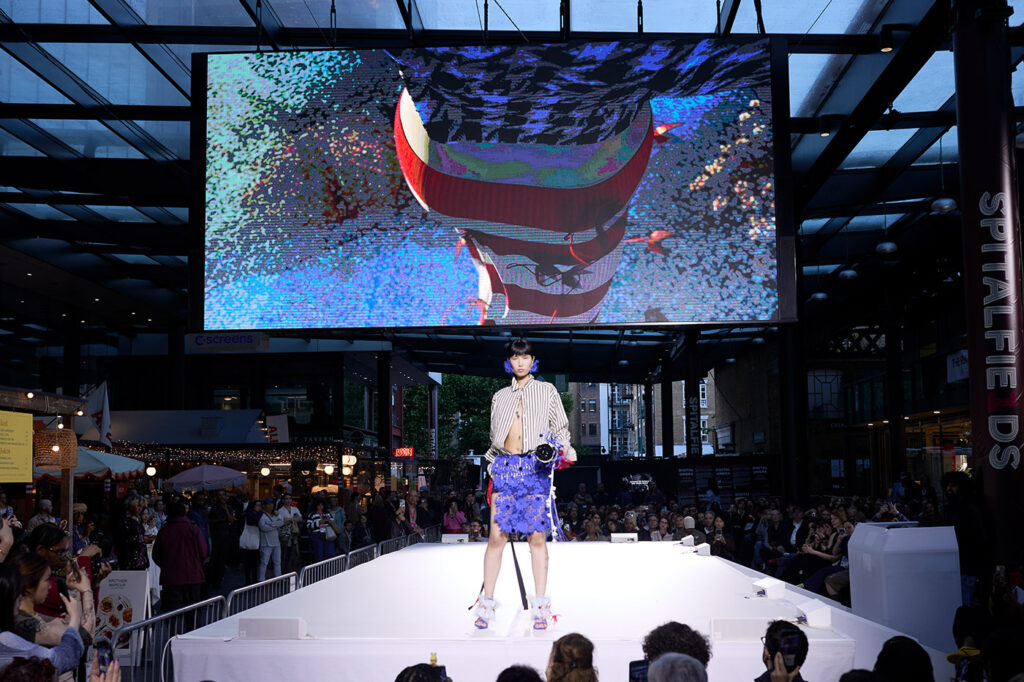
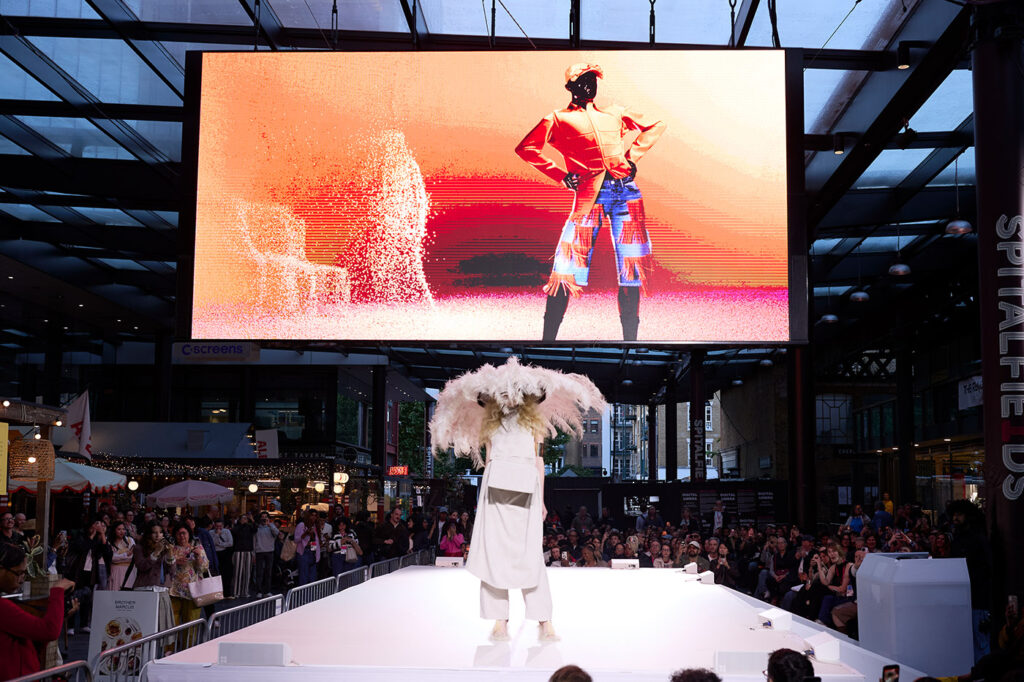
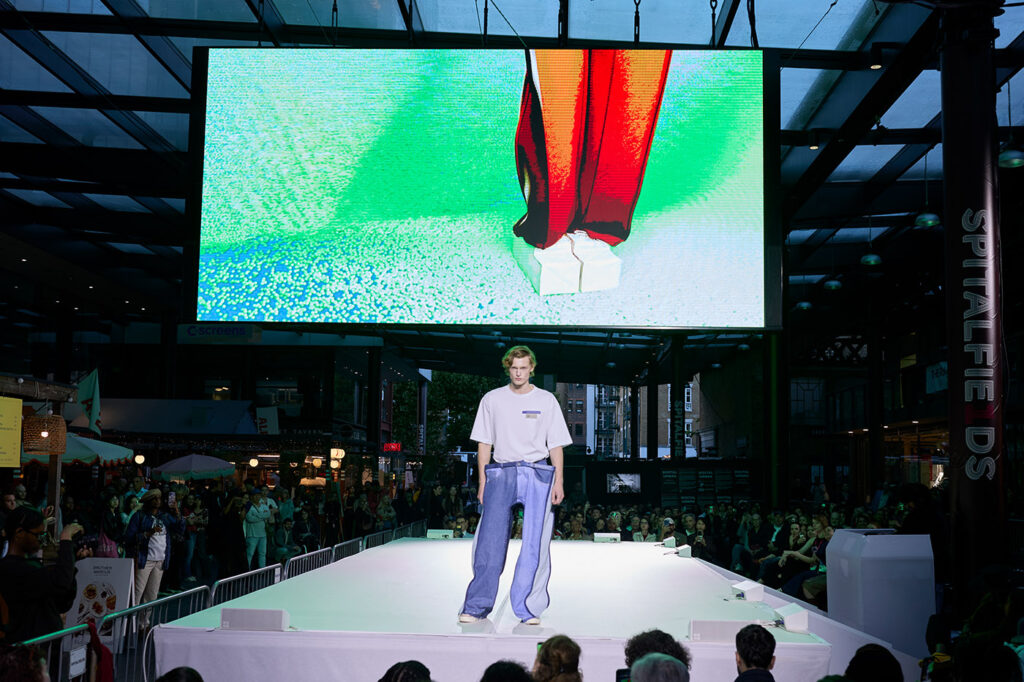
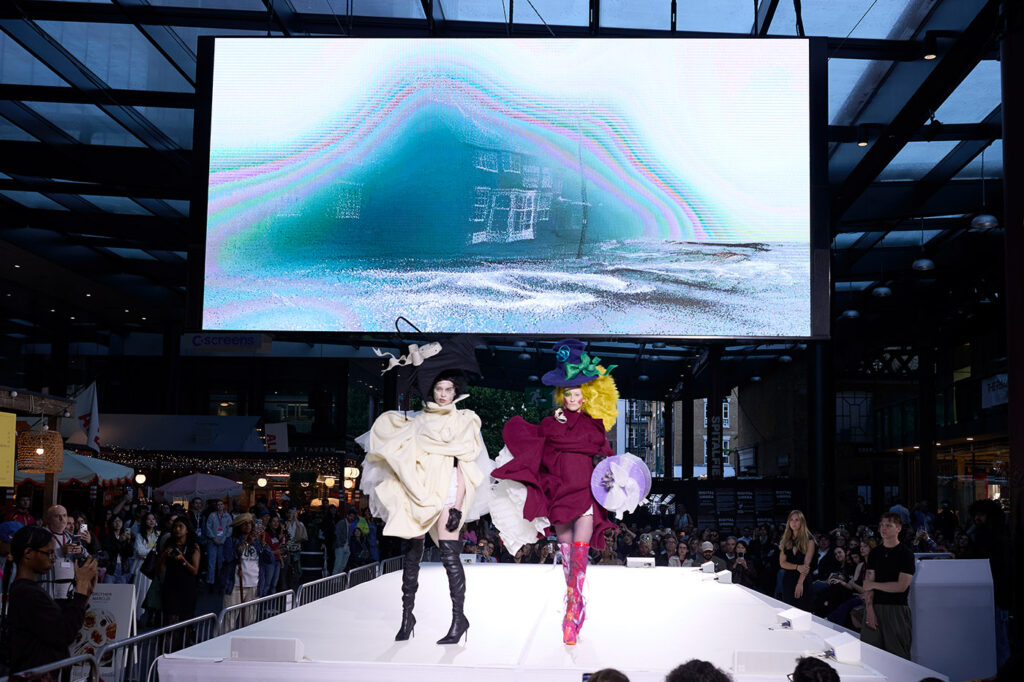
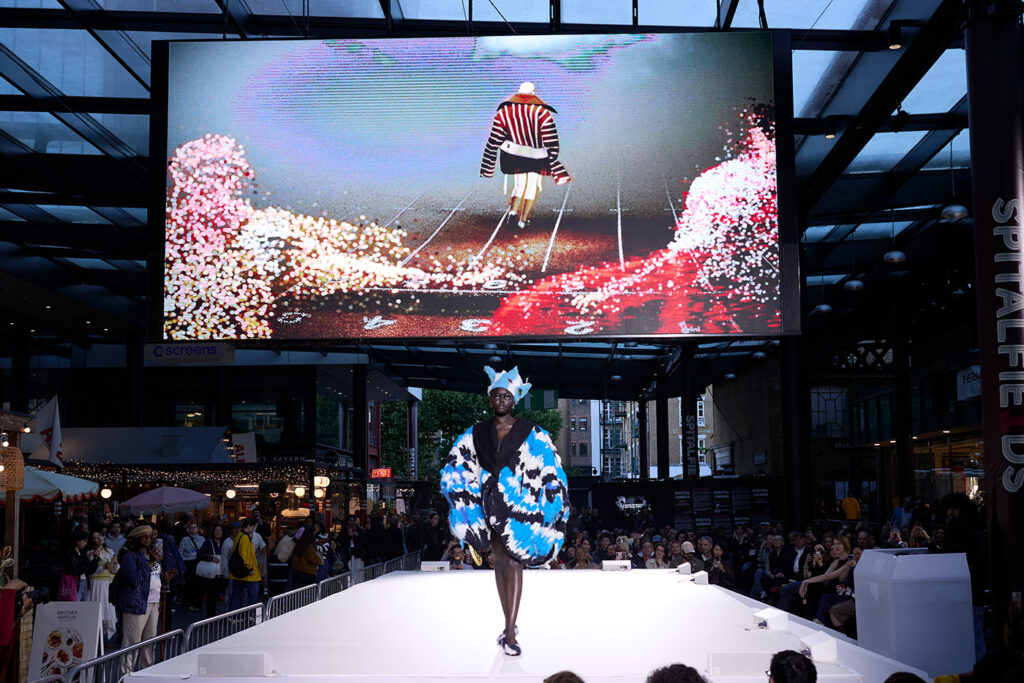
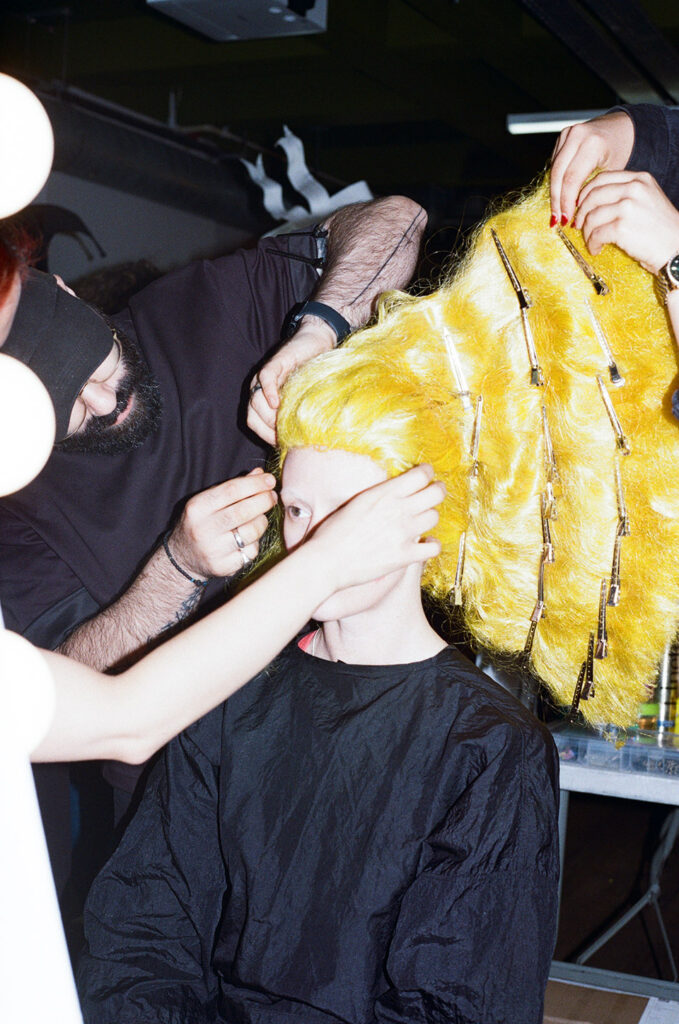
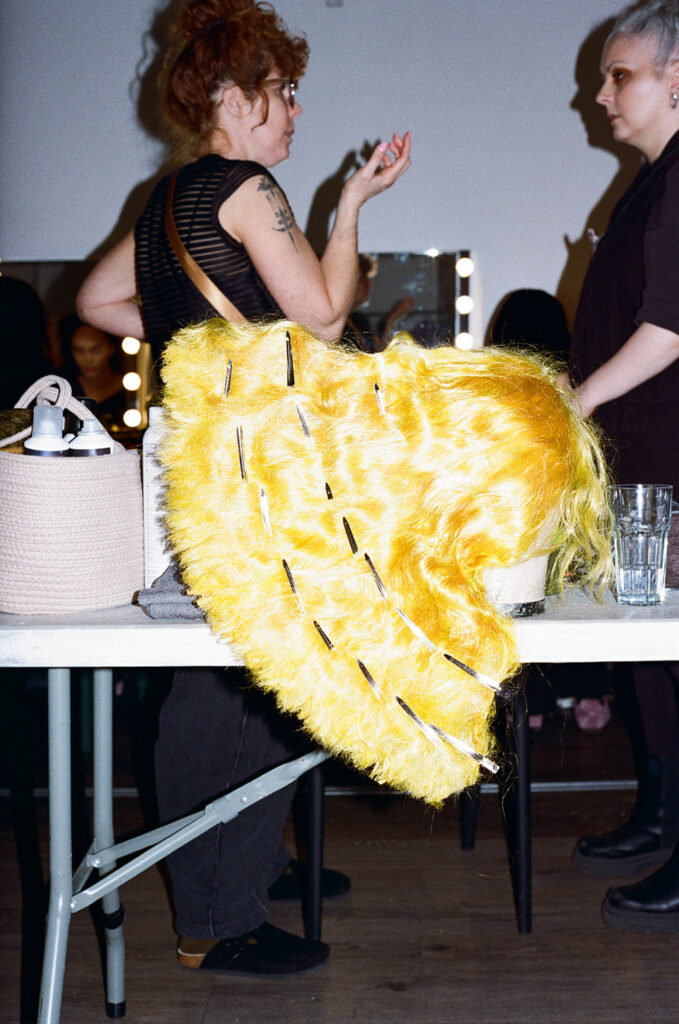
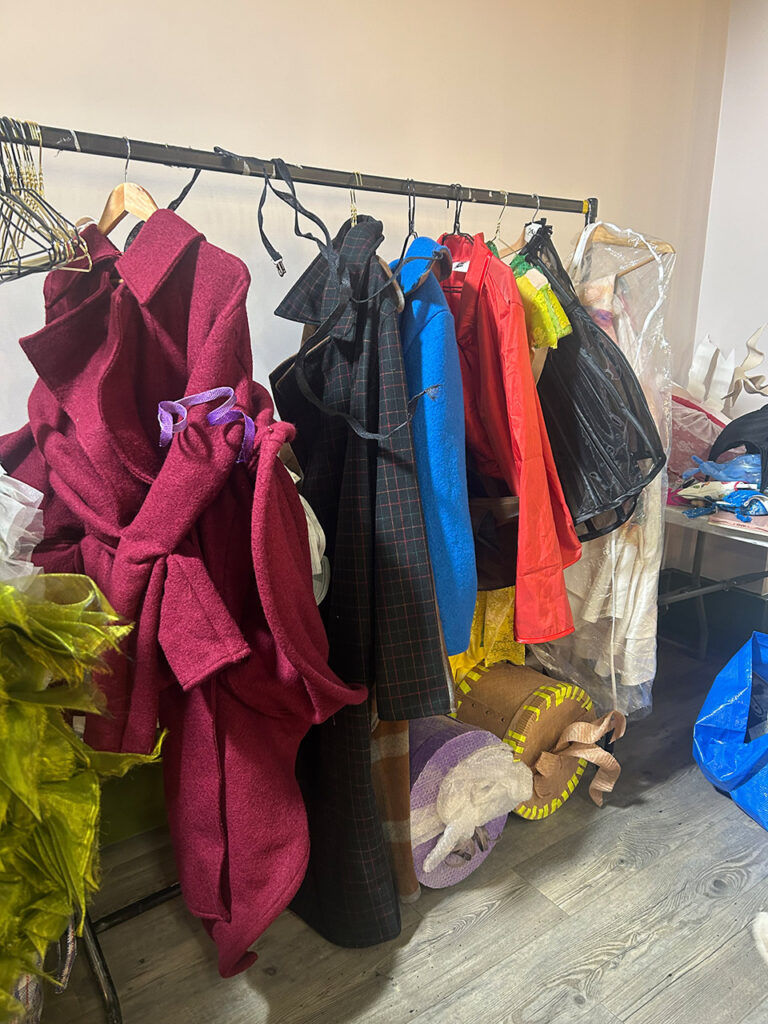
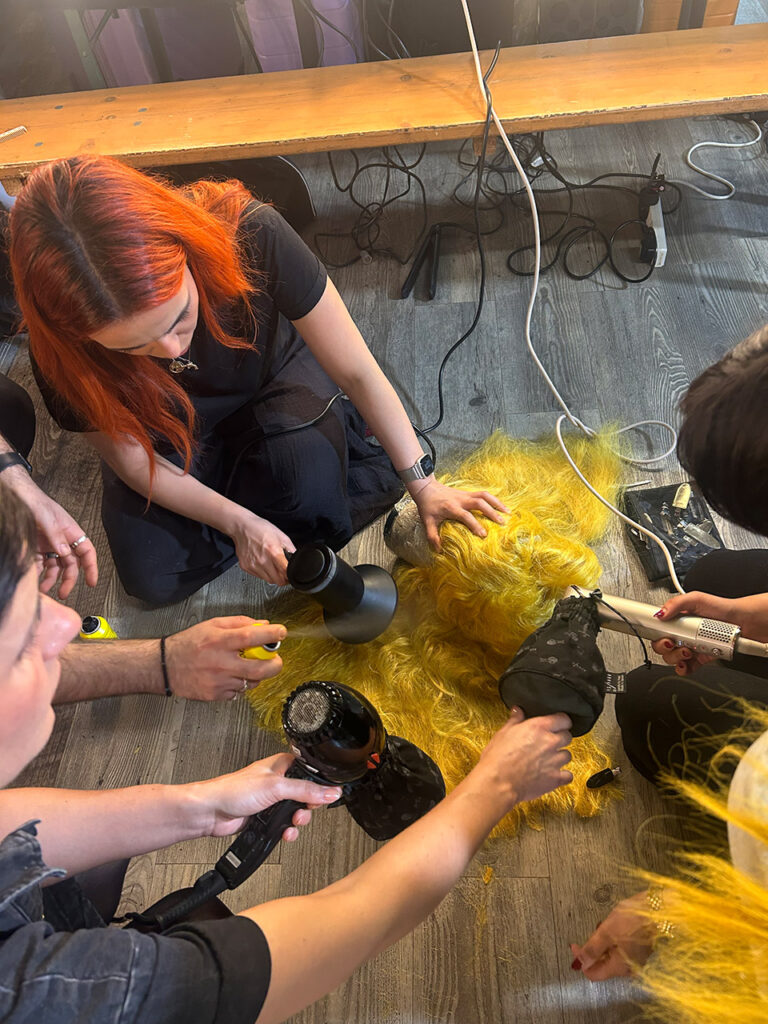
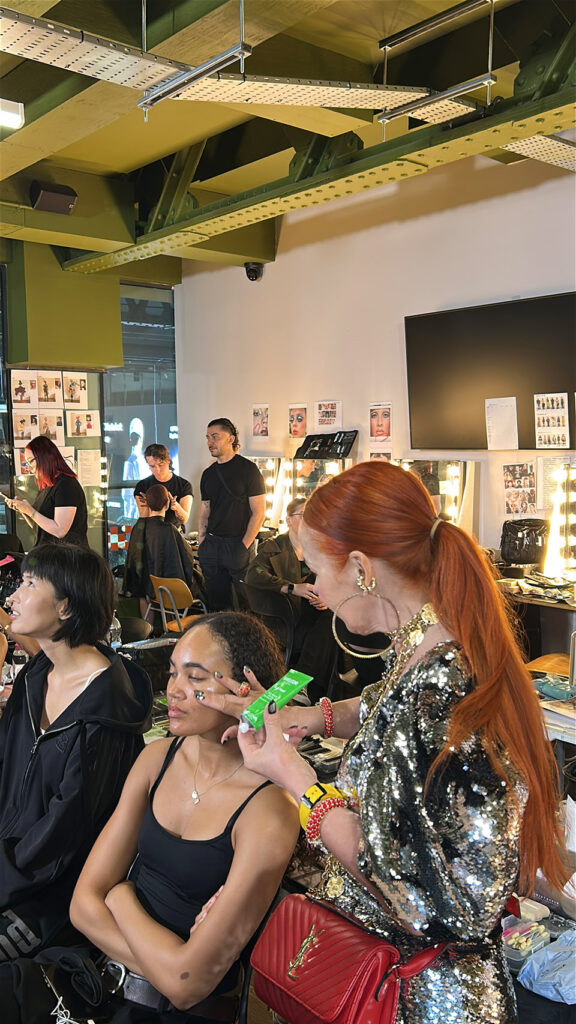
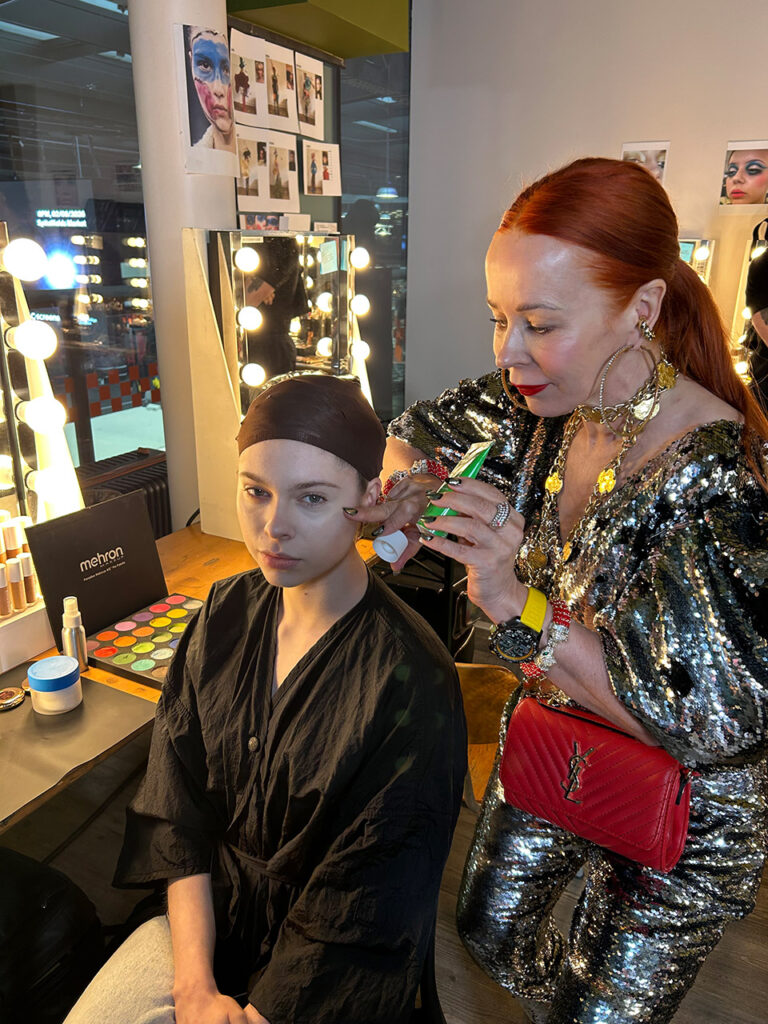
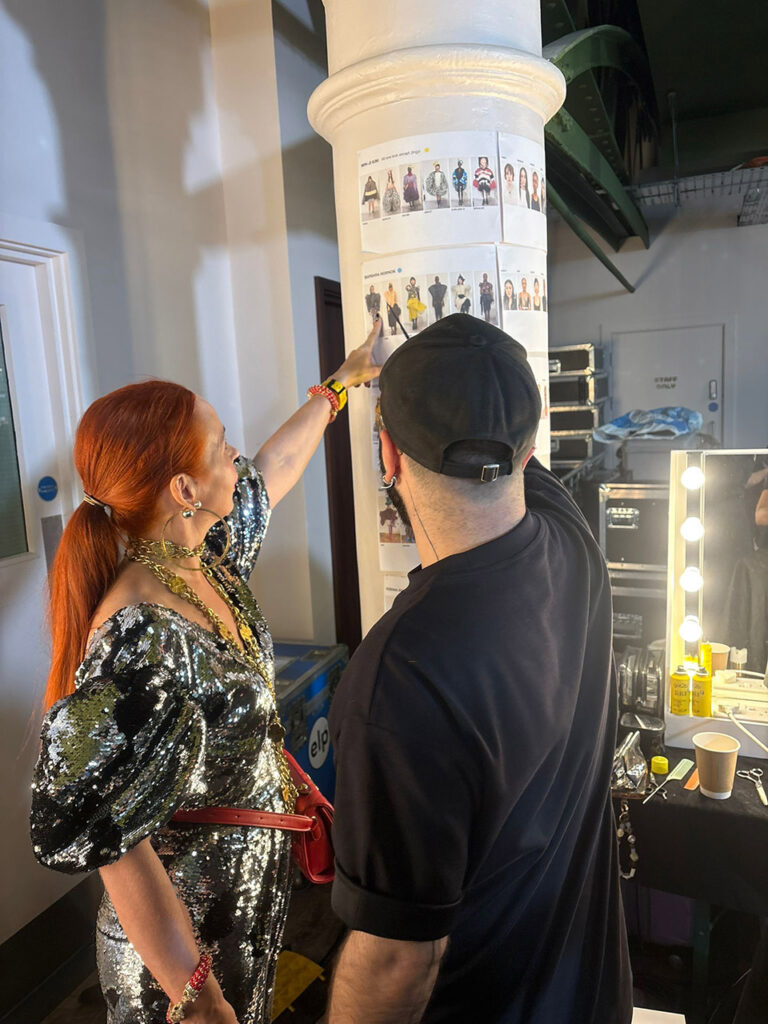
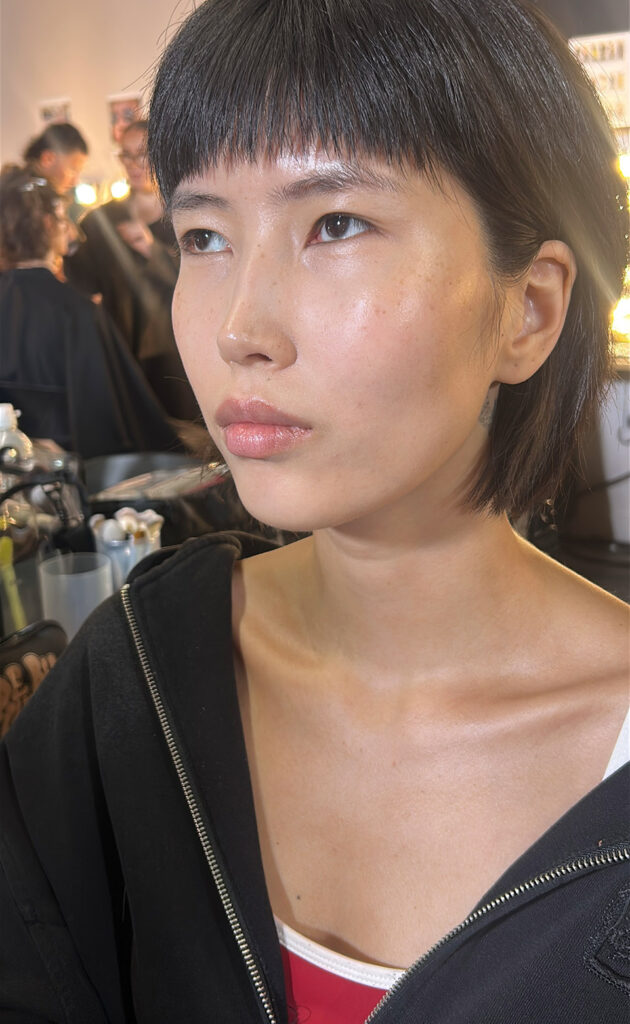
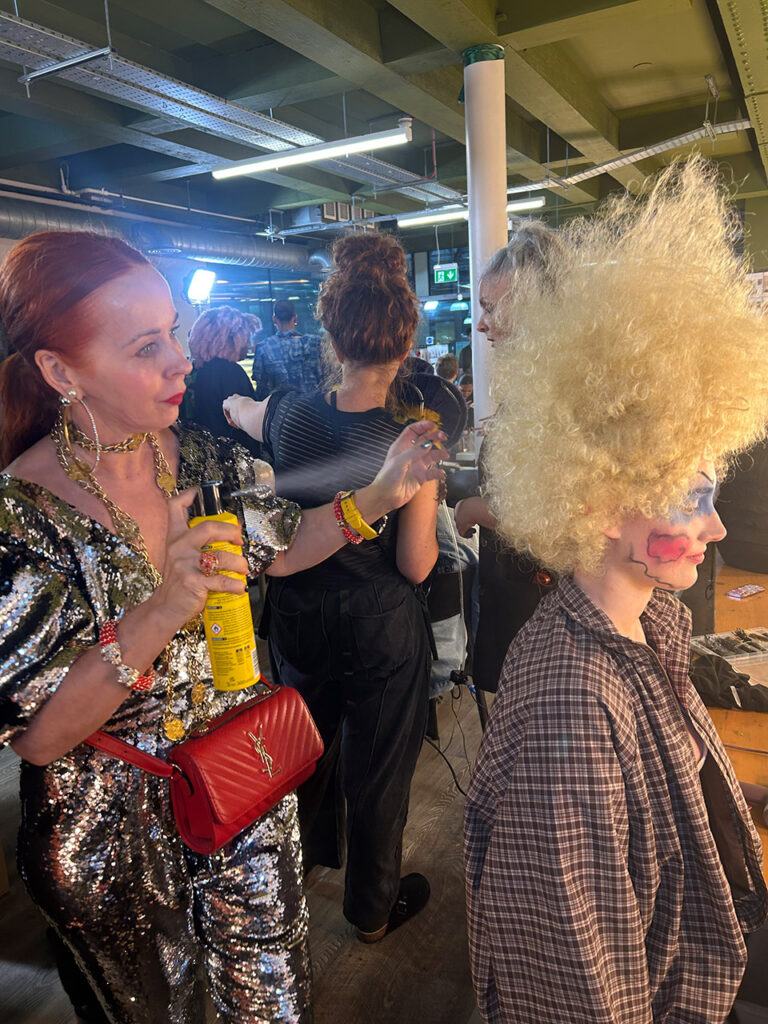
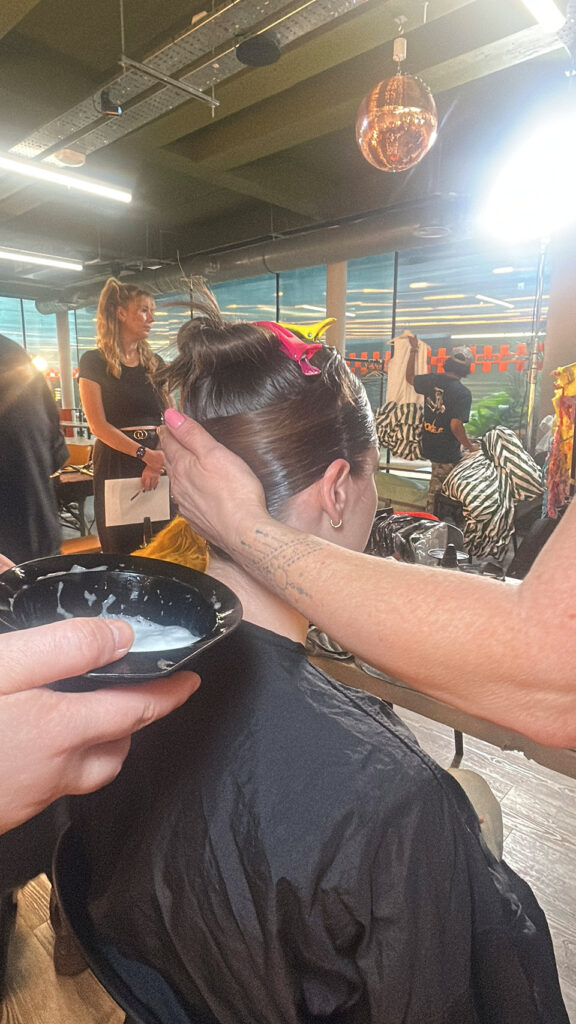
As Makeup and Hair Designer, I led twenty-three artists across all six collections — translating each designer’s world into a distinct beauty identity under the creative direction of Kim Howells. The wigs were part of that vision from the beginning: designed, made and shaped by my hands, each one built to live inside its designer’s narrative as precisely as any garment on the rail. When a last-minute request arrived for a large yellow wig, it was hand-dyed in turmeric ahead of the show and brought to life on the morning by lead hair stylist Harry and the team, who gave everything to make it land. Weleda provided the skincare foundation throughout; Ardell Lashes completed the kit.

Barbara Hornok
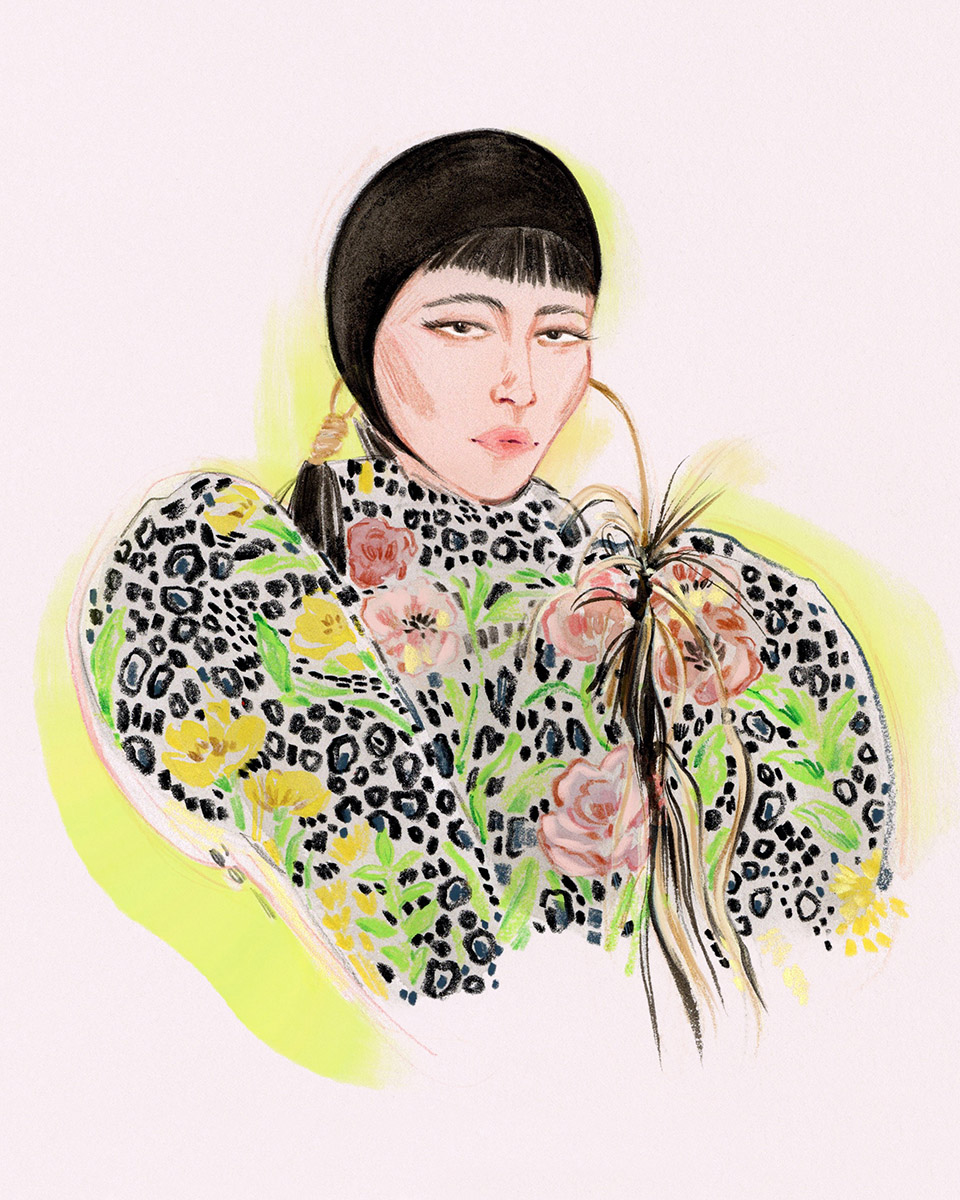
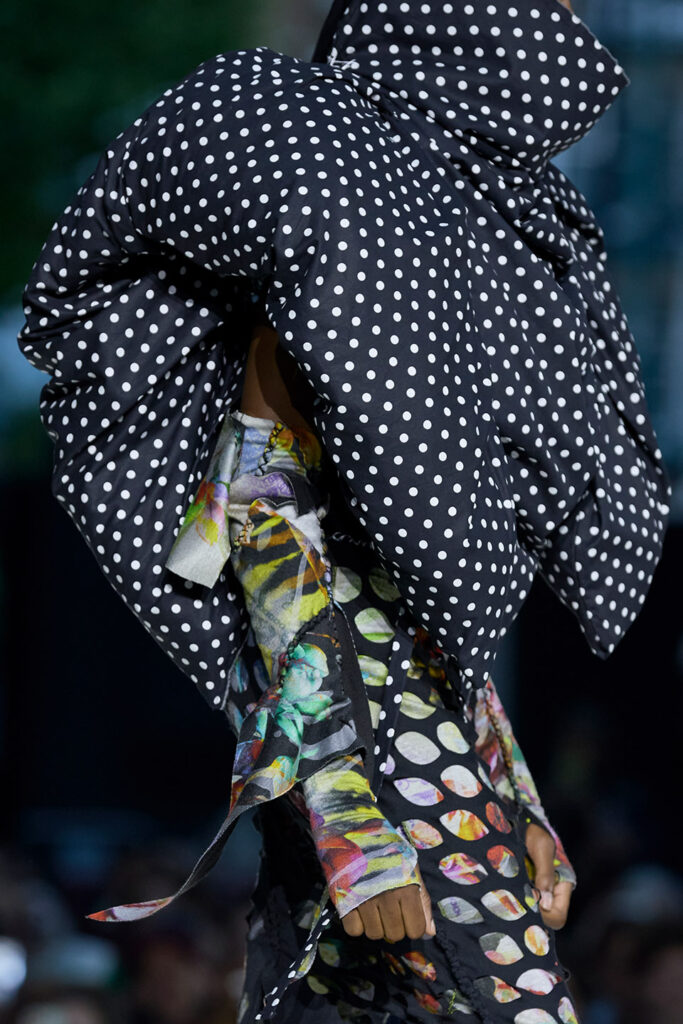
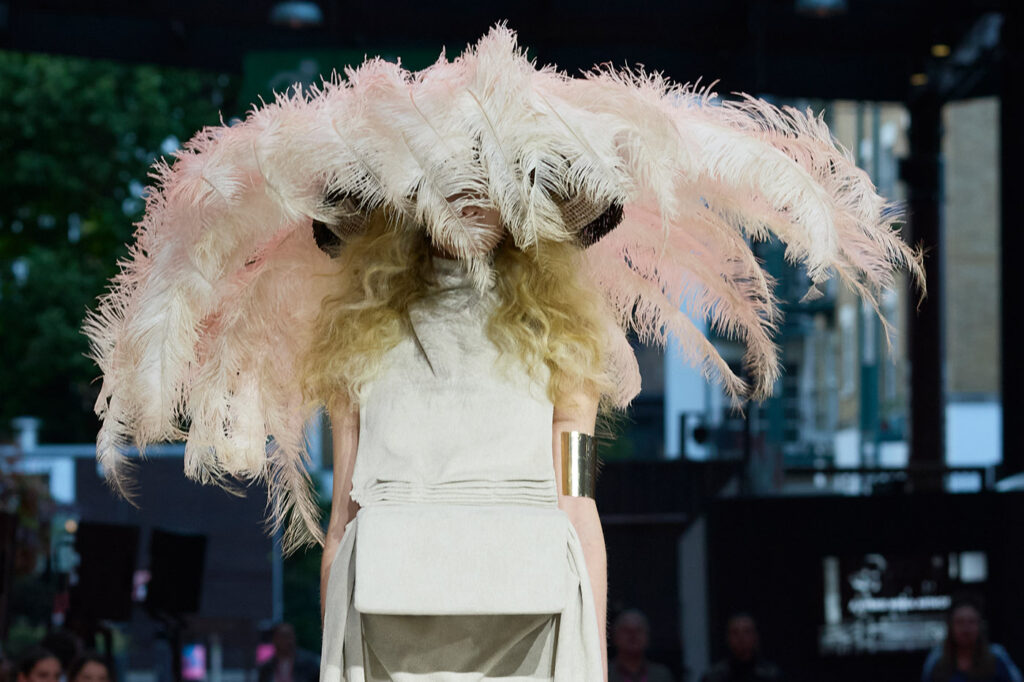
The show opened with Hornok’s oversized, sculptural forms — pieces crafted from foam, recycled textiles, furniture manufacturing offcuts and biodegradable wadding, alongside fabrics kept by her own family. Thick fabric pads wound over shoulders and sides with quiet architectural authority: garments that occupied space, that insisted on being seen.
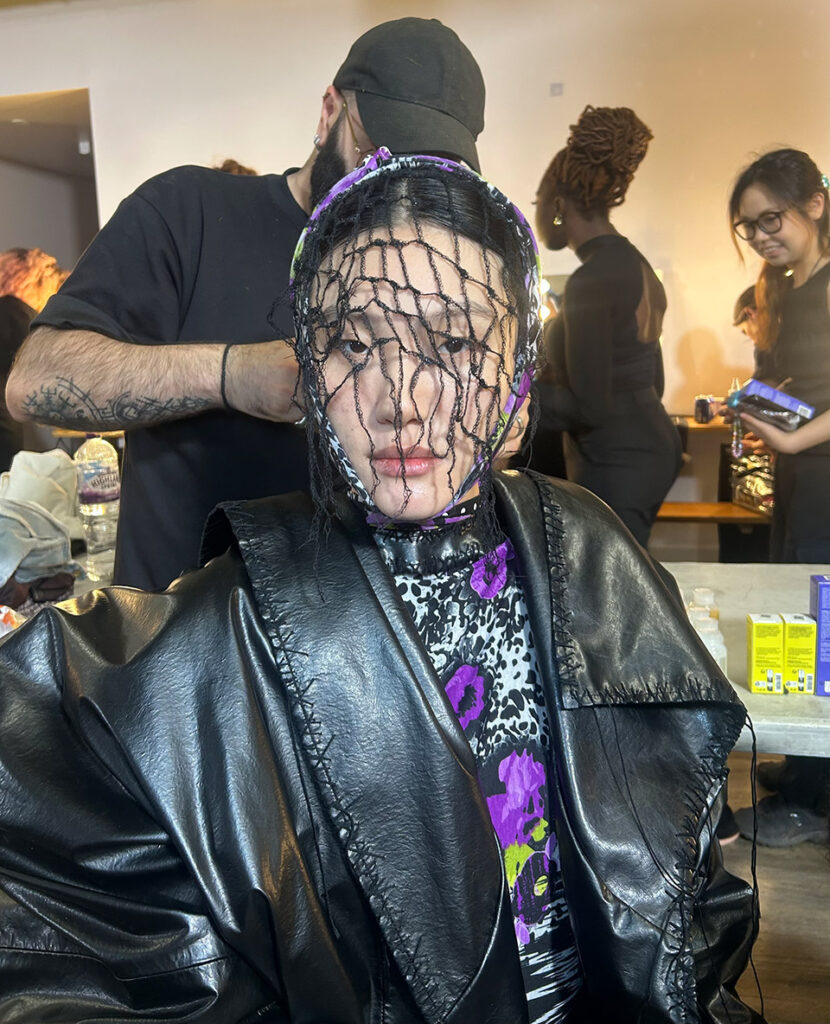
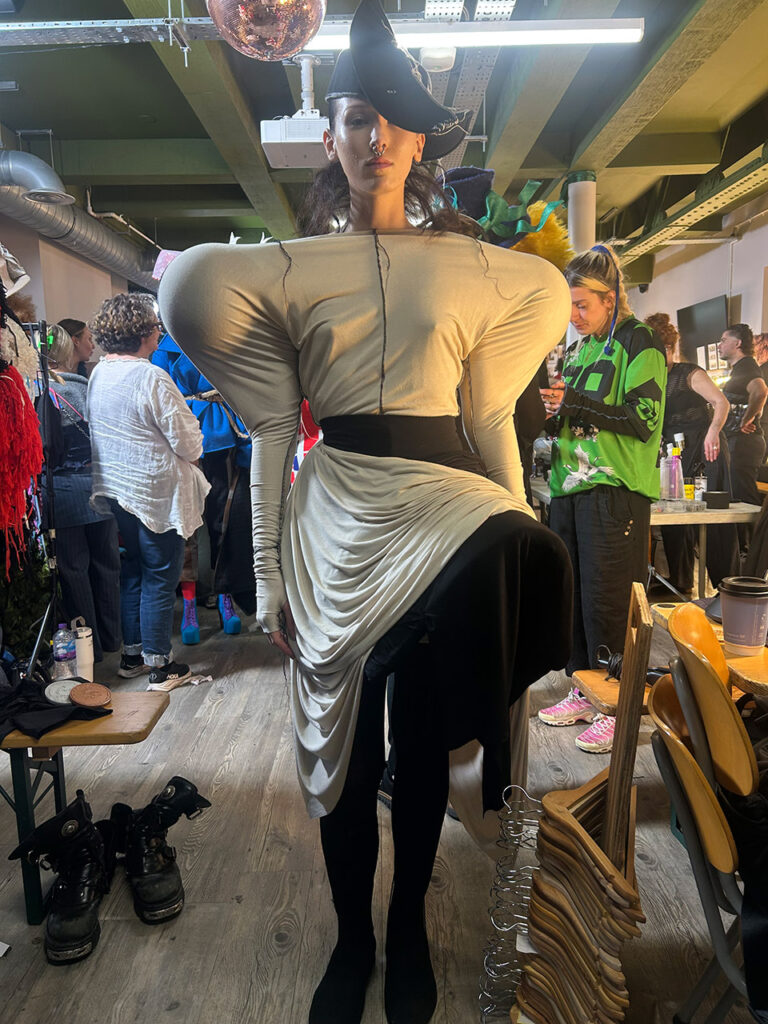
At the heart of the collection is the Hungarian Women’s Carnival — a rare rural tradition in which women inverted village power structures for a day, wearing disguises improvised from domestic materials. Hornok carries that spirit directly into her work, recontextualising the stereotypes faced by women from post-communist countries into something elevated, constructed and entirely on their own terms.
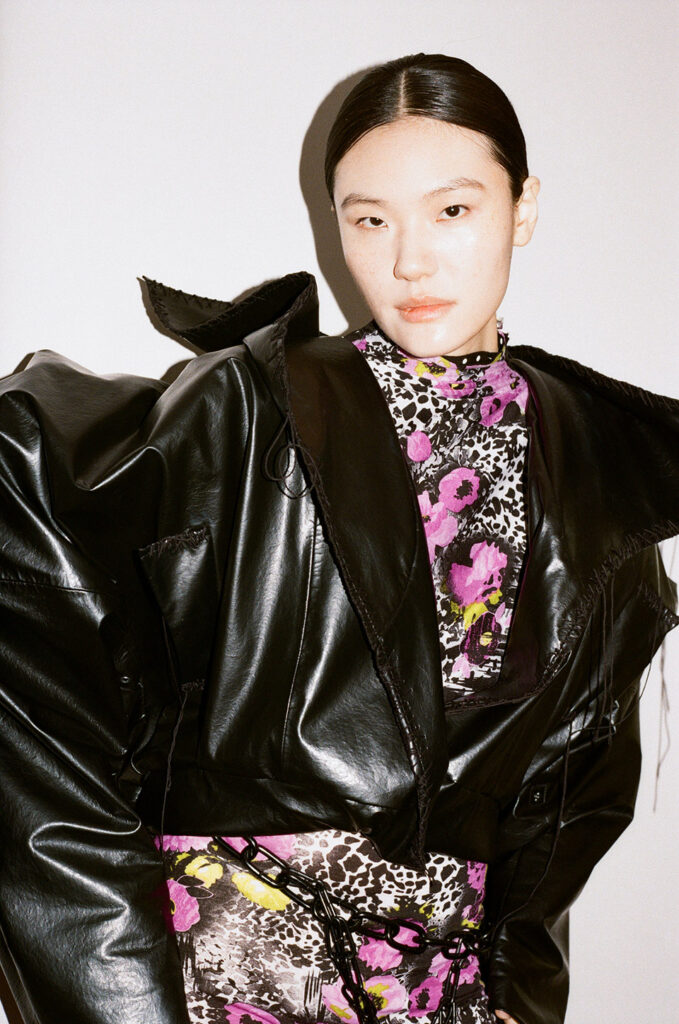
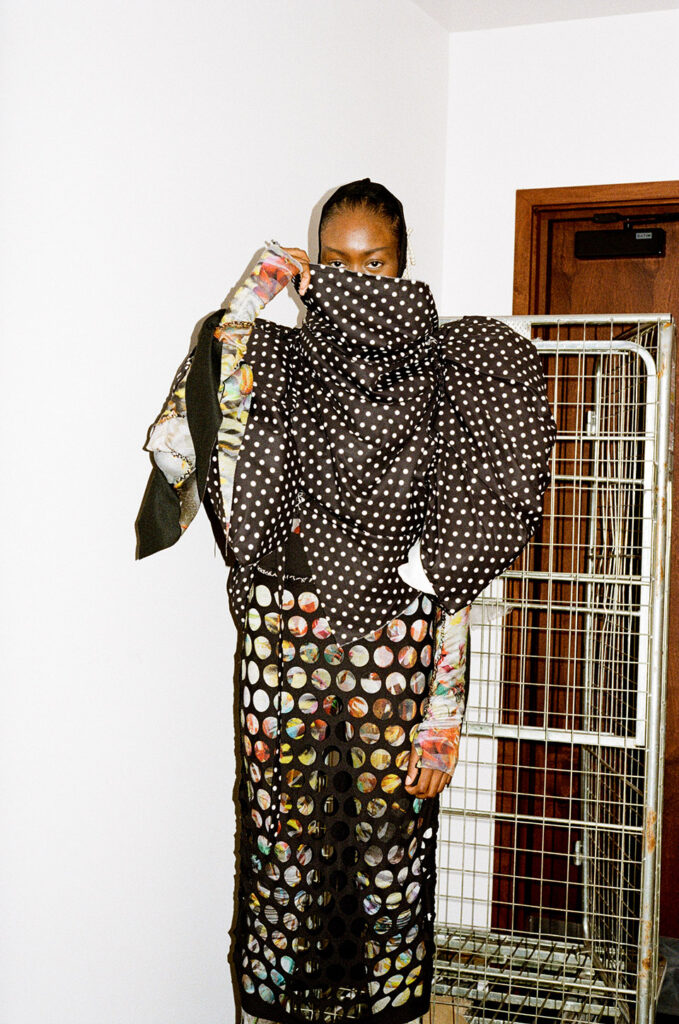
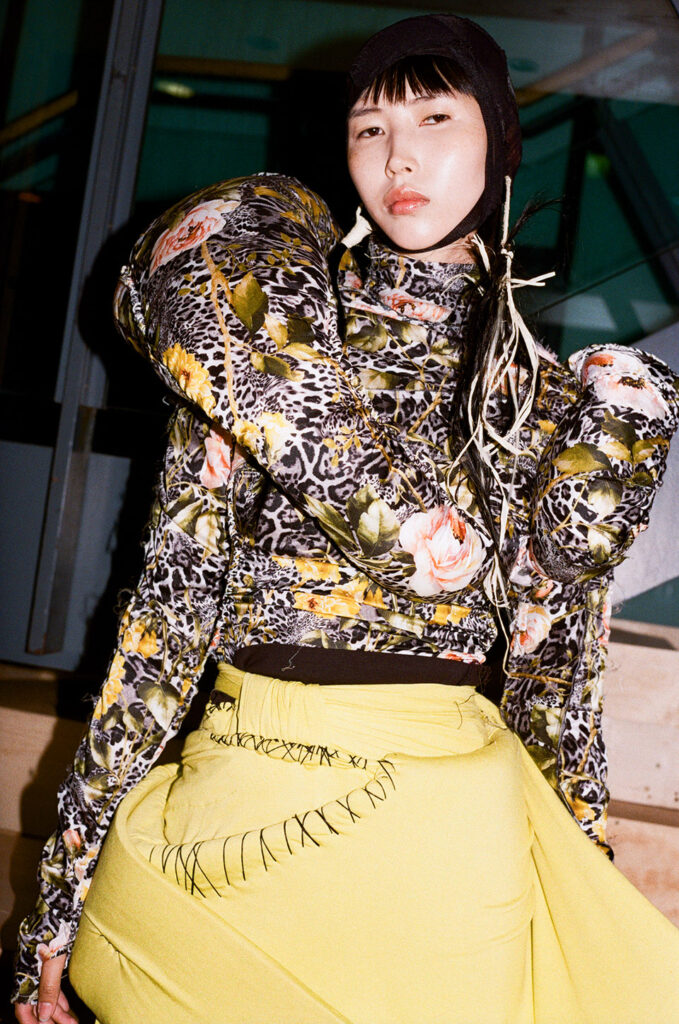
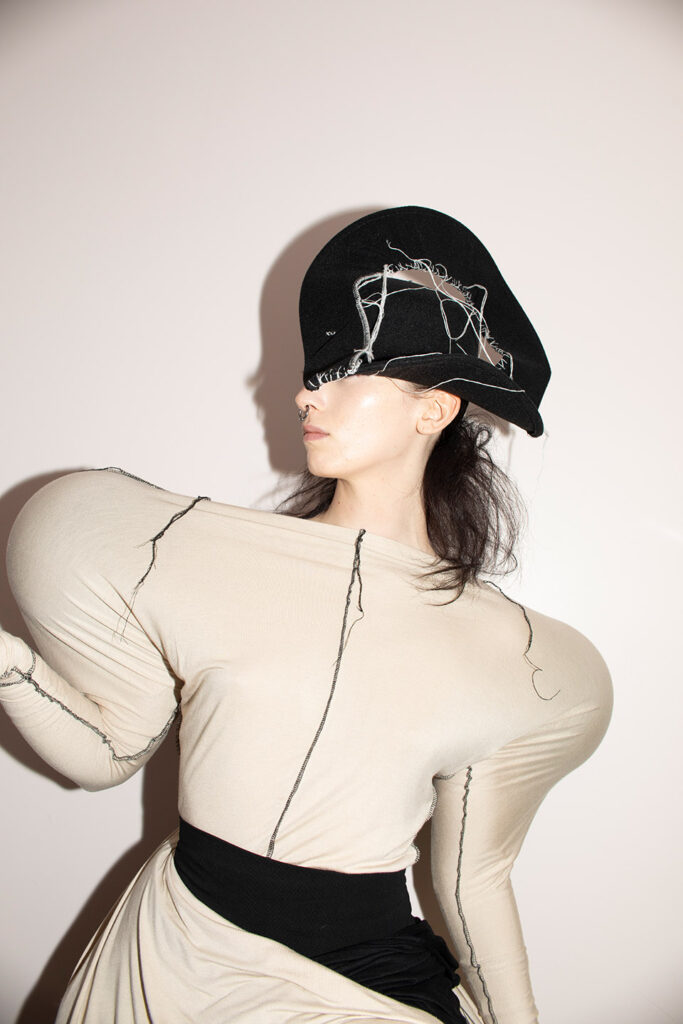
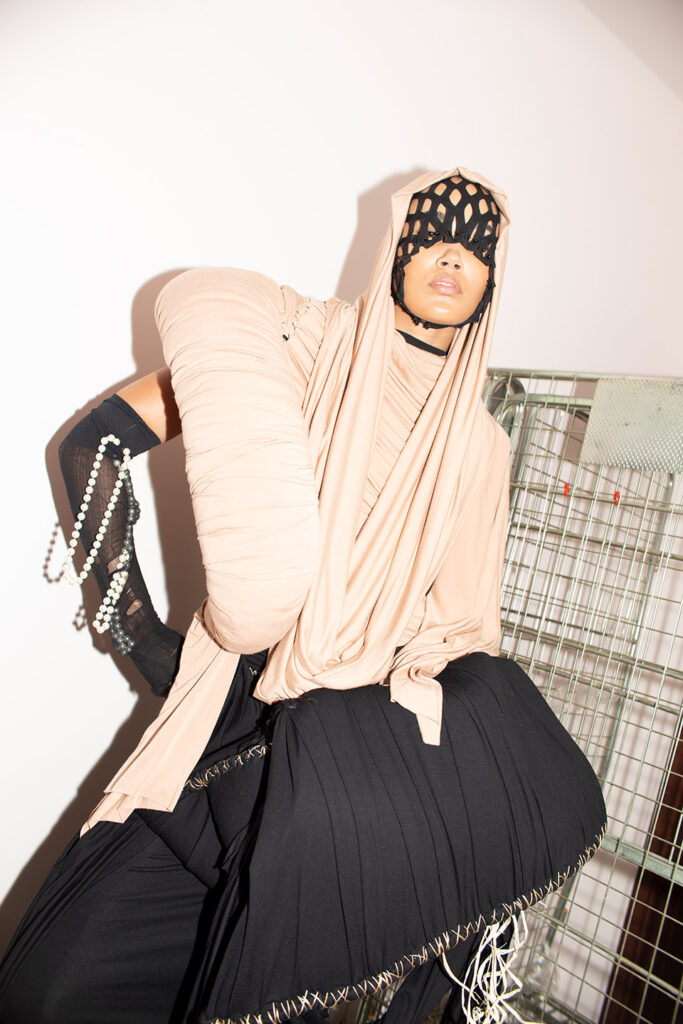
The Women’s Carnival — a rare rural tradition where women inverted village power structures for a day. I carry this spirit of rebellion and make-do attitude into a contemporary context, recontextualising flat stereotypes into a position of power and agency, elevated through craft and construction.
Barbara Hornok
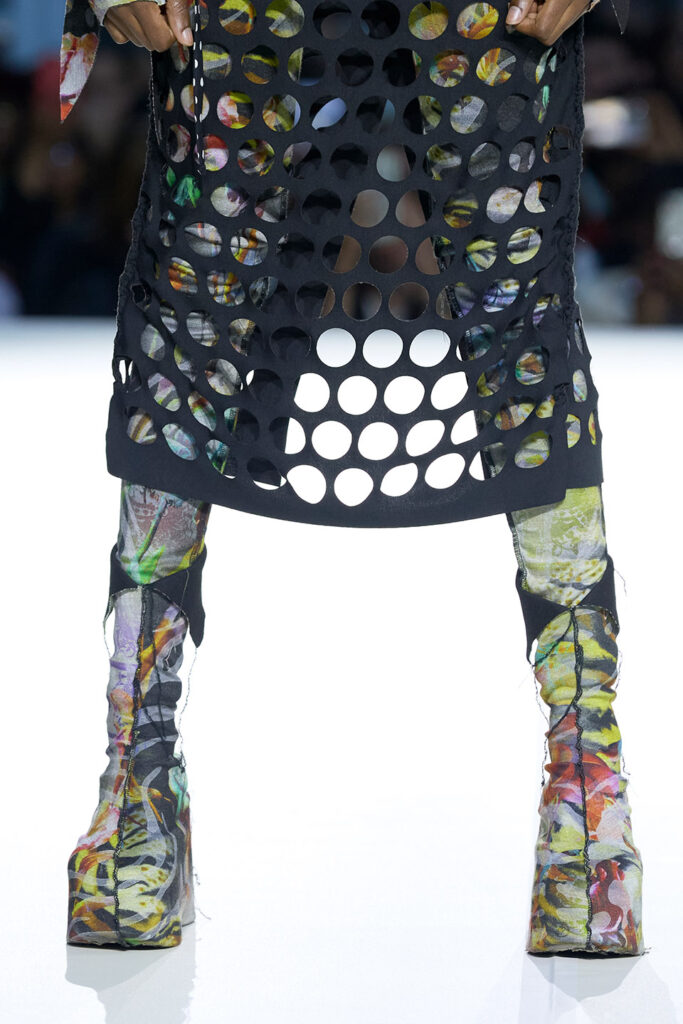
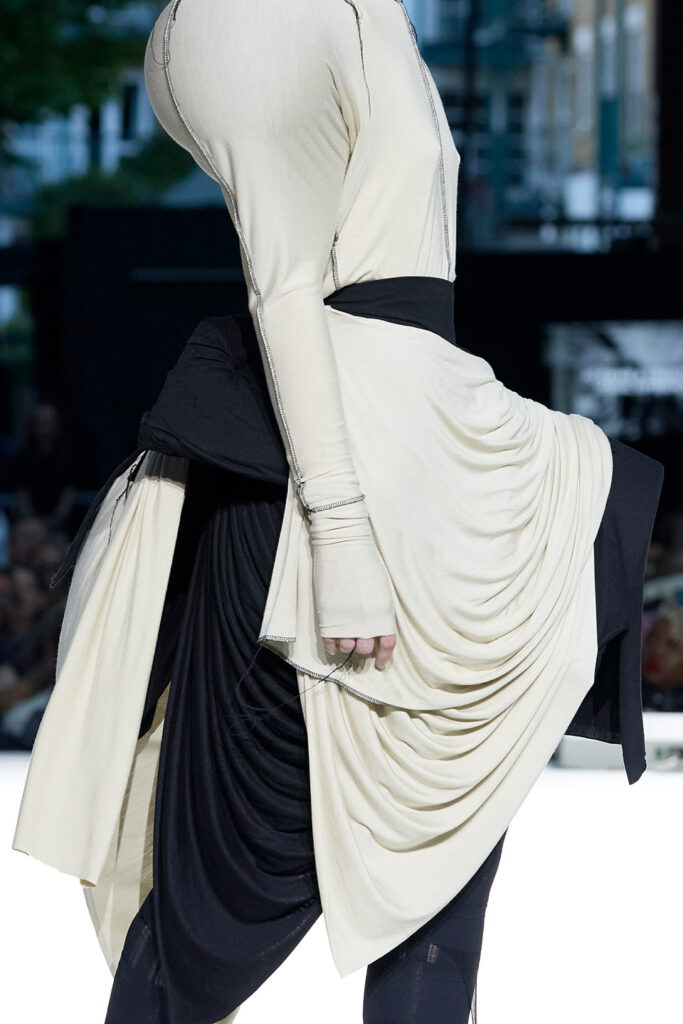
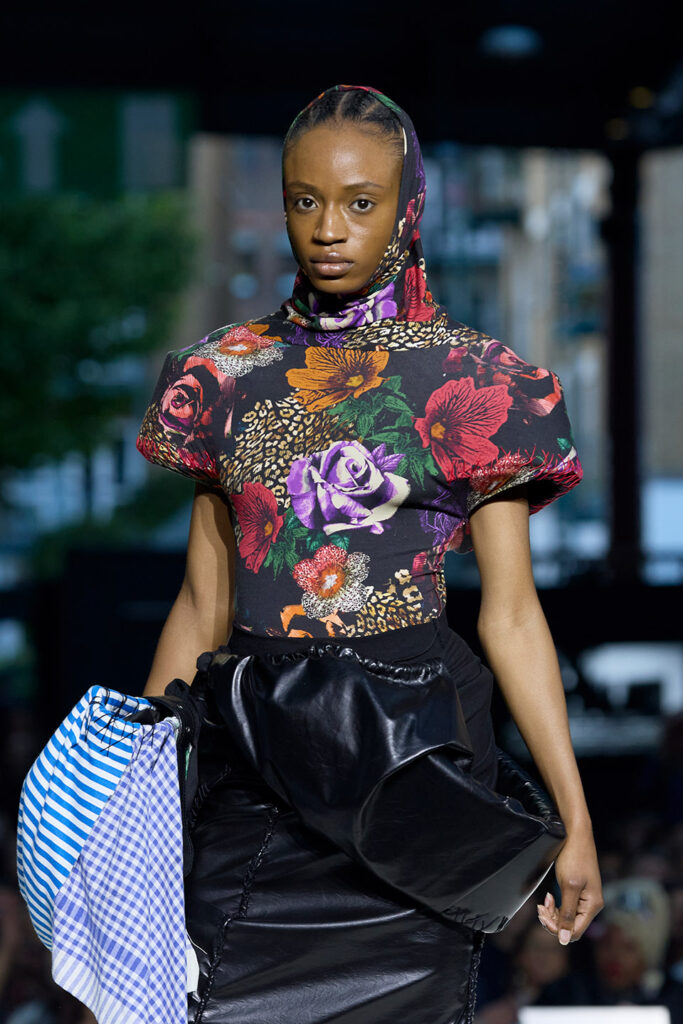
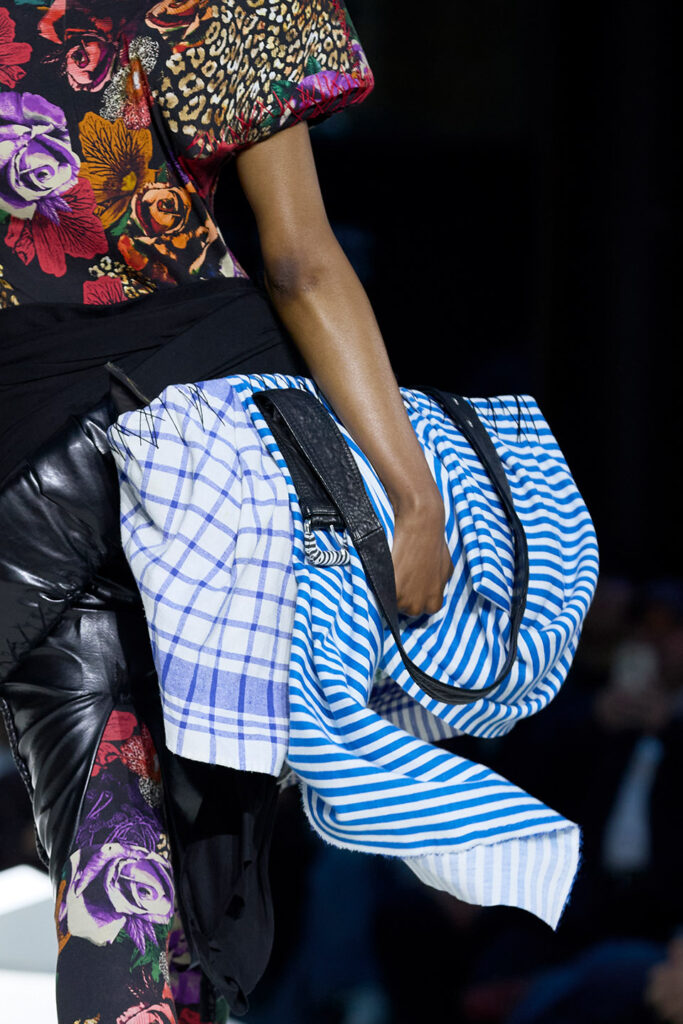
Dede Arisekola
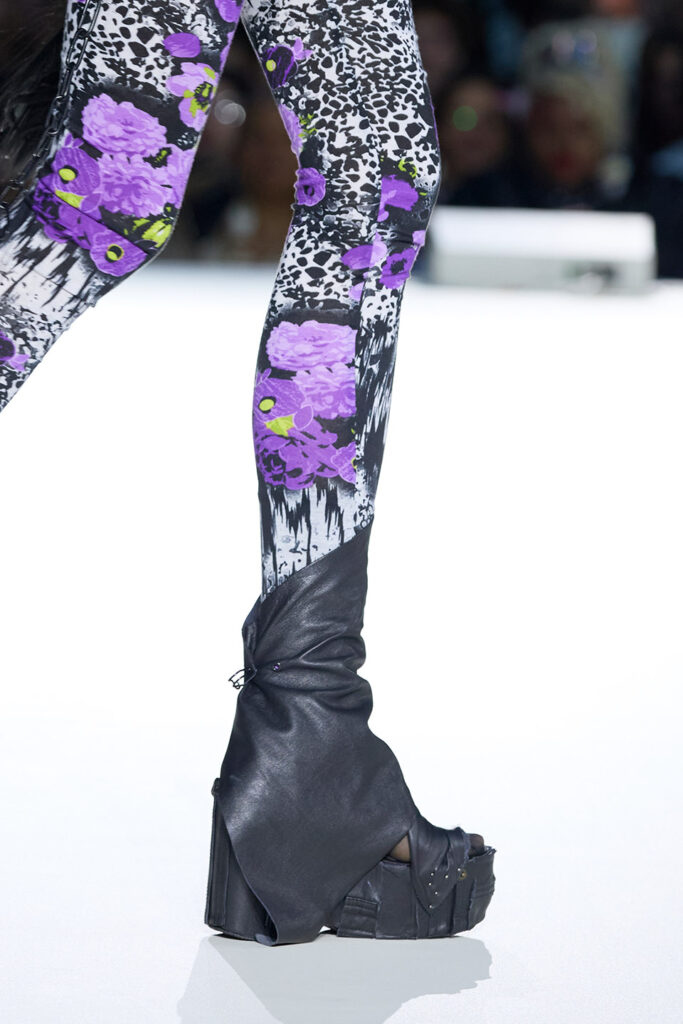
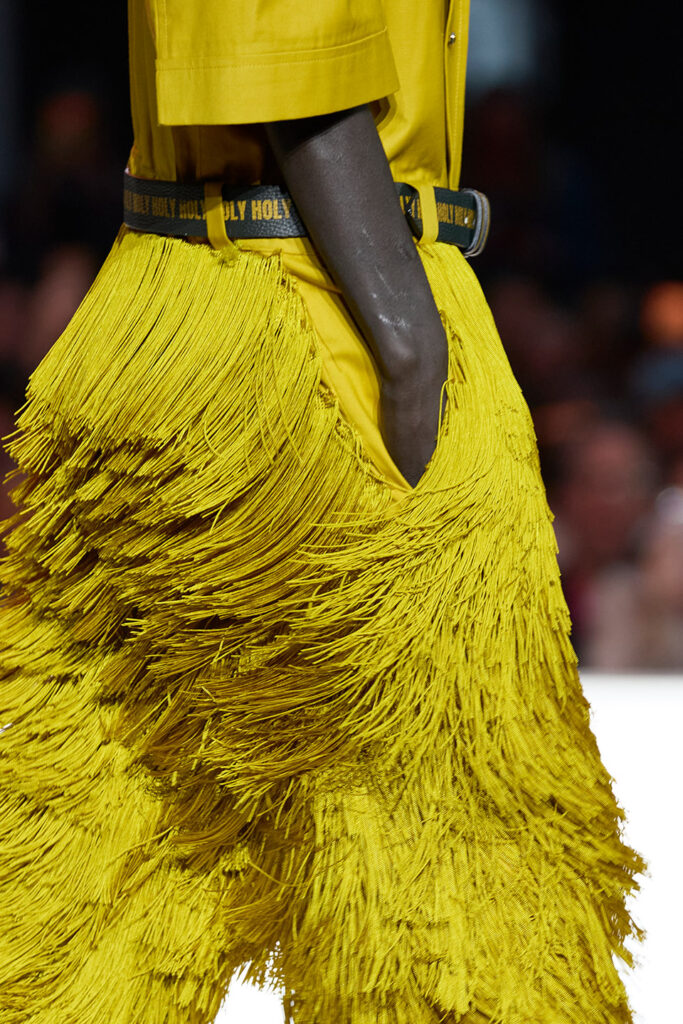
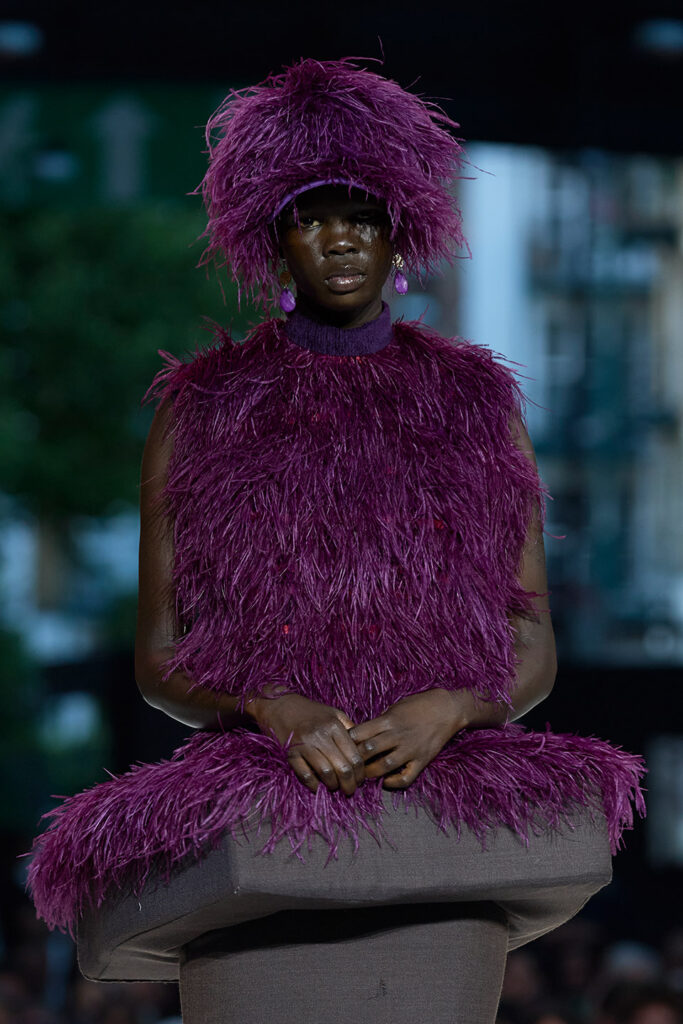
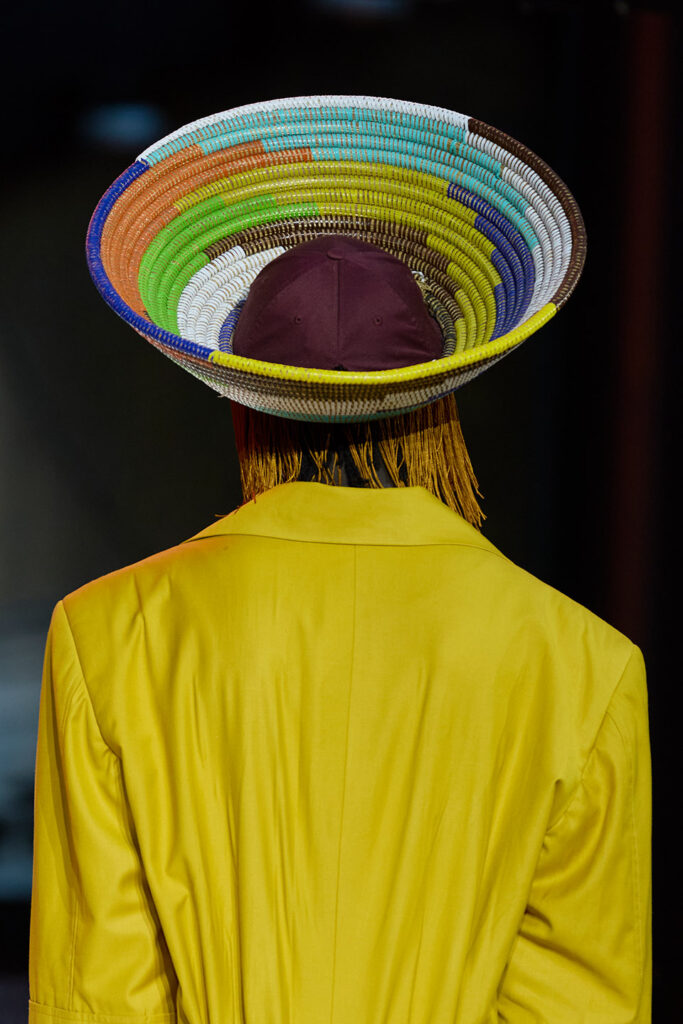
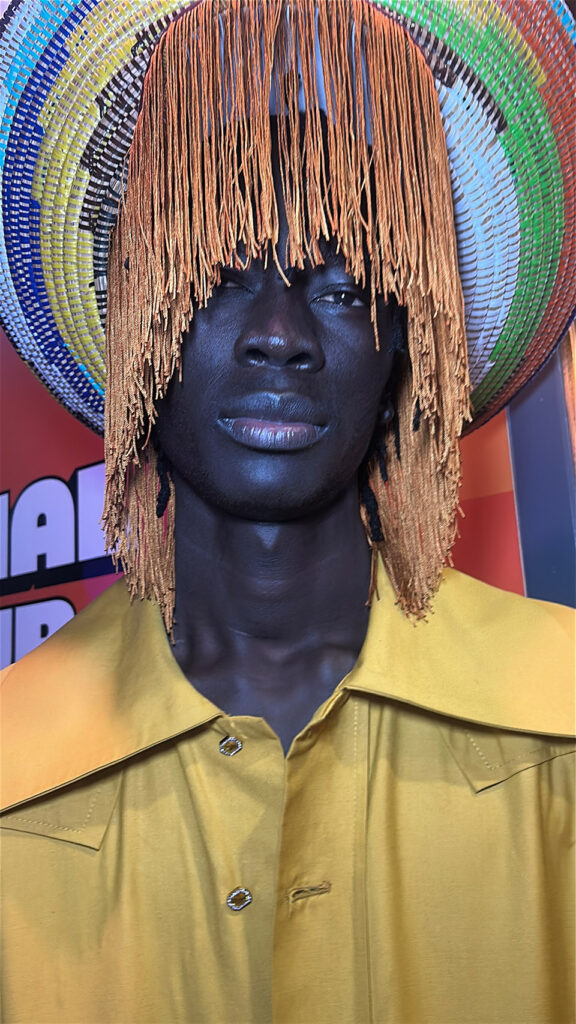
Arisekola brought colour, energy and cultural depth to the runway. Rooted in her Nigerian heritage and Irish childhood, the collection moved through tasselled jeans, shaggy deadstock-knit jackets and hats trailing plum-coloured feathers. A standout: button-up shirts embroidered with abs, inspired by Nigerian male fashion, worn with exactly the irreverence the reference deserved.
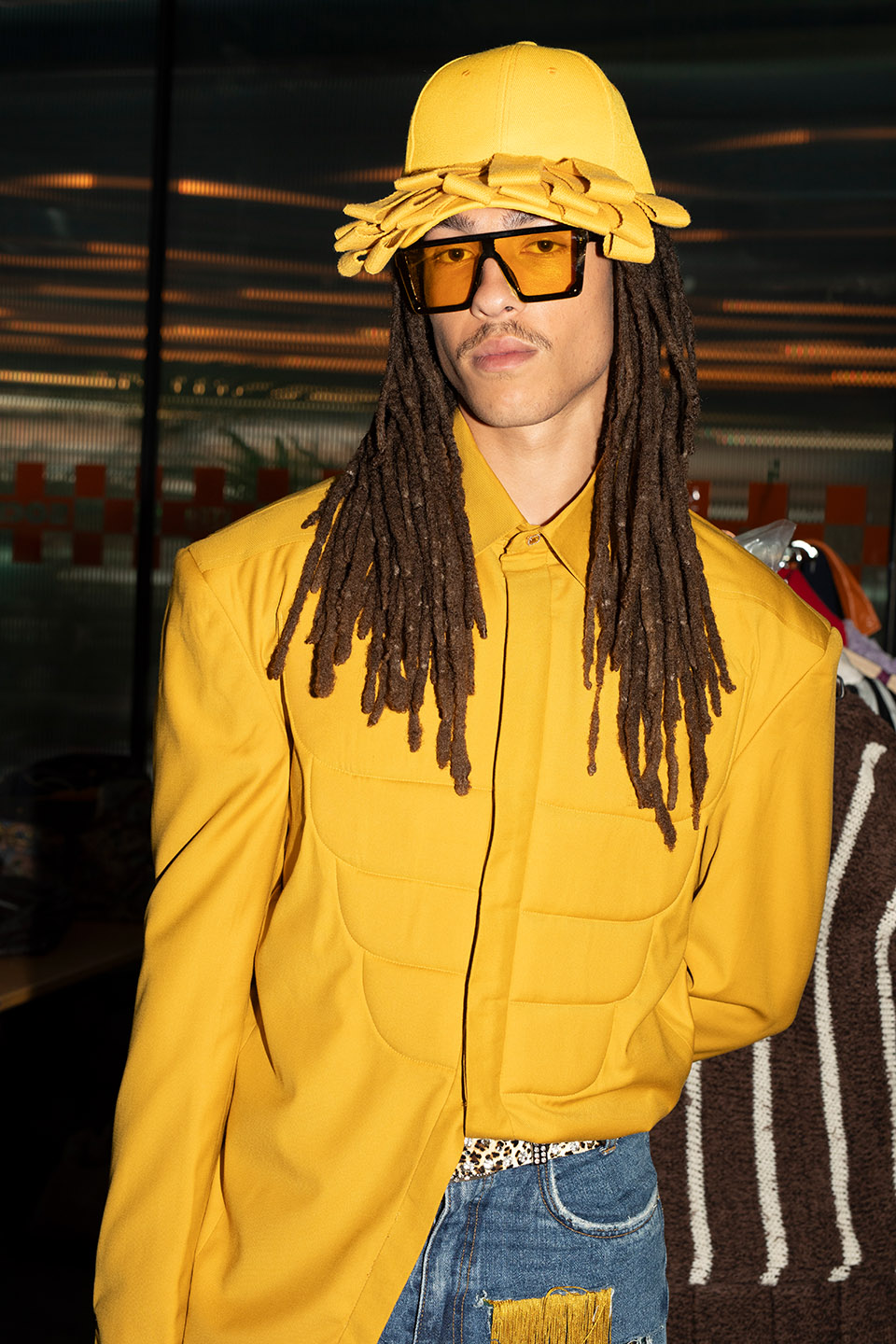
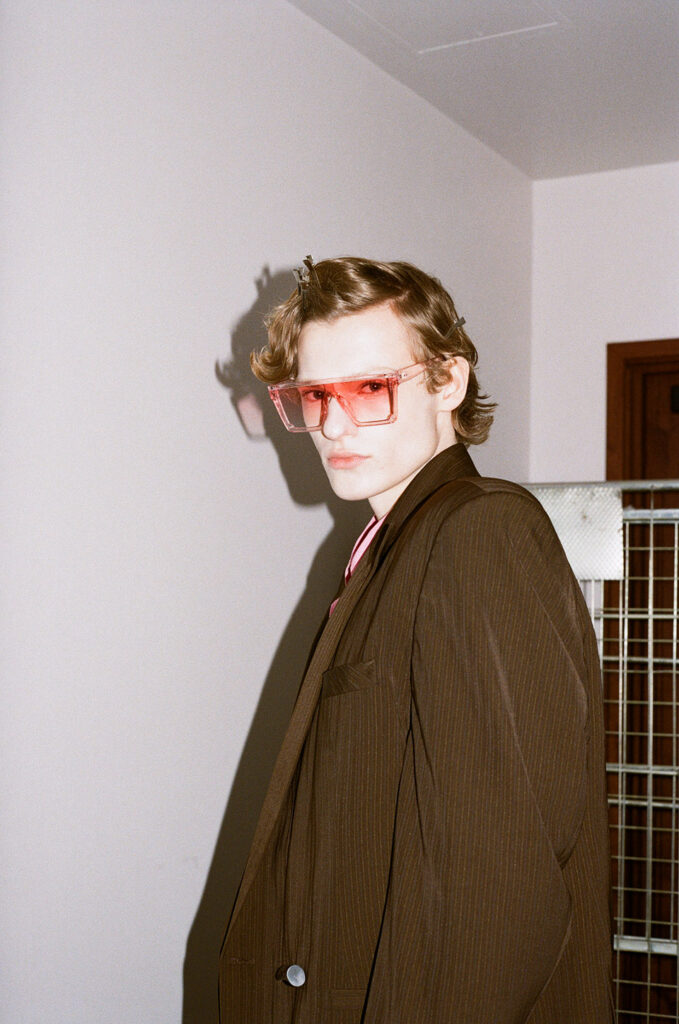
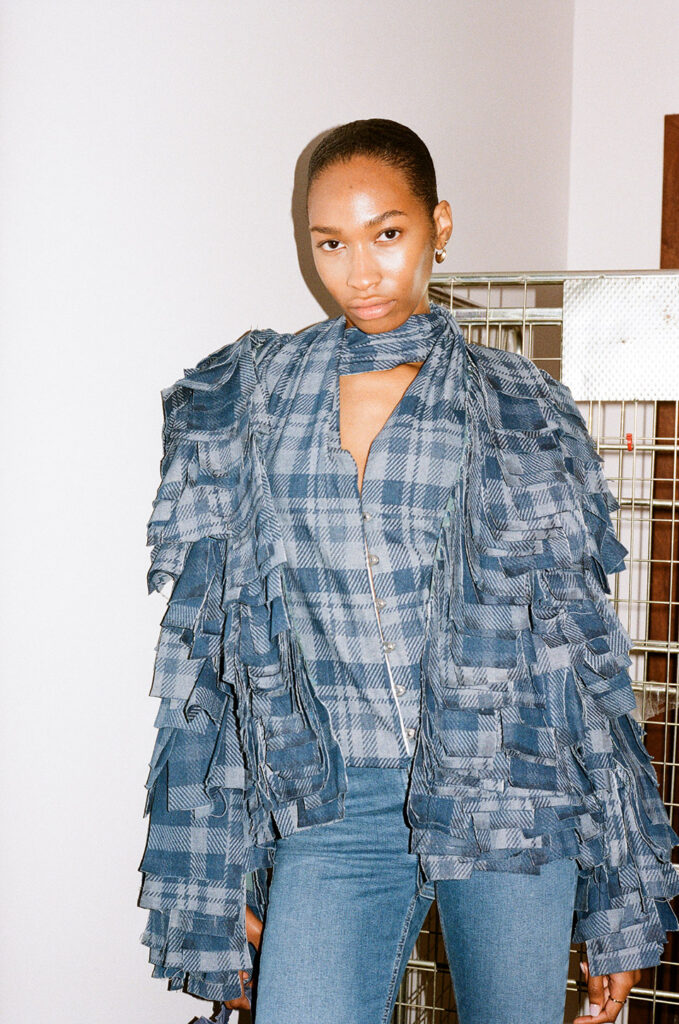
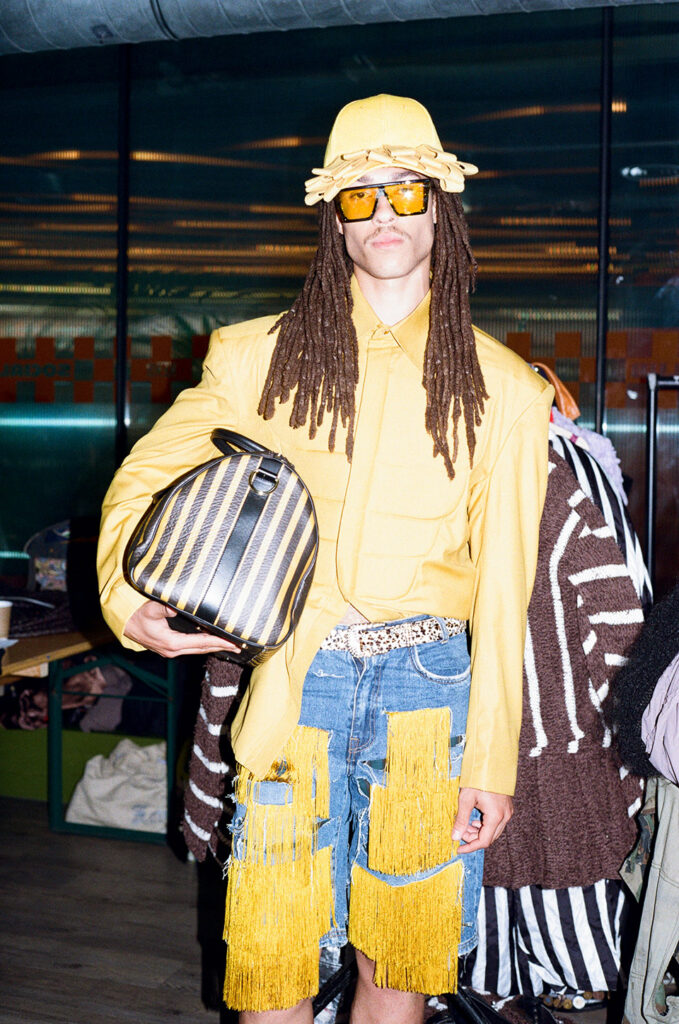
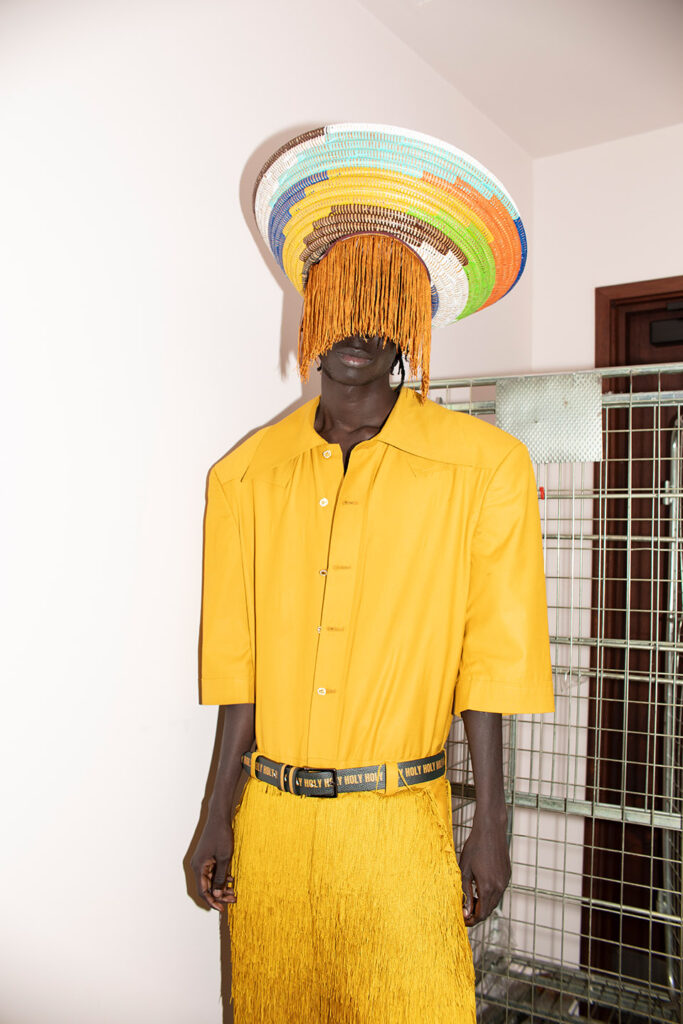
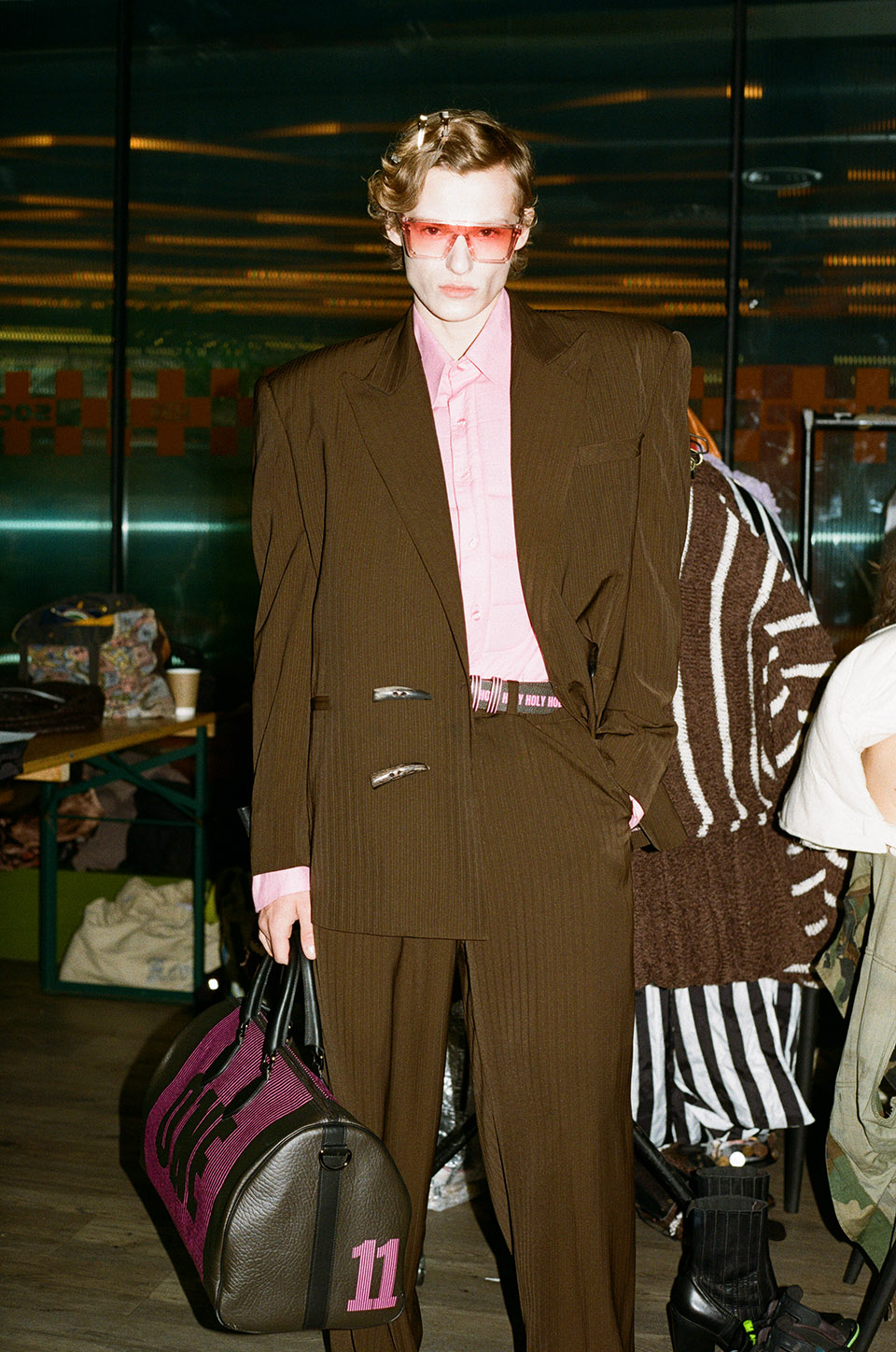
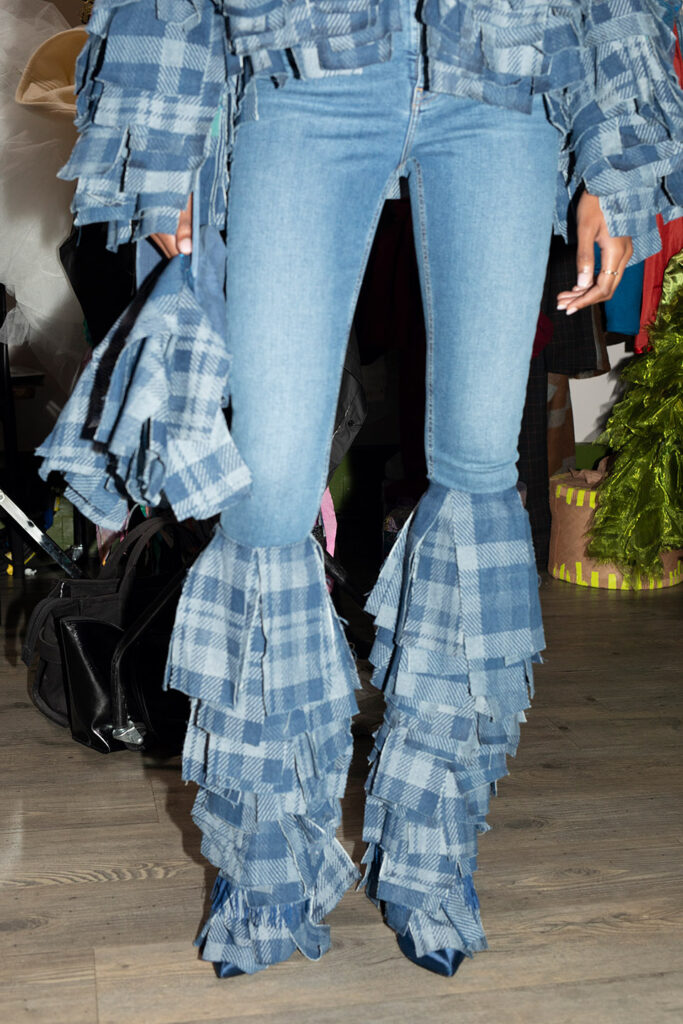
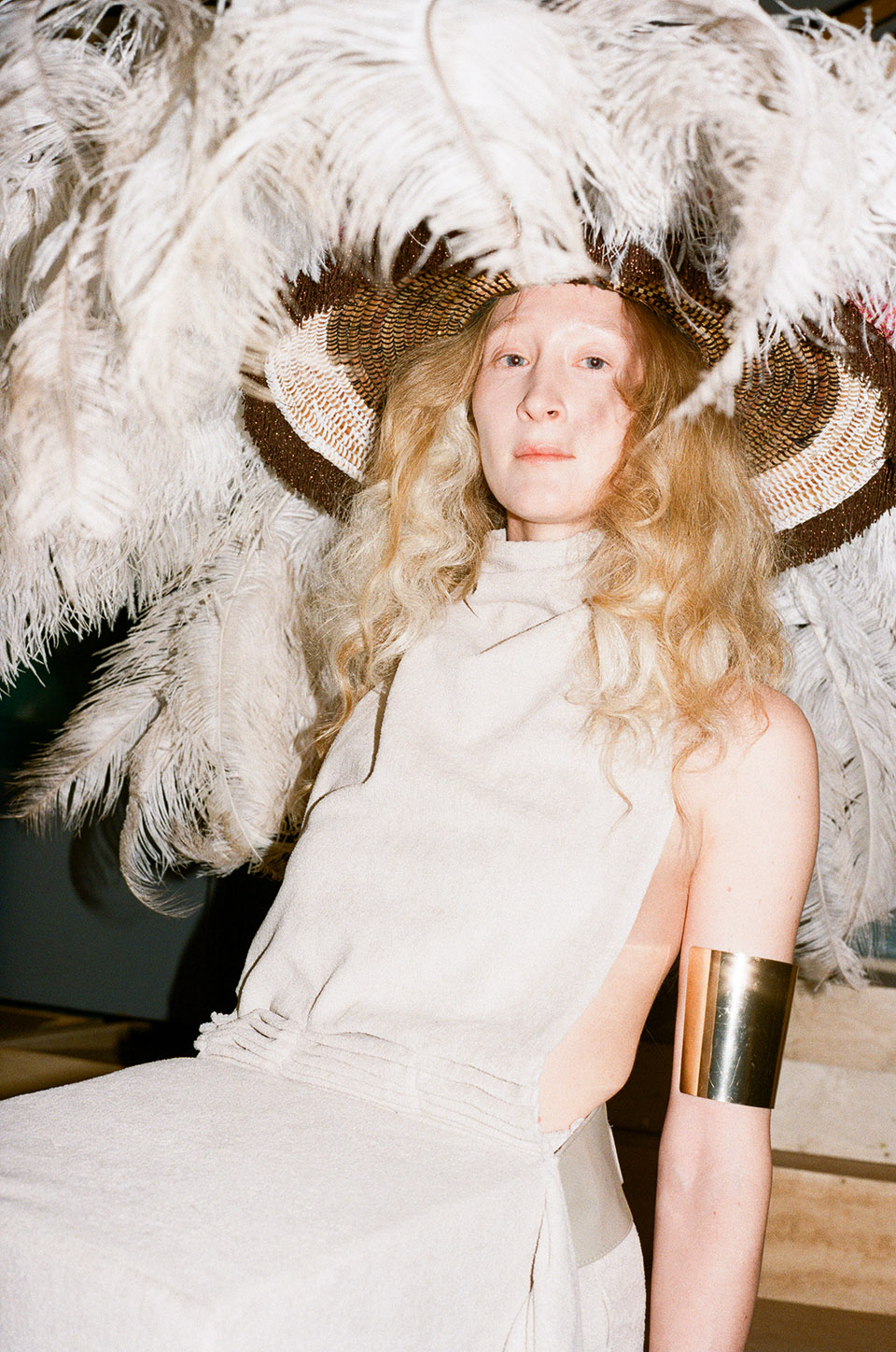
Creating this collection revealed the importance of every experience in life, both positive and negative. Through the creative process, pain, confusion, and rejection were transformed into joy, celebration, and expression. The use of deadstock fabrics and up-cycled garments speaks not only to sustainability, but also to renewal — giving new life to both materials and memories. I wanted each garment to carry that same breath of life, awakening what was once unappreciated and discarded, and transforming it into a source of hope and light.
Dede Arisekola
Min-Ji Kim
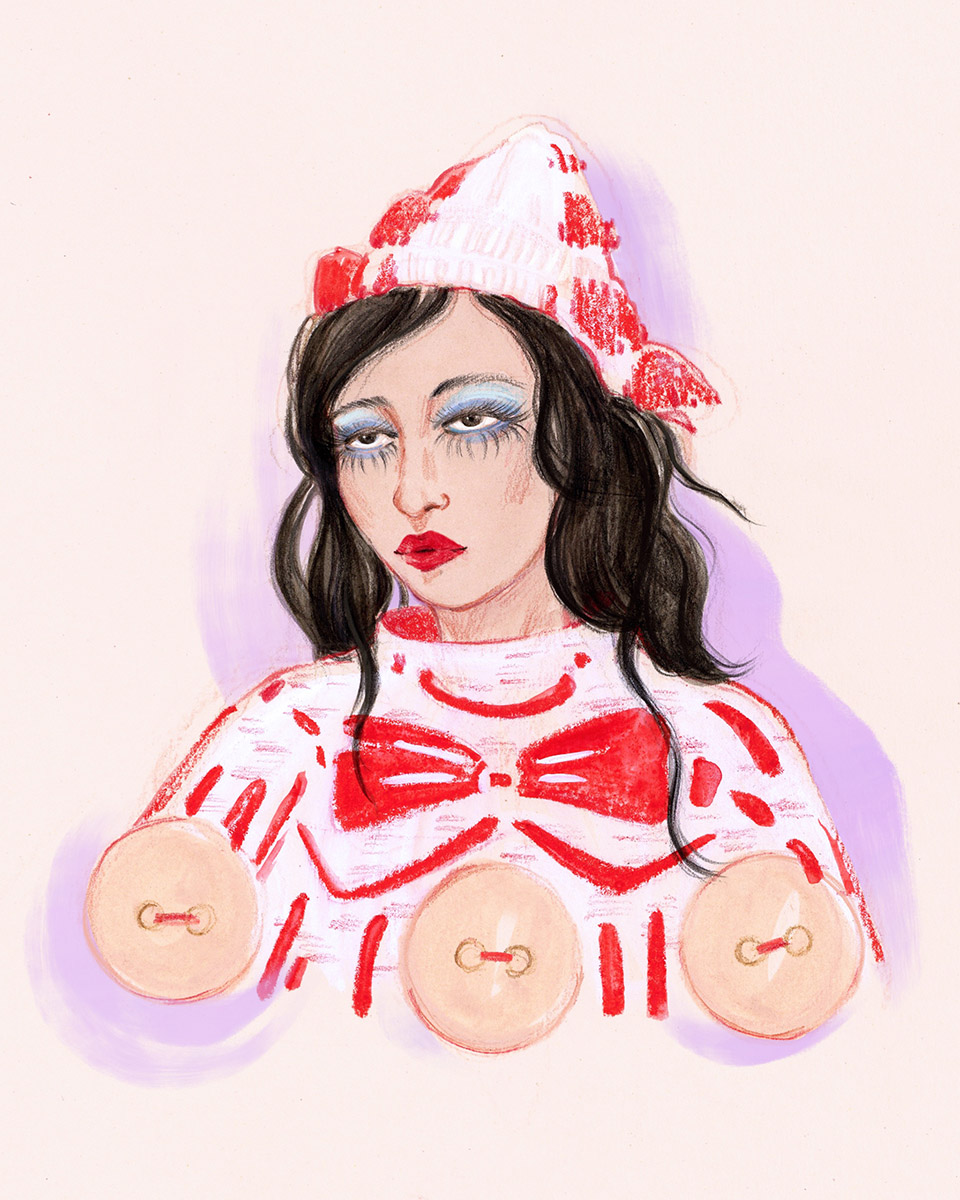
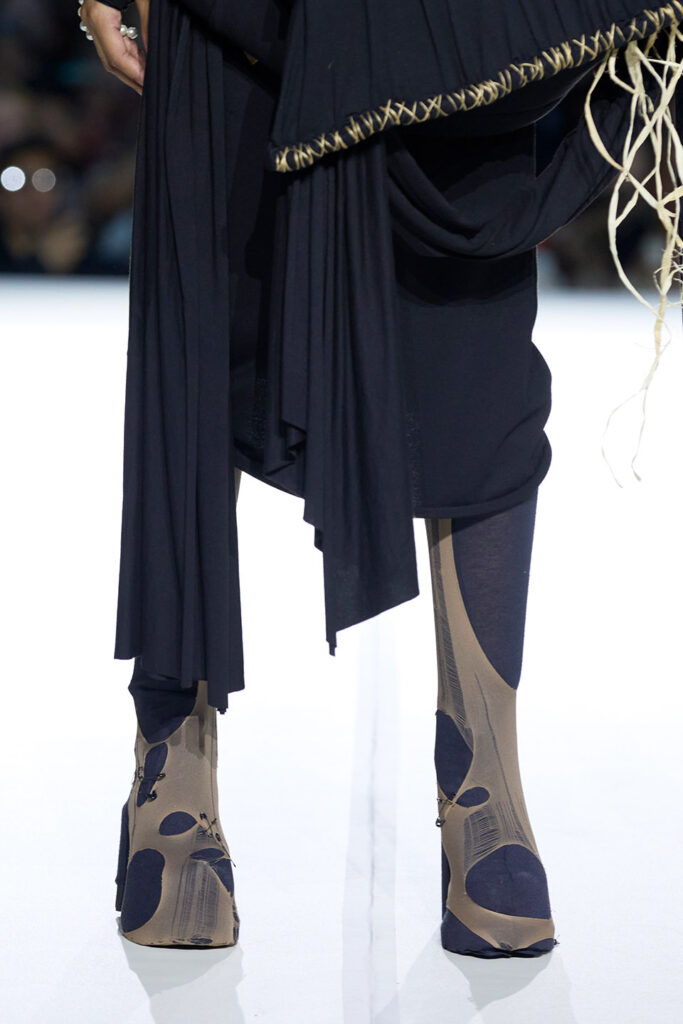
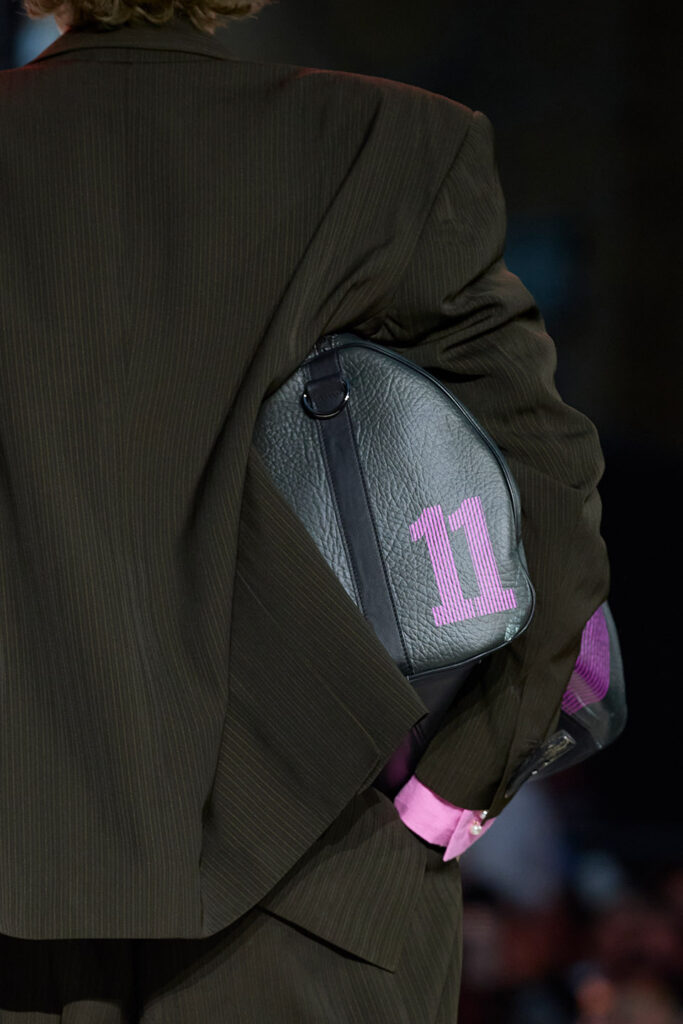
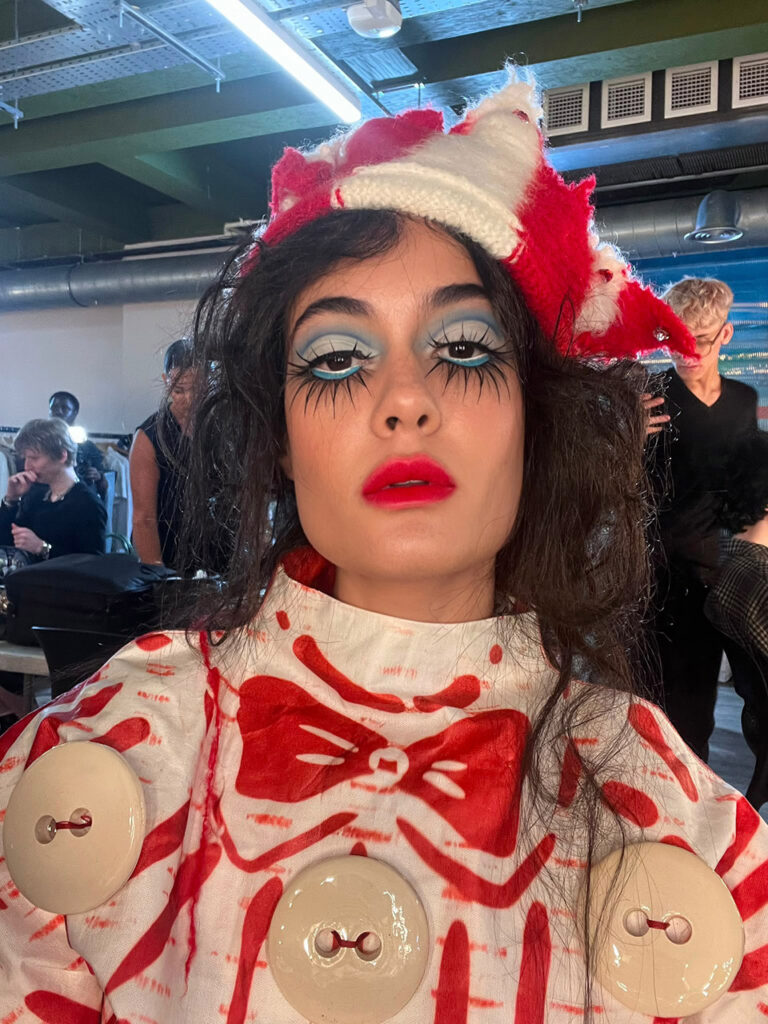
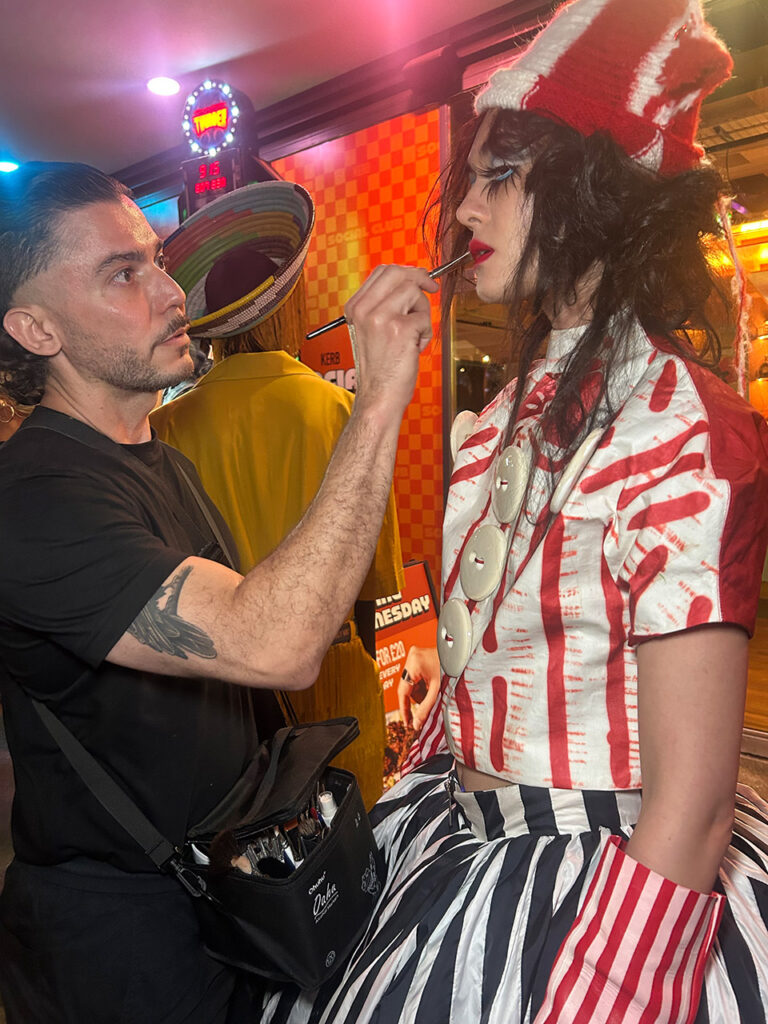
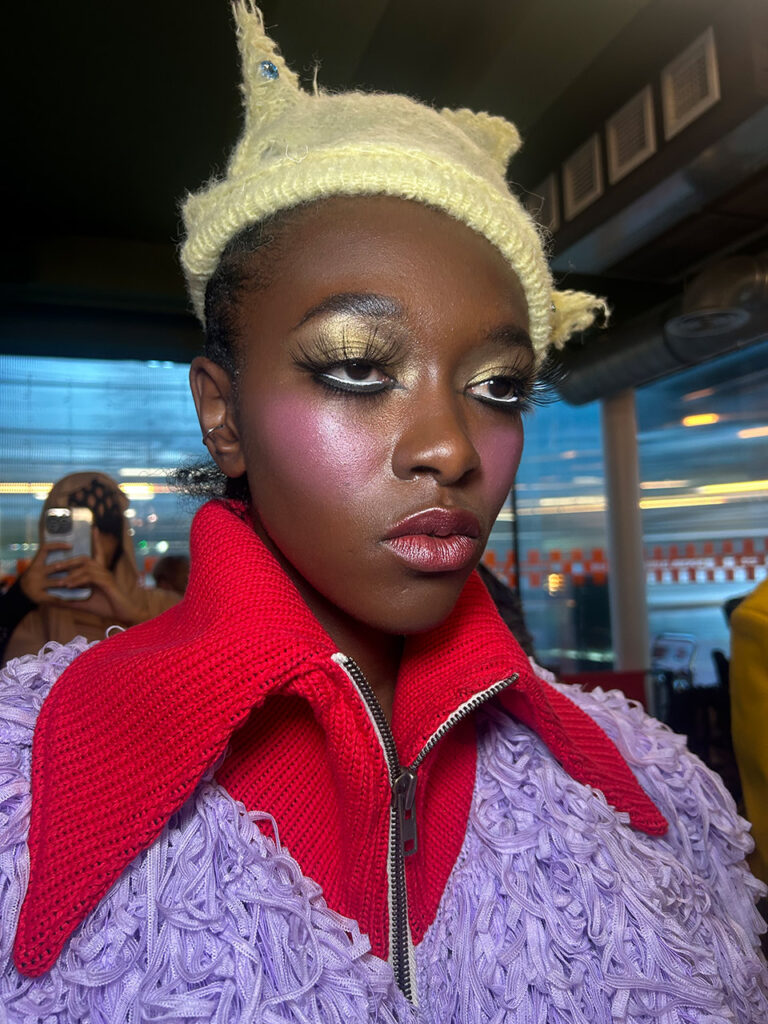
Korean-born Min-Ji Kim brought a different kind of scale — giant shaggy jackets and oversized blazers in wool and deadstock yarn, draped with quiet intention. Shoes studded with coins and bank notes grounded the collection in something stranger and more pointed. Padded shoulders, oversized buttons and candy-cane stripes on bubble skirts: playful and sharply considered in equal measure.
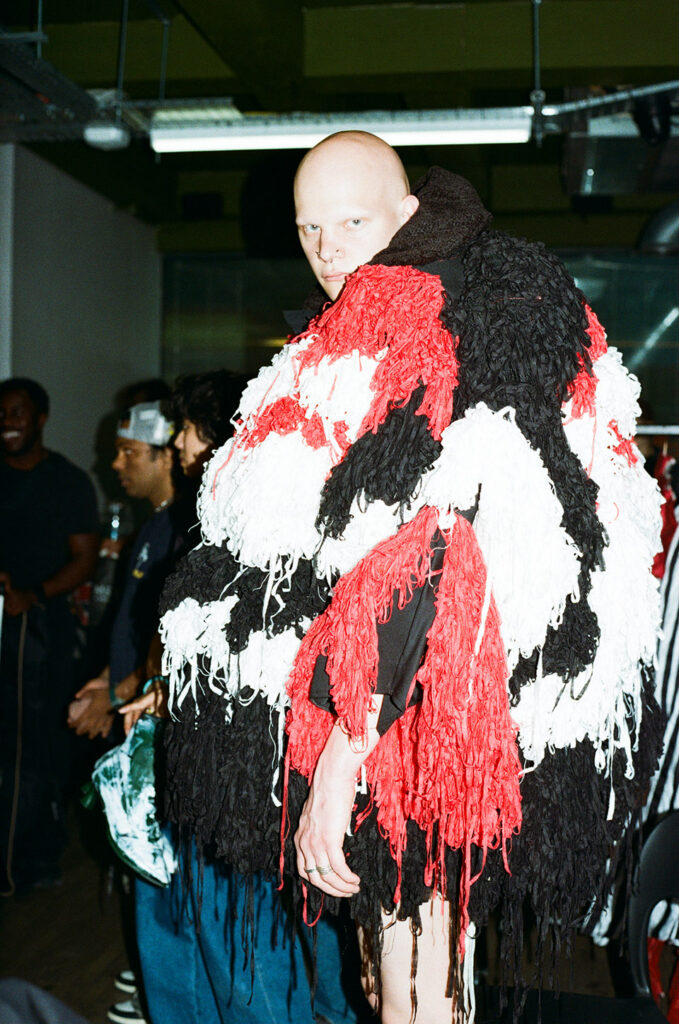
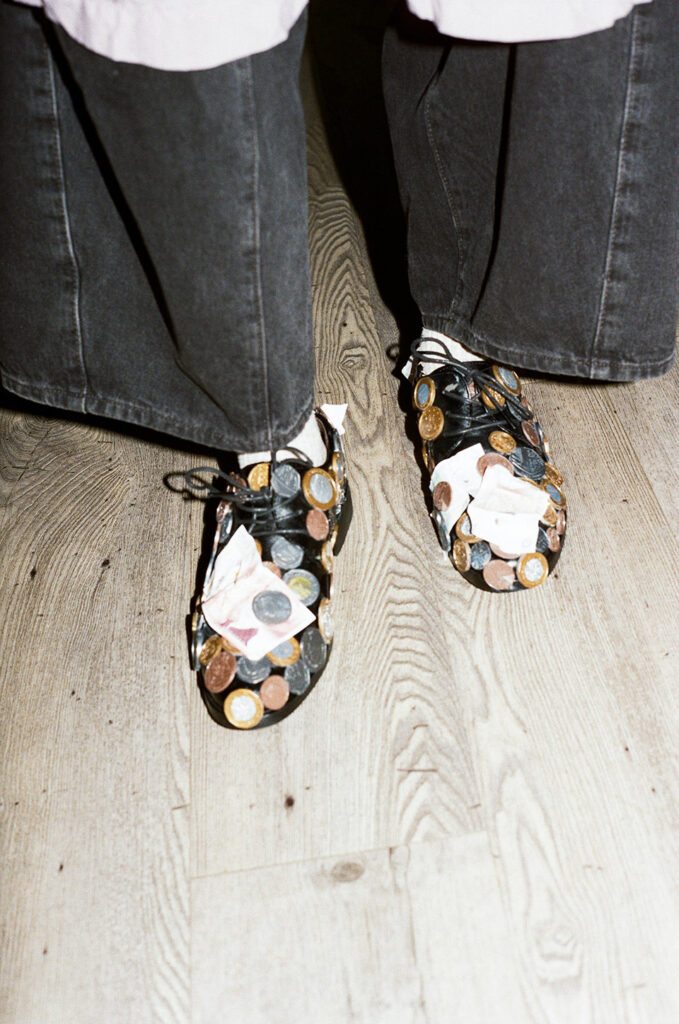
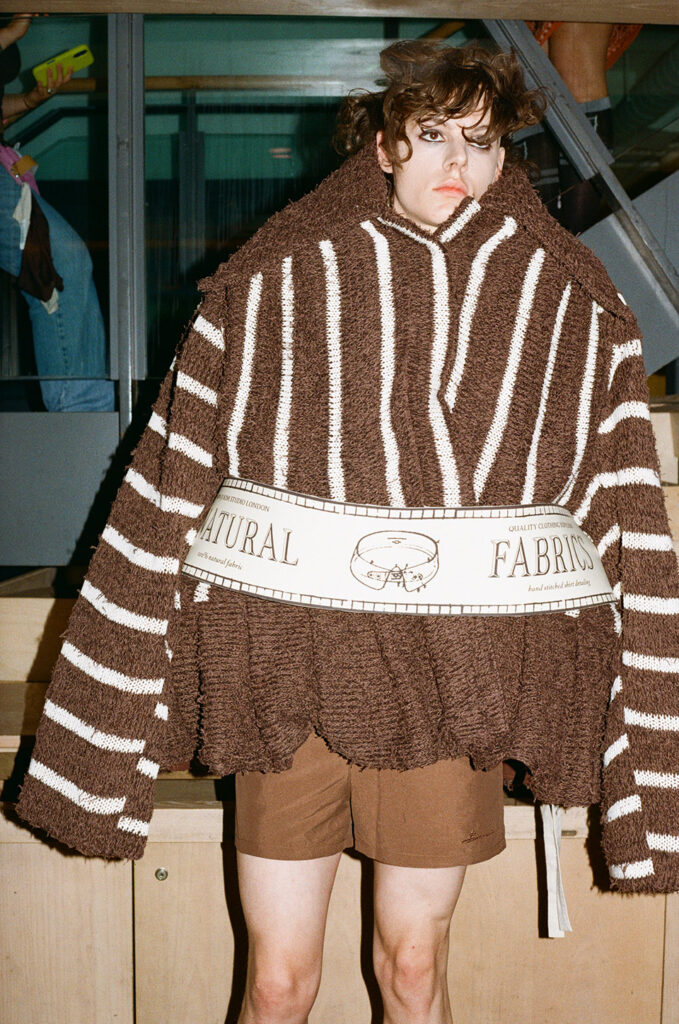
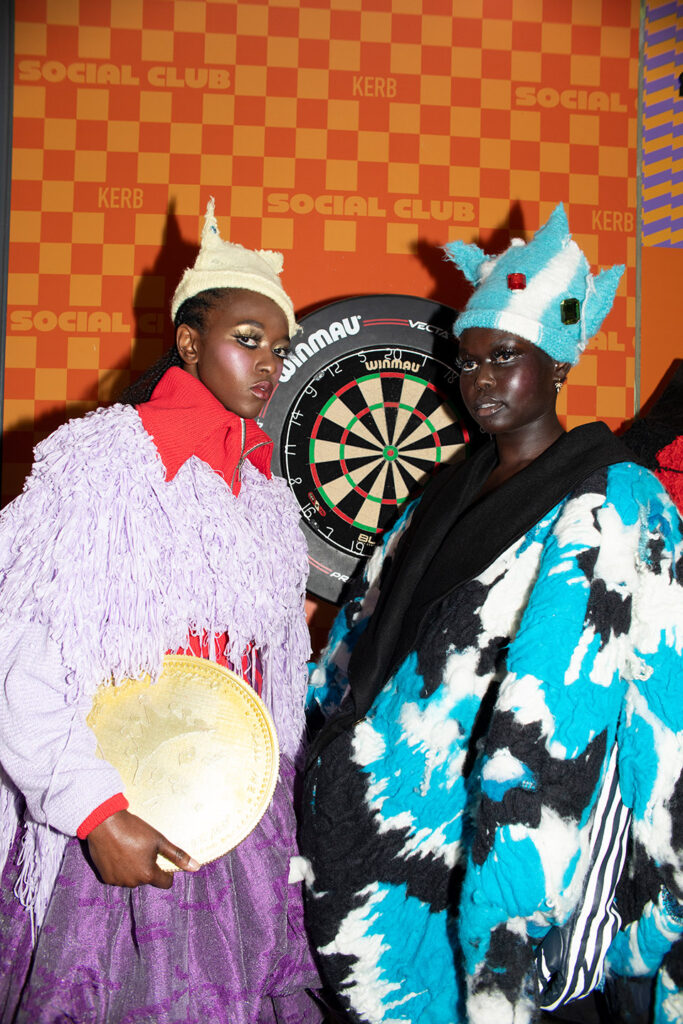
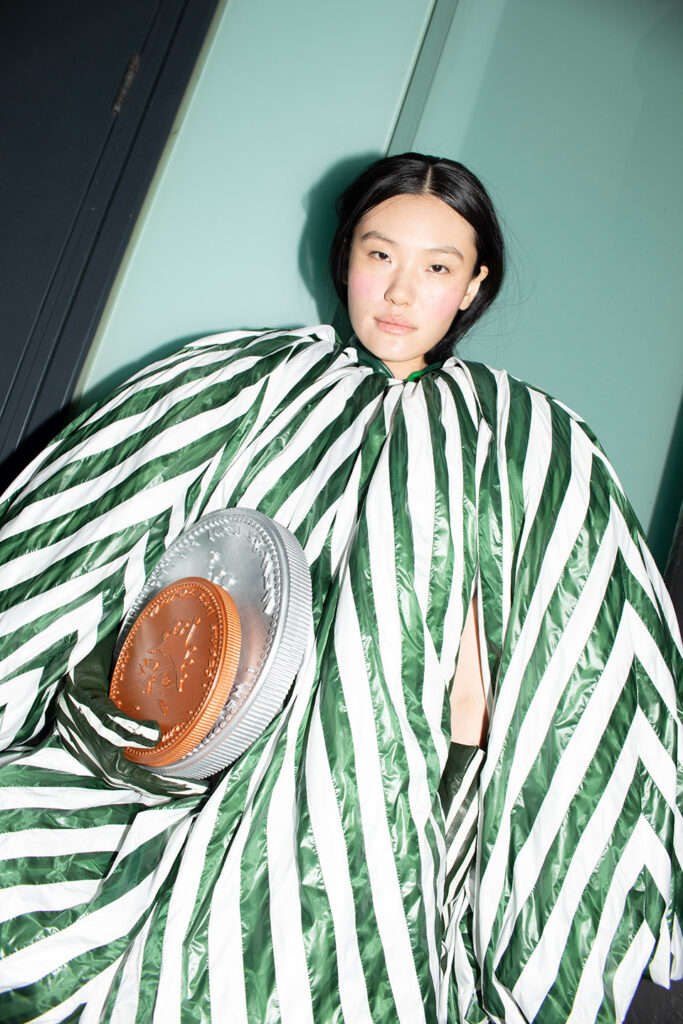
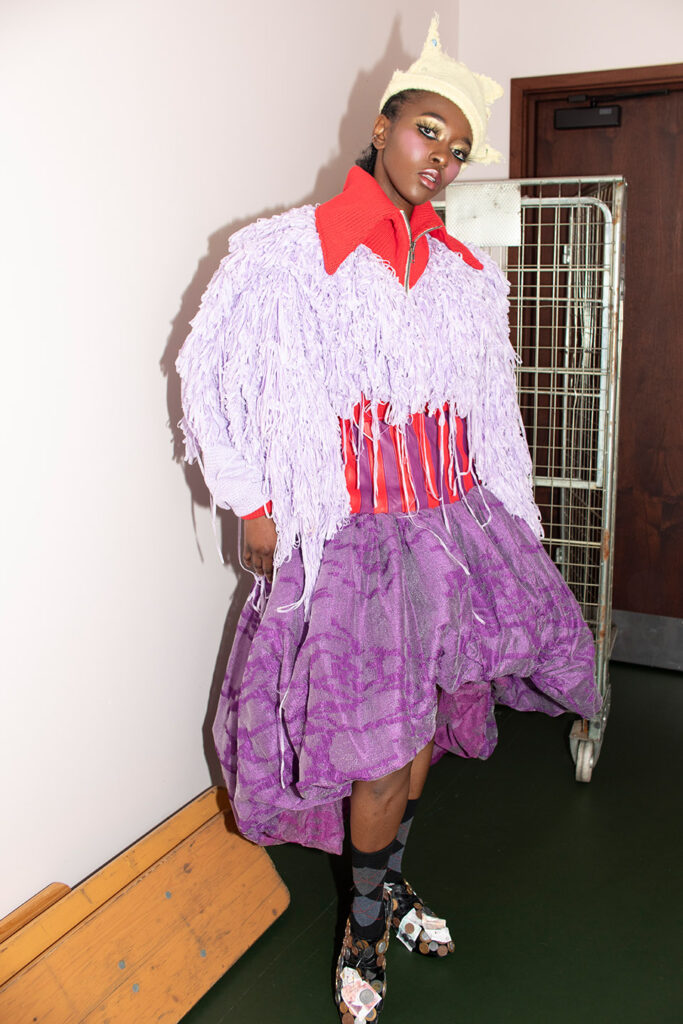
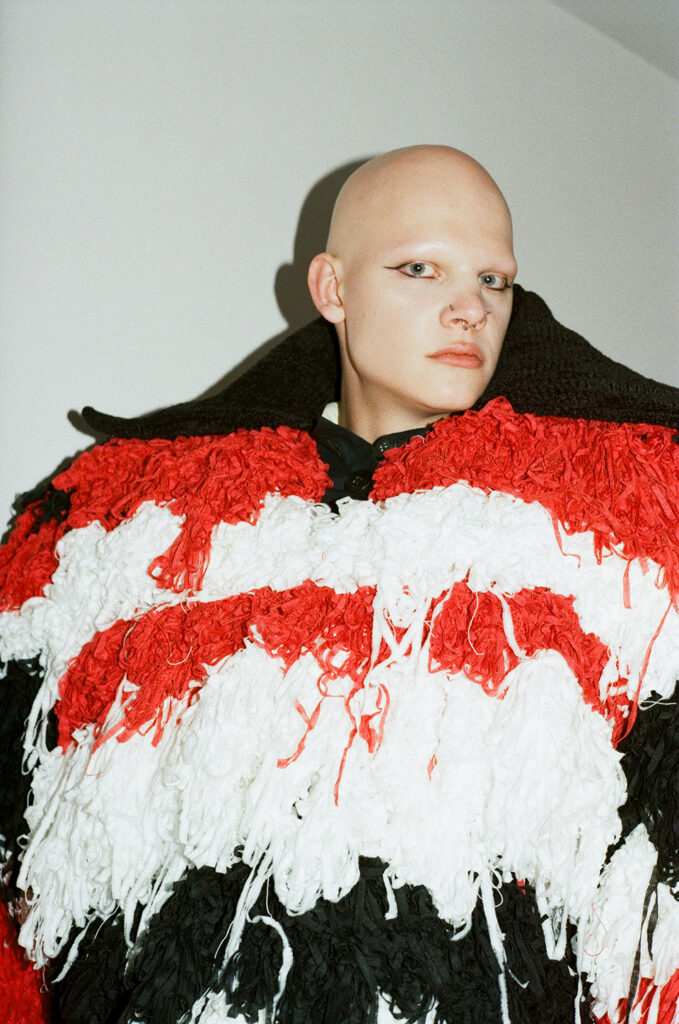
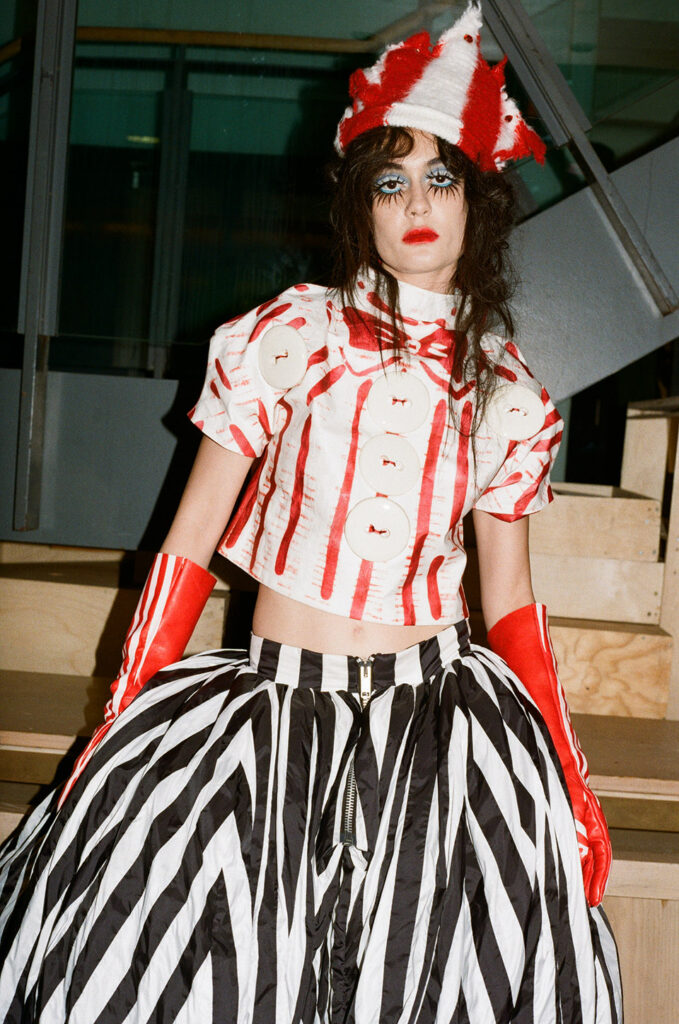
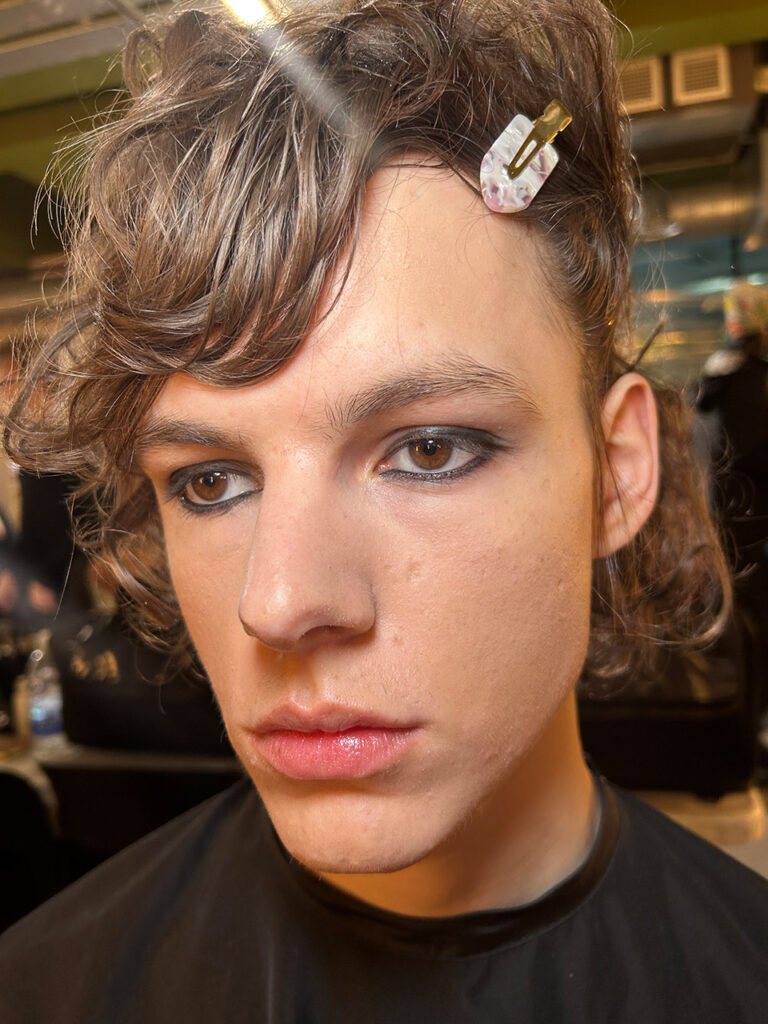
For Min-Ji Kim, a 1960s beauty reference was refracted through a dystopian lens, with raw, undone hair set in deliberate tension against controlled, elegant makeup.
Astrid kearney
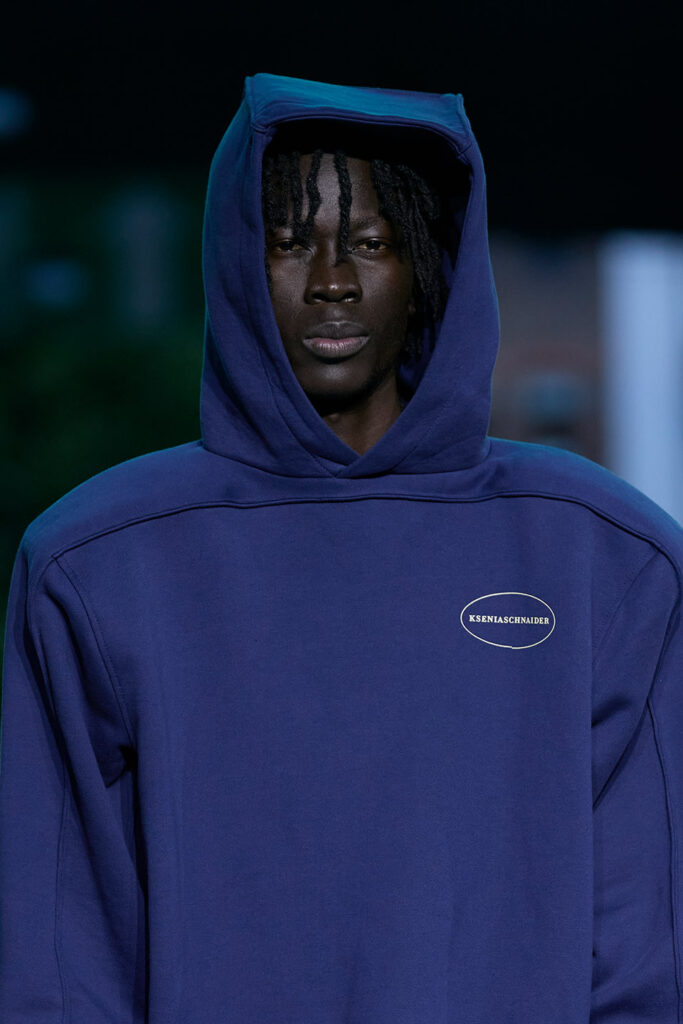
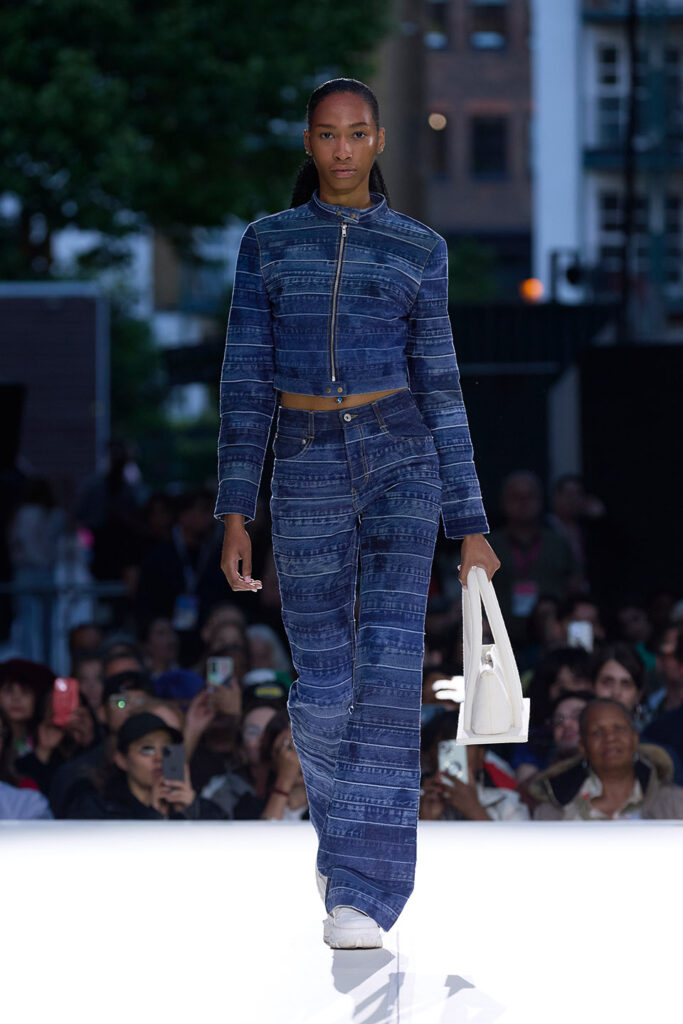
KSENIASCHNAIDER
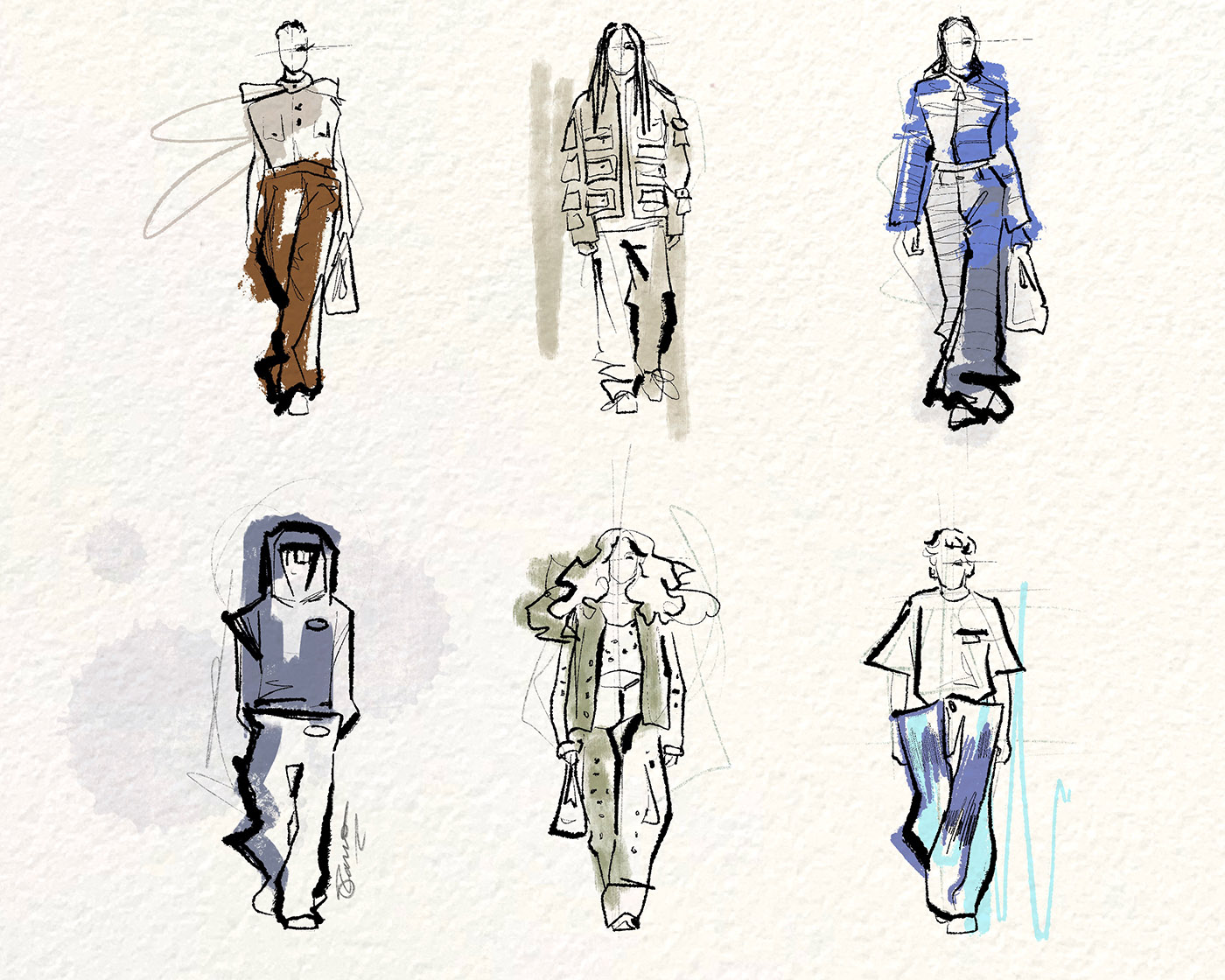
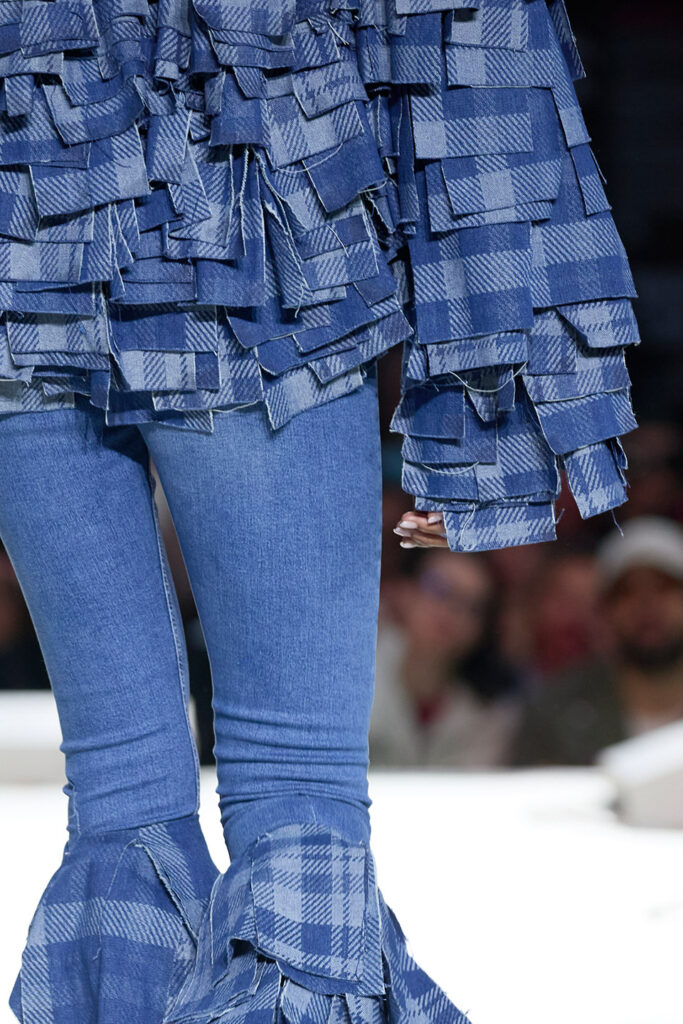
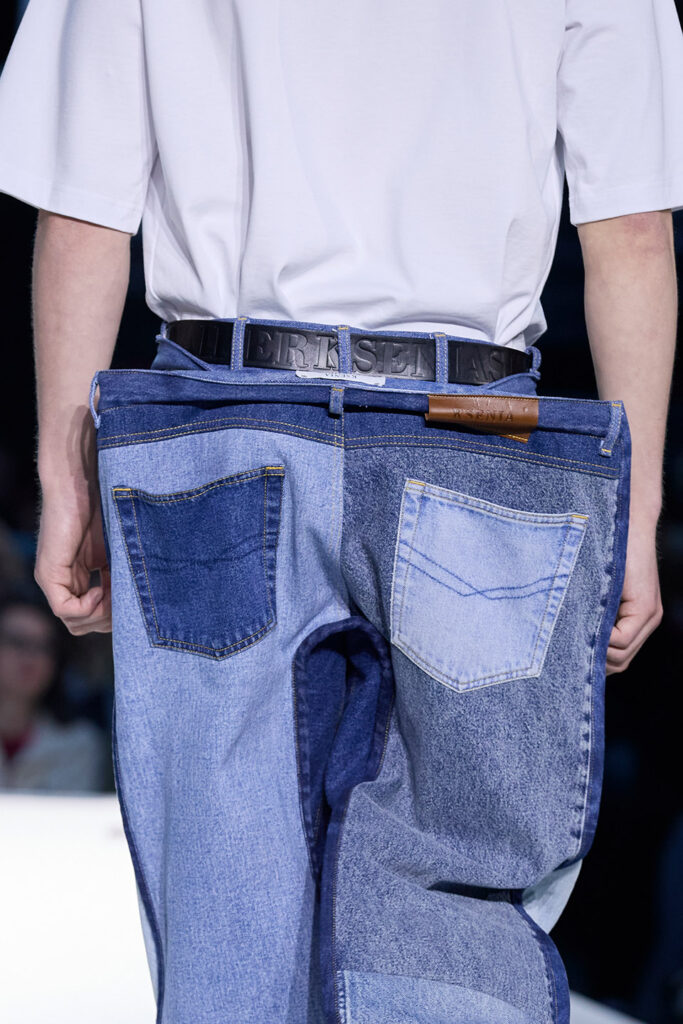
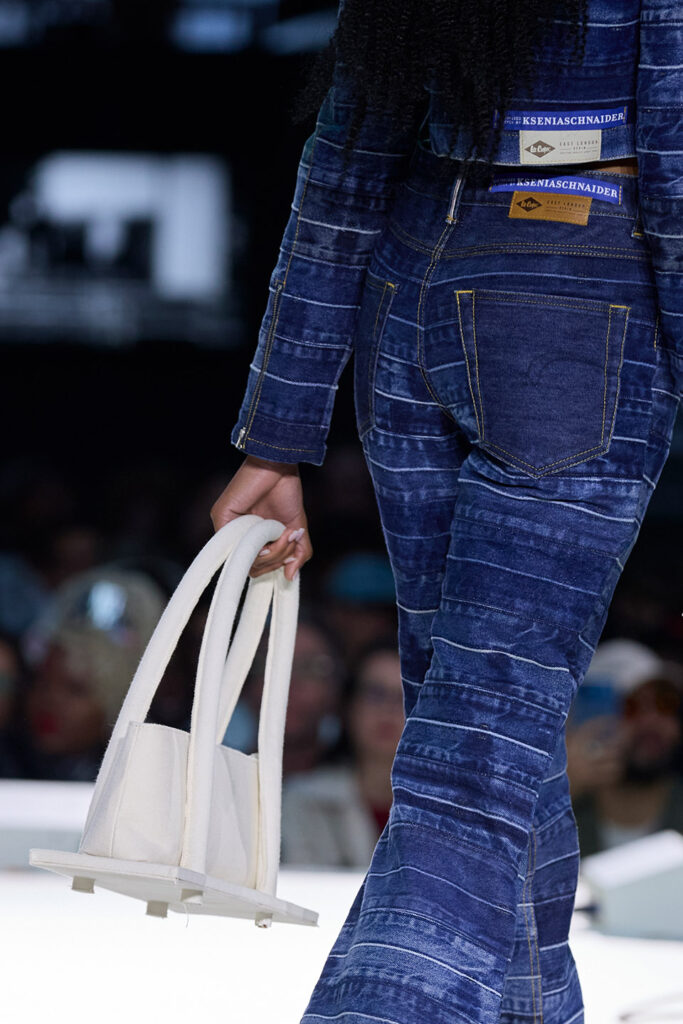
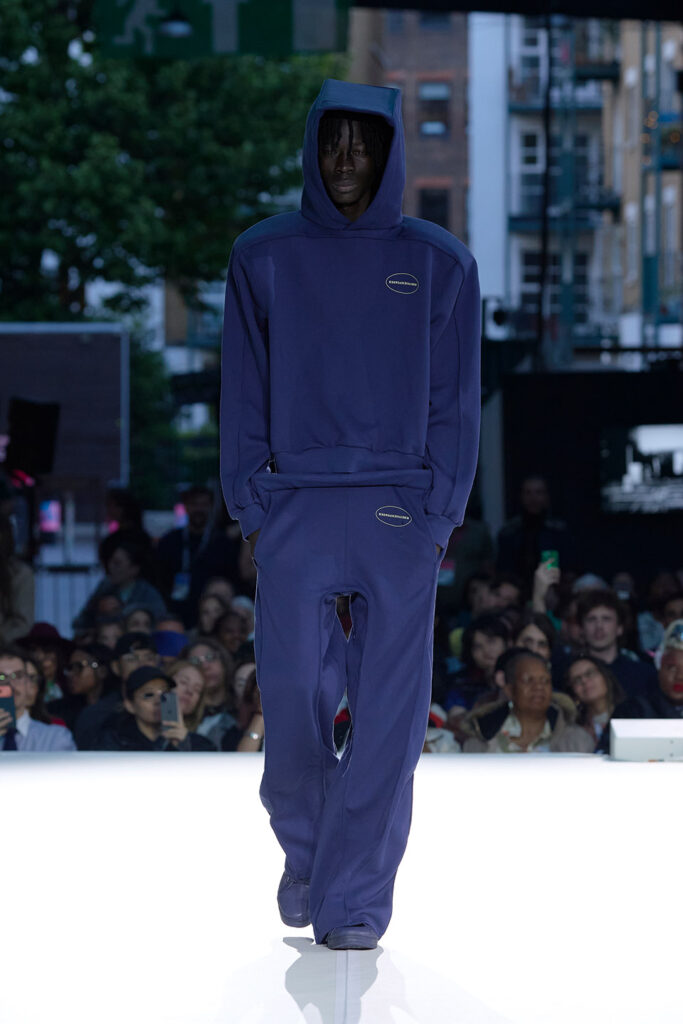
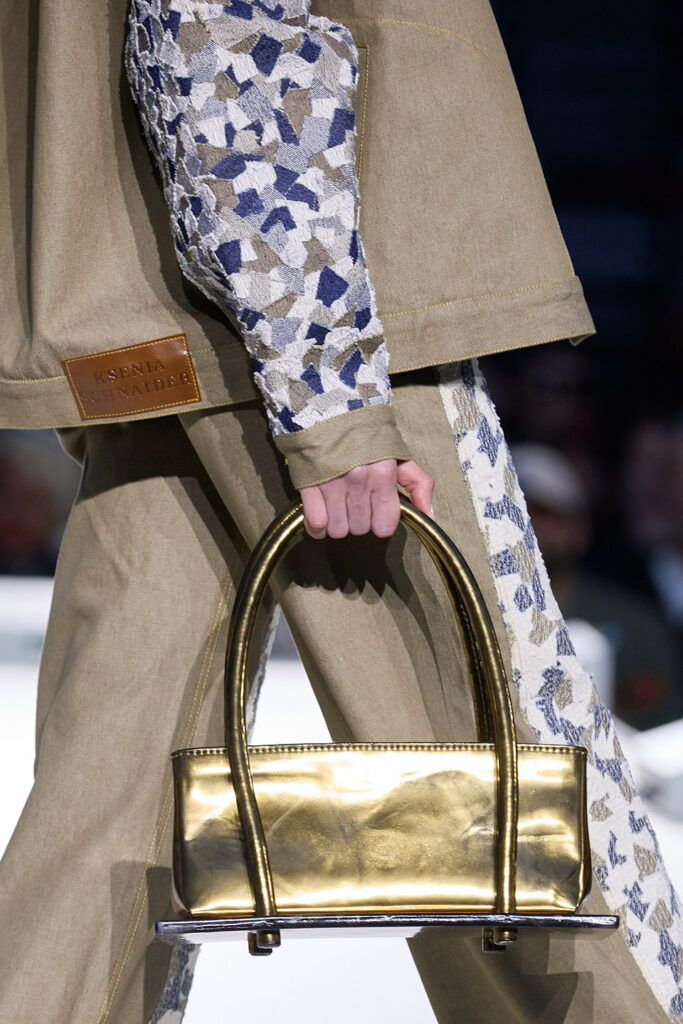
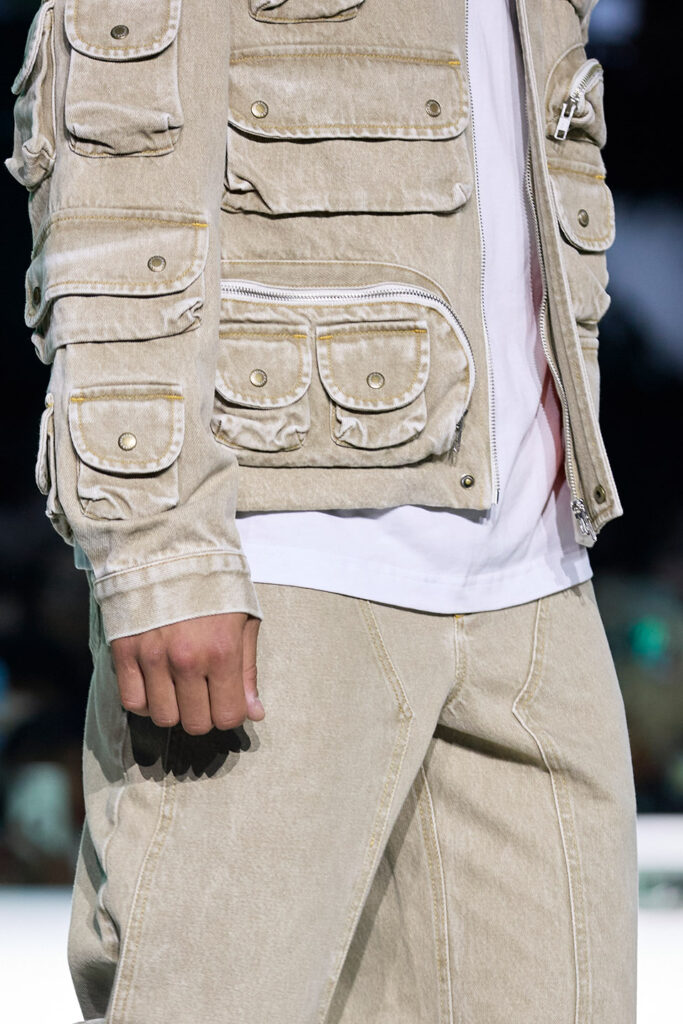
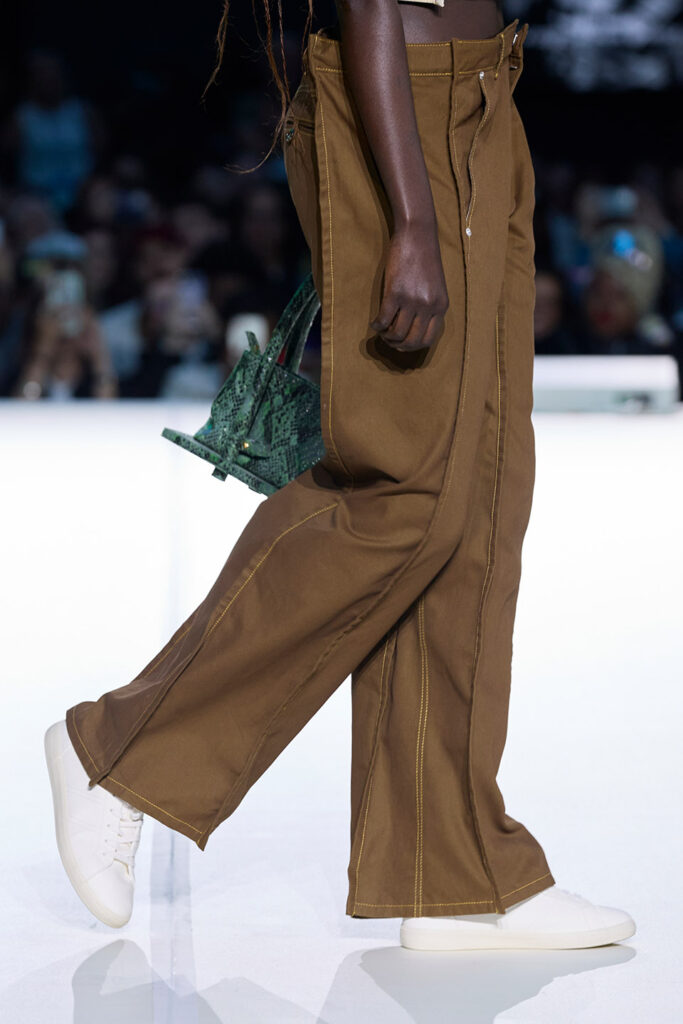
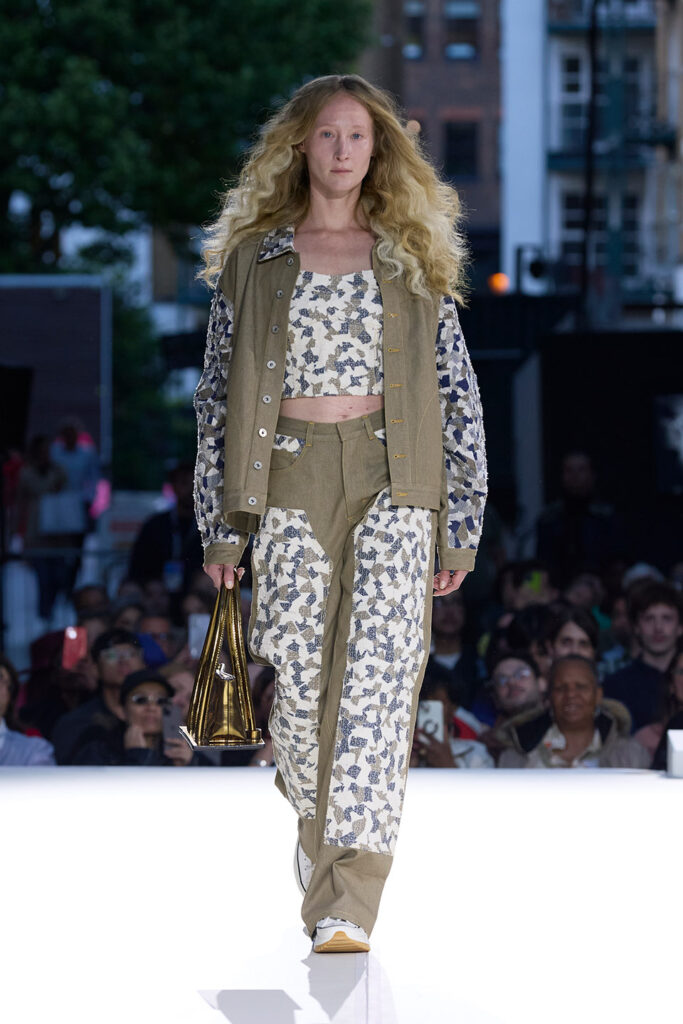
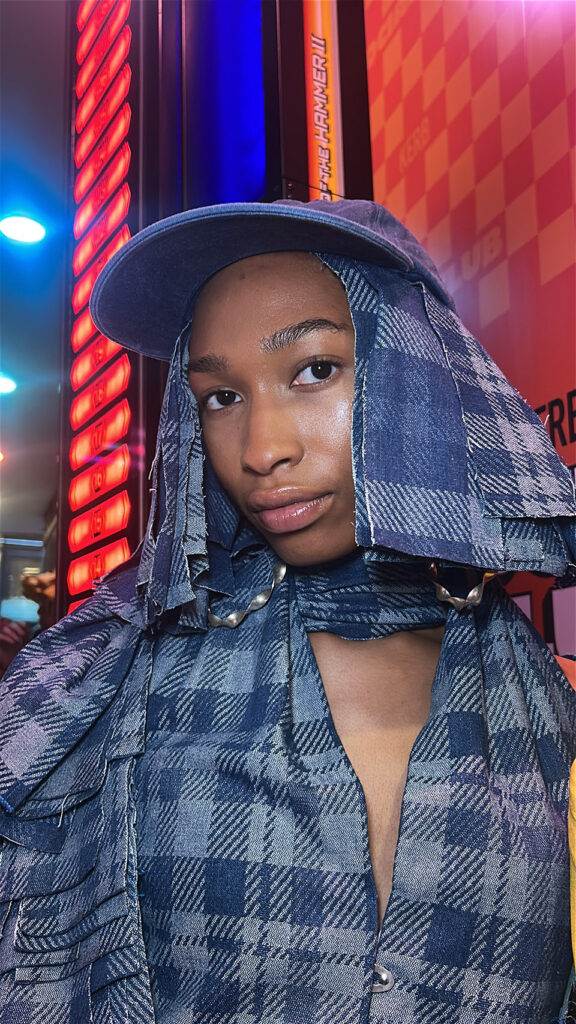
Kyiv-based label KSENIASCHNAIDER — the husband-and-wife design team of Ksenia and Anton Schnaider — has built its following on an irreverent approach to denim, and this showcase confirmed why. Cubic, oversized silhouettes hung with studied ease, anchored by a fully-upcycled all-denim jacket and trousers from FW26’s Denim Workshop. Effortless in the way only precisely considered fashion can be.
The duo’s dynamic ran through every seam: Multipocket menswear turned jackets and jeans into modular utility systems, while denim itself was pushed into new states — knitted, printed, quilted, reconstructed. Gold topstitching, usually denim’s quiet signature, resurfaced as ornament, and BROD-X — a new textile spun from recycled denim waste — carried the story into sustainability.
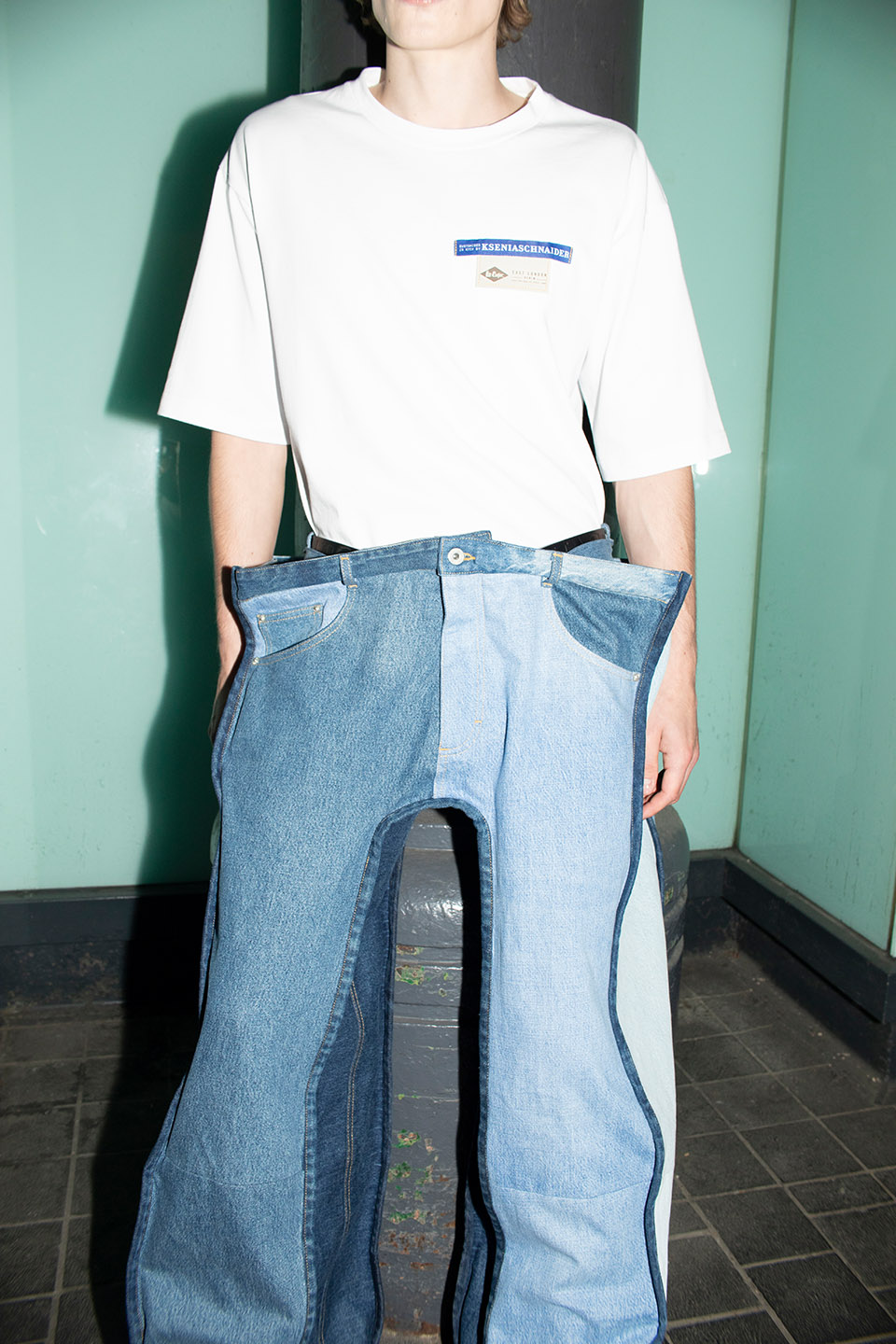
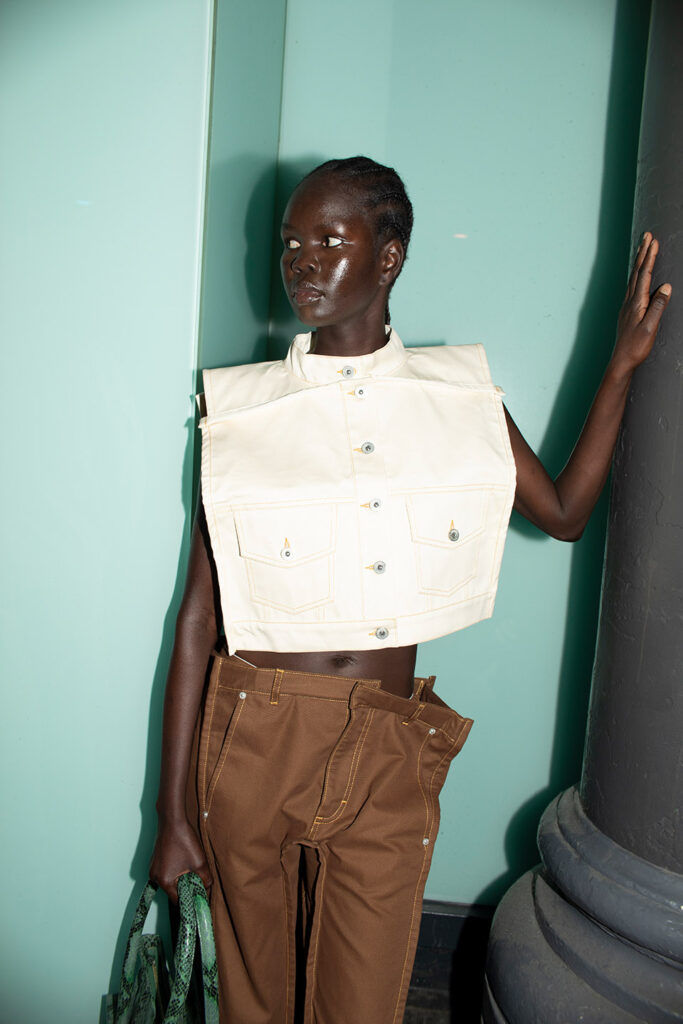
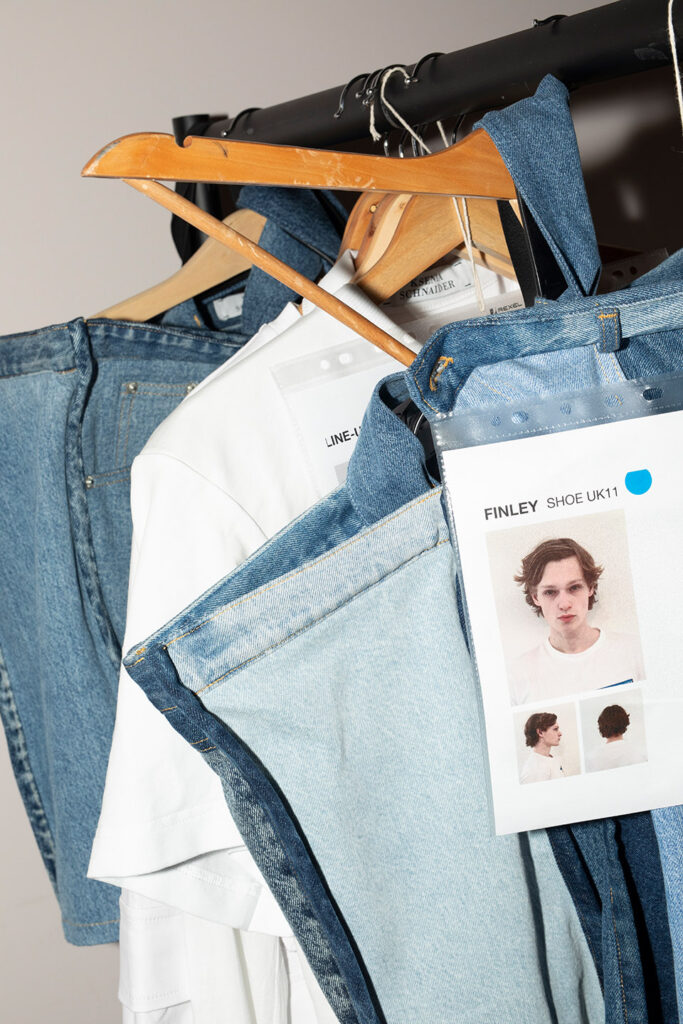
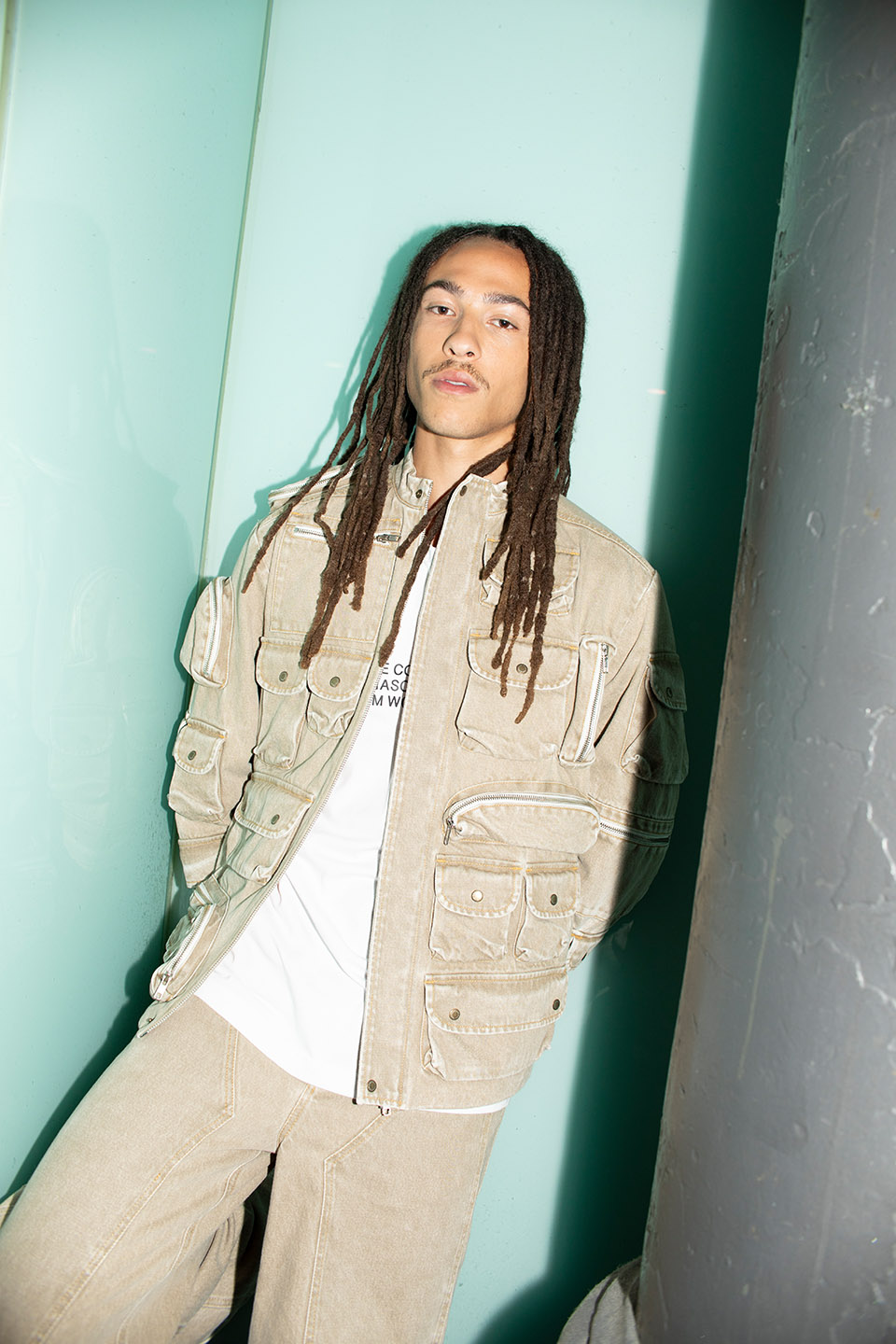
Skin was illuminated yet raw — a natural finish left deliberately unpolished, so the beauty could sit quietly against the textural denim, never competing with it.
Astrid Kearney
Cătălina Negara
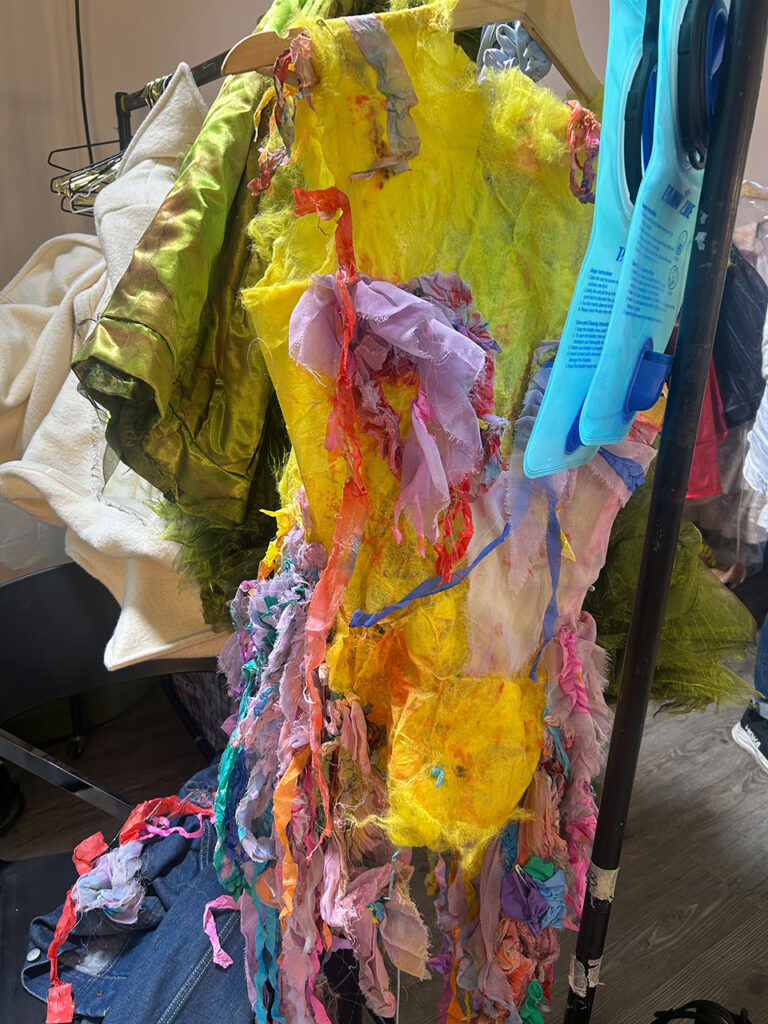
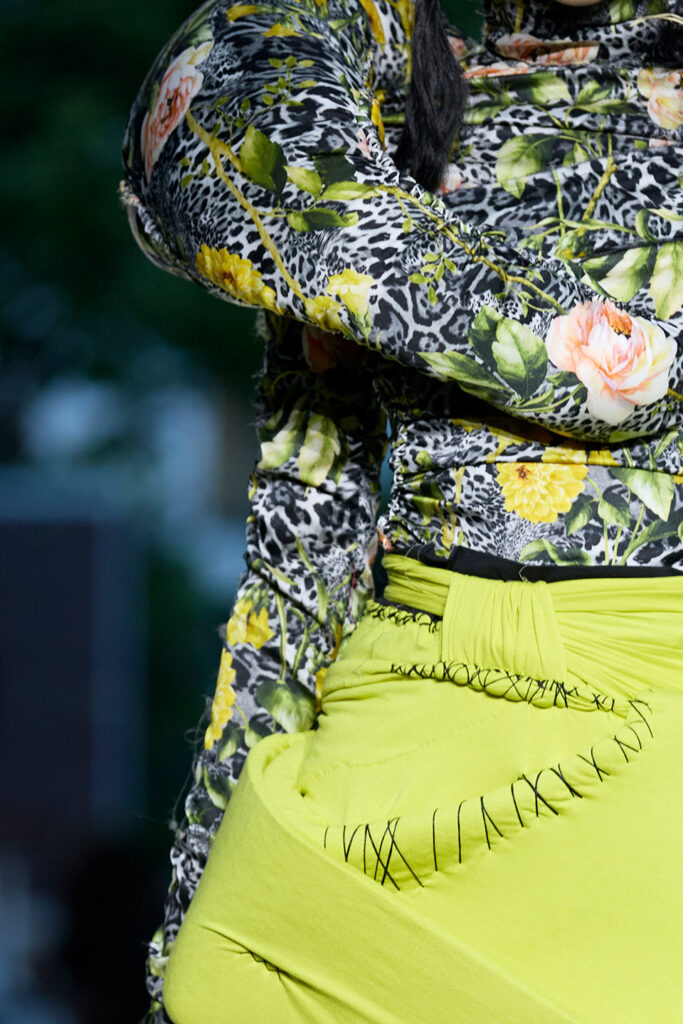
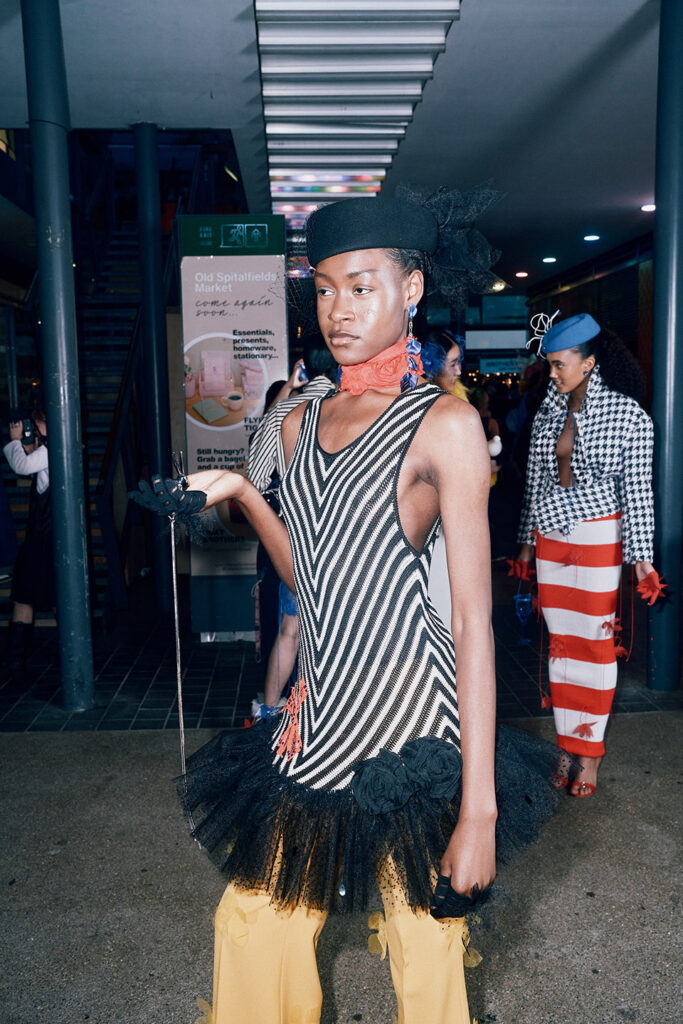
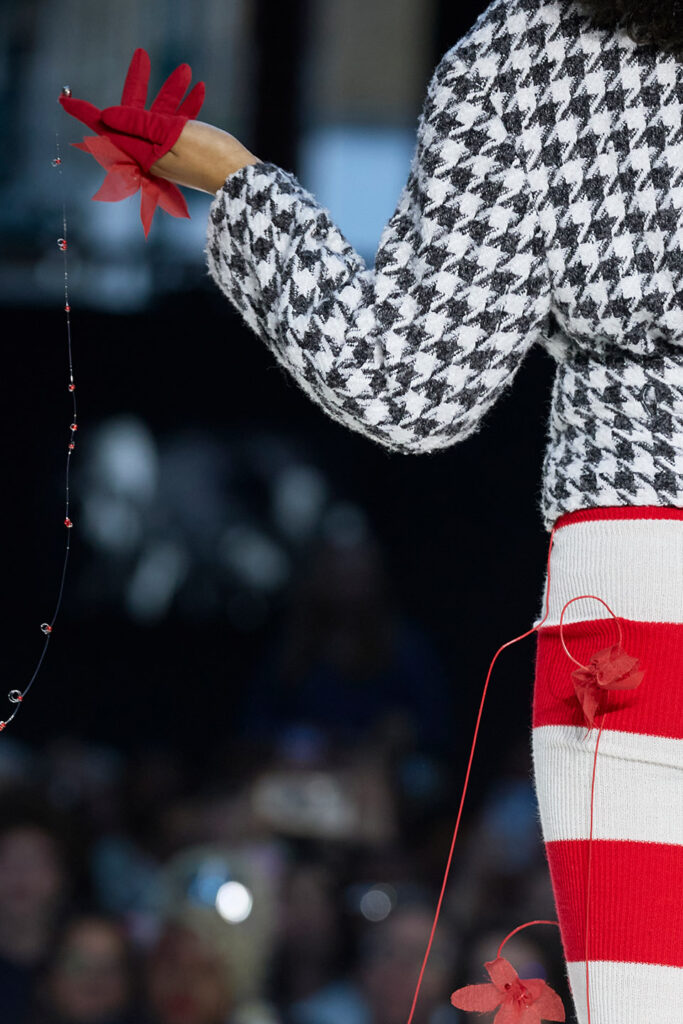
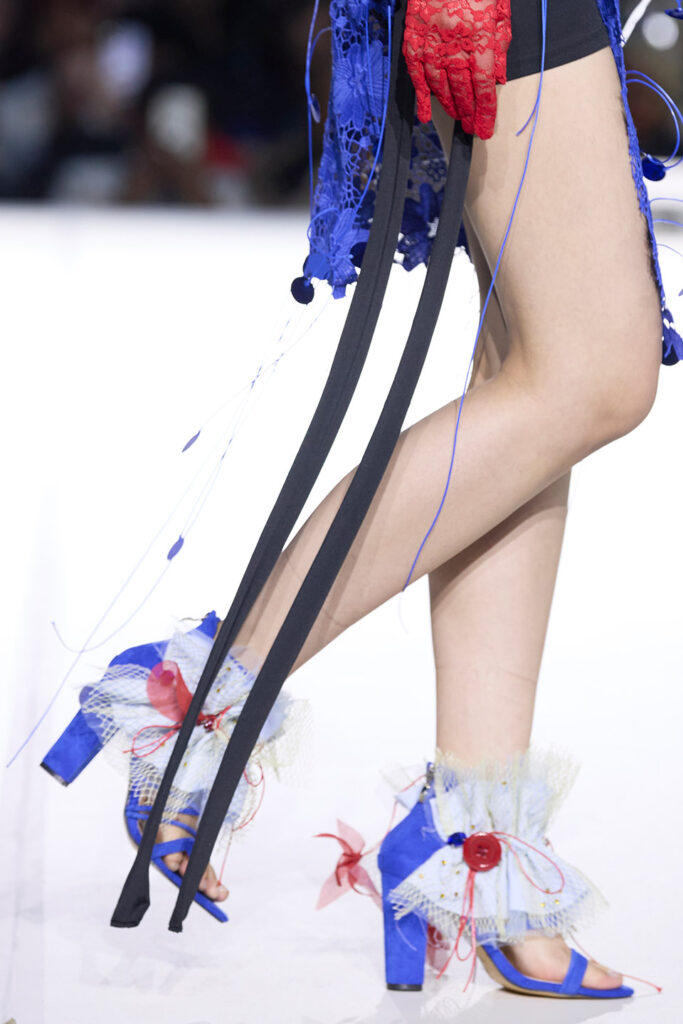
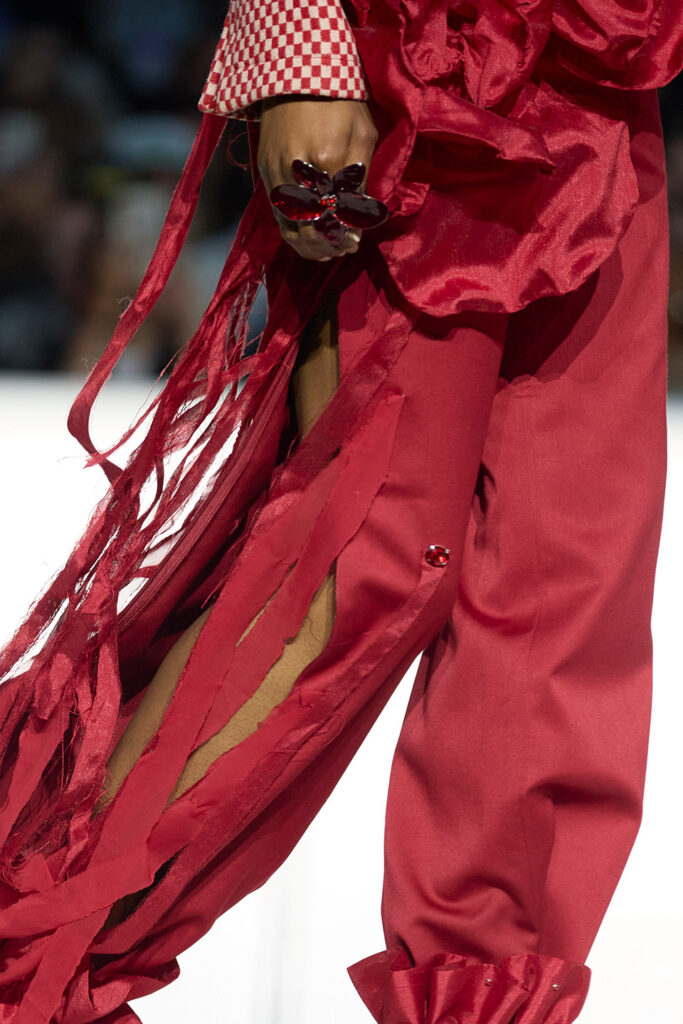
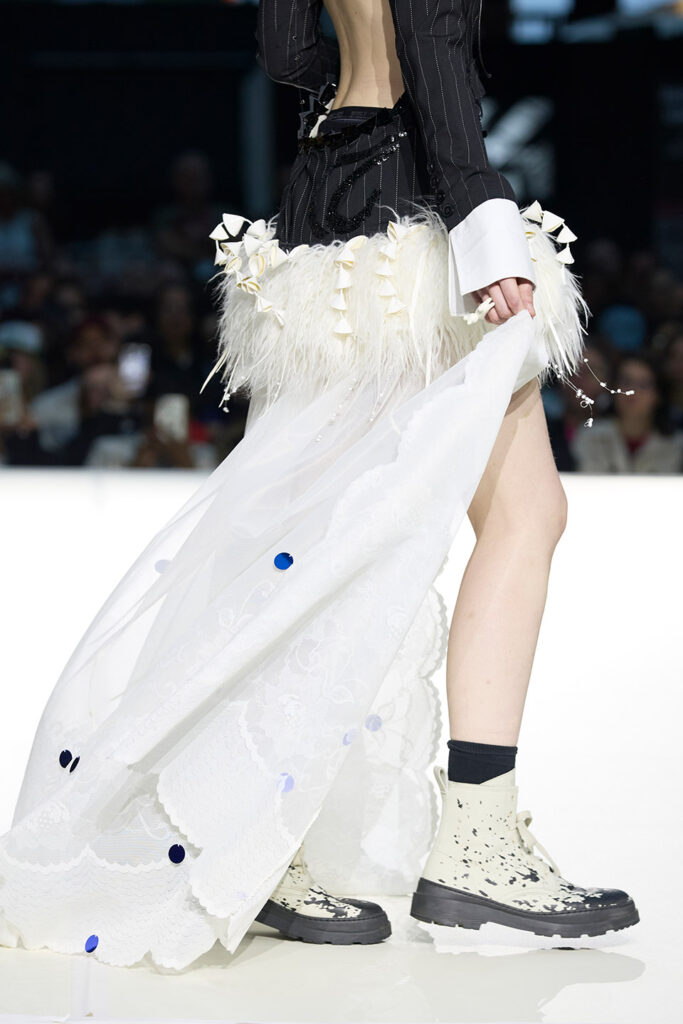
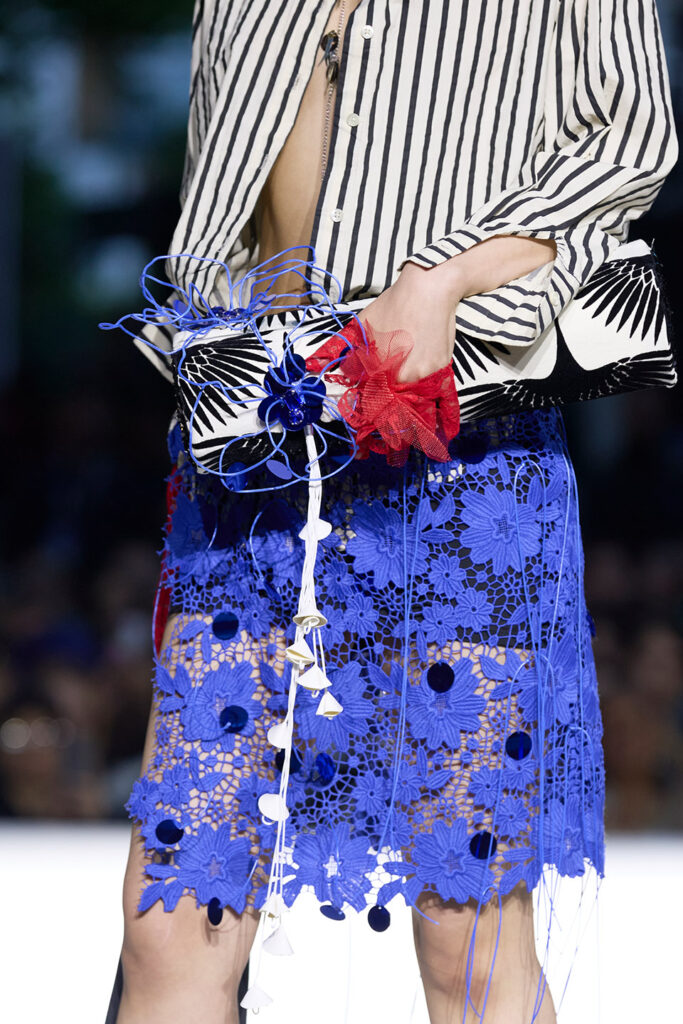
The Moldovan designer who pivoted to fashion after a decade as a floral designer, Negara brought her former world with her — metal flowers adorning models’ hats, floral-tasselled lace skirts swinging as they moved. Red stripes, fluffy yellow boleros and trailing silver jewellery: beachwear refracted through a preppy lens, a strange combination that held together with complete conviction.
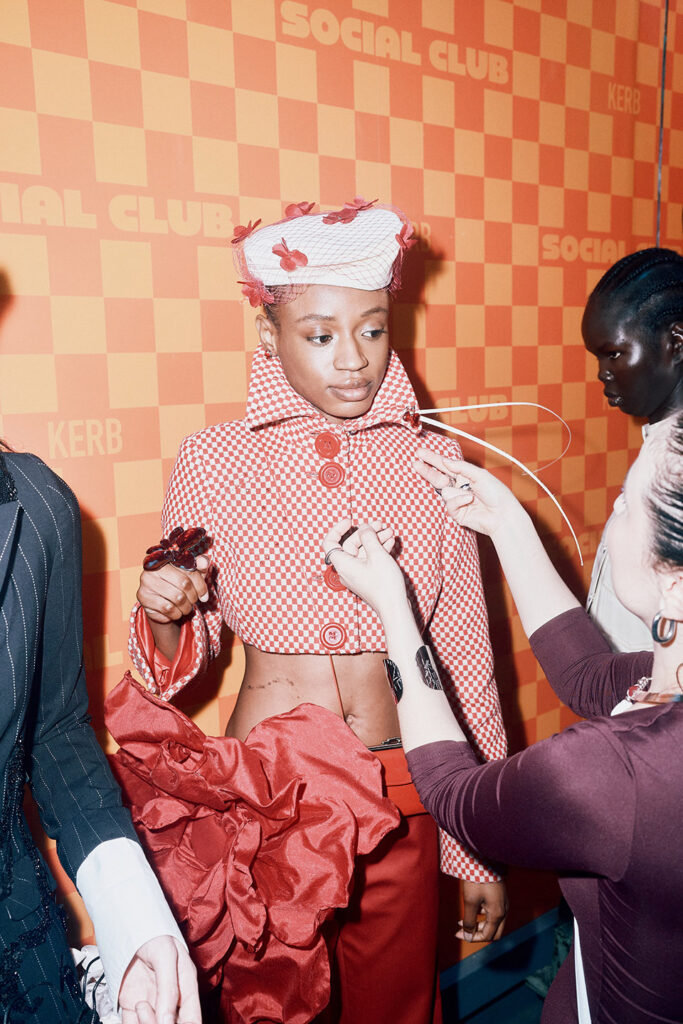
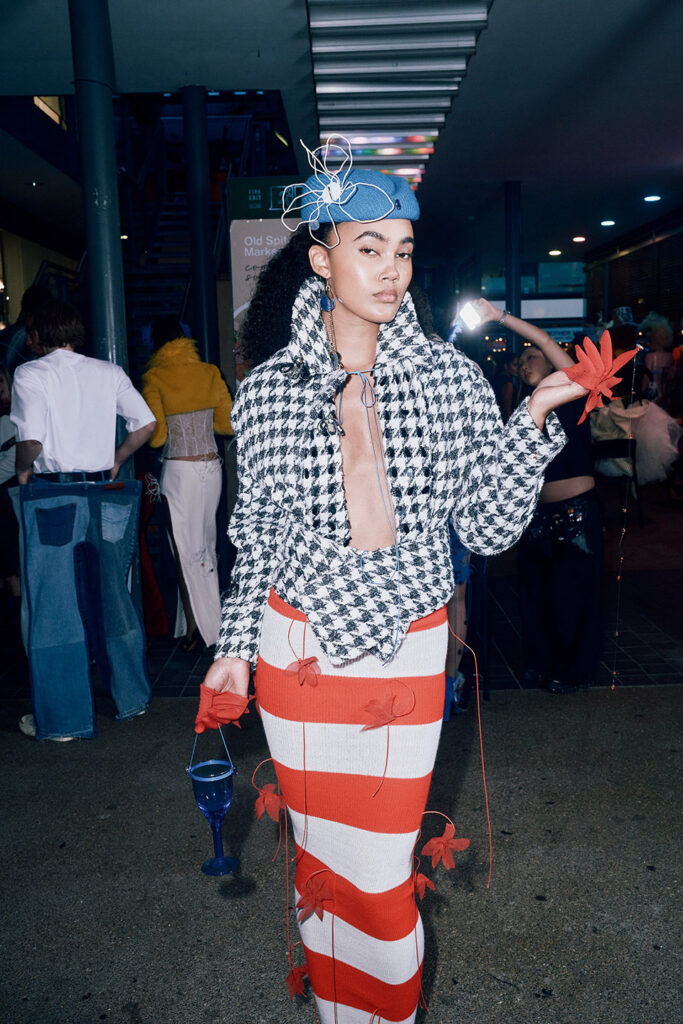
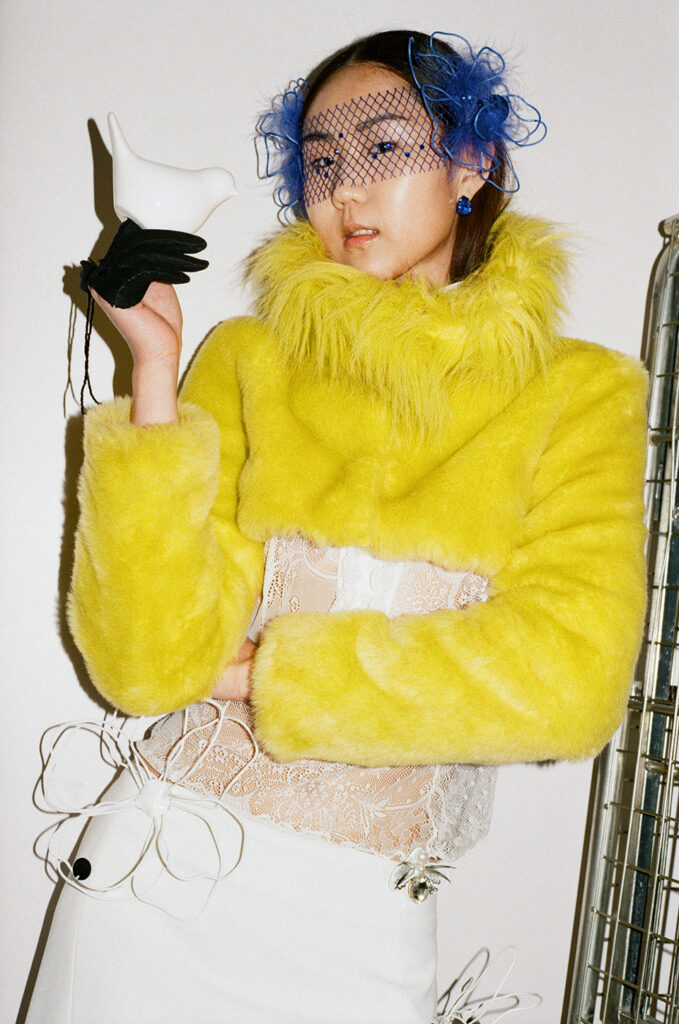
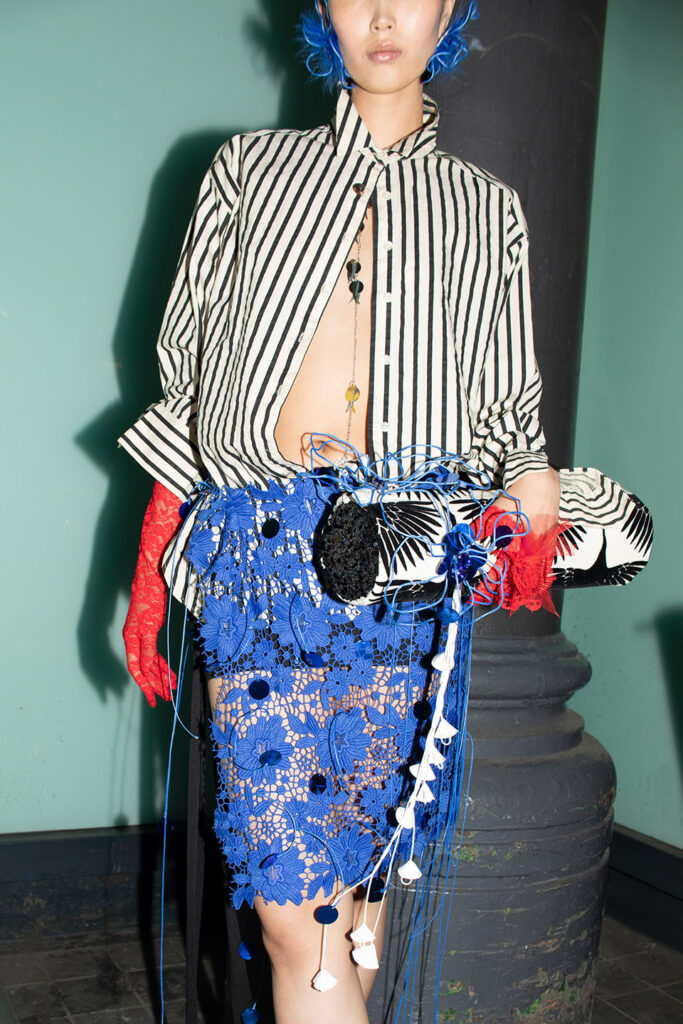
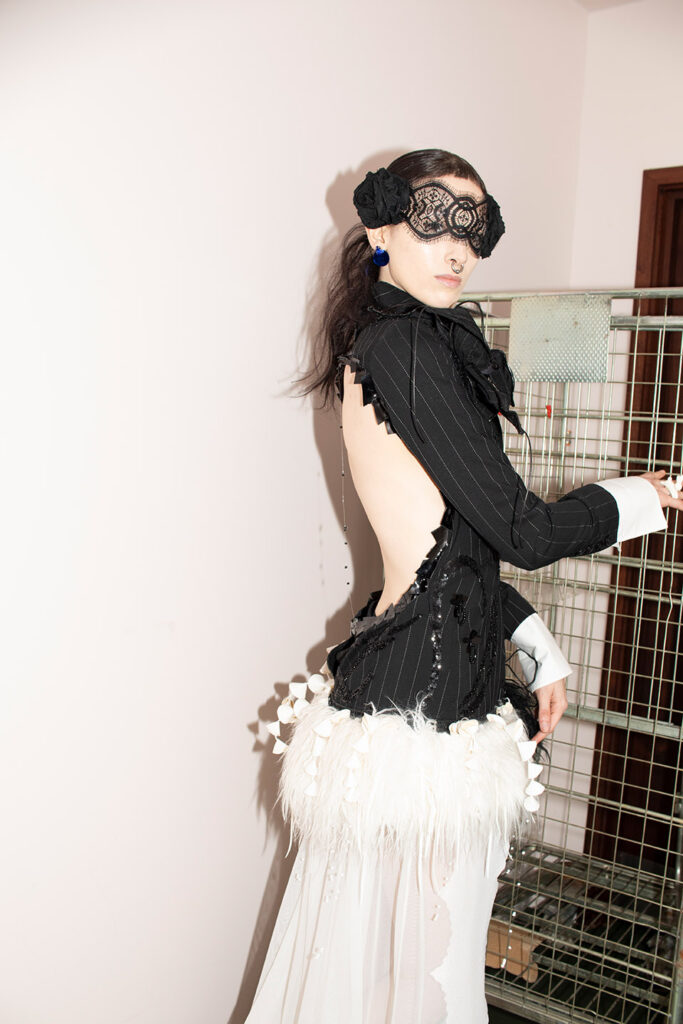
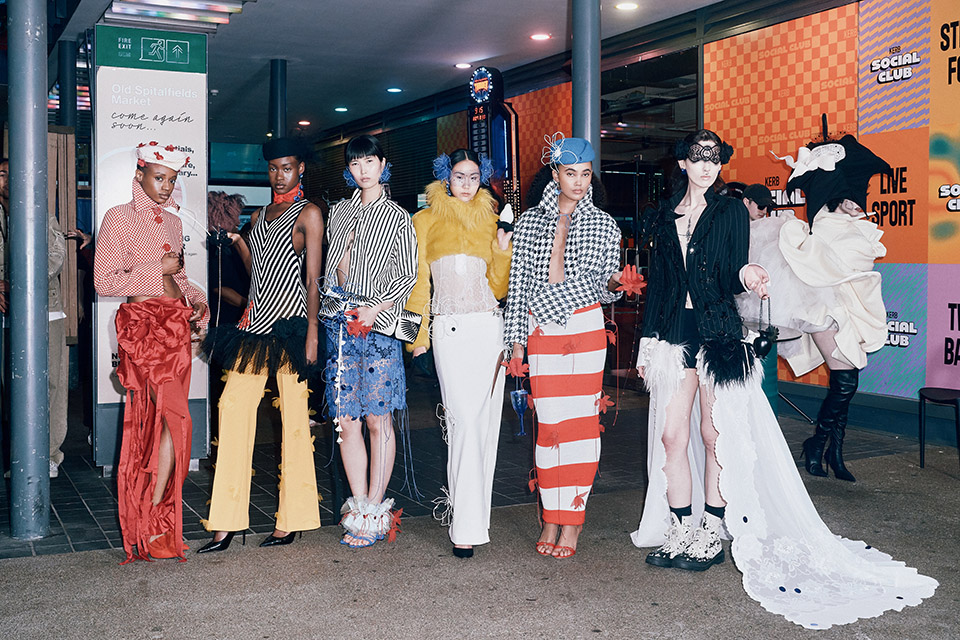
Flowers and fashion have always shaped my creative world. After more than a decade as a floral designer, fashion has become my main form of expression.
Cătălina Negara
Upcycling has been part of my life since childhood. Growing up in a working-class family, transforming old clothes was how I explored my style. Today, that same mindset continues to guide my work—embracing circularity, experimentation, and the beauty of giving materials a second life.
Matthew David Andrews with Milliner Jenny Beattie
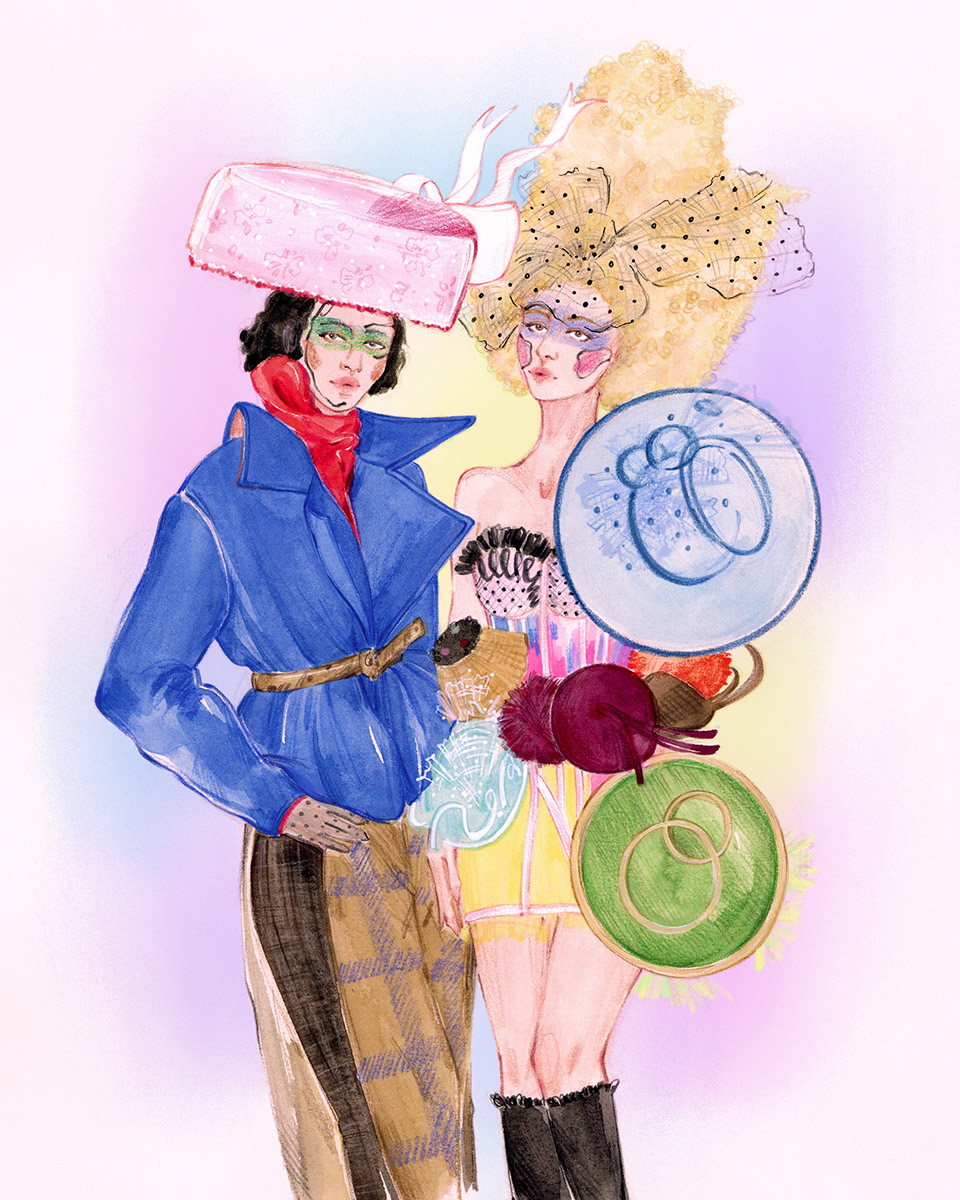
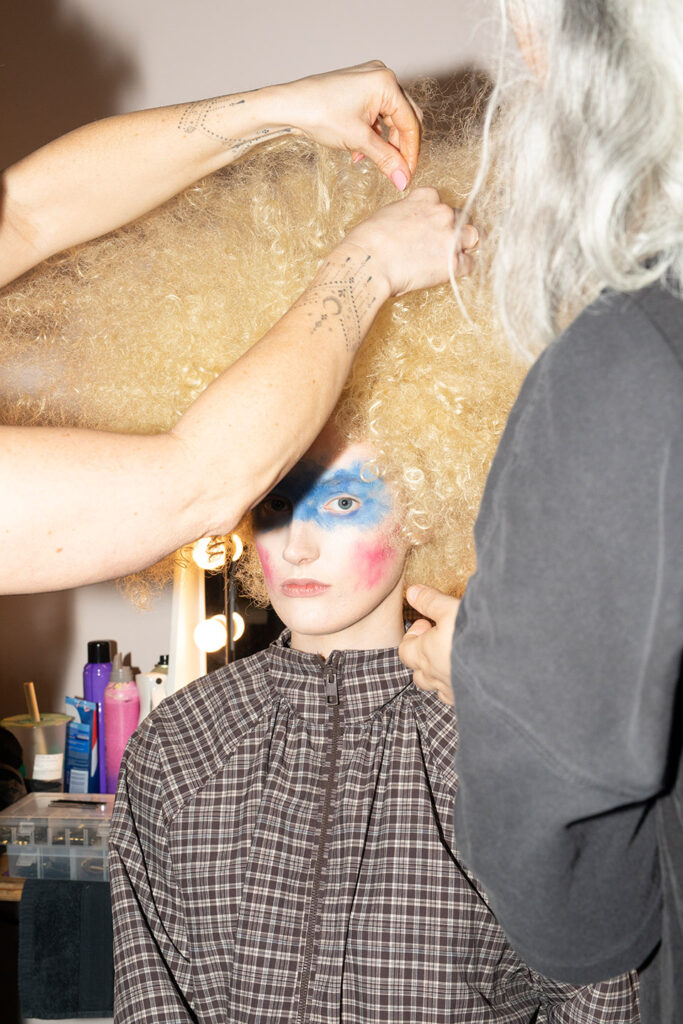
The show closed with Andrews’ fever-dream finale — Mad Hatter’s Tea Party crossed with elaborate corsetry, Victorian-style dresses constructed from balloons, crepe paper, rags and umbrellas worn as hats. Water-activated textiles served as metaphor: childhood creativity forged through difficulty, imagination as refuge. The hats, developed with milliner Jenny Beattie over more than a year, were the show’s final reveal — releasing water onto the models and runway to gasps from the crowd.
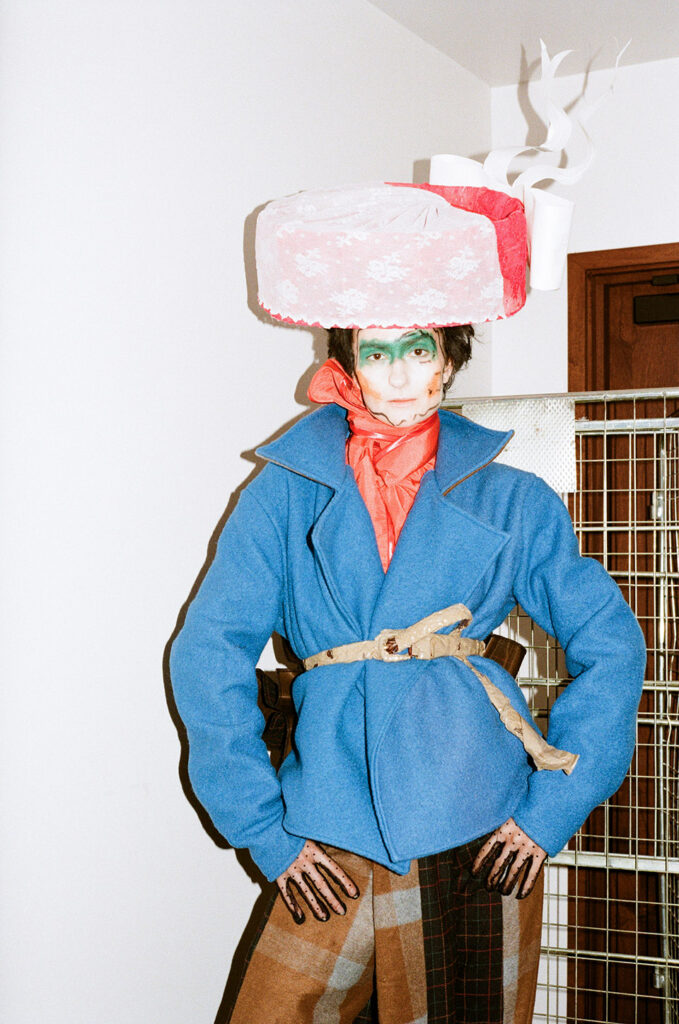
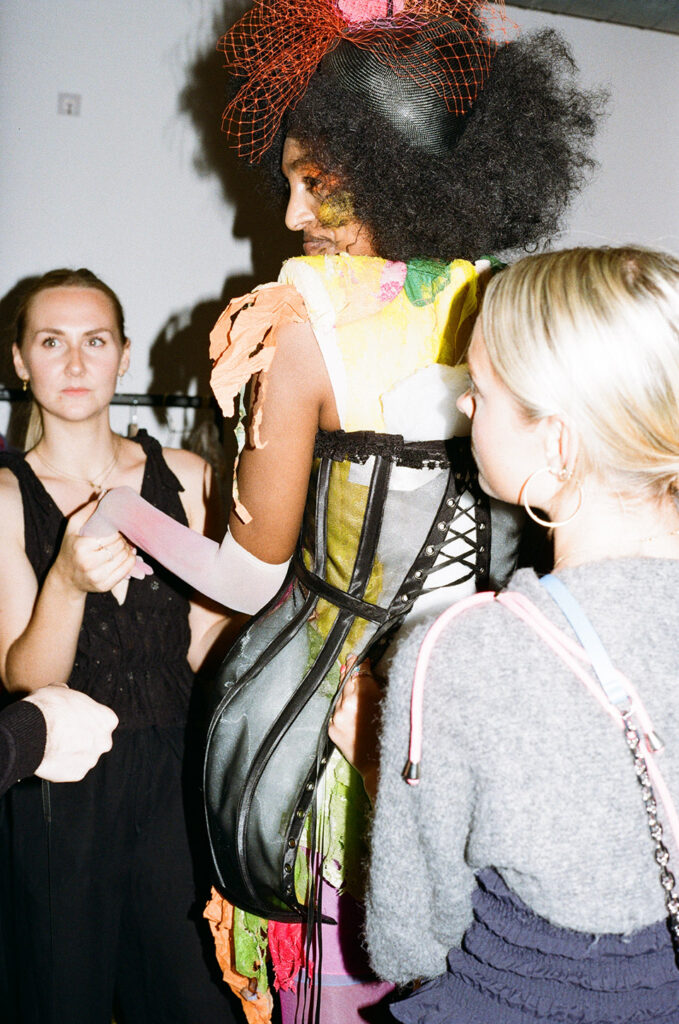
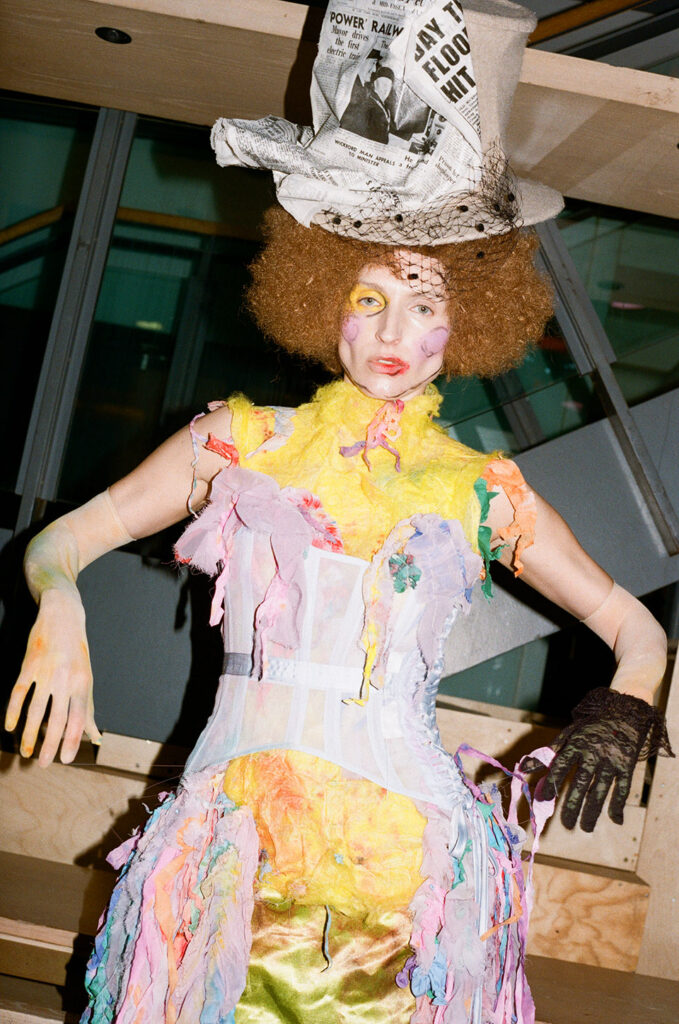
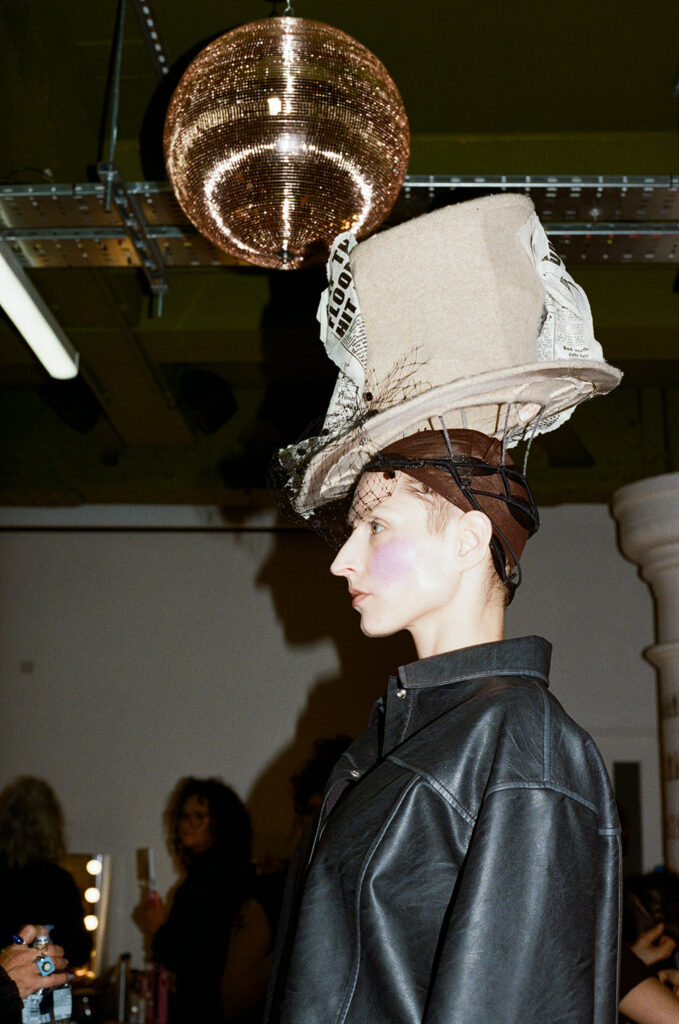
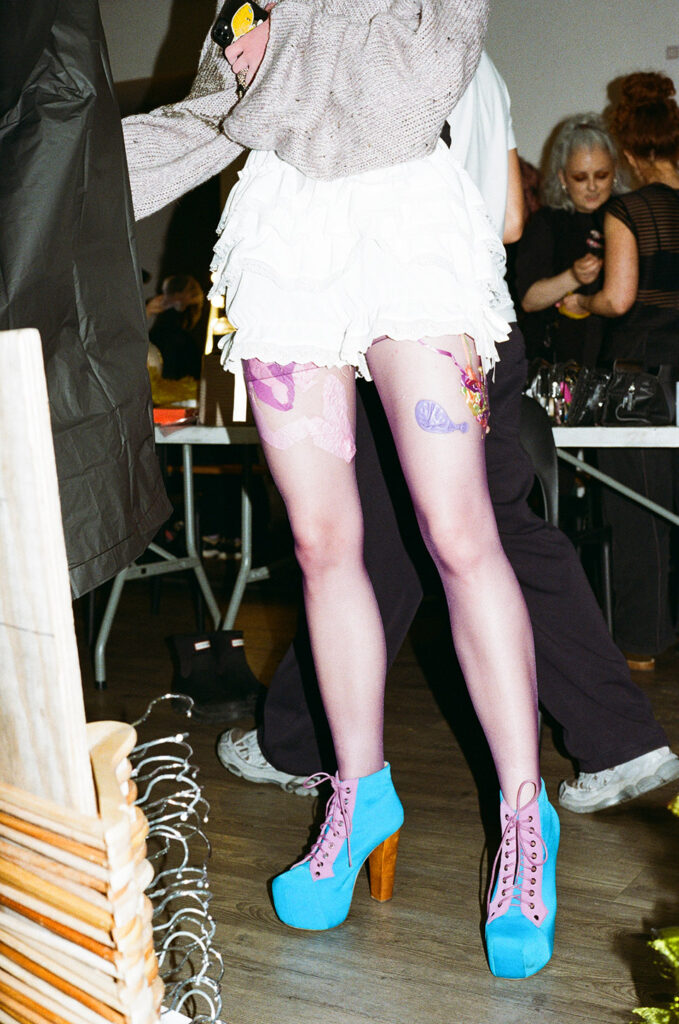
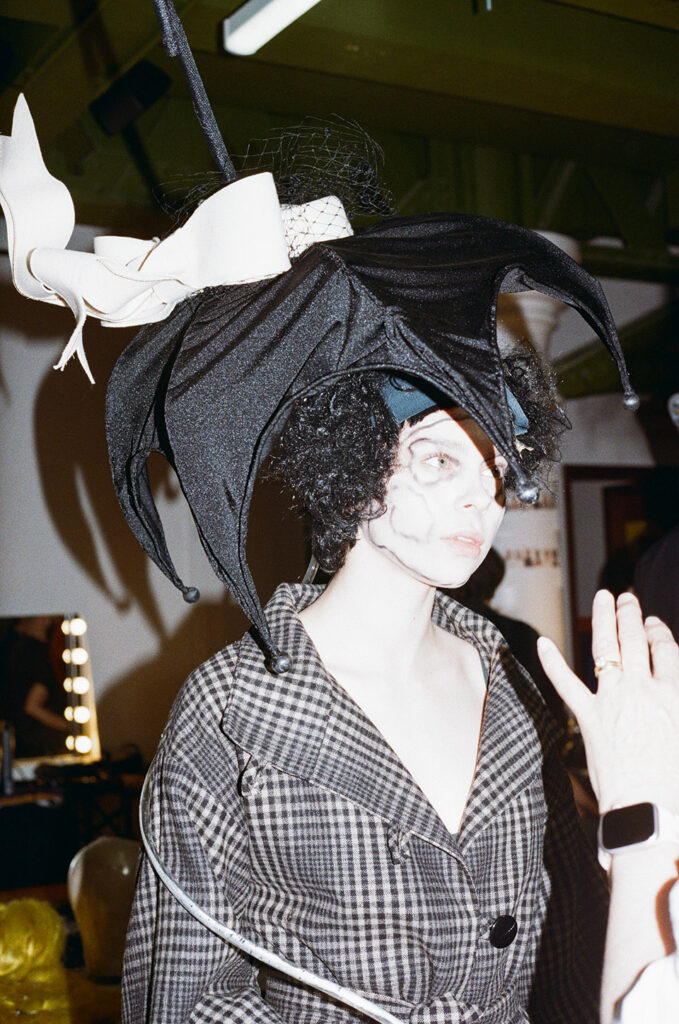
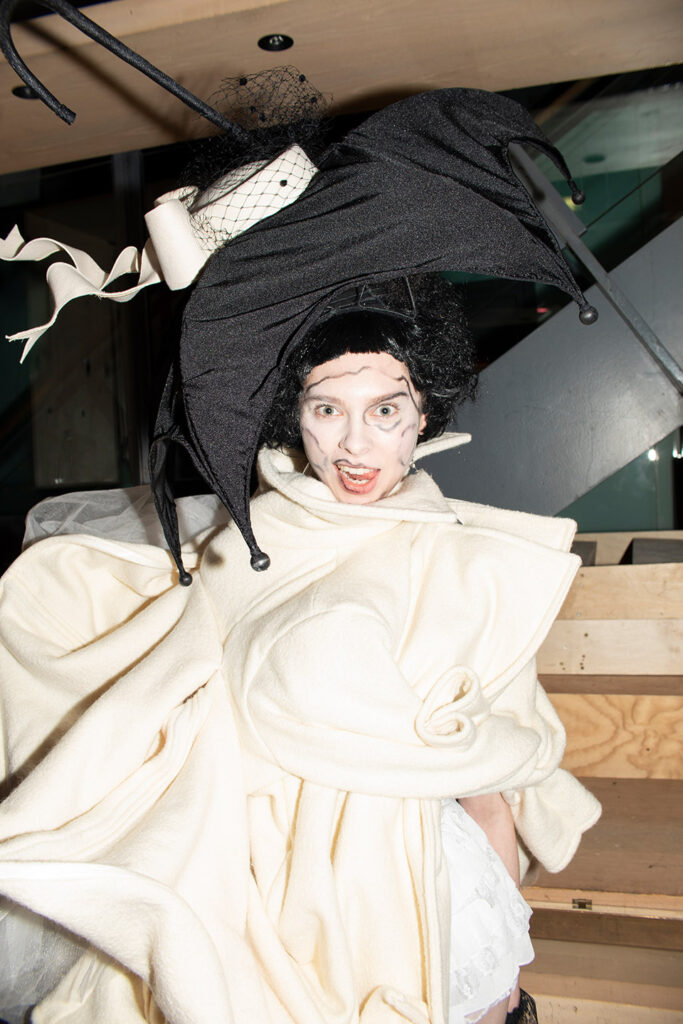
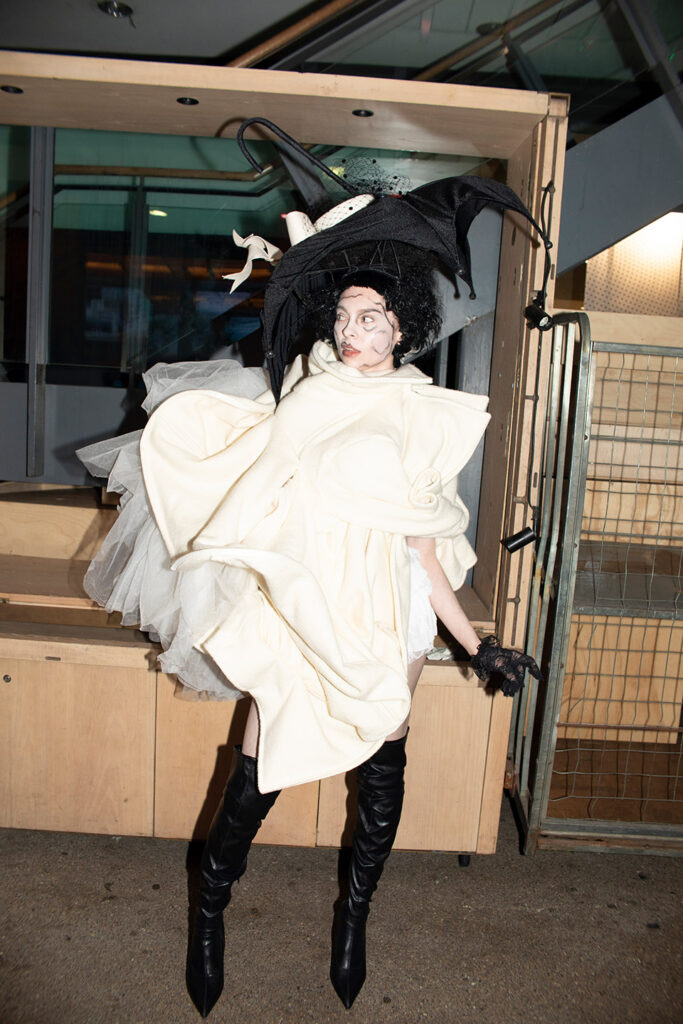
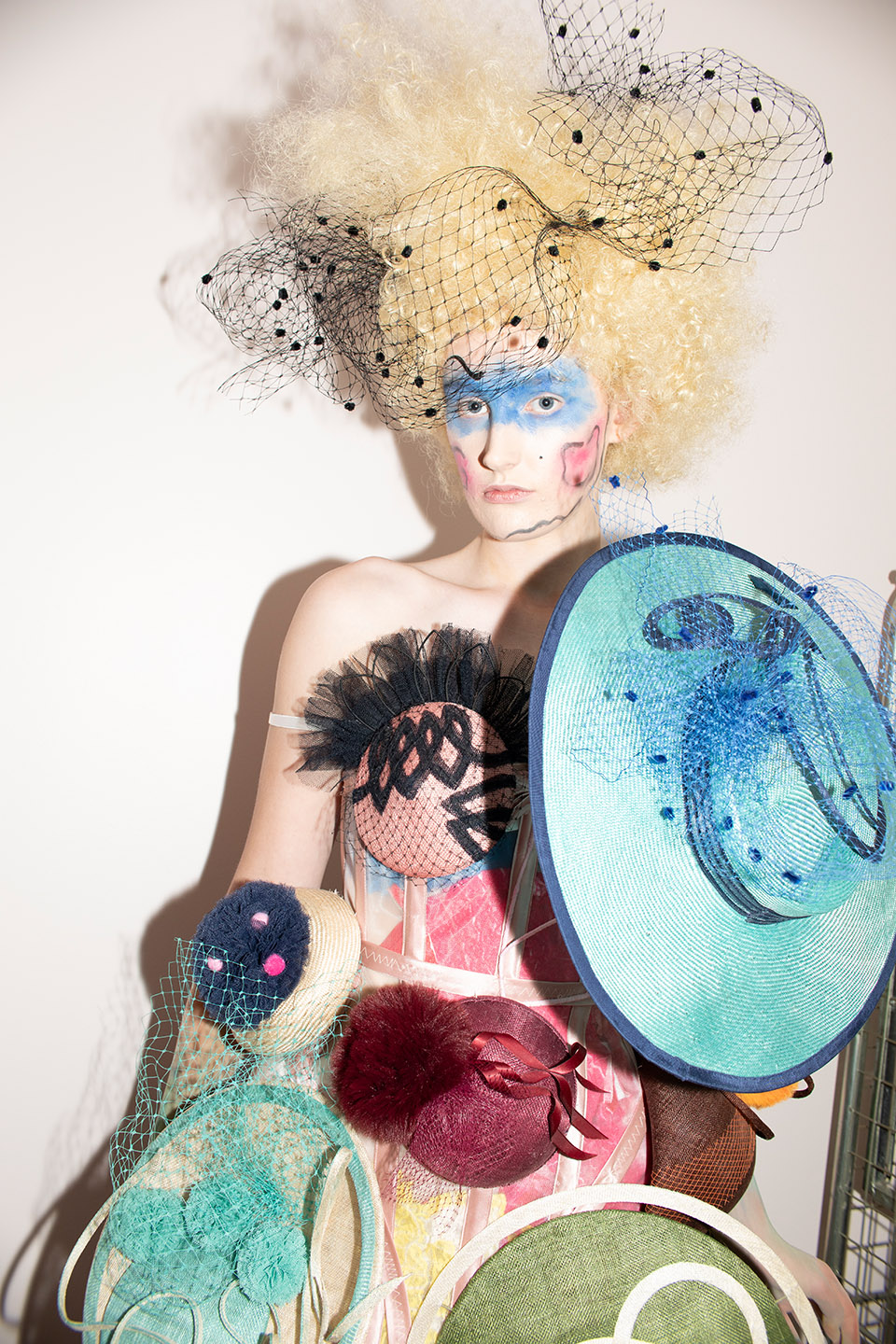
Some of my earliest memories are of me and my mum making treasure chests out of cardboard boxes — literally creating art from trash. Being able to make has always brought me solace.
Matthew David Andrews
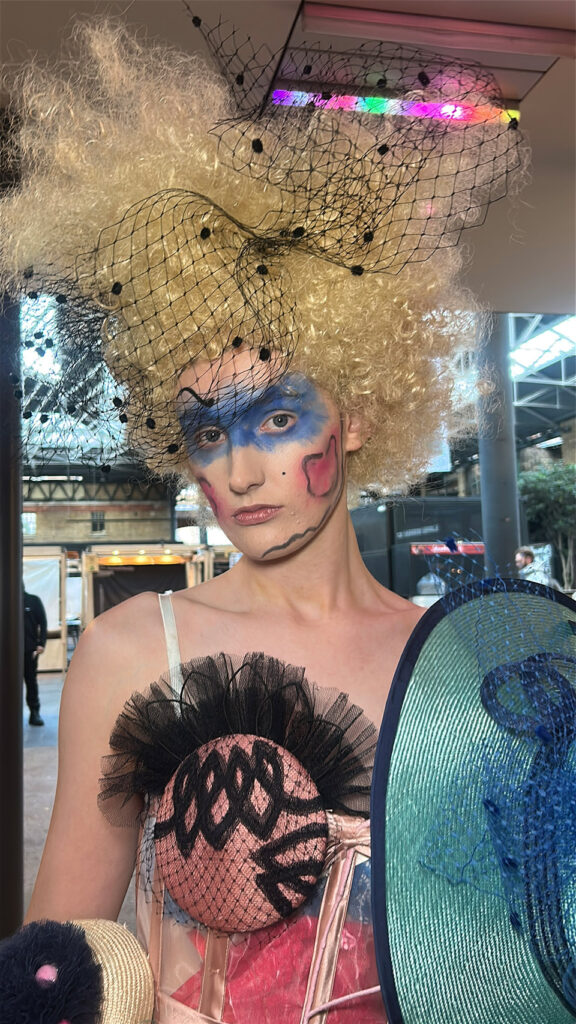
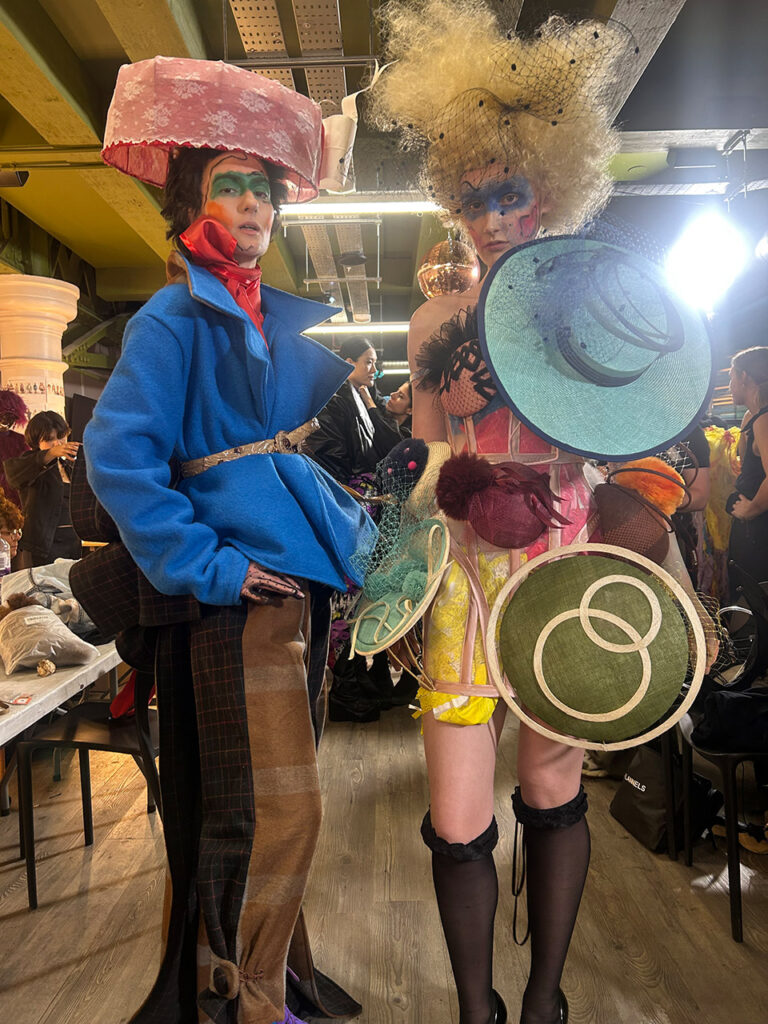
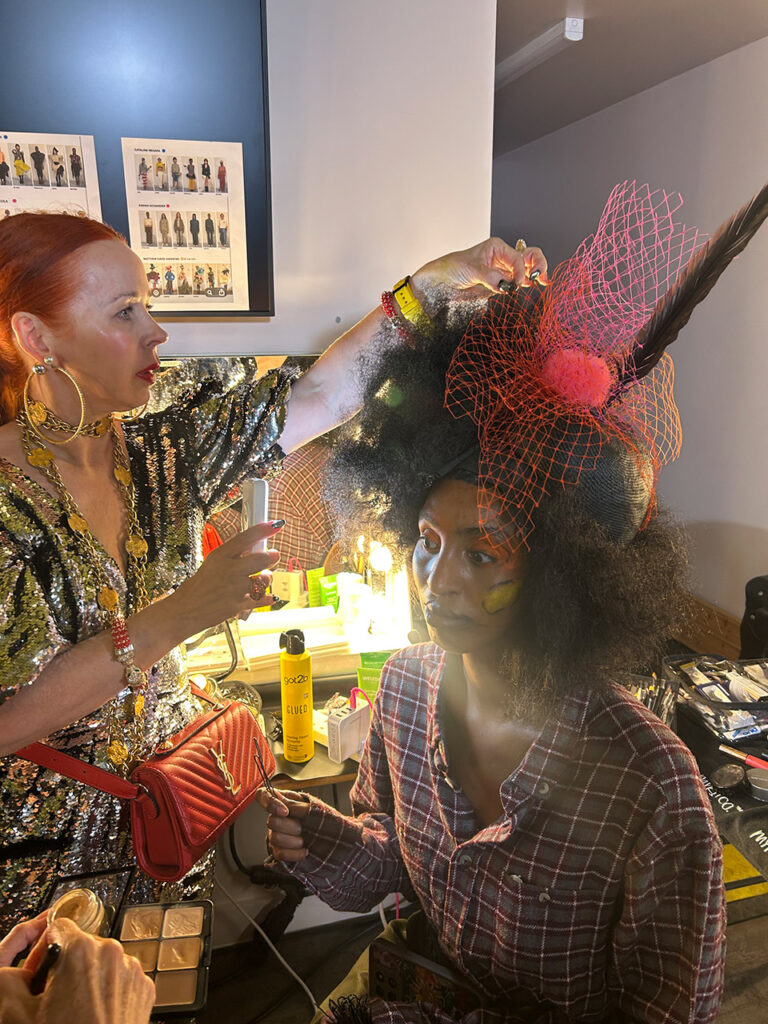
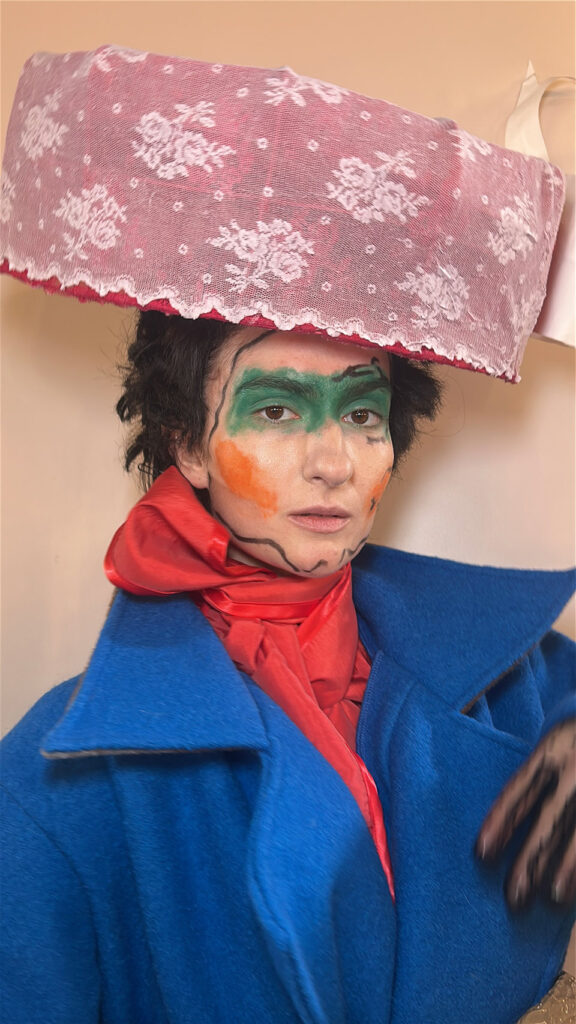
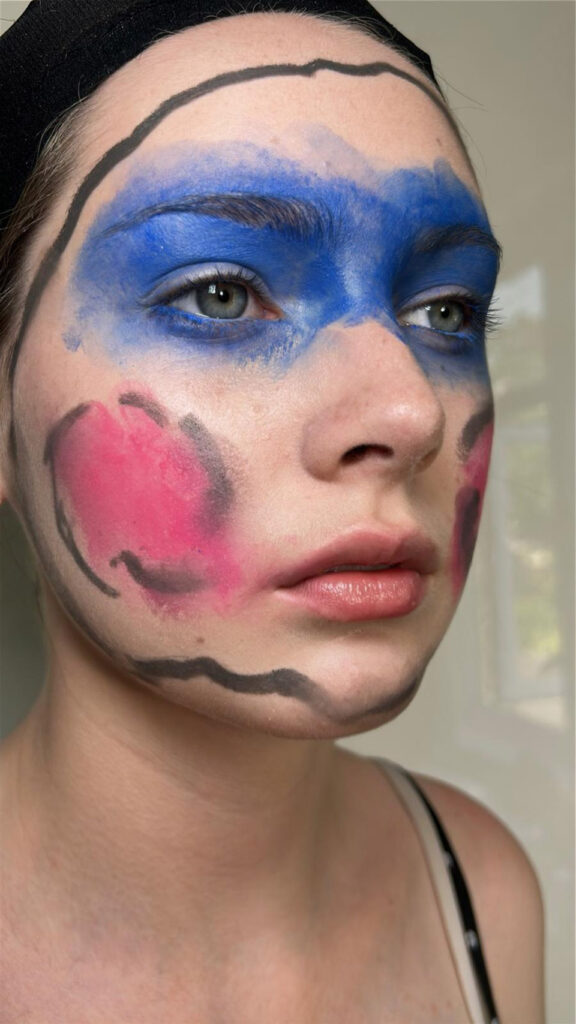
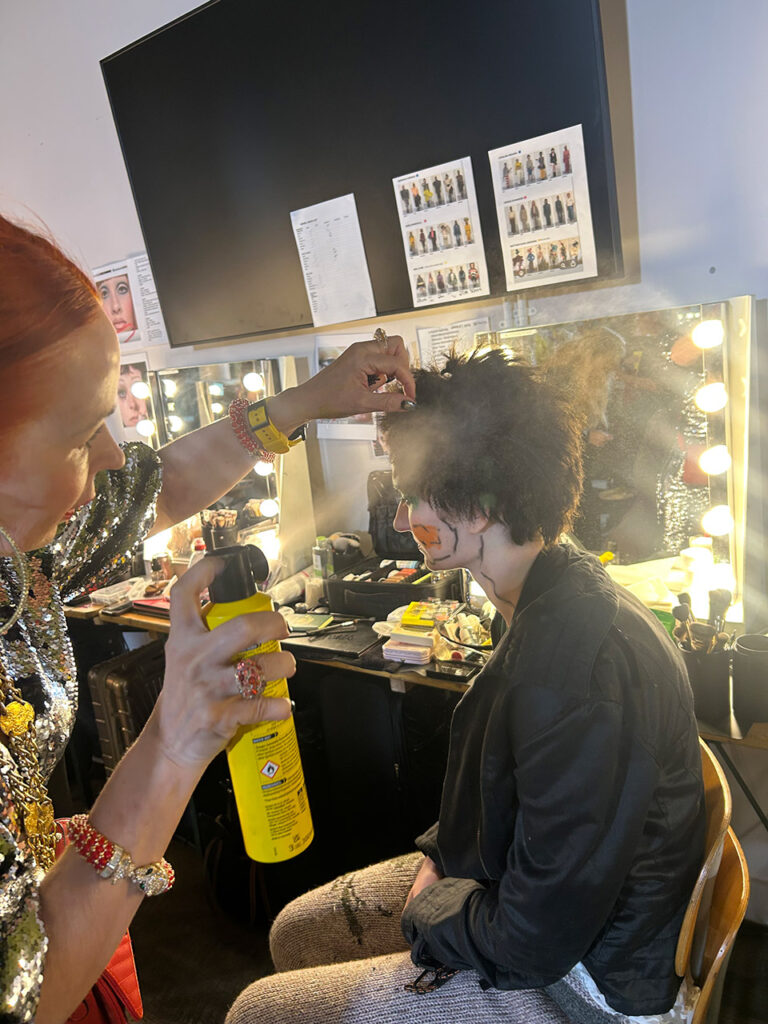
For Matthew David Andrews, faces became living sketchbooks — aqua markings daubed and smudged across the skin, imperfect and instinctive. The wigs matched: windswept, tactile, shaped to hold movement rather than finish.
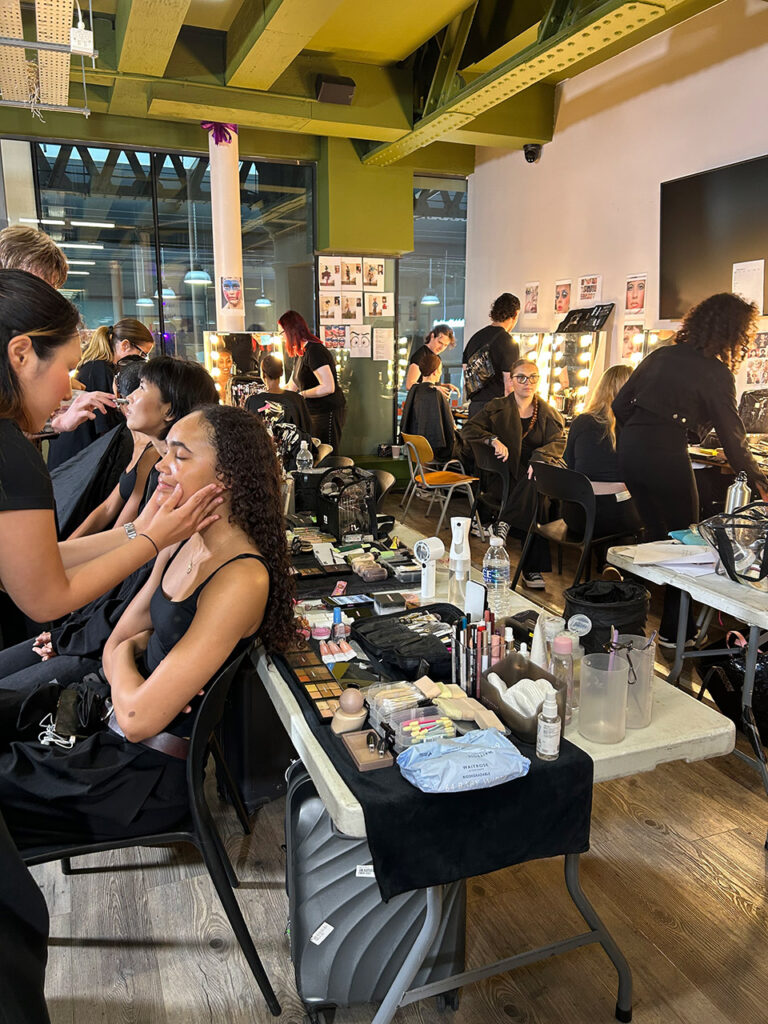
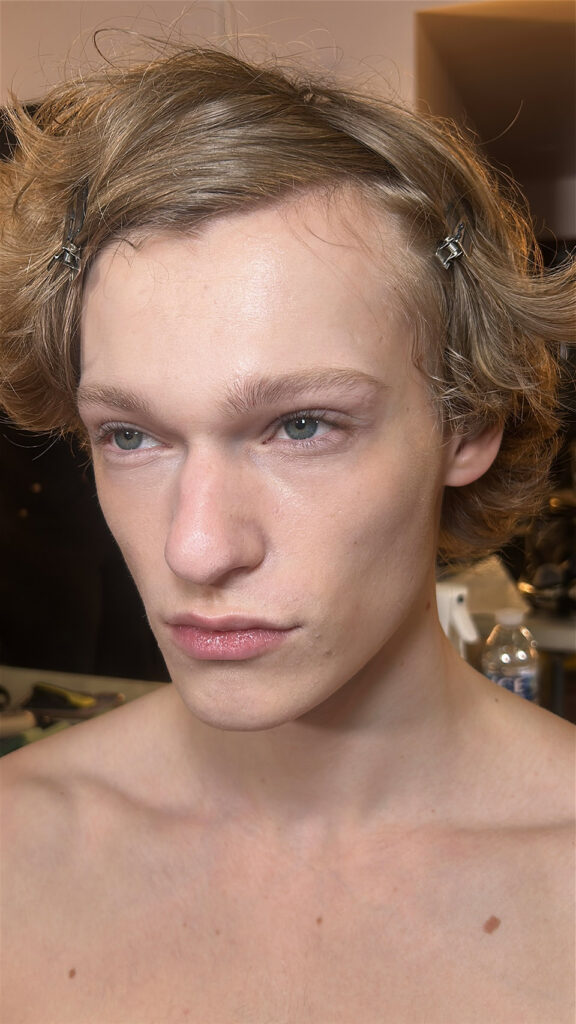
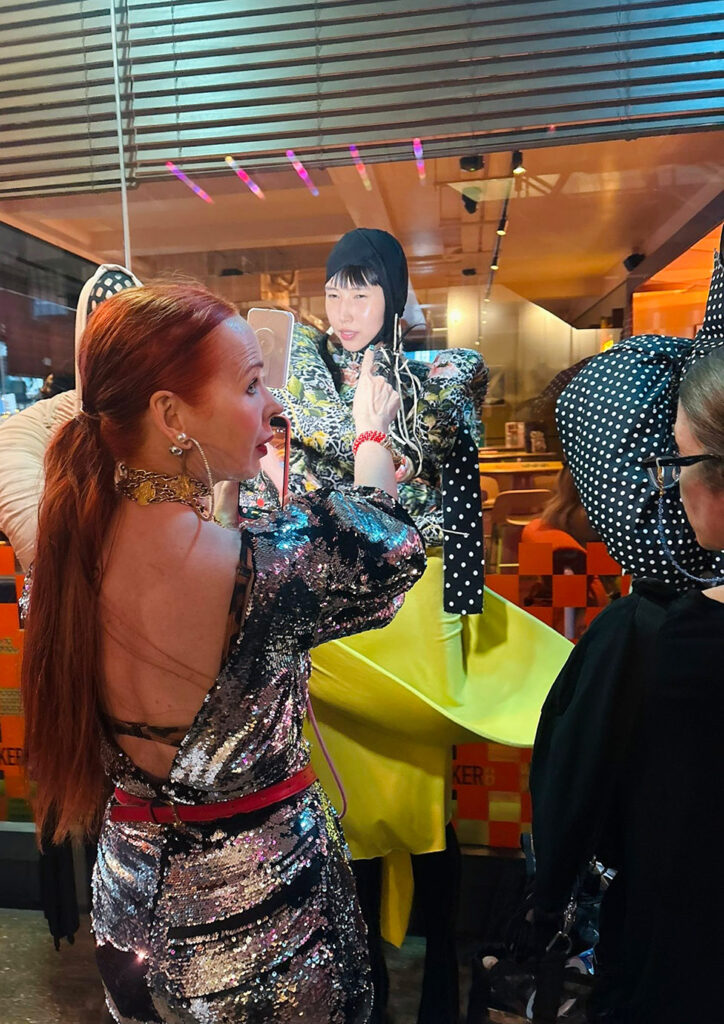
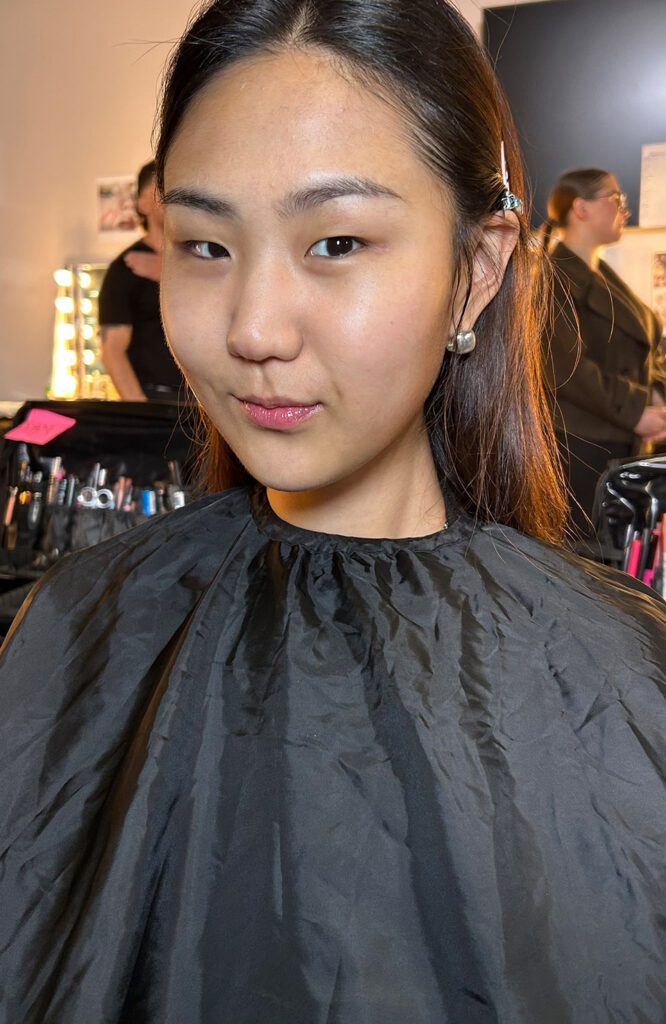
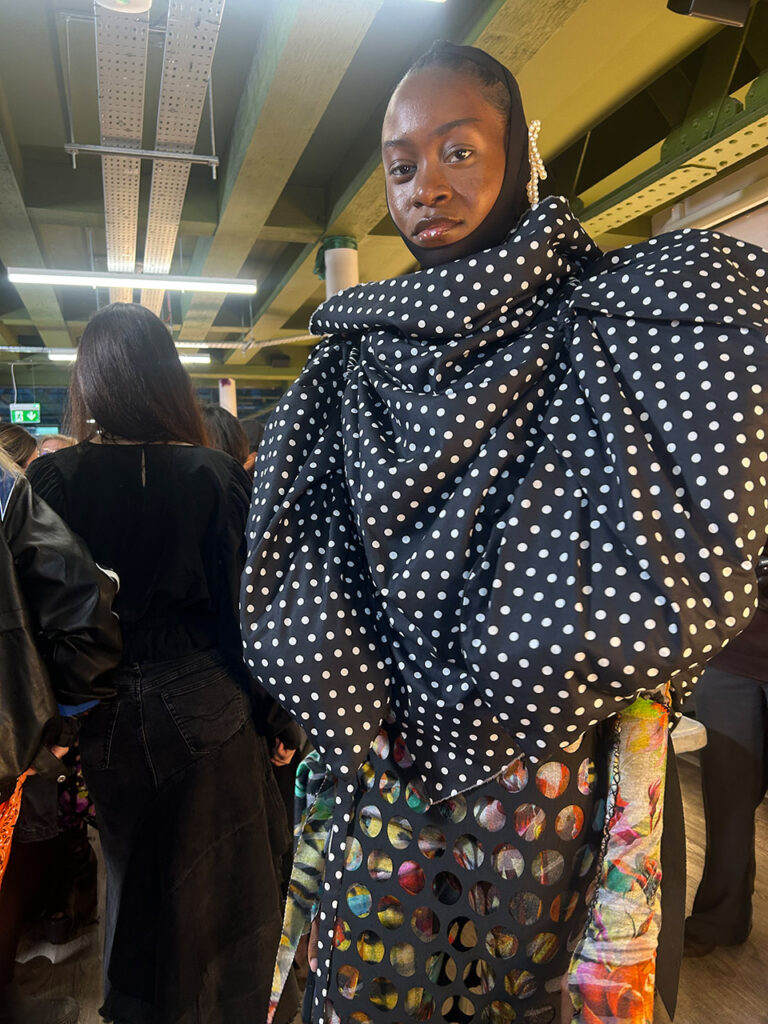
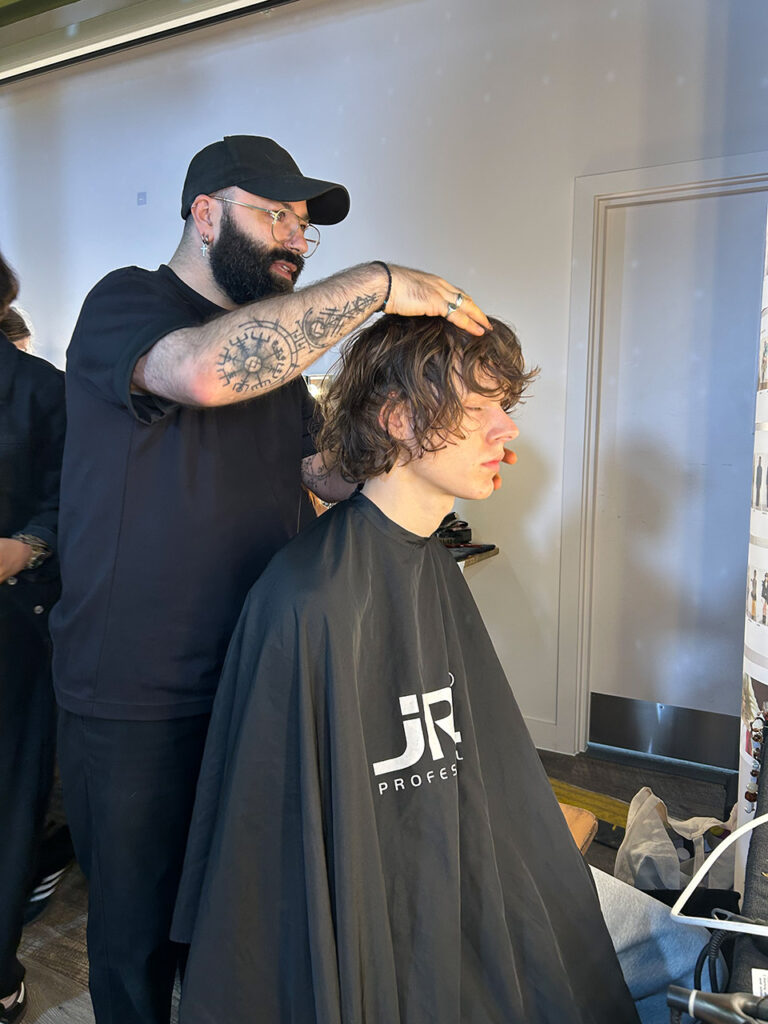
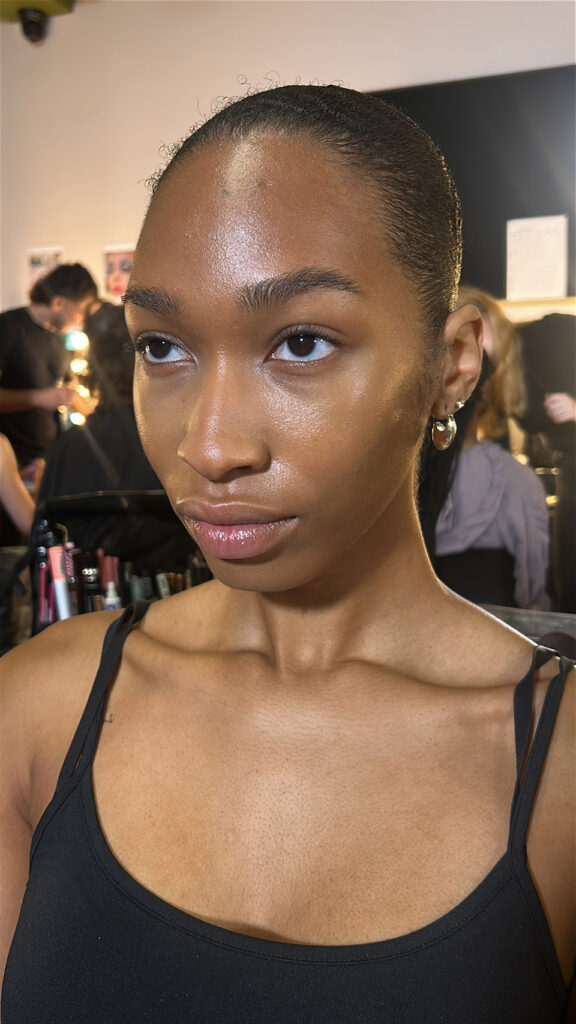
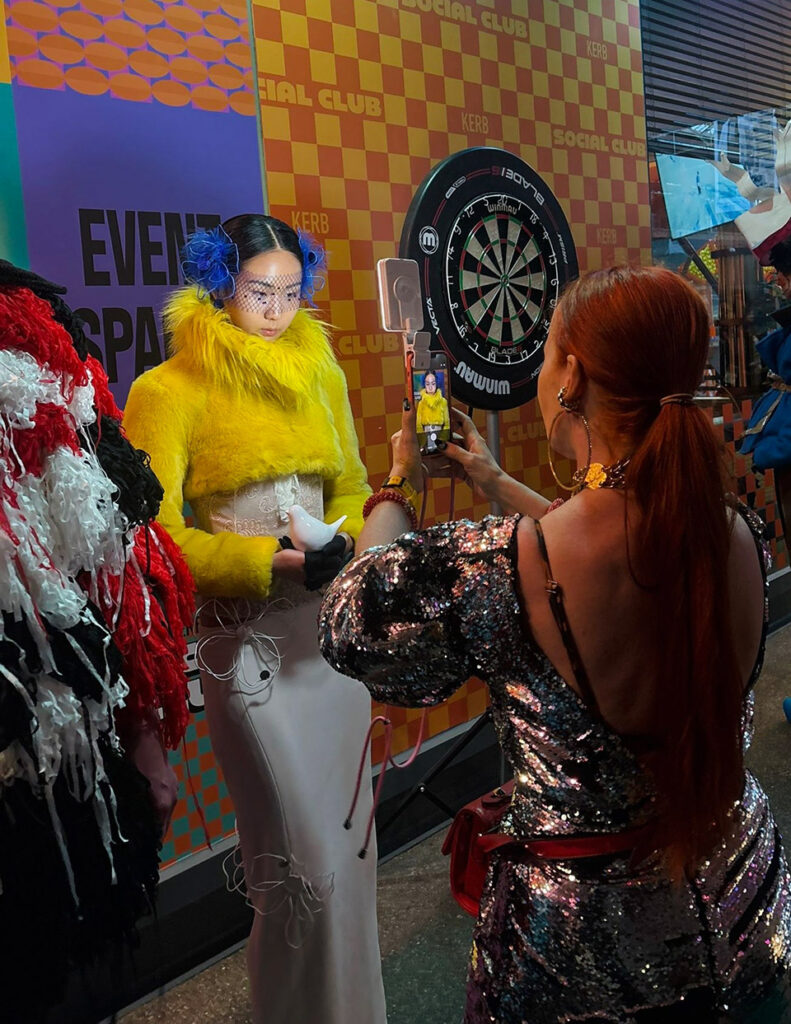
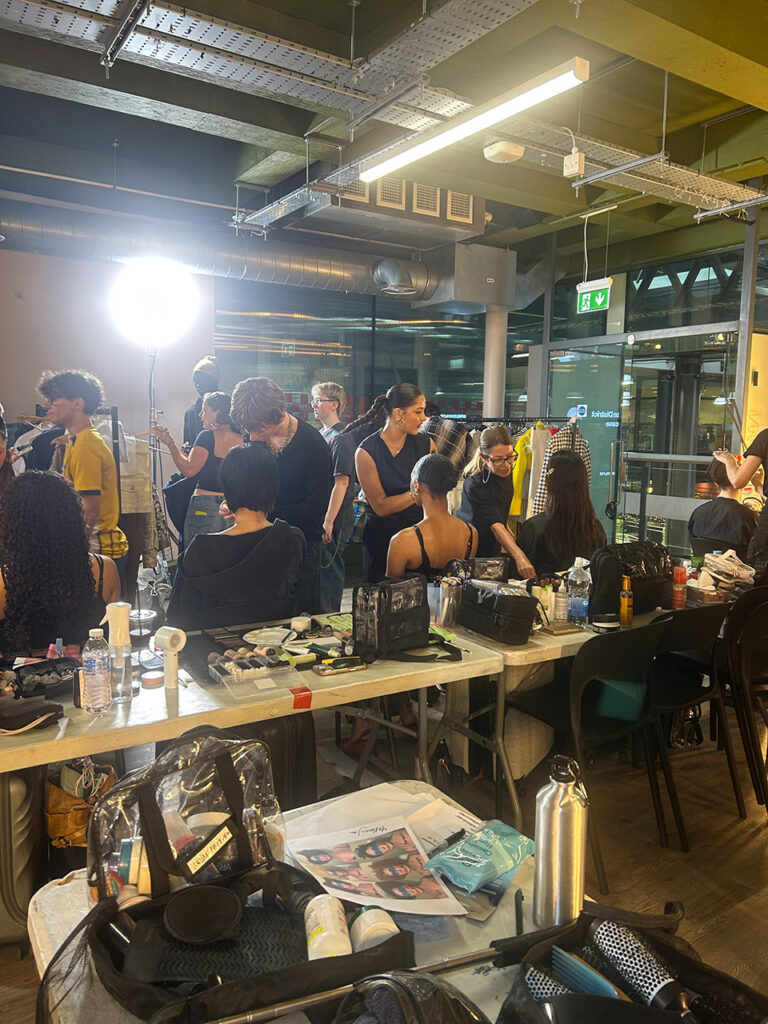
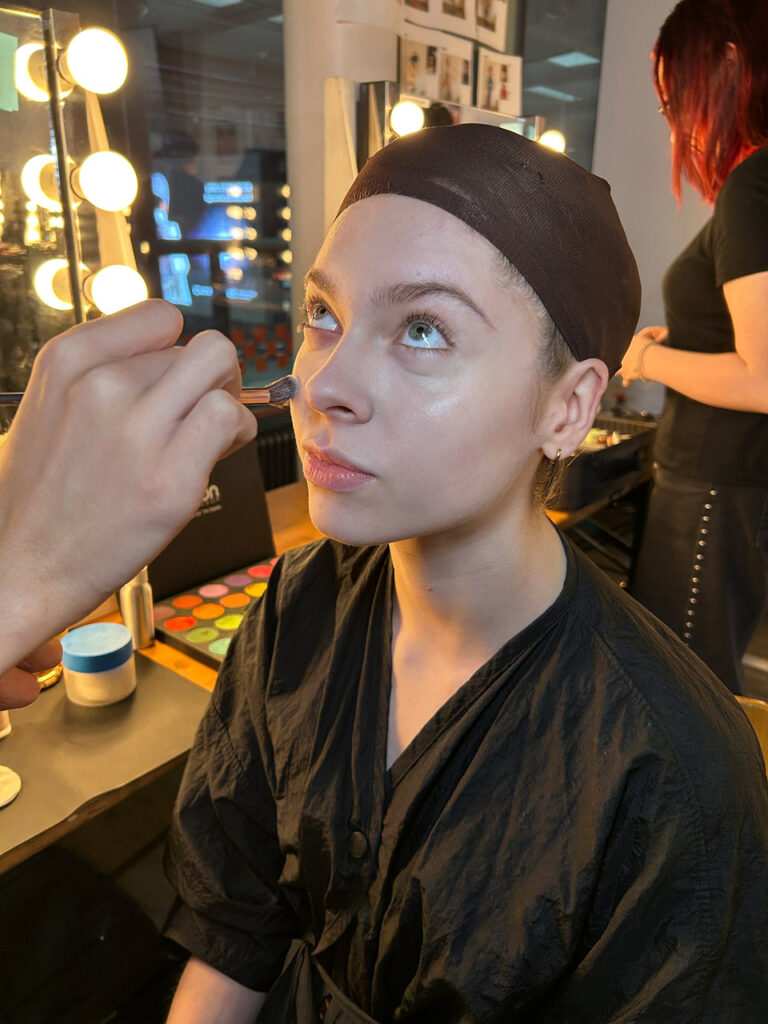
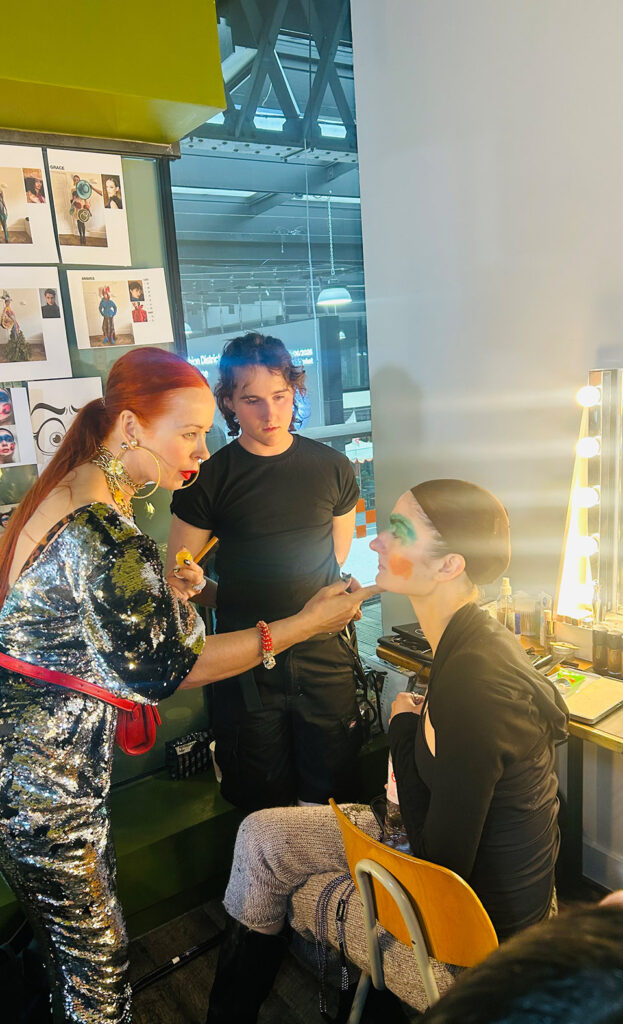
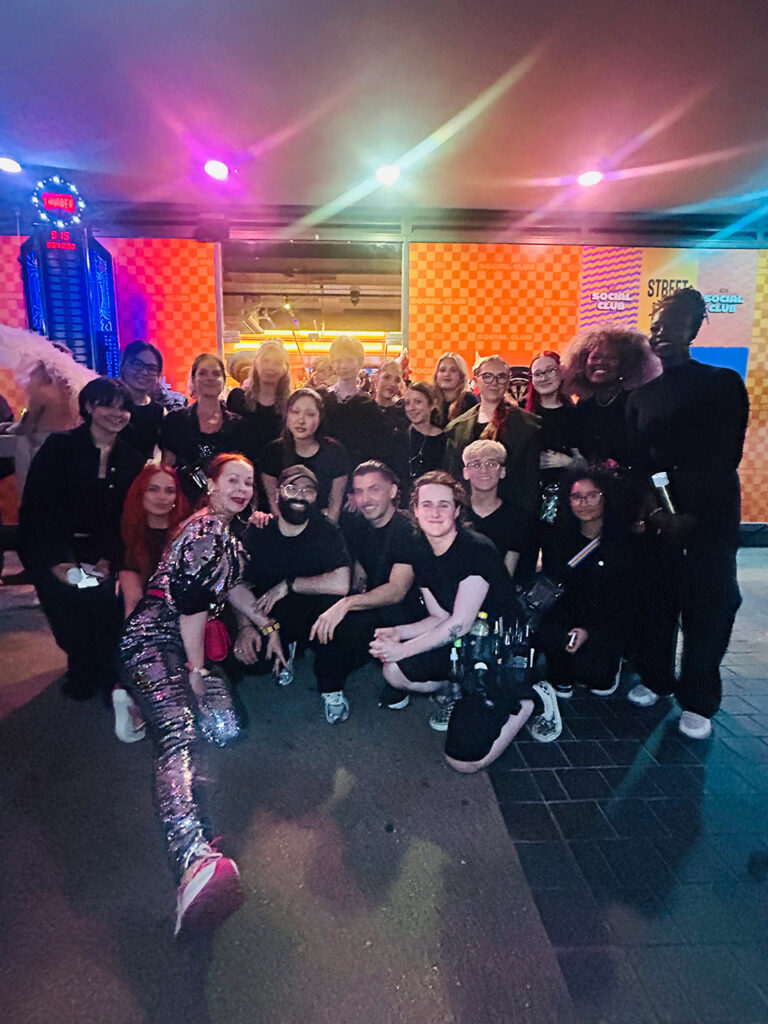
What this role demands is rarely visible from the front row. But shows like this — ambitious, layered, politically charged and technically complex — don’t happen without the quiet architecture of a team that shows up fully. The fd_ldn Live Performance Showcase was a reminder that London’s creative energy is very much alive, that emerging designers are making work of real consequence, and that the most powerful fashion moments are always a collective act.
To boot…
Fashion District London
www.fashion-district.co.uk | @fd_ldn
Astrid Kearney, makeup artist, creative & writer
www.astridkearney.com | @astridkearneymakeup
Read more from Astrid for ZOOT here
SHOW CREDITS
CASTING
Simon Lewis @castandelect
PRESS
Lobby PR @lobby.pr
SHOWCALLING & BACKSTAGE MANAGEMENT
Vikki Burns @go2show
DESIGNERS
Barbara Hornok @barbara_hornok
Cătălina Negara @ng.negara
Dede Arisekola @dedemakestuff
Min-Ji Kim @minjikimstudio
Matthew David Andrews @matthew.david.andrews
Milliner Jenny Beattie @jenny_beattie_millinery
Ksenia Schnaider @kseniaschnaider
MAKEUP Team
Ben @makeuupbyben
Eli @eli_hmua09
Isabelle @isabellehmua
Jessie @_jessiemakeup
Leandro @leandro_facundo
Lukas @lukasmason.portfolio
Nicole @nicole.muax
Oceana @oceanastephanmakeup
Samantha @samwalkermakeup
Sophie @sophiepmakeup
HAIR Team
Cindy @cindyarpesellahair
Funmi @bushkuts
Gemma @styled_by_rockandruby
Lucy @lucy_.ssimpson
Lydia @lydiastewarthair
Nancy @nancykhanmakeup
Sadè @braidedbysade
Stevie-Leah @stevieleahloscombe
Zhixi Zheng @sissyzheng_hmua