metamorphoSIS
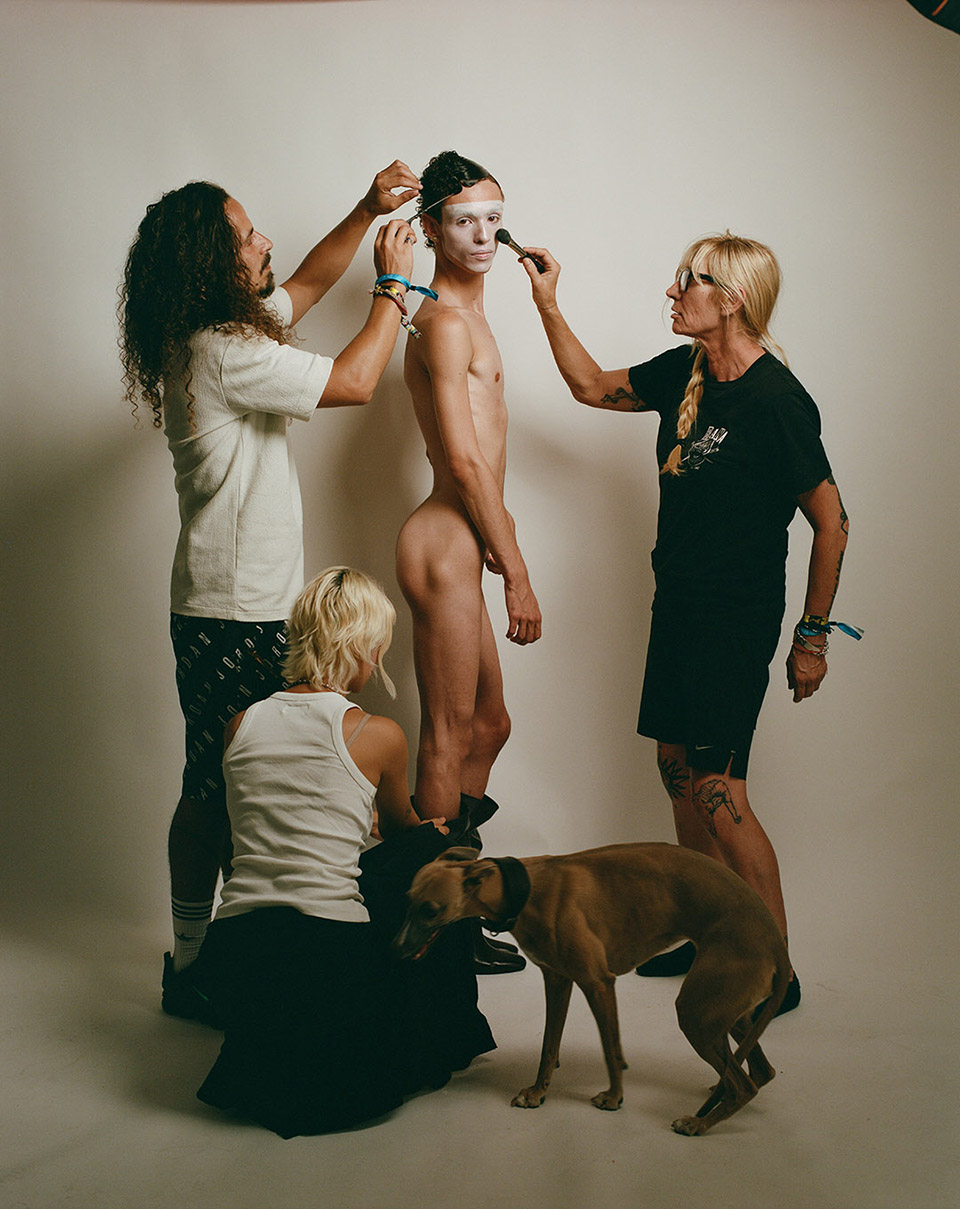
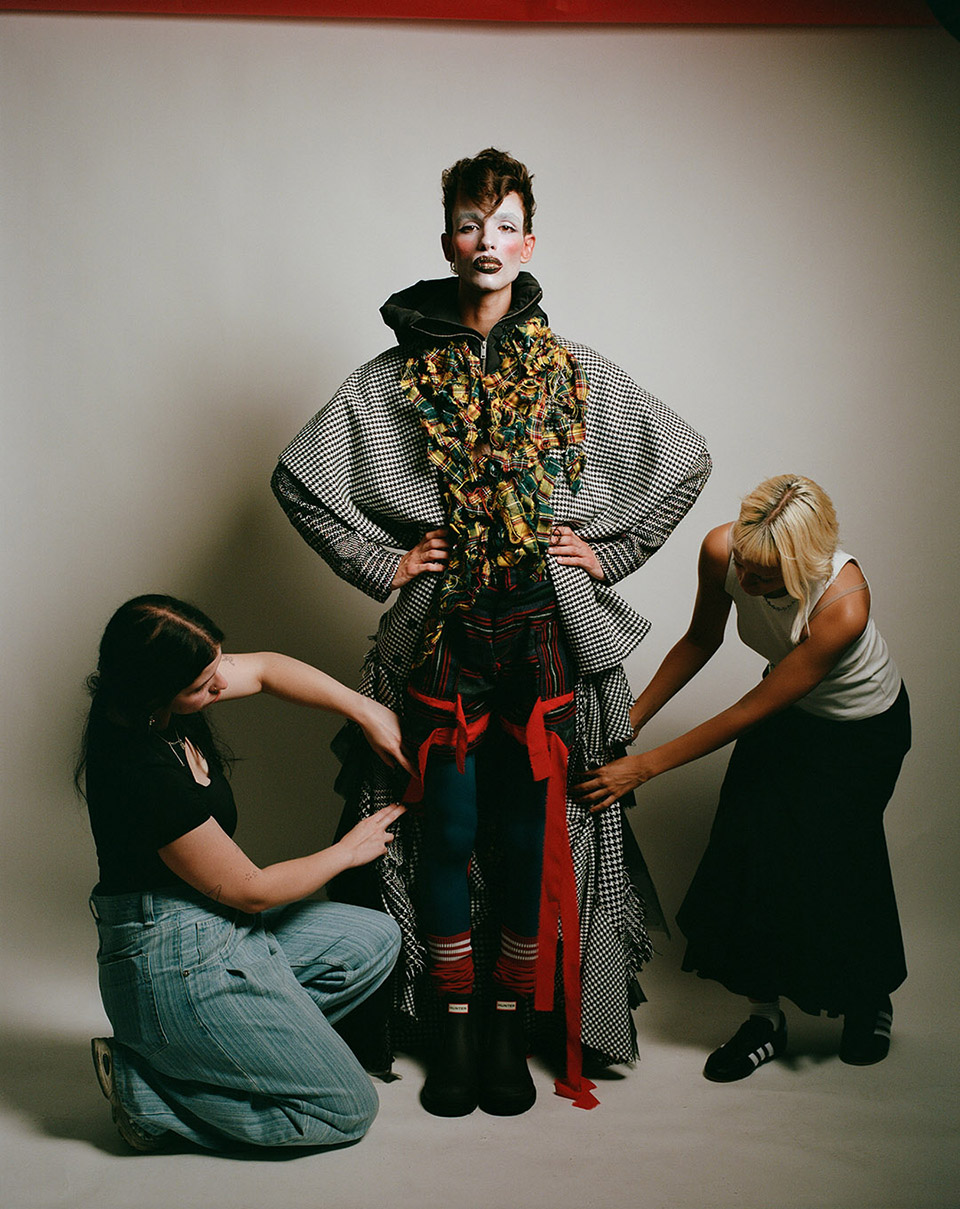
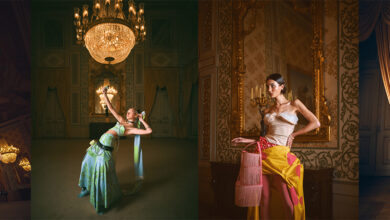
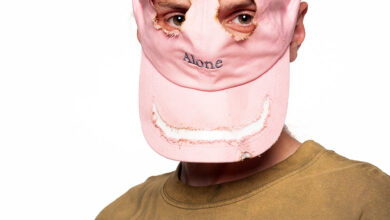
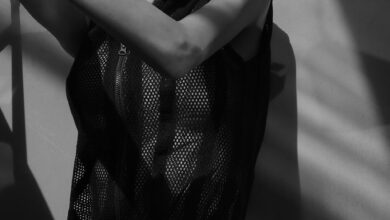
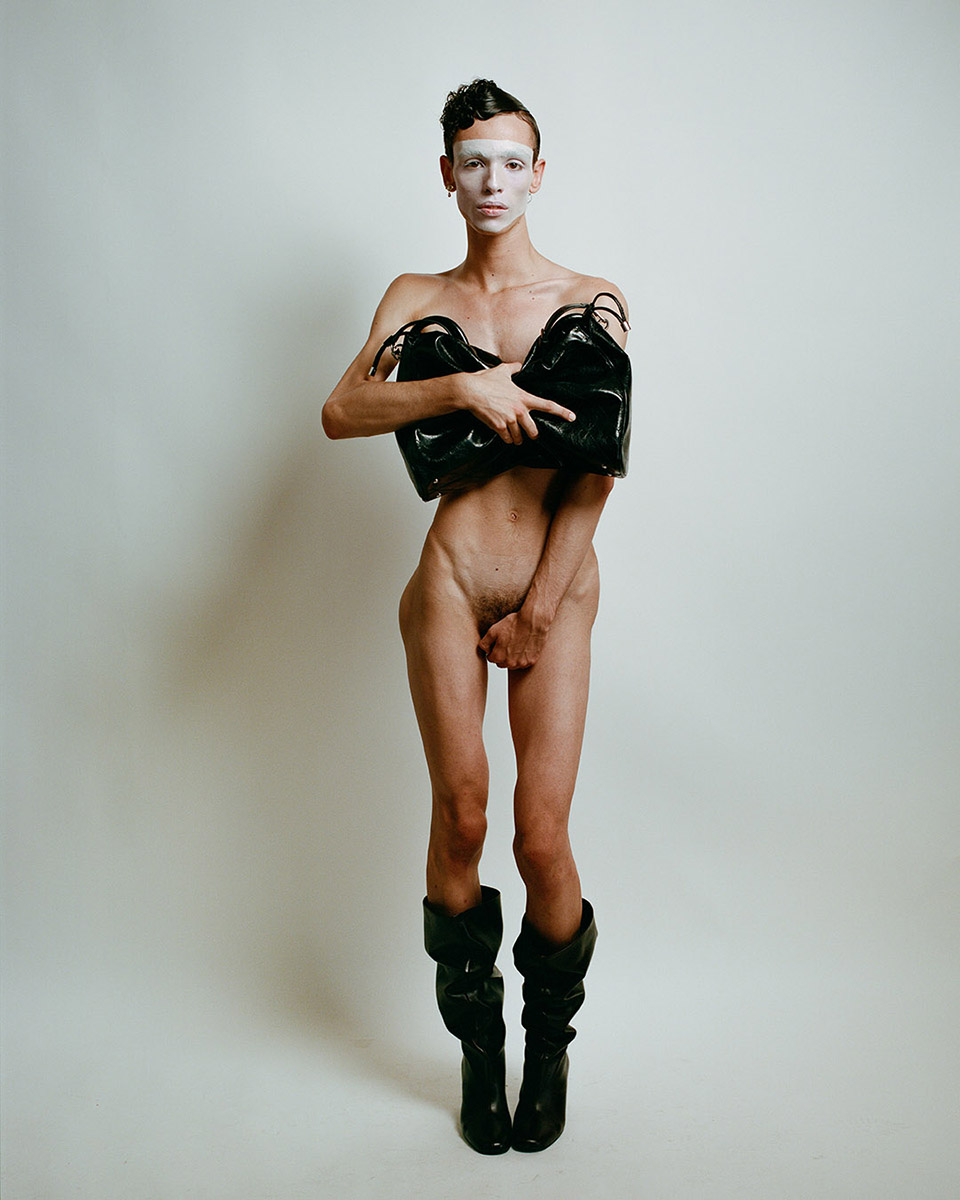
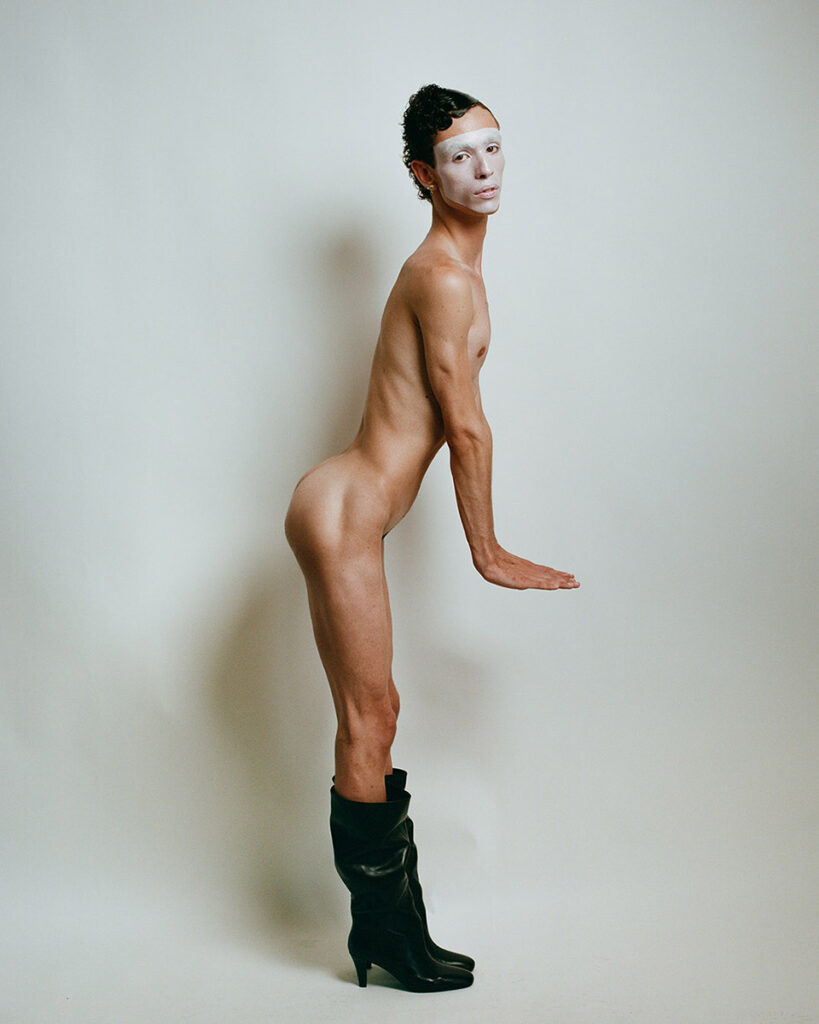
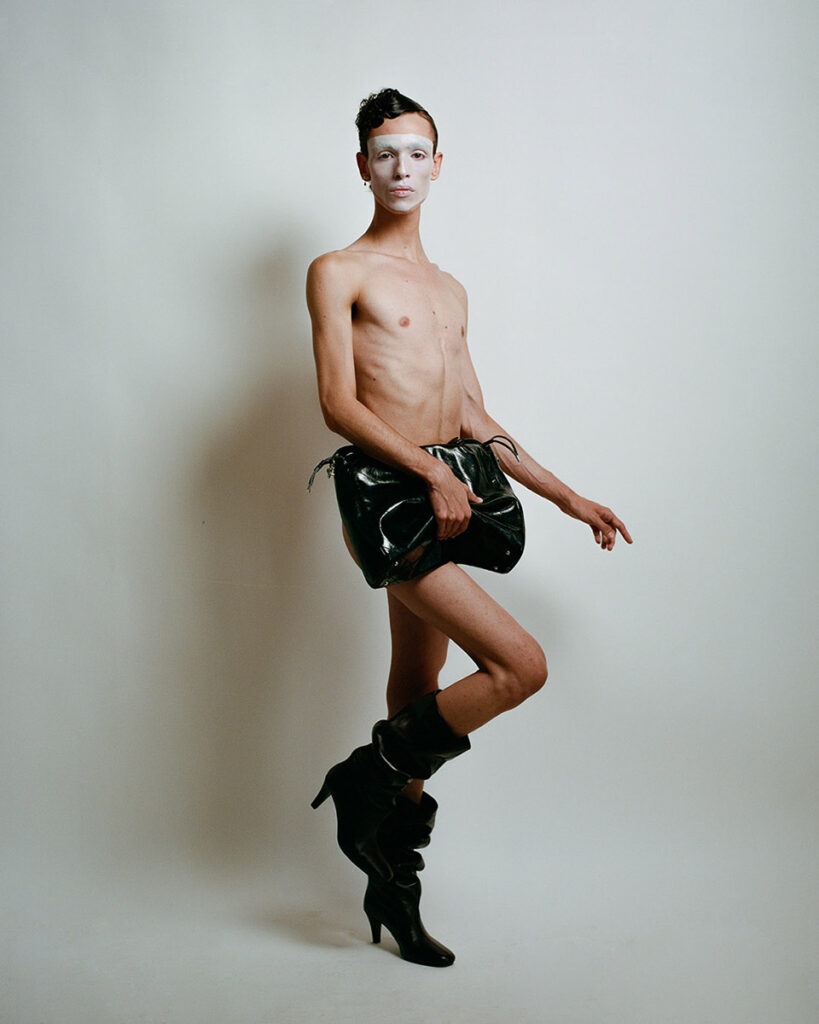
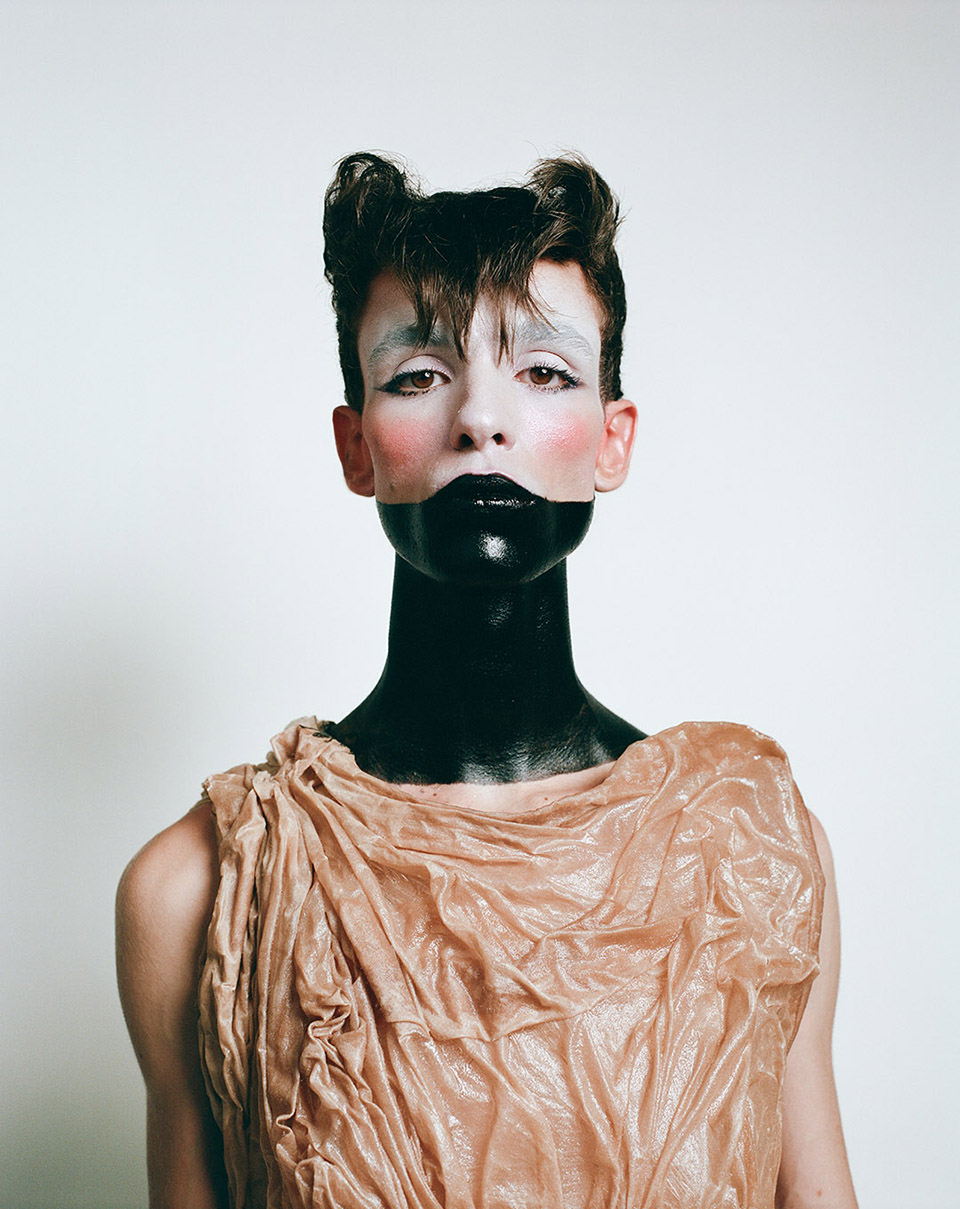
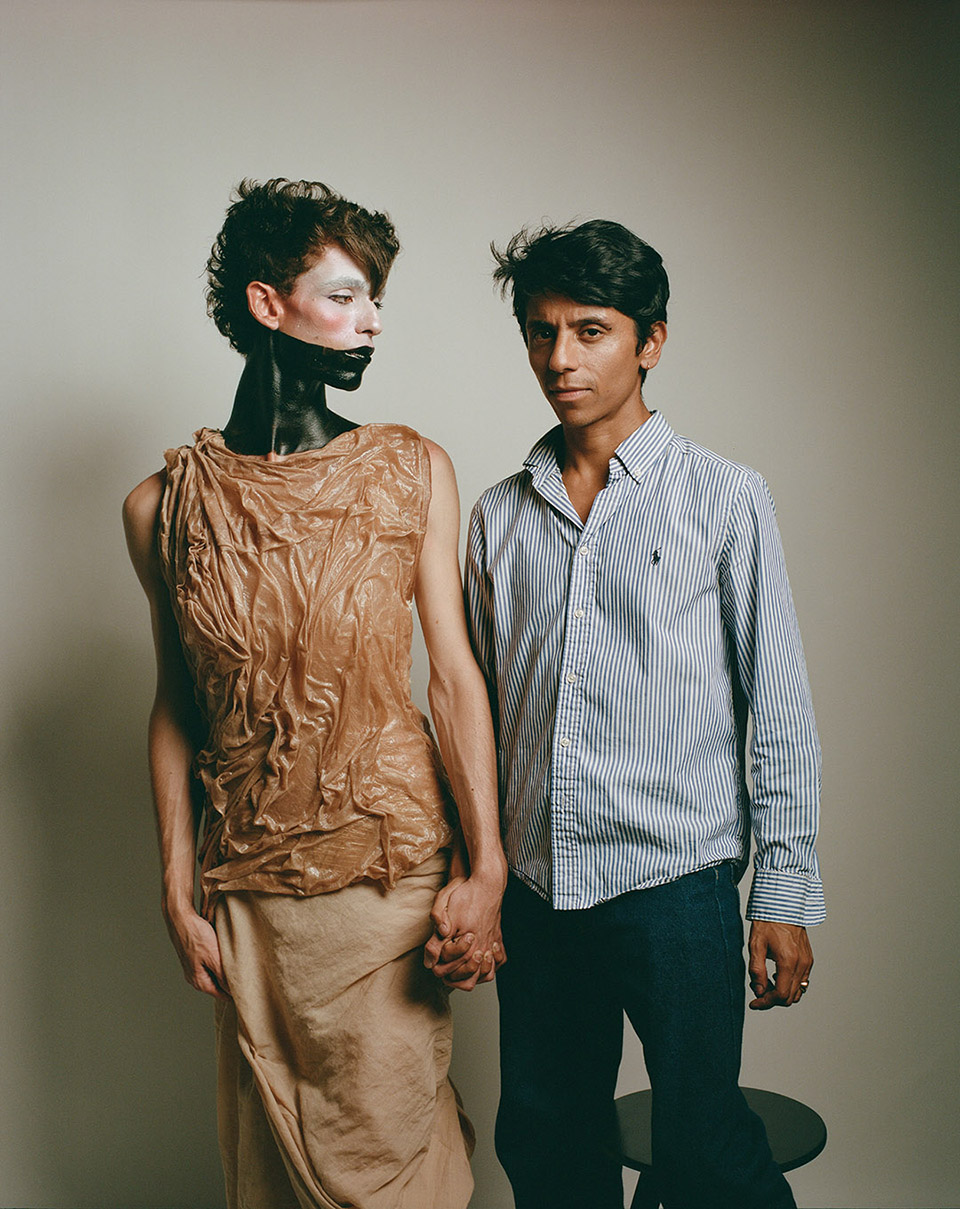
This editorial tells a story of change and evolution. In metamorphoSIS, Paulo Nuno Veiga — also known as PauloPop — takes us on a personal journey that begins as a planted seed and grows through stages of structure, shell, and peeling skin, until something new emerges. He chose not to call it a butterfly, but simply a fly — raw, restless, and real.
Together with photographer Sebastian Tayed, Paulo invited our team at ZOOT to help bring this transformation to life — captured in a few intense, analog moments on medium-format film with a Pentax camera. The result is both delicate and visceral: a visual and emotional metamorphosis.
In our conversation, Paulo reflects on art and life, on freedom and form. He speaks about gender fluidity not as a concept but as a way of being, about vulnerability as power, and about the quiet courage it takes to exist authentically in a world that demands labels. metamorphoSIS is not just an editorial — it’s an act of becoming.
Art & beauty direction Paulo Veiga Nuno and Sebastian Tayed
Photography Sebastian Tayed
Assisted by José Pereira
Featuring Paulo Veiga Nuno from Papaya Management
Styling João Telmo from Besta de Estilo
Assisted by Maria de Abreu
Styling assistant Margarida Rosa
Video & edit Ophell
Special thanks to Meliora | Lisbon Photo Studio
.
— Paulo Veiga Nuno
metamorphoSIS
what innocence calls the end
I call the beginning of creation
from the moment we woke up
just two shining butterflies of the soul
I couldn’t understand me
I couldn’t understand you
from uneasy dreams
we were ripped off
they ask us to see beauty
but that is far gone
when I look into your eyes
the word seems to paralise
is the ability to see
that keeps us from disguise
that make us realize
that the beauty is not in the butterfly
but in the willing to fly
Chapter 1 — The Seed
Paulo Veiga Nuno
Art has always been part of my life. As a child, I would go to my uncle’s band concerts, Pedra
D’Água, and imagine myself on stage one day. I couldn’t dance, sing, or even speak well, but being
there made me happy. In high school, theater and music became central. I joined the conservatory to
learn guitar — which didn’t quite work out — and started singing lessons, which was love at first
sight. I also joined my school’s theater club, where I was given the space, the time, and the silence
to express myself. By the end of high school, it was clear I wanted theater and music to define my
life, so I enrolled at the Contemporary Performing Arts Academy in Famalicão. After three years
shaping me as an artist, I moved to Lisbon to study at the School of Theater and Cinema,
completing the course the week before the “metamorphoSIS” editorial photoshoot — The end of an
Era and the start of another I guess.
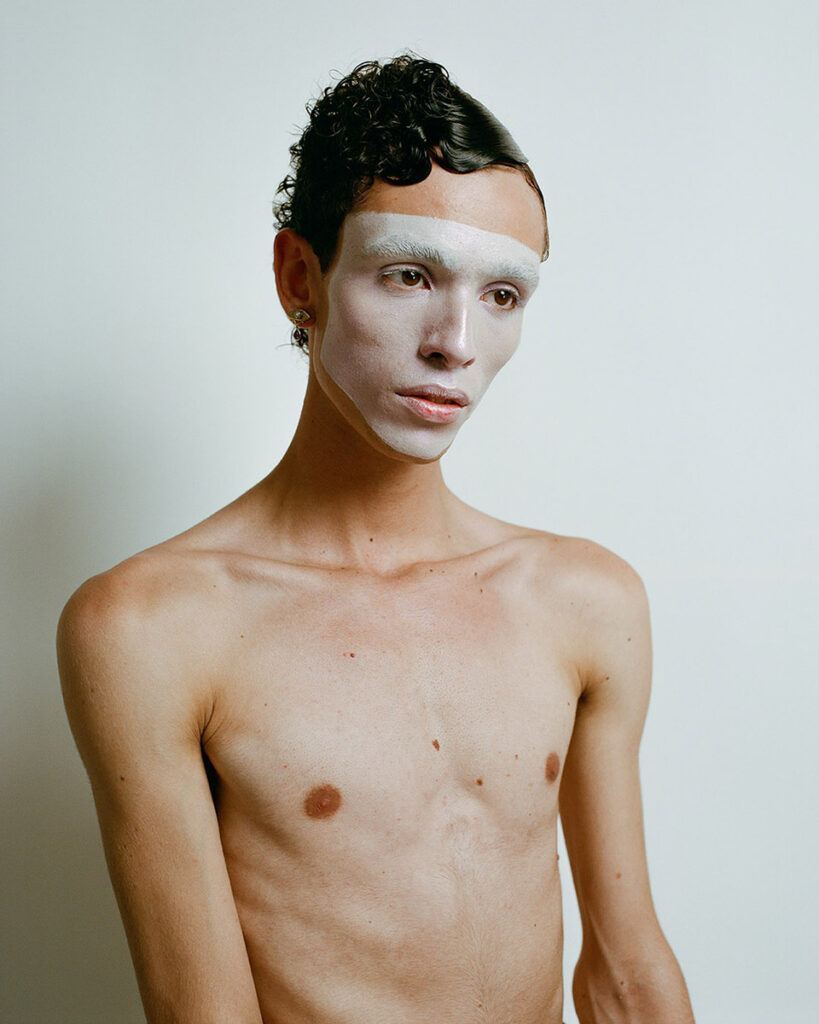
Chapter 2 — The Struct
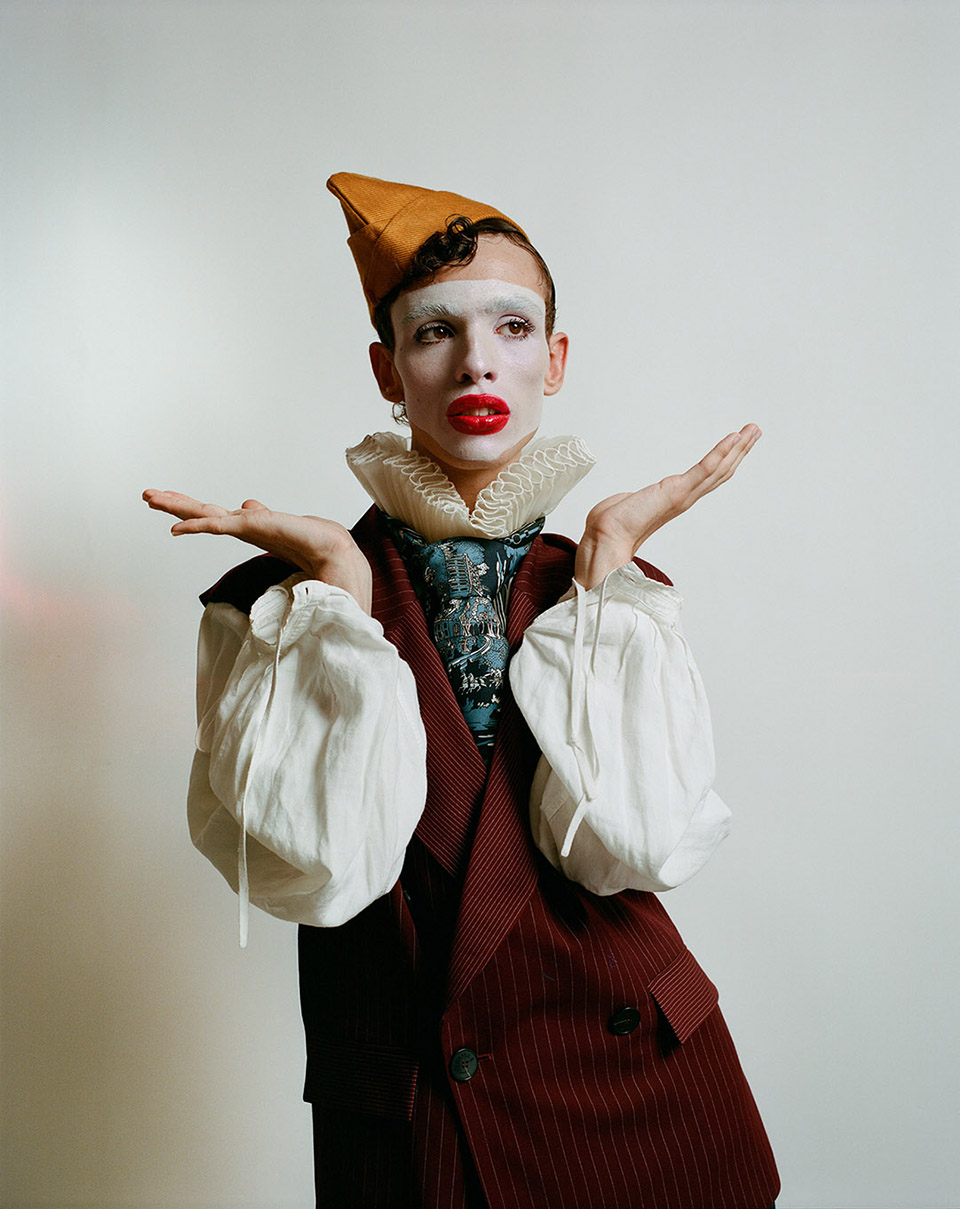
ZOOT: You move between dance, modeling, and acting. How do these different practices influence
each other and shape the way you see yourself as an artist?
Paulo: Right now, it’s mostly acting, modeling, and singing, even though my passion for dance remains
strong. Over the years, I’ve realized that techniques and learnings from one practice can feed
another, creating a continuous evolution. As an artist, having these three forms of expression gives
me freedom — the challenge is knowing what to say with them.
ZOOT: Dance is often described as the most direct form of expression. What does movement allow
you to communicate that words or still images can’t?
Paulo: Movement communicates uniquely by inscribing the body and its emotions in space and time. It
goes beyond description, placing feeling into rhythm, tension, and flow. Unlike words or images,
movement keeps a living ambiguity that transcends language and allows endless interpretation.
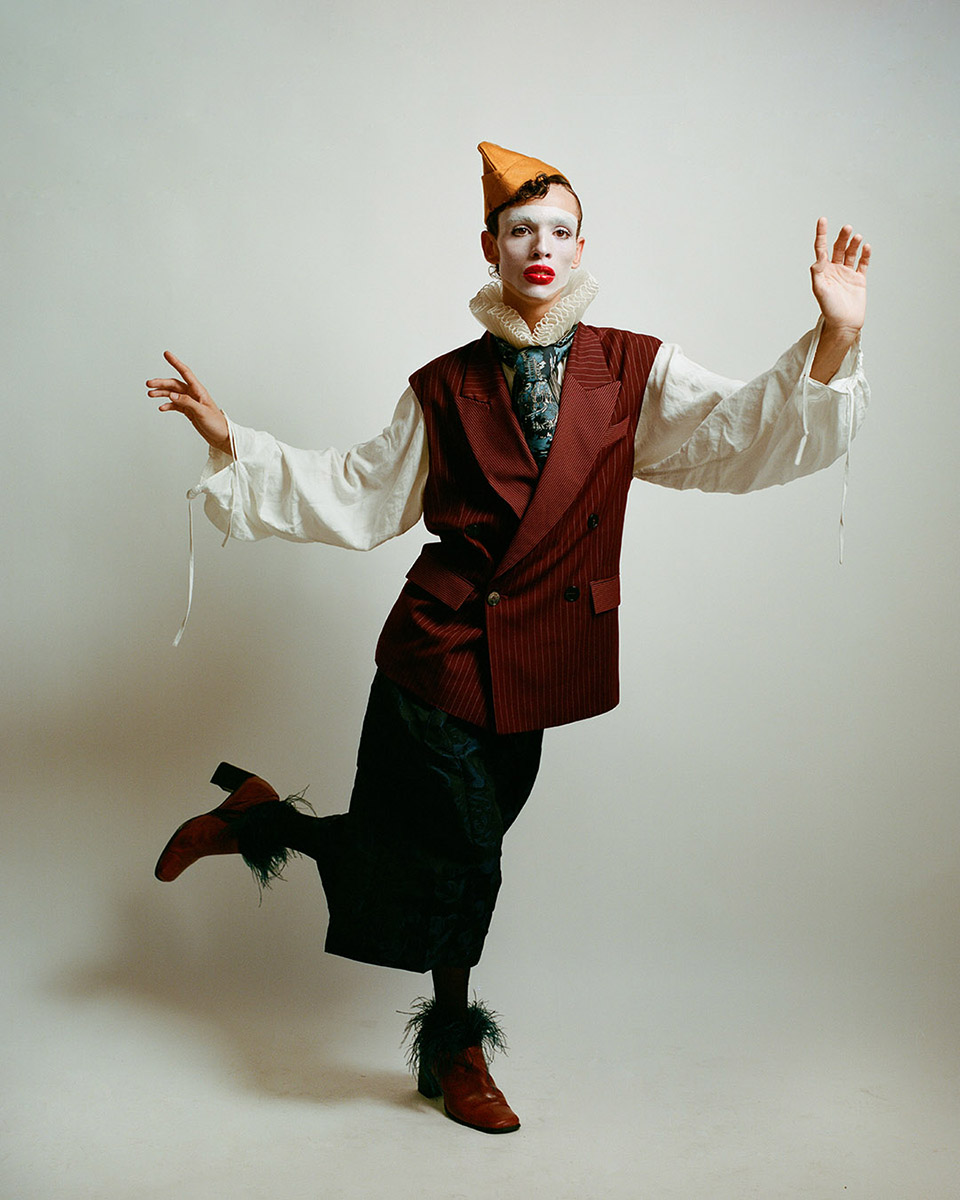
BESTA DE ESTILO shirt, tie & bivaque hat;
GABRIEL SILVA BARROS shoes.
ZOOT: Gender fluidity and expression are increasingly central in fashion and performance. How do
you approach gender in your own work, style, and private life?
Paulo: Honestly, gender doesn’t exist in my life. I don’t assign it to clothing or actions. A skirt isn’t
“female,” a suit isn’t “male.” I wear and do what makes me feel confident, beautiful, and happy. I
don’t care about the gender.
ZOOT: Do you see your practice as a way to challenge traditional notions of masculinity and
femininity?
Paulo: Yes. But more than challenging them, I want to destroy them entirely.
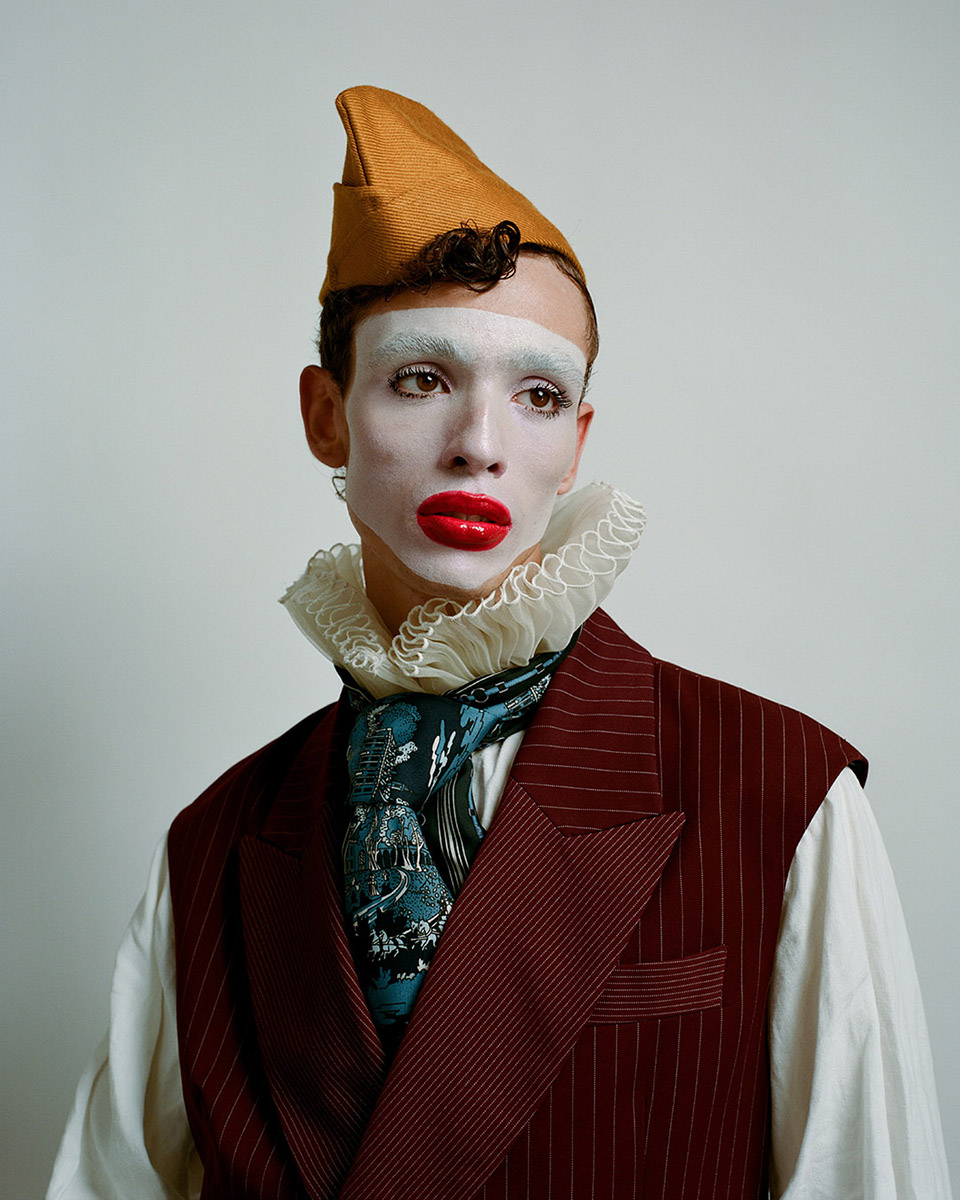
Chapter 3 —The Shell
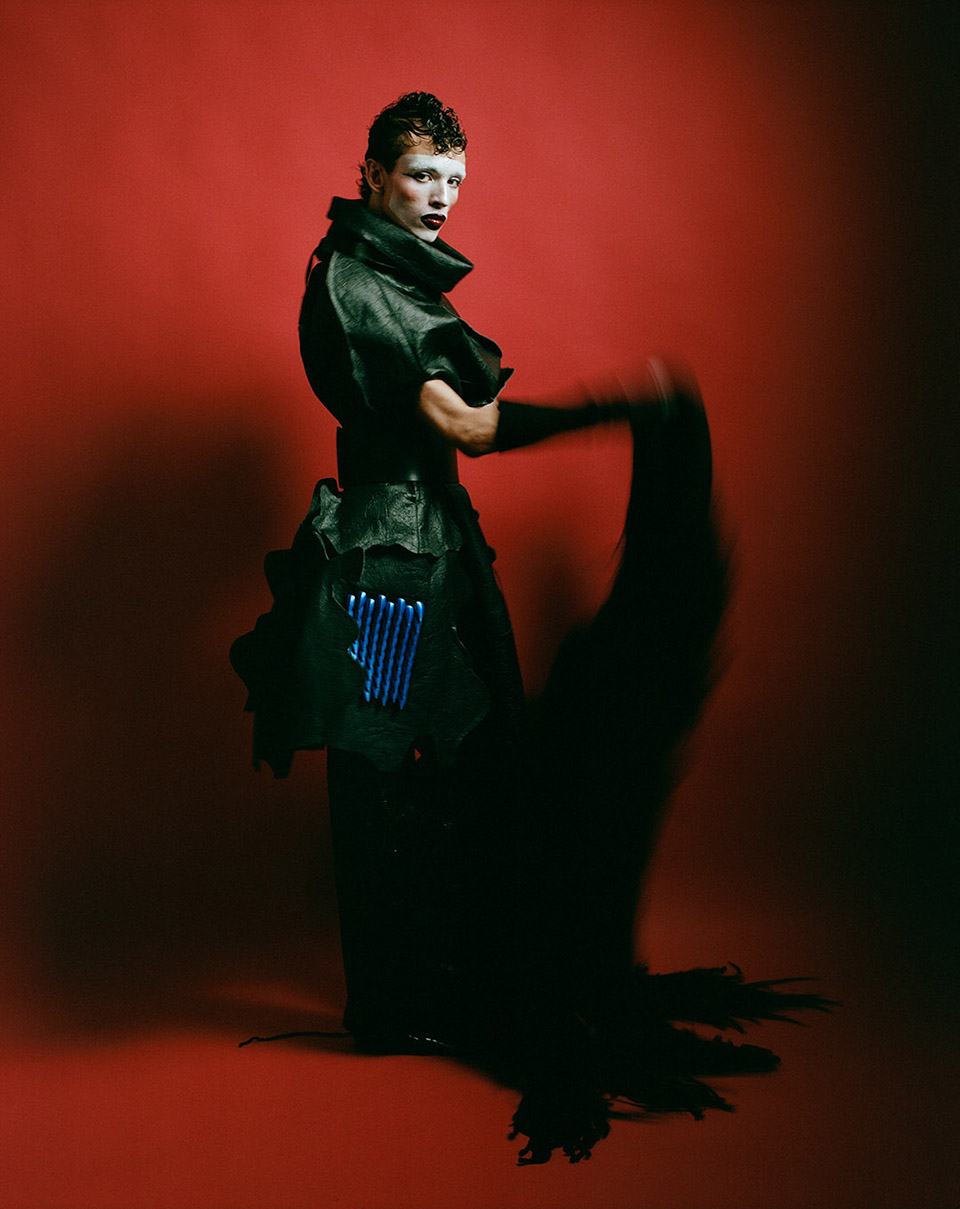
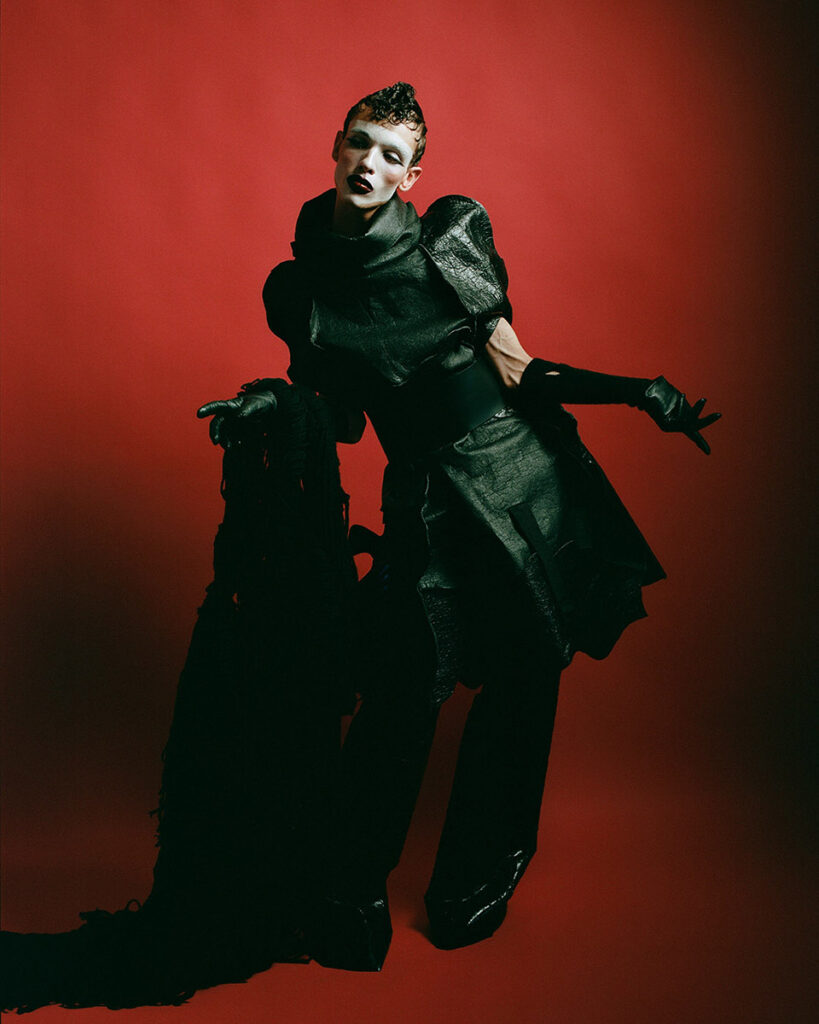
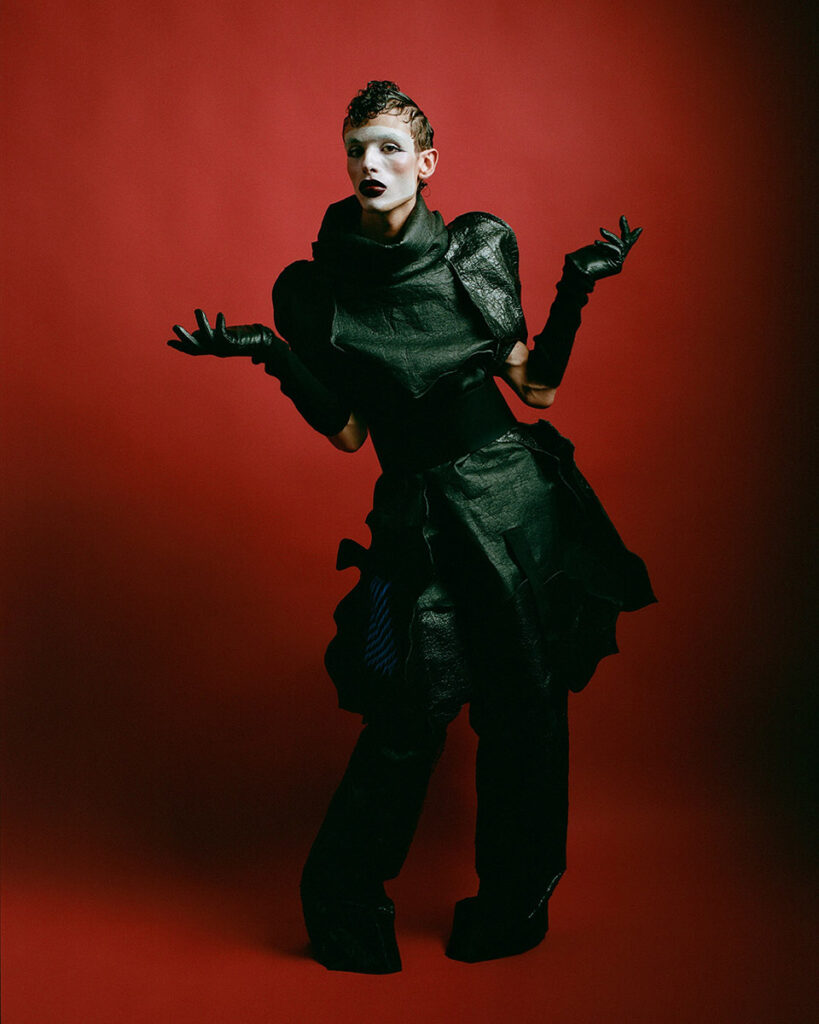
BESTA DE ESTILO gloves; VALENTIM QUARESMA wool garment;
IRREGULAR CHOICE shoes.
ZOOT: Acting requires stepping into different roles and perspectives. Has that influenced the way you perform in fashion or dance?
Paulo: Absolutely. Now, when I step into a studio, I don’t just wear a garment. I create an entire imaginary world around it — a character and why she’s dressed this way. Even if these ideas remain in my mind, they give intention and depth to my poses and movements.
ZOOT: The body is at the center of your work. How do you take care of it, and how do you navigate
its limits versus its possibilities?
Paulo: I listen closely to my body. Along with healthy eating, I train 3–4 times a week, swim, and use the
sauna. I love pushing boundaries, but I always prioritize health and safety.
ZOOT: Vulnerability can be powerful in performance and imagery. What role does vulnerability play
in your creative practice?
Paulo: Vulnerability is crucial. Acknowledging imperfection and the possibility of mistakes creates a safe, judgment-free space where ideas can emerge. It’s an exercise in trust — in ourselves, the process, and others — making any creation more human, tangible, and powerful.
ZOOT: Who or what inspires you most right now — in fashion, dance, or beyond?
Paulo: In fashion, I’m inspired by photographers Alejandro Arrias and José Pereira, who influenced
“metamorphoSIS.” In dance, Imre van Opstal and Portuguese icon Olga Roriz are references. In
music, Madonna is MOTHER, a symbol resilience, transformation and reinvention, alongside FKA
Twigs, Grace Jones, and Roisin Murphy.
Chapter 4 — The Skin
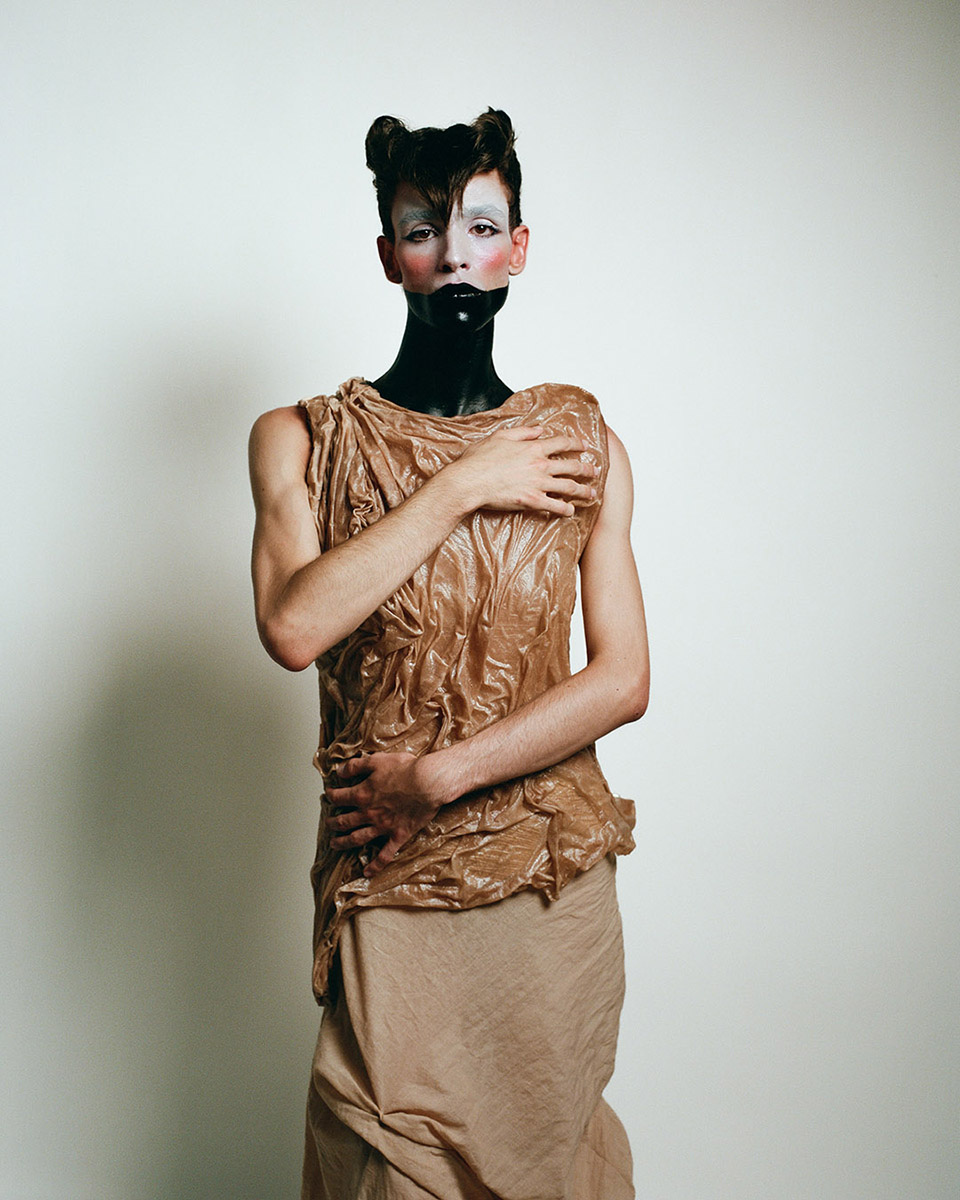
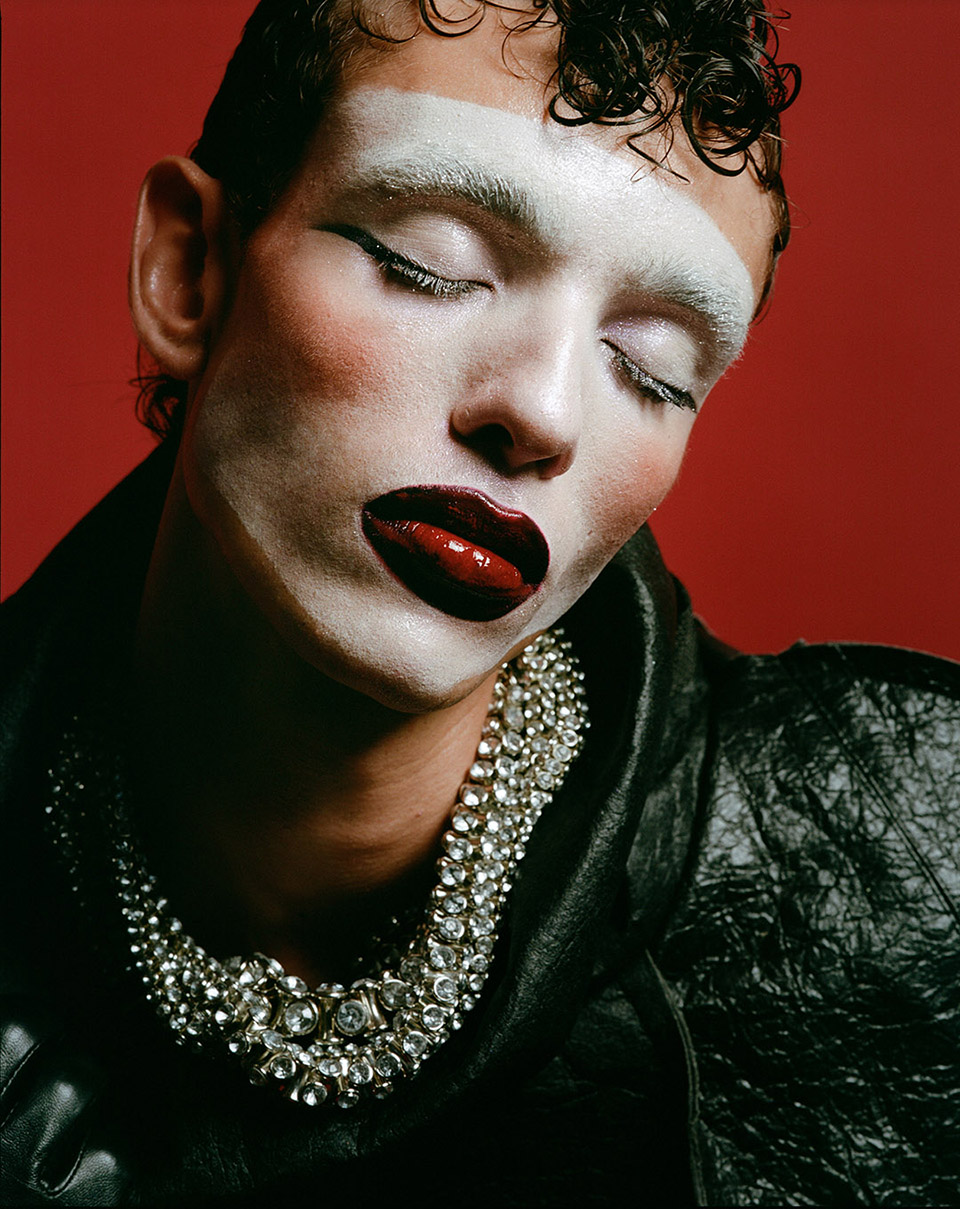
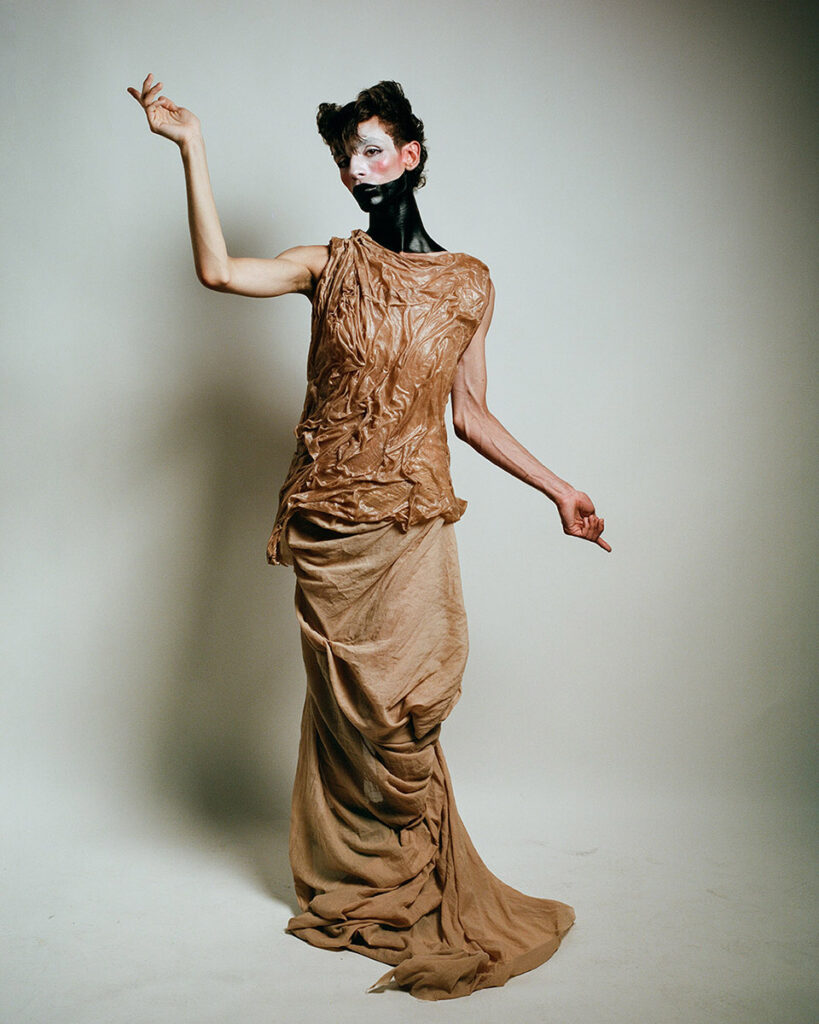
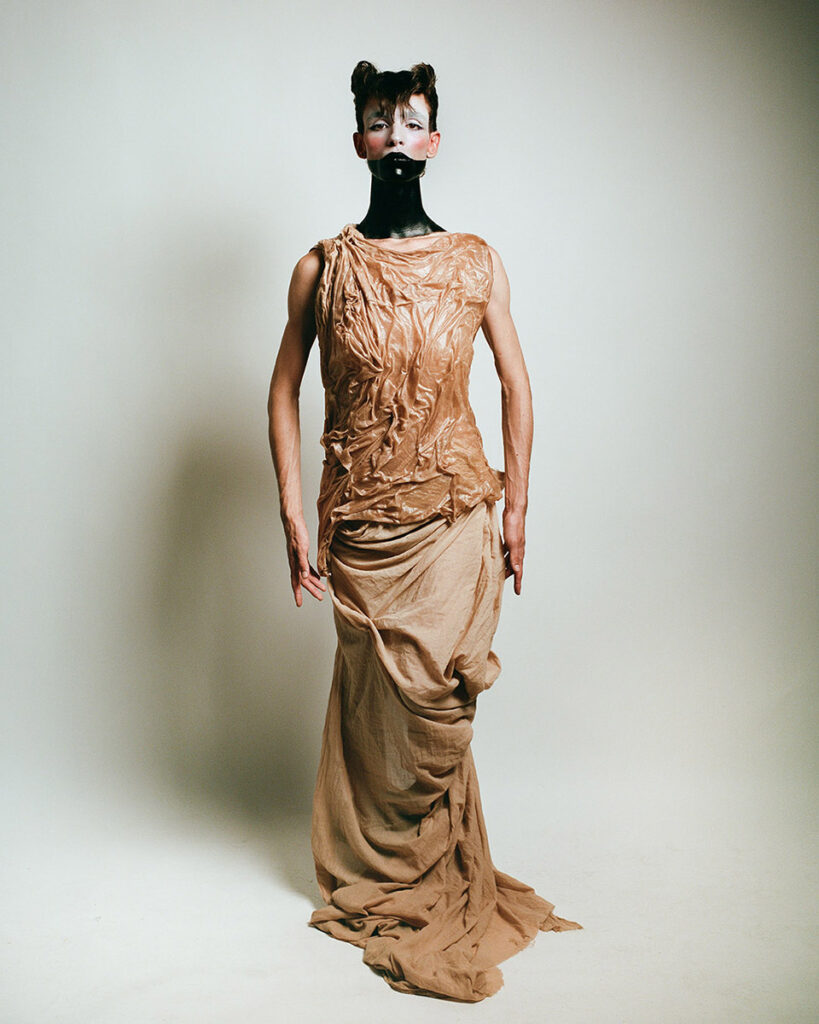
MANEL BAER Body sculture and skirt.
ZOOT: Today, fashion and performance are also platforms for political and social voices. Do you see your work as part of larger conversations about identity and justice?
Paulo: In today’s world, simply making a project like this happen is, in itself, a political act. Unfortunately, there are always more forces trying to hold us back than to push us forward. That’s precisely why, when we bring together a team of artists and succeed in creating a work that expresses our vision, we are showing resistance and celebrating our identity and freedom.
ZOOT: Sustainability is a pressing issue in fashion. From your perspective inside the industry, what
role can artists and models play in shaping a more conscious future?
Paulo: Sustainability can be tricky in a capitalist society. Early on, refusing work isn’t always possible,
even with brands that don’t follow sustainability principles. Still, artists and models play a key role:
questioning, starting conversations, and using their visibility to guide audiences toward more
conscious choices. Small actions accumulate, shaping how the industry reinvents itself.
ZOOT: Climate change is one of the defining challenges of your generation. Do you feel this crisis
influences your worldview or the way you approach your art and your life?
Paulo: Climate concern shapes how I approach life and art. It’s not just content; it guides daily choices — which brands to support, which materials to use. I favor processes that value people over brands and
narratives that link aesthetics to purpose. Small choices add up.
ZOOT: Social media has changed how performers and models connect with audiences. For you, does it feel empowering, or does it also bring new pressures?
Paulo: It’s a mix of both. Social media gives control over our image and lets us share our vision directly.
But it also creates pressure, with artistic value often judged by numbers — followers, likes, reach
— which can feel toxic and limiting. I try to use it as a tool, not as the sole measure of quality. Art
and identity cannot fit on a vertical screen.
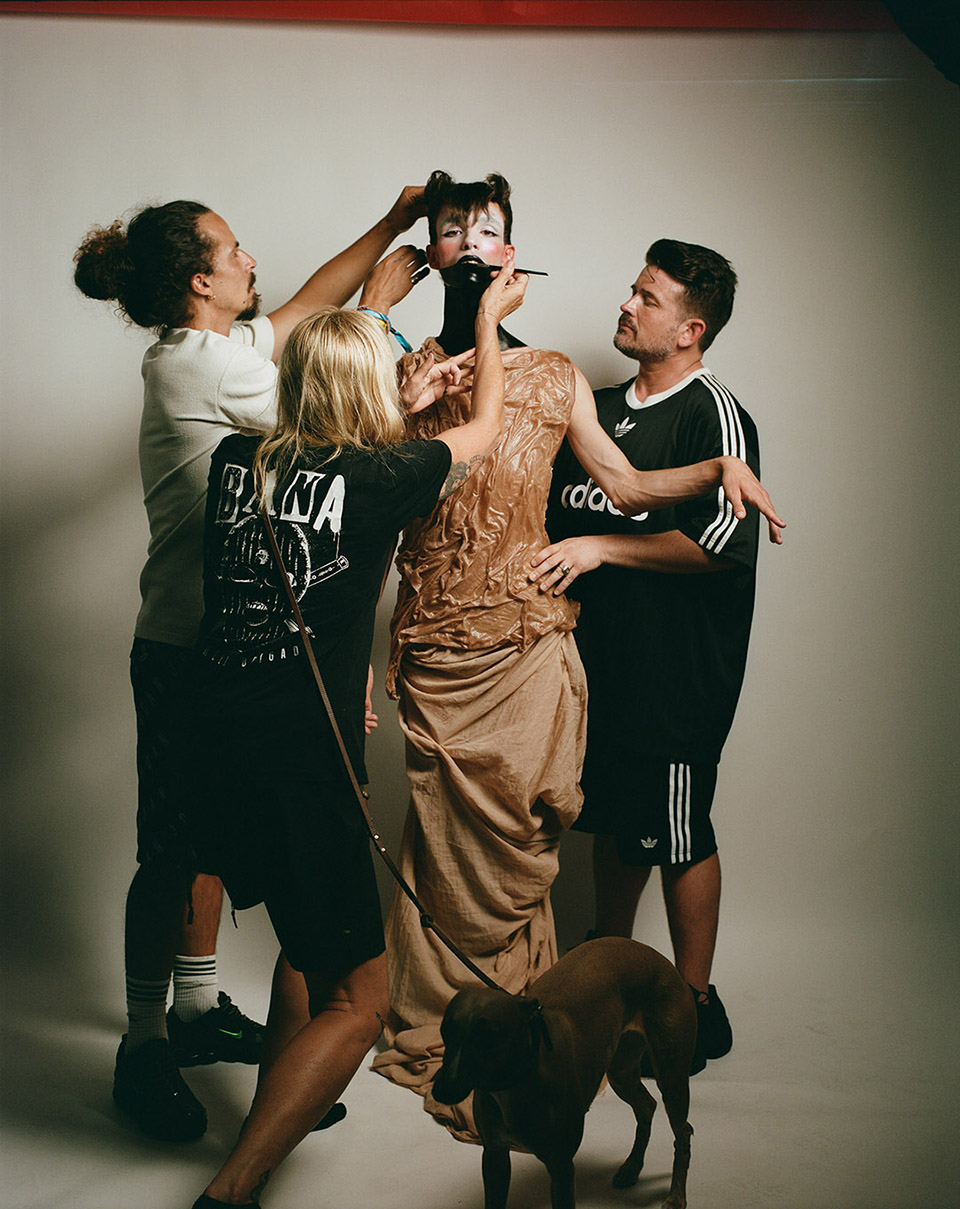
ZOOT: You’ve been part of editorial and fashion shoots. How do you prepare yourself before stepping in front of the lens or onto a stage?
Paulo: I start by studying the concept and understanding the creative team’s vision, that gives confidence and clarity about my role. Knowing the project’s purpose allows me to step into the scene with intention and presence.
ZOOT: Looking back on your career so far, what has been a particularly transformative or defining
moment for you?
Paulo: Without a doubt, my professional acting debut at Teatro São Luiz in Lisbon, in “(Fedra) Não é de
Pedra.” It combined all my passions — music, theater, dance — and was a profound learning
experience. I felt deeply grateful to perform alongside nationally recognized artists in such an iconic
venue.
Chapter 5 — The Fly
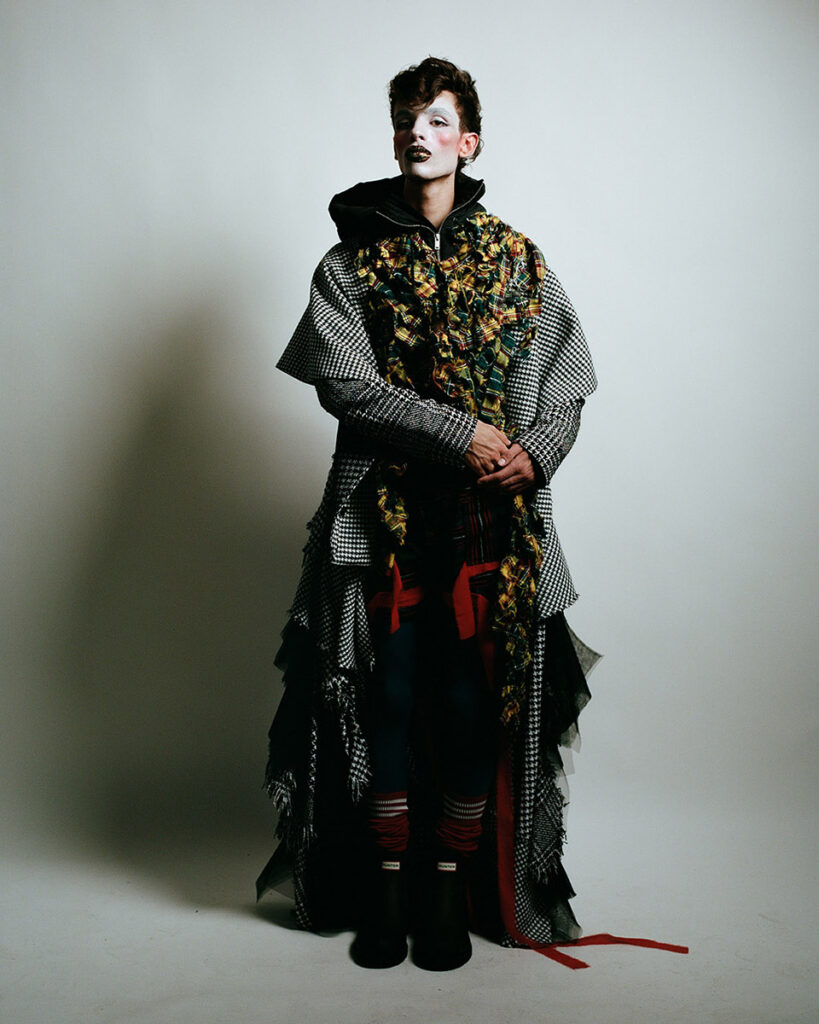
ZOOT: This editorial was shot with an analogue camera. How did it feel, knowing that the
photographer had only a very limited number of exposures per look?
Paulo: I had never shot on film before, and I fell in love with it — it was incredibly rewarding. The limited
exposures meant the photographer and I had to plan each pose in advance, while leaving room for
improvisation. This created focus and concentration throughout the team. It was beautiful to be part
of a moment where we were all immersed, with a single goal: creating “metamophoSIS.”
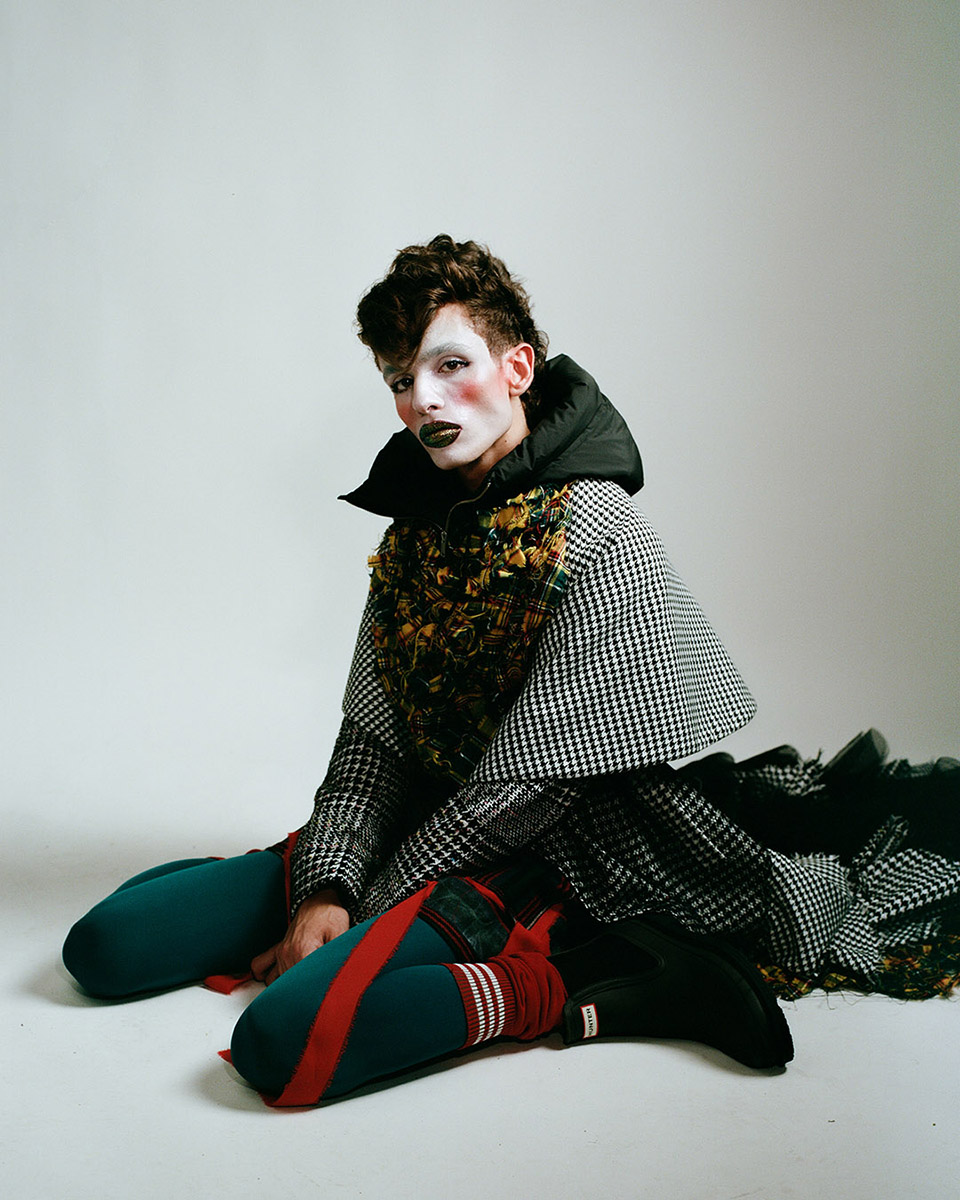
GABRIEL SILVA BARROS shorts; COS hood; PEDEMEIA tights; ADIDAS ORIGINALS socks; HUNTER boots.
Thank you Paulo!
FASHION REFERENCES
BESTA DE ESTILO @bestadeestilo
COS @cosstores
GABRIEL SILVA BARROS @_gabrielsilvabarros
HELLABUV @hellabuv
IRREGULAR CHOICE @irregularchoice
PEDEMEIA @pedemeia_socks
VALENTIM QUARESMA @valentimquaresma
PR´s
BIRDSONG @birdsong_pr
For
MANGO @mango
COMPANHIA DAS SOLUÇÕES @companhiasolucoes
For
ADIDAS ORIGINALS @adidasoriginals
GAËLLE @gaelle_paris
HUNTER @hunterboots
GANESH @ganesh_comunicacao
For
MANEL BAER @manel.baer
SHOWPRESS @showpress.pressoffice
For
ALVES/GONÇALVES @m.alves.goncalves
GUESS @guess
LUÍS CARVALHO @luiscarvalhoofficial